Light streams through a multicolored stained-glass Tiffany window, filling the sanctuary of the First Church in Belmont with a warm, prismatic glow. The artwork depicts a man in a red robe reclining with a shepherd’s staff, an angel in green hovering above. Beneath the figures, an inscription reads: “1813 Elisha Atkins 1888.”
The window has stood as the church’s artistic centerpiece for decades. But, like the building itself, it carries a lesser-known legacy: ties to slavery.
Now, the congregation is reckoning with that history. In 2023, the church formed a task force that investigated the Atkins family’s fortune and its entanglement with slavery in Cuba. That work led to a reparations summit at which Unitarian Universalist congregations from across New England gathered in Belmont to share what they had uncovered about their own ties to slavery and to wrestle with a complex question: How do we repair?
In Cuba, the small rural town of Pepito Tey lies about eight miles from Cienfuegos. The town was once called Soledad, a plantation owned by the Atkins family, where at least 177 people had been enslaved, according to the church’s website.
Records show that Edwin F. Atkins, born Jan. 13, 1850, presided over the First Church in Belmont’s parish committee when he commissioned the radiant Tiffany window in memory of his father, Elisha Atkins. The window was dedicated in April 1890, along with the church building.
The elder Atkins imported sugar from Cuba, especially from Cienfuegos, as early as 1838, according to the Massachusetts Historical Society. He operated E. Atkins and Company, and in the early 1880s, his son acquired Soledad and transformed it into a bustling sugar operation that yielded 4,000 tons by 1887.
Slavery persisted in Cuba until 1886. Even after emancipation, many African and Chinese laborers worked on the plantation for paltry wages, according to historical accounts. In his 1926 book, “Sixty Years in Cuba,” Edwin F. Atkins wrote: “We had at Soledad Caribbees, Congos, Guinea negroes, and many others…among the older negroes was a little Congo, under five feet in height, who said he was the son of a prince in Africa and that he had been kidnapped and sent to Cuba as a slave.”
Back in Belmont, the Atkins family became prominent benefactors over the years, donating land for Belmont Hill School and building several brick mansions, according to town records. The Belmont Historical Society notes that Atkins also contributed $5,000 to the First Church’s construction, a meaningful share of its $26,000 cost in those days.
In the 19th century, Belmont thrived as a prosperous small town, as it does today. The same could not be said for Pepito Tey, which struggles with myriad ills.
“They have an epidemiological crisis right now, in addition to their economic and political crisis,” said Gina Carloni, chair of the Legacy of Slavery Project. “There is a huge outbreak of mosquito-borne illnesses.”
Cuba faces frequent power outages, chronic food shortages and widespread emigration, leaving behind an aging population, according to Human Rights Watch. The current U.S. administration has imposed an oil blockade restricting shipments from Venezuela and Mexico, the country’s main suppliers, according to human rights and policy reports.
The church established the Legacy of Slavery Project in 2023. The group researches slavery and indentureship in Pepito Tey, informs the congregation and forges connections in Cuba for its next phase: reparations.
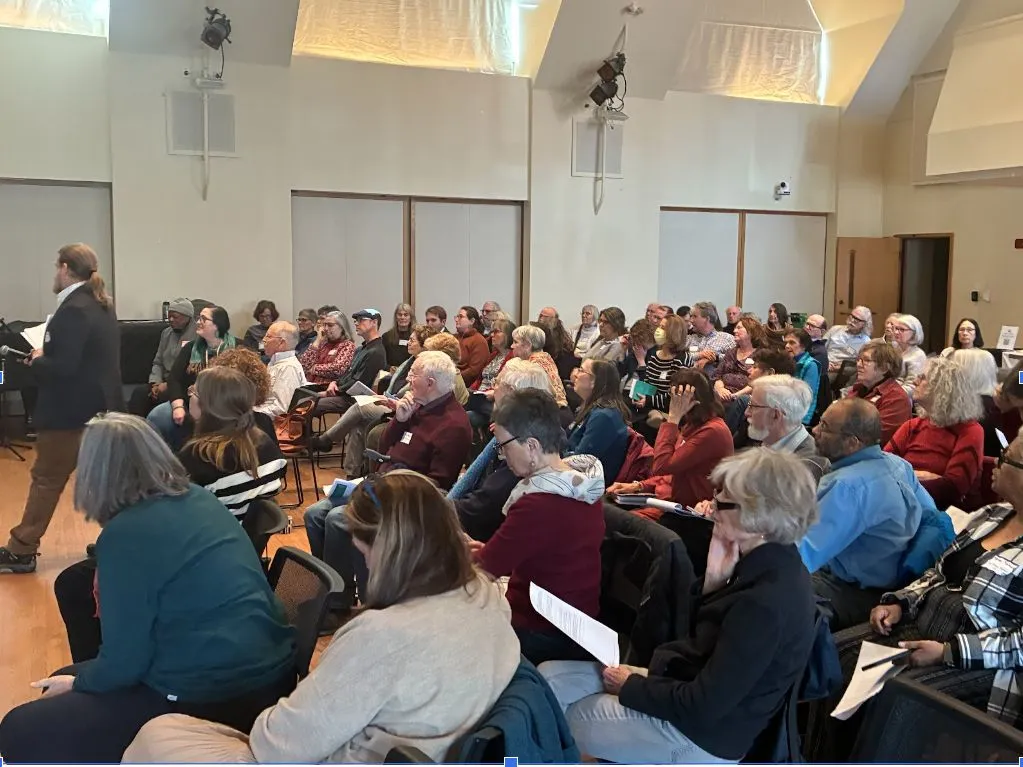
On March 21, Unitarian Universalist churches from Arlington, Cambridge and beyond filled a room at The First Church in Belmont for a reparations summit. Five groups presented findings on their churches’ historical ties to slavery. The First Church in Cambridge recounted how minister William Brattle enslaved Cicely, a 15-year-old African girl, a fact engraved on her headstone in the Old Burying Ground, one of the oldest cemeteries in Cambridge.
Researchers from the First Church of Arlington found documents showing that Revolutionary War hero Jason Russell enslaved Kate. The Arlington Historical Society records state that she was baptized on March 17, 1754, at 3 months old.
“We have a responsibility to do something, and to bring this knowledge forward, and to move it from knowledge to action. And to work towards repairing those harms with communities that have been harmed,” Carloni said.
The Belmont church works with Sophia Boyer, an educator and equity consultant with a background in sociology and history, to guide its reparations efforts. So far, church members have raised money to provide each home in Pepito Tey with a large mosquito net. Congregants are now seeking additional ways to advance reparative work, though strained U.S.-Cuba relations have made their efforts difficult.
“As a person of color, it’s important to have these conversations in spaces with white people, and this is one of the venues that I will participate in that kind of conversation,” Boyer said.
During the summit, Boyer outlined two types of repair: “material repair” and “symbolic repair.” Material repair involves tangible contributions such as money, land or other assets. Symbolic repair encompasses public apologies, memorials and historic acknowledgment. Her presentation invited congregants to reflect on how best to address past harms.
“It has to come from them. What do they want? What do they need?” said Charles Hubbard, a member of the church’s Legacy of Slavery Project and an organizer of the summit. He said reparative work must prioritize the concerns of the people in their descendant community.
“I think a lot of people hear the word reparations and they think, Oh, we’ve got to pay back money. We don’t have the money. We can’t do this, and therefore, we’re just gonna sort of look the other way,” said the Rev. John O’Connor, of the Arlington Street Church in Boston. “I think that is a very common response that you see in contemporary American culture.”
In his closing remarks at the summit, the Rev. Chris Jablonski offered a note of hope: “We give thanks for the end of the beginning, for this lifelong and ongoing work.”
This story was written by a journalism student in BU’s Newsroom program, a partnership between the university, The Belmont Voice and other news organizations in the Boston area.