Author: Daniela Ginsburg

  • Concerns over proposed apartment complex on Washington Street

    A proposed construction on a Washington Street strip in Jamaica Plain has raised concerns from business owners about congestion, inflation and other neighborhood concerns.

    Three dozen residents, including local business owners, attended a virtual public meeting on March 11 to hear the proposal. They said the development would cause housing prices to skyrocket, making JP even more unaffordable, with many disapproving of the aesthetics of the proposed building and the traffic havoc the construction would cause on nearby streets.

    “How can you possibly put a crane in the backyard on our property?” asked Michael West, a local funeral home owner who said he is “vehemently opposed” to the proposed site.

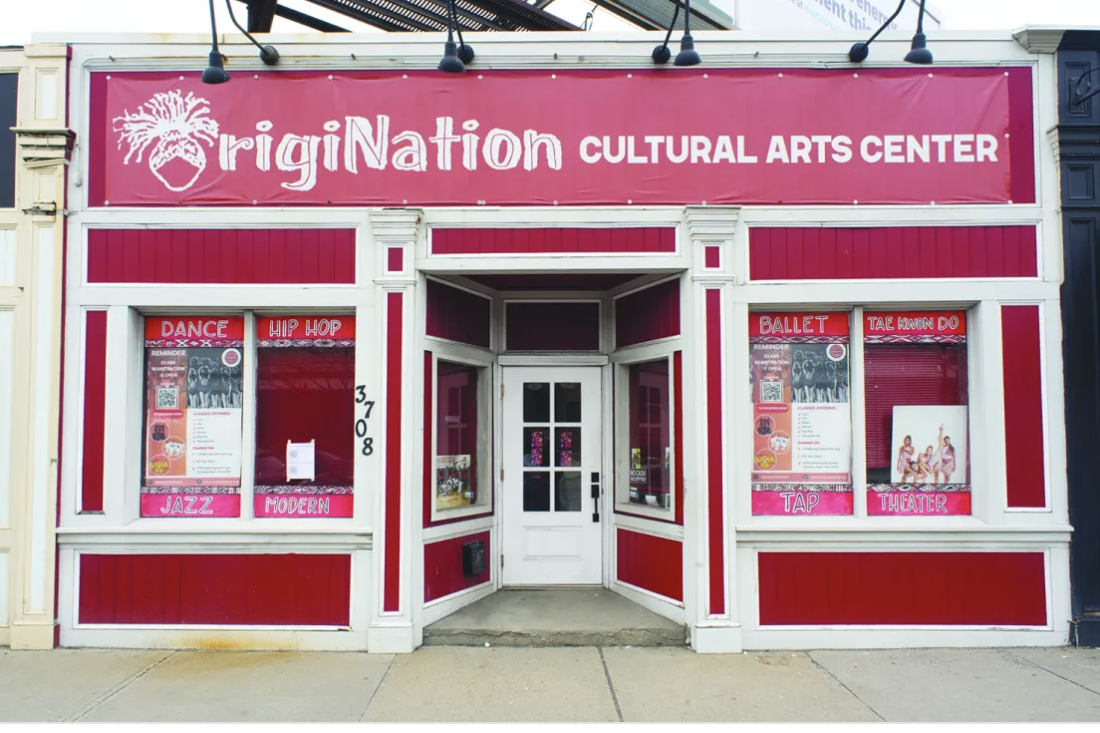
    The front of OrigiNation Cultural Arts Center, on Washington Street.

    The project aims to raise a one-story structure at 3716-3724 Washington St. that is currently rented by Forest Hills Pizza and Forest Hills Dental. Both are located across from the Forest Hills T stop.

    Stephen Harvey, senior project manager in the planning department for the City of Boston, held the meeting to get feedback from the JP community on the proposal, which includes a six-story, mixed-use building with two first-floor retail units and 35 residential units.

    The proposed project “directly aligns with key planning and policy initiatives” that aim to create communities where people can “live, work, and thrive” in neighborhoods closer to public transit, according to information from the company’s review application and details from the MBTA’s multi-family zoning initiative.

    Musau Dibinga, executive director of the OrigiNation Cultural Arts Center inside one of the dance studios.

    Harvey explained that eight of the units have an area median income ranging from 70% to 80%, impacting the costs of living in and around Tower Street.

    George Lee, an attendee at the meeting, said JP is a mix of low and high-income residents and that the proposal’s median income numbers are “very high” compared to what JP renters make.

    “I think the developer really needs to get a lot more solid on [affordability] and come back for another planning department meeting,” Lee said.

    The proposed site would also overshadow the traditional buildings along Washington Street that reflect a connection to the neighborhood’s history and its longtime residents, said  M. Mendez, who also attended the virtual meeting.

    “The building [as proposed] needs to respect the traditional red brick aesthetic, Mendez said. “The building is just too high and too dense.’’

    VinCo Properties, the South End real estate development company that is overseeing the project, plans to add public enhancements through sidewalk widening and street tree planting, Vince O’Neill, the company’s founder and president, explained in the meeting.

    “If the neighborhood has to make some compromises and sacrifices, the affordable units have to be for working people,” Mendez said. “They should not be for singles that are going to take the T to go to Google or to work at Amazon.”

    Musau Dibinga, executive director of OrigiNation Cultural Arts Center whose business is on the strip, expressed frustration over the congestion a new development would cause and about how the city notified the public about the project.

    She said she heard about the meeting through her landlord, adding that she wished the city had talked with other business owners like herself instead of only the owners of Forest Hills Pizza and Forest Hills Dental.

    The pizza shop owner declined to comment for this article, and the dental office is permanently closed.

    OrigiNation, which serves more than 150 students weekly, has been offering dance, leadership and employment training in JP for almost eight years, Dibinga explained.

    She also said that Washington Street is a narrow and “congested” road and that construction, with cranes taking up critical on-street parking spots, would only make things worse for the students as they enter and exit the center.

    Dibinga said she supports efforts to address the housing shortage but opposes the proposed development because it does not match the “fabric of the community”.

    “I want everyone to feel comfortable and have a home,” Dibinga said. “The management company has to be aligned with what we want in the neighborhood.”

    West, who owns Brady and Fallon Funeral Home, which would be behind the proposed site, told the meeting participants that his business conducts more than 300 funeral services a year and that the commotion from any construction would be disruptive to grieving and vulnerable families who attend the services.

    “The noise, the dust, the vibration, the constant traffic, make it impossible to hold dignified services for a funeral service that’s been in existence since 1875 in Jamaica Plain,” West said at the meeting.

    Not everyone at the meeting opposed the project.

    Jesse Kanson-Benanav, executive director of Abundant Housing, expressed his support for the proposal and defended officials at VinCo Properties, which he said had attended multiple Forest Hills Neighborhood Association meetings to hear from the public.

    Kanson-Benanav said he believes it’s a “reasonable project” that can address the housing shortage in JP because of its proximity to the Orange Line.

    The way to address [the housing shortage] is by building more homes, and I think we need to do it in a sustainable way that doesn’t encourage more and more people to drive,” Kanson-Benanav said.

    This story is part of a partnership between the The Mission Hill Gazette and the Boston University Department of Journalism’s Newsroom program.

  • ICE agents spotted in Jamaica Plain, other neighborhoods

    Immigrant and Customs Enforcement agents were allegedly spotted in Forest Hills recently, and one person was “pulled off the street” in Roslindale Square, according to City Councilor Benjamin Weber, who spoke at the Boston Police Department’s District E-13 community meeting recently.

    Weber said while he was unsure about the Forest Hill sighting, the Roslindale incident on the morning of Feb. 5 came from “credible” sources.

    Their statements align with other reports of ICE agents in the Boston area in recent weeks.

    Last month, state Senator Liz Miranda, whose district includes Jamaica Plain,  highlighted on her Instagram page “rumors” of impending ICE raids in Roxbury and Dorchester, with a focus on members of the Cape Verdean community.

    She shared a list of “trusted organizations,” key contacts for legal aid and information to help those impacted know their rights.

    “To our immigrant neighbors and families. You have rights, no matter your immigration status,’’ the post said,  “You are not powerless. You are not alone.”

    The Jamaica Plain Gazette reached out to Miranda’s office for comment but did not hear back by press time.

    At the District E-13 meeting, Boston Police Lieutenant Warren J. Hoppie told the virtual gathering of 15 residents that the department does not receive information from federal agencies working in Boston and that information is only provided by residents calling the police.

    “We want you to call if you see a violation of state law or violation of city ordinance,” Hoppie said. “If you’re in fear of your safety or something else’s safety, please call us.”

    Michael Reiskind, a member of the Jamaica Plain Neighborhood Council, also said he was informed about the Roslindale incident and that ICE agents left the resident’s car blocking the street with the keys left inside.

    Reiskind said that the council has been informed of possible ICE activity in the Mildred C. Hailey Apartments in JP.

    Police said they have not heard anything about ICE sightings from officers who usually circle the area to look for unhoused people.

    Many neighborhoods, including Jamaica Plain, have watchers who train for spotting and alerting community members of ICE sightings through whistles and other means.

    Carla-Lisa Caliga, a volunteer “watcher” who said she monitors ICE activity in her community, raised questions at the meeting about how she could otherwise help her community.  

    Caliga said that the watcher organization saw what appeared to be ICE vehicles in Hyde Park, Roslindale and JP.

    “I’m one of the people that potentially can be arrested by ICE, and I was born in Boston, because I am not going to back down from them. I’m not going to attack them, but I am a watcher,” Caliga said, “We are getting whistles.”

  • Four Nonprofits in Neighboring JP Awarded Funding for Food Justice

    Derrel “Slim” Weathers (second from left), host of Award ceremony and creator of Heal the Hood and members on Jan 22. Photo by Enid Eckstein.

    Shown above, Food Justice Hub, Center for Faith Art and Justice, First Baptist Church.

    Four Jamaica Plain nonprofit organizations were awarded $5,000 in total in January in an effort to help end food insecurity in the neighborhood. 

    Heal the Hood, the First Baptist Church’s Centre Food Hub, The South Street Tenant Task Force and The Southern Jamaica Plain Health Center for Food Pantry received a little more than $1,000 each to carry out their food justice efforts.

    The funding originated during the lengthy federal shutdown last October. At that time, representatives from 25 organizations that advocate for food and other social justice issues met to address concerns about the stability of the Supplemental Nutrition Assistance Program for Jamaica Plain residents in need of federal food assistance.

    They distributed over 10,000 flyers featuring a QR code for Jamaica Plain residents to donate to food justice efforts. The advocates decided to split the donations among four food organizations in the neighborhood.

    The additional funds would help the Centre Food Hub’s work supporting more than 300 households. That includes food delivery, staff, and helping to cover the cost for refrigeration systems that keep produce and meat fresh, said the Rev. Ashlee Wiest-Laird, executive director of the church’s food hub.

    “Our philosophy has always been, if you need food and you ask us for food …we will give you food,” said Wiest-Laird in an interview.

    The church has had a long mission to feed those in need in the neighborhood. During the Covid-19 pandemic, it ran a delivery meal and grocery service for people experiencing food insecurity.

    After the pandemic, volunteers continued to serve cooked meals twice a week and opened a low-cost grocery store, which helps fund a food pantry stocked with non-perishable items and fresh produce.

    Derrel “Slim” Weathers, executive director and founder of Heal the Hood — which hosted last month’s award ceremony — said the funding will help pay staff and continue food justice efforts.

    Heal the Hood grows its own herbs, carrots, lettuce and other vegetables in its own backyard garden. It provides food to more than 100 families three times each week – on Mondays, Wednesdays, and Fridays – and has 70 volunteers and roughly 20 people on staff.

    The organization also gets donations from local businesses and community members through the People’s Free Store program. Volunteers from Feed the Hood deliver groceries to families.

    Weathers created the program in 2019 two years after being freed from incarceration. He said he hoped the program would “liberate” his community, rather than “going back into doing moral corrupting” in the neighborhood.

    “[Heal the Hood] is building a new ecosystem to make sure the mechanisms for … people of all races [so they] can have a chance to be respected and treated equally,” Weathers said in an interview.

    A third organization receiving aid is South Street Task Force, which was created in December 2023 and collaborates with the YMCA by providing trucks that deliver free food to residents every two weeks.

    About 40 families rely on these deliveries, officials said.

    Perla Suazo, the organization’s secretary, said that the need for such services has increased in the past few months, as many local families fear venturing outside and being detained by Immigration and Customs Enforcement officers.

    Sauzo said the organization plans to use the additional funding to purchase online grocery gift cards for those immigrant families.

    “Families need support right now because most of the families stopped working, they’re afraid to go outside [and] they don’t have food,” Suazo said. 

    The fourth awardee, Southern Jamaica Plain Community Health Center, said it will use its $1,000 to buy gift cards, reusable bags and help offset cost for transportation for families, said Evelyn Gallego, a senior program coordinator.

    The center operates twice a week through a bodega-style market open to patients of the center on Mondays and the whole community on Fridays.

    “We have to stay in community and connect with each other, not just… physically, mentally, but also …with your heart,” Gallego said.

  • Four Nonprofits in Neighboring JP Awarded Funding for Food Justice

    Photo by Enid Eckstein
    Derrel “Slim” Weathers (second from left), host of Award ceremony and creator of Heal the Hood and members on Jan 22.

    Shown above, Food Justice Hub, Center for Faith Art and Justice, First Baptist Church

    Four Jamaica Plain nonprofit organizations were awarded $5,000 in total in January in an effort to help end food insecurity in the neighborhood. 

       Heal the Hood, the First Baptist Church’s Centre Food Hub, The South Street Tenant Task Force and The Southern Jamaica Plain Health Center for Food Pantry received a little more than $1,000 each to carry out their food justice efforts.

       The funding originated during the lengthy federal shutdown last October. At that time, representatives from 25 organizations that advocate for food and other social justice issues met to address concerns about the stability of the Supplemental Nutrition Assistance Program for Jamaica Plain residents in need of federal food assistance.

       They distributed over 10,000 flyers featuring a QR code for Jamaica Plain residents to donate to food justice efforts. The advocates decided to split the donations among four food organizations in the neighborhood.

       The additional funds would help the Centre Food Hub’s work supporting more than 300 households. That includes food delivery, staff, and helping to cover the cost for refrigeration systems that keep produce and meat fresh, said the Rev. Ashlee Wiest-Laird, executive director of the church’s food hub.

       “Our philosophy has always been, if you need food and you ask us for food …we will give you food,” said Wiest-Laird in an interview.

       The church has had a long mission to feed those in need in the neighborhood. During the Covid-19 pandemic, it ran a delivery meal and grocery service for people experiencing food insecurity.

       After the pandemic, volunteers continued to serve cooked meals twice a week and opened a low-cost grocery store, which helps fund a food pantry stocked with non-perishable items and fresh produce.

       Derrel “Slim” Weathers, executive director and founder of Heal the Hood — which hosted last month’s award ceremony — said the funding will help pay staff and continue food justice efforts.

       ​Heal the Hood grows its own herbs, carrots, lettuce and other vegetables in its own backyard garden. It provides food to more than 100 families three times each week – on Mondays, Wednesdays, and Fridays – and has 70 volunteers and roughly 20 people on staff.

       The organization also gets donations from local businesses and community members through the People’s Free Store program. Volunteers from Feed the Hood deliver groceries to families.

       Weathers created the program in 2019 two years after being freed from incarceration. He said he hoped the program would “liberate” his community, rather than “going back into doing moral corrupting” in the neighborhood.

       “[Heal the Hood] is building a new ecosystem to make sure the mechanisms for … people of all races [so they] can have a chance to be respected and treated equally,” Weathers said in an interview.

       A third organization receiving aid is South Street Task Force, which was created in December 2023 and collaborates with the YMCA by providing trucks that deliver free food to residents every two weeks.

       About 40 families rely on these deliveries, officials said.

       Perla Suazo, the organization’s secretary, said that the need for such services has increased in the past few months, as many local families fear venturing outside and being detained by Immigration and Customs Enforcement officers.

       Sauzo said the organization plans to use the additional funding to purchase online grocery gift cards for those immigrant families.

       “Families need support right now because most of the families stopped working, they’re afraid to go outside [and] they don’t have food,” Suazo said. 

       The fourth awardee, Southern Jamaica Plain Community Health Center, said it will use its $1,000 to buy gift cards, reusable bags and help offset cost for transportation for families, said Evelyn Gallego, a senior program coordinator.

       The center operates twice a week through a bodega-style market open to patients of the center on Mondays and the whole community on Fridays.

       “We have to stay in community and connect with each other, not just… physically, mentally, but also …with your heart,” Gallego said.

                  Daniela Ginsburg is a student in the Boston University Journalism program. This story is a partnership between The Mission Hill Gazette and the Boston University Journalism program.