Author: Karyna Cheung

  • “I want to lease that space more than anybody else in the world”

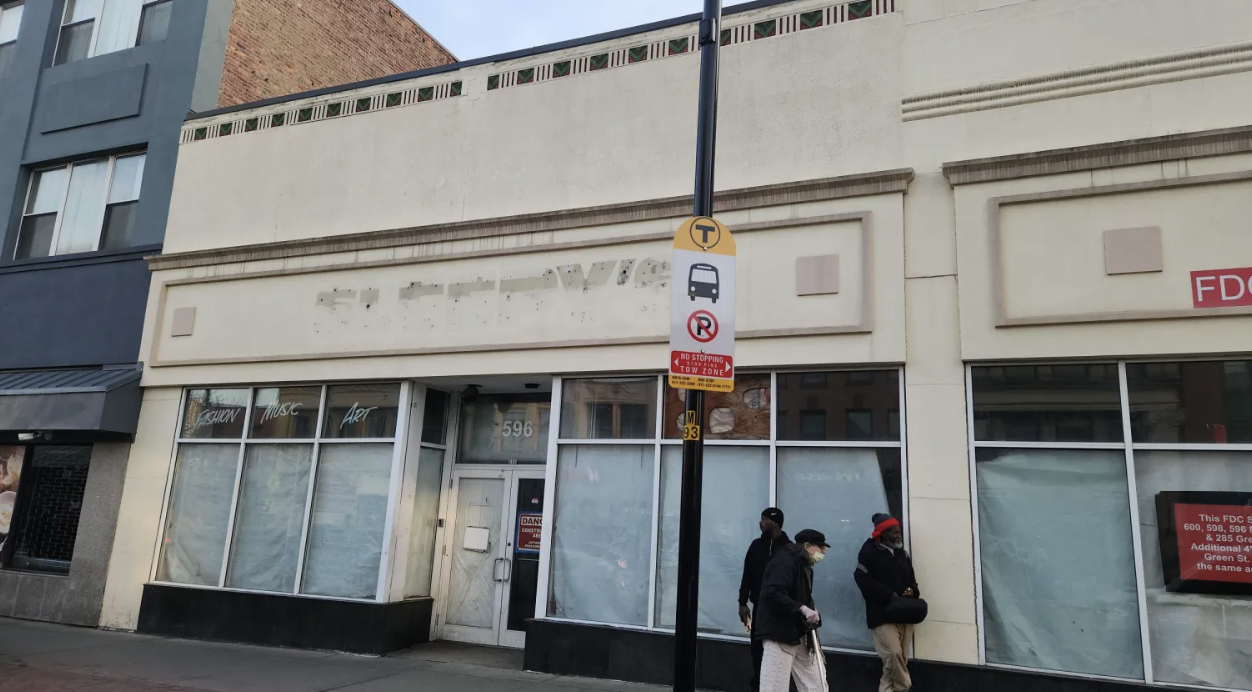
    The building at 596 Massachusetts Avenue in Central Square needs a half-million dollars in work, one reason it remains vacant. Credit: Michael F. Fitzgerald

    An effort to reduce vacant storefronts in Cambridge is showing some success,  dropping 12 percent between November 2024 and October 2025, according to Pardis Saffari, the city’s director of economic opportunity and development.

    The city’s Vacant Storefront Initiative aims to lessen the number of vacancies in the city, with the hope that making information about vacancies more accessible will lead potential tenants to reach out to fill spaces. It isn’t clear how the most recent numbers compare to previous years. Cambridge started tracking vacancies in 2019, but a city spokesperson said data collection is done manually and data from before 2024 isn’t available. 

    The city collects data on vacancies twice a year. Property owners are asked to provide an address, leasing contact, former tenant information and vacancy date for each vacant property. Those details are compiled into a publicly accessible database and interactive map. Most municipalities in Massachusetts do not collect and organize the data in this way, including Boston.

    “This was an effort of concern from both the [city] council and the public about some of the storefronts that they were seeing,” Saffari said. “You could only understand an issue by starting to collect the data.”

    The 1096 Mass. Ave. location of Rod Dee Thai in Cambridge’s Porter Square remains empty after more than five years. Credit: Marc Levy / file

    There are roughly 90 vacant storefronts across the city, and more than 10 of them have been vacant for more than five years. The longest vacancies are not condensed in any particular area, though many of them are in major commercial hubs, including Central, Harvard and Porter squares. Those numbers and the overall metrics on retail vacancies and turnovers are healthy for a city with Cambridge’s retail presence, Saffari said.

    The city is trying to further decrease those numbers. It instated a vacant storefront policy in June 2025, which requires owners of ground-floor vacancies to post leasing contact information in storefront windows to signal prospective tenants or put up “coming soon” signs and details about new tenants if the storefront is renovating in preparation for a new business.

    Harvard Square Cinema’s marquee in April 2026. Credit: Michael F. FItzgerald

    Long-term vacancies

    Perhaps the most notorious empty building in the city is the historic Harvard Square Theatre, vacant since 2012. The property, at 10 Church St. in Harvard Square, was most recently AMC Loews and was sold to billionaire Gerald Chan in 2015. Chan announced a major redesign to the building that would create retail and office spaces, as well as space for two movie theaters, according to GBH. These plans have not come to fruition. Paul Donovan, spokesperson for Mayhaw LLC — a real estate firm Chan owns — wrote in an emailed statement that “We remain fully committed to developing the site so that it is constructive for the economy of Cambridge.” It is the longest retail vacancy in Cambridge.

    Chan was called by Cambridge City Council to testify in April 2025 but did not show up at any subsequent hearings, including one in June that three owners of long-term vacant storefronts did attend — two of which are still on the list. The owners gave a variety of reasons for why their properties had been empty over an extensive period. Tan Promploy testified at the June meeting on his storefront at 1906 Massachusetts Ave. in Porter Square, once Rod Dee Thai. He cited issues with bringing the building up to code and rising construction costs, as well as an encampment of homeless people in the back parking lot.

    Thomas Cifrino, property manager for 596 Massachusetts Ave., was the only contact for any of the properties who responded to requests to be interviewed for this article. Cifrino provided insight on the eight-year vacancy in a building his family has owned for generations. The power transformer there is not strong enough to meet building standards, and the necessary upgrades would cost $500,000 and take six to eight months to install, Cifrino said. Tenants have been interested in the space, but many need a space immediately and don’t want to wait.


    Updates can mean delays

    “It’s a hard thing to do, but we’re working on it, and we’re trying to do it,” Cifrino said. “Trust me, I want to lease that space more than anybody else in the world.”

    The building at 596 Massachusetts Avenue in Central Square needs a half-million dollars in work, one reason it remains vacant. Credit: Michael F. Fitzgerald

    Safarri noted that a property might sit empty for longer periods of time if a tenant moves out but still has years on their lease. There could also be tax benefits that an owner might collect for a vacant lot, an incentive for keeping a property empty.

    “Other situations, it’s not for lack of trying, but I think some landlords have just had harder spaces, or have not made some investment to make the space appealing for a tenant,” Safarri said. “In other situations, there are smaller family trusts, and there’s maybe some things behind the scenes that the family is going through that we are just not made aware of.”

    In another attempt to aid property owners, the city applied for the state’s vacant storefront program last spring. The program provides up to $50,000 in refundable tax credits that the state distributes to businesses occupying storefronts in Cambridge that have been vacant for six months or longer. The tax credits provide incentives for tenants to start new leases and benefit landlords whose storefronts have been empty for long periods.

    “We’re using a lot of different tools in our toolkit, tracking the data, sharing the data, working with property owners around the vacant storefront policy, as well as using the state’s vacant storefront program,” Saffari said.

    The former Evergood Market lasted 67 years. Its home at 1674 Massachusetts Ave., between Harvard and Porter squares in Neighborhood 9, has been vacant since 2016. Credit: Alex Ramirez

    This story is part of a partnership between Cambridge Day and the Boston University Department of Journalism.

  • Summer jobs program for teens in Somerville now accepting applications

    A 2018 photo of beautification efforts around Jerry’s Pond. Pictured are Eric Grunebaum of The Friends of Jerry’s Pond, second from left, and teens from the Mayor’s Summer Youth Employment Program, among others.

    Applications are open for Somerville’s annual summer job program for teenagers.

    The application for the Mayor’s Summer Jobs Program is available until April 30. Students must be 14 years or older by May 4 and live in the city or attend school in Somerville to be eligible. Students graduating this summer are also welcome to apply. Most placements run for six weeks over the summer from July 6 to Aug. 14, and all pay $18.85 an hour.

    “It’s a very competitive program because there is a lot of interest in it,” Youth Services Director Caitlin Kelly said. The city receives hundreds of applications each summer. “We’re only able to place close to 200 teens each year.”

    There are more than 30 job placements this summer across over 20 city departments and Somerville Public Schools, as well as some external placements enabled by grant funding, said Kelly. Those include positions with Mystic Learning Center, VillSide Customs, Somerville Media Center and Parkour Generations.

    Office hours will be held Wednesday, April 8, from 2-4 p.m. at Somerville High School for teens wanting application guidance. There will also be an interview workshop April 29 from 2-3 p.m. at the high school. Interviews are expected to begin May 4, with onboarding in early June. Students are permitted to work up to 20 hours per week.

    The city has run the mayor’s summer jobs program for over 25 years, but previous initiatives with similar goals existed, Kelly said. It aims to provide area youth with career advancement opportunities and skill development.

    The city of Cambridge runs a similar program, the Mayor’s Summer Youth Employment Program. Its applications are open April 15 to May 8.

    This story is part of a partnership between Cambridge Day and the Boston University Department of Journalism.

  • Smokers’ rights activists still fuming after all these years

    Citizen Jonathan Brown-Leopold holding two of his preferred cigarette brands. Credit: Milena Fernsler

    Stephen Helfer never goes anywhere without some kind of tobacco on his person.

    He carries loose Norwegian shag tobacco in small bags or in a metal roll box that produces short, handmade cigarettes. On many an occasion, he has a round tin of smokeless, spitless packets of Snus to tuck in a lip or cheek. He also smokes a pipe daily, sometimes in his home, sometimes outside, depending on his moods. After over 60 years smoking, Helfer, 78, has refined his tastes.

    Helfer runs a 30-minute, twice-a-month show on Cambridge Community Television, “The Smoking Section,” where he invites guests to discuss and sometimes debate him on the merits and negative effects of smoking. He’s also the leader and co-founder of the Cambridge Citizens for Smokers’ Rights, a group with six regular members, which has been railing against the “war on tobacco,” as he calls it, for 20 years.

    Helfer has pitted himself against a widely accepted public health conclusion on tobacco and a continual flow of anti-smoking legislation and sentiment that has progressively and successfully discouraged nicotine use over several generations. He and his group, the Citizens, have campaigned tirelessly with variable success to oppose any city or state proposal that restricts smoking and tobacco products, all while smoking rates in the U.S. and the state are at all-time lows.

    Stephen Helfer, the leader of the Citizens, has advocated against nicotine laws for over 30 years. Credit: Milena Fernsler

    “If you dismantle the anti-smoking elephant, bite by bite, you will see that it is certainly very, very, very much weaker than anti-smoking activists say it is,” Helfer said. “The claims for smoking have gotten more and more shrill, and [activists are] saying things that they know cannot possibly be true.”

    Mark Gottlieb, executive director of Northeastern University’s Public Health Advocacy Institute, has been on the other side of Helfer’s efforts working in tobacco control policies. Gottlieb is an architect of many of Massachusetts’ nicotine laws, most of which have come to pass.

    “Every time we’ve had a proposal for changes in tobacco policy, Stephen has reliably come forward in opposition to such proposals armed with facts or factoids to support his position,” Gottlieb said. “But, I don’t think he is ever being disingenuous with his use of research.”

    The Citizens convene nearly every Sunday at 2 p.m. in Andala Coffee House. Down in the basement, their most active members — mostly men between ages 46 and 78 — sit around tables for the afternoon and mull over a vast array of topics that often have no relation to tobacco, nicotine or smoking. Musings are only minorly interrupted when one or two Citizens step out for a smoke break, usually taken right outside the coffee house.

    The city of Cambridge banned smoking in restaurants and bars in 2003. Helfer had been protesting nicotine laws in public town meetings across Massachusetts in the prior decade, but it was the restaurant smoking ban that galvanized him and Cambridge native Ben Hirsch to found the Cambridge Citizens for Smokers’ Rights. Hirsch now resides in New Jersey — Helfer has been the face of the group ever since.

    “I was looking for a group like this, actually,” said Jonathan Brown-Leopold, 46. Brown-Leopold, who lives in Quincy, met Helfer protesting against smoking restrictions in front of Cambridge City Hall over a decade ago. “They’re the only one in the greater Boston area.”

    The Cambridge Citizens for Smokers’ Rights meet in the basement of Andala Coffee House. Credit: Milena Fernsler

    Helfer has a trove of studies, facts and lengthy spiels he keeps in his arsenal to fight the “war on tobacco” that range from scientific studies and quotes that support his rebuttals to his own personal observations and conclusions. He compiled an 80-page booklet in 1998 typed, printed and bound like an academic thesis, titled “A Different Opinion on Smoking.” It largely consists of  newspaper clippings, curated quotes from doctors downplaying the dangers of smoking, and pictures of famous artists, authors and intellectuals who smoked, many of whom Helfer quotes often.

    “Stalin, Churchill and Roosevelt were all heavy smokers, and Hitler, Mussolini, and Franco were all non-smokers,” Helfer said at one Sunday meeting. He mentioned the fact twice, each time an hour apart. “I don’t know what exactly you can draw from that, but I think there is something interesting about that.”

    Helfer believes anti-smoking laws and opinions are the result of a “moral panic” that began in the 1960s, and that further studies conducted on smoking are products of that panic. He thinks adverse effects of smoking or secondhand smoke are “greatly, greatly, greatly exaggerated,” and that smokers are ostracized by the general public. He puts nicotine in the same category as sugar and caffeine in terms of its addictiveness and detriment to health. Taxes on nicotine products are aimed at disenfranchising the poor and mentally unwell who use nicotine at higher rates than the wealthy, he says.

    “I don’t think the answer is anywhere near simple,” Helfer said. “I think it’s much more profound and much more complex about why this social movement has been so successful.”

    Brown-Leopold, the youngest active Citizen and a staunch proponent for smoking, began smoking cigarettes in middle school when he was 12 years old as a way to cope with his mental health. It calmed his mind and allowed him to function better, he said. Brown-Leopold smokes two packs a day.

    “It’s always easy to blame smoking, but I quit smoking for about a year when I was a teenager,” he said. “My anxiety was so bad I picked it back up again, and my breathing is better while smoking because I don’t have as bad of anxiety.”

    Paul Neff, 72, and David Ajemian, 65, are both slightly less convicted, and less heavy smokers in comparison. 

    “It’s about time for a rest. Especially now that I’m over 70, I’ve got to start taking things more seriously,” said Neff, who smoked more heavily in the past and now smokes “on and off.” “I’ve got to conserve what I have, health-wise.”

    “According to Steve, there were many great athletes who smoked heavily, like biking champions,” Ajemian said. He smokes with his morning coffee and evening drink. “That made me feel a little better.”

    There is also the contingent of Citizens who do not, or rarely, smoke but believe smoking should be a personal choice, including Joanie Sullivan, 67.

    A few years ago, Sullivan lost her desire for cigarettes after nearly four decades chain-smoking them. She had a respiratory attack that put her in the hospital, and when she was discharged, the urge to smoke had died.

    “I definitely think smoking has been all the worse for me, and [Helfer] doesn’t really agree with that,” Sullivan said. She considers herself an “honorary member” of the group. “I’m not 100% in sync with him and all of his beliefs, which actually makes for wonderful discussions when we get together.”

    The Citizens’ membership has ebbed and waned through the years, but it becomes especially vocal when any town, not just Cambridge, proposes new legislation to restrict nicotine and tobacco products, Helfer said. Every decade, new anti-smoking and nicotine proposals crop up in city and state legislatures. Helfer and the Citizens are often there on the other side with arguments and talking points that have changed little over 30 years.

    Generational nicotine bans are the newest policy to make their way through city boards of health. A generational ban would allow a municipality to set a cutoff date that prevents anyone born after the date from ever purchasing tobacco even after turning 21, with the goal of creating a nicotine-free generation. These policies have been enacted in over 20 towns and communities in Massachusetts, starting with Brookline in 2020.

    PHAI executive director Mark Gottlieb is an architect of the generational nicotine ban. Gottlieb first encountered Helfer during Helfer’s early pro-smoking efforts, over 30 years ago.

    Helfer has invited Gottlieb’s boss and president of the PHAI, Richard Daynard, onto “The Smoking Section” to debate tobacco issues in the past. The tension and pushback Helfer brings to public health policy is one that Gottlieb said he welcomes.

    “Every time Stephen raises his hand at a Zoom meeting for a Board of Health, or if I’m lucky enough to to hear him in person with his recognizable baritone, he eloquently states these opinions very consistently,” Gottlieb said. “[He] is doing it as honestly as I think someone can, and I would not think to vilify him for doing so.”

    Gottlieb called the generational ban a “final frontier” in nicotine legislation. Its adoption is coming along slowly and will continue to spread, like many related policies that have come before it. And like many battles waged and lost over those policies, none of that is bound to stop Helfer and the Citizens.

    “This is what I’ve specialized in,” Helfer said. “Sometimes I wonder why I care about it so much myself.”

    This story is part of a partnership between Cambridge Day and the Boston University Department of Journalism.

  • Clover restaurant chain seeks a rescuer, may shut down

    Clover restaurant chain seeks a rescuer, may shut down

    Clover Food Labs, a Cambridge-based fast-casual vegetarian chain, may close all locations and lay off over 180 employees if it can’t find a buyer before June.

    According to a March 30 notice filed with the state, all 182 of Clover’s workers, including executives, will be laid off May 29 if a buyer is not secured before that date. Some employees will work for a limited time after the closure, states the notice, filed by Clover’s people operations director Maureen McSweeny.

    Companies with more than 50 employees are legally required to file a report with the state before a mass layoff or business closing and provide workers with 60 days’ notice.

    In response to an interview request from Cambridge Day, the company sent an unsigned statement that read: “We simply want to comply with all regulations. We are optimistic that Clover will continue to serve our locally sourced farm-to-table fast food in our company’s next chapter.”

    Julia Wrin Piper samples food in the Clover’s kitchens in 2022, when she was chief operating officer. Credit: Clover

    Clover has 11 locations across Greater Boston, with five in Cambridge. It began as a food truck run by founder Ayr Muir in 2008. Muir was succeeded as CEO in 2023 by then-chief operating officer Julia Wrin Piper. Wrin Piper was COO of Somerville’s Aeronaut Brewing Company before joining Clover.

    Neither Muir nor Wrin Piper responded to multiple emails requesting an interview.

    The company previously filed for Chapter 11 bankruptcy, stating that it could no longer pay the leases on multiple locations, The Boston Globe reported in 2023. At the time of the filing, Clover employed roughly 260 workers, according to the Globe. It exited bankruptcy less than six months later, with 13 stores and plans to expand to 60 locations.

    Restaurant employees were sent an internal message to “not share any info” with reporters, and said they could not speak with Cambridge Day, citing the message.

    “We cannot share further information at this time,” the emailed statement reads.

    Clover was part of the offerings on hand at Eastern Edge when the food hall opened in February. Credit: Tom Meek

    The chain prioritizes locally sourced ingredients and a plant-based approach to reduce its carbon footprint, according to its website. For vegetarians like Upala Kalim, 34, of Wakefield, Clover provides several options that might not otherwise be available.

    “I think it meets my needs,” she said. “It definitely caters to the kind of food I like.”

    Brian Forbis, 36, cited Veggie Galaxy in Central Square and Life Alive Organic Cafe as restaurants with large vegetarian menus. Forbis brought Kalim to Clover twice. He enjoys the rosemary fries.

    “It’s always been reliable,” said Forbis, a regular customer. The restaurant’s food truck was often parked near a job Forbis previously had in Watertown, and he would get lunch there. “It’d be hard for some other place [to] expand to the footprint that Clover’s had.”

  • Local pharmacies adapt, push back against corporate stores

    Local pharmacies adapt, push back against corporate stores

    As the pharmacy business has shifted, smaller stores have closed and corporations like CVS and Walgreens have taken over. But Robert Skenderian, third-generation owner of Skenderian Apothecary, says these chains aren’t his biggest competitor: It’s benefit management companies, also known as pharmacy benefit managers (PBMs).

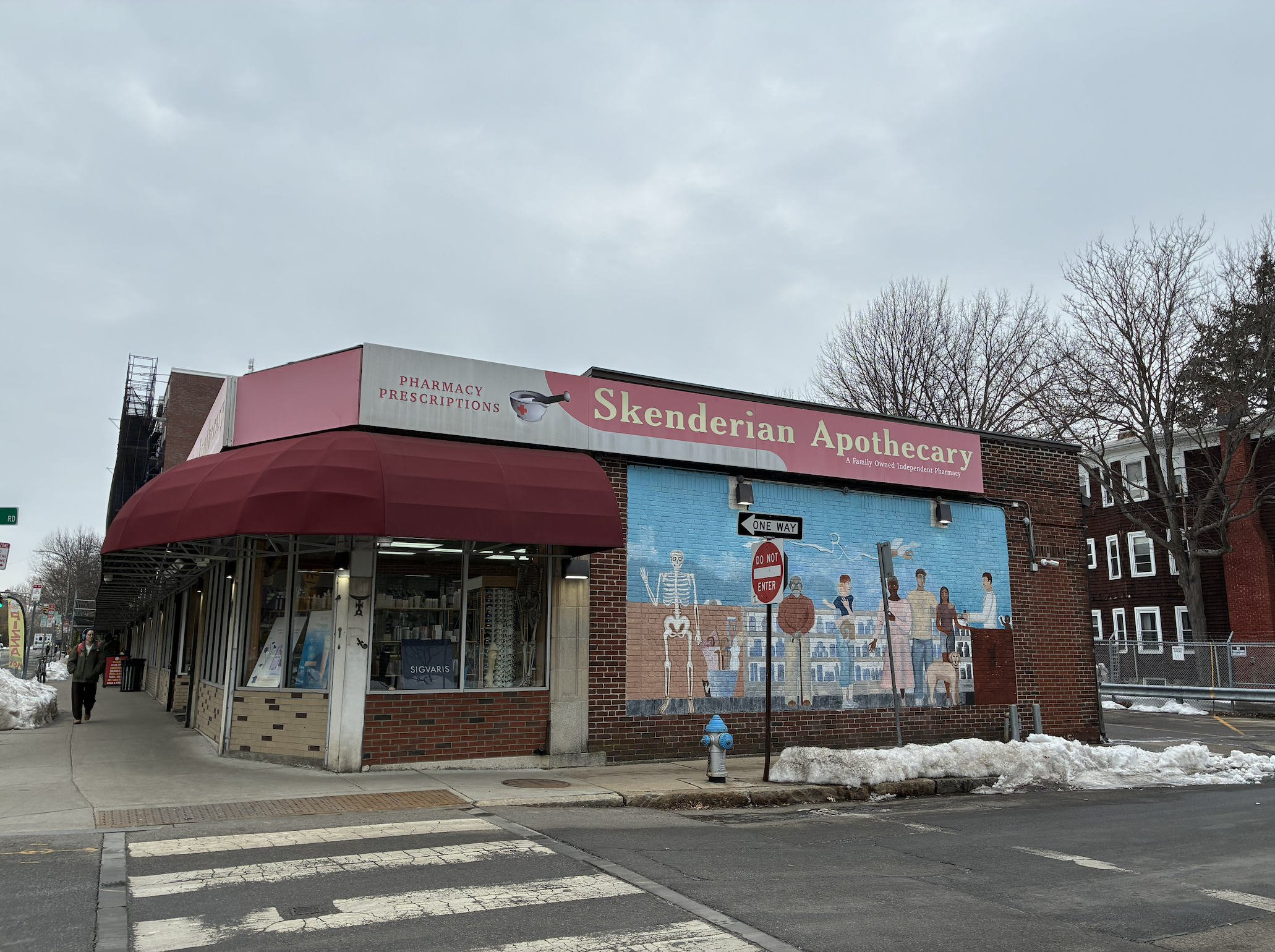
    Skenderian and his two brothers, like their father and grandfather before them, have been serving communities in Cambridge and beyond from the corner of Cambridge Street and Roberts Road. For more than 60 years they’ve filled prescriptions, provided medical supplies and given medicinal advice. But as the years pass, small, locally owned pharmacies like theirs are grappling with a system that benefits large corporations and drives traditional pharmacies to closure.

    “The absolute number of pharmacies in the country are shrinking across the board. Whether you’re a chain store, whether you’re independent, there are fewer and fewer every day because they can’t afford to stay in business,” Skenderian said. “It’s going to continue to happen because the benefit management companies don’t really care whether you can get your prescription filled or not. They only care that they get to keep all of the pie.”

    The PBMs serve as middlemen between insurers, drug companies and pharmacies. They hold major responsibilities — negotiating rebates and discounts with manufacturers, handling claims, developing lists of covered medications for different plans. PBMs also reimburse pharmacies after dispensing patient medications.

    Massachusetts has 38 licensed PBMs. Three of them manage nearly 80% of the prescription drug claims in the United States: OptumRx, a subsidiary of UnitedHealth; CVS’s Caremark; and Express Scripts, a subsidiary of Cigna. Each of those PBMs has a vast pharmacy network in specialty and mail-order pharmacies, or in retail and grocery store locations, where they funnel customers insured by their parent companies to fill their prescriptions. This cuts out locally owned and operated pharmacies.

    “[The PBMs have] really integrated themselves vertically up and down,” said Todd Brown, executive director of the Massachusetts Independent Pharmacists Association. “They have an incentive to keep the business within their own system.”

    Small pharmacies have attempted to negotiate with PBMs in the past, but they have no leverage against the dominance of the top three, Brown said.

    “For me to be successful, to be able to stay in business, to be able to take care of people, in some ways it’s against everything I was taught growing up,” Skenderian said. “People come with a prescription. You want to fill it. You want to help them out. You want to make sure they get the medicine. You want to make a little money, and then everybody’s happy. And you can’t do that anymore.”

    Every time he fills a prescription, Skenderian said, the PBM for a customer’s insurance plan pays him back for less than the medication is worth, sometimes as little as half the cost.

    Skenderian said he has to be “defensive” with how he runs Skenderian Apothecary. He no longer takes many insurance plans he did in the past that now pay him at a major loss, and he fills far fewer prescriptions than he used to.

    “[PBM’s will] pay a different amount to the pharmacy for the exact same claim,” Brown said. “Pharmacies have been forced to limit their participation, limit taking certain insurers so that they cut out the insurers that pay them the least amount.”

    “Claims that CVS Caremark favors large network pharmacies over independent pharmacies are simply not accurate,” CVS Caremark spokesperson Shelly Bendit wrote in an emailed statement. “In Massachusetts, CVS Caremark reimburses independent pharmacies at higher rates than CVS Pharmacy for brand, generic, and specialty medications.”

    Skenderian conceded that CVS Caremark could reimburse independent pharmacies at higher rates than CVS locations. However, the lack of transparency about PBMs’ negotiations with drug manufacturers could still make Caremark’s reimbursements unfair. For instance, a PBM can charge an insurance company more than it pays a pharmacy, a tactic called “spread pricing.”

    Such pricing generated estimated income of $1.4 billion from 2017-21 for the three largest PBMs, according to the Federal Trade Commission. Much of that income came from dispensing commercial prescriptions through unaffiliated pharmacies like Skenderian Apothecary. CVS Health is the parent company of insurer Aetna, Caremark and its retail pharmacies.

    “It’s not a very fair system, but it’s the system we work under,” Skenderian said. “They can manipulate things any way they want. It’s impossible to get to the bottom of this, of what is truthful or not, because they will not give that information.”

    Pharmacy deserts

    In the past several years, the number of all pharmacy locations have shrunk around Massachusetts and nationwide. The state has lost nearly 200 pharmacies since 2019, a 17% decline, according to data published in October 2025 from the Massachusetts Health Policy Commission. Over 1 million Massachusetts residents live in pharmacy deserts or “near-deserts” by the MHPC’s standards.

    Within the study, 2024-25 saw the smallest number of openings and largest number of closings of any time period. A Walgreens store in Cambridge’s Central Square closed in March 2025 because it was an unprofitable location, a common story for many CVS and Walgreens stores that have closed in recent years.

    Skenderian Apothecary and Inman Square Pharmacy are the last independent, locally owned pharmacies in Cambridge. The most recent independent pharmacy to close was Ciampa Apothecary, according to the Massachusetts Department of Public Health. Ciampa moved in 2015 to Peabody and operates as North Shore Home Medical Supply and Home Care Pharmacy.

    “Pharmacies have closed mainly because of the pharmacy benefit managers,” Brown said. “They underpay the pharmacies, overcharge the health plans and keep the difference.”

    “Pharmacies can go out of business for many reasons. PBMs are working to help rural, community pharmacies by paying them more than retail chain pharmacies,” said Greg Lopes, spokesperson for the Pharmaceutical Care Management Association, in an emailed statement.

    Brown suggested there might be other ways for pharmacies to recover the loss on filling prescriptions by offering vaccinations or services and products not usually available at a typical chain store. Skenderian can create compound medications to meet more patient-specific needs than a typical commercial prescription. Other pharmacies may offer specialized medical equipment that would be difficult to find elsewhere.

    Day to day, however, many customers choose a local pharmacy for a more personalized experience and higher standards of service.

    “They take care of you,” said Patricia Mazza, a longtime Skenderian customer. “They also give you good advice on how to use the drug, which you don’t get everywhere, right?”

    In a more long-term effort, Brown and the independent pharmacists’ association are advocating for a bill in the state legislature that would improve conditions for pharmacies across the board. The bill – H.4346, “An Act to Ensure Access to Prescription Medications” – would allow pharmacies to contest PBMs on the cost of drugs and require PBMs to provide pharmacies with detailed reasonings for those costs, match reimbursements among pharmacies regardless of affiliation and reimburse for medications at a rate matching the pharmacist’s expenses. The Joint Committee on Health Care Financing is expected to report on the bill by March 18.

    The federal government has also acted recently on PBM reform. Congress passed bipartisan legislation Feb. 3 that sets standards for how PBMs interact with Medicare plans. It would permit any pharmacy to join an insurance company’s network after meeting standard requirements, a specific benefit to local stores. It also requires a PBM to deliver detailed data to insurers and pharmacies on its prescription drug spending and enables pharmacies to report potential contract violations by PBMs. The plans are expected to go into effect by Jan. 1, 2028.

    “I think it will have a positive effect. The problem is, is it doesn’t really kick in till 2028,” Brown said. “Pharmacies are really struggling right now. Some of them aren’t going to be able to hold on till 2028.”

    Mazza, a real estate broker, gets her prescriptions filled at Skenderian regularly. Through the changes in the two decades she has been a customer, Mazza went out of her way to switch to an insurance plan the pharmacy will accept over getting her medications transferred to a chain.

    “[Skenderian takes] way better care of you than they do at CVS,” Mazza said.

    This story is part of a partnership between Cambridge Day and the Boston University Department of Journalism.

  • Cambridge schools fall short in fencing championships but happy with season success

    Bruno Muñoz-Oropeza
    Épée bout between a CRLS fencer and another fencer.

    Buckingham Browne & Nichols men’s and women’s fencing teams took home silver medals at the state championship tournament Saturday while Cambridge Rindge and Latin School teams came in fifth and sixth.

    “I think [the teams are] very happy with the result,” BB&N fencing head coach Matthew Zich said. “The whole team ended up contributing big matches and big wins throughout the day.”

    CRLS hosted the tournament, held at War Memorial Recreation Center. The CRLS men’s team placed fifth, defeating Northampton High School 16-11, and the women’s team came in sixth place with a 14-13 loss to the Weston High School team.

    Out of 16 public and private schools in Massachusetts in the fencing league, the top eight schools with the best records during the season faced off in separate men’s and women’s seeded brackets. Teams competed against one another in rounds of 27 bouts across three weapons: foil, épée and sabre. After three rounds of fencing, Concord-Carlisle men’s and Boston Latin School women’s teams took the state championship titles.

    The CRLS teams lost their initial rounds against the Weston men and Concord-Carlisle women, but the bigger accomplishment was the improvement the entire squad saw over the season, head coach Gregory Berger said.

    “We graduated a lot of very experienced fencers last year, and this is a relatively new team,” Berger said. “Having them go from the beginning of September to now, we qualify for a state championship, to me, it’s a major accomplishment, regardless of what they are going to place.”

    The championship caps off the end of the competitive season and the end of several high school fencing careers. It was the last tournament for CRLS’s three captains, one for each weapon.

    Bruno Muñoz-Oropeza. CRLS fencers with assistant coach Angélica Brisk.

    “It’s pretty crazy this is my last competition just because I’ve been doing it for so long,” sabre captain and senior Lee Van Voorhis said. “Fencing has been a big part of my life for a long time, and I really do think that I’ve gained a lot of friends from it, a community, and I’ve really liked learning how to do it.”

    Van Voorhis won three of the four bouts they fenced for the women’s team. Épée captain and junior Gareth Flandro defeated a nationally seeded fencer during a quarter-final bout and both he and foil captain Finn Graham secured victories in the men’s bid for fifth place.

    Graham, a senior and foil captain for three years, has played multiple sports, but found community in fencing he didn’t find in other athletics.

    “It feels like, at least at our level, a pretty inclusive sport,” Graham said. “We have people with different backgrounds and all different skill levels and experience levels, and we all practice together.”

    The state championship tournament was organized by CRLS fencing assistant coach Angélica Brisk and her husband, George Scott. Brisk and Scott are also founders of the high school fencing team, established in 2014.

  • Cambridge business owners hold mixed views on ‘slow’ snow removal

    By Karyna Cheung and Sangmin Song

    Karyna Cheung. A snow-covered loading zone on Rogers Street outside Toscanini’s Ice Cream in Kendall Square, an unplowed curbside area used for deliveries.

    Some Cambridge business owners have expressed frustration with the city’s snow removal efforts, with loading zones and customer parking spaces taking weeks to clear.

    Massachusetts got its biggest snowstorm in years Jan. 25, dropping 21 inches of snow on parts of Cambridge. Public schools and businesses in Cambridge were closed for days.
    Two weeks after the storm, some Cambridge businesses owners have yet to see the snow removed from their street-side loading zones and parking spaces.

    Several snow piles surround the Toscanini’s ice cream shop in Kendall Square, and the loading zone on Rogers Street is not plowed. Without cleared loading zones, drivers are taking risks by parking in the street outside the store and rushing to deliver and pick up shipments.

    “We have to load and unload ingredients and finished products,” said Toscanini’s owner Gus Rancatore. “Without loading zones, it becomes incredibly difficult.”

    Many metered parking spaces in the area are crowded with snow. Some of Rancatore’s customers said they were unsatisfied with the city’s snow removal efforts.

    “There’s municipal expectations that you have [regarding snow removals], especially in metered parking spots,” said Cambridge resident Jill Wohl.

    Jeremy Blaustein, general manager of gourmet grocery store Formaggio Kitchen, said its loading zone was almost entirely covered in snow and he made multiple requests to the city to get it cleared.

    “We did ask the city in a couple of different ways, and someone asked on behalf of both of our Cambridge stores, and I also put the message to my city contact,” Blaustein said. “People just kind of dug out when they dug out the other areas. A lot of them were just snowbanks for at least close to a week.”

    Blaustein said some customers dug out spaces for parking, which he considered unsafe.

    “You’re taking your vehicle and your life into your own hands,” Blaustein said. “You see people doing [that] all over the city, because I don’t know what else you’re going to do.”

    Jennifer Mathews, deputy commissioner of Cambridge Department of Public Works, wrote in an email that DPW’s first focus is clearing up the streets and transportation routes.

    “DPW prioritizes safe travel lanes and pedestrian access during snow operations,” Mathews wrote. “Loading zones are distinct from these travel lanes and our snow operations do not specifically involve clearing loading zones (or parking spaces).”

    Mathews wrote some loading zones can be cleared during DPW’s snow removal operations, though they are being cleared as part of the overall pedestrian and bus stop operations. “When we get 6 inches of snow or more, DPW will do a snow hauling operation on main thoroughfares, which would typically clear the loading zones on those main access streets as part of the overall operation,” Mathews wrote. “But other loading zones and commercial delivery areas have historically been the business’ responsibility to clear, and we haven’t received many complaints or requests on them so far this season.”

    Matthews added that the city has not  “historically done the loading zones regardless of the street-side or non street-side distinction.”

    Karyna Cheung. Snow-covered loading and parking zones line both sides of the block near the intersection of Pacific and Sidney streets.

    Rancatore said the city has been quicker in the past with snow removal after storms. In addition to loading zones and parking spaces, snow plowed from the streets has piled on street corners pedestrians use, which Harvard Square Business Association Executive Director Denise Jillson has received complaints about from several business owners.

    “The city’s responsibility, in our mind, should be in their business districts, where there’s lots of foot traffic and lots of small businesses in particular depending on that foot traffic,” Jillson said.

    Josh Huggard, owner of Mr. Bartley’s Burger Cottage at Harvard Square, said he didn’t face any problems after the snow. Harvard University owns the restaurant building and is required to remove snow from any property it owns.

    “Harvard is good about getting their snow people out there, as well as the city of Cambridge in tandem,” Huggard said. “I think they did a good job what they could do in a small, compact area like Harvard Square.”

    Huggard said people should acknowledge the fact that the city could have a hard time figuring out where to put the snow.

    “People gotta realize that this is the worst winter we’ve had in a long time, and people are working hard,” he said. “I’m not an advocate for city workers, but I’m just saying sometimes people need to put themselves in their shoes.”

    This story is part of a partnership between Cambridge Day and the Boston University Department of Journalism.

    This story was updated to correct Denise Jillson’s title.