Author: Madyline Swearing

  • In 7-0 vote, School Committee passes $1.73 billion budget

    The Boston School Committee on Wednesday unanimously passed a $1.73 billion budget for next school year, a more than 4.5 percent increase over this year’s spending plan, but ongoing financial pressures and declining enrollment will put between 300 and 400 jobs at risk. 

    Advocates are calling for the city to invest an additional 1 percent of its operating budget, about $48 million, to avert cuts to student services. The School Committee holds exclusive authority to revise line items in the budget. The City Council and Mayor may approve, reject or reduce the total recommended budget, but do not have the authority to revise individual items or increase the budget. 

    During a February budget presentation, Superintendent Mary Skipper said certain reductions would be necessary as costs continue to outpace revenues. She said fewer teachers would be needed because of an enrollment decline of about 3,000 students over the last two years. Other top financial pressures includee labor contracts, transportation expenses and rising health insurance costs. 

    Increased expenses have contributed to an estimated $53 million budget deficit this year, which led to a hiring freeze announced in January.

    “The budget that the city has proposed for the schools is not adequate to meet the needs of all of our members, particularly students with disabilities and multilingual learners,” said Boston Teachers Union President Erik Berg. “The restoration of any necessary services for our students is a move in the right direction. We’re seeking additional funding added into the BPS budget so they can restore some of the services that are currently [cut].”

    Those proposed cuts would primarily impact teaching and aide positions, as well as administrative roles and other support staff. Special education and bilingual faculty are to be especially affected.

    Mary Stenson, a school nurse at the Melvin H. King South End Academy Elementary School — a specialized school for students with increased social and emotional needs — said she has seen the effects of reductions first-hand, adding parents who have students with similar needs should find these cuts “alarming.” 

    “People see our students as ‘bad kids,’ but they just need their emotional needs met. Bigger schools can’t meet their needs,” Stenson said. “Listen to educators. Take it from the people in the buildings.” 

    Formerly known as the McKinley schools, the Melvin H. King Academy offers speech therapy, physical therapy and dental and vision care, among other services. Julie Cass, a paraprofessional, said it’s not uncommon to need multiple staff members to address the behavioral needs of one student. Reducing special education staff in favor of inclusion models could create unsafe environments for other students and staff, she said.

    “We do intense and effective work. Some kids can coast by, our kids can’t coast,” Cass said. “Many students come in with low self-esteem. They get to find out how smart they are.”

    Sumaya Sheike, a fifth-year educator at Dr. William H. Henderson Inclusion School in Dorchester, said cuts will “hurt” her students and may make the work of remaining staff more difficult.

    “There are a lot of steps to go through before eliminating student-facing roles,” Sheike said. “You can’t talk about the successes of BPS without the faults.”

    For Simel Rodriguez, who has a fifth grader at Blackstone Elementary in the South End with both behavioral and multilingual needs, cuts to special education services could mean losing communication with her daughter. 

    Rodriguez’s daughter has an IEP — an Individualized Education Program — and benefits from speech therapy and additional support in math and reading. 

    “All students, regardless of diverse needs, need this staff,” said Rodriguez, translated from Spanish. “By cutting these things, you limit all learners.”

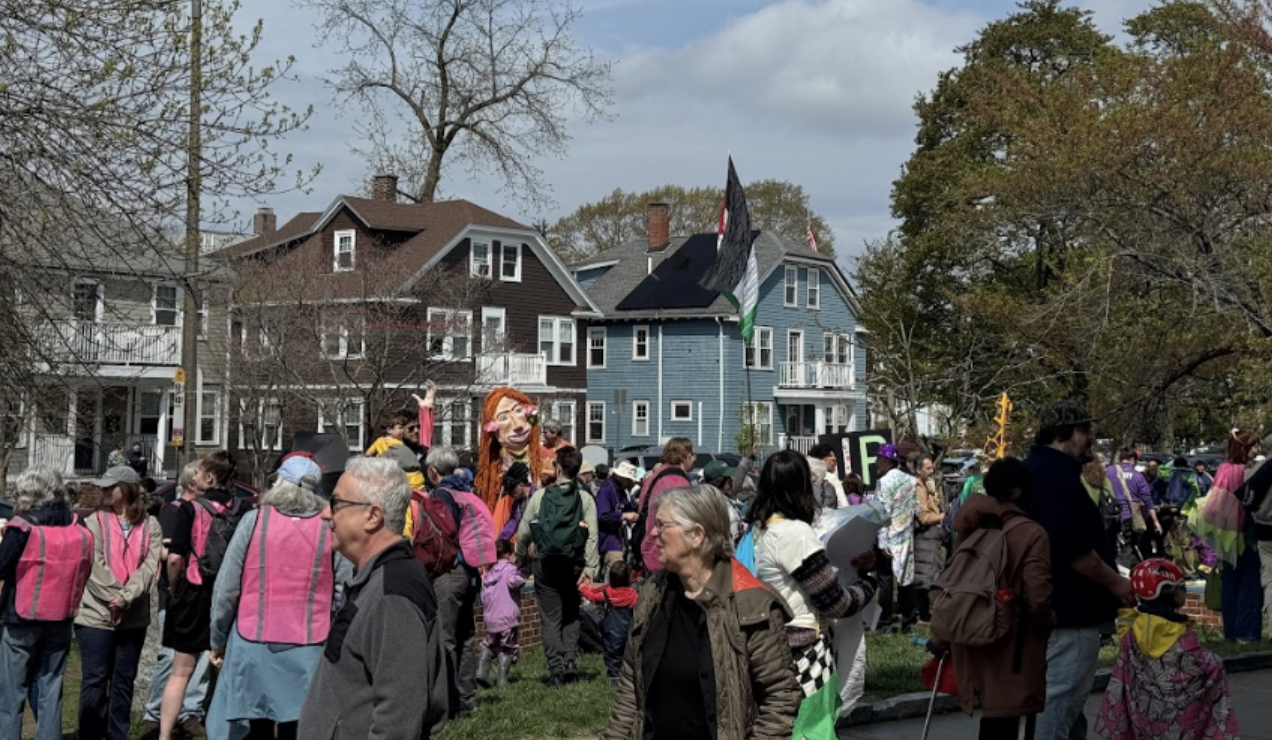
    Rodriguez was one of dozens of parents, union members and advocates who rallied outside City Hall before the City Council budget hearing Tuesday, to call on the Council and Mayor Michelle Wu to prevent service cuts. In an overflowing chamber, Boston Public Schools students presented legislators with letters of intent tied to flowers and many more gave oral testimony.

    Ahead of the 7-0 vote on Wednesday, School Committee members discussed the allocation of transitional funds for schools that will close, improvements for future budget seasons and the role of public comment in amending the budget.  

    “I’m sure there are things we are doing in our schools because we’ve always done them, that may or may not give us the outcomes that we’re looking for,” said School Committee Chair Jeri Robinson, calling for an audit of the BPS central office and at the school level. “It’s time to do some self-reflection. Student outcomes don’t change until adult behaviors do.”

    The budget now goes to the City Council and Wu for final approval.

  • South Boston St. Patrick’s Day Breakfast to include international officials, local performers

    The St. Patrick’s Day Breakfast, where elected officials, military leaders and faith figureheads recognize local performers and trade light-hearted jabs, is set for Sunday, March 15 at 9 a.m…

    Before South Boston’s streets are crowded with intricately decorated floats and equally adorned spectators celebrating the annual St. Patrick’s Day and Evacuation Day parade, is another commemorated tradition — the St. Patrick’s Day Breakfast, where elected officials, military leaders and faith figureheads recognize local performers and trade light-hearted jabs.

    State Sen. Nick Collins of South Boston will host the breakfast, which is scheduled for 9 a.m. on Sunday, March 15, at the Ironworkers Union Hall in South Boston. 

    The sitting senator who represents South Boston traditionally organizes and hosts the event.

    The breakfast will be televised on NECN, NESN and BNN. It will also be on radio: WROL 950 AM and 100.3 FM.

    Aligning with the 250th anniversary of the United States, this year’s breakfast guests include Helen McEntee, the Irish minister of Defense, Foreign Affairs and Trade, Boston Archbishop Richard Henning of the Catholic Archdiocese of Boston, and leaders of the Irish Defence Forces, the Massachusetts National Guard, the USS Barnum and the USS Massachusetts. 

    “For the 250th, we’re pulling out all the stops, and I’m honored to host this year’s St. Patrick’s Day Breakfast as we mark an important milestone for our community, our commonwealth, and our country,” Collins said in a statement. 

    There will be performances from the Boston Gay Men’s Chorus, the Woods School of Irish Dance from South Boston, Curragh’s Fancy, the Tryder Sisters and The Irish Tenors, according to a Collins spokesperson.

    The parade, a separate event, is set to begin at 11:30 a.m., an hour-and-a-half earlier than previous years, which, according to Collins, is to help ensure a family-friendly environment and curb rowdy behavior such as overcrowding, underage drinking and public urination. 

    Collins and South Boston officials, including Boston City Councillor Ed Flynn, U.S. Rep. Stephen Lynch and state Rep. David Biele, in a letter to the Massachusetts Association of School Superintendents and the Associated Independent Colleges and Universities of Massachusetts, have requested that local universities and school districts remind students of safety protocols and expected behavior.

    “We want to remind visitors to South Boston that there will be zero tolerance for the out-of-control behavior that residents have endured in past years,” the letter reads. “Please show courtesy and respect for residents, veterans and military families, our dedicated first responders, and our nation’s history. Follow the golden rule—if you would not do it back home, do not do it here.”

    The letter details public safety measures outlined by a parade Task Force, such as an earlier start time, law enforcement stationing in high-risk areas, enforcement of roof-deck capacity limits and a crackdown on underage alcohol purchases. 

    “Our local businesses play a big role in what makes this event special,” Collins said in a statement about the breakfast. “Their continued partnership reflects the strong sense of community that defines South Boston and helps make the breakfast such a success each year.”

  • Legislators petition to name Dorchester Courthouse after the late Juvenile Court Judge Leslie E. Harris

    A new bill in the Legislature proposes to rename the Dorchester Courthouse in Codman Square for the late Judge Leslie E. Harris as tribute to the work and legacy of the lifelong educator who spent his early years as a probation officer and public defender before sitting on the bench in the Suffolk County Juvenile Court for 20 years until his retirement in 2014. 

    “If you’re from Dorchester or Roxbury, you know who Judge Harris is,” said state Rep. Chris Worrell, one of the bill’s House sponsors. “One of the only judges that you could see in community. You don’t see judges like how you saw Judge Harris at the supermarket and different kinds of events.”

    When Worrell attended Judge Harris’s wake last October, he said he saw mourners from all walks of life, from justices and elected officials to formerly incarcerated individuals, community leaders, and students. That gathering, Worrell said, reflected the life Judge Harris had lived.  

    “To rename the Dorchester District Court after Judge Leslie Harris, it was a no-brainer,” he said. “From the first day we filed the bill, hundreds of people reached out. Everyone’s excited about seeing this done.”   

    For the Harris family, the proposed designation marks a legacy of service and support and serves as a reminder that the man they called “dad” was deeply appreciated. 

    “I wish he were here to see it,” said his son Brian. “He was just dad to me. I have an opportunity to keep his legacy going, and that’s kind of our intentions.” 

    He noted that while Judge Harris was deeply involved in his community and was the kind of person who would go out of his way to help someone, it never took away from his role as a father.  

    “A lot of the people he worked with are no longer children. But some of them have children now,” Brian said. “I hope that in that legacy, their children understand that this was someone in the community who did a lot for you and made a big impact.”

    Should the bill pass, the courthouse would be the third in the state to be named after a Black legal professional, the others being the Roderick L. Ireland Courthouse in Springfield and the Edward W. Brooke Courthouse in Boston.

    “The Massachusetts Black Lawyers Association is considering what we can do as an organization to contribute to supporting that goal,” said Theresa Wilson, president-elect of the association, which is dedicated to fostering inclusivity and equity within the legal field.

    “I remember sitting in meetings with Judge Harris where he was frustrated at the lack of Black men in the juvenile court,” Wilson said. “Juvenile court is often full of little Black boys coming before judges who are making decisions about their lives.”

    As of 2021, nearly 88 percent of lawyers in Massachusetts identified as white, according to census data from the National Opinion Research Center at the University of Chicago, while young people of color made up around 60 percent of juvenile arraignments, 80 percent of pretrial detentions, and 84 percent of commitments to the Department of Youth Services, according to the Massachusetts Coalition for Juvenile Justice Reform.

    Wilson said it is essential for young people to be able to see and recognize themselves in a court system that is often “one monolithic appearance,” something Judge Harris advocated for through his work with the MBLA.

    He was the co-chair of the MBLA Judicial Academy, where he worked with his community network and co-chair Joseph Feaster to create an advisory team that supports those interested in becoming members of the judiciary.

    “We just had our second graduation for our Judicial Academy [Feb.12] for Black History Month, and we have decided to rename the Judicial Academy in honor of Judge Harris,” Wilson said. “It’s now called the MBLA Honorable Leslie E. Harris Judicial Academy.”

    In the legal profession, having a mix of people from different perspectives only makes the work done stronger, said Rodline Louijeune, president of the Boston College Law School Black Alumni Network.

    “If you asked Judge Harris if he thought he would have been a judge when he was in South Side, Chicago, he probably would have said ‘Absolutely not,’” Louijeune said. “I don’t think this time last year I would have thought that Judge Harris would only be a memory now.”

    Leslie E. Harris was a founding member of BC Law’s Black Alumni Network in 1985, when he and a few other students were looking for a way to stay in touch after graduation. BC BAN celebrated its 40th anniversary last year and works to keep alumni engaged and connected while supporting current students on their journeys to become attorneys, which, Louijeune said, is part of Harris’s legacy. 

    “As more of our icons become legacies … it’s important to remember that there’s foundational work that’s been done,” she said. “Having this physical representation of Judge Harris would be, and will be, important and foundational in ensuring that his memory lives on.”

    The House and Senate are currently resolving differences in the bill.

    “My father loved Roxbury, he loved Dorchester, he loved giving people an opportunity, and he loved connecting with people,” Brian Harris said. “We don’t want his legacy to fade away, so that’s why this is important. We hope that everybody who has been moved or motivated by him will share his legacy moving forward.”

  • Lawmakers on verge of passing new literacy standards legislation

    Late last month the Massachusetts Senate unanimously passed The Right to Read bill that the House had approved without objection last fall, moving the Legislature a big step closer to the creation of a new statewide standards for literacy education grounded in “evidence-based” curricula, including professional development for educators and supplemental funding for public schools. The final version of the bill is now in progress. 

    These actions follow Gov. Maura Healey’s awarding of $3.3 million in Partnership for Reading Success – Massachusetts literacy grants to 25 school districts last August, as part of the administration’s Literacy Launch initiative, which supports reading skills in students from kindergarten through third grade.

    While Massachusetts ranked first in 2025 in the National Assessment of Education Progress — known as the Nation’s Report Card — nearly one-third of K-3 students in the state fall below benchmark levels, according to the Department of Elementary and Secondary Education. (DESE). 

    “What really drove this bill forward was the data showing where reading levels stand five years after the pandemic,” said state Sen. Nick Collins of South Boston, a bill sponsor, in a statement to The Reporter. “Too many students are still falling behind in the early grades, and we know that if a child struggles to read early on, it affects everything that comes after.”

    The bill would ensure that students from kindergarten to third grade will learn to read using phonics, phonemic awareness, fluency, vocabulary, and comprehension practices. Schools would have three DESE-approved options to implement curriculum, including a free comprehensive curriculum provided by the department, a list of curriculum options that meet evidence-based criteria, or a waiver authorizing another curriculum that meets the same standards but has not been reviewed or approved by DESE.     

    The legislation would also create an Early Literacy Fund with $25 million in “Fair Share” funding to help support districts with implementation and educators’ professional development. Additional resources are to be made available by DESE. 

    Educators for Excellence —a teacher-led organization advocating for increased involvement in education legislation — held a panel discussion last Wednesday (Feb. 18), where educators from schools across the state discussed the current challenges facing their students and the importance of the Right to Read bill. 

    Nearly 83 percent of educators in the state believe all teachers should use high-quality, evidence-based instructional material, according to a 2025 survey by the organization. Others say evidence-based curriculum isn’t one-size-fits-all, and limiting the teaching tools educators can use may result in students with unfulfilled needs. 

    Along with an updated curriculum, the bill would implement twice-yearly assessments to measure reading progress and screen students for dyslexia. If it appears that a student has fallen behind, schools will be required to contact a parent or guardian within 30 days.

    “This legislation is about making sure every child gets strong, research-backed reading instruction, no matter their ZIP code,” Collins wrote. “It has broad support from groups like MassPotential, The Reading League Massachusetts, EdTrust, and Decoding Dyslexia, all of whom have pushed for more consistency in how reading is taught across the commonwealth.”

  • Boston may have the nation’s tastiest tap water. Here’s why

    During its annual conference in October, The New England section of the American Water Works Association acclaimed Boston’s tap water as the best tasting in all of New England.

    The verdict came after a panel of judges blind-ranked water samples from New England public utility members on a scale of one to five based on clarity, taste, and compliance with federal rules and regulations, said Hillari Wennerstrom, executive director of the association’s New England section. 

    The nonprofit’s roster encompasses more than 4,300 members who supply about 80 percent of North America’s drinking water. 

    Where does Boston’s water come from?

    Most of the city’s tap water is sourced from the Quabbin and Wachusett reservoirs in western and central Massachusetts that are managed by the Massachusetts Water Resources Authority and patrolled by the Department of Conservation and Recreation.

    Rain and snow flow through a constantly expanding network of hundreds of thousands of acres of protected land around the reservoirs, which eventually stream and fill the reservoirs.

    Boston’s winter weather allows for a stockpile of snow and ice to build, which slowly melts and helps regenerate a depleted water system, said MWRA Executive Director Fred Laskey.

    “If it stopped raining right now, it would take almost six years for the reservoir to drain out,” Laskey said. “That’s a sharp contrast to some of our peers around the country, who, in any kind of warm weather, drop down into a watch zone.” 

    How is the water treated?

    Water from the Quabbin and the Wachusett is transported through aqueducts and tunnels, where it is tested and treated with ozone, chlorine, ultraviolet light, and fluoride, according to federal regulations, and then stored in covered tanks and transported to distribution mains and smaller community pipes, Laskey said.

    Ozone disinfects the water and kills bacteria, improving clarity and taste. UV light renders any pathogens non-infectious. A chlorine and ammonia compound serves as a mild, long-lasting disinfectant. Fluoride is added for dental health. Water is tested throughout the distribution process for lead and contamination. 

    How does the water get to Boston clients?

    The MWRA’s largest partner, the Boston Water and Sewer Commission, handles and distributes water from the reservoirs as soon as it hits Boston’s border, said spokesperson Stephen Mulloney. 

    The BWSC operates 1,100 miles of water pipe and 1,100 miles of sewer pipe, serving around 87,000 accounts and more than a million people throughout the city, Mulloney said. Thousands of miles of storm drains handle rain and runoff.

    The commission maintains pipes, addresses main breaks, and resolves quality issues – such as cloudy water from sediment– among other things, like general customer service. 

    “There are pipes under Boston that date back to the mid-1800s,” Mulloney said. “We’re very attentive to that…and since 1977 we have replaced hundreds of miles of water pipe.

    What is the “Best Taste” award?

    The New England “Best Taste” award is a regional precursor to the American Water Works Association’s annual “Best of the Best” taste and “People’s Choice” awards, which involve public water utilities from the United States, Canada, and Puerto Rico. 

    Mulloney said the sample used in the NEAWWA taste test was taken from the home of one of the Boston Water and Sewer Commission’s engineers, which, considering its success, may be used again during the national conference in Washington, D.C., next June.

    The city won its first national “Best of the Best” taste test award in 2014, and has since won more than 20 regional and national awards for taste, customer satisfaction, and engineering excellence.

    “People can rest assured that the water that comes out of the tap is

     of the finest quality,” Mulloney said. “We feel that any tap in Boston would match that taste test champion.”

    What determines the tastiest water?

    It’s difficult to determine what exactly makes one water source seem to taste better than another. Laskey said that pure reservoirs and a combination of ozone and ultraviolet light make for a good taste. Mulloney agreed that a protected source and less intensive industrial treatment make Boston’s water the best.

    “There’s a lot that goes into producing quality drinking water,” Wennerstrom said. “It’s not just a matter of pumping water out of the ground. For all intents and purposes, it’s kind of bragging rights.” 

    This story is part of a partnership between the Dorchester Reporter and the Boston University Department of Journalism.

  • Dr. Kim Parker’s workshops empower young readers at Just-bookish

    Dorchester’s only bookstore, justBook-ish, celebrated its first anniversary on Sat., Nov. 22, after 12 months of offering educational programming, author talks, and other events for the community.

    Minutes from the Fields Corner MBTA station, the bookstore cafe was created to serve as a literary “gathering space” for the neighborhood. While justBook-ish operates as a for-profit retailer, it is owned by the nonprofit Words as Worlds, which connects community members with local and national artists and writers through programming such as open mics, story hours, and author talks.

    Dr. Kim Parker, who serves as board chair for Words as Worlds, hosts monthly literacy workshops that are aimed at K-12 children and their caregivers and modeled after her book, “Literacy Is Liberation: Working Toward Justice Through Culturally Relevant Teaching.”

    Parker has been an educator for more than 20 years, with teaching positions at Codman Academy, New Mission High School, and Cambridge Rindge and Latin School. She serves as the director of Harvard’s Crimson Summer Academy, a three-year college access program for public high school students.  

    The Reporter spoke with her about justBook-ish and her upcoming literacy events at the store. The following has been edited for length and clarity.

    Q. With justBook-ish the only bookstore in Dorchester, what would you say it means for the community and its residents to have this space?

    A. I think that we completely undervalue particular communities and their reading experiences and rights to literacy. The fact that it’s taken so long is interesting and unacceptable. The work now is to keep it here. Your beliefs are on display when you have an actual bookstore, and you believe that people have a right to practice all of their literacies in this space. There’s never been a better time to be reading.

    Q. What is the “Literacy Is Liberation” workshop series?

    A. “Literacy Is Liberation” is a four-part series of literacy workshops intended for children in grades K-12 and their caregivers. Each one has a different focus, but the goal is that they’re action-oriented. They give attendees an overview of the [literacy] landscape through culturally relevant and sensitive research, and then what they can do about it. They usually start with some storytelling. We might have some time to practice, and then folks leave with resources, so they can go out and do this work with their own children.

    The first one was “Is My Child Reading on Grade Level?” A lot of families think their children are reading at grade level, but we can’t wait on Boston to teach kids to read, because historically, it hasn’t. The other workshop was about picture books. 

    My collaborator, Nicholl Montgomery, and I seek to be in community with folks to help them ask the hard questions, advocate for their children, insist that their children be reading at grade level, and then be part of a community. 

    Q. How does your identity and your history as a researcher influence how you curate these events?

    A. We are researchers, we are scholar practitioners, and we have our own children who we are deeply concerned about. Nicholl and I have been teaching for years, and we’ve had a lot of success with particular populations that people want to disparage: boys, Black boys, Brown boys, kids who might have [Individualized Education Programs], all the kids who people say don’t have a right to have strong reading lives. It’s always been personal for me. We’re invested in making sure the kids have the literacy lives they deserve. 

    Q. Why are these workshops so important for this particular age group and specific racial and gender demographics?

    A. In terms of literacy instruction, particularly in city schools, if it’s focusing on kids at all, it’s for remedial instruction, or it’s for K-3. A lot of the instruction teachers are using is not current, it’s not research-backed, and it’s not appropriate for kids. If we want to complain about why boys can’t read, and we do nothing, then that’s the problem. We can do so much. 

    What we’re hoping to do in these workshops is at least give people actionable steps that will enable them to do something different. If the district has failed them, which they have continued to do, then that’s what we’re working with. We believe our work is for people who want their children to be strong readers, and we know that they’re out there.

    Q. Could you tell me about the upcoming Family Reading time and Black and Latino Boys Middle Grade and High School Readers events?

    A. The event coming up [Sat., Dec. 13] is about boys. How do we engage Black, Latino and other boys around literacy? Then the last one on [Sat., Jan. 10] is about family literacy. How do we create practices so families can routinely practice all of their literacies in ways that are empowering and get kids to love reading?

    We will have translation services, but people need to sign up in advance. There is strong encouragement to RSVP. It’s okay if people want to attend one or the other — they’re not all built on each other. 

    This story is part of a partnership between the Dorchester Reporter and the Boston University Department of Journalism.

  • New arrival at South Bay Center: A modern take on a gaming arcade

    Dozens of families and young adults have crowded South Bay Center in recent weeks to take part in a new active gaming experience.

    Activate Games, a Canadian company, marked the grand opening of its first New England location – it has 38 locations in the United States and more than 20 worldwide – three weeks ago with free admission for its first weekend in operation.

    The Boston location may be just the beginning of a bigger expansion into the New England market, said Brett Wilkins, an Activate Games training specialist from Lexington, Kentucky.

    “It’s been packed,” he said. “We’ve consistently had over 70 people in the building at any time.”  

    Activate Games isn’t a typical arcade. Instead of air hockey and claw machines, players dodge giant laser grids, navigate glowing floor tiles, and test their puzzle-solving and teamwork skills. The center is open daily until 10 or 11 p.m. most nights. Weekday admissions range from $25 to $30, weekends are $35 to $40, and a party room is available for birthdays and corporate events.

    Wilkins said the “replayability” aspect of the center may be its most appealing feature. There are 11 “micro-arenas,” each of which has 3 to 10 games, with each game having about 10 levels. Games are fast-paced and last about two minutes. 

    The most popular arenas are the “Mega Grid” and “Mega Laser,” he said. 

    Stylisha Johnson, a special education teacher from Dorchester, went to the center to book a party and was offered a walk-through of the building. With a group of 6- to 15-year-old gamers to cater to, Johnson said she thought all ages could enjoy the games.

    “There is tons of space, so you’re not bumping into anyone,” she said. “There are signs everywhere and instructions for each room, so you’re not confused.” 

    Sherina McKinley, an entrepreneurship manager from Dorchester, said anyone can enjoy the experience, and prices are fair for a family outing or even date night. “We already booked to come back,” she said.

    Roommates Sophia Westfall, Marlyn Desire, and Nathania Brachanow came from Somerville to take advantage of the opening weekend’s free admission.

    “We all just moved in together, so this was great for team bonding,” said Brachnow, a medical student. 

    Desire, a non-profit recruiter, said the experience is a great way for young people to get out of the house and be active. While the experience was free this time, she said she would come back and pay for it in the future, comparing the experience to a night out at the movies.

    Westfall, a veterinarian, said the “Mega Grid” was her favorite room. “There were a lot of moments of us just laughing out loud,” she said. “It’s easy enough for anyone to comprehend.” 

    This story is part of a partnership between the Dorchester Reporter and the Boston University Department of Journalism.