Author: Olivia Ruzic

  • Natick residents reflect on $7m operating budget override a year later

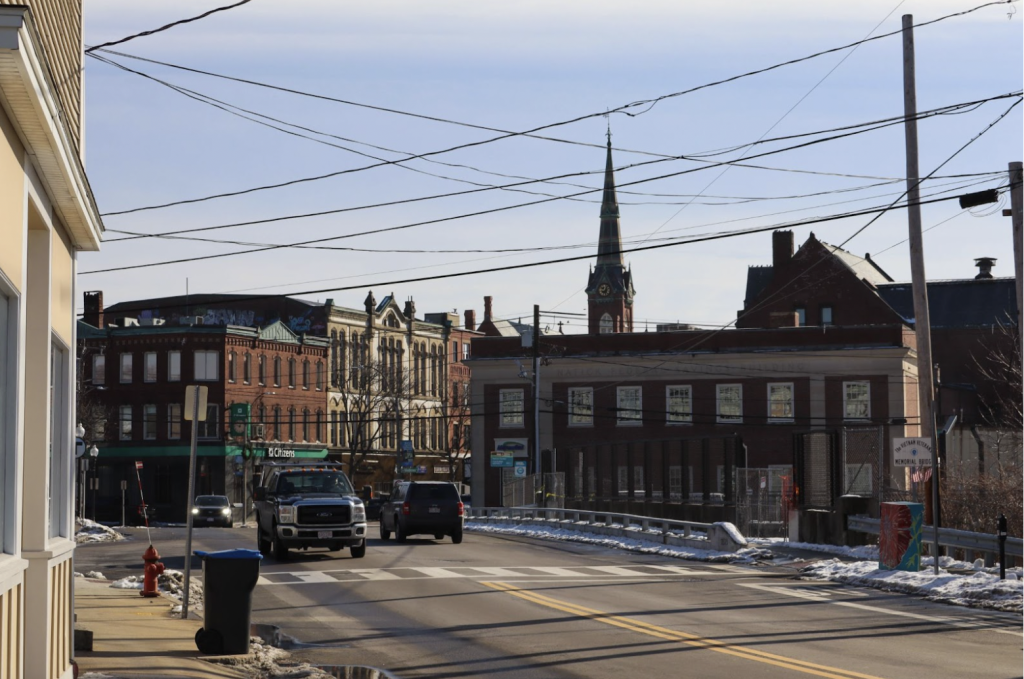
    Natick Center (photo by Olivia Ruzic)

    Last year’s Natick annual town election posed a seemingly impossible choice for its residents: Raise their real estate taxes by an average of $450 per year through a $7 million budget override, or sacrifice the integrity of their town services and children’s schools. 

    In a 60:40 vote, Natick residents chose the budget override.

    “The way it was presented, there seemed to be little choice in that if we didn’t do it, we were only going to end up falling behind and needing to do it later,” said Rick Devereux, a retired resident who voted for the override.

    For over a decade, Natick has been stuck in a budget deficit and relying on free cash, an unpredictable income source, for certain operational costs, Town Administrator Jamie Errickson said.

    “The override allowed us to reduce our reliance on free cash to cover the budget deficit,” he said. “But it didn’t necessarily address the entire structural deficit issue.”

    Free cash refers to the remaining funds after a fiscal year of unused budgets from town departments, such as the police or public works. When a town relies on free cash for operating expenses instead of one-time capital projects, it’s in a budget deficit, Errickson said.

    “It’s not uncommon at all for communities to use some level of free cash to help balance the budget,” he said. “It’s just to the extent that we’re reliant on free cash, because free cash is not a guaranteed revenue source.”

    With the override in place, Natick’s reliance on free cash dropped from $7 million to only $3.5 million, Errickson said. Still, the override was not enough to pull Natick out of its deficit.

    Mostly, the override funding prevented job losses in municipal services and schools, according to the town of Natick. If the override failed, 41 Natick Public Schools personnel and seven town personnel would have been laid off. 

    Natick is one of multiple municipalities in Massachusetts to have recently passed a Proposition 2.5 override. All share similar purposes: Maintain school and town services, and support those who provide them. In late March, Arlington residents approved a $14.8 million override. Brookline residents will vote in May on a $23.5 million override. 

    Donna M. McKenzie, a Natick resident who lives in the 1950s home that her parents owned, voted yes for the override despite potential financial sacrifices.

    “I live on a limited income, and when I was taking care of my dad, we just lived off of his social security income,” McKenzie said. “It was really difficult, but he also supported education, so he voted for the override for the high school.”

    She said residents depend on each other, and maintaining Natick schools benefits everyone. 

    “Massive cuts in the schools would serve no one,” McKenzie said. “Schools are a big part of the reason why people come to Natick, and a big part of why property in Natick is valuable.” 

    This year, McKenzie said she can feel the impact of the override in her personal life. 

    “There are things I can’t do,” McKenzie said. “I shop the periphery in grocery stores, and there are food items I can’t afford. I haven’t gotten my car fixed for quite a while. It’s not easy.” 

    Mckenzie voted yes because her priority to preserve local education trumped lower property taxes. 

    “I want to stay in my house. I worry about whether that’s going to be possible for me over the long run, because of the taxes. But I do, as I’ve said, believe the role of the schools is critical.”

    Nancy Agris Savage, a freelance journalist and writer, said when she was raising her children in Natick, she campaigned for budget overrides to improve the local schools. Years later, she hasn’t changed her tune.

    “I have voted for basically every override that specifically had to do with the school system, because it just makes sense,” Agris Savage said. “Somebody else helped improve our schools when my kids were younger. We all pitched in, and so it’s my job to do the same now.”

    Tony Lista, a past member of the Natick Financial Committee, said he voted no because the town should have consolidated its services before proposing a large override.

    “Nobody wants to see people displaced, but the taxpayers should be able to get a clear idea [of] how our services are provided and make adjustments as necessary,” Lista said. 

    He said he thinks the town has room to tighten its services and he “challenges” Natick to assess how often it needs heavy, expensive equipment, like sewer vacuum trucks. 

    “Those are the things I think that we should be looking at,” Lista said. “They’re boring items, things that people don’t care about, but could save big money in the town.”

    As a resident who owns more than one property in Natick, Lista faces “an additional impact.” 

    “I’m always willing and able to participate in the services that make sense to the town,” Lista said. “So, you have to make adjustments in other areas of your life.”

    The town administration wants to avoid another budget override, but Select Board Chair Bruce Evans said, “never say never.”

    “I think [the override] has bought the town some more time. We had no flexibility in our budgets,” said Evans. “But you know, if we look for this fiscal year and beyond, we’re not going to be without our set of challenges.” 

    This story is part of a partnership between the Natick Report and the Boston University Department of Journalism.

  • Natick’s Natural and Synthetic Turf Field Study Group stays on course with sports fields research

    Memorial Field, one of 3 artifical turf fields in Natick.

    After months of debate over how to best use turf fields in Natick, the town’s study group is making progress researching the pros and cons of artificial turf. 

    The town established the Natural and Synthetic Turf Field Study Group in January to study environmental, financial and children’s health factors in turf field installation and management.

    The study aims to collect data to help the town plan for the future of sports fields across Natick. 

    “Our goal as a study group is not to recommend one thing or another, but it’s to ensure that everyone has the information they need to make an informed decision,” said Julie McDonough, who is part of the group and a former Natick School Committee member.

    Simultaneously with the January 2026 establishment of the study group, the Select Board, Superintendent and Town Administrator forwarded a separate initiative to analyze the design feasibility of the “disrepaired” JV field at Natick High School. 

    “The grass isn’t growing — it’s compacted, so it’s hard, and so that makes it a little bit unsafe,” McDonough said.

    The town approved the field design funding for the JV field during the 2024 spring meeting. However, later that year, a group of Natick Town Meeting members called for a 3-year moratorium on the installation of new synthetic turf fields due to concerns over the effects of turf. 

    The moratorium presentation highlighted toxicity risks to children from turf as well as climate and local environmental risks. 

    “I just think there are too many reasons not to do it,” said Rick Devereux, one of the residents who proposed the moratorium. “It’s our kids.”

    The moratorium “would allow time to address uncertainties,” according to the presentation. 

    The issue failed at the town meeting. 

    A year passed, and the same moratorium group issued an advisory moratorium on turf fields. This time it passed. 

    In response, Select Board and study group member Bruce Evans suggested forming the Natural and Synthetic Turf Field Study Group. 

    The town passed two initiatives. One to analyze JV field design possibilities, and the other to study the effects of synthetic turf. 

    The study group held its first meeting Feb. 2.

    Going forward, the study group will hear from experts from different organizations, such as Parks and Recreation and the Department of Public Works, to gain a balanced perspective for their report. 

    Other nearby towns have also undergone similar studies, including Wayland and Arlington.

    Devereux commended Wayland’s approach to turf fields, particularly agreeing with their ethical concerns. 

    “The idea of replacing grass in a school with plastic when the school is trying to, you know, teach and model more sustainable behavior for their students, was an enormous moral gap,” Devereux said. 

    However, Natick High School Lacrosse Coach Nathan Kittler said he believes turf fields provide more playing hours, which could solve field overusage.

    Grass fields must have a certain amount of “rest hours” to preserve grass quality. With the designated rest hours and the number of fields available in Natick, there are not enough playing hours for all the sports teams. 

    It’s too much for the fields to handle. 

    “At the beginning of the season, after they let [the grass] rest all summer long, and don’t let everybody on it’s nice,” Kittler said. “But once the season starts up, it’s destroyed within weeks.”

    Kittler said even the players prefer the turf over grass. In the end, the high school and youth teams are most affected by the change. 

    After the study group submits its report, the town will have to weigh the potential health and environmental concerns against the playability for the youth sports teams.

    McDonough said she hopes that the group will have an interim report by spring and a full report for the Fall Annual Town Meeting. The report will guide any future decisions about local field design, potentially including the JV field. 

    The study group has four more meetings planned for March 16, March 23, April 6 and April 13.

    “Natick will decide,” said Evans. “It’s ultimately a town decision that says, you know, [what] do we want?”

  • Natick residents hold onto hope in protest in solidarity with Minnesota

    Protesters hold up signs for Jan. 31 rally (photo by Olivia Ruzic)

    When Diane Holzheimer planned a short-notice, anti-ICE protest for a cold weekend, she wasn’t sure how many people would be able to make it out. But she was pleasantly surprised when 160-some of her neighbors from Natick and the surrounding areas showed up Saturday, brandishing American flags and anti-ICE signage to stand in solidarity with Minnesota. 

    “We’re outraged that American citizens are being killed in the streets,” said Elaine Bekebrede, a retired software engineer who lives in Natick. “This is not what law enforcement — if ICE calls themselves law enforcement — that’s not what law enforcement is supposed to do.” 

    Rallygoers gathered in Natick Center Jan. 30 from 12 p.m. to 1 p.m. in Natick Center. On the same day, in cities from coast to coast, protesters participated in a nationwide “ICE Out Everywhere” shutdown. Hundreds of protests were planned for the national day of action, including Natick’s rally. 

    Shouts of “ICE out!” and “What does community look like? This is what community looks like!” echoed throughout the downtown area. Conversations barely could be heard over cowbells, honking cars and the roar of the chants. 

    Protesters in puffer jackets held signs, including extras for passersby, ranging from puns about melting ice to pictures of immigrants who died in detention centers. Additionally, protesters bore American flags or symbols. Holzhiemer wore an American flag as a scarf.

    “I love America, and I always have,” Holzheimer said. “I don’t like what Trump and his minions are trying to make of it.” 

    Aprotester holds a sign high up in the air with an attached American flag at a protest Jan. 31.

    Photo by Olivia Ruzic

    Some of the protestors said they attended a rally in Natick earlier in the year after ICE shot and killed Renee Good. Since the killing of Alex Pretti, protesters said they’re more enraged and discouraged than before. 

    “Murder in the streets…People being abducted, children being kidnapped, said Holzheimer, throwing her hands in the air, dumbstruck. “Can this be happening in our country?”

    Katy Herz, a retired OB-GYN from Sherborn, who said she has been protesting since she was a teenager, said she struggles to hold onto hope for change. 

    “It just feels like it’s the same. Nothing changes, or it changes for a little bit, and then it swings back, and it’s very discouraging,” Herz said.

    A protester carries a simple sign with a strong message for the rally Jan. 31.

    Photo by Olivia Ruzic

    Robert Holzheimer, a retired National Park Service worker who attended the protest, said he had hoped to see a smaller ratio of grey-haired participants. 

    “You have to show up,” Holzheimer said. “I’m hoping that younger people will show up in the next rallies and expect to see a lot more.” 

    During the rally, protesters passed out warm bagels from a shop across the street, complimented each other’s signs, and connected with their neighbors over their shared cause.

    “I am outraged… This makes me feel positive that possibly we’ll get out of this with our country intact,” said Terri Charles, a retired Natick resident and frequent protester.

    Charles said that most Natick residents encourage the protests, although they still face some opposition.

    “We get a few fingers and a few f— yous. But you know, other than that, most people are really supportive,” Charles said.

    Aaron Stevens, a Boston University professor who decided to join when he passed by, said he wasn’t sure how much they can accomplish given they are in a blue town in a blue state, but they continue to show up. 

    “We’re just showing our support in the only way that we can,” he said. 

    Herz said she hopes “ there is enough mass, people on the streets, to make the government look at what’s going on.”

    “I’m not optimistic, but I don’t know what else to do with my anger.”

    This story was produced in partnership with the Boston University Department of Journalism.