



Jeremy Chow demonstrates a Tactus Music jacket at the HLAA Walk4Hearing Boston event in October 2025.
A wearable music-technology startup born from a student-led engineering effort will represent Cambridge at a global gathering in Tokyo this week, as the company begins bringing its product to market.
Founded by Jeremy Chow in 2019, Cambridge-based Tactus Music designs jackets and vests embedded with haptic technology that converts sound into physical vibrations, allowing users to experience music through touch. Both products are priced at $459 on the company’s website.
“Members of the Deaf community told us they didn’t want something bulky or attention-drawing,” Chow said, “so we designed it to integrate the technology directly into clothing.”
The project began in 2018 while Chow was a student at Northeastern University, where he consulted with Laurie Achin, then a visiting lecturer in American Sign Language. Achin, a longtime dancer who is Deaf, said she used to learn music by feeling vibrations through speakers and memorizing the rhythm before performing.
“Jeremy and his team approached me because they wanted input from someone in the Deaf community,” Achin said. “Now it’s more like an athletic warm-up jacket, and being able to feel the beat on my body helps me react more creatively.”
What began as a prototype has since grown into a company now representing Cambridge abroad. Tactus Music was selected this year to compete in Venture Café’s Pitch2Tokyo program, where it will present its business alongside startups from 16 global locations at a gathering Thursday in Tokyo.
“Venture Café prioritizes inclusivity and accessibility in innovation, and Tactus is addressing an accessibility gap in a way that aligns with that focus,” said Alex Cheung, director at Venture Café Cambridge, a nonprofit network that connects startups, investors and industry leaders. “The global gathering will give them the opportunity to pitch their businesses to an international audience and build relationships beyond their home market.”
The gathering will not be Chow’s first time presenting his work in Tokyo. The company exhibited last November at the 25th Summer Deaflympics, where it showcased the wearable devices at a technology expo and integrated them into live performances.
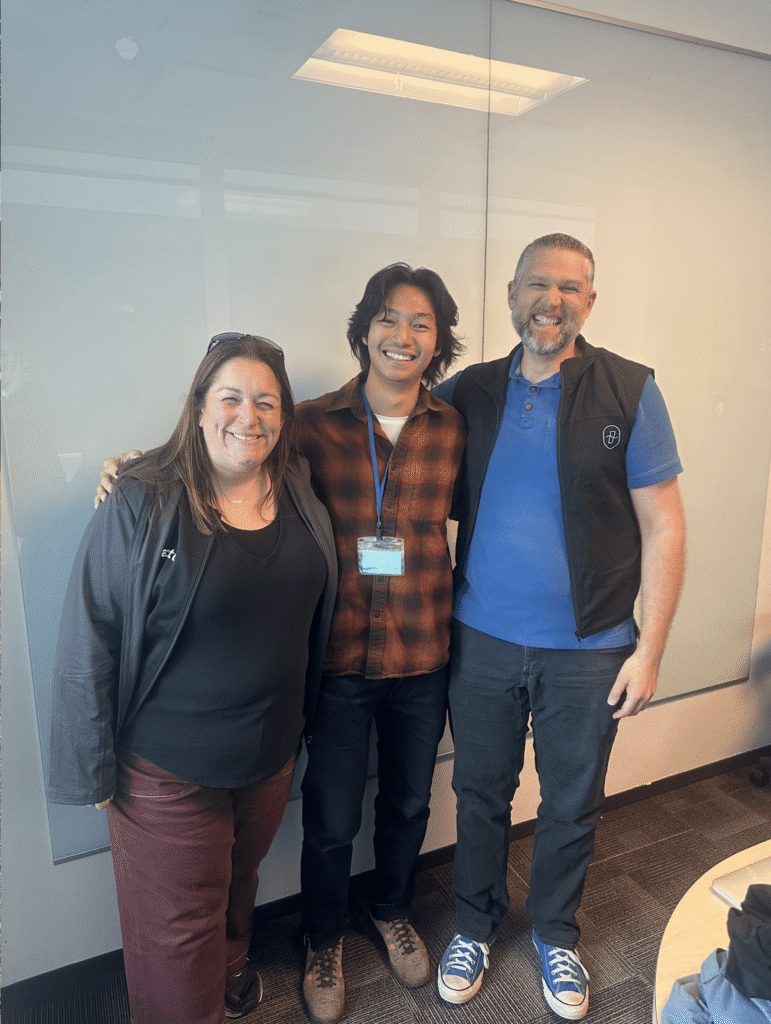
Jeremy Chow stands with Down the Tube Productions co-founders, Deaf community advocates active in the Hearing Loss Association of America’s Boston chapter.
“We had an older Deaf couple ask to use the device because their grandson was performing,” Chow said. “They wanted to really feel the music he was playing. Being able to integrate the technology into that kind of live setting was meaningful for us.”
Chow said the shift into commercialization marked a turning point for the company. After developing the technology alongside a full-time job for several years, he recently began dedicating himself fully to Tactus as it prepares for broader production and partnerships.
“We sold a limited batch in Tokyo, and it marked the shift from development into commercialization,” he said. “We were finishing up development, and now we’re focusing on sales, partnerships and awareness.”
Achin said she sees the company’s commercialization not just as a business milestone, but as a sign that accessibility-focused design is gaining wider recognition.
“The more collaboration and global opportunity they have, the better,” she said. “There are thousands upon thousands of Deaf, late-deafened and hard-of-hearing individuals who could benefit from something like this.”
Looking ahead to the upcoming gathering, Chow said he hopes to use the platform to connect with potential partners and test the company’s model beyond the local market. Longer term, he plans to expand into places where the wearable devices could be integrated into events to create shared experiences for Deaf and hearing audiences alike.
“It’s an opportunity to meet new partners and see how this can scale beyond Boston,” Chow said. “Ultimately, we want to work with venues and bring the technology into live settings where people can experience music together.”
Whether the technology gains broader traction remains to be seen, but the Tokyo stage will provide an early measure of its appeal beyond Cambridge.
“It’s meaningful to represent Cambridge because there’s a strong innovation community here and we want to show how accessibility and design can be part of that,” Chow said. “Cambridge has been an important part of this company’s growth, and we’re looking forward to bringing that perspective to Tokyo.”
This story is part of a partnership between Cambridge Day and the Boston University Department of Journalism.