Category: Allstonia

  • City of Boston will organize neighbors for trash cleanup in in late April

    Allston-Brighton residents will have a chance to volunteer to clean up the local neighborhood on April 25 as part of the City of Boston’s annual Love Your Block Event.

    Working in direct communication with the Public Works and Parks and Recreation Department, the event will provide residents with resources such as clean-up tools, trash bags, and gloves to assist with clean up and ensure trash is handled properly during the event.  

    “The idea is that they would come together as neighbors, enjoy a beautiful spring day out in the community,” Nathalia Benitez-Perez, director of the mayor’s office of civic organizing, said. “Taking ownership of their own areas, as well as beautifying their own areas.” 

    Bloomberg Philanthropies originally created Love Your Block in 2009 as a national grant fund for cities around the country. The city of Boston first launched this event in 2009 and called it Boston Shines. It officially became the Love Your Block event in 2018.   

    Last year, the event had more than 3,100 volunteers who helped clean up over 150 sites around the city. With the growth over the years, Perez said, this year the event plans to host 179 sites with about 4,000 volunteers contributing. 

    “We don’t really care about the amount of trash bags that are collected throughout this,” Perez said. “We care about the fact that people can come out, get to know perhaps new residents, new neighbors.  

    “They can feel like they’re doing a difference in their community by showing up and volunteering for one day.”

    While Love Your Block’s mission is to create a community within the cleanup sites, residents have shared their concerns about trash pick-up and disposal around the city. According to data findings from Boston 311 Services, there have been about 600 trash complaints, with more than 300 cases of improper storage of trash, in Allston-Brighton this year alone.

    Kimberly Wilkins Cummings, the owner of Artful Edge Framing on Harvard Avenue, who has contacted and heard back from Boston 311 services about trash issues, suggests there could be more trash barrels around the city.  

    “You just need to have more barrels out, there’s only like one as far as I can see around this neighborhood, which is not enough,” Cummings said.

    Sam Lee, a Brighton resident, has not heard about the Love Your Block event and says the city does a nice job with regular trash pick-up, but should communicate with residents more on initiatives.

    “That would be also helpful to know, notice, or information out to residents,” said Lee. “I think it’s a really innovative initiative.” 

    The Love Your Block event begins April 24 in downtown Boston. Aside from the April 25 event in Allston-Brighton, it will host clean-ups in multiple neighborhoods up until May 2. The registration form for Love Your Block is currently closed, but residents can email the Office of Civic Organizing through the city of Boston website if they are interested in participating. 

  • Q&Allston: DIY music scene, Beatles love, and new music with Allston band Winkler

    Q&Allston: DIY music scene, Beatles love, and new music with Allston band Winkler

    Cooped up in the small green room at the Rockwell Theatre in Somerville (255 Elm St), I spoke to the five member Allston-Brighton based band, Winkler, 30 minutes before their performance in Rockwell Theatre. 

    The band members consist of Christian Schmidt (drums), Maddy Simpson (vocals), Justin Schaefers (vocals), Danny Edlin (bass), and Alex Massey (guitarist).

    This interview has been edited for clarity.

    How did you guys form Winkler?

    Christian: Maddy used to have a Youtube channel where she would upload videos of musicians playing in a dorm room, kind of like a Tiny Desk spinoff, and we were friends and lived on the same floor. And then Justin did one of those, and we were just hanging out with them and we became friends and so we played music together. We had a different bassist and a different guitar player at one point, a few years ago, but then eventually we reeled in Alex and Danny.  

    Where did Winkler’s name come from?

    Justin: We had one song kind of finished called, Winkler. I think it was a play on words, because there was a line in the song that had to do with Happy Days; it’s a TV show. We had a gig coming up and no band name and we were like maybe we should just use the title of the song we have finished. You know, it’s dangerous because once they put it on the poster the first time, you either have to make a whole big thing about changing it. So for better, for worse, we’ve been Winkler for this whole time.

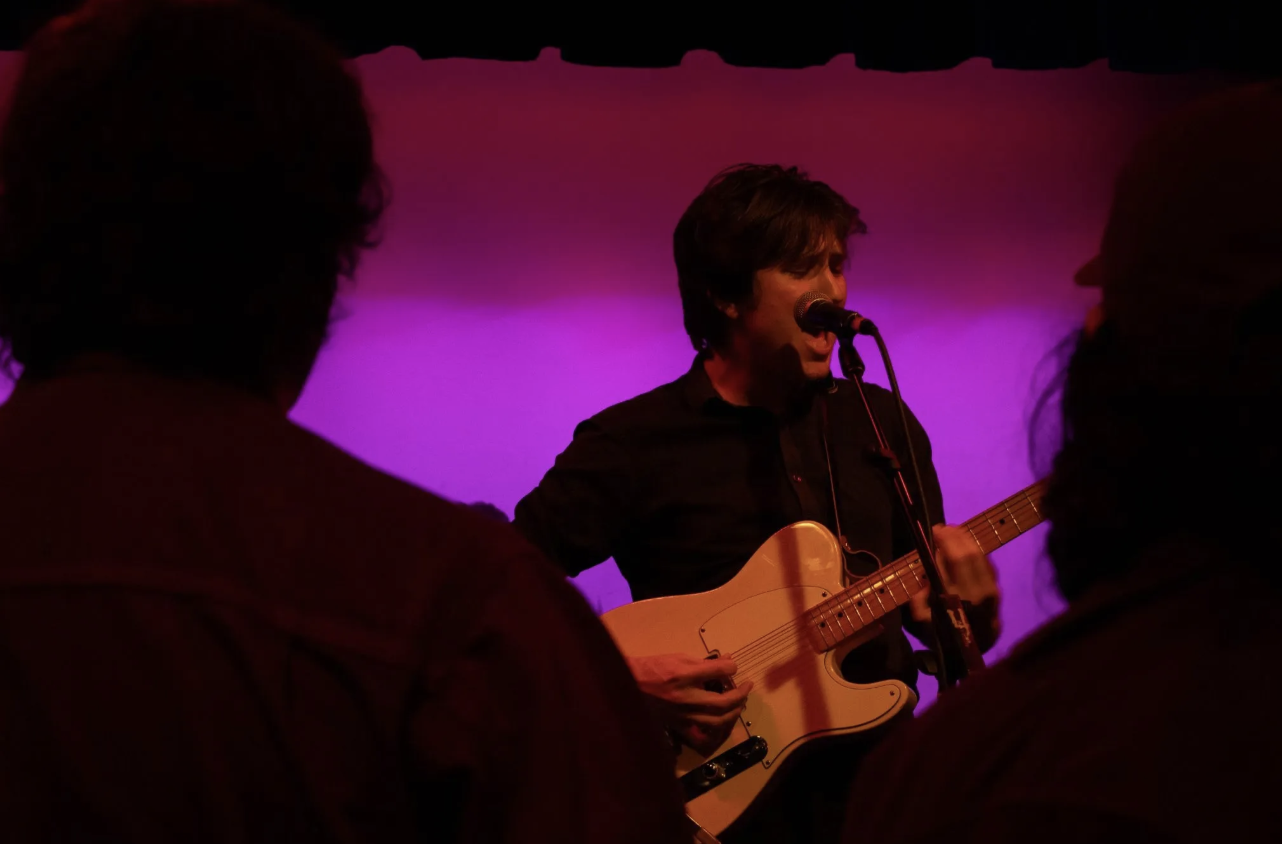
    Justin Schaefers, Winkler’s lead singer performing at Rockwell Theatre in Somerville, M.A.. By Belinda Afful.

    What was your first gig as a band?

    Justin: We played at a house venue. It was called the Green Thumb. No longer exists. It was on a street called Gardner Street. It was in a basement apartment, I’m pretty sure. So a lot of the times we’d set up in, like, looking at the kitchen the whole time. It was fun.

    Where were the rehearsal spaces you guys practiced in?

    Christian: There’s a rehearsal place on Fordham Rd in Allston that we used to play at but pretty soon we moved into a place that we could play in the basement. 

    Danny: Nowadays, we practice split between a house in Brighton and a house in Allston, world’s apart.

    Winkler’s Spotify description is “Making Music in the bedroom for the bedroom,” what does that mean to you guys?

    Justin: It’s a little cheeky. It’s hard to think of a bio. I think we came up with that at one point because we wrote it down. But we did at one point make all the music in a bedroom with just the equipment we had and now we usually do it in a basement. 

    What was the inspiration for your sound? And what artists are you guys most inspired by?

    Justin: I think we all approach it from, we have like a common love for some music, and then we all deviate in our own special ways at the moment.

    Winkler: Our big shared interest is the Beatles. 

    Justin: When we’re in the car for a long enough time, though, sometimes we’ll have multiple hour drives to a show, because I think you get to the point with the Beatles where you just really feel you get to know them. It’s really like a parasocial relationship. So we spend a lot of time hyperanalyzing their relationships with each other. And really just being insufferable. There’s a term Disney adult, well I think we’re Beatles adults. 

    Alex Massey, Winkler’s guitarist performing at Rockwell Theatre in Somerville, M.A.. By Belinda Afful.

    What was it like making music during COVID-19?

    Maddy: Christian and I lived together the whole time and then we lived with Justin. We had already decided before COVID that we were all going to be together. We had signed the lease. And then COVID happened. And we were like, well, what do we do? So we all moved into the house anyway and then it was really easy to make music because there wasn’t anything to do, except to make music.

    Christian: We would send each other demos and stuff. We’re all just noodling on our own for a while. I think we all got a little better over the time we couldn’t play together because of how much we were forced to play a lot.

    I saw that you hosted a front-yard performance in 2022 rather than the basement shows. How has your choice of performance venue shifted since then?

    Christian: I think that show, particularly, we played a duo show. It was very low stakes. So I guess that affected the set because we played some new stuff that we were working on or just tried out some new songs for the first time. Sometimes it’s nice to have a show that’s pretty low pressure to try new things.

    Danny: I feel like generally, we take shows based on factors you would imagine, like whether we’re available, where it seems fun.

    Justin: Now it’s nice because we’ve been playing shows for long enough to where we just want to play with bands we like and vibe with and maybe when we’re first starting out, we’re like, we’ll play anything. 

    Maddy: But now we can say yes, only to things we want to.

    What is the writing and production process for making your music?

    Justin: It’s been a couple different ways. The first record, a lot of the songs were like fully done beforehand, and then we made different arrangements. Then we played live, some songs we added strings to and everything. The last one was a really weird album. We took a lot of time to experiment, so we got to find a lot of results we worked up otherwise. But now we’re just playing so much and we’re playing the next batch of songs that we’re going to release. I feel like that’s gonna influence how this next batch sounds. Maybe we’ll just record them all how we play them live. It changes.

    I read from your Allston Pudding interview that you guys had a love for Home Analog recording, how do you incorporate that into your production? 

    Christian: I think literally it just makes things sound distorted. So it’s always nice to have a little distortion around the drums and the bass and it gives the guitars taste. Because it only records up to a certain frequency, it gets rid of the really high and harsh frequencies sometimes, which helps fuse together a bunch of different instruments, when they’re all a little rough around the edges. It helps it sound more satisfying. 

    Alex: It’s also like a different process. You have to arrive at different stuff when you’re moving physical knobs and watching tape spin around.

    Christian: I would say it feels more like high stakes too. If you are recording digitally, then you can always just infinitely redo things. But sometimes with the tapes, it’s like we already recorded over this one spot a bunch of times. We should just do it.

    How important is it for you guys to be independent artists in Allston? What are some obstacles that you guys face being independent artists in Allston/Boston?

    Maddy: I really love Allston, and also just Boston DIY in general because everybody’s so supportive of each other. People go to each other’s shows and ask each other to play shows. What I love about Allston-Brighton is that the people that put on shows aren’t necessarily musicians themselves, or people that play in bands. A lot of the time, people who just really love DIY music and want to organize DIY music. I think that’s really cool about Allston right now, like there’s people like that and the people who are in bands. We all support each other and we’re all friends in real life too. It’s a big community of people. 

    Danny: I think a lot of the infrastructure in Allston is really good. Like it’s a lot of muti-family homes that can house a bunch of people and they have a bunch of space, which I think is naturally more creatively generative than a two-bedroom apartment where you can’t make a ton of noise. There just is common space in these bigger houses and a lot of people in other neighborhoods or in other cities don’t have that. So I think that’s like partially why a lot of reasons like Allston-Brighton are pretty good for making music but they’re problems with that we still have neighbors and stuff that everyone deals with.

    Maddy: I think one of the challenges is that in Allston the rent has risen astronomically and so it pushes artists farther out of Allston. I mean that’s why three out of the five of us live in Brighton because we can’t afford to live in Allston, though we love Allston. It also drives out the place where we would play, so like the Great Scott, like O’Brien’s is about to close for however many months. And then there’s nowhere to play in Allston. So then we come and we play in Somerville instead because that’s where all the 100, 200 cap venues are.

    Alex: The problem with Boston in general is like the lack of small, like 100 cap, venues, which is like I think why the house venues step up and attempt to fill that way.

    Justin: The cops will, on like a semi-annual basis just shut everything down. I guess COVID, nothing happened and then we got like a couple of good months of playing and then like three of the premier places either got shut down fully by the police or were nervous about the presence. 

    What were the transition periods like when the group members changed?

    Justin: We played some really weird shows. For a couple of months before Danny joined, we were between bass players, like Alex played bass a couple times, sometimes we played no bass.

    Winkler: And we did like acoustic. Electric guitar, drums. It sounded just like garbage. I mean interesting maybe. It wasn’t great. 

    Maddy: Both times we needed to find a new player, which was very easy because Alex came and saw us at a show right after COVID.

    Alex: I saw Winkler and I was like, I think I’m probably going to be in Winkler.

    Maddy: And then when our last bassist, Ava moved, we were devastated. So it took us a few months to like bounce back cause she was so wonderful, but then Danny’s done a good job.

    Danny: I played on bills with Winkler from another band and knew everyone personally, at least a little to some degree. I wasn’t a total random. 

    Maddy: We told Danny that he could audition, but then we never auditioned anybody else.

    Justin: Yeah, this is probably right. 

    If you could choose one word to describe your relationship with one another, what would that be and why?

    Winkler: Rock, cause it’s all for rock, everything we do. You gotta do something. So you might as well do rock.

    Would you say each of you have a different sound/style? What is it like trying to blend individual voices or parts together?

    Maddy: It’s like what Justin was saying earlier, we all have shared interests, but then our differing interests all combine into Winkler.

    Justin: What’s nice is we all know how to play a Winkler song. Even with newer songs, not that it’s repetitive in nature, but I think we’re all good enough in the craft and know what would fit to make it blend. 

    Alex: I think we’re probably the best Winkler cover band.

    Justin, you recently released your album Modest Hits, can you tell me the process of that and how it worked with being the lead singer of Winkler?

    Justin: Those were all just recordings made on my phone. So it was sort of fun because those were ideas I had that I was working on in my own time. But of course, that’s such a different vibe than Winkler, where the whole thing is that there’s five people playing individual parts. But it’s cool. We all have different creative endeavors that all contribute back to Winkler.

    Cicada Summr, a song released in Bazooka Baby, your latest album, gives a much different vibe compared to the other songs released on the album. Is there a reason why you chose to take this creative route on the song?

    Christian: I guess with any song we record, just the idea of the song you sort of imagine like a way you think it should sound, like it has a little landscape of its own. Most other songs, we usually like okay this one makes sense with drums, bass, guitar live but that one we started with the synths and added the drum machines and that it just ended up being different because we had to piece it together part by part. So I think that made it sort of more like a collage, more than other songs. And I guess we kind of wanted it to sound like She Wolf by Shakira. 

    Maddie: I think the thing about being in a band, there’s this idea that you have to have like one sound, but I think actually you can really do whatever you want. I think it’s actually a strength to be able to do things that are really weird and out of the realm of what somebody thinks you should sound like. People think that Winkler is whatever, but we could really be whatever we want. 

    Maddy Simpson, Winkler’s singer, performing at Rockwell Theatre in Somerville, M.A.. By Belinda Afful.

    What is one of your favorite songs to perform?

    Maddie: Fire by Winkler

    Alex: We have a song called Mexico that’s not out that I think it’s awesome.

    Christian: That one’s fun to play. I like that one too.

    Danny: I love City Rain.

    Justin: There’s a new song of ours called Fire, which is just fun because it’s so easy. You can really sit in it without having to think about what’s going on.

    Are there any pre-performance rituals you guys do before a performance?

    Maddy: We usually just hang out, we usually eat dinner.

    Christian: We do hang out, but definitely when we have a show, it’s like we know that the five of us are going to hang out 

    Danny: The biggest thing about it is that we’re all required to be friends with each other.

    What is an artist that you would like to work with in the future?

    Justin: I like John Andrews and the Yawns and we are big fans of this singer named Devendra Banhart. 

    Christian: That would be a dream to like open for him

    Maddy: We’ve been able to open for some people that we really love, which is really cool.

    Justin: There’s a lot of artists that I love to run into in a coffee shop. I really want to be their best friend but I don’t think Paul McCartney would want to do anything right now.

    Is there anything in the future that listeners should anticipate?

    Maddie: This is going to be our most rocking record yet because our first record was like folk rock and then our second record was like folk.

    Alex: My mom called it our acid era.

    Christian: I feel like this album, more so than other albums, is the one we could most accurately just play live. All the other two albums had songs like acoustic or electronic, but this next album was pretty much like band instrumentation.

    Justin: Which is great because even when we’re putting out the last two, there’s certain songs we like, we’ll do it for these release shows and if we go on a tour for it, but then we’ll probably like phase it out because other songs were better in a performance.

    Winkler performing at Rockwell Theatre in Somerville, M.A.. By Belinda Afful.
  • A park crawl of Allston-Brighton

    A park crawl of Allston-Brighton

    McKinney Park

    The McKinney Park sign behind the dugout at the baseball field. Photo By Sarah Cruz. 

    At McKinney Park (74 Faneuil St), a bustling expanse of playgrounds, basketball courts and wide soccer fields, young children gather on the field for soccer practice while teens bump arms in a basketball court. Elderly neighbors and young families walk through the entrance from surrounding homes that line the park. 

    The city has been planning renovations to McKinney Park since 2016. Pam Mullaney, co-founder and treasurer of the Friends of McKinney Park, said she and her neighbor, Michael Bianchi, decided to start the group after the COVID-19 pandemic delayed the City’s plans.

    One of McKinney Park’s playground structures. Photo By Sarah Cruz. 

    Mullaney said she saw firsthand, working for Councilor Breadon with the Friends of Chandler Pond, how much of a difference neighborhood advocacy groups can make. 

    “When a group of neighbors becomes organized and advocates for a park, it makes a huge difference,” Mullaney said. “It can help the neighborhood and the Boston Parks and Recreation Department by having one organized point of contact when some tough decisions are approached.”

    McKinney Park’s renovations are expected to conclude in 2027 and will include splash pads, better park lights and natural turf fields.

    One of the most contentious issues, Mullaney said, is whether the new renovations should include artificial turf. It might mitigate the park’s existing drainage issues and extend sports seasons. On the other hand, neighbors worry about the plastic’s impact on health and heat conduction, especially during hot days. McGuirk and Mullaney point out that the hot rubber would be unbearable to step on in Boston’s heat. 

    According to the National Library of Medicine, the bits of rubber cushioning artificial turf may contain hazardous chemicals classified as carcinogens, neurotoxicants and endocrine disruptors; however, there are not enough studies showing how they actually impact people’s health.

    Elle, almost 1 ½ years old, at the soccer field at McKinney Park. Photo by Sarah Cruz.
    Phoebe, 12 years old, at the soccer field at McKinney Park. Photo By Sarah Cruz.  

    Mullaney and Bianchi started the friends group to give their neighbors a place to voice their opinions.

    “We’re expecting great things in the park,” Mullaney said. “Just more opportunities as the neighborhood continues to be more diverse.”

    Patricia McGuirk, who is on the board of the Friends of McKinney Park, has lived on Goodenough Street, one of the streets lining McKinney Park, her entire life. She said that the park is a great neighborhood resource, especially for families who don’t drive.

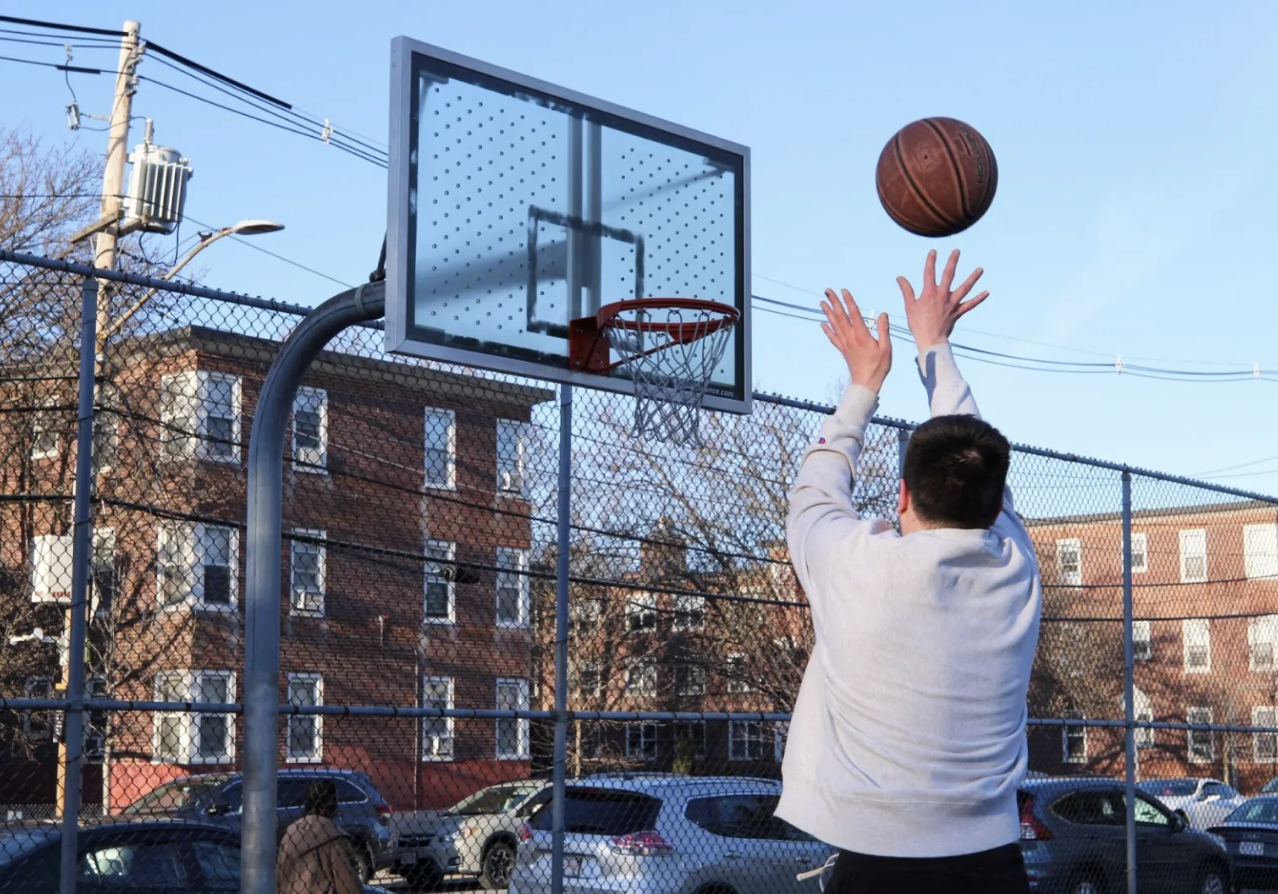
    Brian Cerow plays basketball at the court in McKinney Park. Photo By Sarah Cruz. 

    “I wish we had more trees, more open space, more places for kids to just be kids,” McGuirk said.

    McGuirk described how she took her kids to baseball practice at McKinney Park when they were young. Now, she takes her grandkids to the playground. 

    Established in 1930, McKinney Park has had a long-standing presence in the Allston-Brighton neighborhood. 

    In the 19th century, the area that is now McKinney Park was mainly open fields but contained a few houses near the side of Faneuil Street. 

    McKinney Park was formerly the area delineated under Patrick Kenney and Hiram Barker in this 1890 map. Courtesy of Brighton Allston Historical Society. 

    In the 19th century, the area that is now McKinney Park was mainly open farmland but contained a few houses near the side of Faneuil Street. The infamous Winship family made Brighton, at the time, the epicenter of cattle trade and a significant horticultural hub in New England. 

    Nearby, on much of the land from the corner of Market and North Beacon Street to the river, there were the Winship Gardens. These nursery gardens were a regional attraction. People would come from far and wide using the Boston and Worcester Railroad to see them.  

    In 1937, after McKinney Park was eventually created, a group of 50 children held a demonstration to protest the stalled completion of the park’s field house, where officials had yet to install showers or other accommodations. 

    Charles River Community Garden

    Charles River Community Garden sign. Courtesy of Julian Knight. 

    The Charles River Community Garden (1450 Soldiers Field Road) is sandwiched between the narrow, western side of the Charles River and the busy Soldiers Field Road speedway, where cars zoom past. Runners and bikers speed down a trail towards the Charles River Park. When we meet her on a sunny April afternoon, Susan Bellows, a Charles River Community Garden council member, jokes that if you close your eyes, it almost sounds like you’re on the beach.

    It’s a sunny April afternoon, and Bellows treads lightly along the garden’s woodchip paths, identifying the few small green roots that have sprouted up so far: carrots, onions and strawberries. 

    Blossoming yellow daffodils in Charles River Community Garden. Photo by Sarah Cruz. 

    The garden is quite bare around this time of year — it’s too early for growing. Each plot is separated with wood planks, and one has a batch of yellow daffodils that add a pop of color. 

    In the summer, the garden turns into an all-you-can-eat buffet for voles, rabbits, birds and squirrels, and some gardeners already have built makeshift fences — even entire cages — to keep the critters out. 

    Bellows, who has been involved with the garden for over 30 years, has endless stories about animal mischief — like the time her husband and son went to the garden late one night and turned on their flashlights only to find a colony of rabbits in the garden.

    A faux owl in a garden plot to ward off hungry animals. Photo By Sarah Cruz. 

    Bellows said when planting starts in the summer, zucchinis, tomatoes and unusual varieties of squash fill the garden.

    “It’s a very international group of gardeners of all ages who bring their gardening techniques and plant preferences and knowledge,” Bellows said.

    The 240-square-foot garden houses around 75 plots and over 100 gardeners. Anyone interested can sign up on the Charles River Community Garden website, where they’ll be placed on a waitlist. There is a 30-dollar annual fee, and members must volunteer two days a year laying down fresh chips, clearing out weeds and trimming roots or trees.

    Sometimes people will abandon their gardens, Bellows said, and at that point, Henry Shapiro, the Charles River Community Garden coordinator, will pull people from the waiting list. 

    Aerial view of Charles River Community Garden. Courtesy of Ross Duncan-Brown. 

    With funding from the Massachusetts Department of Food and Agriculture’s community garden program, Hensler and 20 friends started the garden in 1979 after she could not find an available plot at Herter Garden in Herter Park, according to the Charles River Community Garden

    As a board member, Bellows manages shipments to the garden, organizes work activities and supports gardeners when they have disagreements or complaints. She joined the Charles River garden after moving to Cambridge from Los Angeles. 

    “I realized how nice it was when you live in a city and feel like you could still go out and be in a garden and be part of a community,” Bellows said. “

    Chandler Pond 

    View of Chandler Pond from Lake Shore Road. Photo By Sarah Cruz. 

    Lake Street bleeds into Lake Shore Road as Chandler’s Pond (Lake Shore Road) comes into view and an array of trees frame the water as it ripples in the breeze. Geese float in the pond amidst the peaceful silence.

    Neighbors of the pond walk along the curved path in the adjoining Alice E. Gallagher Park. There is a mix of light chatter and a rhythmic tapping of dog paws. 

    Residents fish along the edge of the water, patiently waiting for a catch. On a patch of grass, two people lounge across a blanket, eagerly sketching the scenery before them.  

    During the New England winters, the pond completely freezes over. In the 19th century, it acted as a fruitful source of ice for residents before the invention of refrigeration and electricity. 

    Local horticulturist and entrepreneur William C. Strong excavated Chandler’s Pond in 1855, establishing an ice-harvesting business. In 1858, he sold the pond and its adjacent ice house to ice merchant Malcolm Chandler. 

    The pond in the late 1800s with Kenrick Street in the foreground and Chandler Mansion on the center right. Courtesy of Brighton Allston Historical Society. 

    He created Strong’s Pond, which is largely gone now, to the west of Chandler’s Pond seven years later. With the introduction of refrigeration, the two owners engaged in fierce competition over the ice business until they eventually sold off their properties to respective buyers. 

    After a trail of different owners, developer George W. Robertson acquired Chandler’s Pond in 1925 and subdivided the area into lots for residential development. The City of Boston then obtained the pond in the late 1930s and, under the persuasion of then-City Councilor Maurice Sullivan, created the Alice Gallagher Memorial Park on the southwestern rim of the pond in honor of the local activist.  

    Boston Parks and Recreation’s sign for Alice E. Gallagher Park and Chandler Pond. Photo By Sarah Cruz. 

    “It’s kind of unique,” Charlie Vasiliades, the vice president of the Brighton Allston Historical Society (BAHC), said. He explained that many of the ponds in the metro Boston area were later filled in. 

    It is “the last survivor of nearly twenty ponds, which once dotted Allston-Brighton,” according to the BAHC website

    Concerned for the pond’s run-down state, Genevieve Ferullo and fellow Brighton residents founded the Chandler Pond Preservation Society in 1996. 

    In a 1998 interview between the BAHC and members of the Chandler Pond Preservation Society, neighbors recall how clean the pond was during the ‘40s and ‘50s, when most of the Chandler Pond residents first moved to the area.

    The pond water. Photo By Sarah Cruz. 

    “In the spring, I remember, you could go around and see the turtles,” Alan Morgenroth said. “It was nice and clear, you could see all the flora down the bottom.”

    Some neighbors describe the pond shrinking, overgrown reeds along Kenrick Street and yellow algae growing on the water’s surface. 

    In 1998, the Boston Parks Department and Chandler Pond Preservation Society collaborated with Harvard University and the City of Boston’s Urban Wilds Program on a dredging project, according to the Friends of Chandler Pond website. The project removed the pond’s surface sediment and planted wetland species along its shoreline to protect wildlife. 

    The organization was renamed to Friends of Chandler Pond in 2019, according to the Friends of Chandler Pond website. 

    Now maintaining the pond for over 30 years, the non-profit organization collaborates with the City of Boston to advocate for the pond’s preservation. 

    Sign detailing how the city of Boston has helped to preserve the pond through the Boston Community Preservation Fund. Photo By Sarah Cruz. 

    The organization also collaborated with Crawford Land Management to develop a vegetation management plan in 2020, according to the City of Boston’s Chandler Pond improvements master plan, but has not yet been implemented.

    Volunteers regularly hand-harvest invasive species in the water and fundraise for geese mitigation efforts.

    This story is part of a partnership between Allstonia and the Boston University Department of Journalism.

    Correction, April 12: A previous version of this article incorrectly stated that Susan Bellows was a board member of the Charles River Community Garden. She is a council member of the Charles River Community Garden.

  • From a house on wheels to Harvard Avenue: Vivant Vintage will relocate this June

    From a house on wheels to Harvard Avenue: Vivant Vintage will relocate this June

    Vivant is a French word used to describe something or someone that is lively, animated, or full of energy. Founders of the curated thrift store Vivant Vintage Justin Pomerleau and his wife Emmy Sawich chose this word to name their store to encapsulate the idea of “bringing life back into things that have once had a good life” when they first opened it in 2014. That store will soon have a much bigger space as it moves to a new location this June. 

    After selling pants via a house on wheels he pulled on a tricycle and working as a resident vendor at the SoWa Vintage Market, Pomeraleau decided to move his wares to the store’s current physical location on Allston’s Lincoln Street in 2014. 

    “I kind of saw the writing on the wall that I wanted to get out of there,” he said. “I lived around the corner from the Allston store and was just keeping an eye on this corner.” 

    Pomerleau has since secured a new spot on 151 Harvard Avenue that will have its grand opening on June 27. While the first location was chosen for the sake of convenience, the new space will be large enough to accommodate the secondhand clothing he currently stores in a warehouse in Brighton, a sales floor, and extra space for what he calls a “bargain basement.”

    “It’s kind of serving a very unique purpose, where Newbury Street’s the high volume boutique, where you’ll find the freshest, most on-trend clothing. Then Allston will have our clearance stuff, and will have a larger variety of every type of category.”

    With the new relocation to Harvard Avenue, he hopes the increase in space can serve as a way to bring people together outside of solely buying clothing. 

    “We could both host our own events, but we could also offer space rental,” he said. “I’m really hoping that we could do a film festival, we could do a market, we could do an art show, it opens up a lot of possibilities.”

    Pomerleau said his vision for Vivant Vintage initially started out as an art project. It later dawned on him that investing in this store could help him achieve his dream of being self-employed. 

    “I quickly realized that I had a good knack for it, the buying, for the selling, and really got a lot of satisfaction out of it,” he said. 

    There have been some challenges for the couple with expanding like increasing and sourcing their inventory, taking proper care of their growing staff, all while managing their personal lives. “It all changes as you grow,” he said.

    Having to balance taking care of a newborn with expanding the size of their brand and workforce, Pomerleau described 2025 as one of the hardest years of his life. 

    “Me and my wife are supporting, like, 20 people. Not everyone’s full time, but if somebody’s full time, their livelihood, their well being, it depends on me,” he said.  “Those were the kind of things that made me the proudest and also were sometimes the most challenging with staffing.”

    While Pomerleau finds there are some challenges with staffing, he has created a welcoming and caring environment for his employees.

    Zoe Hopper, the full-time manager of Vivant Vintage in Allston, finds the job fulfilling because people from various backgrounds are able to come together and connect over vintage clothes. 

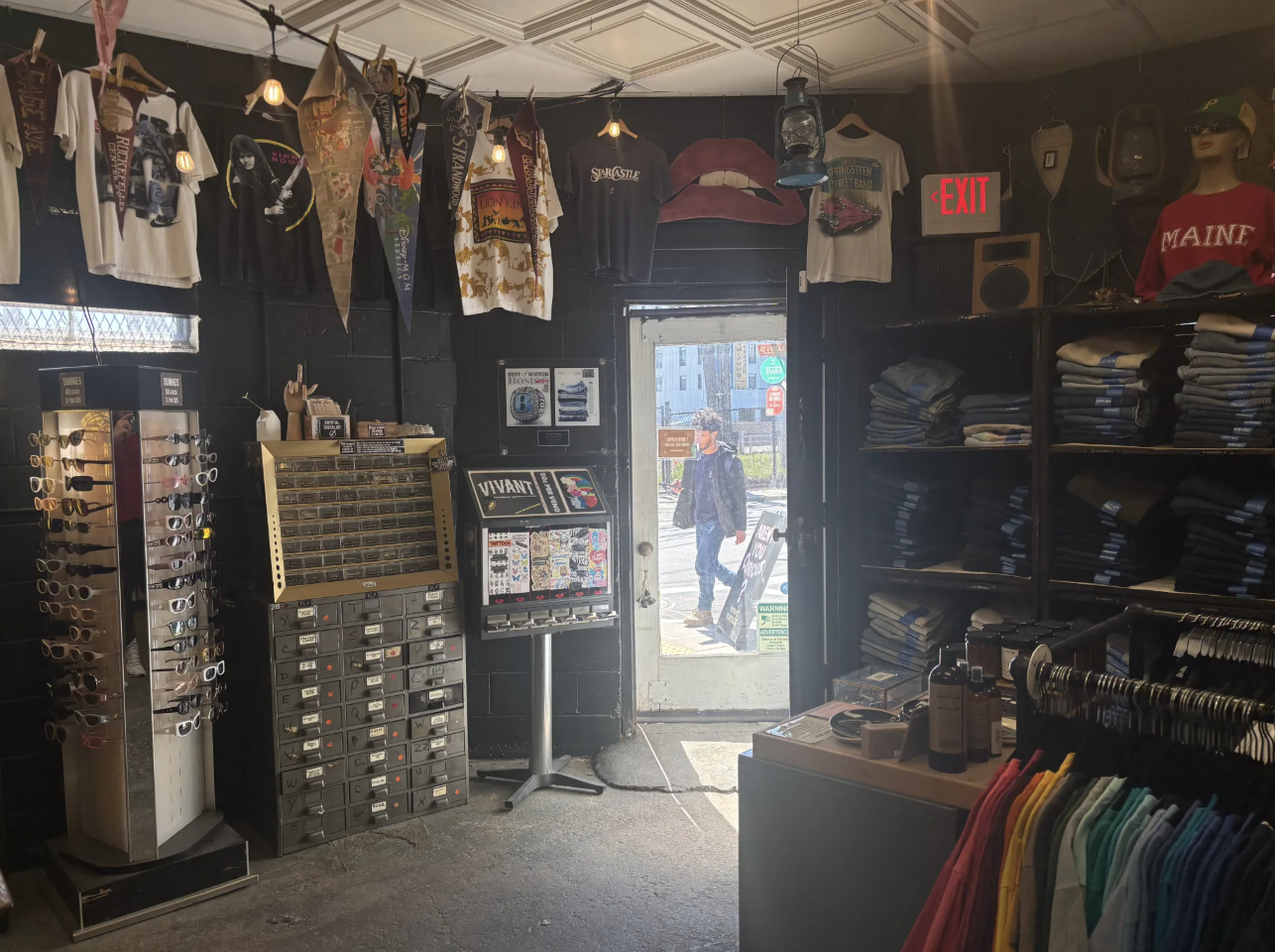
    Vivant Vintage’s interior on Lincoln Street. By Amil Coutinho Amado.

    “People seek it out, and they seek out the experience that comes with the name of it. So the fact that people come here looking for something, and I can act like a tour guide to them through the experience of the store, is really fun,” they said.

    Hopper also described the role of the manager as more fun than it is work. They said their role is to act as a “vibe curator,” which helped with the creation of a close-knit community of patrons to Vivant. “It’s not a transactional experience, especially if you love clothes.”

    Along with challenges that come with staffing, Pomerleau said sourcing secondhand clothing and silver for the jewelry, which Vivant makes and sells, has also been a challenge. 

    After being involved in the secondhand retail business for nearly 15 years, Pomerleau said has seen the rise, fall, and second rise of thrifting. 

    “It was super red hot during the pandemic. It got a lot more interest, and it’s kind of leveled out. It’s definitely worlds greater than it was pre-pandemic,” he said. “There are more people shopping vintage versus firsthand retail.”

    Boston Magazine named Vivant the “Best Vintage Shop” in 2023, which has cemented their place as a beloved destination for vintage aficionados, according to Vivant’s website. It’s very clear that Pomerleau and Sawich take pride in their work. 

    “I love what I do. I love clothes, jewelry, fashion, I love buying and selling things. I like being a part of the Boston business community, and there’s so few independently owned businesses out there, so I get a lot of satisfaction and it makes me feel really good to be able to do this.”

  • MBTA will suspend service, including between Kenmore and Boston College, in late April for infrastructure updates

    On April 7, the Massachusetts Bay Transit Authority (MBTA) announced it will suspend service on parts of the Green Line for infrastructure upgrades from April 22 to April 30. 

    The B branch will be closed between Kenmore and Boston College stops. The MBTA will offer free service on the 57 bus between Kenmore and Packard’s Corner between April 22 to April 24, and April 27 to April 30. Due to accessibility issues, shuttle buses on the B branch will not stop at Packard’s Corner, Griggs Street, or Allston Street, according to the MBTA website. During the weekend of April 25, Green Line shuttles will also replace service between Copley, Boston College, Brookline Hills, and St. Mary’s Street for more infrastructure upgrades. 

    According to a statement from MBTA’s Deputy Press Secretary Lisa Battison, the MBTA is planning to update train infrastructure, continue installing the Green Line Train Protection System (GLTPS). The MBTA official website says that the GLTPS “combines vehicle and wayside equipment to avoid train-on-train collisions, provide stop signal overrun protection, and incorporate speed enforcement for the Green Line.”

    In a statement written to Allstonia, Battison wrote that the MBTA’s upgrades during the closure will “build on the success” of the Track Improvement Program. 

    “This regular, planned renewal and revitalization work is ongoing and continuous, ensuring the long-term stability of our infrastructure and preserving the system for future generations of riders.”

    According to Battison, the infrastructure upgrades will also include the replacement of 130-year-old troughs near Kenmore station. Previously, the MBTA had closed train service for two weeks along a larger portion of the Green Line for similar trough replacement.

    These upgrades to the Green Line come in the wake of a newly proposed capital budget plan that will span 2027 to 2031, and aims to increase efforts to modernize the public transit system in Boston to build for the future, according to the MBTA’s Capital Investment Plan (CIP). 

    The CIP aims to upgrade “inaccessible above-ground Green Line stations” on the line, while also being able to increase service capacity. The CIP’s goal is to make sure that all stations on the Green Line’s B and C branches are fully accessible. 

    While the closure of the stops along the B line will be supplemented with free shuttle service and additional free service on the 57 bus, it will affect thousands of people who rely on the Green Line. 

    Liam Tuohey-Kay, a Boston University student, lives off campus and relies on the Green Line to commute to school and work. 

    “It adds at least another forty five to an hour of travel time per day,” he said. “We have six stops here on campus, and at least twice a year, all of those stops are unusable because of maintenance.”

    Aidan O’Kane, another BU student living off campus, found the closure inconvenient due to the fact that it is planned right before finals week at Boston University starts. While he has stopped using the Green Line to commute, he said that it is generally not helpful.

    “I kind of stopped taking the T earlier in the semester because it was just so inconsistent, so overcrowded, it was just making me late to class every day. It was too stressful,” he said. 

    O’Kane also feels that shutdowns occur on the Green Line too frequently. He says that he thinks the shutdowns don’t help much with improving the Green Line as a whole. 

    “I don’t understand what kind of public transport needs to be shut down four times a year,” he said. “Since I’ve been here, there’s been a lot of infrastructure things. They’ve shut it down a bunch of times, and I don’t think it’s got any better in any way.”

    Both O’Kane and Tuohey-Kay say that they were not aware of the closure until recently. While the MBTA announced the closure on their website, they did not make any other posts on their social media accounts like X or Instagram. 

    “I think they should do a way better job at communicating when things are going to be down, because it does affect a lot of people’s lives, including my own,” Tuohey-Kay said. “They do, quote, unquote, infrastructure updates every couple months, and the T is still, it’s always late.”

  • Allston activist proposes Arts Corridor to support local artists and businesses

    Tim McHale, a 71-one-year-old Allstonian and longtime housing activist, has proposed building an arts corridor in North Allston-Brighton to create a vibrant arts ecosystem while bringing economic opportunity and equitable development to Allston-Brighton. 

    “It’s a public realm that’ll kick butt,” he said. 

    Over the years, McHale said, he has watched North Allston-Brighton change as the artist community broadened geographically, moving away from Harvard Avenue. Three years ago, he arrived at the idea of an artist corridor spanning from Allston Yards to Harvard Avenue.

    “I believe a tsunami of arts and culture is going to land here. Public realm and arts and culture have to expand to balance this mega development,” he said. 

    The proposed corridor’s aim is to “position Allston-Brighton as a leading arts and culture hub in Boston,” according to a document and map submitted to the Boston Planning Department. McHale said the corridor is meant to serve two purposes as a public realm and an arts space where people can browse local art and patronize local businesses. 

    “That’s a healthy thing for a community to have a place to do that,” he said. 

    While planning to collaborate with city officials and artists in the area, McHale said one of the biggest hurdles he has experienced is getting financial support from developers that own the majority of the property in Allston-Brighton.

    “The big developer in our neighborhood is Harvard, and Harvard is a landowner of these sites that we’ve cobbled together. So it remains to be seen how open they will be to transfer these properties to us,” he said. 

    McHale said the biggest challenge is securing developer’s support because the arts corridor is not built yet, making it too early to request funding. He remains hopeful that developers will get on board once buildings and their uses are established. 

    McHale said he has also received positive support and feedback from Allston-Brighton residents and members of the Boston Planning Department. “My advocacy has moved the dial,” he said.

    “The planners at the BPDA and some of the folks at the Mayor’s Office of Arts and Culture are very interested in expanding the arts and culture in neighborhoods, and so this concept has resonated with them, and we’re talking about it, and they’re talking together about it.”

    Allston-based artists who can’t find affordable housing or locations in the neighborhood to showcase their work also are talking about the proposed corridor. 

    Nick Grieco, 37, a local musician and bartender, said he has seen Allston-based artists leave the neighborhood because they can’t afford the rent or find a local space to showcase their work. 

     “I have watched entire circles of friends hightail it to L.A, New York, Nashville, even Austin and Portland, when they were up and coming creative scenes,” he said. “When it comes to creating a neighborhood that is art focused, there’s so many stopping points that our elected officials haven’t taken to lay that groundwork.” 

    Grieco has noticed the overhead costs of being a musician skyrocket over the last decade, making it harder for artists in the area to develop their careers. “It basically means that anybody looking to grow as a musician in this city pretty much has to give up, unless you have a bunch of wealth.”

    Ricky Meinke, director of the Rat City Arts Festival, also has seen artists leave the neighborhood as the landscape for renting drastically changed. 

    “The structural landscape of the neighborhood is extremely challenging to artists,” he said. “Some of our gentrifying apartments will pretend that they have an artist space or a connection to artists, but it’s really piecemeal, and it’s not something to depend on and count on.” 

    While the Rat City Arts Festival is a grassroots operation, Meinke is concerned about potential cuts to city arts funding, in the wake of federal cuts to arts funding programs like the National Endowment for the Arts, hoping the proposed corridor will allow for more paid opportunities for artists in the future.

    “I think at the end of the day, artists want their art displayed, they want to perform, they also need to be paid, and they need to be valued financially. So, I just hope with any of our efforts, we’re thinking in that way,” he said.

    Grieco hopes that soon, the neighborhood will be more supportive and understanding of the corridor. He also hopes for more help from the city to make the proposed arts corridor a reality. 

    “In terms of affordability and density, anything that’s good for working artists is also good for families,” he said.  “I really hope that the city of Boston puts more of an effort into consciously supporting things like this, because Tim’s not going to get the support from developers.”

    McHale compared the prospect of an arts corridor in Allston to more popular mixed-use areas like Broadway in New York City or Burlington, Vermont. He said these spaces are important because they weave together “mega developments with mixed-use public realms.” 

    “It’s important that we balance it with a good public realm, a cohesive one, not a little spot here and a spot here. It’s up to us to make sure that we equalize that pressure on the quality of life, and so that’s what arts, culture, and a good public realm will do.” 

  • “Let It Linger”: Ama fuses Nepali cuisine with familial comfort

    Bright orange traffic cones and freshly-paved concrete outline a modern, glass-paneled hotel near the upper edge of Lower Allston. Inside, customers, consisting of families, students, business workers and more, gather at Ama, the new Nepali-inspired restaurant that opened just last month inside The Atlas Hotel.

    The restaurant’s design reflects its roots in Nepali heritage and comfort. Nepali prayer flags gently sway on the restaurant’s ceiling. Gray curtains between dining areas allow privacy for guests. A small corner fit with couches and coffee tables offers guests a casual lounging spot. Fuzzy, curving red and gold walls bring warmth to every area of the restaurant.

    Ama’s bar is plastered with multi-textured red and gold material, designed by architects at Marlon Blackwell. Photo by Joe Farfan. 

    On a recent Monday, Nyacko Pearl Perry and Biplaw Rai, co-founders of Ama, sit at a wooden table in the warmly lit “Living Room,” a free third space between the hotel and the restaurant. Perry and Rai, who currently own one other restaurant Comfort Kitchen, are not only business partners but spouses with a three-year-old son. Perry’s family has lived in Allston for three generations, and she says that she wants the restaurant to align with the community’s needs. 

    “What we’re hoping for is that everybody feels like this is their space,” Perry said. 

    Both her and Rai have been working closely with local businesses and artists to bring their vision to life. Above the tall potted plants hang abstract paintings by Allston-based artists — works that Perry herself has handpicked.

    “This is literally a family business,” Perry says. “We really want to be a space where someone wants to bring that caregiver who needs to be cared for once.”

    The restaurant’s name is the Nepali word for “mother” and is named after Rai’s own mother. 

    “I think out of everyone in our family, my mom is the person who cooks,” Rai says. He smiles behind a goatee and takes out his ponytail. He’s laid-back and approachable, a supportive leader who gives his workers freedom and guidance, Renato Rodriguez, Ama’s food and beverage director, says.

    Rai’s parents work in the kitchen at Ama. Almost everyone calls them “Ama” and “Papa”. The restaurant’s culinary director, Shelley Nason, describes Ama as a “tough mom who cares about you and will put you in your place.” 

    Papa makes momo — Nepali dumplings — in the kitchen. Nason, who develops almost every dish, has left the momo untouched. 

    “[Papa] is very passionate about those momo,” Nason said. “It’s the way their family makes it, which is important.”

    The Pork Momo comes with six momos and a tomato achaar sauce for 14 dollars. Hearty ginger and scallion dominate each two-bite snack. Every momo is carefully wrapped in a stretchy, translucent, almost buttery skin. The subtle mala kick in the tomato achaar sauce adds a heavenly vibrance to this earthy dish. Those front-of-the-tongue flavors are familiar to me — just a little taste of my parents’ Chinese dumplings in each bite. 

    Left: The Pozole Verde, part of Ama’s soup series “She Knows the Way”. Right: Papa’s Pork Momo with tomato achaar sauce on the lunch menu. Photo by Joe Farfan. 

    The restaurant differentiates itself from others by sticking to the classics, Rai says. Instead of rushing service, he wants guests to enjoy a full experience. 

    “Our tagline is, ‘Let it Linger,’” Rai says. “You don’t have to have a white tablecloth and three suits to have that service. You can still have that service by being kind and really listening attentively to the guest.”

    Part of Rai and Perry’s effort to offer a slow, comfortable experience is reintroducing soups to the restaurant industry. 

    “If you go to most restaurants these days, you will not find soup on the menu at all,” Rai said, “But [soup is important to] every culture and every family.” 

    The Pozole Verde is one of two soups on Ama’s menu. It’s a green, earthy stew with vegetables and braised pork inside a poblano pepper and tomatillo broth base. Each flavor feels controlled — you can taste the spice underneath that herbal soup and the sweetness from the pork. The crispy tortilla served on the side adds a nice crunch. It’s kind of a hot, savory cereal. 

    One of the most recommended menu items on the lunch menu is the duck fried rice. It’s a comforting hodgepodge of their sweet, crispy duck confit, garlicky greens and egg topped with sunflower sprouts. It’s another playful experiment with texture. The crispy duck and bits of crispy rice complement the fluffy egg and springy sprouts. Small hints of spice from the chili oil bind this hardy dish. 

    Each item on the menu is crafted with story and relatability in mind, Rai said. 

    Perry lights up as she recalls fond memories of her grandmother’s pineapple upside-down cake, which inspired the menu’s Brown Butter Pineapple Cake. For 12 dollars, it could easily be a two-bite dessert. The vegan cake is fluffy and slightly moist, topped with coconut cream and maraschino cherries that brighten the taste. The salted pineapple caramel sauce drapes every flavor in buttery, savory richness.

    A behind-the-scenes look at Ama’s back-of-house team. The restaurant’s open kitchen design allows diners a glimpse at the people preparing their meals. Photo by Joe Farfan. 

    In the future, Rai said he plans to “take more breaks.” His partner laughs, but it’s true. The pair has two restaurants and a son to care for. Despite this, the couple is already thinking about ways to expand. For instance, diners can expect new menu items and a new art installation in one of the restaurant’s spaces in the next six months, Perry said.

    Another restaurant is also already in the works, Perry and Rai said. Fox Club, opening in April 2026, will be a rooftop bar in The Atlas. Perry is excited to install more local art in the space.

    Photo by Joe Farfan. 

    The first six months of opening a restaurant can be stressful, Perry said. Rai and Pearl said they wanted to elevate the comfort of the guest experience at Ama by including a coat check and three meals, seven days a week.

    “I think at the end of the day, it’s like, can we show up for each other in 2026?” Perry said, “We need spaces where we’re doing that, and we hope to be one of those spaces for folks.”