Category: Dorchester Reporter

  • Criticism, optimism greet developers at Greater Mattapan Council session

    Residents’ reaction to two redevelopment plans in Mattapan diverged sharply between criticism and optimism Tuesday night as developers of the 1576 Blue Hill Avenue project and the former Carney Hospital site presented plans to the Greater Mattapan Neighborhood Council (GMNC)..

    Residents’ reaction to two redevelopment plans in Mattapan diverged sharply between criticism and optimism Tuesday night as developers of the 1576 Blue Hill Avenue project and the former Carney Hospital site presented plans to the Greater Mattapan Neighborhood Council (GMNC) over Zoom to just under 50 attendees.

    Attorney Mike Ross shared the plans of his real estate developer client, Solmon Chowdhury, to redevelop 1576 Blue Hill Avenue. The site runs along Babson Street, which is just off of Blue Hill Avenue.

    The proposal calls for the construction of a 6-story building with 58 rental units, 8 of which are intended for affordable housing, Ross said. There would be 38 one-bedroom apartments, 3 studios, 11 two-bedrooms, 4 three-bedrooms and 3 artist live-in work lofts.

    Attendees raised concerns about the limited parking available, saying they were worried how that could affect the area.

    Plans call for between two and six parking spaces using mechanical stackers for shared vehicles that belong to the housing development. Residents’ guests and any residents with cars would likely have to find parking elsewhere.  

    “There are plenty of buildings with parking spaces,” Ross said. “This isn’t one of them.” 

    The project got negative views from some residents, who said the six-story building would feel out of place in the commercial heart of Mattapan. “How does this benefit our community when we have been historically marginalized?” David Venter asked.

    Residents were also skeptical that no homeownership options were available in the project, considering Mattapan’s largely residential community. Some were frustrated that the plan would not require approval from the Zoning Board of Appeal, under the Squares + Streets zoning initiative that seeks to simplify the process of gaining approval for housing.

    And some felt that the design was created before developers understood what the neighborhood wanted. Allentza Michel, an urban planner, said developers hadn’t “done their homework” when developing this proposal.

    Barbara Crichlow offered that the project is too large and would be better outside of the Mattapan business district. Countered Ross: “What we’re building here is exactly what the squares and streets zoning has asked to be built here.”

    Other attendees said they felt their questions went unanswered by Ross, who left the Q&A session early to attend a different meeting. Many continued to write questions about the project in the chat section of the Zoom meeting. 

    “I feel like the presentation was triggering to a lot of folks,” Pamela Jones, the treasurer of the GMNC and co-moderator of the meeting, wrote in the chat. 

    The GMNC submitted a “comment letter” to the developers detailing design requests for the property that the group would like to see in the final proposal. While the development does not require the GMNC’s approval, Jones said, “we have some influence.” It needs approval by the Boston Planning & Development Agency but not by the Zoning Board of Appeal.

    Redevelopment plans for the Carney Hospital site were met with more excitement. 

    Tom O’Brien, the chief executive officer of HYM Investment Group, presented his concepts. His company is working with My City at Peace, an urban planning organization that evaluates neighborhood needs and works with developers. The preliminary plan includes building a medical center and housing, and adding more green space.

    Carney Hospital was owned by Steward Health Care, which went bankrupt in 2024. The hospital has since closed, leaving Mattapan’s and Dorchester’s 150,000 residents without a local hospital. 

    “First of all, it’s wrong, but also it creates demand,” O’Brien said. “It’s pretty sad, you know, but hopefully we can all work together to make something good come of it.” 

    The 12.7-acre site would house a medical building leased to a major health care system that is yet to be determined. That building will also host some sort of educational program — likely a nursing school, O’Brien said. Senior housing and family unit rental buildings would also be on the site. The number of units has not been decided, nor has the number of affordable housing units. 

    Developers will create a more detailed plan and present it at the GMNC’s April meeting. Plans will be reviewed by Boston’s planning department in an Article 80 evaluation — a multi-stage development review that considers the impact on neighborhoods, transportation, the environment and public infrastructure. O’Brien and his team are working on hospital outreach to see which might operate the medical center of the site.

    O’Brien said his team has met regularly with abutters, and plans to “blur” the boundary between the campus and surrounding properties. The building, now in disrepair, would be demolished, and much of the paved area would be eliminated to create more green space.

    Apollo Global Management, the property’s owner that foreclosed on the Carney site after Steward’s bankruptcy, hired HYM and My City at Peace to develop plans for the site. 

    O’Brien and his team have met in about 30 public meetings to discuss Carney redevelopment with civic groups and abutters. 

     “That’s our objective,” he said, “to listen a lot to people right now and then work our way toward a proposal that reflects that.” 

    GREATER MATTAPAN NOTEBOOK

    Bigtime Talent Showdown: Fri., March 27, from 5 to 8 p.m. at Perkins Community Center. Youth talent competition for performers who sing, dance, play an instrument, or otherwise share a performance talent. Prizes: Cash prizes, community recognition, and a chance to perform in front of a packed room

    • HBCU:  Summer legislative internships / aide positions for students currently enrolled at Historically Black Colleges and Universities. For more information, contact Matthew Martinelli at matthew.martinelli@boston.gov or 401-374-2406.

    • City budget public testimony: Tues., March 10, at 6 p.m. at Boston City Hall. Any resident can speak about budget priorities.

    • Crossing Guard of the Year Recognition: Nominations are open for the statewide awards.

    This story is part of a partnership between the Dorchester Reporter and the Boston University Department of Journalism. 

  • Shattuck ‘restart’ sparks debate on recovery needs and housing

    Shattuck ‘restart’ sparks debate on recovery needs and housing

    A renewed discussion over uses for the soon-to-be-vacant Lemuel Shattuck Hospital property next to Franklin Park has prompted new ideas – and a rise in tension among interested parties.

    State officials last year scrapped a Boston Medical Center-led plan to redevelop the property as a recovery campus following the relocation of the hospital and its 260 beds to the East Newton Pavilion in the South End next year.

    In the months since the BMC plan dissolved, advocates and coalition representatives have been eager to present their ideas to the state Executive Office of Health and Human Services (EOHHS). 

    More than 100 community members gathered last Thursday night (Feb. 27) for a “listening session” with several state agencies at Edward Brooke High School on American Legion Highway in Dorchester. Members from the Department of Mental Health, the state housing cabinet, and EOHHS attended – as did a host of state public health officials that included Shattuck CEO Fatima Watt.

    Catharine Hornsby, senior advisor for the state Health and Human Services cabinet, said the process is a complete reset with no preconceived notions. Beside her is Josh Cuddy of the Executive Office of Housing and Livable Communities. Seth Daniel photo

    Catharine Hornsby, senior advisor for EOHHS, said they came with no preconceived notions and a presumption that many in the audience might already know more than the state officials. It was, she said, a “full restart” that will inform a new Request for Proposals (RFP).

    Two main camps quickly emerged — those who want some form of supportive housing built, and those who want the 13.3-acre lot turned over to more community-based plans in abutting Franklin Park. Supportive housing is a type of facility that combines under one roof behavioral health and substance use disorder (SUDs) support services.  

    In addition to input, the state is seeking ideas for how to incorporate that input, possibly establishing a community advisory board to oversee its actions regarding the project. 

    The existing Shattuck serves patients through a combined approach of medical and psychiatric treatment and the hosting of rehabilitation and recovery programs. Non-profit provider programs at the Shattuck, which include a methadone clinic, a Pine Street Inn shelter, residential treatment programs, and outpatient psychiatric services are not part of next year’s move. Bay Cove CEO Kevin Martone said at the meeting that they want to remain on site.

    The Morton Street property was deeded to the Commonwealth of Massachusetts in 1949 with a statutory restriction requiring that the land be used for public health purposes. 

    Some who favor the supportive housing idea said it should be designated for people recovering from SUDs. Other proposals aired include housing for veterans, a village for abutting senior citizens looking to downsize, mothers reuniting with their children, and other populations that could benefit from a combination of housing and support/health services under one roof. 

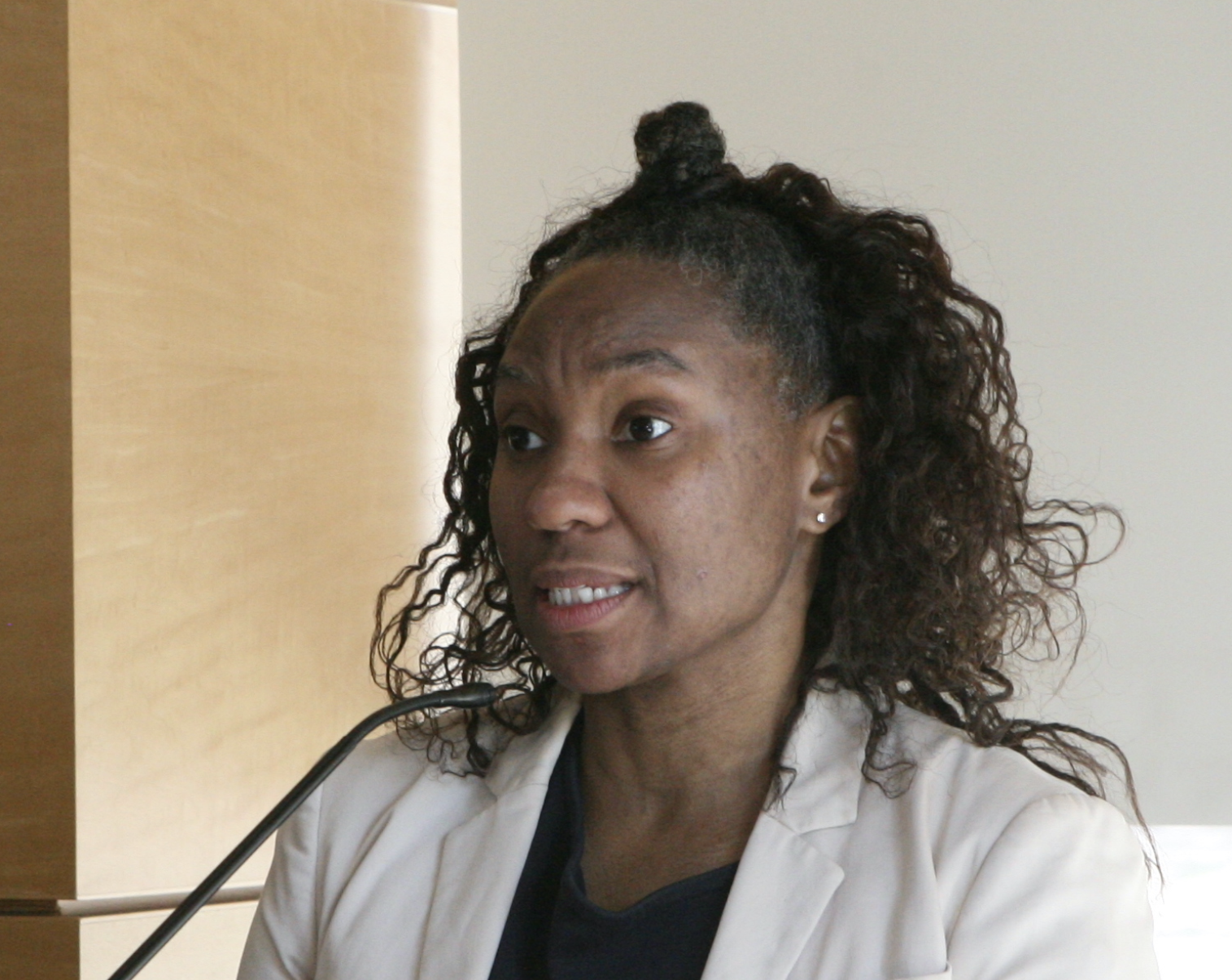
    Dorchester’s Dianne Wilkerson, a former state senator, proposed a “senior citizen legacy village” with senior housing, urgent care, a 24/7 pharmacy, and a veterans’ center.

    Former Sen. Dianne Wilkerson spoke at the meeting. Seth Daniel photo

    “This is not your grandmother’s addiction,” she said. “The idea of an addiction village here – there’s a reason why no one else has done this in the United States. It doesn’t make sense.”

    Many at the meeting said they were concerned about a high concentration of people in varying stages of substance use recovery living together, citing the increased relapse rate when individuals in recovery are surrounded by active drug users.

    Dorchester’s Marti Glynn and Jamaica Plains’s Patricia Clifford – both retired public health workers – said that sort of situation is detrimental to recovery.

    Patricia Clifford, an abutter to the Shattuck site on the Jamaica Plain side and a retired employee, said putting those in recovery together in large numbers isn’t a good idea. Seth Daniel photo

    “When people are trying to get clean and are in close contact with active users it is an insurmountable task,” said Clifford, who retired from the Shattuck in 2023.

    In contrast, members of the Housing and Health on Morton Street Homes Coalition (HHOMS) – a group that supported and worked with the BMC proposal – said they want any new plan to include at least 200 supportive housing units and to allow substance use recovery and mental health providers in the facilities. 

    Dorchester’s Shameeka Moreno, a member of HHOMS and organizer for Boston Tenant Coalition, appeared frustrated as she addressed opposition to the supportive housing idea. 

    “If this community cares about the kids, give us housing for moms going through reunification,” Moreno said. “Give us places for our kids to play where we still can have that green, but we can still have that housing, too.”

    Asserting that green space a form of public health, Karen Mauney-Brodek, president of the Emerald Necklace Conservancy, wants the site to be turned over to Franklin Park.

    Mattapan’s Kenya Beaman said the Shattuck was considered a “scary” place when she was growing up, and she’d like to see it become community-oriented and inviting. Seth Daniel photo

    “The Parthenon of parks could be reborn under this administration,” Mauney-Brodek said. “The park is a limited resource. We have limited green spaces in the city.” 

    Moreno countered that she has seen disparities in how support services are regarded by some other community members. Opponents of the housing idea said they agree that more supportive housing is needed in Boston, but they add that the Morton Street campus is not the place for it.  

    “It’s good for my Black kid, but it’s not good for a predominantly white neighborhood,” Moreno said. “That’s what I hear when you say, ‘Not in the Emerald Necklace, not over here.’ This is the city. This is what comes with the city.” 

    State Rep. Chris Worrell said in an interview that he wants to hear every idea, and that “no idea is dumb. We could create something very beautiful.” 

    In an interview, District 7 City Councillor Miniard Culpepper said that he was opposed to the former BMC plan and emphasized his support for community input on the project.

    “Whenever you have a diversity of opinion, you come up with a good result,” he said. 

    While he said he does not specifically support one plan over another, Culpepper did say he was against developing a 400-unit supportive housing complex, and he added that the residents in the immediate area who opposed the BMC plan should be represented on the advisory board. 

    “Whatever leverage I have,” Culpepper said, “I’m going to use it to make sure whatever the residents decide goes into that facility.”

    State Sen. Liz Miranda (above), who attended the meeting, said she was happy the state “agreed to start this process over.” And State Sen. Nick Collins said in an interview that he wants to see a review of the facilities and cost-benefit analysis done before the community decides on a proposal. He said he wants to explore the possibility of “retrofitting” what’s there. 

    “I think we should take a step back and say, ‘What can we do with the existing building?’” Collins said. 

    There is no clear timeline for the future listening sessions or next steps in the process, but the state again emphasized that community input will be at the forefront this time around. 

    “[Community members] feel like the trust is shattered,” Worrell said. “This is the first step of building that trust and letting the community know that this is truly a community led process.”

    His brother, District 4 Councillor Brian Worrell, added, “I’m hopeful that this state-led process will result in a use that serves Bostonians for generations to come and reflects the will of our residents.” 

    This story is the product of a partnership between the Dorchester Reporter and the Boston University Department of Journalism. The Reporter’s news editor, Seth Daniel, contributed to the article.

  • Among city’s Black clergy, Rev. Jesse Jackson’s spirit lives on

    Among city’s Black clergy, Rev. Jesse Jackson’s spirit lives on

    When Pastor John Borders was serving as the chaplain of the Suffolk County Jail in the late 1980s, he invited the Rev. Jesse Jackson to speak to his congregation of prisoners.

    Around that time, in a conversation Borders said he’ll “never forget,” Jackson admonished the young pastor for not doing enough to prioritize social justice in his ministry.

    “You and the other clergy need to work harder at bringing together the elected officials and the clergy in Boston to solidify the social justice agenda,” he recalled Jackson telling him.

    Borders, who now leads Morning Star Baptist Church in Mattapan, said those words continue to inform his ministry – pressing him, he said, to use the pulpit as a vehicle to bring about social and political change for Boston’s Black population.

    “We must not only walk in that path [of spiritual piety], but we must develop a praxis,” Borders said. “And that was a social justice praxis. He helped me with that.”

    Jackson, who died Feb. 17 at age 84, led a life that was hardly limited to a church’s pulpit. In 1965, while a student at the Chicago Theological Seminary, he led 20 students and a third of the seminary’s faculty to Selma, Alabama, where peaceful protesters had been brutally beaten by state troopers.

    Two years later, prior to finishing his theological studies, Jackson left school to focus entirely on furthering the Civil Rights Movement under Dr. Martin Luther King, Jr. 

    For the remainder of his life, through two presidential campaigns and thousands of speaking appearances, Jackson used his status as a religious leader (he was ordained by the minister of a Chicago church after he went to work for King) to advocate for greater economic and educational opportunities for Black people.

    “His life really taught me … that the pulpit was not a place to retreat from politics, but it was actually a platform for us to bring more clarity to our community, to our cities, to our country, and to the world,” said Rev. Willie Bodrick, the senior pastor of Twelfth Baptist Church in Roxbury (shown above).

    In 2017, Jackson spoke to the congregation at Grace Church of All Nations in Dorchester. Karen Foxworth, the wife of A. Livingston Foxworth, the senior pastor of Grace Church of All Nations, was present for the speech.

    She said his being there was “historical. Everybody was just really hinged to the word, because of his history and his knowledge and his fight and his experience. We really got a lot out of it.” 

    Borders, who described himself as one of Jackson’s “young protegees” in Boston, said his emphasis on social justice inspired him to co-create an initiative that would later become the Boston TenPoint Coalition, a project that successfully and drastically reduced youth violence in the city.

    “The gangs had come into Morning Star Baptist Church and tried to kill a man,” Borders said, referring to an attack in 1992 in which a group of young men stabbed a 21-year-old man eight times during a memorial service at the church. “That led to clergy meeting at Morning Star for over six months from every faith and every religion in America.” 

    That initiative, together with Operation Ceasefire, helped bring down Boston’s youth homicide rate by two thirds by 1997, according to data from the Bridgespan Group. 

    “Reverend Jackson’s life continues to reinforce the opportunity for us to see truth to power,” Bodrick said. “Also to advocate, and to ensure that our advocacy becomes action that supports the most vulnerable.”

    This story is the product of a partnership between the Dorchester Reporter and the Boston University Department of Journalism.

  • Police seek suspects who assaulted pregnant woman in Uphams Corner supermarket

    Police are searching for two teenagers who allegedly assaulted a pregnant woman in a Dorchester supermarket Sunday. One of the suspects threw a stolen tub of yogurt at the woman’s face, according to a police report.

    Police responded to a reported larceny in progress around 1 p.m. at Brother’s Market, a supermarket on Dudley Street, police said. 

    Two managers told police that a group of teenagers “came into the store and attempted to steal items” but employees at the store blocked the door and the teenagers put back the items and walked out, the report said.

    One of the teenagers then walked back into the store and stole “a tub of yogurt and put it in her pocket” before walking back out, the report said.

    A worker at the store, who was described in the report as seven months pregnant, followed the teen “to retrieve the yogurt,” the report said.

    The worker told police that as she approached the teen, “another female pushed her back.”

    “The female who stole the yogurt then threw the yogurt at her hitting her in the left side of the face,” the report said.

    Police described the teen who allegedly threw the yogurt as a “light-skinned female, about 14-18 years old, [with] long bright red hair in a ponytail.”

    Police described the teen who allegedly pushed the pregnant woman as a “black female, about 14-18 years old, [with] long bright red wavy hair.”

    Boston police are asking anyone with information to call 617-343-4275.

    This story is part of a partnership between the Dorchester Reporter and the Boston University Department of Journalism.

  • The good, the bad and the ugly of Boston’s snow removal

    Neelima Cherukuri dressed in her best cheetah print shorts and sandals before she picked up her shovel and braved the cold outside her Carson Street apartment.

    “I’m not really cold right now,” she said. “I’m very lazy to put on shoes. I came out at — oh no, it’s been 40 minutes.” 

    Above: Carson Street resident Neelima Cherukuri shovels snow from her front steps and driveway Tuesday afternoon. Kelly Broder photo

    The 17 inches of snow dropped by Monday’s blizzard reaffirmed what many Dorchester residents were already thinking: When will this winter end? 

    More than 44 inches of snow has dropped on Boston in the last month. With temperatures only recently hovering above freezing, much of it remains.

    Meanwhile, Boston’s 14 “snow farms” continue to grow. 

    Crews work to dump snow into the Bayside Expo lot on Tuesday afternoon. More than half a dozen trucks unloaded mountains of snow into the Dorchester “snow farm” in under 10 minutes. Kelly Broder photo

    Three of these farms are in Dorchester. The lot at Bayside Expo, Circuit Drive and Franklin Park serve as designated areas where large trucks dump snow to be melted. 

    The city rented snow melters from two or three vendors, interim Chief of Streets Nick Gove said. The vendors fire up the machines for up to 10 hours and all melted snow is released into stormwater drains. 

    Snow farms are typically parcels that are in an “interim state” that don’t see a lot of traffic, like the lot of the former Boston Edison Power Plant in South Boston, Gove said. Others are placed in sites owned by the City, like the Bunker Hill lots in Charlestown. The large trucks that transport snow cause temporary road closures, and farm sites are chosen to minimize that disruption. 

    Gove said city crews start with pre-treating roads to create a “brine” of salt. Plows are deployed during the storm, targeting main roadways frequented by emergency vehicles and MBTA buses. Crews then load the snow into large trucks to be dumped at the snow farms, where it will be put into snow melters. The days following a storm consist of city crews clearing school lots, sidewalks, bike lanes and bus stops. 

    The Bayside “snow farm” in operation on Tuesday, Feb. 24, 2026. Bill Forry photo

    “We appreciate everybody’s cooperation with the snow emergency and related parking bans,” Gove said. “We know that that’s an inconvenience, but it’s really critical for us to be able to get back to the curb.” 

    In a post to BlueSky Social on Wednesday, Mayor Michelle Wu said that Tuesday (Feb.24) “was the [first] time the City has done large-scale daytime snow removal, holding the parking ban to give crews max space to work. Across daytime and overnight, we hauled away almost 1,500 truckloads of snow (25,000+ cubic yds) to clear main roads and school zones. [Thank you] to our hardworking City teams.”

    The discussion of purchasing snow melters will be on the agenda at a 2 p.m. hearing on Tuesday, March 3, with city councilors Ed Flynn, Brian Worrell and Enrique Pepén. The trio will discuss establishing a snow corps and other snow removal strategies to bolster up Boston’s snow removal efforts. 

    Some Dorchester residents said they actually enjoyed their snow days, even if it meant shoveling. They appeared more bothered with Mother Nature herself. 

    “Maybe other people like the snow,” Cherukuri said, “but I’m done for this season.” 

    Others tolerated shoveling with more acceptance. 

    “I actually find it kind of gratifying,” fellow Dorchester resident Matthew Pugnaire-Jones said. “It’s not great, but it’s a sense of work.” 

    The East Cottage Street resident said he abbreviated his trip to Portland, Maine, to get back before the storm, but enjoyed being “holed up” at the Banshee pub Monday. 

    Above: Residents of Moseley Street work to clear snow from cars Tuesday afternoon. (Photo by Kelly Broder)

    On Moseley Street, resident Doug Sorensen cleared snow from around his car to return to in-person work for the Army Corps of Engineers on Wednesday. 

    Sorensen said the large snowbanks around street parking areas have been crowded, but that the roads appeared well-treated prior to this storm. He said he’s done with winter weather. 

    “We can stop at this,” Sorensen said. “That would be nice.”

  • First Parish Dorchester vigil for Minneapolis victims ‘just a beginning,’ congregants hope

    First Parish Dorchester vigil for Minneapolis victims ‘just a beginning,’ congregants hope

    Soft rainbow lights illuminated the sanctuary ceiling, and a purple glow danced across the guitars and keyboard of the 1630 Band. The group – named for the year that the church and Dorchester were founded – performed Buffalo Springfield’s “For What It’s Worth.” 

    The lighting and the music endorsed a vigil gathering of the congregation of Unitarian Universalist First Parish Dorchester last Thursday evening (Feb. 19), where some 20 attendees in the pews – careful not to drip wax from handheld candles – learned about immigration support organizations and sang protest songs as acknowledgment of the deadly violence in Minneapolis involving by federal agents.

    Their focus was on Renée Nicole Good and Alex Pretti, American citizens who had been shot dead in separate encounters on the streets of Minneapolis last month by agents of their government.

    Their fate and the widespread civil protest against federal forces in that city sparked both outrage and support across the country. 

    The situation there also ignited fear in Boston, where more than a quarter of residents are foreign-born.

    Prayers, moments of silence, reflections about hope were peppered between performances of the Underground Railroad song, “Wade in the Water,” Bob Dylan’s “Blowin’ In the Wind” and other protest arrangements. 

    “We have witnessed the death of folks who just want to be present and say, ‘Have a heart,’” said Julia Thompson Martinez, a church member and immigrant from Honduras (pictured above). “We are here this evening because people do care. We care.” 

    Congregant Betsy Miessner spoke about her volunteer work with the LUCE Immigrant Justice Network, which documents ICE sightings and informs the public. She has been trained in how to verify sightings of ICE officers and share them with the community.

    “Know Your Rights” cards were handed out, along with whistles to signal an ICE sighting. The cards advise those who see ICE officers to call the LUCE hotline at 617-370-5023. For those confronted by officers, LUCE recommends not allowing them into your home without a signed warrant, not answering any questions, and not signing any documents. 

    “We wake up every morning, [and ask], ‘When is ICE coming to Boston?’” said Ardis Vaughan, the parish treasurer. “They’re in East Boston. When are they going to come to Dorchester?’”

    Susan Lush, the elected clerk of the church and main organizer of the vigil, said events like this can help the cause of immigrant safety, even in a small way. “If nothing else, it makes you feel more agency,” she said. “There are things that you can do, and at least you can let your feelings be known in a way that is non-violent.” 

    Theodore Stocker, a board member of the church attended the vigil with his seven-year-old daughter, Juniper Stories. “It is nice to see that there’s a big feeling of solidarity,” he said. 

    Because the parish is small, Lush said, she was worried about a low turnout at Thursday’s vigil. But there will be more events like this, she noted, adding: 

    “This is the first attempt, and I’m sure we’ll learn from it, and hopefully be able to apply it in other ways in the future,” Lush said. “So, I see it as just a beginning.”

    This story is part of a partnership between the Dorchester Reporter and the Boston University Department of Journalism.

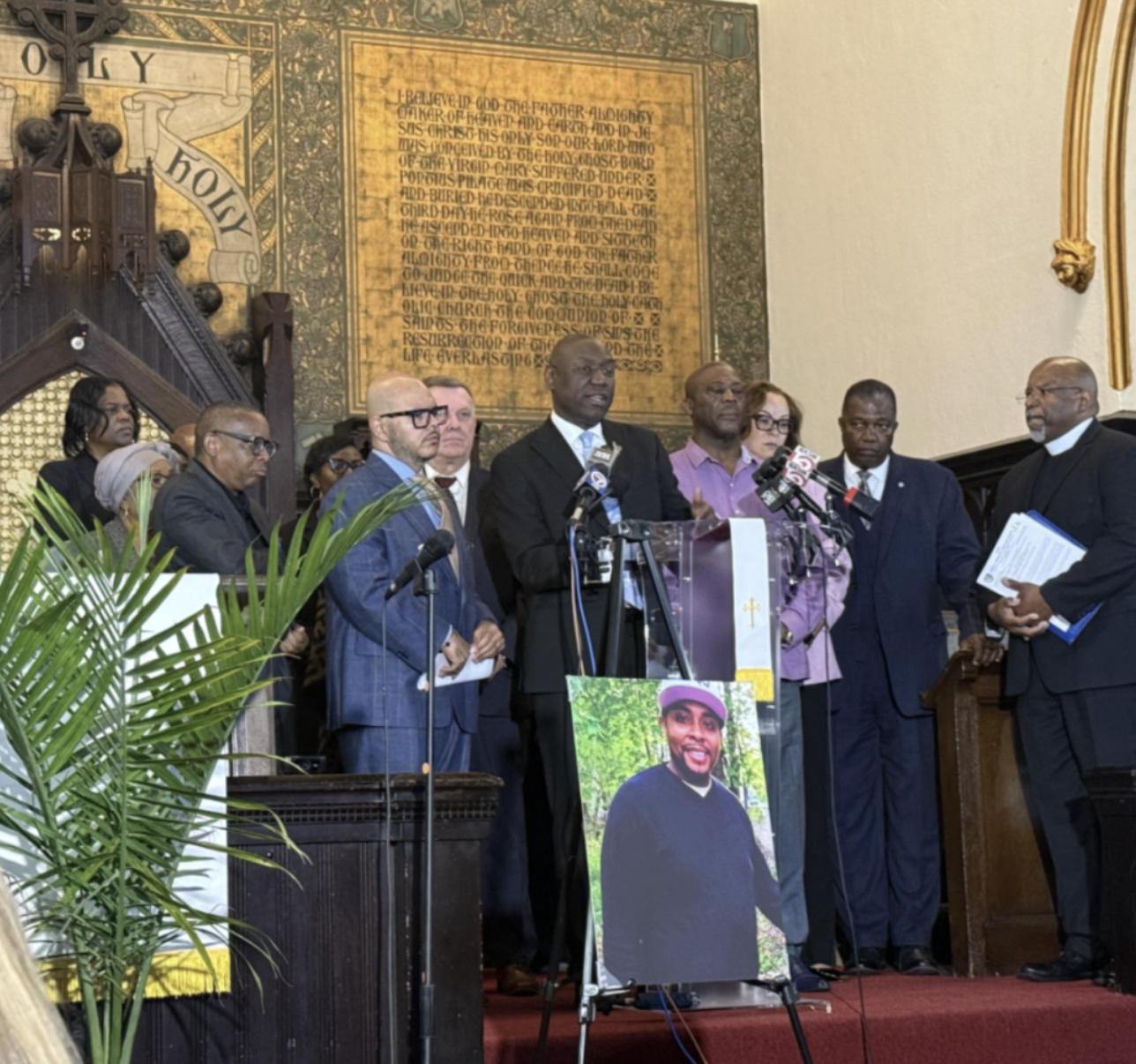
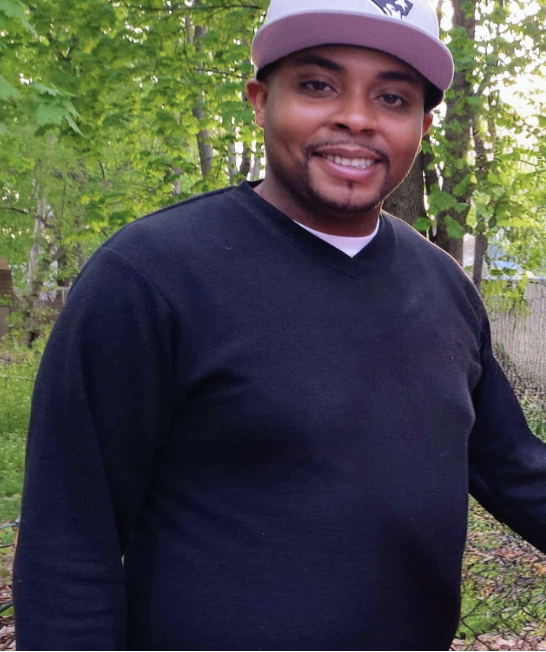
  • Legislators petition to name Dorchester Courthouse after the late Juvenile Court Judge Leslie E. Harris

    A new bill in the Legislature proposes to rename the Dorchester Courthouse in Codman Square for the late Judge Leslie E. Harris as tribute to the work and legacy of the lifelong educator who spent his early years as a probation officer and public defender before sitting on the bench in the Suffolk County Juvenile Court for 20 years until his retirement in 2014. 

    “If you’re from Dorchester or Roxbury, you know who Judge Harris is,” said state Rep. Chris Worrell, one of the bill’s House sponsors. “One of the only judges that you could see in community. You don’t see judges like how you saw Judge Harris at the supermarket and different kinds of events.”

    When Worrell attended Judge Harris’s wake last October, he said he saw mourners from all walks of life, from justices and elected officials to formerly incarcerated individuals, community leaders, and students. That gathering, Worrell said, reflected the life Judge Harris had lived.  

    “To rename the Dorchester District Court after Judge Leslie Harris, it was a no-brainer,” he said. “From the first day we filed the bill, hundreds of people reached out. Everyone’s excited about seeing this done.”   

    For the Harris family, the proposed designation marks a legacy of service and support and serves as a reminder that the man they called “dad” was deeply appreciated. 

    “I wish he were here to see it,” said his son Brian. “He was just dad to me. I have an opportunity to keep his legacy going, and that’s kind of our intentions.” 

    He noted that while Judge Harris was deeply involved in his community and was the kind of person who would go out of his way to help someone, it never took away from his role as a father.  

    “A lot of the people he worked with are no longer children. But some of them have children now,” Brian said. “I hope that in that legacy, their children understand that this was someone in the community who did a lot for you and made a big impact.”

    Should the bill pass, the courthouse would be the third in the state to be named after a Black legal professional, the others being the Roderick L. Ireland Courthouse in Springfield and the Edward W. Brooke Courthouse in Boston.

    “The Massachusetts Black Lawyers Association is considering what we can do as an organization to contribute to supporting that goal,” said Theresa Wilson, president-elect of the association, which is dedicated to fostering inclusivity and equity within the legal field.

    “I remember sitting in meetings with Judge Harris where he was frustrated at the lack of Black men in the juvenile court,” Wilson said. “Juvenile court is often full of little Black boys coming before judges who are making decisions about their lives.”

    As of 2021, nearly 88 percent of lawyers in Massachusetts identified as white, according to census data from the National Opinion Research Center at the University of Chicago, while young people of color made up around 60 percent of juvenile arraignments, 80 percent of pretrial detentions, and 84 percent of commitments to the Department of Youth Services, according to the Massachusetts Coalition for Juvenile Justice Reform.

    Wilson said it is essential for young people to be able to see and recognize themselves in a court system that is often “one monolithic appearance,” something Judge Harris advocated for through his work with the MBLA.

    He was the co-chair of the MBLA Judicial Academy, where he worked with his community network and co-chair Joseph Feaster to create an advisory team that supports those interested in becoming members of the judiciary.

    “We just had our second graduation for our Judicial Academy [Feb.12] for Black History Month, and we have decided to rename the Judicial Academy in honor of Judge Harris,” Wilson said. “It’s now called the MBLA Honorable Leslie E. Harris Judicial Academy.”

    In the legal profession, having a mix of people from different perspectives only makes the work done stronger, said Rodline Louijeune, president of the Boston College Law School Black Alumni Network.

    “If you asked Judge Harris if he thought he would have been a judge when he was in South Side, Chicago, he probably would have said ‘Absolutely not,’” Louijeune said. “I don’t think this time last year I would have thought that Judge Harris would only be a memory now.”

    Leslie E. Harris was a founding member of BC Law’s Black Alumni Network in 1985, when he and a few other students were looking for a way to stay in touch after graduation. BC BAN celebrated its 40th anniversary last year and works to keep alumni engaged and connected while supporting current students on their journeys to become attorneys, which, Louijeune said, is part of Harris’s legacy. 

    “As more of our icons become legacies … it’s important to remember that there’s foundational work that’s been done,” she said. “Having this physical representation of Judge Harris would be, and will be, important and foundational in ensuring that his memory lives on.”

    The House and Senate are currently resolving differences in the bill.

    “My father loved Roxbury, he loved Dorchester, he loved giving people an opportunity, and he loved connecting with people,” Brian Harris said. “We don’t want his legacy to fade away, so that’s why this is important. We hope that everybody who has been moved or motivated by him will share his legacy moving forward.”