Category: Flipside News

  • Cruz Development’s One Waverly project secures state funding

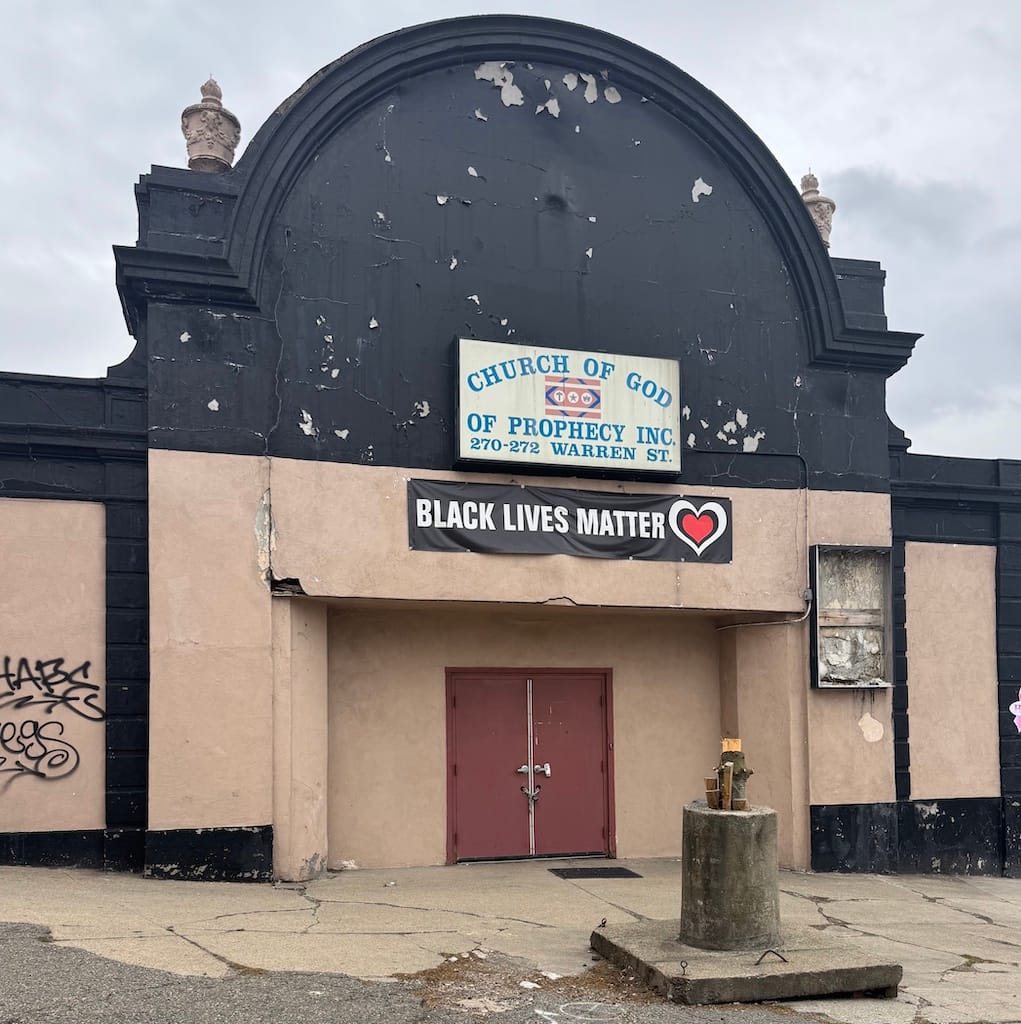
    With walls sprayed with graffiti and trash lining the street nearby, a dilapidated structure sits on 1 Waverly St. in Roxbury. What had once been a movie theater from the 1940s through the 1970s was converted into a Church of God of Prophecy Inc. site and utilized as a place of worship for more than 20 years. 

    Five years ago, the church sold the building due to increasing maintenance costs, and it sat in a state of significant disrepair with parts of the roof collapsing and water leaking. 

    Since then, Cruz Development Corporation bought the site, seeing an opportunity to transform it into affordable housing for Roxbury.

    Now, the One Waverly project is moving one step closer to completion after the company received about $2 million each in state tax credits and additional subsidies through the federal Low-Income Housing Tax Credits program, according to Cruz Companies.

    The funding is in addition to $5.2 million the project received in September from the City of Boston Mayor’s Office of Housing, according to officials.

    “It’s been a blighted building for a very long time,” said Daniel Cruz Jr., the company’s senior vice president. “[Residents] want to see something happen on the site since it’s been … an eyesore. They’re looking forward to us putting up a brand new building.”

    The proposed project would include 52 units of affordable housing dedicated to households earning less than 60 percent average median income and over 3,800 square feet of commercial space.

    Funding for affordable housing is very competitive, and the process can be arduous, said Stephen Donovan, the city’s housing development project manager of One Waverly. 

    “This project has a lot of momentum right now,” said Donovan. “There’s a critical need for restricted affordable housing in Boston.”

    Cruz said the neighborhood’s demographics suggest the same. 

    “A lot has to do with what the neighborhood is looking for,” Cruz said, “We try to come up with something that we believe will be strongly supported by the neighborhood that we choose to do a development in.” 

    Construction is projected to start in early 2027, according to Cruz, with an approximate 20-month building time. 

    Cruz Companies is a third-generation, family-run and 100 percent Black-owned enterprise that works on multiple types of projects, including affordable and mixed-income transactions and rentals.

    Cruz said the company had multiple meetings with neighborhood groups and have received support for the complex.

    The current site of 1 Waverly, the former Church of God of Prophecy Inc. (Stephanie Ahn photos).

    Lorraine Payne Wheeler, the chair of the Roxbury Path Forward Neighborhood Association, said she supports the project but explained that not all affordable housing endeavors have had positive impacts in Roxbury. 

    If rentals are 100 percent affordable for mostly low-income residents, then, she said, that does not leave much for people in the middle. Those residents struggle to choose between extremely expensive and restricted low-income housing, said Wheeler in an interview.

    “Many groups of people need assistance with housing because it’s so expensive. But I think you reach a saturation point. We’ve been pushing for more affordable home ownership rather than rentals,” Wheeler said.

    Wheeler and other neighbors said they are optimistic about the Waverly project due to the location and income flexibility for residents. Wheeler cited the sliding fee, housing opportunities to different people and the project’s attractiveness to neighbors.

    “We’re hopeful that this building will serve everybody in the neighborhood,” said Wheeler. 

    Cruz Development has said the project will include other appealing amenities and green space. 

    The current run-down courtyard in the middle of the buildings will be transformed into an open space with picnic tables and chairs for residents to enjoy.

    The company is projecting the building to be open to rent to residents in early 2029.

  • Black History Month celebrations in a time of erasure

    Worshipers celebrate Black History Month service at Twelfth Baptist Church in Roxbury on Feb.15. Credit: Jiaxu Liu

    While Black History Month is observed this year in Boston and beyond, the Trump administration has taken actions that many say attempt to erase aspects of Black and other histories. 

    In January, the administration directed the National Park Service to remove an exhibit on slavery from a site in Philadelphia. Last year, the president issued multiple executive orders targeting diversity, equity and inclusion policies on college campuses and workplaces. In response, this year’s Black History Month celebrations have taken on an added tone of determination and resistance.

    As organizers prepare for Women’s History Month next month and Asian-American and Pacific Islander heritage month in May, those celebrations are also taking on new meaning this year.

    During a recent service at Twelfth Baptist Church in Roxbury, ministers and worshipers said preserving and sharing Black history is more important than ever.

    “This is definitely a time where we’re doubling down,” said Isaiah Briggs, a minister of the Twelfth Baptist Church during a recent interview. “We’re saying …you know our history. Although they’re trying to erase it, you can’t erase the legacy and the way that it’s impacted us today.”

    He said it’s important that the church and others who celebrate Black History “keep this history alive” and that they can no longer rely on the government “to preserve our stories.”

    “We as the community, and particularly as a church, have a sacred obligation to not just preserve the stories, but to tell them to the next generation in a way that can encourage them, [empower and guide] them in a time [when it’s most needed],” said Briggs.  

    The church has taken on a recent effort, by introducing a “luncheon storytelling” program that allows senior members to take the stage and share their personal experiences. One speaker described participating in bus boycotts in Alabama; another recalled attending segregated schools in Massachusetts, where she had to walk through white neighborhoods to reach the high school where her mother worked cleaning the bathrooms. Others described life in the segregated South, where Black customers were prohibited from trying on shoes before purchasing them. 

    “I do think that Black folks and communities are always going to create a way,” said Dzidzor Azaglo, an artist and activist who helps organize the storytelling luncheon. “They’re always going to build what we need. We’re always going to contribute and speak out of the type of world that we want to live in.”

    During the February service, Bodrick emphasized that reflecting on Black history is also a way to confront present-day inequalities and work toward a more just future.

    “We [have to] keep speaking to the ancestors, so we don’t repeat the mistakes of the past, so we don’t misdiagnose the problems of the present, so we don’t shrink our imagination because the God we serve is able to do exceedingly and abundantly above all we can ask,” Bodrick said.