Category: Natick Report

  • Natick residents reflect on $7m operating budget override a year later

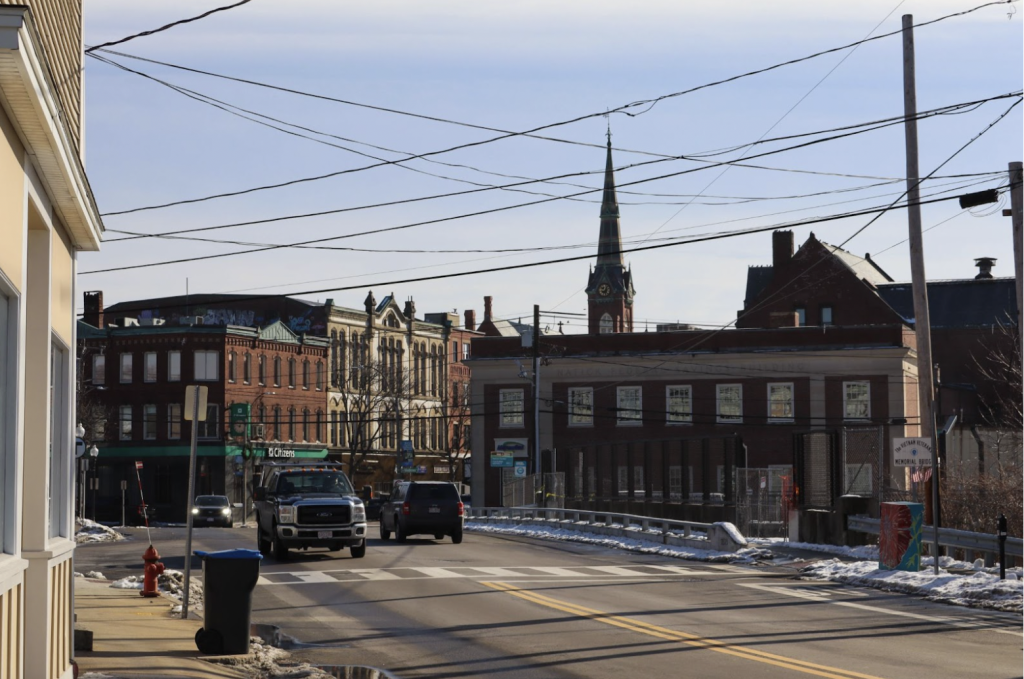
    Natick Center (photo by Olivia Ruzic)

    Last year’s Natick annual town election posed a seemingly impossible choice for its residents: Raise their real estate taxes by an average of $450 per year through a $7 million budget override, or sacrifice the integrity of their town services and children’s schools. 

    In a 60:40 vote, Natick residents chose the budget override.

    “The way it was presented, there seemed to be little choice in that if we didn’t do it, we were only going to end up falling behind and needing to do it later,” said Rick Devereux, a retired resident who voted for the override.

    For over a decade, Natick has been stuck in a budget deficit and relying on free cash, an unpredictable income source, for certain operational costs, Town Administrator Jamie Errickson said.

    “The override allowed us to reduce our reliance on free cash to cover the budget deficit,” he said. “But it didn’t necessarily address the entire structural deficit issue.”

    Free cash refers to the remaining funds after a fiscal year of unused budgets from town departments, such as the police or public works. When a town relies on free cash for operating expenses instead of one-time capital projects, it’s in a budget deficit, Errickson said.

    “It’s not uncommon at all for communities to use some level of free cash to help balance the budget,” he said. “It’s just to the extent that we’re reliant on free cash, because free cash is not a guaranteed revenue source.”

    With the override in place, Natick’s reliance on free cash dropped from $7 million to only $3.5 million, Errickson said. Still, the override was not enough to pull Natick out of its deficit.

    Mostly, the override funding prevented job losses in municipal services and schools, according to the town of Natick. If the override failed, 41 Natick Public Schools personnel and seven town personnel would have been laid off. 

    Natick is one of multiple municipalities in Massachusetts to have recently passed a Proposition 2.5 override. All share similar purposes: Maintain school and town services, and support those who provide them. In late March, Arlington residents approved a $14.8 million override. Brookline residents will vote in May on a $23.5 million override. 

    Donna M. McKenzie, a Natick resident who lives in the 1950s home that her parents owned, voted yes for the override despite potential financial sacrifices.

    “I live on a limited income, and when I was taking care of my dad, we just lived off of his social security income,” McKenzie said. “It was really difficult, but he also supported education, so he voted for the override for the high school.”

    She said residents depend on each other, and maintaining Natick schools benefits everyone. 

    “Massive cuts in the schools would serve no one,” McKenzie said. “Schools are a big part of the reason why people come to Natick, and a big part of why property in Natick is valuable.” 

    This year, McKenzie said she can feel the impact of the override in her personal life. 

    “There are things I can’t do,” McKenzie said. “I shop the periphery in grocery stores, and there are food items I can’t afford. I haven’t gotten my car fixed for quite a while. It’s not easy.” 

    Mckenzie voted yes because her priority to preserve local education trumped lower property taxes. 

    “I want to stay in my house. I worry about whether that’s going to be possible for me over the long run, because of the taxes. But I do, as I’ve said, believe the role of the schools is critical.”

    Nancy Agris Savage, a freelance journalist and writer, said when she was raising her children in Natick, she campaigned for budget overrides to improve the local schools. Years later, she hasn’t changed her tune.

    “I have voted for basically every override that specifically had to do with the school system, because it just makes sense,” Agris Savage said. “Somebody else helped improve our schools when my kids were younger. We all pitched in, and so it’s my job to do the same now.”

    Tony Lista, a past member of the Natick Financial Committee, said he voted no because the town should have consolidated its services before proposing a large override.

    “Nobody wants to see people displaced, but the taxpayers should be able to get a clear idea [of] how our services are provided and make adjustments as necessary,” Lista said. 

    He said he thinks the town has room to tighten its services and he “challenges” Natick to assess how often it needs heavy, expensive equipment, like sewer vacuum trucks. 

    “Those are the things I think that we should be looking at,” Lista said. “They’re boring items, things that people don’t care about, but could save big money in the town.”

    As a resident who owns more than one property in Natick, Lista faces “an additional impact.” 

    “I’m always willing and able to participate in the services that make sense to the town,” Lista said. “So, you have to make adjustments in other areas of your life.”

    The town administration wants to avoid another budget override, but Select Board Chair Bruce Evans said, “never say never.”

    “I think [the override] has bought the town some more time. We had no flexibility in our budgets,” said Evans. “But you know, if we look for this fiscal year and beyond, we’re not going to be without our set of challenges.” 

    This story is part of a partnership between the Natick Report and the Boston University Department of Journalism.

  • Natick breakfast celebrates woman entrepreneurs, builds community

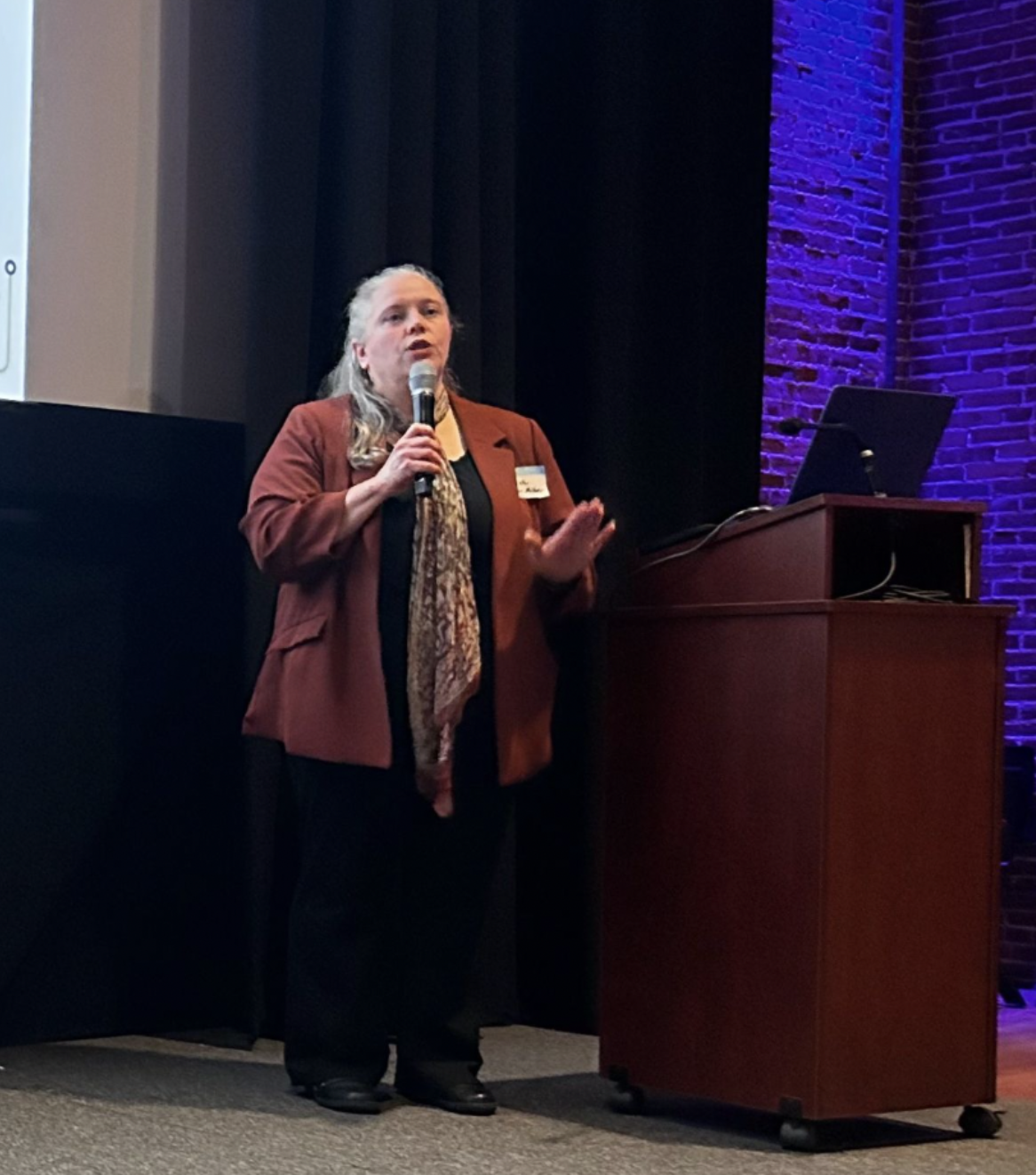
    Leah Parker-Moldover speaking at W.E. (Women Entrepreneurs) Love Women Breakfast (Photo credit: Mary Goetz)

    Even after the coffee cups were cleared and people began filing out, a handful of women hung back on the second floor of the Center for the Arts in Natick, swapping stories about their budding businesses and personal journeys.

    Executive Director of Framingham-based MetroWest Nonprofit Network Leah Parker-Moldover spoke at the breakfast about the importance of meaningful networking. She later said in an interview that having events specifically dedicated to women—rather than events that simply support the ones who show up—fosters a different kind of vulnerability among attendees. 

    “I think sometimes we can find ourselves feeling like we have to present our best selves,” she said. “Really, the most meaningful progress sometimes happens when we share what we’re actually struggling with.”

    To mark the end of Women’s History Month, nearly a dozen women gathered at the Center for the Arts in Natick for the W.E. (Women Entrepreneurs) Love Women Breakfast on March 31, where they learned how to own their brands and expand their businesses. 

    Executive Director of the Natick Center Cultural District Heather Rockwood said her goal with the W.E. Love Women events is not only to “celebrate” and “uplift” women entrepreneurs, but to give them the opportunity to network with each other and learn how to grow.

    “I hope they leave feeling refreshed and excited about being themselves; being women entrepreneurs,” Rockwood said. 

    The breakfast began with attendees milling about the room, introducing themselves to each other and to guest speakers Parker-Moldover and Gina Gibbs Foster, a corporate communications and corporate affairs professional.

    “As a woman leader in the nonprofit sector that is predominantly female, it’s important to take time to celebrate women and build each other up,” Parker-Moldover said. 

    Gibbs Foster followed Parker-Moldover to the stage, speaking to the “small but mighty” crowd, as she called it, about the importance of building one’s brand and living up to it. 

    “It’s all about telling your story, owning it and reinforcing it over time,” she said in an interview after the breakfast.

    Gibbs Foster said when she was asked to speak, she felt moved to share her professional brand-building “secrets,” which she said have brought success to several executives and corporations. 

    “The more resilient a woman can be, the better she is able to withstand economic changes, political changes, social changes, and still knows she can count on herself and her business to fulfill her needs, personally, professionally and financially,” she said.

    Leah Heppner Tragolo, who’s starting her own leadership and life coaching business, said her experience was “wonderful,” especially because it was near her home and small-scale.

    “These days, community is everything,” Gibbs Foster said. “This type of event just reinforces the value of getting together in person with like-minded people who share similar interests and passions, because we can all help each other and benefit from the relationships as a result.”

    After the breakfast finished and organizers began cleaning up, some women hung back to connect with one another before heading out. 

    “I work from home, so it’s a great opportunity to meet other entrepreneurs, women, people in my community,” said Heather Schaffner, who coaches women in midlife menopause with her company Alora.

    Tragolo mentioned past business-building events she’d been to, where she left feeling “drained.” Here, though, she said she could walk out feeling refreshed instead.

    “I got more out of this than I did at a thousand-person event,” Tragolo said.

    In her talk, Parker-Moldover said it’s not about having 500-plus LinkedIn connections. It’s about having the one or two that actually amount to meaningful, reciprocated and human bonds — especially with other women.

    “It’s easy to look around and only see the hard things, the overwhelming things,” she said. “But when I actually sit down with a person, I get to hear about the incredible work that’s being done, and I end up feeling so much better, not only about the future, but also about my community.”

    This story is part of a partnership between the Natick Report and the Boston University Department of Journalism.

  • Natick breakfast celebrates woman entrepreneurs, builds community

    Natick breakfast celebrates woman entrepreneurs, builds community

    Even after the coffee cups were cleared and people began filing out, a handful of women hung back on the second floor of the Center for the Arts in Natick, swapping stories about their budding businesses and personal journeys.

    Executive Director of Framingham-based MetroWest Nonprofit Network Leah Parker-Moldover spoke at the breakfast about the importance of meaningful networking. She later said in an interview that having events specifically dedicated to women—rather than events that simply support the ones who show up—fosters a different kind of vulnerability among attendees. 

    “I think sometimes we can find ourselves feeling like we have to present our best selves,” she said. “Really, the most meaningful progress sometimes happens when we share what we’re actually struggling with.”

    To mark the end of Women’s History Month, nearly a dozen women gathered at the Center for the Arts in Natick for the W.E. (Women Entrepreneurs) Love Women Breakfast on March 31, where they learned how to own their brands and expand their businesses. 

    Executive Director of the Natick Center Cultural District Heather Rockwood said her goal with the W.E. Love Women events is not only to “celebrate” and “uplift” women entrepreneurs, but to give them the opportunity to network with each other and learn how to grow.

    “I hope they leave feeling refreshed and excited about being themselves; being women entrepreneurs,” Rockwood said. 

    The breakfast began with attendees milling about the room, introducing themselves to each other and to guest speakers Parker-Moldover and Gina Gibbs Foster, a corporate communications and corporate affairs professional.

    “As a woman leader in the nonprofit sector that is predominantly female, it’s important to take time to celebrate women and build each other up,” Parker-Moldover said. 

    Leah Parker-Moldover speaking at W.E. (Women Entrepreneurs) Love Women Breakfast (Photo credit: Mary Goetz)

    Gibbs Foster followed Parker-Moldover to the stage, speaking to the “small but mighty” crowd, as she called it, about the importance of building one’s brand and living up to it. 

    “It’s all about telling your story, owning it and reinforcing it over time,” she said in an interview after the breakfast.

    Gibbs Foster said when she was asked to speak, she felt moved to share her professional brand-building “secrets,” which she said have brought success to several executives and corporations. 

    “The more resilient a woman can be, the better she is able to withstand economic changes, political changes, social changes, and still knows she can count on herself and her business to fulfill her needs, personally, professionally and financially,” she said.

    Leah Heppner Tragolo, who’s starting her own leadership and life coaching business, said her experience was “wonderful,” especially because it was near her home and small-scale.

    “These days, community is everything,” Gibbs Foster said. “This type of event just reinforces the value of getting together in person with like-minded people who share similar interests and passions, because we can all help each other and benefit from the relationships as a result.”

    After the breakfast finished and organizers began cleaning up, some women hung back to connect with one another before heading out. 

    “I work from home, so it’s a great opportunity to meet other entrepreneurs, women, people in my community,” said Heather Schaffner, who coaches women in midlife menopause with her company Alora.

    Tragolo mentioned past business-building events she’d been to, where she left feeling “drained.” Here, though, she said she could walk out feeling refreshed instead.

    “I got more out of this than I did at a thousand-person event,” Tragolo said.

    In her talk, Parker-Moldover said it’s not about having 500-plus LinkedIn connections. It’s about having the one or two that actually amount to meaningful, reciprocated and human bonds — especially with other women.

    “It’s easy to look around and only see the hard things, the overwhelming things,” she said. “But when I actually sit down with a person, I get to hear about the incredible work that’s being done, and I end up feeling so much better, not only about the future, but also about my community.”

  • ‘The first step to empathy is listening’: Natick Freedom Team hosts interfaith sharing event

    A microphone and oyster shell passed from hand to hand in a circle of folding chairs as neighbors spoke about their own spirituality and listened to others’ without interpretation.

    The Natick Freedom Team, a volunteer anti-bias, racism and bigotry organization, gave residents the chance to explore their neighbors’ belief systems at an interfaith listening circle March 25 at the First Congressional Church of Natick.

    “Our goal is to listen and help create an opportunity for people to share,” said Don Greenstein, an ombudsperson at Brandeis University and member of the Natick Freedom Team who led and moderated the circle. “It was met and then some.” 

    Greenstein said he was trained in conducting listening circles, a “restorative justice” practice with roots in Native American tradition, where participants sit in a circle with a talking stick to ensure one person speaks at a time without interruption. Greenstein has organized several listening circles with the Natick Freedom Team. 

    Christine Guthery, a member of the Natick Freedom Team and founder and executive director of Spark Kindness, an anti-bullying organization, underscored the importance of listening in a time of surface-level judgment, exacerbated by social media.

    “The first step to empathy is listening, and empathy is the first step to preventing harm of all kinds,” she said.

    Freedom Team volunteers Greenstein, Rev. Cindy Worthington-Berry and the Rev. Becky Binns created Wednesday’s listening circle as a part of Natick’s World Interfaith Harmony Month, according to Binns.

    World Interfaith Harmony Month was a celebration and a way to connect with neighbors’ spirituality. The Natick Interfaith Clergy Group, a coalition of faith leaders across congregations and faiths, held 11 events, from Friday night service at Temple Israel of Natick to a visit to the Hindu Sri Lakshmi Temple in Ashland, among others, from Feb. 26 through March 26. 

    “None of it stands alone. It’s all part of a broader tapestry of us really honoring one another with presence and truth and respect,” Binns said.

    Greenstein opened the listening circle with a speech laying out its purpose and the rules for participation: listen respectfully, no dialogue, use “I” statements and remain mindful about generalizations and microaggressions. 

    He then asked the first question — “What do you wish people knew about your religion, faith or spirituality?” — and passed the talking stick, a microphone and oyster shell, to the first person to his left, and so on around the circle.

    Swati Dave, a member of the Interfaith Clergy Group from the Hindu Sri Laskshmi Temple, began in the outer circle, quietly observing participants’ responses until she felt inclined to speak, and moved to the inner just in time to catch the talking stick, rubbing the shell between her fingers as she shared. 

    “It was a beautiful experience that everyone heard me,” Dave said in an interview after the meeting, describing what it was like to speak about Hinduism without being “judged or questioned.” 

    The Rev. Binns of St. Paul’s Episcopal Church said that when she suggested the circle, she hoped it would facilitate a deeper dive into faith discussions that the Interfaith Harmony Month events only touched upon. 

    Binns said she appreciated the honesty participants showed in speaking with one another about their faiths. 

    “There’s something unique and powerful about the way that Natick really spends time listening to each other and spending time with each other in this kind of way,” she said.

    Tim Lathwood, a Satanist, said he’d been to similar events as a member of the First Congressional Church but nothing quite like Wednesday’s interfaith listening circle, calling it a “unique experience.”

    “It’s important to use your spiritual knowledge,” he said. “When speaking about spirituality, you speak to everybody. When speaking about spirituality, you speak to nobody.”

    Jay Poropatich, Natick communications director and member of the Natick Freedom Team, said while he is not particularly religious, he participated in the listening circle as a Natick resident and neighbor, as well as the town’s communications director. 

    “The reason I communicate is to inform and build community,” Poropatich said. “And in order to communicate, which is fundamentally talking, you really have to start listening.”

    For the Rev. Cindy Worthington-Berry, a pastor at First Congressional Church of Natick and member of the Natick Freedom Team, the circle both gave her a chance to listen to her parishioners speak and gave them the “powerful” experience of articulating their own faith instead.

    Worthington-Berry said she wants more diversity at events like the listening circle. She said she always wants to ask herself, “Who’s not there and what would make them feel comfortable?”

    Binns said she was glad to see the listening circle giving neighbors a chance to hear about others’ belief systems in a way not always possible in a church, temple or other establishment. 

    “We so often get together in these interfaith settings, and we neutralize ourselves a little bit in order to not offend one another and to feel like we’re in a place where we have a common knowledge,” Binns said.

     “But what sometimes gets lost is the deeper beauty and deeper honesty of really loving and talking about and celebrating the differences of our faith journeys and traditions.”

  • Natick’s Natural and Synthetic Turf Field Study Group stays on course with sports fields research

    Memorial Field, one of 3 artifical turf fields in Natick.

    After months of debate over how to best use turf fields in Natick, the town’s study group is making progress researching the pros and cons of artificial turf. 

    The town established the Natural and Synthetic Turf Field Study Group in January to study environmental, financial and children’s health factors in turf field installation and management.

    The study aims to collect data to help the town plan for the future of sports fields across Natick. 

    “Our goal as a study group is not to recommend one thing or another, but it’s to ensure that everyone has the information they need to make an informed decision,” said Julie McDonough, who is part of the group and a former Natick School Committee member.

    Simultaneously with the January 2026 establishment of the study group, the Select Board, Superintendent and Town Administrator forwarded a separate initiative to analyze the design feasibility of the “disrepaired” JV field at Natick High School. 

    “The grass isn’t growing — it’s compacted, so it’s hard, and so that makes it a little bit unsafe,” McDonough said.

    The town approved the field design funding for the JV field during the 2024 spring meeting. However, later that year, a group of Natick Town Meeting members called for a 3-year moratorium on the installation of new synthetic turf fields due to concerns over the effects of turf. 

    The moratorium presentation highlighted toxicity risks to children from turf as well as climate and local environmental risks. 

    “I just think there are too many reasons not to do it,” said Rick Devereux, one of the residents who proposed the moratorium. “It’s our kids.”

    The moratorium “would allow time to address uncertainties,” according to the presentation. 

    The issue failed at the town meeting. 

    A year passed, and the same moratorium group issued an advisory moratorium on turf fields. This time it passed. 

    In response, Select Board and study group member Bruce Evans suggested forming the Natural and Synthetic Turf Field Study Group. 

    The town passed two initiatives. One to analyze JV field design possibilities, and the other to study the effects of synthetic turf. 

    The study group held its first meeting Feb. 2.

    Going forward, the study group will hear from experts from different organizations, such as Parks and Recreation and the Department of Public Works, to gain a balanced perspective for their report. 

    Other nearby towns have also undergone similar studies, including Wayland and Arlington.

    Devereux commended Wayland’s approach to turf fields, particularly agreeing with their ethical concerns. 

    “The idea of replacing grass in a school with plastic when the school is trying to, you know, teach and model more sustainable behavior for their students, was an enormous moral gap,” Devereux said. 

    However, Natick High School Lacrosse Coach Nathan Kittler said he believes turf fields provide more playing hours, which could solve field overusage.

    Grass fields must have a certain amount of “rest hours” to preserve grass quality. With the designated rest hours and the number of fields available in Natick, there are not enough playing hours for all the sports teams. 

    It’s too much for the fields to handle. 

    “At the beginning of the season, after they let [the grass] rest all summer long, and don’t let everybody on it’s nice,” Kittler said. “But once the season starts up, it’s destroyed within weeks.”

    Kittler said even the players prefer the turf over grass. In the end, the high school and youth teams are most affected by the change. 

    After the study group submits its report, the town will have to weigh the potential health and environmental concerns against the playability for the youth sports teams.

    McDonough said she hopes that the group will have an interim report by spring and a full report for the Fall Annual Town Meeting. The report will guide any future decisions about local field design, potentially including the JV field. 

    The study group has four more meetings planned for March 16, March 23, April 6 and April 13.

    “Natick will decide,” said Evans. “It’s ultimately a town decision that says, you know, [what] do we want?”

  • Natick residents hold onto hope in protest in solidarity with Minnesota

    Protesters hold up signs for Jan. 31 rally (photo by Olivia Ruzic)

    When Diane Holzheimer planned a short-notice, anti-ICE protest for a cold weekend, she wasn’t sure how many people would be able to make it out. But she was pleasantly surprised when 160-some of her neighbors from Natick and the surrounding areas showed up Saturday, brandishing American flags and anti-ICE signage to stand in solidarity with Minnesota. 

    “We’re outraged that American citizens are being killed in the streets,” said Elaine Bekebrede, a retired software engineer who lives in Natick. “This is not what law enforcement — if ICE calls themselves law enforcement — that’s not what law enforcement is supposed to do.” 

    Rallygoers gathered in Natick Center Jan. 30 from 12 p.m. to 1 p.m. in Natick Center. On the same day, in cities from coast to coast, protesters participated in a nationwide “ICE Out Everywhere” shutdown. Hundreds of protests were planned for the national day of action, including Natick’s rally. 

    Shouts of “ICE out!” and “What does community look like? This is what community looks like!” echoed throughout the downtown area. Conversations barely could be heard over cowbells, honking cars and the roar of the chants. 

    Protesters in puffer jackets held signs, including extras for passersby, ranging from puns about melting ice to pictures of immigrants who died in detention centers. Additionally, protesters bore American flags or symbols. Holzhiemer wore an American flag as a scarf.

    “I love America, and I always have,” Holzheimer said. “I don’t like what Trump and his minions are trying to make of it.” 

    Aprotester holds a sign high up in the air with an attached American flag at a protest Jan. 31.

    Photo by Olivia Ruzic

    Some of the protestors said they attended a rally in Natick earlier in the year after ICE shot and killed Renee Good. Since the killing of Alex Pretti, protesters said they’re more enraged and discouraged than before. 

    “Murder in the streets…People being abducted, children being kidnapped, said Holzheimer, throwing her hands in the air, dumbstruck. “Can this be happening in our country?”

    Katy Herz, a retired OB-GYN from Sherborn, who said she has been protesting since she was a teenager, said she struggles to hold onto hope for change. 

    “It just feels like it’s the same. Nothing changes, or it changes for a little bit, and then it swings back, and it’s very discouraging,” Herz said.

    A protester carries a simple sign with a strong message for the rally Jan. 31.

    Photo by Olivia Ruzic

    Robert Holzheimer, a retired National Park Service worker who attended the protest, said he had hoped to see a smaller ratio of grey-haired participants. 

    “You have to show up,” Holzheimer said. “I’m hoping that younger people will show up in the next rallies and expect to see a lot more.” 

    During the rally, protesters passed out warm bagels from a shop across the street, complimented each other’s signs, and connected with their neighbors over their shared cause.

    “I am outraged… This makes me feel positive that possibly we’ll get out of this with our country intact,” said Terri Charles, a retired Natick resident and frequent protester.

    Charles said that most Natick residents encourage the protests, although they still face some opposition.

    “We get a few fingers and a few f— yous. But you know, other than that, most people are really supportive,” Charles said.

    Aaron Stevens, a Boston University professor who decided to join when he passed by, said he wasn’t sure how much they can accomplish given they are in a blue town in a blue state, but they continue to show up. 

    “We’re just showing our support in the only way that we can,” he said. 

    Herz said she hopes “ there is enough mass, people on the streets, to make the government look at what’s going on.”

    “I’m not optimistic, but I don’t know what else to do with my anger.”

    This story was produced in partnership with the Boston University Department of Journalism.

  • Natick Spooktacular combines tricks, treats, books & more

    Children clad in costumes and fall-weather outfits weaved in and out of the crowd at Natick’s annual Spooktacular & Trick or Treat Parade at the Town Common this past Saturday.

    New promoters, the Bacon Free Library and the Joseph Keefe Bookmobile, joined the standard slate of local community partners in attendance.

    Director of the Bacon Free Library, Amy Sadkin, emphasized how essential public libraries are to the community. “It’s so important for kids to be able to read — and adults as well,” she said. “And we provide educational materials for all ages. So, it’s great to be able to meet everybody and talk about it.”

    On one side of the city green space, the Bacon Free Library booth offered button-making with Halloween-themed images, as well as information and a sign-up list labeled, “Trustees of the Bacon Free Library” for people interested in volunteering, donating or learning more about the library.

    Across the Common, the Bookmobile was parked on the street. Emily Toombs, the Outreach Librarian for the Morse Institute Library, was dressed as the character Enid from the horror-comedy Netflix show “Wednesday.” The Bookmobile was also dressed in Wednesday-themed decorations, including an animated Nevermore Academy screen on the exterior. The inside of the Bookmobile featured fake spiderwebs and spider decorations.

    According to Toombs, the Bookmobile’s main purpose is to bring literacy to the community. The mobile library stays primarily in Natick, but it’s drivable.

    “I think to be able to bring reading to people is really cool, because not everybody has access to get to the library all the time,” said Natick resident Cris Flores, who attended Spooktacular with his wife and two children. “So, to be able to have the different community stops, I think it’s great.”

    The Bookmobile also serves as a listening post for the Morse Institute Library. “Knowing what interests people in the community, what languages we need to be stocking in the library and then also making people aware that we’re here for them,” said Toombs, describing the library’s goals. “We’re their librarians, and we’re here for the community, and we want to put on the shelves what people want.”

    In addition, Flores said Spooktacular is also good for businesses. “It’s great (for businesses) because there’s so many, we all get to know Natick in and out because they’re here, representing their business.” 

    For both the Bookmobile and the Bacon Free Library, funding largely comes from external sources. The volunteer-led nonprofit, Friends of the Morse Institute Library, buys most of the Bookmobile’s collection. The town of Natick and donors fund the Bacon Free Library’s services and programming.

    Natick resident Lily Sun said she and her family enjoy supporting local businesses at community events. “It provides a very safe environment for us struggling with young kids, where we can just trust them and come here and spend our morning,” she said. “We come here, (and) we try to support local businesses.”