Tag: Boston Marathon

  • She Once Relearned How to Walk; Now She’s Helping Others Do the Same

    She Once Relearned How to Walk; Now She’s Helping Others Do the Same

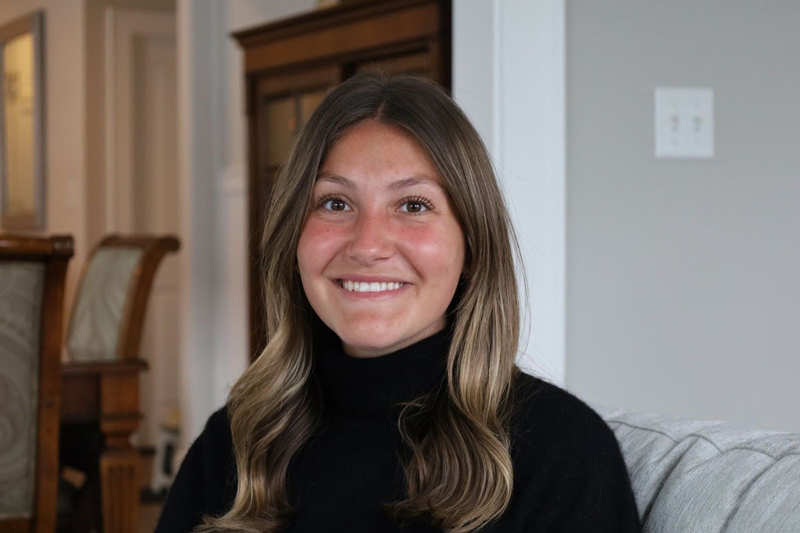
    Belmont resident Annie Veo completed her 14-week clinical rotation at Boston Children’s Hospital last year, treating children recovering from brain surgery, spinal fusion, hip injuries and broken bones. Some were in the intensive care unit; others were relearning how to walk.

    Fifteen years ago, Veo was one of them.

    For more than a decade, Annie battled a rare autoimmune disease that temporarily took her sight and mobility, forcing her to relearn how to walk.

    “I used to yell at my physical therapist because I didn’t want to get out of bed,” said Annie, 25. “It was too hard.”

    But those years in therapy shaped her career and inspired her to help people facing similar challenges.

    “After everything I went through, being a physical therapist was all I ever wanted because it helped to change my life,” she said.

    Annie took the licensing exam and waited.

    On Tuesday, Feb. 3, a few minutes before 5 p.m., her phone buzzed with a staccato text from an elated friend: “I passed.”

    Annie and her mother, Mora Veo, were in Miami, a post-exam vacation designed to decompress. She was shocked because the results of the physical therapy licensing exam were not supposed to be released until the following day.

    Annie and her mother sprinted up to their motel room. She opened the exam website, but the page would not load.

    With her mother looking over her shoulder, Annie clicked the page again. Nothing. Again, nothing. Then, at exactly 5:15 p.m., the word “Passed” appeared.

    “Me and my mom were screaming and jumping up and down, hugging each other,” she said. “It felt like everything I ever worked for finally came through.”

    Annie’s mother, Mora, said her daughter’s childhood symptoms were mysterious and frightening.

    “They really did not have much information on why she kept having episodes,” she said.

    This included recurring vision loss, severe headaches, neck and back pain, and weakness that sometimes left her unable to walk.

    “I would lose my peripheral vision one eye at a time, and it would switch back and forth,” Annie said.

    Doctors initially diagnosed her with meningitis, an inflammation of the membranes around the brain and spinal cord, because her symptoms closely mimicked the disease. But treatments did not resolve her condition, and over time, she lost her ability to walk. A decade later, at age 20, specialists determined she had myelin oligodendrocyte glycoprotein antibody disease, or MOG, a rare autoimmune disorder that affects the optic nerve and central nervous system.

    “I had to relearn how to walk again and just build up my strength to kind of live a normal life,” Annie said.

    Despite constant pain, multiple hospital admissions lasting weeks at a time, and uncertainty about her future, Annie kept up with her studies. Exhausted, with a body betraying her, she forced herself to attend classes, navigate hallways with limited vision, and complete assignments when she could barely keep her eyes open.

    “I don’t think I fully understood everything that was happening, but I just knew I had to keep going,” she said. “My family was always there, supporting me, and that gave me the push I needed to get through each day.”

    During her illness, the Belmont community rallied around the Veo family, and a 2012 fundraiser called “No Texting Day” raised more than $10,000 for Boston Children’s Hospital, where Annie was treated.

    Now, Annie is preparing to take on another challenge. This spring, she will run her first Boston Marathon to raise funds for children facing medical challenges.

    “There were moments I wasn’t sure I would ever get here,” she said. “Now I can run, walk, and help others, and it feels incredible to come to this full-circle moment.”

    It took years and countless hours of rehabilitation to get there. Ashlee Folkes, a physical therapist who supervised Annie during her clinical rotation, said she stood out early.

    “We never had to teach Annie how to work with kids. It came to her naturally,” Folkes said. “She could meet the kids where they were.”

    During her rotation, Annie worked with more than 100 patients, ranging from infants as young as 6 months old to young adults in their early 30s who were recovering from complex neurological and orthopedic procedures.

    “When more challenging cases came up, she never backed down,” Folkes said. “From the moment I met her, I knew she was going to be a great physical therapist.”

  • Newton’s Maggie Chaviano of Newton Community Pride will run her first Boston Marathon in honor of her dad

    Maggie Smith Chaviano is running the 2025 Boston Marathon in support of Newton Community Pride. Courtesy Photo

    For years, Maggie Chaviano watched the Boston Marathon runners from her porch at the 18.5-mile mark in Newton.

    On Monday, she’ll be rushing by her friends and family cheering her on as she takes it on herself.

    “I’ve been in awe of this race in particular and the history around it,” said Chaviano, 43, a self-employed marketing professional. “Watching any marathon makes me want to cry, because it’s such an amazing display of what people can do.”

    The 2025 Boston Marathon will be Chaviano’s second marathon—her first being in Chicago in the early 2000s. She took on the challenge to support Newton Community Pride, a local nonprofit organization that presents free arts programming in the city.

    Her husband, Damien Chaviano, has been on Newton Community Pride’s board of directors for five years. He grew up sharing a love of the arts with his brother — performing alongside him in productions of “Bye-Bye Birdie” and the like in his native Chicago.

    “For me to have an impact on my community and bring arts to Newton, I thought would be a tremendous way to volunteer my time,” said Chaviano, 44, who works in real estate development.

    Chaviano planned to run the marathon to raise money and awareness for the organization this year but quickly realized that he wouldn’t be able to train properly. Smith stepped up to run instead.

    “The marathon is a staple, and has been for a really long time, and we’re super excited that we have somebody local who’s running for us, representing us and getting our organization noticed in our community,” said Newton Community Pride’s executive director, Blair Lesser Sullivan.

    But this run holds more weight for Chaviano than she could have anticipated. She unexpectedly lost her father about a month ago. When she was growing up, the two shared a love for running. “They were magical together,” Chaviano said.

    “[My dad] was very excited,” she continued. “I wish he were going to be here, but I know he will be. He’ll be the wind on my back.”

    Chaviano’s parents live about five blocks away from the marathon’s finish line near Copley Square. As she pushes toward the end of the race, she knows she will have her family’s love waiting for her.

    “This has gone from a fundraiser to a personal challenge that, on behalf of her father, she’s just gonna have this complete, overwhelming, experience when she crosses that line,” Chaviano said. 

    Having not run consistently since before she had her first child a decade ago, Chaviano had to ramp up her mileage from zero to 26.2—and fast. She started training in late December, giving her only three and a half months to prepare. 

    One of her friends will run alongside her, and suggested she get a coach. That coach told Smith that she would recommend six to eight months of training for someone with Smith’s background. They developed a “don’t get hurt” plan—but Chaviano has surprised herself with just how far she’s been able to push herself. 

    “I think external motivators are really powerful,” she said. “Knowing that I was running for this organization that I think does wonderful work and has done in New England for 35 years, that’s been the biggest like, ‘OK, not a choice to get off the couch.’ I’m getting off the couch.” 

    This story is part of a partnership between the Newton Beacon and the Boston University Department of Journalism.

  • Pass the Easter dinner rolls, please: A nutritionist’s take on what to eat — and avoid — ahead of the Boston Marathon

    One runner digs into a bowl of beef and sweet potatoes when training to run 26.2 miles. Another pops a pair of Pop-Tarts before long runs.

    Training for a marathon is as much about eating as it is about exercising. Nailing nutrition, or “fueling,” comes down to science — and timing. Boston Marathon spectators even might notice athletes fueling during the race next Monday.

    But are carbohydrate-dense foods the answer to a good race? What other foods are marathoners eating before the big day? What should they be eating? And what should they be eating if they celebrate Easter, which falls the Sunday before the marathon this year?

    Nutritionist and serial marathoner Carol Sullivan confirmed: Carbs are king.

    “Your body will take either white table sugar or berries or a sweet potato or jelly beans — that’ll all get turned into blood glucose,” Sullivan explained, “and that will get stored in your liver and in your muscles as glycogen.”

    The body taps these glycogen stores for energy to burn when exercising. Keeping these stores full is ideal pre-marathon. Most people underestimate the amount of carbohydrates their body needs, Sullivan said.

    Typically, she said, carbohydrates might take up 40% of calories in a regular diet, but when it comes time for a “26.2 effort,” that carb percentage should rise to 60% of caloric intake. Another way to measure the ideal carb-load is based on individual weight: eat eight to 10 grams of carbs per kilogram. To put that in perspective, for a 130-pound (59 kilogram) person, that would be about 10 cups of pasta for the day.

    Sullivan suggests runners stick to only familiar foods the day before the marathon. “They should also be eating foods that are very high carbohydrate, low fat and low fiber,” she said. “None of the traditional Easter foods make this cut, except for the dinner rolls.”

    As a clinical dietician at Massachusetts General Hospital and a former college athlete, Sullivan is running her ninth Boston Marathon this year. She shared some tips for specific foods to eat and avoid, whether it’s on your Easter dinner table or pulled from your pantry.

    Advertisement

    • Beets. They are rich in nitric oxide, which helps improve blood flow, aiding in delivering nutrients and oxygen to working muscles.
    • Fatty fish. Salmon, tuna and sardines are all great sources of Omega-3 fatty acids, known to promote heart and brain health, and act as anti-inflammatories for muscle pain.
    • Caffeine. This is one of the few proven performance-enhancing stimulants. “We love caffeine,” Sullivan said. Stick to the suggested 3-6 mg of caffeine per kilogram of your weight since it can cause unwanted gastrointestinal issues. And definitely don’t experiment with caffeine for the first time on race day!
    • Hydration is also a key part of fueling, and sodium is an electrolyte that acts like a water magnet for our cells. For sodium-rich hydration, Sullivan confirmed pickle juice does work.

    When it comes to traditional Easter meals…

    • Put down the mashed potatoes. Fats and fibers take more energy and time to digest than carbohydrates, so runners should look for low-fat, low-fiber and high-carb foods. Mashed potatoes are usually loaded with butter and sour cream, so opt for a baked potato or sweet potato.
    • Ham is high in fat, but roast chicken is a lower-fat substitute.
    • Eat vegetables and other high fiber foods at your own risk. While vegetables are great for you every other day of the year, any high fiber foods put you at risk of needing a bathroom stop mid-race. If you do opt for some veggies like carrots, be sure to cook them with oil instead of butter.
    • Skip the wine and opt for tart cherry juice instead. Sullivan recommends it for muscle recovery because the juice is rich in antioxidants and an anti-inflammatory called anthocyanin. Before a high-performance race, it’s best to stay away from alcohol, so she suggests enjoying it in a wine glass.

    While there are basic guidelines to follow, ultimately what people eat before their big race is truly personal. So, we asked a few local marathoners what they’ve been fueling up with during training, too.

    Bridget Leahy, 33, Salem

    Bridget Leahy prioritizes protein in her lunch and swears by an internet-viral protein bowl: ground beef, sweet potatoes, avocado and cottage cheese with hot honey. The day before long runs she has two big protein bowls. She hydrates with LMNT electrolyte drink mix — “one of my big things that I have every day, that I truly think that I will do for the rest of my life,” Leahy said.

    She realized fueling and hydration begins at the beginning of the week, not the night before her long Saturday runs. She downs carb-rich Gu or Edge gel packets every 4 to 5 miles. Salt tablets help her from cramping. Her carb load happens on Thursdays — and she swears the chicken saltimbocca from a restaurant on her route is her good luck.

    Leahy, who has a 16-month-old son, is running for Tufts Medical Center in support of its pioneering postpartum research. She works as an emergency room technician in Salem Hospital and is a member of the National Guard. This is her first marathon.

    Jason Venkat Bhardwaj, 42, West Newton

    Jason Venkat Bhardwaj keeps it simple.

    “I just kind of eat normally,” Bhardwaj, who’s run a dozen marathons including six Bostons, said. “I’m a big believer in, like, don’t change the formula a lot.”

    But he said he takes race day and in-race nutrition “pretty seriously.” Among his rules: Don’t eat anything greasy, don’t drink beer in the week before the race and get enough sleep. Taking a page out of the book “Hansons Marathon Method,” Bhardwaj doesn’t see much benefit in carbo loading.

    “I think part of the training is like your body gets used to storing a certain amount of glycogen from your normal diet,” he said.

    So instead, he leans into hydration. Sometimes, he drinks beet juice. He prefers half a cup of coffee on race day.

    On Monday, Bhardwaj will be in the first runners’ corral, with a 10 a.m. start time. Around 5 a.m., he said he’ll have a regular breakfast, like half an English muffin with peanut butter and some dry cereal. Before the race, a banana and Triscuits. And once he gets going, he’ll alternate between the caffeinated and decaffeinated Maurten gels every 5 miles.

    Trevor Hodde, 35, Uxbridge

    Trevor Hodde is staying true to his regular balanced diet. He learned his lesson.

    On Hodde’s 21-mile training run, he baked a batch of Kodiak protein muffins, knowing this run was the closest to the real marathon he was going to get; he wanted to carb up. But he said he felt heavy on his run.

    He said he likes Propel water for its electrolytes, sodium and potassium, and sometimes drinks LMNT electrolyte mixes while running.

    Hodde has been running since high school, and has run a few half marathons and triathlons, but this is his first marathon. He is running for the Boston Children’s Hospital’s Miles for Miracles Team.

    Seetal Ahluwalia, 23, Brighton

    Seetal Ahluwalia has a more colorful approach to carbs.

    Before a long run, she eats two Pop-Tarts — particularly the s’mores flavor — and while running she reaches for the occasional handful of Scandinavian Swimmers gummy candy from Trader Joe’s. The sour ones keep her mouth from getting dry, she said.

    Those quick sugars have worked well for her so far. On her runs, she alternates between caffeinated and decaffeinated Gu energy gels. On warmer days, she also takes SaltStick electrolyte chews to stay hydrated. She added that she also believes a chicken cutlet sub of any kind is “rewarding and satiating” after a long run.

    Ahluwalia picked running back up during the pandemic as a casual form of self-care. Running the Boston Marathon was on her Boston bucket list before finishing her master’s degree in the city. She’s repping Team Red Cross.

    As for the Pop-Tarts?

    “I stole it from people on TikTok, and it worked out,” she said.


    This story is part of a partnership between WBUR and the Boston University Department of Journalism.