
Tag: business

  • Local pharmacies adapt, push back against corporate stores

    Local pharmacies adapt, push back against corporate stores

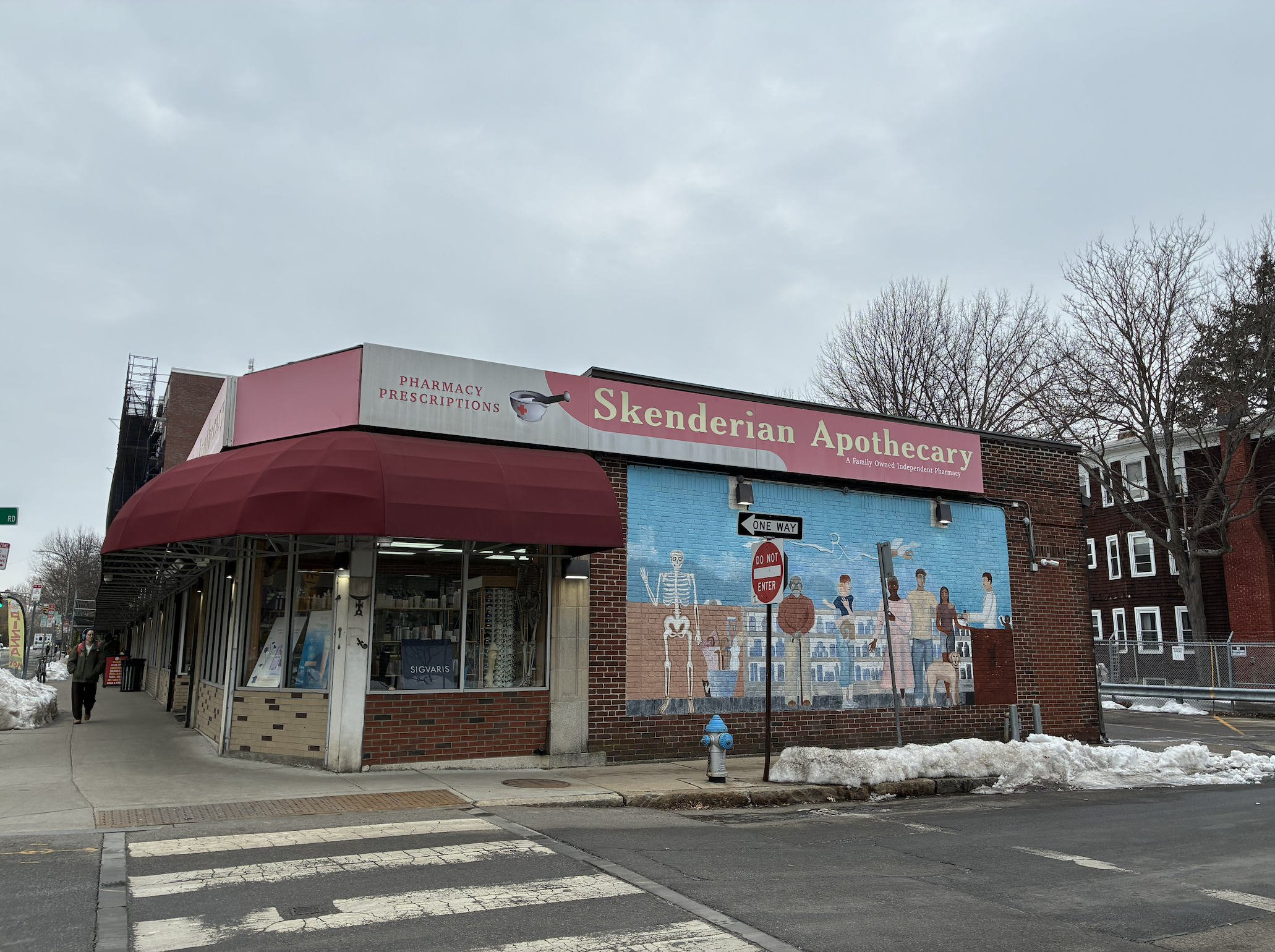
    As the pharmacy business has shifted, smaller stores have closed and corporations like CVS and Walgreens have taken over. But Robert Skenderian, third-generation owner of Skenderian Apothecary, says these chains aren’t his biggest competitor: It’s benefit management companies, also known as pharmacy benefit managers (PBMs).

    Skenderian and his two brothers, like their father and grandfather before them, have been serving communities in Cambridge and beyond from the corner of Cambridge Street and Roberts Road. For more than 60 years they’ve filled prescriptions, provided medical supplies and given medicinal advice. But as the years pass, small, locally owned pharmacies like theirs are grappling with a system that benefits large corporations and drives traditional pharmacies to closure.

    “The absolute number of pharmacies in the country are shrinking across the board. Whether you’re a chain store, whether you’re independent, there are fewer and fewer every day because they can’t afford to stay in business,” Skenderian said. “It’s going to continue to happen because the benefit management companies don’t really care whether you can get your prescription filled or not. They only care that they get to keep all of the pie.”

    The PBMs serve as middlemen between insurers, drug companies and pharmacies. They hold major responsibilities — negotiating rebates and discounts with manufacturers, handling claims, developing lists of covered medications for different plans. PBMs also reimburse pharmacies after dispensing patient medications.

    Massachusetts has 38 licensed PBMs. Three of them manage nearly 80% of the prescription drug claims in the United States: OptumRx, a subsidiary of UnitedHealth; CVS’s Caremark; and Express Scripts, a subsidiary of Cigna. Each of those PBMs has a vast pharmacy network in specialty and mail-order pharmacies, or in retail and grocery store locations, where they funnel customers insured by their parent companies to fill their prescriptions. This cuts out locally owned and operated pharmacies.

    “[The PBMs have] really integrated themselves vertically up and down,” said Todd Brown, executive director of the Massachusetts Independent Pharmacists Association. “They have an incentive to keep the business within their own system.”

    Small pharmacies have attempted to negotiate with PBMs in the past, but they have no leverage against the dominance of the top three, Brown said.

    “For me to be successful, to be able to stay in business, to be able to take care of people, in some ways it’s against everything I was taught growing up,” Skenderian said. “People come with a prescription. You want to fill it. You want to help them out. You want to make sure they get the medicine. You want to make a little money, and then everybody’s happy. And you can’t do that anymore.”

    Every time he fills a prescription, Skenderian said, the PBM for a customer’s insurance plan pays him back for less than the medication is worth, sometimes as little as half the cost.

    Skenderian said he has to be “defensive” with how he runs Skenderian Apothecary. He no longer takes many insurance plans he did in the past that now pay him at a major loss, and he fills far fewer prescriptions than he used to.

    “[PBM’s will] pay a different amount to the pharmacy for the exact same claim,” Brown said. “Pharmacies have been forced to limit their participation, limit taking certain insurers so that they cut out the insurers that pay them the least amount.”

    “Claims that CVS Caremark favors large network pharmacies over independent pharmacies are simply not accurate,” CVS Caremark spokesperson Shelly Bendit wrote in an emailed statement. “In Massachusetts, CVS Caremark reimburses independent pharmacies at higher rates than CVS Pharmacy for brand, generic, and specialty medications.”

    Skenderian conceded that CVS Caremark could reimburse independent pharmacies at higher rates than CVS locations. However, the lack of transparency about PBMs’ negotiations with drug manufacturers could still make Caremark’s reimbursements unfair. For instance, a PBM can charge an insurance company more than it pays a pharmacy, a tactic called “spread pricing.”

    Such pricing generated estimated income of $1.4 billion from 2017-21 for the three largest PBMs, according to the Federal Trade Commission. Much of that income came from dispensing commercial prescriptions through unaffiliated pharmacies like Skenderian Apothecary. CVS Health is the parent company of insurer Aetna, Caremark and its retail pharmacies.

    “It’s not a very fair system, but it’s the system we work under,” Skenderian said. “They can manipulate things any way they want. It’s impossible to get to the bottom of this, of what is truthful or not, because they will not give that information.”

    Pharmacy deserts

    In the past several years, the number of all pharmacy locations have shrunk around Massachusetts and nationwide. The state has lost nearly 200 pharmacies since 2019, a 17% decline, according to data published in October 2025 from the Massachusetts Health Policy Commission. Over 1 million Massachusetts residents live in pharmacy deserts or “near-deserts” by the MHPC’s standards.

    Within the study, 2024-25 saw the smallest number of openings and largest number of closings of any time period. A Walgreens store in Cambridge’s Central Square closed in March 2025 because it was an unprofitable location, a common story for many CVS and Walgreens stores that have closed in recent years.

    Skenderian Apothecary and Inman Square Pharmacy are the last independent, locally owned pharmacies in Cambridge. The most recent independent pharmacy to close was Ciampa Apothecary, according to the Massachusetts Department of Public Health. Ciampa moved in 2015 to Peabody and operates as North Shore Home Medical Supply and Home Care Pharmacy.

    “Pharmacies have closed mainly because of the pharmacy benefit managers,” Brown said. “They underpay the pharmacies, overcharge the health plans and keep the difference.”

    “Pharmacies can go out of business for many reasons. PBMs are working to help rural, community pharmacies by paying them more than retail chain pharmacies,” said Greg Lopes, spokesperson for the Pharmaceutical Care Management Association, in an emailed statement.

    Brown suggested there might be other ways for pharmacies to recover the loss on filling prescriptions by offering vaccinations or services and products not usually available at a typical chain store. Skenderian can create compound medications to meet more patient-specific needs than a typical commercial prescription. Other pharmacies may offer specialized medical equipment that would be difficult to find elsewhere.

    Day to day, however, many customers choose a local pharmacy for a more personalized experience and higher standards of service.

    “They take care of you,” said Patricia Mazza, a longtime Skenderian customer. “They also give you good advice on how to use the drug, which you don’t get everywhere, right?”

    In a more long-term effort, Brown and the independent pharmacists’ association are advocating for a bill in the state legislature that would improve conditions for pharmacies across the board. The bill – H.4346, “An Act to Ensure Access to Prescription Medications” – would allow pharmacies to contest PBMs on the cost of drugs and require PBMs to provide pharmacies with detailed reasonings for those costs, match reimbursements among pharmacies regardless of affiliation and reimburse for medications at a rate matching the pharmacist’s expenses. The Joint Committee on Health Care Financing is expected to report on the bill by March 18.

    The federal government has also acted recently on PBM reform. Congress passed bipartisan legislation Feb. 3 that sets standards for how PBMs interact with Medicare plans. It would permit any pharmacy to join an insurance company’s network after meeting standard requirements, a specific benefit to local stores. It also requires a PBM to deliver detailed data to insurers and pharmacies on its prescription drug spending and enables pharmacies to report potential contract violations by PBMs. The plans are expected to go into effect by Jan. 1, 2028.

    “I think it will have a positive effect. The problem is, is it doesn’t really kick in till 2028,” Brown said. “Pharmacies are really struggling right now. Some of them aren’t going to be able to hold on till 2028.”

    Mazza, a real estate broker, gets her prescriptions filled at Skenderian regularly. Through the changes in the two decades she has been a customer, Mazza went out of her way to switch to an insurance plan the pharmacy will accept over getting her medications transferred to a chain.

    “[Skenderian takes] way better care of you than they do at CVS,” Mazza said.

    This story is part of a partnership between Cambridge Day and the Boston University Department of Journalism.