Tag: Chris Worrell

  • Shattuck ‘restart’ sparks debate on recovery needs and housing

    Shattuck ‘restart’ sparks debate on recovery needs and housing

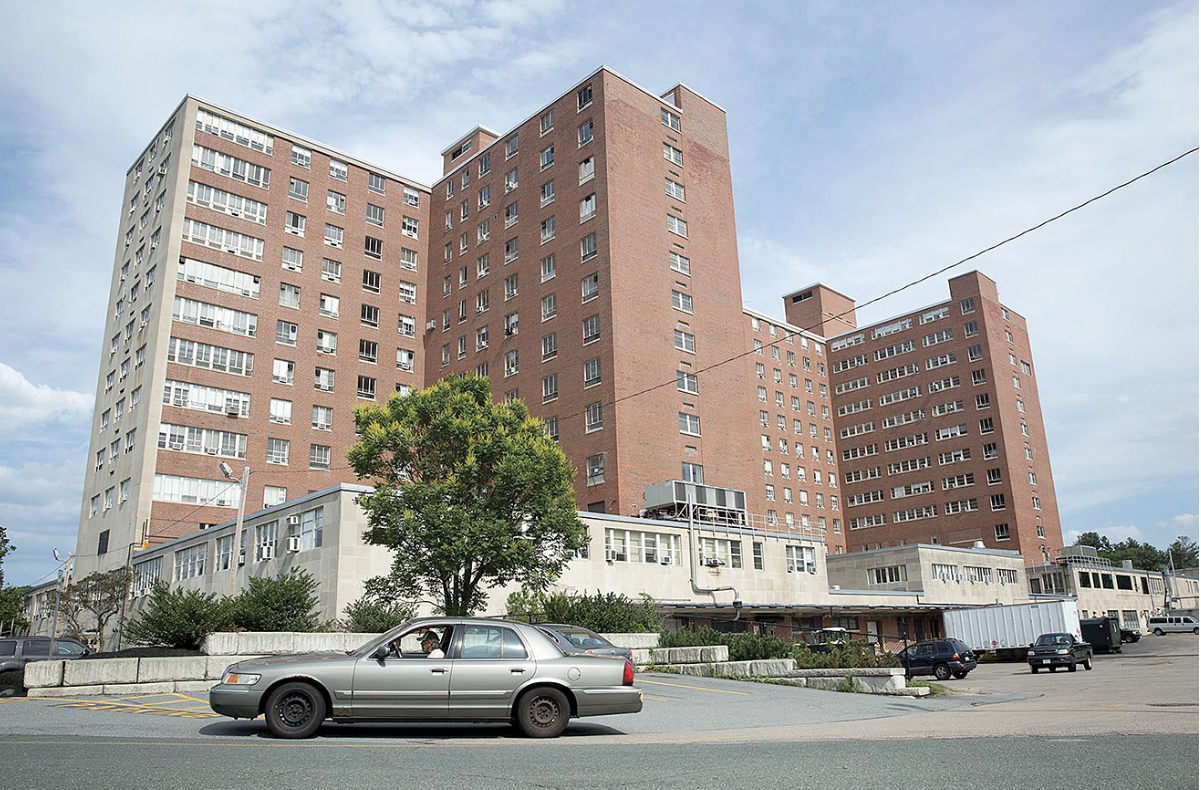
    A renewed discussion over uses for the soon-to-be-vacant Lemuel Shattuck Hospital property next to Franklin Park has prompted new ideas – and a rise in tension among interested parties.

    State officials last year scrapped a Boston Medical Center-led plan to redevelop the property as a recovery campus following the relocation of the hospital and its 260 beds to the East Newton Pavilion in the South End next year.

    In the months since the BMC plan dissolved, advocates and coalition representatives have been eager to present their ideas to the state Executive Office of Health and Human Services (EOHHS). 

    More than 100 community members gathered last Thursday night (Feb. 27) for a “listening session” with several state agencies at Edward Brooke High School on American Legion Highway in Dorchester. Members from the Department of Mental Health, the state housing cabinet, and EOHHS attended – as did a host of state public health officials that included Shattuck CEO Fatima Watt.

    Catharine Hornsby, senior advisor for the state Health and Human Services cabinet, said the process is a complete reset with no preconceived notions. Beside her is Josh Cuddy of the Executive Office of Housing and Livable Communities. Seth Daniel photo

    Catharine Hornsby, senior advisor for EOHHS, said they came with no preconceived notions and a presumption that many in the audience might already know more than the state officials. It was, she said, a “full restart” that will inform a new Request for Proposals (RFP).

    Two main camps quickly emerged — those who want some form of supportive housing built, and those who want the 13.3-acre lot turned over to more community-based plans in abutting Franklin Park. Supportive housing is a type of facility that combines under one roof behavioral health and substance use disorder (SUDs) support services.  

    In addition to input, the state is seeking ideas for how to incorporate that input, possibly establishing a community advisory board to oversee its actions regarding the project. 

    The existing Shattuck serves patients through a combined approach of medical and psychiatric treatment and the hosting of rehabilitation and recovery programs. Non-profit provider programs at the Shattuck, which include a methadone clinic, a Pine Street Inn shelter, residential treatment programs, and outpatient psychiatric services are not part of next year’s move. Bay Cove CEO Kevin Martone said at the meeting that they want to remain on site.

    The Morton Street property was deeded to the Commonwealth of Massachusetts in 1949 with a statutory restriction requiring that the land be used for public health purposes. 

    Some who favor the supportive housing idea said it should be designated for people recovering from SUDs. Other proposals aired include housing for veterans, a village for abutting senior citizens looking to downsize, mothers reuniting with their children, and other populations that could benefit from a combination of housing and support/health services under one roof. 

    Dorchester’s Dianne Wilkerson, a former state senator, proposed a “senior citizen legacy village” with senior housing, urgent care, a 24/7 pharmacy, and a veterans’ center.

    Former Sen. Dianne Wilkerson spoke at the meeting. Seth Daniel photo

    “This is not your grandmother’s addiction,” she said. “The idea of an addiction village here – there’s a reason why no one else has done this in the United States. It doesn’t make sense.”

    Many at the meeting said they were concerned about a high concentration of people in varying stages of substance use recovery living together, citing the increased relapse rate when individuals in recovery are surrounded by active drug users.

    Dorchester’s Marti Glynn and Jamaica Plains’s Patricia Clifford – both retired public health workers – said that sort of situation is detrimental to recovery.

    Patricia Clifford, an abutter to the Shattuck site on the Jamaica Plain side and a retired employee, said putting those in recovery together in large numbers isn’t a good idea. Seth Daniel photo

    “When people are trying to get clean and are in close contact with active users it is an insurmountable task,” said Clifford, who retired from the Shattuck in 2023.

    In contrast, members of the Housing and Health on Morton Street Homes Coalition (HHOMS) – a group that supported and worked with the BMC proposal – said they want any new plan to include at least 200 supportive housing units and to allow substance use recovery and mental health providers in the facilities. 

    Dorchester’s Shameeka Moreno, a member of HHOMS and organizer for Boston Tenant Coalition, appeared frustrated as she addressed opposition to the supportive housing idea. 

    “If this community cares about the kids, give us housing for moms going through reunification,” Moreno said. “Give us places for our kids to play where we still can have that green, but we can still have that housing, too.”

    Asserting that green space a form of public health, Karen Mauney-Brodek, president of the Emerald Necklace Conservancy, wants the site to be turned over to Franklin Park.

    Mattapan’s Kenya Beaman said the Shattuck was considered a “scary” place when she was growing up, and she’d like to see it become community-oriented and inviting. Seth Daniel photo

    “The Parthenon of parks could be reborn under this administration,” Mauney-Brodek said. “The park is a limited resource. We have limited green spaces in the city.” 

    Moreno countered that she has seen disparities in how support services are regarded by some other community members. Opponents of the housing idea said they agree that more supportive housing is needed in Boston, but they add that the Morton Street campus is not the place for it.  

    “It’s good for my Black kid, but it’s not good for a predominantly white neighborhood,” Moreno said. “That’s what I hear when you say, ‘Not in the Emerald Necklace, not over here.’ This is the city. This is what comes with the city.” 

    State Rep. Chris Worrell said in an interview that he wants to hear every idea, and that “no idea is dumb. We could create something very beautiful.” 

    In an interview, District 7 City Councillor Miniard Culpepper said that he was opposed to the former BMC plan and emphasized his support for community input on the project.

    “Whenever you have a diversity of opinion, you come up with a good result,” he said. 

    While he said he does not specifically support one plan over another, Culpepper did say he was against developing a 400-unit supportive housing complex, and he added that the residents in the immediate area who opposed the BMC plan should be represented on the advisory board. 

    “Whatever leverage I have,” Culpepper said, “I’m going to use it to make sure whatever the residents decide goes into that facility.”

    State Sen. Liz Miranda (above), who attended the meeting, said she was happy the state “agreed to start this process over.” And State Sen. Nick Collins said in an interview that he wants to see a review of the facilities and cost-benefit analysis done before the community decides on a proposal. He said he wants to explore the possibility of “retrofitting” what’s there. 

    “I think we should take a step back and say, ‘What can we do with the existing building?’” Collins said. 

    There is no clear timeline for the future listening sessions or next steps in the process, but the state again emphasized that community input will be at the forefront this time around. 

    “[Community members] feel like the trust is shattered,” Worrell said. “This is the first step of building that trust and letting the community know that this is truly a community led process.”

    His brother, District 4 Councillor Brian Worrell, added, “I’m hopeful that this state-led process will result in a use that serves Bostonians for generations to come and reflects the will of our residents.” 

    This story is the product of a partnership between the Dorchester Reporter and the Boston University Department of Journalism. The Reporter’s news editor, Seth Daniel, contributed to the article.