Tag: Congress

  • In MA, Doctors’ Day becomes rallying point for health care reform

    While Doctors’ Day has traditionally celebrated physicians’ contributions — specically the date of the first use of general anesthesia in surgery by Dr. Crawford W. Long on March 30, 1842 — this year Massachusetts physicians are redefining it as a platform for advocacy.

    Facing federal funding cuts and growing primary care shortages, Massachusetts physicians met with legislators on March 25 at the State House to call for urgent policy action. Physicians from the Massachusetts Medical Society gathered for their first in-person Doctors’ Day since before
    the COVID-19 pandemic to advocate for bills to increase primary care access, improve childhood immunization rates, and bolster protections for immigrant health care access.

    The renewed urgency comes as the “Big Beautiful Bill,” passed by Congress last July, is expected to cut $3.5 billion annually from federal health care funding to Massachusetts. The cuts amount to about 5% of the state’s proposed total budget for fiscal 2027. This will lead to about 326,000 residents losing health care insurance coverage, according to a minority report of the Joint Economic Committee, based on a report by the Congressional Budget Office. “I’m proud of the advocacy this day represents, but I encourage you to do more,” Dr. Kiame Mahaniah, the state’s secretary of Health and Human Services, told physicians. Mahaniah emphasized that physicians play a critical role in clinical care, but must also advocate for the broader health care system throughout the state.

    An aging workforce means a shrinking workforce

    Access to primary care physicians has been declining across Massachusetts, and is expected to face greater threats as cuts to Medicaid take effect later this year, according to a recent re-
    port by NPR. More than half of in-office physicians are age 55 or older, raising concerns about a shrinking workforce, according to Mahaniah.

    State Sen. Cindy Friedman, D-Arlington, co-chair of the Legislature’s Committee on Health Care Financing, highlighted the growing strain on the system, as colleagues consistently ask her, “Can you help me get a primary care physician?” Friedman championed several of the bills discussed at the March 25 event.

    Throughout the state, primary care represents a small and declining share of total health care spending. This leads to increased strain on emergency departments, according to a presentation from Mass. Medical Society reps.

    Physicians advocated for the future of their profession by promoting passage of several bills designed to strengthen primary care access.

    Among those proposals is one that would double the investment in primary care over four years, with a target of at least 12% of total health care spending allocated to primary care departments. It would also establish a primary care stabilization fund to deliver payments directly to practices, an idea that Mahaniah and other speakers advocated for throughout the meeting.

    Physicians also raised concerns about administrative burdens tied to insurance companies’ prior authorization requirements, an issue they say leads to unnecessary costs and often causes pa-
    patients to forgo needed treatment.

    The bill, aimed at reducing delays in patient care and administrative burden, would strengthen oversight and improve timely access to treatment.

    Addressing declines in vaccination rates

    In addition to administrative and industry issues, physicians also advocated for pressing public health concerns as nationwide threats to vaccine and immigration policies begin to take effect
    in Massachusetts.

    In early January, the Centers for Disease Control and Prevention reduced the number of recommended vaccines for children. Massachusetts has seen declines in vaccination rates in recent years, as well as a record high number of non-medical religious exemptions, according to the Mass. Medical Society.

    In some school communities, vaccination rates have dropped below herd immunity thresholds — the point at which enough people in an area have protection from a disease that it no longer spreads easily, according to the Mass. Medical Society. Vaccination ex-
    emption rates among kindergarten students are rising in central and western counties, with 1.6% exempt in Worcester County and 2.7% in Hampden County. In Middlesex County, 1.2% of students had exemptions, while in Suffolk County the rate was 0.8% for the 2024-25 school year, according to the Department of Public Health.

    Another proposal would require all public and private schools to report immunization data annually to the Department of Public Health, while ensuring that necessary medical exemptions are maintained.

    Physicians also advocated for a provision in a supplemental budget proposal, offered by Gov. Maura Healey, that calls for protecting health care facilities from civil immigration enforce-
    ment actions, with the goal of reducing appointment cancellations and no-shows. The bill would restrict immigration agents’ access to health care facilities, requiring a judicial warrant to en-
    ter medical facilities.

    The House-approved PROTECT Act would restrict local law enforcement’s cooperation with ICE. However, the act does not designate health care facilities as sensitive locations.
  • Chris Boyd campaigns for Congress on a call to invest in region’s future

    Chris Boyd campaigns for Congress on a call to invest in region’s future

    Chris Boyd is still waiting for his American dream.

    Growing up in Bellingham, Boyd experienced firsthand the struggles of a low-income American family and remembers when the 2008 recession hit home. With his single mother providing their only income, Boyd said, his family had to rely on public assistance programs.

    “Let’s make sure that we’re investing in these programs to make life more affordable so that we can actually get that American dream,” Boyd said, “because we were promised an American dream and I’m still waiting for that deposit in my bank account.”

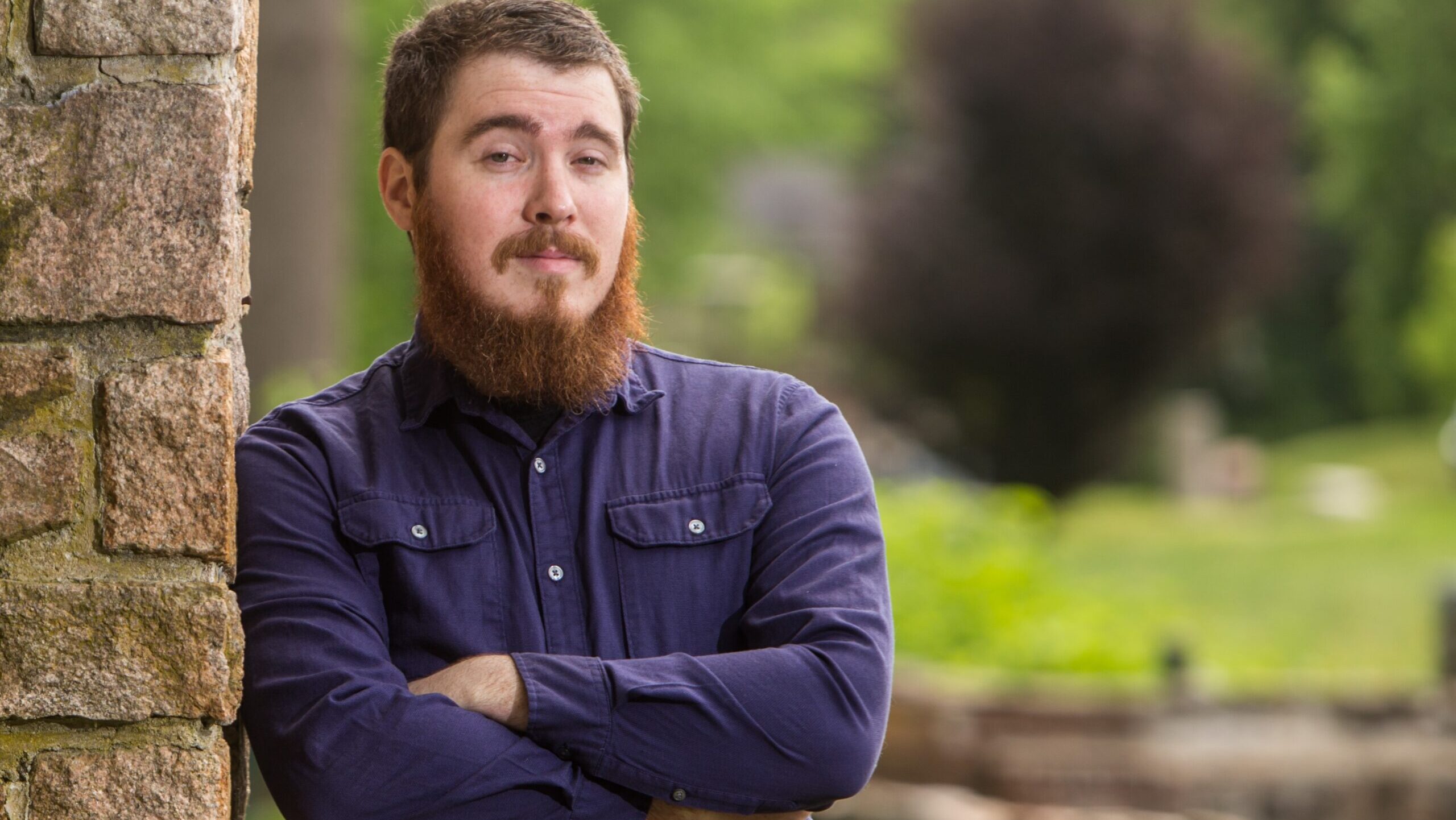
    Boyd, 31, studied music at Rhode Island College and became a music teacher. Now he’s running in a five-way Democratic primary for Congress in Massachusetts’ 4th House district in an attempt to unseat Rep. Jake Auchincloss.

    Boyd said his decision was the culmination of decades-long frustration with Democrats not willing to act on issues they had campaigned on.

    “It’s really that lack of fight and that lack of action that has slowly been building up over time,” Boyd said.

    Boyd said he wants to ensure that public assistance benefits such as the Supplemental Food Assistance Program will be protected for future generations.

    He said it isn’t just his campaign—it’s “ours,” including the volunteers and community members Boyd connects with. He’s campaigning on three pillars: democracy, affordability and investing in our future.

    These pillars were based on discussions and conversations Boyd has had with volunteers, people at Democratic caucuses and community meetings.

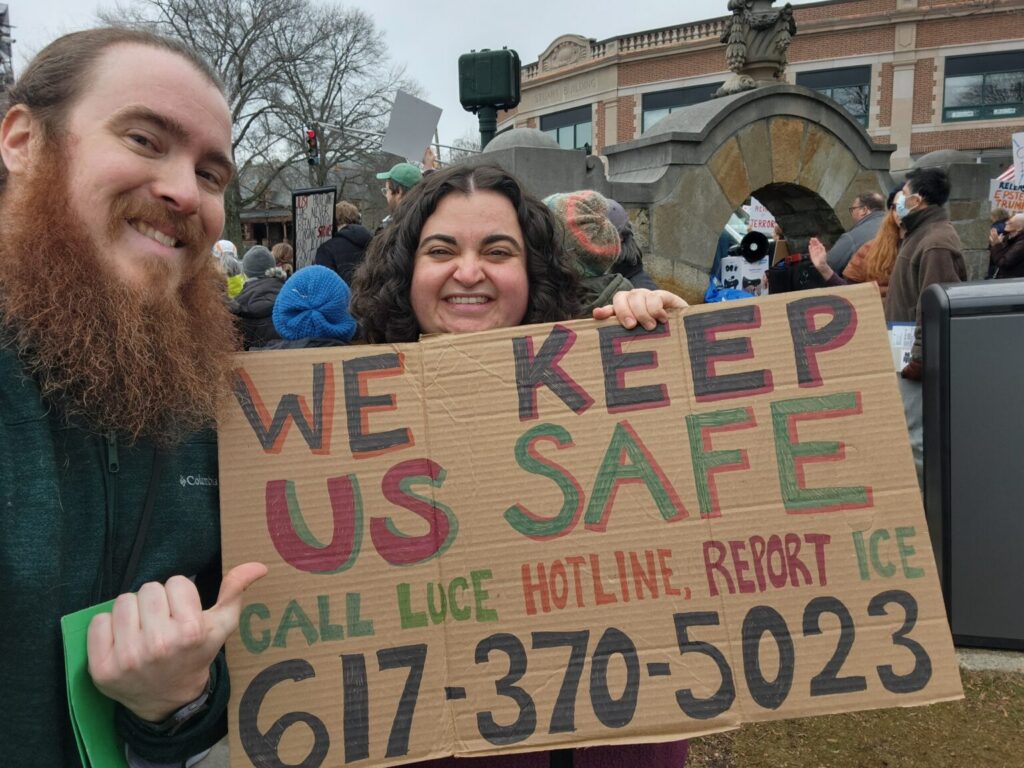
    Congressional candidate Chris Boyd, shown here with Martha Durkee-Neuman of LUCE, participates in a protest against Immigration and Customs Enforcement on the Newton Centre Green. Courtesy photo

    Boyd condemned the nation’s involvement in overseas conflicts such as those in Iran and Gaza.

    “We shouldn’t be supporting bombs going overseas,” Boyd said. “We did 20 years of that.”

    Boyd said he supports overturning Citizens United, abolishing the U.S. Immigration and Customs Enforcement agency and protecting transgender rights.

    “We are supposed to be the beacon of liberty and democracy and freedom and protecting human rights on this planet,” Boyd said. “We have supposedly set ourselves up in that role, but we’re not acting like it.” 

    In the area of affordability, he wants to tackle issues like student debt relief, create more affordable housing and work against AI replacing jobs.

    He has visions for public job programs similar to the New Deal, support for Medicare for All and school funding.

    “Thinking about investing in our future, we want to show our children and say, ‘Listen, your country cares about you,’” Boyd said.

    Boyd said his experience growing up in a low-income household makes him a strong candidate for Congress.

    “I’m a normal person,” Boyd said. “I’m not a millionaire […] and I don’t have all these big connections. But what I do have is that perspective of growing up with that struggle and seeing what our public programs can do and all the great things that we can do when we come together as a country.”

    He said his ability to connect with the public on these issues and their anxieties about the future help him run a compelling campaign. His election, he said, would bring to Congress a perspective that is lacking—that of the average American.

    “I have that experience of actually talking to people and listening and seeing and helping people through these struggles,” Boyd said. “And we don’t have a lot of that in Congress today.”

    Congressional candidate Chris Boyd, left, participates in a protest against Immigration and Customs Enforcement on the Newton Centre Green. Courtesy photo

    Boyd said his main frustration with Auchincloss’ leadership is the amount of corporate money the congressman has accepted for his campaigns. In 2023-24, the top contributors to Auchincloss were American Israel Public Affairs Committee, RA Capital Management and Deerfield Management.

    “We can just do so much better in 2026,” Boyd said.

    Boyd questions why Auchincloss accepts this money despite opposing the Supreme Court’s landmark 2010 decision in Citizens United v. FEC that removed financial restrictions on corporations’ donations to political candidates.

    “It’s really two-faced of him to keep accepting all of this money,” Boyd said, “and if I believe that he really wants to overturn Citizens United, if he wants to show that, he will return all of the corporate money.”

    Auchincloss won 22.4% of voters in the nine-candidate Democratic primary in 2020, meaning 77.6% of voters were against his election.

    But Boyd also said that if his poll numbers are not the “highest” come the primary election, he’d be willing to step away from the race to prevent a split primary.

    “The progressive cause is more important than any one candidate,” Boyd said.

    As Boyd campaigns, he said, he will stand on the values that he came into this race with.

    “My values are that we should be making sure … everybody does have a chance to get that American dream that we were promised,” Boyd said.

    ****

    This story is part of a partnership between the Newton Beacon and the Boston University Department of Journalism.