

Tag: education

  • Newton Community Education rebounds, finding financial footing after years of uncertainty

    Newton Community Education rebounds, finding financial footing after years of uncertainty

    Newton Community Education is reporting a significant rebound in revenue this fiscal year, following years of financial turbulence.

    But its financial improvement has come at a cost.

    Founded in 1991 as a self-sustaining arm of Newton Public Schools, the nonprofit NCE offers hundreds of classes and programs each year, including woodworking, yoga and beekeeping classes.

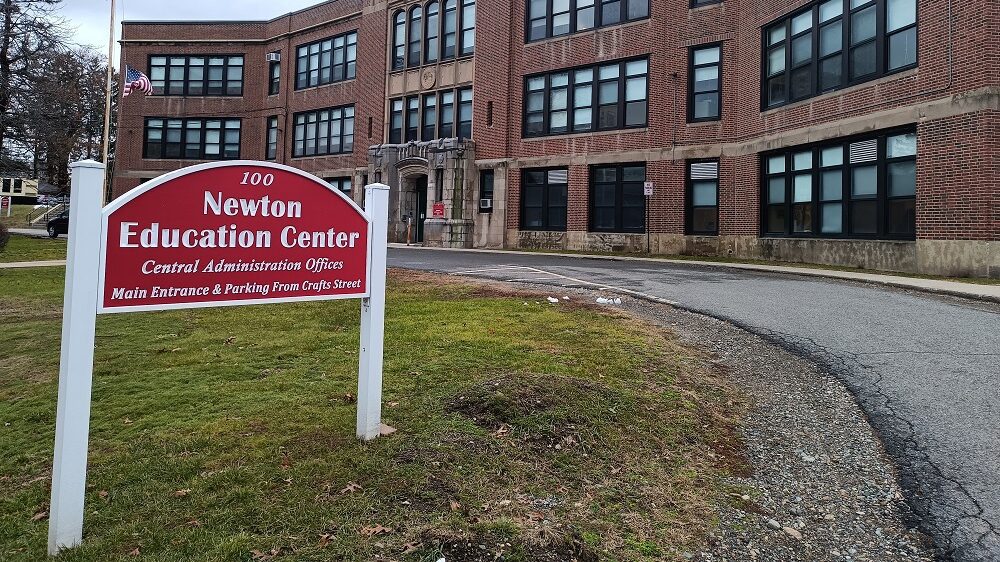
    The Newton Education Center. Photo by Dan Atkinson

    In recent years, after COVID-19 decimated enrollment, rising costs caught up with the organization. NCE had to pay employee benefits and pension costs in addition to pitching in for custodial services, creating a deficit of more than $300,000, the Beacon reported in 2024.

    “The reason why we’re in a better position at this time this year, compared to last year, is because we have made significant cuts to our staff,” said Kate Carpenter Bernier, NCE’s executive director. NCE eliminated its director of finance and administration and cut 1.2 office positions, Carpenter Bernier said.

    For now, NCE is relying on a part-time bookkeeper and two volunteers—one of whom is an NCE commission member—to fill the gap.

    “Those community volunteers are providing a lot of expertise and assistance, and financial analysis, projections and budgeting,” Carpenter Bernier said. She also acknowledged, however, that the arrangement isn’t meant to be permanent.

    Restoring staff would reduce the projected profit that NCE has worked hard to rebuild. “That’s the catch-22,” Carpenter Bernier said.

    Claire Wadlington, a member of the Newton Community Education commission, said cutting staff was necessary in order for NCE to break even. “There weren’t very many options for what to cut,” she said.

    Wadlington also pointed out that NCE’s fiscal year follows an unusual cycle. Its lowest revenue period, which is the fall, is its highest expense period—driven by a roughly $160,000 pension bill and the cost of summer camp labor, Carpenter Bernier wrote in a memo to the school committee.

    Wadlington said the timing is key to understanding NCE’s financial health.

    By the end of this fiscal year, NCE projects a surplus of roughly $107,000, according to Carpenter Bernier’s memo. NCE’s annual budget is $1.9 million.

    Last year NCE conducted focus groups to see what parents wanted from after-school programming. Based on that feedback, the group retooled its afternoon clubs to be longer and also to run for a whole semester. The result is fewer individual enrollments, but each one was worth significantly more in revenue.

    Adult programming also surged almost 50% compared to last fall, Carpenter Bernier said. Still, summer camps continue to be the biggest revenue driver, accounting for about half of NCE’s revenue, she said.

    NCE is now working with John Rice, the city’s chief of community services, to create new programs and increase revenue and enrollment. 

    With Rice’s help, Carpenter Bernier said, NCE is set to relocate adult art classes to the Cooper Center and is collaborating with the city Parks and Recreation Department on a carpentry program for adults with disabilities.

    Rice said he sees cross-promotion between city events and NCE as a direct financial benefit for the nonprofit.

    NCE runs more than 700 classes, clubs and camps annually, serving nearly 3,000 children and adults. Carpenter Bernier said she sees opportunity to grow those numbers, particularly through expanded after-school clubs and new programming for middle and high school students.

    But sustaining that growth will require rebuilding the internal capacity of NCE, Carpenter Bernier said. 

    “You need staff in order to really deliver your product well and to continue to expand programming and take advantage of needs and opportunities, which will also drive revenue,” Carpenter Bernier said. “If you don’t have the revenue, then it’s difficult to build staff.”

    Wadlington said she expects Carpenter Bernier to be disciplined about when to restore positions. “I think they’re doing amazing in the context of growing despite having cut essential people,” she said.

    Carpenter Bernier said she thinks NCE’s revenue and expenses are stable and she doesn’t see any upcoming risks. “I think that it’s important that we, organizationally, determine a path to restoring capacity so that we can be fully … operating as high capacity as we were in the past,” she said.

  • Creem files legislation for database to monitor quality of special education in districts

    A proposed bill on Beacon Hill sponsored by Newton’s state senator would require the Massachusetts Department of Elementary and Secondary Education to publish more detailed student data each year, with a particular focus on special education access.

    Filed by Sen. Cynthia Creem, the measure would require school districts to report exactly which special education services students receive, allowing the state to identify disparities in how support is delivered.

    It would also require the state to make this information easily searchable and cross tabulated by race, gender, disability type, socioeconomic status, English-learner status, and homelessness to give families and policymakers a clearer picture of inequities across districts and individual schools.

    “S.317 ensures that families, educators and the state finally have clear, transparent data to better identify problematic demographic patterns in our education system,” Creem said in an interview. “Better data will help support earlier interventions and assist policymakers in creating more tailored and targeted policy solutions.”

    Beth Berman, a Newton resident and social worker, said her daughter received special education services in the Newton Public Schools from kindergarten through age 22 after being diagnosed with a traumatic brain injury, epilepsy and multiple learning disabilities.

    At Underwood Elementary, her daughter had a one-on-one aide, occupational therapy, reading pullouts, summer services, and even supervision during the after-school program—support Berman said is rare today.

    Those services changed when her daughter moved to F.A. Day Middle School. She was placed in a sub-separate program, a small classroom with students who had higher support needs, which Berman said caused her daughter’s academic progress to stall.

    When she sought an alternative placement, Berman said the school did not provide support, forcing her into what she described as an “expensive and acrimonious” legal process to secure an out-of-district therapeutic school.

    “It’s a fight for parents every step of the way, because resources are few, and it depends on the political landscape of how supported teachers and specialists are,” she said. “Socioeconomics is one of the biggest barriers in Newton.”

    Berman said measurable and readable data would be helpful to show how special education resources are being used.

    “I’ve had some parents say she was using a lot of resources,” Berman said. “I thought, if you want a brain-damaged child, then you can have her aide.”

    NPS Superintendent Anna Nolin said she welcomes the data collection proposed in Creem’s bill.

    Nolin said she does not believe special education students are denied access to support any more than non-special education students in Newton. She said the district’s programs are strong and even “dominate the support landscape” in NPS.

    She noted that the district has built an internal dashboard capable of breaking down the types of information outlined in the bill.

    “We believe parents should see how their kids are doing in real time and be empowered partners at the table,” Nolin said. “The data helps make Individual Education Program and non-IEP meetings more productive and ensures parents have equal footing and understanding when they meet with educators.”

    Responding to concerns from parents who said they needed legal counsel to secure services, Nolin said that while few general-education supports have been integrated since the COVID pandemic, NPS has added staff and resources to expand and integrate five in-house special education programs.

    “Parents also need to know that unless we are given the resources to support their children—staffing, training and support—we cannot effectively meet their needs,” Nolin said. “And in Newton, after six years of budget cuts, we struggle at times to provide what I would call the best level of support for all kids.”

  • Bruce Hedison wants to be an advocate for teachers on the School Committee

    Bruce Hedison, who retired to Newton in 2024 after 33 years of teaching in Hudson, seeks to bring his decades of experience to the Ward 7 seat of the School Committee.

    “I just bring a different perspective to the table,” Hedison said. “I have 33 years of teaching under my belt in the same district.”

    Hedison, 59, who grew up in Chelmsford, is the fourth generation in his family to pursue a career in education. He earned a technology education degree at Fitchburg State University, got his first job in Hudson in 1990 as a drafting and architecture teacher, and developed Hudson High School’s first physics and robotics class with grants from the National Science Foundation.

    He is up against incumbent Alicia Piedalue for the Ward 7 seat. Before Piedalue ran for Ward 7, she served on the governing board for The Eliot Innovation School, a K-8 school that, because of school choice, has become disproportionately white. White students, who make up only 15 percent of the population in Boston public schools, account for 63 percent of Eliot’s enrollment.

    Hedison said Piedalue and several other Boston families tried to take over Charlestown High School in Boston to make it just as exclusionary. He compared the Eliot school to a charter school. He said that making Charlestown an innovation school would make it difficult for students in low-income areas to attend the school.

    “When [The Eliot] turned into this innovation charter school, which is still under Boston Public Schools, children in those schools had like a single percent of getting in versus living in the affluent areas of Boston,” Hedison said, “I just believe that public education is for all, no matter what.”

    Piedalue counters that criticism by pointing out that both Eliot and Charlestown are open-enrollment public schools. The Eliot School cannot choose its students based on exam scores or other metrics. Students attend Eliot through zoning and a lottery system, she said, and Charlestown High would be no different if it had earned innovation school status.

    “With respect to the Charlestown High innovation plan, it is accurate that there were a group of families who attempted to get Charlestown High ‘innovation school status.’ which is the status the Eliot school has,” Piedalue said. “They are still absolutely open-enrollment schools. You do not choose who goes there, and, in fact, Charlestown High draws from areas that have plenty of low-income students.”

    Over the course of his career, Hedison said he grew the school’s technology department and taught everything from computer design to photo editing.

    “It went from me at my school as the only technology teacher to currently now there’s seven,” Hedison said.

    Hedison, who does not have children, said he decided to run after hearing about the two-week teachers’ strike in 2024, in which the teachers demanded higher wages.

    I always wondered why there weren’t many people on school committees with a background in education that had been in the trenches,” Hedison said.

    He said it is important to have a voice on the school board that can empathize with school employees and advocate for the teachers.

    “To hear about the disconnect between the teachers and the school committee and the city council and the mayor and the previous superintendent, it was really disheartening,” he said.

    Hedison experienced budget cuts as a teacher in Hudson and was moved around to various positions as a result. He later chaired a council that advises the government on Hudson’s insurance needs and became president of the Hudson Teachers Association.

    “We went into interest-based bargaining where everybody goes into the same room as equals,” he said, “and you have honest conversations and you are fully transparent with, you know, budgeting, what the needs are on both sides.”

    His experience has also helped shape his opinions on such topics as multi-level learning and school choice.

    Multi-level classrooms, which have been controversial in Newton, can be effective in some cases, he said, but the committee should prioritize teachers’ feedback before implementation. Multi-level learning involves placing students of different levels in the same classroom to learn a subject at different paces.

    “I believe that leveling should be happening at the high school level,” Hedison said. “Now, when we talk about humanities, that’s a whole different subject. We have to listen to the educators in the classroom, and they are saying that in math or science, it is needed.”

    Hedison witnessed the outcomes of school choice in his previous district and didn’t think the program was beneficial.

    “I don’t agree with school choice for Newton,” Hedison said. “The reason behind it is that we need to have our resources right now for our kids in Newton and to fund our schools and to take care of our own right now.”

    Discrimination and Islamophobia have been on the rise in Newton Schools amid the war in Gaza, and Hedison said there’s no room for that in the school system.

    “My feeling is that schools have to deal with any type of discrimination needs to be dealt with,” Hedison said. “And schools need to be a neutral zone when it comes to politics. You can have discussions, but it all has to be with a level of respect.”

  • School Committee candidate and educator Mali Brodt hopes to help reshape NPS

    Mali Brodt moved to Newton for the school system. Now she wants to reform it.

    A mother of three and a longtime educator, Brodt, 46, says her run for the Ward 6 seat on the Newton School Committee is deeply personal.

    She and her husband moved to Newton 10 years ago, when their twins, Manon and Persephone, were in preschool and she was pregnant with their youngest daughter, Reyna.

    “We moved here for the schools, like many people do,” Brodt said. “They’re now in seventh and third grade, so it’s been a full decade.”

    Brodt will face Jonathan Greene, a Newton parent and finance executive, in the race for the Ward 6 seat, which is now held by Paul F. Levy, a businessman, author and professor who is not seeking reelection.

    A native of Brookline, Brodt has worked in education for nearly 20 years, first as a middle school teacher in Boston Public Schools and later as a school adjustment counselor in private schools. She currently works in Westwood but said her experience across different school systems gives her a valuable lens on the challenges educators face. 

    “I think becoming a mother changed everything,” Brodt said. “It changed my perspective as a teacher. It made me much more empathetic to parents and families. Before you have kids, it’s easy to think, ‘My kid would never do that.’ But parenting is complicated.” 

    Brodt’s passion for equity emerged early. Her mother worked in public health and was active in the American Civil Rights Movement. Her father, who grew up under apartheid in South Africa, was involved in the anti-apartheid movement.

    “I was brought up in a way that if you can see that you can help in some way, you should,” Brodt said.

    Though Brodt has spent years observing Newton’s schools as a parent and educator, it was the 2024 teacher strike that pushed her to run. 

    In January 2024, Newton educators launched an 11-day strike, the longest in Massachusetts in over two decades. Teachers demanded better pay, improved student mental health support and limitations on the number of students one staff member can be responsible for. Organized by the Newton Teachers Association, the strike drew attention to issues in the classroom and tension between teachers and city officials. 

    “When you move to a place with strong schools, I think there’s a strong assumption that things work well and everybody’s on the same page. The strike really showed us that it isn’t true,” Brodt said. “It was shocking to me to see the antagonism and rhetoric around it, and that’s what pushed me to pay more attention to the politics.” 

    She criticized the situation for characterizing teachers as the problem, worsening the relationship among teachers, parents and the city council. 

    “I mean, being a teacher, knowing teachers and respecting teachers—teachers don’t want to strike, they want to teach,” Brodt said. “It must have come to a point where something was truly off.” 

    During the strike, Brodt said, the messages coming from the school committee and the teachers did not align. She condemned the current school committee for its lack of transparency and cohesiveness when informing parents and community members about the strike. 

    If elected, Brodt said, she would prioritize rebuilding trust among the school committee, teachers and the public. “The school committee and the teachers’ union are on the same side,” Brodt said. “We all want what is best for our schools.”  

    Brodt is also critical of how Newton funds its schools. “We have been chronically underfunding our schools for years,” Brodt said. “You can’t just keep throwing one-time funds at the budget every year and expect it to be fixed—we need to actually fix the problem.” 

    She brought up the example of curriculum development, an ongoing need that’s often treated as a one-off line item. Every year, Newton does curriculum reviews, buys new curricula and does professional development to prepare teachers for new material. However, the budget does not account for these costs on an annual basis. 

    Brodt is candid about the mental health crisis in schools today, especially after COVID-19. “Ever since I started teaching, I’ve seen a steady increase in social-emotional deficits and mental health needs,” Brodt said. “But COVID accelerated everything.” 

    Students, she said, are dealing with more anxiety and attention challenges than ever before. “Teachers don’t necessarily have all the tools that they need to help support the kids in front of them,” Brodt said. “The world is different now.” She described how social media and the pandemic have had a direct impact on children’s ability to learn and behave.

    Brodt said she believes that if the world is changing, so should the curriculum. “We need to have schools meet the needs of kids today, and not just be nostalgic for the way things used to be.” 

    Despite her criticism, Brodt is quick to clarify that she is not running out of personal disappointment.

    “My kids have had a tremendous experience. We’ve loved their teachers, we’ve loved their school,” Brodt said. “It’s not that I’ve been disappointed in Newton schools. I’m frustrated that a city with the resources is not treating schools with the respect and importance they deserve.”

  • Jim Murphy wants to bring educators’ voices to School Committee

    After spending nearly four decades in classrooms and school offices, Jim Murphy says it’s time educators had a loud voice in the policies that shape Newton Public Schools.

    Murphy, 64, a retired teacher and administrator, is running for the Ward 8 seat on the Newton School Committee with a clear mission: repair relationships and increase transparency.

    In the past five years, Newton schools have endured the pandemic, a teacher’s strike and a budget crisis, leaving the community divided on the path forward. Tensions remain high between educators and district leadership. As an educator and school administrator for 38 years, Murphy said his perspective is exactly what the school committee has been missing. 

    “There’s this silly idea that an educator on a school board is somehow a conflict of interest,” Murphy said. “It’s important to have the voices of people who have done that work and know what it looks like.” 

    With Amy Davenport no longer on the Newton School Committee, the board has no former educators among its members. Davenport, a former teacher and high school principal, was elected in Ward 7 in 2023 but stepped down in September 2024.

    Murphy has faced criticism that his background in education could make him biased toward teachers. He firmly rejects that claim.

    “The school committee in Newton needs educators,” he said. “My experience as both a teacher and administrator gives me insight into how policy becomes something in the classroom.” 

    From attending parent-teacher meetings to managing budgets and evaluating curriculum as a department director, Murphy said he has learned how to bridge competing interests. 

    Murphy started his career teaching at an alternative school in Dorchester and finished as the grades 6-12 social studies director in Weymouth. He’s introduced debate teams, coached softball, and sat through countless parent-teacher conferences and budget meetings. Through it all, he said, he’s learned to bridge competing interests.

    He earned a bachelor’s degree in social thought and political economy from the University of Massachusetts Amherst and a master’s degree in teaching and curriculum from the Harvard Graduate School of Education. Murphy is continuing his education as a PhD candidate in the School for Global Inclusion and Social Development at UMass Boston, working on his dissertation in civic education in Massachusetts. 

    Originally from Weymouth, Murphy has roots in the Boston area that go back generations. He’s been a Newton resident for 18 years, living with his wife, a lifelong Newton resident. While the couple doesn’t have children, Murphy says his commitment to education stems from decades of working with students and families.

    After dedicating most of his life to teaching and learning about the education system, Murphy said running for the Newton School Committee felt like an obvious next step.

    “I continue to have a strong belief that people need to be involved in their communities,” Murphy said, “so I spent a long time teaching people that’s what they should be doing. In retirement, I wanted to continue to walk the walk.” 

    Budget breakdown

    While he knew he would eventually run, recent backlash to Newton’s fiscal 2026 budget inspired Murphy to take action. “The budget allocated by the mayor’s office would require layoffs and stalling programs that were beginning to show success,” Murphy said. “And the current school committee wasn’t pushing back.”

    ”There needs to be a true accounting of what it means to be educating kids,” he said. Murphy knows how many important costs get missed in the school budget. For example, he said, every school has a nurse, but money to pay for nurses isn’t included in the official budget.

    “The first thing about budgeting is better transparency,” Murphy said. “What money is available, and where is money needed? We need truer figures instead of pretending certain costs don’t exist and allocating future budgets based on that.” 

    Vision for reform

    In 2023, Newton Public Schools introduced the “Portrait of a Graduate” initiative, emphasizing core values the community wants to see in students. This student is adaptable, with strong critical thinking skills, a learner’s mindset and empathy. 

    And according to Murphy, this student can’t exist under Newton’s current education system. “It does not match up,” he said. 

    “This is not just a Newton issue; education has long needed some changes,” Murphy said. “We are still trying to make a 19th-century education system work in the 21st.” 

    If elected, Murphy said, he would focus on curriculum reform that includes broad input from parents, administrators, committee members and teachers. 

    “Top of the agenda is repairing these relationships,” Murphy said. “We need to get back to the place where everybody’s on the same team.”

  • At-Large council candidates differ on policing, housing and school reform

    At-Large City Council panel: (from l to r) Marvin Mathelier, Julia Mejia, Erin Murphy, Will Onouha, Henry Santana, Alexandra Valdez, Frank Baker and Ruthzee Louijeune. Photo by Jacqueline Manetta.

    A forum for candidates running for at-large seats on the Boston City Council revealed stark differences in how the candidates would approach education, public safety, housing and other issues.

    The June 16 forum at Suffolk University — organized by a group of Democratic ward committees— drew eight of the nine candidates seeking four seats: incumbents Ruthzee Louijeune, Julia Mejia, Henry Santana and Erin Murphy, and challengers Will Onuoha, Marvin Mathelier, Alexandra Valdez and Frank Baker. Yves Mary Jean, who did not attend the first candidates’ forum, did not attend this one either. The event was moderated by UMass Boston professor Travis Johnston.

    On issue after issue, Onuoha and Baker – often joined by Murphy – voiced opinions in polar opposition to the rest of the field.

    Education

    The question of whether Boston School Committee members should be elected or appointed by the mayor, as they are now, elicited strong reactions from the candidates. Only Valdez, Baker, and Onuoha said they do not support having an elected committee.

    “Our kids matter far too much for us to start playing politics with education,” Onuoha said.

    Mejia quickly countered him.

    “To say that Black and brown people are under-educated or unable to decide what democracy looks like, I take offense to that,” Mejia said, “because we’re in a moment right now that we have to understand that people want more democracy, not less.”

    Baker, Murphy and Onuoha said they do not support the state’s decision to drop the MCAS as a graduation requirement.

    The candidates agreed on other school issues, including expanding early education programs to infants and imposing a bell-to-bell ban on cellphones in schools.

    Asked how they would address inequities in education, the candidates offered different ideas. Murphy emphasized tackling chronic absenteeism and boosting support for mental health, music and art. Valdez and Frank called for more space for pre-K students. Louijeune, the current councilpresident, highlighted poverty and the need for affordable child care.

    Mejia stressed supporting early childhood education practitioners. Onuoha said he would advocate for helping parents who are struggling with housing. Mathelier and Santana said they would focus on transportation and housing, as 10 percent of students have been homeless during the school year.

    Pictured at the forum (from l to r) Travis Johnston, the moderator, Marvin Mathelier, Ruthzee Louijeune, Henry Santana, Alexandra Valdez, Erin Murphy, Julia Mejia, Frank Baker and Will Onouha. Photo by Jacqueline Manetta.

    Public safety

    Onuoha, Murphy, Baker and Valdez said they would not want police to stop working with the Boston Regional Intelligence Center (BRIC), a federally funded counterterrorism agency that aims to prevent crime through data-gathering and analysis.

    Onuoha, a Mission Hill native, said growing up in a neighborhood directly impacted by street gangs in his youth is part of why he supports BRIC’s work. Louijeune mentioned a deportation that resulted from the center’s intelligence sharing, but Baker said that example is outdated and is not a reason to stop working with it.

    Murphy, Onuoha and Baker said they do not support legalizing overdose prevention centers, where people can safely consume drugs. The candidates all said they would support a policy banning Immigration and Customs Enforcement agents from schools and courthouses.

    Housing

    Baker and Onouha said they do not support Boston’s updated Inclusionary Zoning policy (IDP) that requires 20 percent of new housing units to be income-restricted as a way to increase affordable housing in the city.

    Housing construction has slowed in Boston, Baker said, because it has become unsustainable to follow the 20 percent policy.

    “So 20 percent of nothing is nothing at the end of the day,” he said.

    Onuoha agreed and said focusing on workforce housing – aimed at tenants who earn too much for subsidized housing but not enough for market-rate housing – would be his solution.

    “You have to be poor to get into affordable housing,” Onuoha said. “You have to be poor to stay in it.”

    Baker, Onuoha and Murphy said they don’t support Mayor Michelle Wu’s rent control proposal to cap rent increases at inflation plus 6 percent.

    Baker explained why he opposes it: “Because a lot of renters like myself are small property owners, and I don’t think we necessarily need the government to tell us what we can charge for rent.”

    Onuoha said the regulation aimed at stabilizing rent doesn’t work. “We outlawed rent control,” he said, because it increased the cost of housing.

    Asked how they would ensure that Boston prioritizes long-term stability for low-income residents, families, and older people, Onouha again mentioned workforce housing, while Baker said he would direct city dollars at housing rather than focusing on policies.

    Louijeune emphasized the need for rent stabilization policies as a commitment to Black and low-income communities, preventing them from being displaced by gentrification.

    Mathelier advocated for revising Article 80, the process that governs how new development projects are reviewed and approved by the Boston Planning Dept. Santana used the city of Austin, Texas, as a model of what they should aim for.

    Valdez said the most secure generational housing is achieved by creating tenant protection programs. Mejia and Murphy talked about their work on the City Council and the importance of working with the communities.

    Transportation and infrastructure

    Baker was the only candidate to oppose extending past 2026 free bus fares for all riders on routes 23, 28 and 29 through parts of Mattapan, Roxbury and Dorchester.

    “To say that fares are free, we’re paying for it one way or another,” Baker said.

    He was also the only candidate to oppose updating zoning rules to require new buildings to achieve net-zero carbon emission standards.

    Mejia, Murphy, Baker, Onuoha and Louijeune all said they oppose the renovation of White Stadium.

    Each candidate then offered their visions for a transportation system that balances safety, sustainability, and the needs of drivers, bicyclists, transit riders, and pedestrians.

    “Transportation and housing issues are actually married,” Onouha said.

    Baker said the city should do more with water taxis.

    “And we should also look to see what Uber and Lyft are doing,” he said.

    Civic engagement and leadership

    Murphy, Onuoha and Baker said they oppose increasing the $2 million allocated for participatory budgeting, which now allows residents to decide how part of the city budget is spent.

    The candidates were asked to grade the city’s success in engaging the voices of diverse residents.

    Mathelier, Murphy, Onuoha, Santana, Valdez and Baker all gave Boston a C. Louijeune gave the city a B-, and Mejia gave it an incomplete.

    They were asked to share what steps they would take to engage the voices of small businesses. There was overall agreement on the need to listen closely and find creative ways to include residents in conversations.

    A full video of the forum is available here.

  • Robert Cappucci makes yet another bid for mayor; one of three challenging Mayor Wu

    Robert Cappucci. Georgia Epiphaniou photo.

    Robert Cappucci has been campaigning for public office for more than five decades, with runs for state representative, Congress, City Council and now, for the fourth time, mayor of Boston. 

    “A winner, as they say, never quits, and a quitter never wins,” says the 80-year-old one-time Boston Police officer.

    He has been successful twice: In 1987, and again in 1989, he was elected to the Boston School Committee. He didn’t have an opportunity to win a third time because membership on the school panel became an appointed position in 1991.

    Before, during, and in between his attempts to win public office, he has had his hand in different lines of work. In addition to his time with the BPD, he was a substitute teacher in the for Boston Public Schools and, for several years, he was involved in real estate.

    A lifelong East Boston resident who grew up with four siblings and served in the US Navy during the Vietnam War (1968-1974), he has never been married. He describes himself as a “workaholic.”

    In 2013, he announced a campaign for mayor but failed to turn in enough signatures to qualify for the ballot. In 2017 and 2021, he made the ballot, but did not advance beyond the preliminary municipal elections, receiving 6.7 percent of the vote in 2017 and 1.1 percent in 2021.

    Cappucci has roots in electoral politics. His father, Enrico, represented East Boston as a Democratic member of the Massachusetts House from 1937 to 1949. He says his father told him that he wasn’t cut out to be a politician. “I guess he knows what a politician is, and I don’t.”

    Still, Cappucci didn’t know exactly what his father meant by his assertion – Enrico died in 1976, two years before his son’s first run for public office, for state representative – but he later interpreted it to mean that politicians pander to different audiences. 

    “As I got older, I think of a politician as someone that is pretty good with their words, so they don’t really commit themselves,” Cappucci says. “A politician to me seems to have no — I hate to say it — conscience.”

    He is running as a conservative in a city that has had a Democrat in the mayor’s office continually since James Michael Curley took office for the third time in 1931. But Cappucci has never been deterred by the political makeup of his city, where 39.7 percent of voters are Democrats, 55.2 percent are unenrolled, and 4.3 percent are Republicans.

    “Although it’s a liberal city, there are plenty of people out there that have my way of doing things,” he says, “a conservative way.”

    John Dillon, a self-styled “liberal,” has supported Cappucci the office-seeker from his first run for School Committee through his bid for mayor in 2021. A knee injury has kept him on the sidelines this year.

    “He did his service on a nuclear submarine. Do you know what you have to do — to go through — to do that?” Dillon asked. “You’re put through all sorts of psychological tests and everything else, so it told me he was a real bright guy. And the fact that he always wanted to help the poor was another thing that really hit me.”

    Cappucci says he is running as a “unifier candidate,” which to him means bridging the gap between Democrats and Republicans on certain issues.

    In 2021, he was a critic of so-called “sanctuary cities.” Though he didn’t clearly lay out his stance for his latest campaign in this interview, he did say he favors President Trump’s efforts to increase arrests and deportations by Immigration and Customs Enforcement (ICE). 

    “He’s going after, from what I have been observing, people that are very bad,” Cappucci said. “They’re killers, they’re murderers, they’re rapists. That’s who he’s targeting.”

    When pushed on this statement with examples of detentions involving undocumented individuals without criminal records — like Marcelo Gomes da Silva, a Milford teen who was detained by ICE on his way to volleyball practice in May — Cappucci said he wasn’t sure that media accounts were accurate. 

    “As my father always told me, being an attorney in politics, he said, ‘Don’t believe everything you read,’” he said. “So, when you get situations like that, I’m not sure we’re getting the truth.”

    Cappucci is a critic of incumbent Mayor Michelle Wu, especially with respect to her handling of the situation at Massachusetts Avenue and Melnea Cass Boulevard, an area with a history of rampant substance misuse. 

    Richard Masterson, a Cappucci supporter and lifelong Roxbury resident, said no one is solving the problem. 

    “It seems like they just push it from one area to another area to another area,” he said. “There are people shooting up drugs, needles hanging out of their necks and out of their arms, and sitting on the curbs. They have nowhere to go.”

    Cappucci holds Wu responsible for the ongoing problem. He told Masterson that, if elected, he would seek to reopen Long Island Hospital, which offered addiction treatments but was closed in 2014 when officials deemed the bridge to Long Island to be in poor condition. 

    Among his other concerns about Wu’s mayoralty is the ongoing redevelopment of White Stadium in Franklin Park. “I really have a problem with trying to do things when you’re giving away the tax dollars,” he said. “We need that money for so many reasons.” He said housing, education, and infrastructure should take precedence over the stadium.

    Although wins and losses are out of his control, Cappucci says that running for office is what he wants to do for the rest of his life.

    “As a Catholic, I’m trying to do the best I can. So when I go before him — when I pass away — he can say, hopefully, ‘You did a good job.’”