Tag: Jamaica Plain

  • Concerns over proposed apartment complex on Washington Street

    A proposed construction on a Washington Street strip in Jamaica Plain has raised concerns from business owners about congestion, inflation and other neighborhood concerns.

    Three dozen residents, including local business owners, attended a virtual public meeting on March 11 to hear the proposal. They said the development would cause housing prices to skyrocket, making JP even more unaffordable, with many disapproving of the aesthetics of the proposed building and the traffic havoc the construction would cause on nearby streets.

    “How can you possibly put a crane in the backyard on our property?” asked Michael West, a local funeral home owner who said he is “vehemently opposed” to the proposed site.

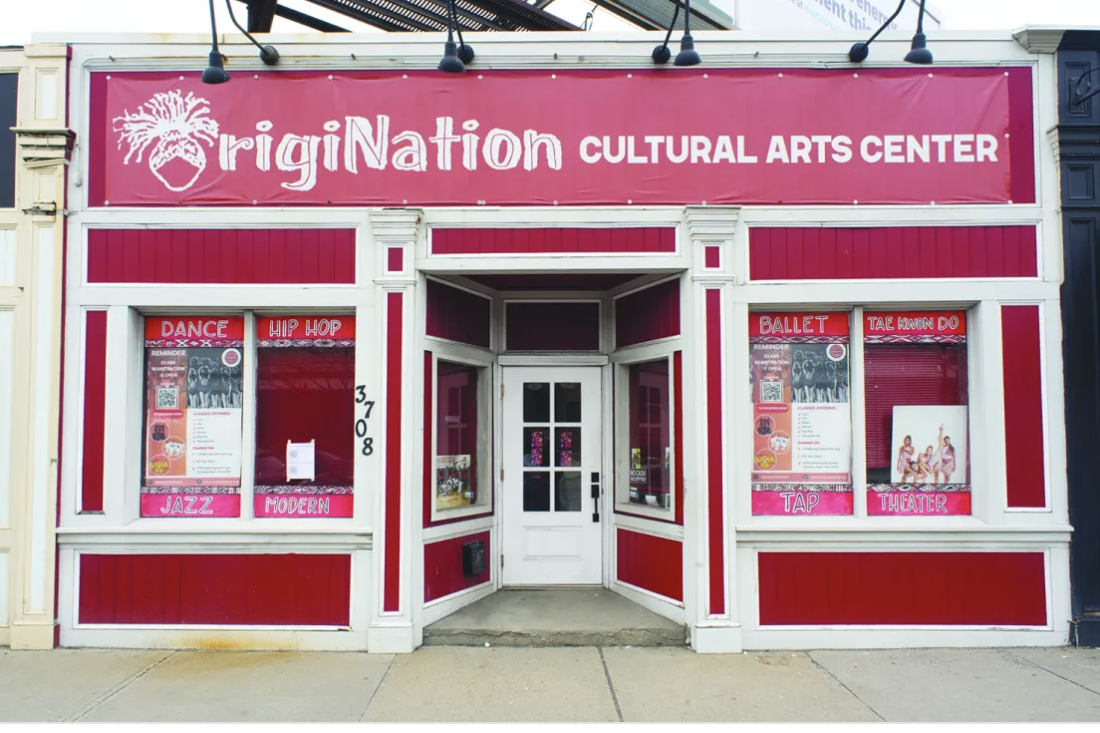
    The front of OrigiNation Cultural Arts Center, on Washington Street.

    The project aims to raise a one-story structure at 3716-3724 Washington St. that is currently rented by Forest Hills Pizza and Forest Hills Dental. Both are located across from the Forest Hills T stop.

    Stephen Harvey, senior project manager in the planning department for the City of Boston, held the meeting to get feedback from the JP community on the proposal, which includes a six-story, mixed-use building with two first-floor retail units and 35 residential units.

    The proposed project “directly aligns with key planning and policy initiatives” that aim to create communities where people can “live, work, and thrive” in neighborhoods closer to public transit, according to information from the company’s review application and details from the MBTA’s multi-family zoning initiative.

    Musau Dibinga, executive director of the OrigiNation Cultural Arts Center inside one of the dance studios.

    Harvey explained that eight of the units have an area median income ranging from 70% to 80%, impacting the costs of living in and around Tower Street.

    George Lee, an attendee at the meeting, said JP is a mix of low and high-income residents and that the proposal’s median income numbers are “very high” compared to what JP renters make.

    “I think the developer really needs to get a lot more solid on [affordability] and come back for another planning department meeting,” Lee said.

    The proposed site would also overshadow the traditional buildings along Washington Street that reflect a connection to the neighborhood’s history and its longtime residents, said  M. Mendez, who also attended the virtual meeting.

    “The building [as proposed] needs to respect the traditional red brick aesthetic, Mendez said. “The building is just too high and too dense.’’

    VinCo Properties, the South End real estate development company that is overseeing the project, plans to add public enhancements through sidewalk widening and street tree planting, Vince O’Neill, the company’s founder and president, explained in the meeting.

    “If the neighborhood has to make some compromises and sacrifices, the affordable units have to be for working people,” Mendez said. “They should not be for singles that are going to take the T to go to Google or to work at Amazon.”

    Musau Dibinga, executive director of OrigiNation Cultural Arts Center whose business is on the strip, expressed frustration over the congestion a new development would cause and about how the city notified the public about the project.

    She said she heard about the meeting through her landlord, adding that she wished the city had talked with other business owners like herself instead of only the owners of Forest Hills Pizza and Forest Hills Dental.

    The pizza shop owner declined to comment for this article, and the dental office is permanently closed.

    OrigiNation, which serves more than 150 students weekly, has been offering dance, leadership and employment training in JP for almost eight years, Dibinga explained.

    She also said that Washington Street is a narrow and “congested” road and that construction, with cranes taking up critical on-street parking spots, would only make things worse for the students as they enter and exit the center.

    Dibinga said she supports efforts to address the housing shortage but opposes the proposed development because it does not match the “fabric of the community”.

    “I want everyone to feel comfortable and have a home,” Dibinga said. “The management company has to be aligned with what we want in the neighborhood.”

    West, who owns Brady and Fallon Funeral Home, which would be behind the proposed site, told the meeting participants that his business conducts more than 300 funeral services a year and that the commotion from any construction would be disruptive to grieving and vulnerable families who attend the services.

    “The noise, the dust, the vibration, the constant traffic, make it impossible to hold dignified services for a funeral service that’s been in existence since 1875 in Jamaica Plain,” West said at the meeting.

    Not everyone at the meeting opposed the project.

    Jesse Kanson-Benanav, executive director of Abundant Housing, expressed his support for the proposal and defended officials at VinCo Properties, which he said had attended multiple Forest Hills Neighborhood Association meetings to hear from the public.

    Kanson-Benanav said he believes it’s a “reasonable project” that can address the housing shortage in JP because of its proximity to the Orange Line.

    The way to address [the housing shortage] is by building more homes, and I think we need to do it in a sustainable way that doesn’t encourage more and more people to drive,” Kanson-Benanav said.

    This story is part of a partnership between the The Mission Hill Gazette and the Boston University Department of Journalism’s Newsroom program.

  • Sotheby’s Real Estate Office hostsJP Tiny Desk Concert series

    Local real estate agent Brian Fizer has turned Sotheby’s real estate office into an intimate concert venue on select Thursday nights in Jamaica Plain. Free to attend, the “JP Tiny Desk Concert Series” features Boston musicians with a side of charcuterie boards and the opportunity to bring your own booze. 

    “Every event people say ‘Oh, this is the highlight of my week…it’s so nice to see this space right in the middle of JP used this way,’ ” said Fizer in a recent interview. “It’s all been great feedback.”

    Located at 673 Centre St., Sotheby’s doubles as a hub for neighbors to unite over local music that Fizer said feeds off community camaraderie. Just behind its reception desk wall, Sotheby’s office adds itself to JP’s reserved scene of daily shows at Midway Café and weekly sessions at Brendan Behan Pub.  

    “Community is really important in JP, but let’s do something just to give back to the community,” said Fizer on his motivations to create the concert series. “It was just a way for us to reach out to people.”

    Fizer called on Carol Palmer and Andrew Brilliant — his coworkers on the Brilliant Places real estate team — to help form the series. Palmer and Brilliant’s experience helping throw JP First Thursdays helped bring Fizer’s idea to life. Tiny Desk will have its third session Feb. 12 featuring the Sado Domestics, a grassroots trio that will bring an upbeat, rock-driven sound. Fizer has noticed the crowd grow to upwards of 40 people, spanning from children to retirees. 

    “I remember thinking like there’s just not a lot of instances in our current society where you get to hang out across generations,” said Fizer. 

    The Sado-Domestics will be the first group to break from the jazz theme lineup. According to the band’s website, their “sound is an acoustic-leaning blend of folk, roots and rock.” The group will perform as a trio, with lead singers and guitarists Chris Gleason and Lucy Martinez joining Jimmy Ryan on the mandolin.

    Åsa Runefelt, a jazz vocalist and Berklee College of Music graduate, highlighted Fizer’s commitment to creating the “intimate” and “live” space the poster tagline advertises. She said she felt thankful not only for his generosity to open up the office, but to the venue’s ironically good acoustics.

    “It happens to be a really great venue,” said Runefelt. “He thinks about the lighting, there’s some art on the walls, the chairs are comfortable, but it’s close enough to the musicians.”

    Runefelt performed alongside Brian Freeman, accompanying her vocals on the piano as she sang from her debut album “Night Flower,” released in December. Runefelt said the crowd responded with heartfelt claps to her new releases, whereas Tiny Desk fulfilled her wish to find a sharable concert building. It was just last year she walked the streets of JP to find an office that could benefit from hosting events after store hours.

    “I thought ‘maybe there’s a possibility here for sharing a space, and then he just comes up with his idea,” she said. “It’s amazing.”

    As a performer Runefelt elaborated on the freedom jazz breeds to create an improvised sound experience, especially when live. She said that music has a power to bring people together who may be strangers due to its finite lifespan.

    “Making a painting, this painting hangs there, you can enjoy it forever, but for musicians, it’s just a fleeting moment of living,” said Runefelt.

    Gleason, the co-lead singer of the Sado-Domestics, praised the mutual benefit to the audience and artist. Gleason performs all around Greater Boston, with monthly concerts at the Square Root in Roslindale and at the Sanctuary Cultural Arts Center in Maynard. He said that now more than ever in-person events can positively impact people who otherwise would stay inside.

    “Music is therapeutic, but it’s good for the audience, too,” he said. “We all spend so much time on our devices or watching television.”

    Fizer also said Tiny Desk can inspire a digital detox for attendees in its third space. He deemed  Sotheby’s intimate setup as an unplugged experience where people can socialize with less digital interaction.

    “It’s just, ‘you’re here to enjoy music, right?” said Fizer. “You see people talking to each other, which is really cool and doesn’t always happen in an East Coast city.”

    But as far as an official goal for Tiny Desk, Fizer settles on community. 

    “Human connection, interaction, community — and what better way to do it than listening to music that perhaps is a genre you’ve never listened to,” he said. “We feel that’s kind of the anecdote to a lot of our problems.”

  • Four Nonprofits in Neighboring JP Awarded Funding for Food Justice

    Derrel “Slim” Weathers (second from left), host of Award ceremony and creator of Heal the Hood and members on Jan 22. Photo by Enid Eckstein.

    Shown above, Food Justice Hub, Center for Faith Art and Justice, First Baptist Church.

    Four Jamaica Plain nonprofit organizations were awarded $5,000 in total in January in an effort to help end food insecurity in the neighborhood. 

    Heal the Hood, the First Baptist Church’s Centre Food Hub, The South Street Tenant Task Force and The Southern Jamaica Plain Health Center for Food Pantry received a little more than $1,000 each to carry out their food justice efforts.

    The funding originated during the lengthy federal shutdown last October. At that time, representatives from 25 organizations that advocate for food and other social justice issues met to address concerns about the stability of the Supplemental Nutrition Assistance Program for Jamaica Plain residents in need of federal food assistance.

    They distributed over 10,000 flyers featuring a QR code for Jamaica Plain residents to donate to food justice efforts. The advocates decided to split the donations among four food organizations in the neighborhood.

    The additional funds would help the Centre Food Hub’s work supporting more than 300 households. That includes food delivery, staff, and helping to cover the cost for refrigeration systems that keep produce and meat fresh, said the Rev. Ashlee Wiest-Laird, executive director of the church’s food hub.

    “Our philosophy has always been, if you need food and you ask us for food …we will give you food,” said Wiest-Laird in an interview.

    The church has had a long mission to feed those in need in the neighborhood. During the Covid-19 pandemic, it ran a delivery meal and grocery service for people experiencing food insecurity.

    After the pandemic, volunteers continued to serve cooked meals twice a week and opened a low-cost grocery store, which helps fund a food pantry stocked with non-perishable items and fresh produce.

    Derrel “Slim” Weathers, executive director and founder of Heal the Hood — which hosted last month’s award ceremony — said the funding will help pay staff and continue food justice efforts.

    Heal the Hood grows its own herbs, carrots, lettuce and other vegetables in its own backyard garden. It provides food to more than 100 families three times each week – on Mondays, Wednesdays, and Fridays – and has 70 volunteers and roughly 20 people on staff.

    The organization also gets donations from local businesses and community members through the People’s Free Store program. Volunteers from Feed the Hood deliver groceries to families.

    Weathers created the program in 2019 two years after being freed from incarceration. He said he hoped the program would “liberate” his community, rather than “going back into doing moral corrupting” in the neighborhood.

    “[Heal the Hood] is building a new ecosystem to make sure the mechanisms for … people of all races [so they] can have a chance to be respected and treated equally,” Weathers said in an interview.

    A third organization receiving aid is South Street Task Force, which was created in December 2023 and collaborates with the YMCA by providing trucks that deliver free food to residents every two weeks.

    About 40 families rely on these deliveries, officials said.

    Perla Suazo, the organization’s secretary, said that the need for such services has increased in the past few months, as many local families fear venturing outside and being detained by Immigration and Customs Enforcement officers.

    Sauzo said the organization plans to use the additional funding to purchase online grocery gift cards for those immigrant families.

    “Families need support right now because most of the families stopped working, they’re afraid to go outside [and] they don’t have food,” Suazo said. 

    The fourth awardee, Southern Jamaica Plain Community Health Center, said it will use its $1,000 to buy gift cards, reusable bags and help offset cost for transportation for families, said Evelyn Gallego, a senior program coordinator.

    The center operates twice a week through a bodega-style market open to patients of the center on Mondays and the whole community on Fridays.

    “We have to stay in community and connect with each other, not just… physically, mentally, but also …with your heart,” Gallego said.

  • Annual JP Open Streets

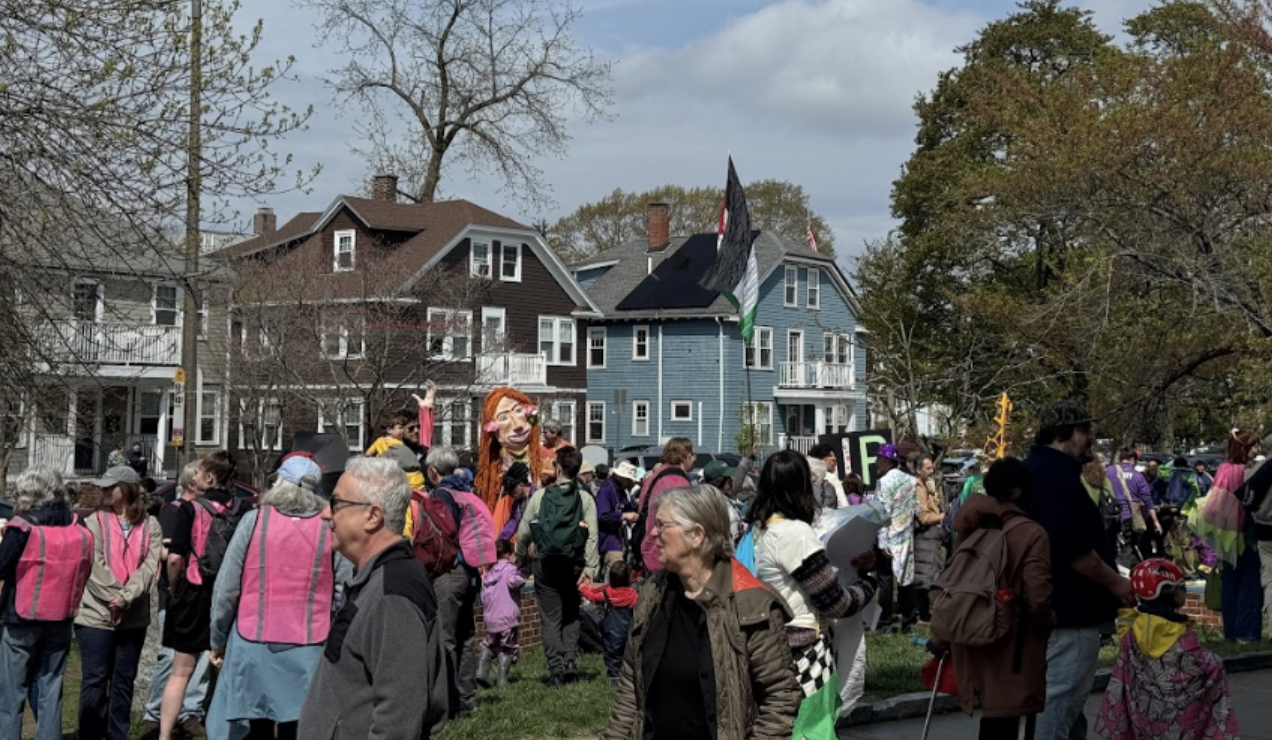
    Local businesses, organizations, food vendors and musicians assembled on Jamaica Plain’s Centre Street last week in celebration of Boston’s last Open Street festival of the season.

    The city closed Centre Street from 10:30 a.m. to 3 p.m. between Jackson Square and Soldier’s Monument, according to Boston Mayor Michelle Wu’s office.

    The Open Street program began with three neighborhoods in 2022, six years after Open Newbury in 2016, the region’s first neighborhood event. This year’s series began in July with events in Roxbury, followed by Hyde Park, Dorchester and Mattapan before concluding in Jamaica Plain.

    In all, the Open Streets event has attracted more than 30,000 people to various neighborhoods, according to Ginger Brown, executive director of JP Centre/South Main Streets.

    Franklin Park Defenders, a community action group, used the street festival to raise awareness about its opposition to the city’s proposed sports complex at White Stadium.

    “These are the opportunities we have to meet people [and] talk to people,” said Melissa Hamel, a volunteer with the Franklin Park Defenders, an organization that lobbies city officials to restore White Stadium as a public space, rather than proceed with a for-profit establishment.

    Michelle Davis, a Franklin Park Defenders volunteer who grew up in the area, said the city neglects Franklin Park because it is surrounded by minority communities.

    Organizers divided the festival into three zones separated by intersections, which allowed traffic to pass through. Zone 1 stretched from Jackson Square to Moraine/Boylston Street, Zone 2 extended to Green Street, and Zone 3 concluded at Soldier’s Monument, according to a map provided by the city.

    The Stop & Shop near the Jackson Square MBTA station offered free fruit, water and granola bars.

    “We’re doing everything we can,” said Cindy Sailer, the store’s community relations specialist, responding to recent cuts to the federal food stamp program.

    Brown said Open Streets enriches Jamaica Plain’s community spirit, along with year-round events such as dance classes, farmers markets and other community events. According to Niche, a website that profiles neighborhoods and schools, Jamaica Plain is the third best neighborhood to raise a family in Boston.

    Northeastern graduate students Krithika Krishnamurkhy and Tanvi Kandalla are new members of the Jamaica Plain community who visited Open Street for the first time last week. They said it helped acclimate them to the neighborhood.

    “It was nice to go and sort of interact with a bunch of people who live here and meet them,” said Kandalla, who bought chicken wings from Cambridge Smoke, which, according to Instagram @cambridgesmoke, specializes in smoked meats, barbecue, Southern and Haitian cuisines.

    Replenish Scrubs owner Shaneen Harris offered visitors samples of organic body scrubs. Harris began creating the products in 2018. Her products include lavender vanilla, peppermint tea tree and sweet orange lemon scents, according to @replenish_scrubs on Instagram.

    “You create a buzz,” said Harris, describing Open Streets’ benefit to businesses.

    Families were able to use sidewalk chalk, take swings in batting nets set up by the Boston Red Sox, and participate in live painting classes combined with music from At Peace Arts.

    Brown said the Open Street event served its purpose by bringing people together.

    “What tends to happen is we isolate ourselves to the neighborhood we live in,” she said, “so if folks walk a bit further, they could discover something new.”

  • What to know about Bluebikes’ expansion in Dot, Mattapan, Roxbury, Jamaica Plain

    By Madyline Swearing

    Boston’s bike share system is expanding throughout Dorchester, Mattapan, Roxbury and Jamaica Plain, with 20 new Bluebikes stations to be installed in those neighborhoods. City officials hosted an open house on Oct. 1 at the Marshall Community Center, where residents reviewed proposed site maps and offered feedback on potential station sites (see map below for specific locations).

    Here’s a look at the details of the initiative.

    What is Bluebikes, and how does it work?

    Bluebikes is a publicly owned bike share system that lets anyone rent bikes from docking stations. The system operates in 13 municipalities and has 337 stations in Boston.

    Payment plans include 30-minute rides for $2.95, $10 day passes, monthly and annual memberships. Passes and memberships can be bought on the Bluebikes app and website, or at a station kiosk.

    Boston saw 2.6 million Bluebikes trips in 2024, 11 percent of which started in Dorchester, Mattapan, Roxbury, and Jamaica Plain.

    What is the Bluebikes expansion plan?

    Last year, Mayor Wu and the Boston Streets Cabinet — consisting of the Public Works and Transportation departments — announced plans to add 100 new Bluebikes stations throughout Boston’s neighborhoods to meet a rising demand.

    This is all part of Go Boston 2030, the city’s transportation plan to improve safety, expand access, and reduce emissions. Launched in 2017, the project’s initiatives have included extending MBTA service hours, building neighborhood “slow streets,” and ensuring each household in Boston is within a 10-minute walk of a public bike share station. About 89 percent of households meet that criteria, according to the Streets Cabinet.

    “The objective is to make it convenient and reliable for people to get around the city by bike,” said Boston Bikes Director Kim Foltz. “Biking is a sustainable and affordable form of transportation and is a good connection to other transit.”

    What has already been done?

    The expansion has been implemented in phases, beginning with the MBTA Red Line diversion in 2023. The first phase involved the addition of eight new bike stations in Dorchester and Mattapan, and 31 docks were added to existing stations.

    Since last year, the city has received more than 2,600 comments offering feedback on proposed bike station sites, compiled from open houses, emails, and survey responses. So far, nearly 80 of the 100 new stations have been installed across the Beacon Hill, Downtown, South Boston and Allston neighborhoods, to name a few.

    Where is the project now?

    The initiative is in its fourth phase, focused on adding 20 new Bluebikes stations throughout Dorchester, Mattapan, Roxbury and Jamaica Plain. The Streets Cabinet aims to install two to four stations in Dorchester, two to four in Jamaica Plain, two to five in Mattapan, and four to seven in Roxbury.

    Boston Bike Share Planner Louisa Gag said proposed sites were chosen for their visibility, clearance of utilities, and potential accessibility for a Bluebikes service van. Gag said it is a priority to put docking sites within half a mile of an MBTA station.

    Other requirements include access to at least four hours of sunlight each day, to charge the sun-powered docking computers, and ensuring sites leave at least 5 feet of sidewalk space for pedestrians and 1.5 feet of clearance from the street curb. Off-street sites were favored overall, as they don’t disturb parking and don’t need to be removed for snowplows in the winter.

    Sites may be installed on public or private property, which can include plazas, residential neighborhoods, sidewalks, parking lanes, and libraries.

    Residents are invited to attend open houses where they can review maps of potential docking locations, offer feedback and ask questions. There will be two events in Mattapan this month, on Oct. 28 at the Mattapan Library and on Oct. 30 via Zoom.

    Feedback forms will be offered in person at each open house or can be accessed on the city website until Oct. 31.

    What is the timeline for the project?

    The Streets Cabinet will accept suggestions for new bike stations until Oct. 31. They will be reviewed and considered over four weeks. Site lists will be narrowed, and permits will be filed. Installation is expected to begin in January.

    What other programs does Boston Bikes offer?

    Boston Bikes offers community workshops like adult bike lessons, youth biking programs, and community ride events. Cyclists can arrange to have their bikes repaired at no cost or learn how to fix them independently during community workshop events.

    Discounted bike passes and e-bikes are available for residents, new riders and those who are income-eligible.


    This story is part of a partnership between the Dorchester Reporter and the Boston University Department of Journalism.

    This article was originally published on October 17, 2025.

  • ‘To the People Like Us’ — Students tackle community changes through opera

    From left  – Katelyn Geary, Nina Evelyn, Timothy Steele (piano), on the floor is Cerise Jacobs and Kayla Faccilongo, Linda Maritza Collazo and Jesús Daniel Hérnandez. Miu Tung Rong photo

    Daniela Martinez, a graduating senior at the John D. O’Bryant School of Mathematics and Science, joined 826 Boston in the fall of 2023, thinking she’d be writing plays, not the libretto for a new opera. But for six months last year, Martinez worked alongside other students at the writing nonprofit brainstorming, scene writing, and creating the text for the opera “To the People Like Us.”

    A year later, on June 28, the opera is set to premiere at the Strand Theatre in Uphams Corner.

    “To the People Like Us” follows three teens living in an unnamed city neighborhood. Costanza and Malakai, who are native to the area, confront the possibility of displacement when Indigo, whose mother is the developer responsible for the pressure, moves onto the scene.

    The opera was created by a dozen students from 826 Boston’s Youth Literary Advisory Board — a program that offers students stipends for their work as writers and editors — in collaboration with White Snake Projects, an activist opera company.

    Above: Nina Evelyn. Miu Tung Rong photo

    “White Snake came to us with the idea of students writing the libretto,” said Asiyah Herrera, a teaching artist for the Youth Literary Advisory Board. “I was cautious and hesitant because I’ve never written a libretto before.”

    Herrera said there was a steep learning curve for everyone involved, herself included. The writing they had worked on together previously was done on a much smaller scale, she said.

    She split the students into three groups, assigning each team specific scenes in the story to work on. Two individuals from White Snake Projects came to the sessions to guide the students through the writing process.

    “It was mainly just us and the writers at White Snake,” Martinez said, “making sure the plot points would be something that White Snake would want to represent, or the characters would be something that they would want on the stage and be okay with.” 

    Mezzo-soprano Kayla Faccilongo. Miu Tung Rong photo

    Each season, White Snake Projects assigns a social justice issue as the focal theme of their shows. The organization chose climate change for 2025.

    While students centered the opera on climate change, they used the opportunity to adapt the story into a real-life issue they’ve seen firsthand: gentrification.

    “They wanted a story that was about themselves and their own experience, like all of the places they’re talking about are real places in Boston,” said Pascale Florestal, the opera’s director.

    “The 826 Boston location is in Jamaica Plain, and Jamaica Plain is currently being gentrified,” Martinez said. “A lot of us — including myself [because] I live in East Boston, which is also being gentrified — had experience with it, so that came from ourselves.”

    Jorge Sosa, who composed the music for the opera, said it was important for him not only to stay true to the students’ vision but also to use art as a tool to explore related social issues.

    “I think that music is speech. Art is speech, and we can use it to say whatever we need to say,” Sosa said. “For me, I use my right to free speech to talk about the issues that are important to me.”

    Even though Sosa has never met the students in person, he said he shares their vision and concerns, and though the music may not change the world, he thinks that it still has the potential to create an impact.

    He said the music needed to reflect the characters and the world in which they lived. He jokingly describes the opera as an “electronic zarzuela,” a Spanish operetta style that alternates between spoken and musical scenes. He also included references to salsa and bolero in the show.

    Florestal acknowledged that opera has a reputation as a higher-class, elitist activity. She said it will be interesting to see how typical opera-goers react to the performance.

    “My job is to show people in opera who may not think about what it means to tear down this building and build a skyscraper, to the families who live in that building or the families who rely on that corner store for groceries,” she said. “Those people, oftentimes, who are affected by these larger implications of the system that we live in don’t get an opportunity to have their voices heard.”

    Martinez said she wants this opera to motivate people “to open their ears and listen to each other and have actual conversations, instead of just yelling back and forth at each other and sticking by their stubborn ideals.”

    “To the People Like Us” will have two performances on June 28, at 2 p.m. and 7 p.m. Ticket prices are “pay what you can.” RSVP information is available on the White Snake Projects website.

  • Plan for new Mattapan complex aims to foster connection among children and senior adults

    February 06, 2025

    Affordable child care and senior housing are coming to Mattapan in the very same building.

    The Shattuck Child Care Center, an affordable child care center established in 1969, will have a new home on the ground floor of Brooke House, a future apartment complex for low-income older adults.

    WBUR is a nonprofit news organization. Our coverage relies on your financial support. If you value articles like the one you’re reading right now, give today.

    Brooke House is part of a larger plan to redevelop land into Olmsted Village, an intergenerational neighborhood offering affordable housing and services for foster children, families, young adults and senior adults.

    The plan was approved by the state in December 2021, and the team hopes to begin construction on the project, including the $90 million Brooke House initiative, early next year.

    Olmsted Village represents the final phase of a long-term project to develop the last 10 acres of the former Boston State Hospital site. The concept was proposed by housing developers 2Life Communities and Lena New Boston.

    “This is the last chapter of the story, which we’re really excited to be a part of,” said Zoe Weinrobe, the chief of real estate for 2Life, a nonprofit affordable housing developer and operator for older adults based in Brighton.

    Shattuck was an obvious partner to 2Life when it considered incorporating affordable child care into its proposal, according to Lizabeth Heyer, 2Life’s president. She said she sent her children to Shattuck and remembered the center’s struggle to find a permanent home after the state decommissioned its original location in 2012.

    Shattuck has rented space inside First Baptist Church in Jamaica Plain since 2017. Mary Grace Casey, the center’s co-director, said she’s grateful for the relationship. But before Sunday services, she said, the center’s staff must cover up art projects and tuck away tables so the altar can slide back in front of the window.

    Casey is excited for Shattuck to have its own space again — and even more thrilled to return to Mattapan, where the center was originally located on the campus of Lemuel Shattuck Hospital.

    “There’s nothing about this that isn’t amazing, other than the fact that they haven’t dug the hole for it yet,” Casey said.

    Both Shattuck and 2Life want their relationship to be more than landlord-tenant: as the building comes together, so will plans to foster a meaningful connection among the children, senior adults and wider Olmsted community.

    “There’s something about children that really do bring out the best in people,” Casey said. “If you’re lonely, or if you live alone, sometimes hearing kids’ voices and laughter is a nice thing to brighten up your day.”

    Casey also hopes to work with young adults at Treehouse, another proposed project within the village that will offer housing to those who are at risk of aging out of the foster care system.

    “If you’re lonely, or if you live alone, sometimes hearing kids’ voices and laughter is a nice thing to brighten up your day.”

    Mary Grace Casey

    She sees a future where a 20-year-old living in Treehouse is an aide for her classroom, or a former librarian living in Brooke House spends time teaching the children how to read.

    There’s practical benefits, too: enrollment will increase at Shattuck from 46 seats to 55 seats in the larger space. Casey hopes that will give Shattuck the flexibility to turn its pre-K classroom into a Boston universal pre-K classroom, allowing families to feed into Boston Public Schools.

    Other features are on deck: the new space will have everything she’s long dreamed of, such as sinks in the classroom –– thanks to a long conversation with Mass Design Group, the project’s architect.

    Most importantly, the center’s co-director is looking forward to having more socioeconomic diversity in her classrooms at its future location. She believes Shattuck, which accepts vouchers from Child Care Choices of Boston, will be an attractive, affordable option for Mattapan families.

    “I believe that our program is going to meet the needs more of that community,” she said. “And we always want families with vouchers to be able to find space.”

    But outreach to families must wait on development, which is still in its final phases before construction.

    Weinrobe, of 2Life, said the project is anxiously awaiting its last piece of funding to come in from the state, which will allow them to go out to bid and get into the ground in early 2026.

    That timeline leaves Shattuck’s leaders hopeful to move in by spring of 2028. As one of the first providers to arrive to the new community, Casey was asked by the developers if nearby construction would be problematic.

    She said she immediately shut down that concern.

    “I was like, are you kidding? Preschoolers and construction?” she said. “That’s all they’re going to want to see! You’ve got a curriculum right in front of us.”


    This story is part of a partnership between WBUR and the Boston University Department of Journalism.