Tag: Massachusetts Municipal Association

  • A decades-old state law is squeezing budgets in Brookline and beyond. Local legislators aren’t eager to change it.

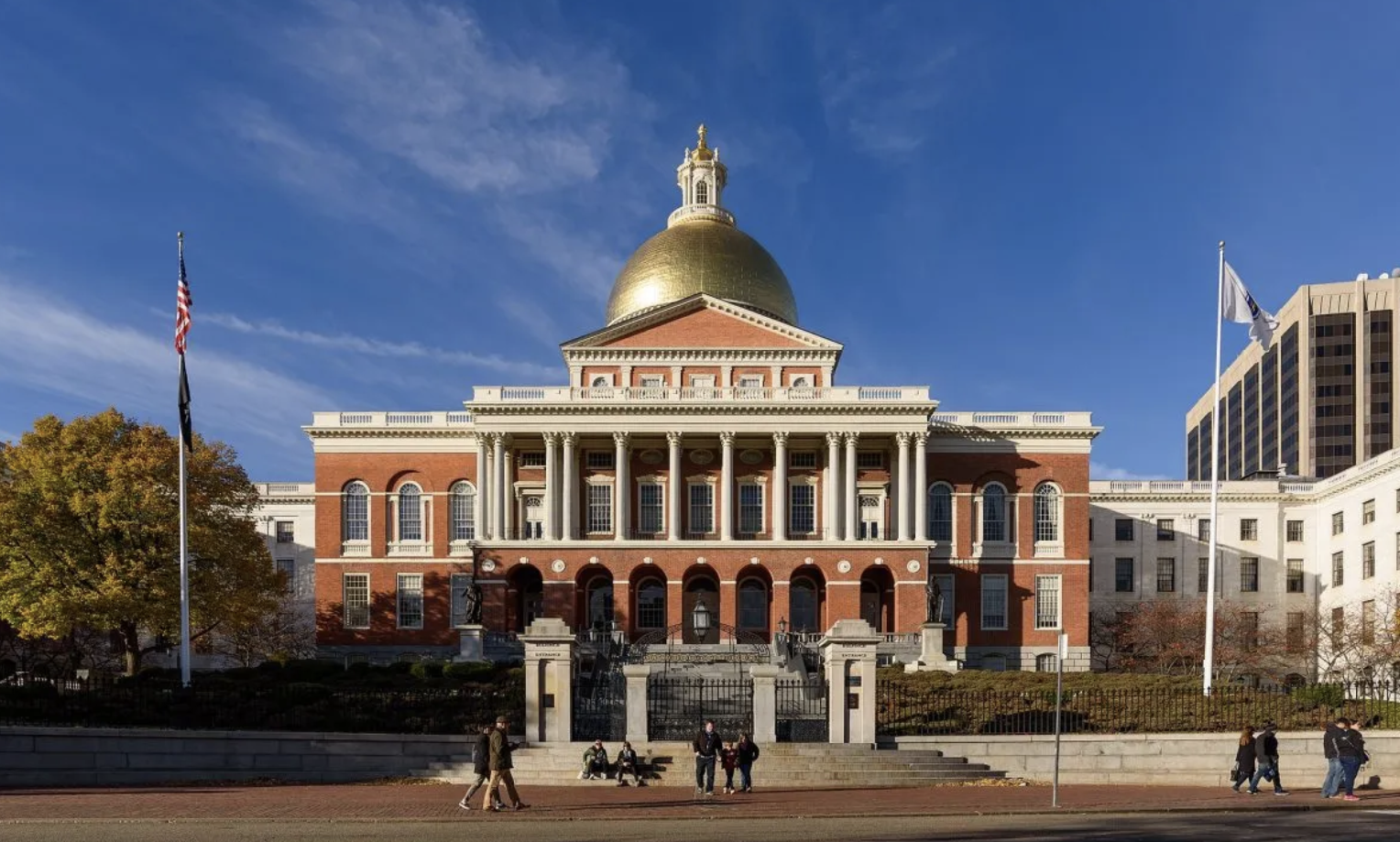
    The Massachusetts State House. Photo via Wikimedia Commons

    As Brookline voters go to the polls next month for the second time in three years to vote on a property tax override – this time for roughly $23 million, the largest in state history if approved — local legislators don’t appear keen on amending a decades-old state law that a town study committee points to as major factor in creating a “structural deficit.”

    The override proposal includes about $18.5 million for the Public Schools of Brookline over the next three years and $5.3 million for other services, as officials warn that failure could lead to layoffs affecting more than 200 school employees and the elimination of programs such as middle school world language instruction and K–8 conservatory music.

    town study committee report  published last month attributes Brookline’s repeated need for overrides not to one-time mismanagement, but to a structural mismatch between rising costs and limits on how quickly the town can raise revenue.

    “Brookline has a ‘structural deficit’ because its revenues, an overwhelming majority of which are statutorily limited, grow at a slower rate than its expenses, none of which have legal limits,” the report said.

    Because property taxes account for nearly 80% of Brookline’s revenue, the report identifies one statute above all others as driving that imbalance: Proposition 2½, the decades-old state law that caps annual property tax increases at 2.5%, unless voters approve an override.

    “The existence of the structural deficit is why Brookline keeps coming back to voters to approve revenue increases above and beyond Proposition 2½ limits,” the report adds.

    That finding is now fueling a broader questions on Beacon Hill: just how much is Proposition 2½  contributing to the strain facing communities like Brookline, and are lawmakers willing to revisit reform or repeal? 

    Brookline is not alone. Communities across Massachusetts have turned to Proposition 2½ overrides to close similar budget gaps, including in Arlington, where just days ago voters approved a $14.8 million override, currently the largest in state history. Other towns, such as Milton, Franklin, Natick and Duxbury, have also advanced override proposals in the past year.

    A December report from the Massachusetts Municipal Association, a statewide advocacy group representing all 351 cities and towns and a key municipal policy voice, outlined possible reforms to Proposition 2½ as municipalities face growing fiscal pressure.

    Adam Chapdelaine, the organization’s executive director, said the group is not calling for a full repeal of Proposition 2½, but instead supports changes that would give municipalities more breathing room.

    Among the proposals is allowing communities, through a ballot vote, to raise their levy limit above 2.5% or tie it to an economic indicator.

    “Allowing a community, by ballot vote, to decide they want to be, let’s say, a ‘Prop 3.5’ community, or vote to tie their number to some type of economic index, maybe the CPI,” he said.

    Chapdelaine said such changes would preserve the spirit underpinning the law while giving municipalities more flexibility.

    “Despite the challenges that Proposition 2½ presents to local budget makers, it also helps build community trust by ensuring there is a system in place to keep local property taxation in check,” he said.

    Still, Chapdelaine said no changes are expected during the brief remainder of the current legislative session, though he said lawmakers are beginning to engage more seriously with the issue.

    “I feel like, generally speaking, legislators understand that we’re reaching something that feels like a breaking point,” he added, “and some types of changes … need to be on the table.”

    Rep. Tommy Vitolo, D-Brookline, expressed his support for the town’s override but did not address whether he believes Proposition 2½ is contributing to the underlying budget pressures.

    “Brookline voters love our four publics: public schools, public parks, public services and public transportation,” Vitolo said in a statement. “Because exceptional public amenities require commensurate public investment, I will vote in favor of Brookline’s Proposition 2½ override on Election Day.”

    When pressed on whether the law itself should be revisited or reformed, Vitolo declined to comment.

    Sen. Cindy Creem, D-Newton, whose district includes Brookline, said she had read the MMA report and was aware of it circulating among lawmakers on Beacon Hill, but stopped short of embracing its central premise that Proposition 2½ is a primary driver of the state’s municipal budget strain.

    “I do know that communities feel stymied by Proposition 2½ in regard to how much money they can raise,” Creem said. “But I wouldn’t want to say it was the main contributor for any community.”

    Instead, Creem listed other factors exacerbating mounting budgetary pressures.

    “It’s not getting back money from the federal government … or the cost of everything going up so much … fuel costs … snow removal costs,” she said. “So, when you talk about contributing, they all contributed.”

    Creem agreed there is little immediate momentum for major Proposition 2½ reform on Beacon Hill, though she said “I do” when asked if she expects the issue to draw renewed attention in the next legislative session.

    “The Massachusetts Municipal Association is really good at getting people together. I’m assuming that they’re working with legislators to see if they can come up with some solution here,” she said.

    She pointed to uncertainty around federal funding and one of this year’s ballot questions, which could slash Massachusetts income tax revenue by 20%, as factors shaping the debate. However, Creem said those same pressures could cut both ways politically.

    “One would say yes because what it would reflect on is less money to cities and towns,” she said. “Another person could look at it and say the voters spoke — they don’t want to raise any more money.”

    Creem declined to take a position on whether she would support Proposition 2½ reform or repeal.

    “I don’t know at this point, I have to listen to my communities,” she said.