Tag: Michelle Parsons

  • Coyote mating season breeds curiosity and cautiousness

    Coyote mating season breeds curiosity and cautiousness

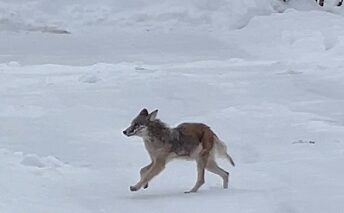
    With eastern coyote mating season under way, so too is the annual debate in Arlington over how well humans and coyotes can coexist.

    Arlington Animal Control Officer Michelle Parsons said she hasn’t received any reports of  coyote attacks on humans or pets so far this season. The last reported attacks in town occurred in 2021, when coyotes attacked two 2-year-olds in separate incidents.

    Coyotes are a minimal threat to human safety, Parsons said.

    “There are people that are more afraid, and I try to dissuade them from being super fearful,” she said. “[Coyotes] are really not out to attack us, and they’re more afraid of us than we are them.”

    During mating season, coyotes concentrate on courting mates and defending their territory. Their habitat includes all of Massachusetts, except Martha’s Vineyard and Nantucket. Although coyotes can adapt to urban, suburban, and rural environments, attacks on humans are extremely rare and usually caused by deliberate feedings.

    Pets face the most danger, Parsons said. She advises people to accompany animals during trips outside.

    “Especially during breeding season, a male is not going to let other males into the house,” she said. “They may not be discerning between your big male domestic dog against another male coyote that’s trying to come into their territory.”

    This winter’s heavy snowfall poses a challenge to coyotes’ and other wild animals’ ability to find food, Parsons said.

    “A lot of the smaller rodents and stuff that the coyotes are used to are underground and in hiding because of the cold weather,” she said. “I think they’re skinnier. They’re a little less robust.”

    With the coyotes increased hunger, Parsons encourages people to keep their garbage sealed to avoid attracting them.

    Capturing and relocating wildlife is prohibited in Massachusetts. Instead, people are advised to contact an animal control agent if they encounter issues with wildlife on their property. The law permits killing wildlife if they’re caught in the act of destroying someone’s property.

    Anne Short Gianotti, an associate earth and environment professor at Boston University who specializes in wildlife management, said people’s discomfort with coyotes persists despite state policy.

    “Being uncomfortable with coyotes in a particular place or wanting them to not be there can sometimes cause tensions between different neighbors,” she said. “People can have different ideas about what should happen with coyotes, but there’s actually not that much they can do except for manage their own property and their own behaviors.”

    Coexistence is the only option, Gianotti said.

    “We have to learn how to live with [coyotes] because even if we were allowed to remove them, they would just come back,” she said. “They’re very good at responding to openings in the environment.”

    Online groups create openings for communication and foster connections between humans and coyotes, Gianotti said.  

    One of these online groups is the Facebook group Coyotes of Arlington. Jang-Ho Cha founded the group in 2021 after seeing a lot of social media posts about coyotes on the Facebook forum The Arlington List. Coyotes of Arlington, which has roughly 2,700 members, is increasingly active during mating season.

    “We’re seeing all these incredible videos from people’s Ring cameras, and then occasionally there’s a sprinkling of [posts of], ‘My cat is missing,’ and then there’s a little discussion of ‘We should eliminate all the coyotes,’” Cha said.

    Most of the group’s posts are photos of coyotes, which receive mostly positive comments, Cha said.

    “Seeing a coyote is a really cool thing,” he said. “For some people, it’s scary. For me, it’s like if I saw a bald eagle.”

    Laura Kiesel, founder of Save Arlington Wildlife, a grassroots wildlife conservation organization, said the organization’s Facebook posts about coexistence with coyotes sometimes attract negative comments.

    Kiesel hopes to teach others about coyotes to reduce their stigma.

    “There’s been a lot of fear and I’ve seen more people saying we should cull them or we should relocate them, which is not even feasible or practical,” she said. Kiesel encourages people to maintain boundaries with coyotes.

    “At the same time that you shouldn’t be terrified of them, you also don’t want to feed them,” she said. “They’re not our dogs. They’re not pets, and it’s good to have some distance and keep them wild to the extent possible.”