Tag: Nathan Metcalf

  • A decades-old state law is squeezing budgets in Brookline and beyond. Local legislators aren’t eager to change it.

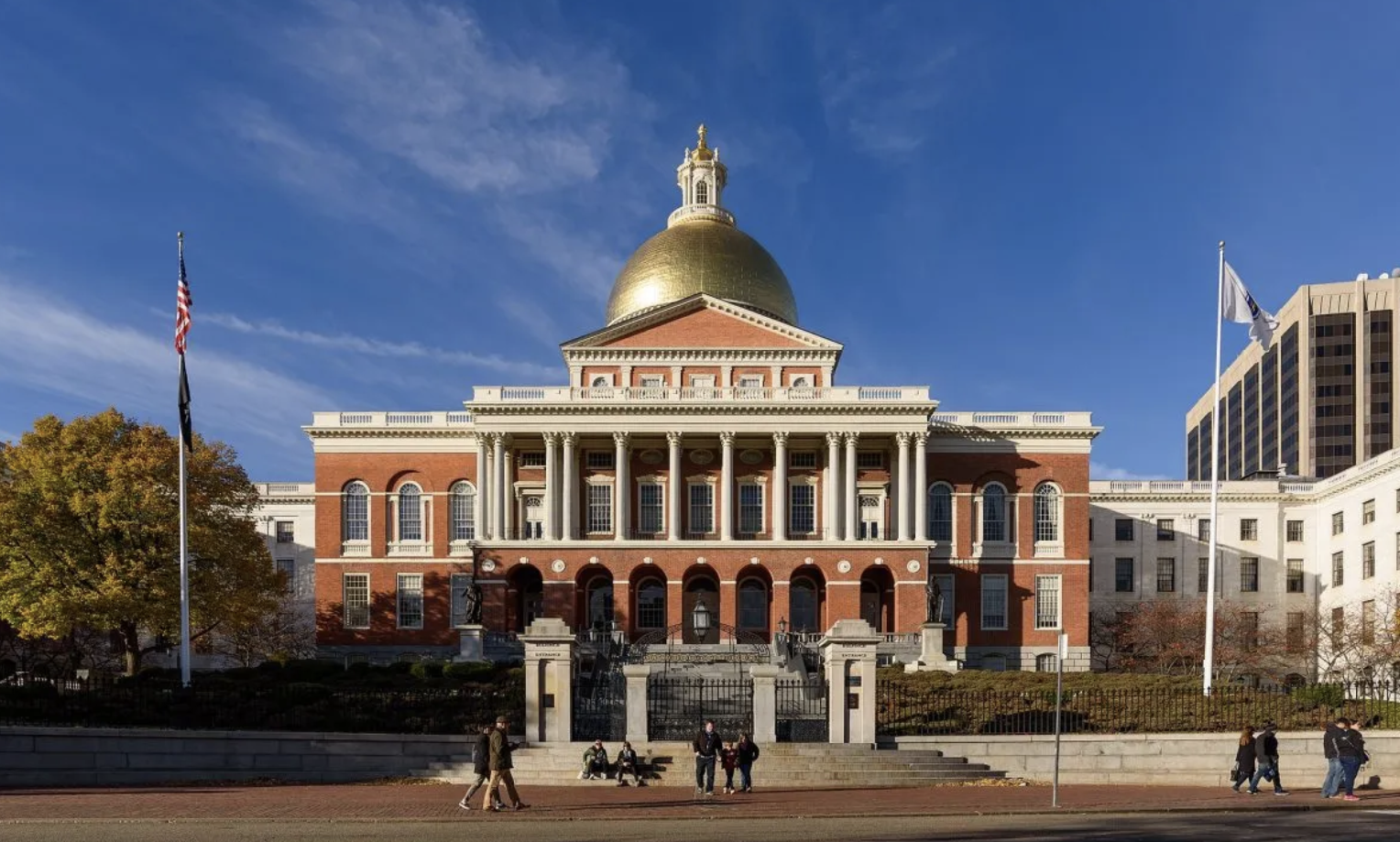
    The Massachusetts State House. Photo via Wikimedia Commons

    As Brookline voters go to the polls next month for the second time in three years to vote on a property tax override – this time for roughly $23 million, the largest in state history if approved — local legislators don’t appear keen on amending a decades-old state law that a town study committee points to as major factor in creating a “structural deficit.”

    The override proposal includes about $18.5 million for the Public Schools of Brookline over the next three years and $5.3 million for other services, as officials warn that failure could lead to layoffs affecting more than 200 school employees and the elimination of programs such as middle school world language instruction and K–8 conservatory music.

    town study committee report  published last month attributes Brookline’s repeated need for overrides not to one-time mismanagement, but to a structural mismatch between rising costs and limits on how quickly the town can raise revenue.

    “Brookline has a ‘structural deficit’ because its revenues, an overwhelming majority of which are statutorily limited, grow at a slower rate than its expenses, none of which have legal limits,” the report said.

    Because property taxes account for nearly 80% of Brookline’s revenue, the report identifies one statute above all others as driving that imbalance: Proposition 2½, the decades-old state law that caps annual property tax increases at 2.5%, unless voters approve an override.

    “The existence of the structural deficit is why Brookline keeps coming back to voters to approve revenue increases above and beyond Proposition 2½ limits,” the report adds.

    That finding is now fueling a broader questions on Beacon Hill: just how much is Proposition 2½  contributing to the strain facing communities like Brookline, and are lawmakers willing to revisit reform or repeal? 

    Brookline is not alone. Communities across Massachusetts have turned to Proposition 2½ overrides to close similar budget gaps, including in Arlington, where just days ago voters approved a $14.8 million override, currently the largest in state history. Other towns, such as Milton, Franklin, Natick and Duxbury, have also advanced override proposals in the past year.

    A December report from the Massachusetts Municipal Association, a statewide advocacy group representing all 351 cities and towns and a key municipal policy voice, outlined possible reforms to Proposition 2½ as municipalities face growing fiscal pressure.

    Adam Chapdelaine, the organization’s executive director, said the group is not calling for a full repeal of Proposition 2½, but instead supports changes that would give municipalities more breathing room.

    Among the proposals is allowing communities, through a ballot vote, to raise their levy limit above 2.5% or tie it to an economic indicator.

    “Allowing a community, by ballot vote, to decide they want to be, let’s say, a ‘Prop 3.5’ community, or vote to tie their number to some type of economic index, maybe the CPI,” he said.

    Chapdelaine said such changes would preserve the spirit underpinning the law while giving municipalities more flexibility.

    “Despite the challenges that Proposition 2½ presents to local budget makers, it also helps build community trust by ensuring there is a system in place to keep local property taxation in check,” he said.

    Still, Chapdelaine said no changes are expected during the brief remainder of the current legislative session, though he said lawmakers are beginning to engage more seriously with the issue.

    “I feel like, generally speaking, legislators understand that we’re reaching something that feels like a breaking point,” he added, “and some types of changes … need to be on the table.”

    Rep. Tommy Vitolo, D-Brookline, expressed his support for the town’s override but did not address whether he believes Proposition 2½ is contributing to the underlying budget pressures.

    “Brookline voters love our four publics: public schools, public parks, public services and public transportation,” Vitolo said in a statement. “Because exceptional public amenities require commensurate public investment, I will vote in favor of Brookline’s Proposition 2½ override on Election Day.”

    When pressed on whether the law itself should be revisited or reformed, Vitolo declined to comment.

    Sen. Cindy Creem, D-Newton, whose district includes Brookline, said she had read the MMA report and was aware of it circulating among lawmakers on Beacon Hill, but stopped short of embracing its central premise that Proposition 2½ is a primary driver of the state’s municipal budget strain.

    “I do know that communities feel stymied by Proposition 2½ in regard to how much money they can raise,” Creem said. “But I wouldn’t want to say it was the main contributor for any community.”

    Instead, Creem listed other factors exacerbating mounting budgetary pressures.

    “It’s not getting back money from the federal government … or the cost of everything going up so much … fuel costs … snow removal costs,” she said. “So, when you talk about contributing, they all contributed.”

    Creem agreed there is little immediate momentum for major Proposition 2½ reform on Beacon Hill, though she said “I do” when asked if she expects the issue to draw renewed attention in the next legislative session.

    “The Massachusetts Municipal Association is really good at getting people together. I’m assuming that they’re working with legislators to see if they can come up with some solution here,” she said.

    She pointed to uncertainty around federal funding and one of this year’s ballot questions, which could slash Massachusetts income tax revenue by 20%, as factors shaping the debate. However, Creem said those same pressures could cut both ways politically.

    “One would say yes because what it would reflect on is less money to cities and towns,” she said. “Another person could look at it and say the voters spoke — they don’t want to raise any more money.”

    Creem declined to take a position on whether she would support Proposition 2½ reform or repeal.

    “I don’t know at this point, I have to listen to my communities,” she said.

  • ‘This is not normal’: Brookline lawmakers outline priorities for pivotal year on Beacon Hill

    This election year will be a high-stakes one in Brookline, on Beacon Hill, and across America, according to the five lawmakers who represent the town at the Massachusetts State House.

    The effective end of the 194th legislative session on July 31 — and with it the deadline for bills proposed over the past two years to advance or die — combined with a November election featuring races for the state’s constitutional offices, every seat in the Legislature, up to a dozen ballot questions and midterm national elections focusing on immigration and federal spending  – sets up a year that will be remembered for generations, one local lawmaker said.

    “Fifty years from now, American schoolchildren will learn about this time in history and be shocked,” said Rep. Tommy Vitolo, D-Brookline, referring to what he described as the “unquestionably” unconstitutional actions of immigration enforcement under the second Trump administration. “This is not normal, and we’ve got to figure out a way to stop it.”

    Vitolo is the only member of Brookline’s state delegation whose district is entirely contained within the town. He, along with Sen. Cindy Creem  (D–Newton) and Reps. Greg Schwartz, D-Newton, Kevin Honan and Bill MacGregor, both Boston Democrats, collectively speak for Brookline’s interests on Beacon Hill.

    Rep. Tommy Vitolo

    Vitolo, first elected in 2018 and now serving his fourth term, said the urgency of the moment is shaping the “day-in, day-out work of governing,” particularly as affordability pressures continue to define life in Brookline and across the state.

    “The word you’re going to hear over and over again is affordability, and for good reason,” Vitolo said. “Too many people are working hard and doing the right things and still struggling to have the comfort they rightfully expect.”

    Among his priorities, Vitolo highlighted workforce development, particularly the House-passed bill  which would require certain large public construction projects to use apprentices 

    “The only way you become a master plumber or a master carpenter or a master welder is to start by getting your first job learning how to do it,” Vitolo said. “Apprenticeships lead to jobs where someone can own a home, raise a family, and maybe go on vacation once in a while.”

    Vitolo also highlighted energy and climate legislation as a key focus, including a measure which aims to transition buildings away from natural gas , and a separate bill which would strengthen energy codes  to promote net-zero and solar-ready construction, both of which he filed. 

    “Brookline is on the cutting edge,” Vitolo said, noting the town’s role as one of 10 municipalities authorized by state law to require fossil-fuel-free new construction. “Communities that have more privilege, more wealth, more capital — those should be the leaders.”

    Sen. Cindy Creem

    Creem, first elected in 1998 and now serving as Senate majority leader, framed the year ahead from a position of institutional power — and constraint.

    She said immigration enforcement is the most urgent issue she hears about from constituents, and that a core focus in the coming months will be advancing a bill filed by Gov. Maura Healey in late January that would restrict civil immigration arrests  without a judicial warrant in sensitive locations such as courthouses, schools, health care facilities and places of worship, among other measures. 

    “We cannot control the federal government,” Creem said. “But we can make sure people are not impersonating ICE, that due process is protected, and that we’re not complicit in actions that violate constitutional rights.”

    Besides immigration issues, Creem said her top legislative priority for the final year of the session is a Senate-passed data privacy bill  which would ban the sale of sensitive personal information, including precise location data.

    “We banned the sale of sensitive data, including location data — in other words, somebody who might come to Massachusetts for services that may not be legal in another state, such as abortion or gender-affirming care,” Creem said. 

    Rep. Greg Schwartz

    Schwartz, a first-term lawmaker elected in 2024 and a practicing primary care physician, said healthcare access is his central concern as lawmakers confront budget pressures and federal uncertainty. As a key priority, he pointed to advancing a bill he is sponsoring, which would increase the share of healthcare spending devoted to primary care.  

    “Primary care is the foundation of the entire healthcare system,” Schwartz said. He said the state’s low level of spending on primary care is contributing to physician burnout and limiting access to care. “People have insurance, but they can’t find a doctor,” he said.

    Schwartz added that budget discussions on healthcare are complicated by uncertainty about federal funding, particularly Medicaid reimbursements, which account for a substantial portion of state spending.

    “In a roughly $62 billion budget, we’re talking about on the order of $14 billion in reimbursements from the federal government,” Schwartz said. “That’s practically 25%.”

    Rep. Kevin Honan

    Honan, first elected in 1987 and the longest-serving member of the Massachusetts Legislature, said his priorities for the final year of the session include legislation aimed at improving housing governance and increasing housing production as affordability pressures continue to grow.

    One proposal he highlighted would establish a condominium ombudsman  within the Attorney General’s Office to help resolve disputes between condo owners and associations.

    “This is an issue that comes up all the time,” Honan said. “People feel like they don’t have anywhere to turn.”

    Honan also pointed to a measure often referred to as the “Yes in my back yard”  (YIMBY) bill, which he supports, to make it easier to build multifamily housing and allow housing on underused land.

    “When you’re trying to create more housing, you need zoning reform,” Honan said. “You need multifamily housing to address the housing shortage that we’re experiencing in Massachusetts.”

    Rep. Bill MacGregor

    MacGregor, who was elected in 2022 and is currently serving his second term, said the rising cost of living is also shaping his priorities for the final year of the session, particularly child care affordability, in addition to concerns about access to mental health care.

    “I’m a father of two toddlers, so early childhood education is something that’s important to me,” MacGregor said. “For two kids in daycare, it’s over $50,000. We’re one of the most expensive states.”

    To help offset those costs, MacGregor said he has filed a bill which would create a child care and dependent care tax credit , allowing families to reduce their state tax bill by up to $500.

    MacGregor acknowledged the amount was modest, but said, “Every little bit helps nowadays.”

    MacGregor also highlighted legislation that would establish a special commission to study interstate telehealth  and ways to allow patients to maintain continuity of care when crossing state lines, particularly for mental health treatment.

    “If you’re seeing a therapist and you go to college out of state, you wouldn’t be able to see that same therapist,” MacGregor said. “That’s a real problem.”

  • At UMass Boston, young voters take up Markey vs Moulton match

    As US Rep. Seth Moulton mounts a challenge to Sen. Ed Markey built on the idea of generational change in Washington, The Reporter discussed the still-emerging contest with young voters in recent weeks..


    By Nathan Metcalf

    When US Sen. Ed Markey’s campaign blasted out endorsements last month from the state’s young Democratic leaders, it revived memories of the “Markeyverse,” the online coalition of progressives that helped propel the now-79-year-old into his third US Senate term in 2020.


    Five years later, however, as US Rep. Seth Moulton mounts a challenge built on the idea of generational change in Washington, some younger voters say their enthusiasm for incumbents is tempered by frustration with an aging Democratic establishment and the rising costs of daily life.

    UMass Boston students Nick Gentile and Arianni Pimentel said they want to believe in the system but feel alienated by it.


    “Neither of them really seems like a great option right now,” Gentile said.


    “I just want someone who’s not going to forget about people like us once they win,” Pimentel added.
    In a deep-blue state like Massachusetts, it’s likely that Moulton, often cast as a more moderate Democrat than the progressive Markey, will have to convince young voters that his pragmatism won’t come at the expense of marginalized groups.


    Those fears likely stem largely from remarks he made after Donald Trump’s victory over Vice President Kamala Harris last November, when he told The New York Times, “I have two little girls. I don’t want them getting run over on a playing field by a male or formerly male athlete, but as a Democrat, I’m supposed to be afraid to say that.”


    The comment spurred the resignation of his top political aide and drew backlash from progressives nationwide.
    With Markey’s age and Moulton’s remarks about the LGBTQ+ community emerging as their biggest liabilities among young Democrats, the two lawmakers have begun what promises to be a grueling, yearlong intra-party fight over the future.


    Inside the political science office at UMass Boston, Gentile and Pimentel – two undergraduates juggling classes, jobs, and rent – said the race feels distant from their lives.

    “I don’t really know much about either of them,” Gentile said. “But we need people who actually know what it’s like to be our age right now. It’s not about identity; it’s about whether you can afford rent, food, or even the T.”


    Gentile, a political science major from Dorchester who works part time on campus, said he’s undecided but, drawn to the idea of younger leadership, leaning toward Moulton. “He’s younger,” he said. “Maybe he’d understand how hard it is to make it work.”


    Across the desk, Pimentel, a psychology major who grew up in Dorchester and now lives in Quincy, said she’s budgeting how to eat through November while waiting on her SNAP benefits. “Everyone’s struggling to pay for groceries, not just one group,” she said. “I support LGBTQ+ rights and everything, but I think politicians talk about that more than they talk about how expensive life’s gotten.”


    Simone Alcindor, a freshman political science major from Medford, offered a different view. A member of Our Revolution Medford and the Suffolk University Democrats, he calls himself “a proud progressive” and said he’s firmly behind Markey.


    “He’s still a fine leader,” Alcindor said. “Younger doesn’t mean better. We’ve seen what happens when people talk about change but don’t fight for it.”


    Alcindor said Moulton’s comments about transgender Americans show why progressives must stand their ground. “It’s incredibly regressive,” he said. “You don’t win by throwing people under the bus. The right’s going to come after us no matter what, so we might as well stand up for what we believe in.”


    He said that after meeting Markey at a campaign event in Springfield, he saw that “he had more energy than most people in the room. He listens, and he actually shows up. That matters.”


    Alcindor said he’d “probably prefer” Ayanna Pressley if she entered the race but worries a three-way contest could split the progressive vote. “I think Pressley and Markey are on the same team,” he said. “It’s the kind of leadership that actually represents us when the time comes.”

    Pressley, a progressive Massachusetts congresswoman, has not announced a Senate bid, though her office has not ruled out the possibility, fueling speculation she could join the race.


    Abdullah Beckett, a 26-year-old Dorchester resident, UMass Boston graduate, and community organizer, said his support for Markey comes from a more local place shaped by rent hikes, long commutes, and a sense that many working-class voters have stopped believing politics can change their lives.


    Beckett works as a field organizer for Mayor Wu and plans to volunteer for Markey’s campaign this fall. “I like Markey. I think he’s real,” Beckett said. “He shows up for stuff that matters here, not just in Cambridge or downtown.”


    He said that while he respects Moulton’s service as a Marine, the congressman’s remarks about transgender athletes “felt like he was trying to play both sides.” 


    That kind of hedging he argued, drives away younger voters. “That’s not leadership,” he said. “You can’t be afraid to say what’s right just because it’s not polling well. That’s the kind of stuff that loses people my age.”


    For many of his neighbors, Beckett said, affordability outweighs ideology. “It’s hard to tell people in Dorchester that voting’s gonna change their rent,” Beckett said. “We’re paying Boston prices on fast-food wages. Until somebody fixes that, it’s hard to care who’s fighting who.”


    “He’s old, sure,” Beckett added of Markey, “but I’d rather have somebody old who listens than someone young who doesn’t.”


    This story is part of a partnership between the Dorchester Reporter and the Boston University Department of Journalism.

    This article was originally published on November 12, 2025.

  • Early voters make their choices ahead of next Tuesday’s city election

    Early voters make their choices ahead of next Tuesday’s city election

    By Nathan Metcalf

    A slow but steady trickle of 2,230 voters cast early ballots at one of the ten locations that were opened over the weekend for voting ahead of Boston’s Nov. 4 municipal election.

    At Dorchester’s Richard J. Murphy School,185 residents cast ballots on either Saturday or Sunday.

    With Mayor Wu’s reelection assured, early voters arriving at the K–8 school on Worrell Street described the at-large City Council race, with four seats and eight names on the ballot, as the contest that was keeping them engaged.

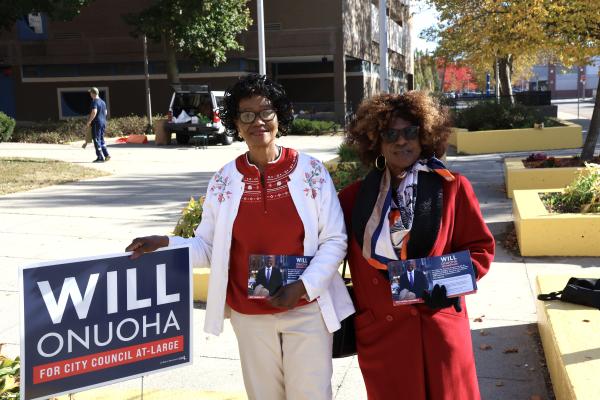
    Those candidates include four incumbents, Julia Mejía, Erin J. Murphy, Henry Santana and Ruthzee Louijeune; three newcomers, Alexandra Valdez, Will Onuoha, and Marvin Mathelier; and a familiar face in Dorchester, Frank Baker, returning from a two-year hiatus after not seeking reelection to the District 3 seat he had held for 12 years.

    “I think housing is the biggest issue facing Boston right now,” said Meghan Greeley, 42, a Pope’s Hill resident and Murphy School parent who was raking leaves for her volunteer group, the Murphy School Family Council, before going inside to vote.

    She said she voted for incumbents Louijeune and Santana, as well as newcomers Onuoha and Mathelier.

    “We’re homeowners,” Greeley said, “but if we want a thriving community, people have to be able to afford to live here.” Given that, she said she supported candidates aligned with Wu’s housing and education priorities.

    “I was thrilled that Wu’s running unopposed,” she said. “She’s the right choice for the city.”

    Not everyone agreed with Greeley’s take on things . Kevin M., a 55-year-old Savin Hill resident who declined to give his last name, said he voted only for Frank Baker, calling the former District 3 councillor “the one trying to get sense back into City Hall.”

    He said the council has become “upside down” and mired in corruption, referring to the recent ethics scandal involving former Councillor Tania Fernandez Anderson. His bullet vote to back only Baker, rather than choosing up to four candidates, as voters can in the at-large race, helped to maximized his candidate’s share of support in a crowded field.

    A lifelong Dorchester resident who said he grew up with Baker, Kevin cited crime and homelessness as his top concerns.

    “Frank’s got a track record,” he said. “He’s done a great job.”

    Ben Stone, 38, of Ashmont, said he voted for Louijeune, Onuoha, Santana, and Valdez, adding that he backed the latter two because they were endorsed by Abundant Housing Massachusetts, which advocates looser zoning to increase supply.

    “They want more housing of all kinds,” said Stone, who is executive director of the Brookline Housing Authority.

    Longtime Cedar Grove residents Thomas J. and Rita McCarthy said early voting’s weekend hours make civic
    participation easier. “It’s convenient,” said Thomas, 76. “Being on a Sunday, you beat the line.”

    The couple chose Louijeune, Mejía, Onuoha, and Mathelier — a split between incumbents and newcomers. Thomas described them as “Wu people,” adding, “I wanted to give two votes back to Wu.”

    They praised the mayor’s leadership but worried about property taxes if Proposition 2½ were loosened or repealed.

    “The city’s collecting plenty already,” Thomas said.

    The McCarthys said aging school buildings remain their top concern.

    “Tom and I volunteered recently in one of the elementary schools where they can’t drink out of the water bubblers because there is lead in the pipes, said Rita. “They have no gyms. They have no lunchrooms. They have these old buildings that have been around since I went to school in Boston.”

    Among the campaign volunteers outside the Murphy School was Valdez’s father, Modesto Valdez, 52, of Mattapan, (shown below) who spoke about helping with his daughter’s first campaign.

    “I feel so proud of her,” he said. “She’s a really nice person, very dedicated, very hard-working.”

    Valdez said his daughter, who emigrated from the Dominican Republic as a child and grew up in Mattapan, has been committed to public service since she was young.

    “She’s been serving the city almost her whole life,” he said. “Now she feels it’s time to give back even more to Boston.”

    Not wanting to be outdone by the Valdezes, a volunteer for Will Onuoha phoned the candidate’s mother, Esther Onuoha, who hurried to the Murphy School for an interview.

    Onuoha described her son as “a uniter” shaped by years of work under four Boston mayors, Tom Menino, Marty Walsh, Kim Janey, and Wu.

    “He’s been serving this city for a long time,” she said. “He understands how it works, and he listens to everyone.”

    The city’s Election Department put the weekend tally at the Murphy School at 112 ballots on Saturday and 73 on Sunday. Citywide, 1,203 ballots were cast on Saturday and 1,027 on Sunday.

    More early voting opportunities are available this week at Boston City Hall, Dorchester’s Perkins Community Center (Tuesday, Oct. 28, 12-8 p.m.), and Florian Hall (Thursday, 12-8 p.m.).

    Polls will be open on Tuesday, Nov. 4 from 7 a.m.-8 p.m. at all of the city’s precincts.

    This story is part of a partnership between the Dorchester Reporter and the Boston University Department of Journalism.

    This article was originally published on October 28, 2025.

  • Dot tenants push ballot measure to cap rent boosts at five percent

    By Nathan Metcalf

    Volunteers from Dorchester are gathering signatures at grocery stores, MBTA stops, and community centers in an effort to get a rent-control measure on the 2026 Massachusetts ballot that, if approved, would limit rent increases for most residential units to five percent a year, or the annual rise in the Consumer Price Index, whichever is lower.

    The bill would exempt owner-occupied buildings with four or fewer units and properties less than 10 years old. It would also repeal the 1994 law that outlawed rent control statewide, ended programs in Boston, Cambridge and Brookline, and barred new ones.

    Organizers have until Nov. 19 to collect the 74,574 signatures needed to put the petition on next year’s ballot.

    Supporters say the proposal, if made law, would give urgently needed relief to tenants struggling to afford housing, with many spending more than 30 percent of their income for rent. In Boston and Dorchester especially, advocates say, it’s essential to preserve working-class and immigrant communities that are now facing mounting displacement.

    For their part, opponents counter that rent caps would discourage new construction, reduce maintenance, and burden small property owners, worsening the shortage the measure aims to fix.

    Said Lori Hurlebaus of Fields Corner, a member of the resident-run alliance Dorchester Not for Sale, “We’ve been talking to people all over Dorchester who are feeling the pressure of rising rents. A lot of folks are worried about whether they can keep living in the neighborhoods they grew up in. This ballot campaign is about making sure they can stay.”

    Dorchester Not for Sale hosted a community dinner on Oct. 9 at the Vietnamese American Initiative for Development (VietAID) center in Fields Corner, where tenants and small property owners shared Vietnamese food and discussed strategy.

    Lan Le, a Vietnamese refugee who spent two decades in Dorchester before being priced out, said she has moved more than 15 times since arriving in the United States in 1981.

    “It made my family have to move out of Dorchester, which is where all the Asian community gather,” she said. “My mother doesn’t speak English, so it’s the best place for her to be in Dorchester, but because of the rent that we cannot afford, we had to move to Quincy.”

    Nelito Vaz, a tenant who has lived on Robinson Street for a decade, said his monthly rent has climbed from $1,600 to $2,150 over that time. “It’s very stressful,” he said. “When I pay the rent, I barely have money to afford other things that I need.”

    Despite already spending about half his income on rent, Vaz said he’s determined to stay among his Cape Verdean community in Dorchester. “That’s why I’m part of this organization,” he said, “so we can stay here and not get relocated.”

    Not everyone at the dinner was a renter. Rich LeBrun, a Dorchester resident who owns and lives in a two-family home in Ashmont Hill, supports rent control to protect both his tenants and his neighborhood.

    “In the last 20 years we’ve seen people that have been there for years and years be priced out,” he said. “As a small landlord, I see this as protecting my investment, because it’s protecting my neighborhood.”

    But many landlords and property groups say rent control would do more harm than good, warning it could drive up costs, discourage upkeep, and shrink the city’s housing supply.

    Leaders of the Small Property Owners Association, which helped repeal Massachusetts’s previous rent control law in 1994, argue that bringing it back would repeat what they call a failed experiment. The policy, in place from 1970 to 1994, “was a nightmare on all fronts,” said Vice President Amir Shahsavari, who noted that the association was founded by small, “mom-and-pop” landlords frustrated by what they saw as abuses under the old system. “History has shown that the policy itself is unworkable.”

    Tony Lopes, a Dorchester property manager who oversees approximately 30 units, said the effects would be especially damaging in neighborhoods like his.

    Of that earlier time, he said, “It led to higher rents, fewer available units, and discouraged new housing development. He added that rising insurance and tax costs make rent caps “unsustainable for local owners who rely on rents to send their kids to school or fund retirement.”

    Other landlords were blunter. Rick Martin, a Clam Point investor who has owned multiple two- and three-family homes in Dorchester since the 1990s, called rent control “an utter disaster for Boston” and said it would drive small owners out of the city.

    “If they’re going to bring back rent control, I want nothing of it,” he said. “You’re going to see people flock out of the rental industry left and right, and then you’re going to end up with dilapidated houses everywhere.”

    Tenant organizers dismissed those claims as fear-mongering from an industry long resistant to oversight.

    “This isn’t about punishing landlords,” said Jason Boyd, housing coordinator for the Dorchester-based coalition Action for Equity. He noted that the proposal exempts small, owner-occupied buildings and gives new developments a 10-year grace period. “It’s not targeting community members who live in the community,” he said. “It’s a simple and effective tool to protect tenants and allow people to plan.”

    Carolyn Chou, executive director of Homes for All Massachusetts, a statewide coalition of tenant and housing justice groups leading the Keep MA Home ballot campaign, said opponents are recycling outdated arguments.

    “We’ve heard the same scare tactics before, but this is 21st-century rent control,” she said. “Our communities can’t wait while people are being priced out of neighborhoods they built.”

    This story comes from a partnership between the Dorchester Reporter and the Boston University Department of Journalism.

    This article was originally published on October 22, 2025.

  • Epiphany students help artist ProBlak ‘breathe life’ into new mural

    By Nathan Metcalf

    Laughter, hip-hop, and the smells of soul food filled the air behind Epiphany School on Sunday as more than 200 people gathered to celebrate the unveiling of a mural celebrating Black joy and youth.

    The mural, “Breathe Life: 8piphany” by Boston artist Rob “ProBlak” Gibbs, stretches across the school’s rear façade. It shows two smiling children gazing upward as pages inscribed with the school’s eight character benchmarks — respect, courage, compassion, pride, perseverance, curiosity, gratitude, and thoughtful choices — swirl amidst a cosmic backdrop, evoking the boundless potential of Black youth.

    The eighth installment in Gibbs’s acclaimed “Breathe Life” series, the mural was created collaboratively with Epiphany’s students and staff. The project was supported by the city of Boston’s Un-Monument | Re-Monument | De-Monument initiative, funded by a $3 million Andrew W. Mellon Foundation grant for community-driven public art.

    The title “Breathe Life” comes from the idea of speaking positivity into the world, Gibbs said, “to take something negative and flip it into something positive, to breathe life into it, to resuscitate it.” The phrase, which he began using years ago in his graffiti work, became the title of a mural series celebrating Black joy and imagination across Boston neighborhoods.

    “I coined it to be like a love song to the city,” he said.

    Each mural, he added, “starts out with a thought. That thought turns into a conversation. That conversation turns into a composition. That composition goes into a community that hopefully influences or impacts the world.”

    Located next to Shawmut MBTA station, Epiphany School is an independent, tuition-free middle school for children from economically disadvantaged families in Boston.

    For A.B. Deleveaux, Epiphany’s director of arts and culture, the mural fulfills a dream years in the making.

    “Rob and I had been talking about doing something for the school for the longest time,” he said. “Now, every morning I come out here for inspiration before I start the school day.”

    The idea gained traction after Epiphany’s head of school saw “Breathe Life Together” on the Rose Kennedy Greenway. A student mural committee was formed to help brainstorm, and Gibbs painted during school hours so children could watch the piece take shape.

    Seventh-grader Zoe Peña, a member of the mural committee, said she initially was not confident in her art but joined after encouragement from Deleveaux. “I’m not usually into art,” she said, “but after the first session I got really interested.”

    Every one of the mural’s eight character benchmarks appears in her handwriting, a detail she said makes her “feel proud every time I look at it.”

    Jayden Rosa, another seventh-grader on the mural committee, said the project showed him “kids our age can work on big things.” He suggested including another of the school’s mottos, “Never give up on a child,” which now appears on one of the swirling sheets of paper. “It’s a great piece of art,” he said, “because the people who were involved can come back and admire that they were a part of it.”

    Tamare Gordon, an early educator at Epiphany and longtime Roxbury resident, said the piece captures what teachers strive to impart every day. “Looking at the faces and the quotes, it shows the confidence we build in children,” she said. “It’s a reminder they can reach for the stars.”

    Jason Talbot, Gibbs’s longtime friend and cofounder of Artists for Humanity, a South Boston nonprofit that employs teens in paid art and design work, said the mural continues the mission that he and Gibbs began as teens in Roxbury.

    “Rob’s voice is getting louder and louder,” Talbot said. “His message helps young people realize they’re worth investing in, that they’ve got a bright future.”

    During a panel discussion, Boston Globe columnist Jeneé Osterheldt told the crowd that art like “Breathe Life” plays a vital civic role, especially amid what she described as efforts by the Trump administration to restrict how race and history are taught in schools and museums.

    “Our history and imagination are under attack,” she said. “Art like this reminds us who we are.”

    Gibbs’s work now spans from neighborhood walls to major Boston institutions like Harvard University and the Museum of Fine Arts, yet he still looks to the city’s neighborhoods as his greatest source of inspiration.

    “People always ask why I keep coming back,” he said. “I never left. Greatness is already here.”

    This story is part of a partnership between the Dorchester Reporter and the Boston University Department of Journalism.

    This article was originally published on October 22, 2025.

  • In Town Field, ‘Journey of Light’ installation illuminates the path to a permanent memorial

    By Nathan Metcalf


    Below a glowing canopy of lights and traditional nón lá hats, each affixed with a slip of paper bearing a Vietnamese family’s immigration date, nearly 100 people gathered Sunday night for a temporary art installation marking a milestone in the campaign to establish a permanent Vietnamese diaspora memorial in Boston.

    Artist Ngọc-Trân Vũ organized “Journey of Light: A 1975 Memorial Field,” a multisensory installation of illuminated conical hats, projected visuals, music, and intergenerational storytelling in Town Field Park, at the heart of Dorchester’s Little Saigon cultural district.

    For Vũ, the nón lá were not just cultural emblems but “vessels of stories,” a way to honor lives uprooted by war and displacement, and to expand remembrance beyond traditional war memorials that center narratives of American soldiers to include the families and communities who endured the Vietnam War’s aftermath.

    Growing up in Dorchester, home to New England’s largest Vietnamese-American community, Vũ often visited the Vietnam Veterans Memorial on Morrissey Boulevard with her father, a South Vietnamese veteran, and his friends.

    “That memorial only has American names,” she said. “There’s no Vietnamese name represented here. What would it mean for our community to have a space where our stories are recognized?”

    This year marks the 50th anniversary of the fall of Saigon, remembered by many in the Vietnamese diaspora as Black April, when communist North Vietnamese forces captured the capital on April 30, 1975, sealing the collapse of the South Vietnamese government. In the months that followed, hundreds of thousands fled the country by land, sea or air. Many who remained were sent to so-called “re-education” camps, where they endured forced labor and political indoctrination.

    Though the nation it once represented collapsed half a century ago, the yellow flag of South Vietnam, streaked with three red stripes, billowed over Town Field Park on Sunday night. As the programming began with a flag-raising ceremony, elderly veterans in faded uniforms stood at attention and saluted.

    “Journey of Light” is part of a broader, years-long effort known as the 1975: A Vietnamese Diaspora Commemoration Initiative. The community-led campaign has hosted dialogue nights, design showcases, and archived dozens of oral histories, all efforts to build momentum for a permanent memorial in Boston’s Little Saigon so Vietnamese Americans can see their history honored alongside the city’s other monuments.

    Khang Nguyễn, vice president of the Vietnamese-American Community of Massachusetts, emphasized the project’s wide support during the event.

    “This is not one organization – it has support from more than 25 groups,” he said, before adding with a smile: “In November, please vote for the candidate that’s going to help us get this memorial.”

    The installation sparked a range of memories and reflections, from elders who lived through the war and its aftermath to younger Vietnamese Americans seeking to understand their inheritance.

    For some, the canopy of hats called back painful memories of displacement. Trần Trung Đạo, a 70-year-old poet from Braintree, recalled fleeing by boat after the fall of Saigon, before ending up in a refugee camp in the Philippines, where he met a young girl whose story has lingered with him for decades.

    “She was six years old,” he said. “She lost her father, she lost her mother, she lost her sister in the ocean. She came to the camp with her two-year-old brother, and other people took care of them. When I wrote a poem about her, I cried.”

    Nia Dương, 37, who grew up in Dorchester and now coordinates UMass Boston’s Asian American Studies program, said the installation reflected the diversity of the Vietnamese diaspora, which came to the United States in four major waves, from the first evacuees of 1975, to the “boat people” of the late 1970s and ’80s, to Amerasians and former soldiers who arrived through government programs in the 1980s and ’90s, to more recent family reunifications.

    “People left for many reasons, not just politics,” she said. “A lot of us came for opportunity, because of poverty.”

    For younger Vietnamese Americans, the installation offered space to connect with histories they did not live through and reflect on the larger meaning of the war.

    “Every Vietnamese family was affected by the war,” said Aaron Nguyễn, 24, of Little Saigon. “The US should not have been in the war, but it both harmed and helped the Vietnamese people. Most people didn’t want the country divided in the first place, they just wanted peace.”

    As night fell, organizers handed out small blue and white tea lights and asked attendees to close their eyes in remembrance. People were invited to think of someone they had lost, then exchange their light with a neighbor, a symbolic gesture of carrying one another’s stories forward.

    “White is about memory, mourning, and honoring our ancestors,” Vũ said. “Blue is about water and sky, migration, the journey, and hope.”

    This story is part of a partnership between the Dorchester Reporter and the Boston University Department of Journalism.

    This article was originally published on October 2, 2025.