
Tag: Natick

  • Natick breakfast celebrates woman entrepreneurs, builds community

    Natick breakfast celebrates woman entrepreneurs, builds community

    Even after the coffee cups were cleared and people began filing out, a handful of women hung back on the second floor of the Center for the Arts in Natick, swapping stories about their budding businesses and personal journeys.

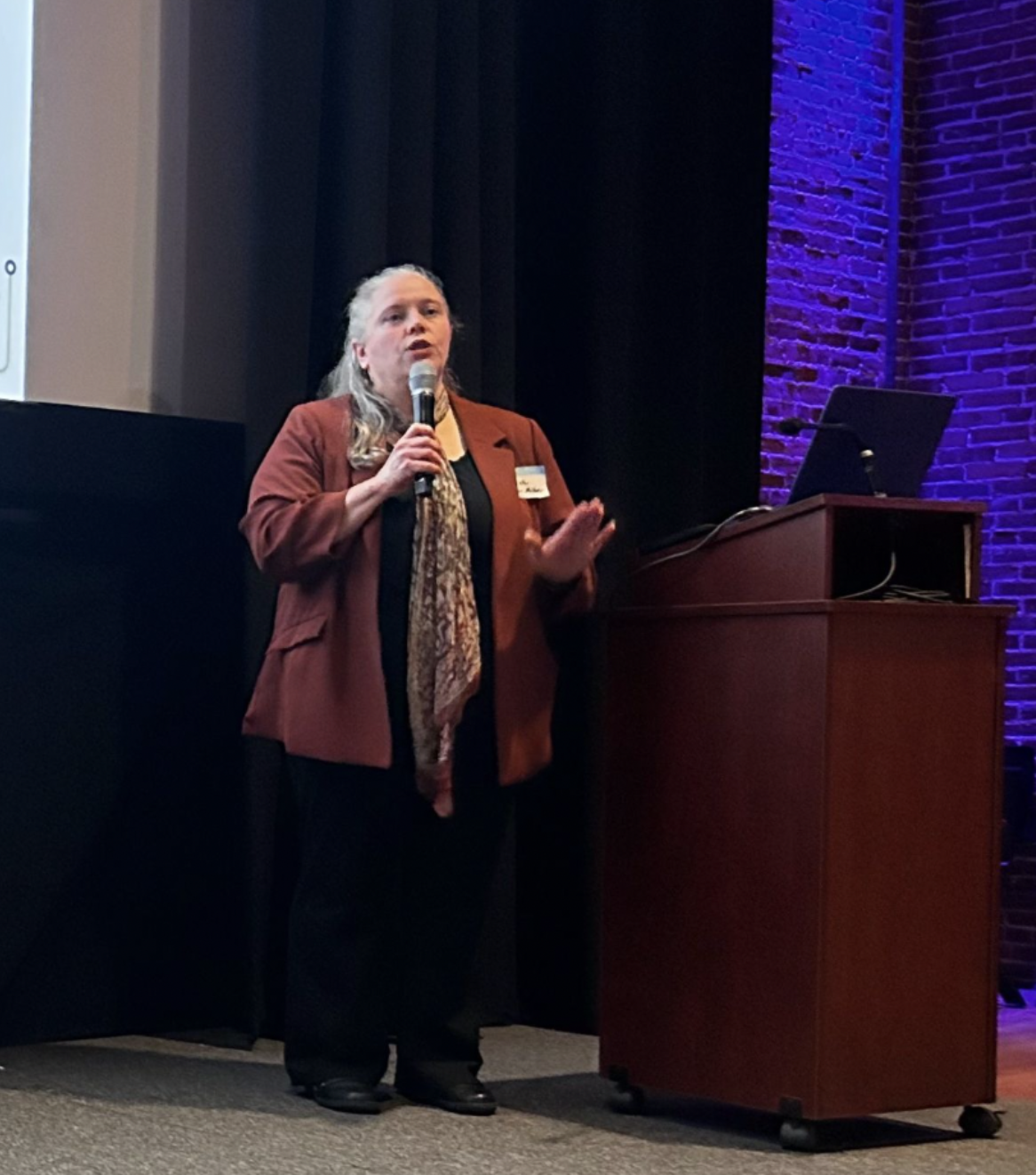
    Executive Director of Framingham-based MetroWest Nonprofit Network Leah Parker-Moldover spoke at the breakfast about the importance of meaningful networking. She later said in an interview that having events specifically dedicated to women—rather than events that simply support the ones who show up—fosters a different kind of vulnerability among attendees. 

    “I think sometimes we can find ourselves feeling like we have to present our best selves,” she said. “Really, the most meaningful progress sometimes happens when we share what we’re actually struggling with.”

    To mark the end of Women’s History Month, nearly a dozen women gathered at the Center for the Arts in Natick for the W.E. (Women Entrepreneurs) Love Women Breakfast on March 31, where they learned how to own their brands and expand their businesses. 

    Executive Director of the Natick Center Cultural District Heather Rockwood said her goal with the W.E. Love Women events is not only to “celebrate” and “uplift” women entrepreneurs, but to give them the opportunity to network with each other and learn how to grow.

    “I hope they leave feeling refreshed and excited about being themselves; being women entrepreneurs,” Rockwood said. 

    The breakfast began with attendees milling about the room, introducing themselves to each other and to guest speakers Parker-Moldover and Gina Gibbs Foster, a corporate communications and corporate affairs professional.

    “As a woman leader in the nonprofit sector that is predominantly female, it’s important to take time to celebrate women and build each other up,” Parker-Moldover said. 

    Leah Parker-Moldover speaking at W.E. (Women Entrepreneurs) Love Women Breakfast (Photo credit: Mary Goetz)

    Gibbs Foster followed Parker-Moldover to the stage, speaking to the “small but mighty” crowd, as she called it, about the importance of building one’s brand and living up to it. 

    “It’s all about telling your story, owning it and reinforcing it over time,” she said in an interview after the breakfast.

    Gibbs Foster said when she was asked to speak, she felt moved to share her professional brand-building “secrets,” which she said have brought success to several executives and corporations. 

    “The more resilient a woman can be, the better she is able to withstand economic changes, political changes, social changes, and still knows she can count on herself and her business to fulfill her needs, personally, professionally and financially,” she said.

    Leah Heppner Tragolo, who’s starting her own leadership and life coaching business, said her experience was “wonderful,” especially because it was near her home and small-scale.

    “These days, community is everything,” Gibbs Foster said. “This type of event just reinforces the value of getting together in person with like-minded people who share similar interests and passions, because we can all help each other and benefit from the relationships as a result.”

    After the breakfast finished and organizers began cleaning up, some women hung back to connect with one another before heading out. 

    “I work from home, so it’s a great opportunity to meet other entrepreneurs, women, people in my community,” said Heather Schaffner, who coaches women in midlife menopause with her company Alora.

    Tragolo mentioned past business-building events she’d been to, where she left feeling “drained.” Here, though, she said she could walk out feeling refreshed instead.

    “I got more out of this than I did at a thousand-person event,” Tragolo said.

    In her talk, Parker-Moldover said it’s not about having 500-plus LinkedIn connections. It’s about having the one or two that actually amount to meaningful, reciprocated and human bonds — especially with other women.

    “It’s easy to look around and only see the hard things, the overwhelming things,” she said. “But when I actually sit down with a person, I get to hear about the incredible work that’s being done, and I end up feeling so much better, not only about the future, but also about my community.”

  • Natick’s Natural and Synthetic Turf Field Study Group stays on course with sports fields research

    Memorial Field, one of 3 artifical turf fields in Natick.

    After months of debate over how to best use turf fields in Natick, the town’s study group is making progress researching the pros and cons of artificial turf. 

    The town established the Natural and Synthetic Turf Field Study Group in January to study environmental, financial and children’s health factors in turf field installation and management.

    The study aims to collect data to help the town plan for the future of sports fields across Natick. 

    “Our goal as a study group is not to recommend one thing or another, but it’s to ensure that everyone has the information they need to make an informed decision,” said Julie McDonough, who is part of the group and a former Natick School Committee member.

    Simultaneously with the January 2026 establishment of the study group, the Select Board, Superintendent and Town Administrator forwarded a separate initiative to analyze the design feasibility of the “disrepaired” JV field at Natick High School. 

    “The grass isn’t growing — it’s compacted, so it’s hard, and so that makes it a little bit unsafe,” McDonough said.

    The town approved the field design funding for the JV field during the 2024 spring meeting. However, later that year, a group of Natick Town Meeting members called for a 3-year moratorium on the installation of new synthetic turf fields due to concerns over the effects of turf. 

    The moratorium presentation highlighted toxicity risks to children from turf as well as climate and local environmental risks. 

    “I just think there are too many reasons not to do it,” said Rick Devereux, one of the residents who proposed the moratorium. “It’s our kids.”

    The moratorium “would allow time to address uncertainties,” according to the presentation. 

    The issue failed at the town meeting. 

    A year passed, and the same moratorium group issued an advisory moratorium on turf fields. This time it passed. 

    In response, Select Board and study group member Bruce Evans suggested forming the Natural and Synthetic Turf Field Study Group. 

    The town passed two initiatives. One to analyze JV field design possibilities, and the other to study the effects of synthetic turf. 

    The study group held its first meeting Feb. 2.

    Going forward, the study group will hear from experts from different organizations, such as Parks and Recreation and the Department of Public Works, to gain a balanced perspective for their report. 

    Other nearby towns have also undergone similar studies, including Wayland and Arlington.

    Devereux commended Wayland’s approach to turf fields, particularly agreeing with their ethical concerns. 

    “The idea of replacing grass in a school with plastic when the school is trying to, you know, teach and model more sustainable behavior for their students, was an enormous moral gap,” Devereux said. 

    However, Natick High School Lacrosse Coach Nathan Kittler said he believes turf fields provide more playing hours, which could solve field overusage.

    Grass fields must have a certain amount of “rest hours” to preserve grass quality. With the designated rest hours and the number of fields available in Natick, there are not enough playing hours for all the sports teams. 

    It’s too much for the fields to handle. 

    “At the beginning of the season, after they let [the grass] rest all summer long, and don’t let everybody on it’s nice,” Kittler said. “But once the season starts up, it’s destroyed within weeks.”

    Kittler said even the players prefer the turf over grass. In the end, the high school and youth teams are most affected by the change. 

    After the study group submits its report, the town will have to weigh the potential health and environmental concerns against the playability for the youth sports teams.

    McDonough said she hopes that the group will have an interim report by spring and a full report for the Fall Annual Town Meeting. The report will guide any future decisions about local field design, potentially including the JV field. 

    The study group has four more meetings planned for March 16, March 23, April 6 and April 13.

    “Natick will decide,” said Evans. “It’s ultimately a town decision that says, you know, [what] do we want?”

  • Natick police collect 50-plus firearms at gun buyback event

    Natick police collected 57 firearms at a gun buyback event Oct. 11, including 36 handguns, six shotguns, three rifles and 12 other weapons such as BB guns and starter pistols.

    The event at Hartford Street Presbyterian Church exchanged gift cards for firearms as part of an effort to remove unwanted weapons from homes. Residents were encouraged to drive to the church with unloaded firearms in their trunks, where Natick police and the Middlesex County Sheriff’s Office workers collected, recorded and disassembled the weapons.

    “A family member died. These guns were in the attic. They’re in the basement. Family has no interest in them. (People are) looking for a safe process in which to get rid of these guns,” said Lt. Christopher Foley of the Middlesex Sheriff’s Office. “It’s going to keep them out of the hands of children, the mentally ill (and) potentially criminals.”

    The buyback was organized by former Natick Select Board member Erica Ball, her husband, Jay Ball, and Natick resident Richard Sidney. Gift cards from Amazon, Ben & Jerry’s and Stop & Shop were purchased with a $10,000 grant from the MetroWest Health Foundation. Leftover cards were donated to local nonprofits including A Place to Turn, Family Promise Metrowest and the Natick Service Council.

    “The idea of a gun buyback started when I was still actively involved in the town, “said Erica Ball. “Especially in urban settings, I don’t think that there’s a place for guns. If you live in the West and you hunt, or you either hunt for your livelihood or hunt for sport, that may be a different story.”

    Natick Chief of Police James Hicks said the program is a response to the problem of unlicensed residents finding firearms in relatives’ homes and not knowing how to dispose of them. “They are not licensed, so they know they can’t handle them, but just keep them,” he said. “And then it ends up where you end up with a weapon that may be in a house that it shouldn’t be.”

    According to a Johns Hopkins Bloomberg School of Public Health report, there were 270 gun deaths in Massachusetts in 2023. Of those, 121 were homicides, 147 were suicides and 10 were people younger than 17.

    “Every time I hear of one of these gun shootings, my heart just breaks,” Erica Ball said. “I’m someone who’s lost a child not to a gun, (but) to a truck accident. I have experienced what that feels like, and every time I hear about it, or I see this needless loss of life … I say to myself, ‘There must be something we can do.’ And this is one way, and it feels good.”

    Foley and his team checked to make sure the firearms were not loaded before placing them in the trunk of the police vehicle on site, which was designed for the storage of ammunition and firearms.

    The firearms were then logged and examined to make sure they weren’t stolen or used in a crime. Afterward, the fully functional firearms were to be sent to the Massachusetts State Police Firearms Identification Unit for destruction, while incomplete firearms were to be sent to scrap metal recycling company Schnitzer Northeast.