An online movement to rename a T station is gaining traction after a local librarian learned that it memorializes a family that included an enslaver.
The Ruggles station on the orange line gets its name from Ruggles Street, which is just south of the stop. The street was named in 1825 for Roxbury’s Ruggles family, according to a 1910 volume of “A Record of the Streets, Alleys, Places, etc.” published by Boston’s Board of Street Commissioners.

Matthew Weidemann, a librarian at Needham Free Public Library, runs an Instagram account – @rename_ruggles – on which he posts videos nearly every day about why he wants the T station renamed. The account has accumulated over 1,700 followers.
Weidemann created the account after sitting on the T wondering where station names came from. He learned that Timothy Ruggles, a member of the Roxbury family for which the street and station were named, was a Loyalist military officer and enslaver in the 1700s.
“People just assume that names are just kind of neutral, or they just exist like the weather, but they aren’t,” Weidemann said. “They’re all a choice, and we can make better choices.”
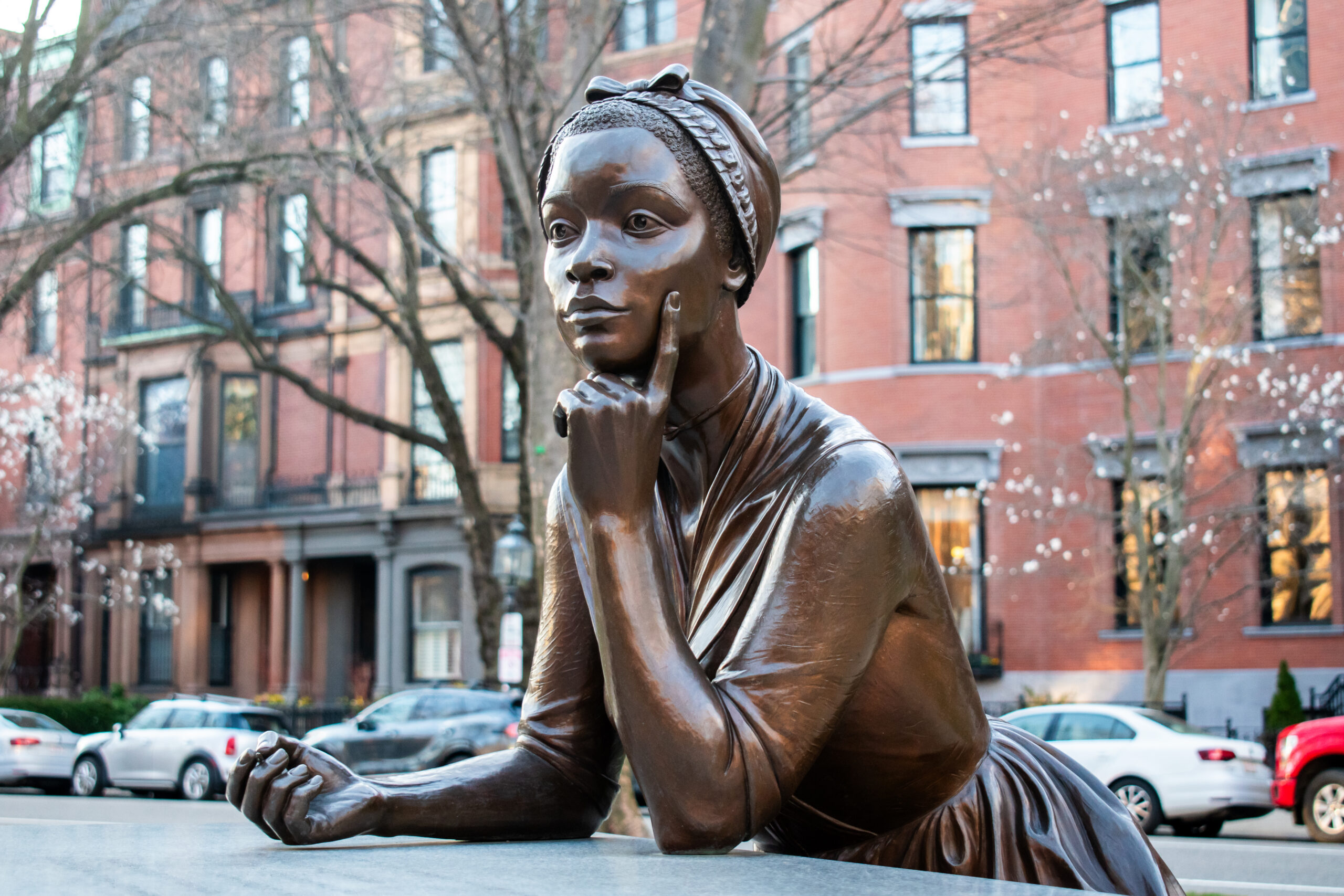
Weidemann’s posts argue that Ruggles should be renamed Wheatley Station. Phillis Wheatley, born in West Africa, was enslaved and brought to Boston in 1761. John and Susanna Wheatley bought her around age 7 and taught her to read and write in English. She became a prominent poet and author, and is regarded as a trailblazing pioneer of black authorship.
“To me she represents both the promise and the failures of America,” Weidemann said.

But Weidemann is open to another option. David Ruggles, an abolitionist born in Connecticut who is not known to be directly related to Timothy, helped to free enslaved people through the Underground Railroad, including Frederick Douglass.
“That kind of interesting juxtaposition is almost reason enough to just consider intentionally naming it after him,” Weidemann said.
Many of New England’s Ruggleses come from one prominent Roxbury family who emigrated from England in the 1600s and spread across New England over generations, leaving their mark wherever they went. Some were politicians, military figures, and local elites.
Almost 400 years after the family first landed in Boston from England, the Ruggles name has stretched across all six New England states.
Maine has the Ruggles House Society, a museum in Columbia Falls sharing the architecture and culture of the Federalist era. Ruggles Mine in New Hampshire invites campers to stay atop Isinglass Mountain in Grafton. Vermont is home to an engineering company with the name and a shared housing community for older adults.
In Rhode Island, a beloved college resource dog shares the name. Salve Regina University’s labrador retriever was named by students and inspired by Ruggles Avenue, a street on the Newport campus. The pup’s handler and resource officer, Michelle Caron, said she did not know of the name’s complex history, and that she is concerned about the connection. That street was named after Nathaniel Sprague Ruggles, a likely relative of Roxbury’s Ruggles family.
“Over the years those names stay the same,” Roxbury historian Leland Clarke said. “But history sometimes can get clouded.”
Clarke, a Boston University professor of fine arts and music, has a special interest in Roxbury history. He grew up in the neighborhood and authored a book, “Something Worth Saving: Forgotten People, Places, and Events That Helped Shape America,” about Roxbury’s history.
He said there are several examples of street names in the Boston area that were named after once-prominent families but have become more of a reminder of the region’s history and less about honoring those it was named for. Examples in Roxbury include the Warren and Dudley names.
A March 2023 blog post, written under the pen name Riverside Lechmere, proposed renaming stations with “names that are now long divorced from our memory.”
The author declined to speak with the Dorchester Reporter and share their real name but wrote in an email that they “only wished to start a conversation, not endorse a conclusion.”
Betty Ruggles Tolias, from Middleboro, is a descendant of the Roxbury Ruggles family. Betty said she is descended from John Ruggles, whose brother, Thomas, was Timothy’s great-great-grandfather.
She was shocked to hear that Timothy was an enslaver.
“I think the people of Roxbury should do what they think is right,” Tolias wrote in a message to this reporter. “I pray they remember there are Ruggles who care about minorities of all types. We care a great deal.”
Byron Rushing, president of the Roxbury Historical Society, said he would support renaming the station after the abolitionist Ruggles. But he was hesitant to throw out the original Ruggles name because it was named for the family, not one particular enslaver.
“If you’re in a [slave-owning] family and you did not own slaves, the whole family doesn’t lose its right to be honored,” Rushing said.
Boston has a recent history of renaming landmarks due to the city’s racist past.
In 2018, the city changed Fenway Park’s nearby Yawkey Way to Jersey Street after the Red Sox petitioned to remove the former club owner’s name over acts of racism under his leadership.
Dudley Square was renamed Nubian Square in 2020 to embrace the neighborhood’s African roots. The Dudley name came from a 1600s colonial governor, Thomas Dudley, who served in office when slavery was legal.
Many T riders have no clue where the “Ruggles” came from.
Cole Eidson, a psychology professor at Northeastern University who uses Ruggles Station frequently, said he would support renaming efforts. Dorchester resident and orange line rider Leny Marrero said it “felt like it was a no brainer” when Dudley Square was renamed to Nubian Square and would like to see the same for Ruggles.
Weidemann’s Instagram account shared a petition that calls on Mayor Michelle Wu to rename the station. But the renaming process actually starts with the T.
The process to rename a station happens under the MBTA’s Station Naming Committee, a five-member group that discusses proposed names before giving a recommendation to the T’s general manager.
“It’s a very difficult and challenging conversation. It doesn’t divide us,” Clarke said. “It brings us together, and it sparks the conversation. What else is out there that we need to look into, to explore and to celebrate?”