

Tag: SNAP

  • There’s been a decline in SNAP sales at Mass. farmers markets since Nov. 1

    Massachusetts farmers are beginning to feel the effects of reduced federal SNAP benefits, with some businesses reporting their SNAP are down by half at farmers markets around Boston.

    Nov. 1 was the one-month mark for the federal government shutdown that began Oct. 1. Patrick Penn, deputy under secretary of food nutrition and consumer services for the U.S. Department of Agriculture, said last week in a court filing that SNAP recipients will receive 65% of their benefits for the month. The decision follows an order by a federal judge for the Trump administration to use emergency funding for the program Oct. 31.

    David Wadleigh, owner of Kimball Fruit Farm in Pepperell, said last week that he’s been to a market every single day Nov. 1. At all of them, he said foot traffic was slower than usual and at the Copley Square Farmers Market on Friday, SNAP sales were down by about 50%from before Nov. 1.

    SNAP purchases typically make up about 20% of his profits at markets, which worked out to about a 10% decrease in profits overall, he said.

    “We’ve been paying to upkeep these plants already. We’ve already put the money out,” Wadleigh said. “Now the risk is the money might not come in like we’re expecting it to.”

    Chath pierSath, a farm worker at Nicewicz Family Family Farm in Bolton, drew attention to agriculture’s effect on the larger state and city economy. Enabling people to eat sustains this part of the economy, he said.

    “By making sure that access to food and water (is available), you create a larger picture of our protective economy,” he said. “When people are alive, well and healthy, then the economy is alive and healthy.”

    Some farmers said they hadn’t yet seen a decline, but said it was too early in the day to determine if sales would be affected or not.

    “Farmers are in many ways notoriously optimistic,” said Edith Murnane, executive director of Massachusetts Farmers Markets. “There’s a sense of ‘we’ll wait and see.’”

    Farmers said help is available to help from the state’s Healthy Incentives Program as well as community donations and assistance programs as avenues for affected customers to continue shopping at markets.

    Markets in areas like Somerville and Cambridge have programs that allow people to obtain additional SNAP benefits. For the Davis Square Farmers Market in Somerville, users typically need to have a remaining SNAP balance to match their account balances for the month by up to $15. In light of the shutdown, customers have been able to receive benefits regardless of the amount on their cards, said Murnane.

    Vendors who don’t take SNAP benefits at their formers market stands said that while they haven’t been directly affected yet, they worry that’s possible if the shutdown continues, since consumers may choose to use money they would use for other uses on food instead.

    Most farmers with leftover produce said they plan to donate their crops to local food banks. While concerned about their own sales, many said they’re also worried for the consumers themselves.

    “We at least have places that we can donate (food) to so hopefully (people) will still have access to the food,” Wadleigh said. “We want everyone to be able to have access to our food.”

    As the federal government shutdown continues, farmer’s markets, neighborhood stores and supermarkets along with the retailing, agriculture and fishing sectors are all expected to feel continued impacts.

  • SNAP benefits were frozen. How Mass. food pantries are trying to fill the gap

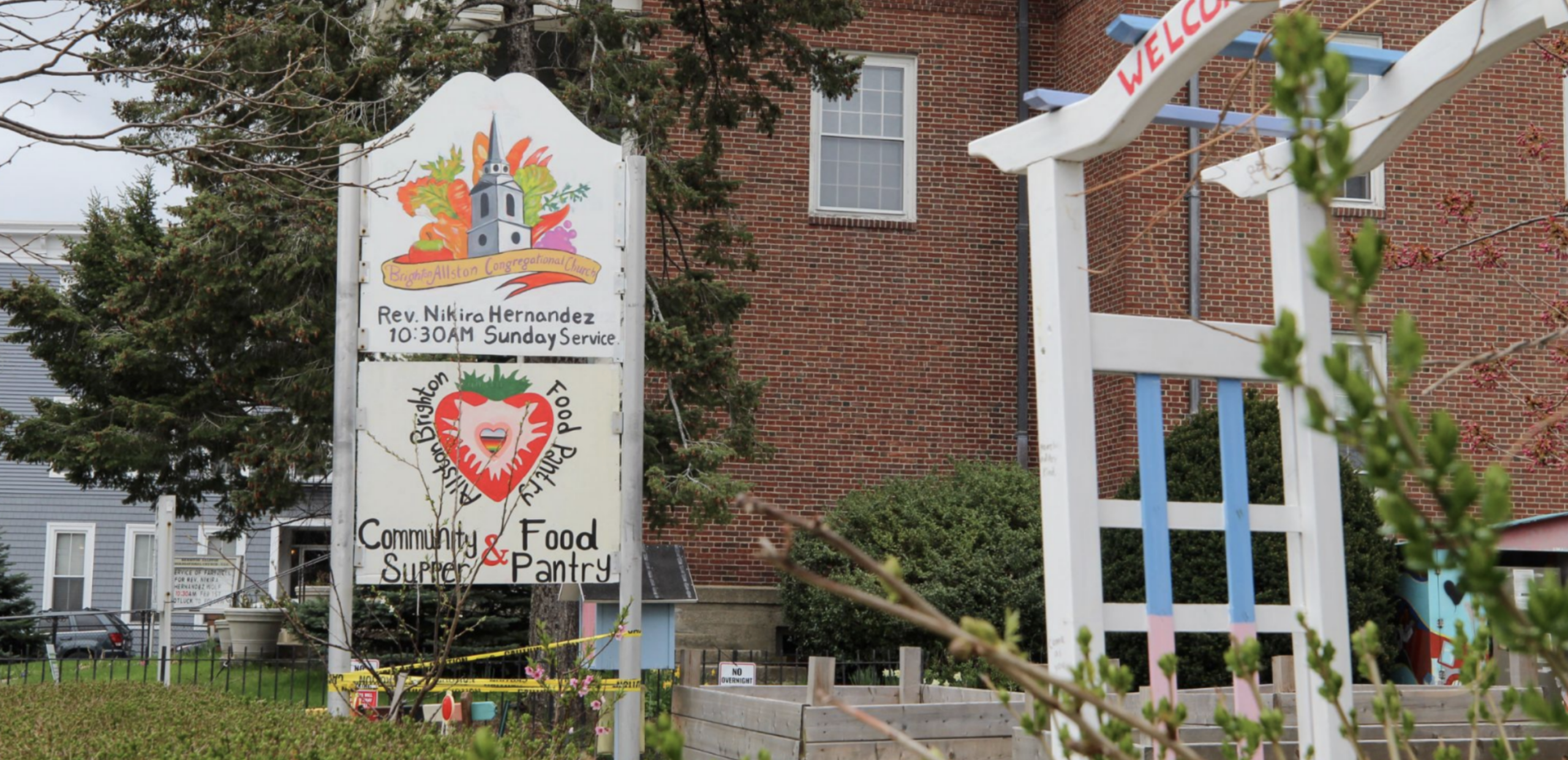
    With the federal shutdown creating uncertainty for the Supplemental Nutrition Assistance Program, food pantries throughout MetroWest are trying to fill the gap for the more than 1 million Massachusetts residents who rely on the program to buy groceries.

    Massachusetts Attorney General Andrea Campbell joined those from 22 other states on Tuesday, Oct. 28, in a lawsuit accusing the U.S. Department of Agriculture and Secretary Brooke Rollins of unlawfully suspending the food assistance program that serves more than 40 million Americans.

    State Rep. James Arena-DeRosa, D-Holliston, who led the USDA’s Northeast Food and Nutrition Service during a 2013 government shutdown, said the agency has previously used emergency funds to sustain SNAP benefits and could do so again. Sure enough, two federal judges ruled on Friday that President Donald Trump’s administration must continue to fund SNAP using contingency funds during the government shutdown.

    “SNAP is a lifeline to over 1,800 residents in the towns (Holliston, Hopkinton, Sherborn and Millis) I serve,” Arena-DeRosa wrote in an email. “President Trump says this situation is ‘not an emergency’ — tell that to the people whose benefits will run out and will be stressed trying to feed their families.”’The well has run dry’: U.S. Dept. of Agriculture says SNAP benefits won’t go out on Nov. 1

    The lawsuit comes as Gov. Maura Healey faces pressure from advocates like the Make Hunger History Coalition to tap the state’s $8 billion rainy day fund to offset potential losses. Instead, her administration and the United Way of Massachusetts launched the United Response Fund last week to support local food providers and other community-based organizations.

    Greater Boston Food Bank revives direct distribution strategy

    But with federal benefits at risk, local food banks are becoming the backbone for hunger relief.

    “We’ve been averaging about 200 new families a month, but in the past few weeks we’ve seen an additional 20 to 30 new families every single day,” said Joe Mina, program director at the Pearl Street Cupboard & Café for the United Way of Tri-County.

    Based in Framingham, the pantry serves as a regional hub for food distribution, supplying nearly 30 smaller pantries through its cross-dock network. The operation distributes roughly a quarter-million pounds of food each month, receiving donations from more than 250 supermarkets, restaurants and food producers through its partnership with Feeding America.’Creating needless fear’: Campbell, other AGs sue Trump administration over SNAP benefit suspension

    To meet rising demand, the Greater Boston Food Bank is reviving its direct distribution strategy, first launched during the pandemic to send pallets of food directly to partners like the United Way of Tri-County. The effort, a GBFB spokesperson said, will help food reach communities faster as SNAP funding remains uncertain.

    “The number of clients keeps going up while the resources available to us keep going down,” Mina explained. “Leaders have to think about their constituency and the people they represent — you want to make sure families are taken care of, not make it part of a political backlog.”

    Local programs can’t replace sustained federal support

    State leaders acknowledged that even strong local programs can’t replace sustained federal support.

    “Feeding children, families and individuals has consistently been one of the Legislature’s top priorities,” a spokesperson for Senate President Karen Spilka, D-Ashland, wrote in an email. “That said, no state can permanently sustain the hundreds of millions of dollars in long-term SNAP funding that the federal government is deliberately withholding.”

    That challenge is already playing out in Hopkinton, where Project Just Because founder President Cherylann Walsh said her pantry, which serves about 900 families a week, has been inundated with calls from residents who say their benefits were cut or delayed.

    “I had 19 emails this morning alone,” Walsh said Wednesday, Oct. 29. “One mother told me she skips meals so that what she gets can stretch far enough to feed her children.”Fees waived: DoorDash, Gopuff launch emergency food responses for SNAP recipients

    The pantry receives about 16,000 pounds of food each week from GBFB, supplemented by donations from Trader Joe’s, Stop & Shop and other grocers. Still, Walsh said her seven-person team is struggling to keep up as demand spikes and suppliers face the same squeeze.

    “Before, what they received from SNAP could carry them through the week, and we were simply a supplement,” said Ashley Dasilva, Project Just Because’s warehouse manager and multilingual interpreter. “Now, we’re their primary source of food.”

    Food insecurity is at ‘the forefront of public conversation’

    In Franklin, Tina Powderly, executive director of the Franklin Food Pantry, said she registered as many new clients in a single day this week as she typically does in a month.

    “The threat to SNAP benefits has brought food insecurity to the forefront of public conversation,” Powderly said. “But the reality is that the demand has been rising sharply for months. People are losing their jobs, housing costs are at historic highs, and health insurance premiums are skyrocketing.”EBT cards will still work: Unused SNAP money is expected to roll over into November

    To meet that need, the Franklin pantry is purchasing food directly from wholesalers and extending hours to help new clients with registration and assistance programs. Powderly said financial donations are the most effective support because the pantry can purchase food tax-free and at steep discounts.

    In Maynard, Open Table, a pantry serving 21 communities, has added 40 new households in the past four days, roughly four times its usual pace. Executive Director Alexandra DePalo said the organization serves nearly 10,000 households a year, many of whom visit weekly for groceries or prepared meals.

    “Even with SNAP, people already rely on us,” she said. “The food pantries are equipped to provide additional support for families and community members. We’re not equipped to be the sole provider of food benefit dollars.”

    Even with the lawsuit pending, gaps in food assistance remain likely if the shutdown persists. Other states, including New York and California, have already committed emergency funds to cover missing SNAP benefits. For now, MetroWest pantries are counting on community donations.

    “For every call there’s been asking for help,” DePalo said, “there’s been another asking how they can help.”

  • Can state funds cover gap left by federal food aid restrictions?

    Thousands of legally present immigrants in Massachusetts at risk of losing federal food aid would be eligible for state-funded benefits under a legislative proposal aimed at addressing growing food insecurity.

    The measure, proposed by state Rep. Antonio Cabral, a New Bedford democrat, would create a state-funded Supplemental Nutrition Assistance Program with benefits and eligibility that match the federal level but without restrictions based on immigration status or citizenship.

    SNAP is a federal program administered at the state level, with benefits and eligibility determined by Congress.

    The federal policy shift will push many immigrants into “deepening poverty,” Cabral told the Legislature’s Committee on Children, Families and Persons with Disabilities.

    In Worcester, 25.8% of households received SNAP benefits as of 2021, according to the Worcester Community Food Assessment. Under new federal restrictions signed into law this summer, certain lawfully present immigrants with humanitarian protections, including refugees, asylum seekers and victims of human trafficking, will lose access to SNAP.

    The federal restrictions exclude about 10,000 immigrants in Massachusetts from SNAP benefits and affect their U.S. citizen children, according to an analysis by the Massachusetts Law Reform Institute.

    Worcester food pantries have reported widespread fear among immigrants in response to the policy changes.

    At Jeremiah’s Inn Food Pantry in Worcester’s Main South neighborhood, 65% of clients are not enrolled in SNAP despite often being eligible, said Alyssa Dancause, director of community engagement. Language barriers, lack of awareness and fear related to immigration status often prevent low-income immigrants from accessing food aid, she said.

    “People are afraid to put that they are an immigrant on any kind of documentation that could be traced back to them,” she said. The pantry is working on providing appointment and delivery services because some clients are concerned about waiting in line outside.

    Food pantries are also feeling the impact of reduced funding. Food banks in Massachusetts lost $3.4 million in federal support, which “trickles down to all of the food pantries,” Dancause said.

    Meanwhile, demand for food assistance continues to rise, said the Rev. John Madden, pastor of St. John Church in downtown Worcester. The church hosts a food pantry, St. John Food for the Poor, which serves emergency food supplies to 250 to 300 families each Saturday and provides prepared meals during the week.

    “We have certainly seen an increase in people coming,” Madden said, noting that the Legislature should give higher priority to food security.

    The federal change represents a “nationwide attack to demonize people who are on SNAP benefits,” according to the policy team of U.S. Rep. James McGovern of Worcest4er.

    “That takes place in the context of prices going up,” McGovern’s communications director said. “They are stretching people’s budgets more and more.”

    In December 2023, the state Legislature approved $6 million to extend SNAP benefits to all legally present immigrants who met the program’s income requirements. The Department of Transitional Assistance launched the program in February 2024 but shut it down two months later because of a lack of funding. Cabral filed an amendment to revive the program, but the House dismissed it.

    McGovern’s policy team expressed concern that the growing hunger crisis now relies on state funding to address, saying the federal government is “shifting an enormous burden” onto states. “They do not have the funds necessary to cover benefits that were previously covered by the federal government.”

  • Winchester’s Wright-Locke Farm largely insulated from Trump agricultural cuts

    The Trump administration is gutting funding for farms and agricultural programs across the country, but Winchester’s Wright-Locke Farm is largely insulated from those cuts, because it relies almost exclusively on sales and donations.

    With federal funding freezes and mass layoffs in the U.S. Department of Agriculture, local farms face an uncertain future. Town-owned Wright-Locke is unlikely to be hurt by federal cuts, though, as long as people keep donating, shopping and volunteering there, said the farm’s manager, Adrienne Altstatt.

    The interior of the barn. WINCHESTER NEWS STAFF PHOTO/DANIELLE KRANTZ

    “We rely a lot on the community for all of the offerings we give the community, which is a lot,” said Tracy Kinsey, Wright-Locke’s communications and outreach coordinator. “We also rely on the community to support us, through donations, through volunteering, to keep the farm sustainable and running and not going into the red. We are really proud of the fact that we are able to sustain ourselves with our programs that we run with the funds that we raise.”

    One funding source that could be threatened is an $18,000 federal grant Wright-Locke was promised for a high tunnel greenhouse the farm recently built.  The structure, made of metal hoops and covered with plastic, helps farmers extend the growing season by providing protection from extreme weather, improving soil conditions and increasing crop yields. 

    “We have spent $18,000 on it already, but have not yet been reimbursed,” said the farm’s executive director, Erika Gorgenyi. “And therefore we are at risk of them not fulfilling this agreement and losing this funding.”

    Spring work at Wright-Locke Farm. WINCHESTER NEWS STAFF PHOTO/DANIELLE KRANTZ

    In 2023, 18% of the farm’s revenue came from donations, 81% from program services and the other percent from investment income. Gorgenyi said the farm receives a small grant from the Department of Education.

    “One of the biggest challenges that small farms like ours always face, obviously, is funding,” Kinsey said. “It’s not cheap to run an operation like this, so we have to do a lot of fundraising.”

    One of the farm’s most significant sources of revenue is Farm to Go, a store that sells local produce, meat, eggs and other grocery items.

    Donna von Halle, a Farm to Go regular, shops weekly.

    “I know where the food’s coming from, that it hasn’t traveled potentially thousands of miles to get there,” von Halle said. “I think that the food is more nutrient-dense because of that.”

    Old farm machinery. WINCHESTER NEWS STAFF PHOTO/DANIELLE KRANTZ

    Von Halle orders online at the beginning of the week and picks up the order on Thursdays. She said the convenience of the shop has made grocery shopping easier. On occasion, she asks for recipes to accompany produce.

    “They’re so accommodating,” von Halle said. “There’s been times when I’ve even asked for ideas. I remember I said, ‘I don’t really know what I’m gonna do with fennel.’ And you know, Sarah, the one working there, said, ‘Oh, you can do this with it.’ And so those are just experiences that you wouldn’t have at a grocery store.”

    The land there has been farmed since 1638. It was originally home to the Indigenous Massachusett Tribe and Pawtucket people, who actively managed the environment by cultivating crops like maize, beans and squash.

    After colonization led to the displacement of the Indigenous tribes, John Wright purchased the farm. Over time, it passed through the Locke and Wright families. The farm grew blue hubbard squash until it became a raspberry farm under the Hamilton family. 

    The land was targeted for development in 2007, following the death of owner Curtis Hamilton. In response, the residents of Winchester voted to acquire the entire 20 acres for $14 million, blocking a developer’s plan to build 260 housing units there. The town set aside 7.5 acres for preservation and 12.5 acres for potential development. 

    Fresh eggs right from the source. WINCHESTER NEWS STAFF PHOTOS/DANIELLE KRANTZ

    Community members created the nonprofit Wright-Locke Farm Conservancy to manage the property. Efforts shifted toward fundraising to secure the preservation of the remaining 12.5 acres, leading to an $8.6 million campaign to purchase the property. The Conservancy has a 30-year lease on the land that expires in 2041.

    “It was mainly community members that really stepped up and said, ‘Hey, now, Wright-Locke Farm’s doing such great things with their education programs and all these other things. We need to protect that and give them more bandwidth,” said Kim Kneeland, the farm’s associate director. “And so, a couple years later, we were able to buy the land.”

    The newest addition to Wright-Locke Farms is All-Seasons Barn, an indoor event space designed to support the farm’s programming, which broke ground in 2021. According to Kneeland, the building cost around $3.5 million.

    One of the goats enjoys the sun. WINCHESTER NEWS STAFF PHOTO/DANIELLE KRANTZ

    The farm also contributes to the larger New England food chain. Farm to Go, which accepts SNAP and EBT, sells food from other small farms and vendors around New England. 

    “From Needham to Maine to Vermont to Connecticut, we have other small farms that are looking to get their products out to people in the region,” Kinsey said. “And we sort of help act as a local food hub to distribute that.”

    The farm participates in “Grow-a-Row,” which allocates a row of fresh produce to local food pantries for donation, Kinsey said.

    “Core to our mission is supporting other small farms and small businesses, sort of getting away from the industrial food chain and more turning back time a little bit and going back to local, fresh food,” Kinsey said.

    The farm offers educational opportunities, including a year-round, nature-based preschool. Community members can participate in workshops in the historic 1827 Barn or the All Seasons Barn. The farm also hosts free “Farm Talks” on agriculture, environmental, and health topics.

    Educational programs take place at Wright-Locke Farm. WINCHESTER NEWS STAFF PHOTO/DANIELLE KRANTZ

    Visitors can plan educational or volunteer group visits from April to October, or arrange off-site enrichment programs on farm-related subjects. The farm also partnered with the Winchester High School environmental science department to cultivate and track a portion of the land. 

    The farm is open to the public year-round.

    “We are open to the public, dawn until dusk, 365 days a year,” Kinsey said. “If you want to come here and take a walk, if you want to come here and listen to a podcast, you can do that. And a lot of people don’t know that.”

    This story is part of a partnership between The Winchester News and the Boston University Department of Journalism.