Tag: Veterans

  • Town Meeting approved a property tax relief program for veterans in 2024. Why hasn’t it been launched?

    When Town Meeting unanimously approved a property tax work-off program for veterans in November 2024, co-petitioner Alec Lebovitz said he was excited to spread the word to the community.

    “It provides some much-needed relief to a very small number of residents,” he said, “but residents who need that help and, in this case, have all served our country.”

    Nearly a year and a half later, the program has yet to launch.

    Town Meeting members talk before the start of the meeting on Tuesday, Nov. 19, 2024 Photo by Brennan Kauffman

    The measure is supposed to offer property tax abatements to veterans and surviving spouses in exchange for part-time service to the town. Participants could volunteer up to 125 hours in town departments such as the library and schools to reduce their property tax bill by up to $1,875 annually. Dozens of municipalities throughout Massachusetts, including Boston and Newton, have adopted similar programs.

    The veteran tax work-off program was to run in tandem with the 35-slot senior tax work-off program that has been running in Brookline since 2009. However, Vivian Williams, the senior tax-work off program coordinator, said she was unaware of this addition. “I don’t know anything about veterans,” she said.

    Town officials and Select Board members were unable to provide a clear reason why no slots for veterans have been added.

    Assistant Town Administrator Charles Young suggested there may have been trouble finding a veteran who would both benefit from the program and be able to provide skills needed by town department roles.

    Town Administrator Chas Carey said his impression is that most veterans in Brookline rent rather than own homes and would therefore not benefit from the program. 

    Town data suggests dozens of veterans own property in Brookline. The most recently available accessors’ data show that 51 veterans and surviving spouses received property tax reductions in 2023. The age demographics of these veterans are unavailable, but roughly 70% of Brookline veterans overall are over age 60, according to U.S. Census data.

    While this means many veterans would also be eligible for the senior tax work-off program, they would be subject to an income cap of $92,650, unlike the veterans program, which does not have a specified income cap. 

    Creating slots for veterans would not only allow younger veterans to participate but also ensure that older veterans in need would have access to the program without having to compete for a spot in the senior tax work-off program, Lebovitz said.

    Some concern was raised during the proposal’s initial discussion about diluting the effectiveness of the senior work-off program by creating competition between seniors and veterans for limited volunteer roles in town departments.

    “I don’t want it to be a situation where we have a waiting list and it’s pitting two groups against one another,” Carey said. 

    In the proposal for the program, former Veterans’ Services director Bill McGroarty estimated three or four younger veterans could benefit. 

    In a later public hearing, McGroarty reported that one older veteran had already reached out to apply before the town had begun marketing the program. This prompted co-petitioners Lebovitz and Neil Gordon to send a letter to the Select Board last November, urging them to create at least one slot in the veterans program for fiscal year 2027.

    “Fully implementing this program has the potential to create a financial lifeline for struggling veteran families in Brookline at a time when the challenges they face are only growing,” they wrote. 

    Difficulty adjusting to civilian life after service, unemployment and medical debt are some of the reasons veterans experience disproportionate financial instability, according to the U.S. Department of Veterans Affairs website. 

    Gordon and Lebovitz said they never received a response to the letter, and the budget cycle began this February with no motion on the program.

    While the co-petitioners acknowledged that the number of veterans who would benefit is unclear, Lebovitz said the only way to find out is by launching the program. He said he was surprised Brookline hadn’t already adopted it when he first came across the opt-in law. 

    “Why doesn’t Brookline have this program?” he said. “If it’s a voluntary program that basically costs us nothing and helps individual residents, why wouldn’t we have this?” 

    Elmon Hendrickson, commander of Brookline American Legion Post 11, said that while he doesn’t know of any individual veterans who would benefit from the program, he thinks it could be helpful to younger veterans. 

    “If they don’t have to be a senior citizen to get it, that would be great,” he said. 

    All the program is waiting on is the Select Board, Lebovitz said. “The issue isn’t that we need money set aside in the budget,” he said. “We need the Select Board to actually create those program slots and get the ball rolling.”

  • Revere Veterans Food Pantry sees a rise in need

    Revere Veterans Food Pantry sees a rise in need

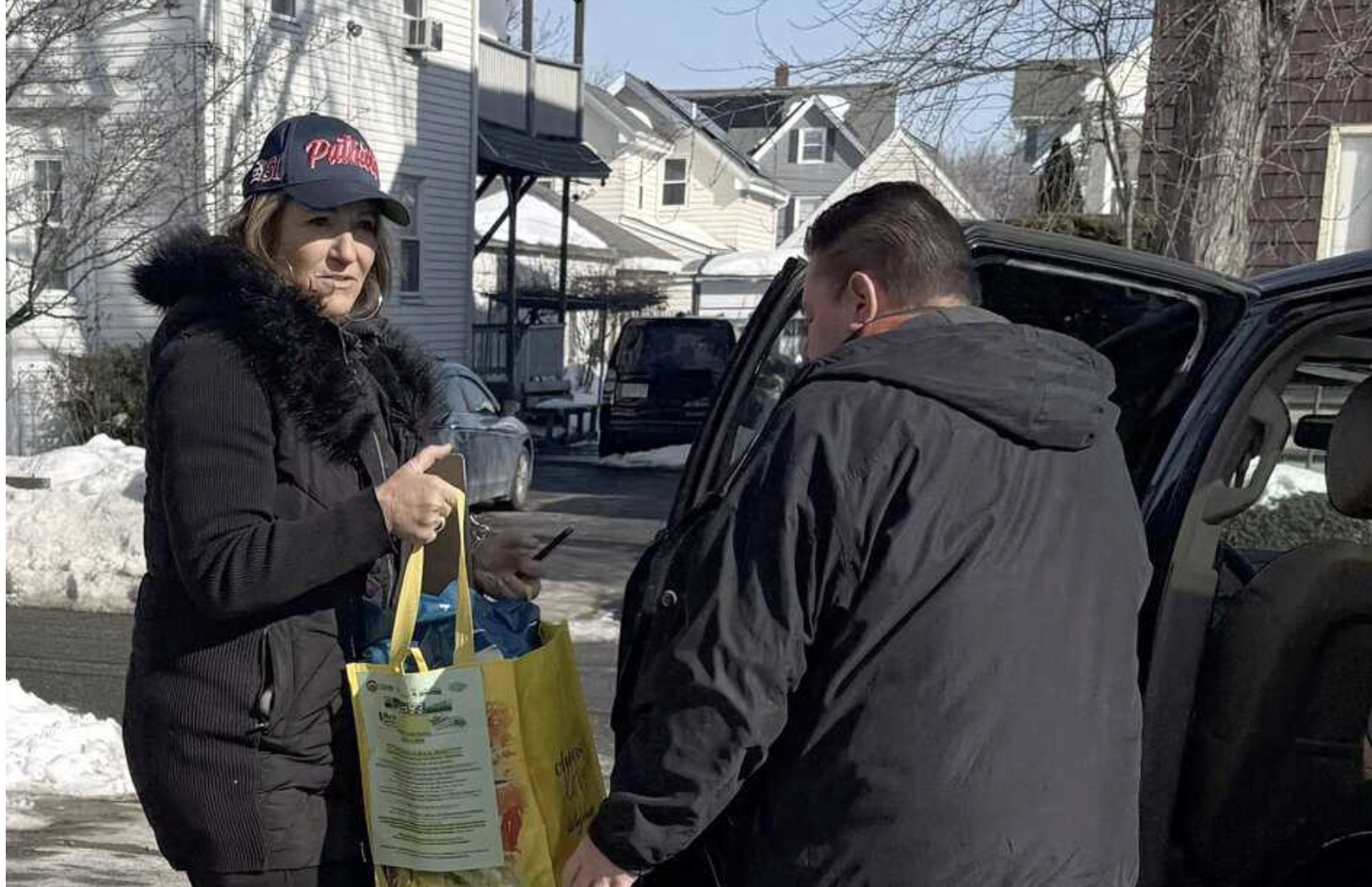
    Every first Wednesday of the month, residents drive to the back of the American Legion building in Revere to receive their share of canned vegetables, pasta, rice and meat from the Veterans Food Pantry. That was no different on a recent day — except a steady incline of need in the line.

    “[The need] has steadily increased in the last couple of months,” said Donna Dreeszen, the pantry’s founder, in an interview. “We have a lot of younger veterans that we typically didn’t have before.”

    Dreeszen started the pantry on an upstairs floor of the American Legion building in 2012 with just 37 clients; today that number is nearly 500, she said.

    Food insecurity among veterans has become a pressing issue since the global pandemic and the government shutdown in the fall. More than 21,000 recipients of the federal Supplemental Nutrition Assistance Program in Massachusetts are veterans, according to the state’s website.

    Dreeszen said she founded the pantry after seeing many veterans struggle with food insecurity. But when the pantry first opened, few people came. She said she worked hard to persuade veterans to take advantage of the service.

    “I would ask the veterans, ‘Why didn’t you come to the food pantry?’ and they were like, ‘I don’t need it,’ even though some did,” said Dreeszen recently as she pored over a spreadsheet of the pantry’s statistics.

    Eventually, she said, the veterans began to come. Danny Hernandez, the pantry’s manager, said he and his staff began using targeted advertising to reach veterans, and the results have led to an increase in the number of people using the pantry.

    On the eve of the monthly food pantry, Hernandez, the staff and volunteers start preparing for distribution day. This includes designating specific areas to sort the food. The next day, volunteers arrive early, around 6 a.m., to receive deliveries from The Greater Boston Food Bank and stock large shopping bags provided by Wegmans. The pantry also receives fresh greens and other produce from Olivia’s Organics in Chelsea, said Dreeszen.

    Volunteers say they are driven to help. “It was only natural to be able to volunteer and give back,’’ said Carol Pizziferri, a volunteer for the past 10 years whose father served in World War II.

    She said that when the pantry was upstairs it was challenging for both volunteers and clients to get the bags to their cars. But now, the drive-up system has made things much better, especially for the elderly clients, she added.

    “It’s much easier than waiting for people, especially upstairs,” said Pizziferri. “And so now… basically, [you] come in your car, [we] put the bags in, and they check you off and see you later.”

    William Reedy, a volunteer who is also a veteran, said the pantry does what it can for the people it serves. “We all help one another,” Reedy said. “[If] anybody needs anything, they can always call us.”