Tag: Winchester

  • Families gather for Winchester High School Science & Engineering Night

    Families gather for Winchester High School Science & Engineering Night

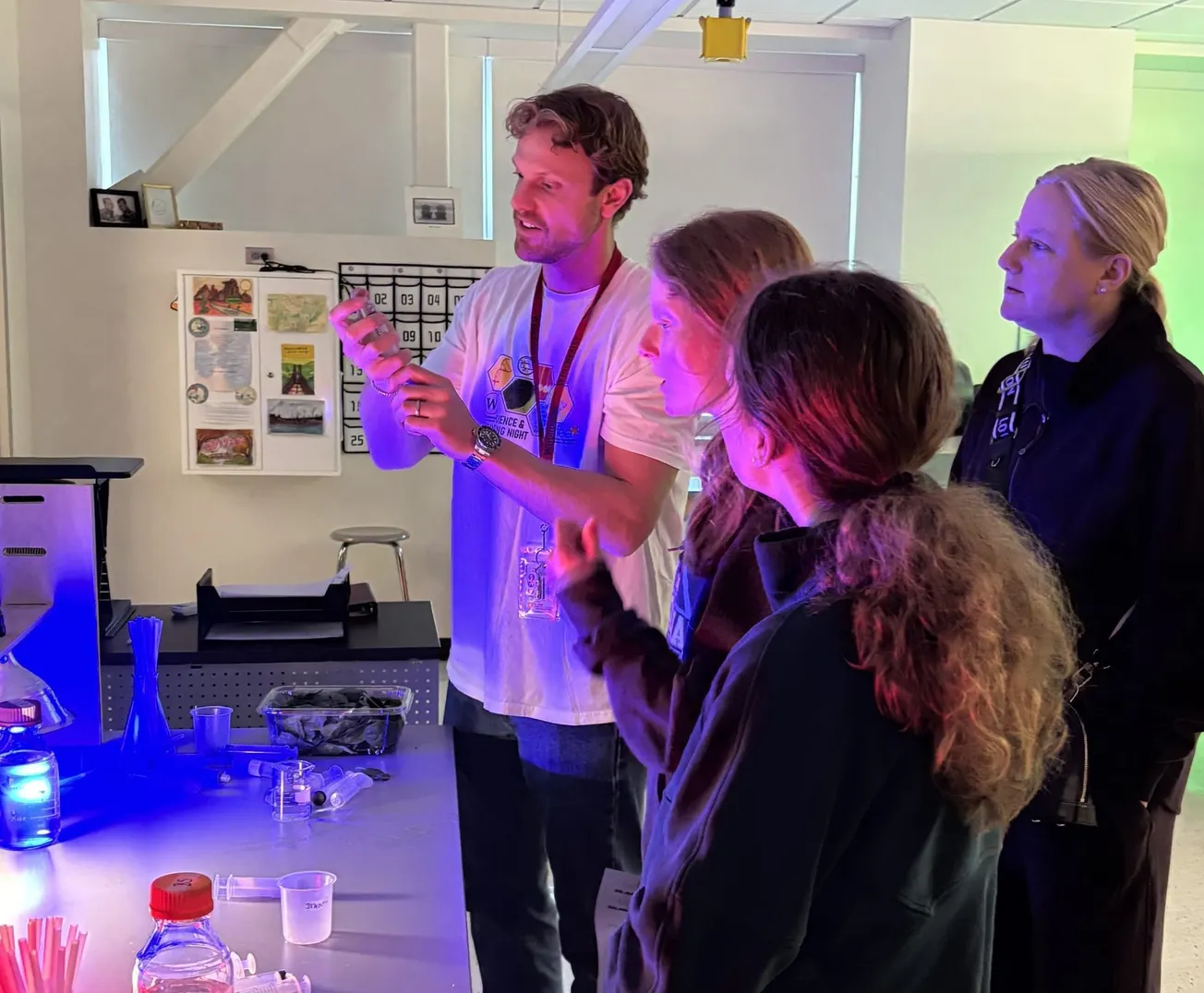
    Science teacher Ben Lawhorn demonstrates a photosynthesis lab in the biology room during Winchester Science & Engineering Night on April 2. COURTESY PHOTO/ANN RITCHIE

    Hundreds of families funneled into Winchester High School on April 2 to look at specimens through microscopes, toy with 3-D modeling on computers and try out pulse oximeters.

    Science & Engineering Night invited parents and children in grades K-8 to visit the high school and watch 39 demonstrations of what students learn in the high school’s 13 science courses. The event, which drew 471 families, also showcased students’ projects and the school’s equipment.

    “It’s great to show people in the town what science offerings they have here,” said Brendan Connors, a parent attending the night with his son, Ian.

    Science Olympiad member Amelia Huang helps the Abbott family explore density in the chemistry room during Winchester Science & Engineering Night on April 2. COURTESY PHOTO/ANN RITCHIE

    The equipment shown to families was paid for with grants from the Winchester Foundation for Educational Excellence, a nonprofit dedicated to raising money for Winchester’s public schools. The organization also funded the event.

    The event was planned as a collaboration between the biology and engineering departments.

    Ann Ritchie, director of science for grades K-12, said she hopes the night will encourage more collaboration among departments in the school.

    High school students who were part of the National Honor Society and the school’s Science Olympiad team ran demonstrations.

    “The way the big kids and little kids interact is so inspiring,” Ritchie said. “That’s what makes this night so unique.”

    Students planned most of the activities. One student asked if they could bring in the Mystic River Association to do a demonstration about herring migration and how citizen scientists count the fish during their migration, Ritchie said.

    “The [high school] kids are excited,” said Ipshita Chakladar, one of the teachers who organized the event. “We get our energy from them.”

    Ethan and Wesley Bates test their hand-eye coordination outside the applied neuroscience room during Winchester Science & Engineering Night on April 2. COURTESY PHOTO/ANN RITCHIE

    The first floor of the high school included 3D printing, a robotics demonstration, a construction and manufacturing booth, and a booth for the foundation.

    An engineering section on the first floor showcased the engineering classes’ creations as well as the wood shop. The creations included a safe made out of wood, a xylophone and a garbage compactor.

    On the second floor, families participated in activities that showed off the biology and anatomy courses. Activities included a brain speed test that asked kids to match the hand symbols pasted to a wall within 10 seconds and test their understanding of anatomy by naming parts of a model.

    Within the high school’s library, families could test out button-making machines, music production, wood burning machines and 3D modeling computer program. There was a showcase of high school students’ projects, including a jacket that helped people with period cramps.

    National Honor Society volunteer Talia Co invites the Parikh family to explore an optical illusion in the applied neuroscience room during Winchester Science & Engineering Night on April 2. COURTESY PHOTO/ANN RITCHIE

    Anthony Zidell, a resident of Crescent Road, came with his daughter to check out what the high school had to offer.

    “It’s really remarkable to see everything the high school has access to,” Zidell said, adding he couldn’t wait to send his daughter to the high school.

    K-8 students who came said their favorite parts of the event were the wood shop, the heart monitors and the robotics.

    Aurelia Gugliotta, a student at Lynch Elementary School, went with her mother because she loves science.

    “I love it,” Gugiotta said when asked about her favorite part of the event. “All of it.”

    Tavishi Chattopadhyay is a journalism student at Boston University. This story is part of a partnership between Winchester News and the Boston University Department of Journalism.

  • Winchester’s sidewalks aren’t always clear, nor whose job it is to clean them

    Winchester’s sidewalks aren’t always clear, nor whose job it is to clean them

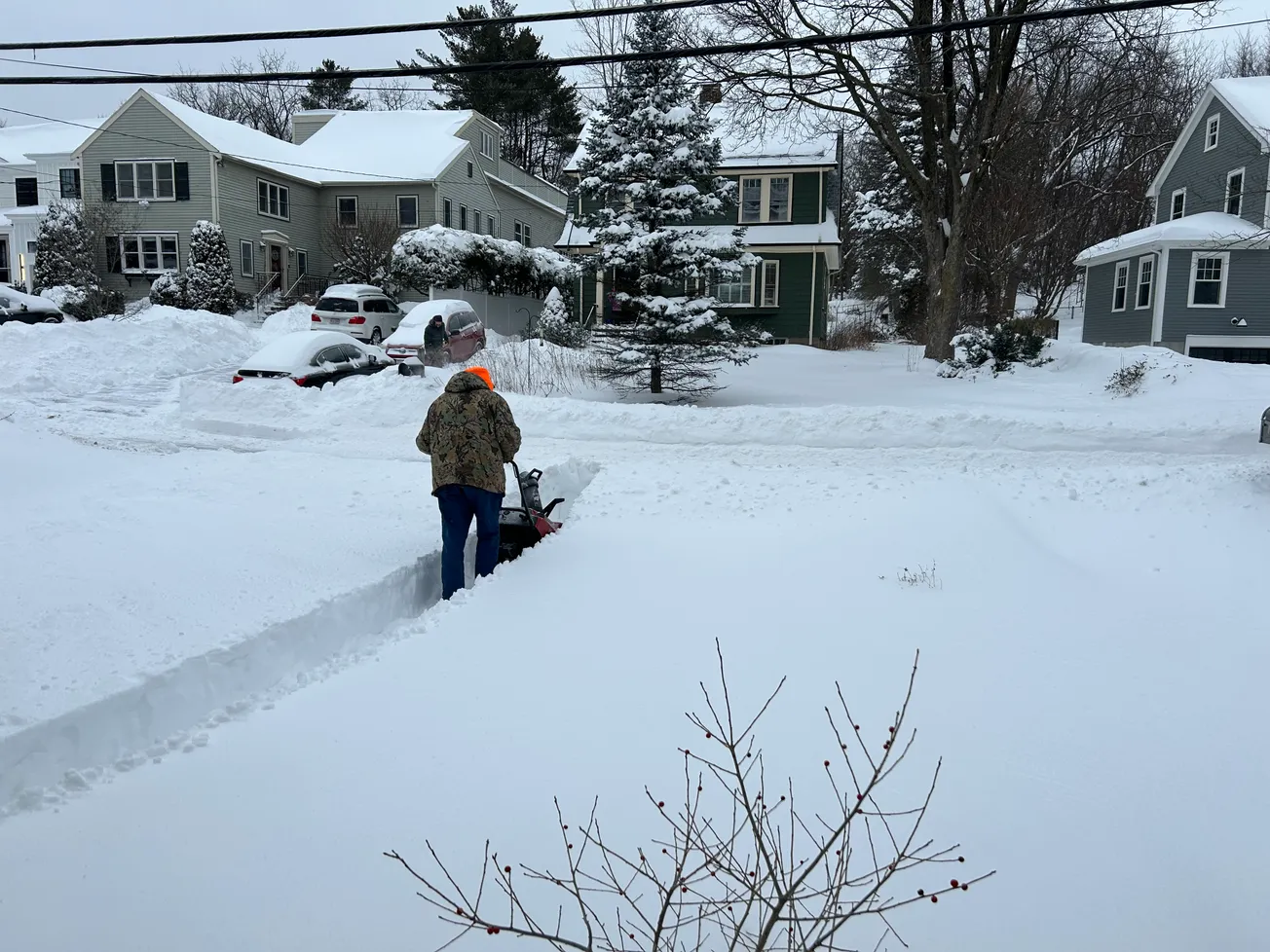
    Fernanda Stern and her 6-year-old daughter struggled to use the town’s sidewalks two days after last month’s blizzard to get to school from their home on Highland Avenue. Large mountains of snow had forced them to either walk on the street or in snow banks for weeks.

    Snow build-up on sidewalks has become a hot topic of discussion since Stern posted on Facebook about her experience. Some people shared similar experiences.

    The day after the Feb. 22-23 blizzard, Sarah Milt, who lives on Appalachian Road, set out to walk her dog on the sidewalk. Instead, she walked in the road after seeing a large snow pile that neither she nor her dog could climb.

    In response to Stern’s post, some residents claimed it was the property owners’ job to shovel their sidewalks, while others said it was the Winchester Public Works Department’s job.

    “There’s no accountability there because we think the neighbors will do it, the neighbors think DPW will do it, and at the end, nobody does it,” Stern said.

    So who is actually responsible? It varies by community.

    Some surrounding communities – Arlington, Medford and Stoneham – require residents to plow or shovel their own sidewalks.

    Winchester is different.

    The town’s bylaws state that commercial property owners are responsible for maintaining their sidewalks; failure to do so can result in a $10 fine. However, homeowners are exempt from this rule.

    On its website, the Public Works Department has two maps showing the areas it is responsible for shoveling and plowing. Highland Avenue is included in its responsibilities. About 36 hours after the post, Stern said, the department cleared the sidewalk of snow.

    The website warns residents that it may take between 24 and 48 hours for sidewalks to be cleared after a snowstorm.

    DPW Director Robert LaBossiere said it can take longer for crews to clear sidewalks, depending on the storm’s severity.

    Delays in snow removal can result from the breakdown of machines, including snow blowers, which often get clogged. The process is further delayed as the department waits for a mechanic and the repair parts to come for the broken-down machines.

    Snow removal is also slowed by residents illegally pushing excess snow from their driveways into sidewalks or roads.

    Town snow-removal workers often work for 30 or so hours, LaBossiere said.

    “It’s not a glamorous position to be in for these guys, so it wears on them,” he said. “But they do the best they can.”

    Workers stayed out from Sunday night, Feb. 22, until midnight on Monday, Feb. 23, to clear roads during and after the blizzard. Then they were out again Tuesday morning, Feb. 24, to clear the sidewalks, LaBossiere said.

    Even with the town’s consistent work, LaBossiere said, it can take at least four days to fully clear all the snow from a major snowstorm, like the Feb. 22 blizzard that dropped 18 inches on Winchester.

    However, residents are left unaware of the town’s plowing routes or its struggles with the storm. Milt said she learned about constraints on the department from a friend who works in a neighboring town’s public works department.

    Town Manager Christopher Senior said Winchester needs to work on its communication. He said he hopes the town newsletter and social media accounts will help residents understand the snow removal process.

    Shamus Brady, a Select Board candidate, said he plans to introduce a new bylaw that would require residents to shovel their own sidewalks. He also said he wants to start a high school volunteer team to shovel sidewalks for residents who are physically and financially unable to do so.

    “I want the kids and those with mobility issues to be able to walk [around town],” Brady said.

    The bylaws would require police to enforce sidewalk shoveling and residents to clear their sidewalks before school starts. This proposed bylaw must be submitted by March 13, along with 10 signatures in support, before it can be brought to the Spring Town Meeting for discussion.

    Tavishi Chattopadhyay is a journalism student at Boston University. This story is part of a partnership between Winchester News and the Boston University Department of Journalism.

  • Winchester’s new open space plan calls for cleaning up Wedge Pond

    by Aayushi Datta

    October 16, 2025 . 6:00 AM  5 min read

    Winchester is working on a new open space plan that will improve parks, trails and areas around Wedge Pond.

    Winchester officials are turning their attention to one of the town’s most recognizable landmarks, Wedge Pond, as part of a new open space and recreation plan that outlines improvements to parks, trails and natural areas over the next six years.

    This is the town’s fourth such plan, which aims to protect the town’s open spaces while making them more accessible and environmentally healthy. The plan provides residents with a report on the town’s recreational facilities and natural environment.

    A group of Scouts on canoe on Wedge Pond. COURTESY PHOTO/MATT GORDON

    At a Sept. 8 public hearing on the plan, residents said they wanted it to focus on water quality for ponds across town. Wedge Pond, long known for algae blooms and high bacteria levels, is one of the plan’s main focus areas.

    Elaine Vreeland, Winchester’s conservation administrator, said the pond is a priority from both recreational and conservation aspects of the plan.

    The Conservation Commission will focus on water quality. For years, residents have raised concerns about the health of Wedge Pond. High bacteria counts and recurring algae blooms have kept the pond closed to swimming for long periods.

    “There’s a history with the pond of so-called Wedge Pond fever, which goes back probably 60 years,” said John Stevens, who has lived near the pond for more than 30 years. “It’s getting more use now, but it still needs some help to be brought to standards that most people would accept for swimming.”

    A frozen Wedge Pond attracts players for a hockey game. COURTESY PHOTO/MATT GORDON

    Testing and treatment of the pond are managed by Water & Wetland, an environmental firm contracted by the town. According to a 2024 report from Water & Wetland, the pond has historically struggled with microscopic algae blooms, which can reduce water clarity and affect aquatic life.

    “We conduct monthly site visits, which consist of on-site treatments as necessary,” said James Lacasse, a senior environmental scientist with the company.

    The 2024 report documented two invasive plant species, curly-leaf pondweed and purple loosestrife, while native plants, such as coontail and water lilies, continued to thrive, sometimes reaching nuisance levels. Dissolved oxygen readings, which indicate water health, generally showed healthy levels for fish and aquatic organisms, although algae blooms remained a recurring issue.

    Donate today!

    Lacasse said the town is considering adding an aeration system to pump oxygen into the water, which could reduce algae growth and improve water clarity. The proposed aeration system could cost $35,000 to $40,000 and would mix the water column to reduce harmful algae blooms.

    Vreeland said the Conservation Commission is working on getting the aeration equipment. The project is awaiting final approval.

    A look at the flora and fauna on Wedge Pond. COURTESY PHOTOS/RANDIE BLACK-SCHAFFER

    Nick Cacciolfi, Winchester’s recreation director, said his department is working to make the Borggaard Beach area around Wedge Pond more inviting. Borggaard Beach is currently closed because of high levels of bacteria in the water. Although intended to be a bathing beach, the town has set an alternative goal to make the beach more usable until the water quality issue is resolved.

    “Our goal is to make it accessible and available to people that want to enjoy it as a park,” Cacciolfi said.

    Two beach volleyball courts are set for construction this fall, and the town plans to add picnic tables, better walking paths, and a small area for kayak launches.

    “These are the steps that we’re taking to make it open and feasible for future expansion and to clean up the area,” Cacciolfi said.

    Volunteer groups have also become part of the effort to restore the pond. The Friends of Wedge Pond, a local community group, has organized cleanup days, removed invasive plants and raised awareness about the pond’s condition.

    The Friends have received Community Preservation Act funding for minor improvements in addition to the ones already being made by the recreation department. Under the CPA, towns can collect a small property-tax surcharge that the state matches by up to 40%. The money can be used for open space, recreation, affordable housing, and historic preservation.

    Plans are in the works to improve the area around Wedge Pond. COURTESY PHOTOS/MATT GORDON

    Approximately $60,000 in CPA funds have been allocated to support upcoming Wedge Pond projects. At a June 10 meeting, Bill Band reported that state Rep. Michael Day had secured a $150,000 earmark in the state budget for Wedge Pond water quality.

    “In the short term, the next year or so, you’re going to see a lot of action down there and bringing it up to speed, and making it more of a town resource than it’s been over the last four or five years,” Cacciolfi said.

    For Stevens, Winchester’s plan is a significant step toward fighting climate change.

    “These efforts, to me, are important,” Stevens said. “Winchester can’t alone accomplish or limit climate change. It can be an example, and it can also, with the cooperation of others, help to, presumably, minimize the change in climate.”

    Aayushi Datta is a journalism student at Boston University. This story is part of a partnership between the Winchester News and the Boston University Department of Journalism.