

By Crystal Yormick and Natascha Nussbaum

Signs posted around the site in Danvers warn of dangerous contaminants in the area. Long-term exposure to these contaminants can cause a variety of health issues. Natascha Nussbaum
DANVERS — When TJ Welch and his family moved here more than two decades ago, he bought a three-bedroom house overlooking the Crane River.
This suburb, with good schools and a history that goes back nearly three centuries, is an oasis to him.
That feeling changed after an area across the street was fenced off and covered with warning signs. Welch’s home, it turned out, was just 250 yards from a 17-acre stretch of land contaminated with heavy metals and semi-volatile compounds.
“We always told our kids growing up not to wander down there, because there’s poison in the soil,” Welch said.
The former Creese and Cook Tannery, which operated from 1903 until it went bankrupt in 1981, is one of 33 Superfund sites in Massachusetts. There are 1,343 across the United States.
Superfund sites, like the one in Danvers, pose significant environmental and health risks. They’re eligible for cleanup, funded either by a party held liable for the contamination or through Congress’s established Superfund.
In Danvers, the tannery’s process of converting animal hides into leather deposited high concentrations of toxic chemicals and metals into the surrounding soil and water.
Long-term exposure to such chemicals can cause a range of diseases, including cancer, lung disease, and kidney failure. Lead exposure, particularly in children, can cause brain damage, attention disorders, and hypertension.
Like many Superfund sites, the cleanup in Danvers had to overcome years of bureaucracy and other obstacles before starting.
The state Department of Environmental Protection first declared the site to be contaminated in 1984 after conducting an investigation. Shortly afterward, the Danvers Herald reported that state environmental officials downplayed the potential human health risks of people living near the area.
Twenty-six years later, after finding semivolatile compounds in the soil as well as lead and arsenic levels exceeding federal limits, the US Environmental Protection Agency began investigating and planning to remove toxins at the site. Some lead levels exceeded EPA standards by 2,000 percent. It was officially designated as a Superfund site in 2013.
The EPA typically compels the company or people responsible for the contamination to pay the bill. But the Creese and Cook Tannery closed decades ago, so Congress appropriated more than $24 million for the cleanup.
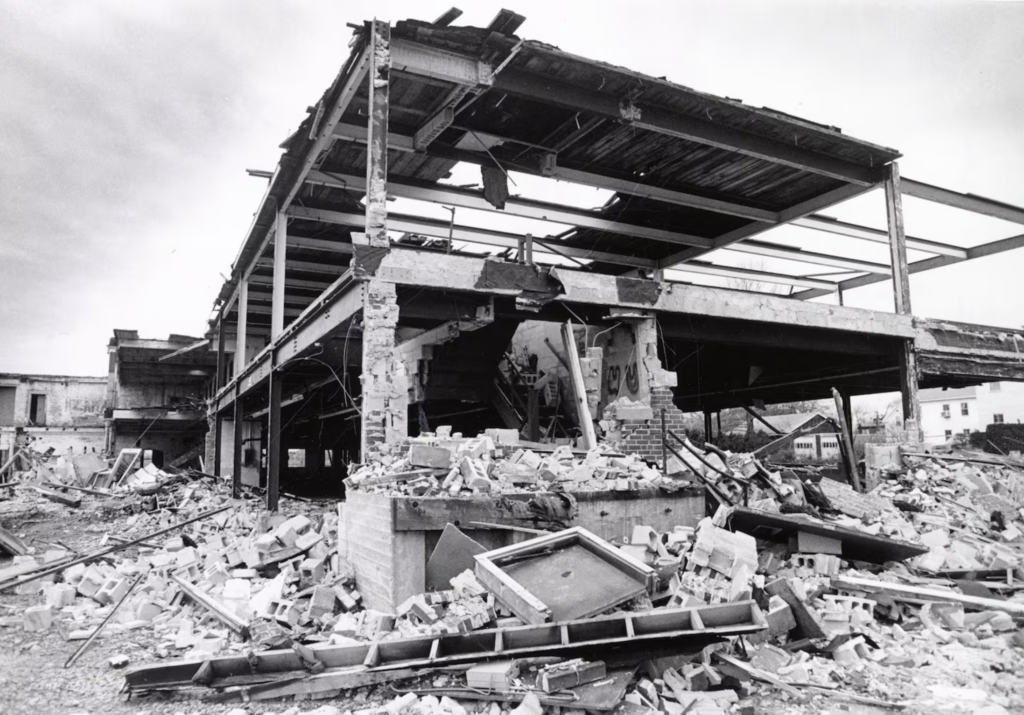
The Creese and Cook Co. Tannery lies partially demolished on Dec. 5, 1985.Kirk Williamson/The Salem News Historic Photograph Collection
That work started last year and involves the excavation of more than 62,000 cubic yards of contaminated soil. Most of that soil will remain on the site, along the Crane River, covered with a protective cap.
The cleanup is scheduled to be completed later this year.
Welch, who moved into his Danvers home in 2001, said the site was effectively open to the public for years. His 25-year-old son, Owen, grew up playing on the property, which lacked barriers or warning signs until 2009, following a lawsuit against the site’s owner, he said.
Jacob Macadam, a Danvers resident of 13 years and childhood friend of Owen, said the warning signs near the former tannery were vague and provided “no indication” that the area should be avoided or could harm him.
“That didn’t really dissuade anyone,” Owen Welch said. “We kind of still go down there a bit.”
Referring to the site as the “radioactive place,” Macadam thought it would never go away because “no one really cared.”
“It was always kind of just this thing in the background,” Macadam said. “It was never a point of contention for any adults in the area. Maybe it probably should have been.”
That work started last year and involves the excavation of more than 62,000 cubic yards of contaminated soil. Most of that soil will remain on the site, along the Crane River, covered with a protective cap.
The cleanup is scheduled to be completed later this year.
Welch, who moved into his Danvers home in 2001, said the site was effectively open to the public for years. His 25-year-old son, Owen, grew up playing on the property, which lacked barriers or warning signs until 2009, following a lawsuit against the site’s owner, he said.
Jacob Macadam, a Danvers resident of 13 years and childhood friend of Owen, said the warning signs near the former tannery were vague and provided “no indication” that the area should be avoided or could harm him.
“That didn’t really dissuade anyone,” Owen Welch said. “We kind of still go down there a bit.”
Referring to the site as the “radioactive place,” Macadam thought it would never go away because “no one really cared.”
“It was always kind of just this thing in the background,” Macadam said. “It was never a point of contention for any adults in the area. Maybe it probably should have been.”
Richard Reibstein, a former Superfund employee and senior lecturer of environmental law and policy at Boston University, said a lack of concern from residents is normal when it comes to Superfund areas and other contaminated sites.
“If this is your choice to live here, or if you don’t have a choice and you have to live here, either way, it’s not something you really think about,” he said.
The Danvers site hosted a public meeting last year to update the community on the cleanup and released a fact sheet.
Ralph Ciruolo, owner of the Crane River Laundromat, which borders portions of the site, called the cleanup a “waste of money.” He said the EPA has failed to dig up and clean paved areas.
In 2019, EPA officials committed to excavating 3 feet of soil across most of the property above the 100-year flood plain, excluding some areas covered by buildings or pavement. But their records contradict some of those plans, stating that the “estimated maximum depth of contaminants” requiring excavation is 4 feet.
Charlotte Gray, EPA community involvement coordinator for the site, wrote in a statement that there are fabric barriers placed between the contaminated soil and the soil replacements to protect the public. These contaminants don’t usually migrate upward, and people have to be in direct contact with it to suffer health risks, she wrote.
The EPA also delayed remediation of the Crane River until an unannounced future date, despite reporting that sludge, or solid waste, was “directly discharged into the Crane River.”
Gray wrote that the site does not affect the local water supply because the Crane River is a tidal waterway.
Daniel Coyle, who lives near the site, said he is sometimes concerned about contaminants in the air, because he occasionally smells unpleasant odors from the site.
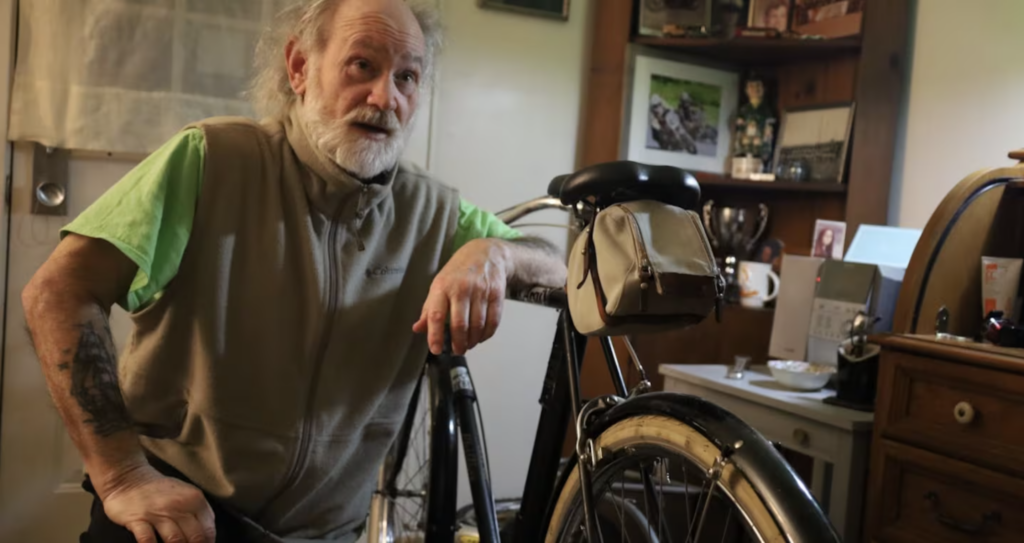
Daniel Coyle, 67, hopes for expanded bike paths in the area after the cleanup is complete. Coyle is a lifelong bicycle enthusiast and activist. He said the construction and site don’t bother him apart from the occasional smell. Crystal Yormick
The EPA is required to monitor and test the soil for five years before the land can be used again.
The 2019 Record of Decision states the Danvers site will be cleaned to levels that allow the land to be redeveloped for residential or recreational use. However, neither the EPA nor the town of Danvers has indicated what will become of the site.
Some Superfund sites have been associated with decreased life expectancy of nearby residents.
Some residents seem resigned to the possibility that the site might be making them sick. Reibstein said residents living near Superfund sites should seek to reduce their exposure.
“If you’re living in an area where it [has] contaminated the groundwater, get yourself the water filter,” he said.
Remediation on the Creese and Cook Tannery site is slated to be completed this fall. Insufficient resources for Superfund sites nationwide can slow the work, and climate change increases the risk of the pollution spreading.
For the 13 million Americans living within 3 miles of a Superfund site, climate change and environmental contamination are becoming a dangerous combination. Increasingly powerful storms, more flooding, and growing wildfires increase the possibility of contaminants spreading.
Federal rules limit the amount of pollutants that can remain on a Superfund site after remediation, but the EPA modified those limits in October. Contractors overseeing a Superfund cleanup can now leave three times more lead in soil than the government previously allowed.
The Trump administration said this change would speed up cleanups. During President Trump’s first term, the EPA completed the fewest Superfund cleanups of any administration since the program’s first years in the 1980s.
In Danvers, residents are concerned about the impact of the old tannery on their health.
“Maybe one day I’ll find out all the water I was drinking was messed up, or I shouldn’t have been messing around down there,” Owen Welch said.