


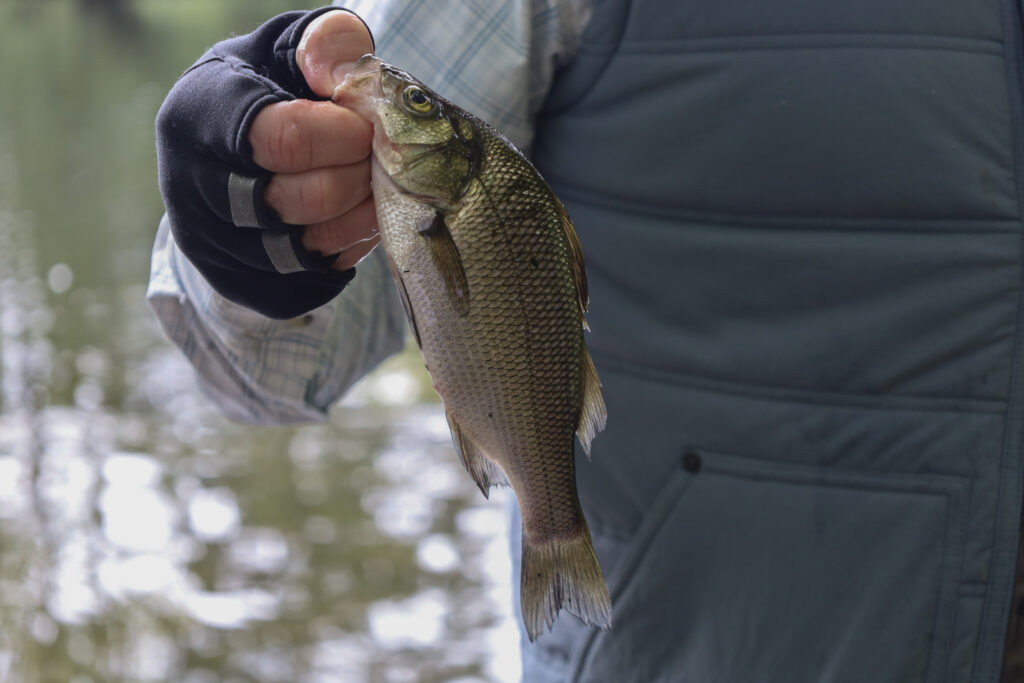
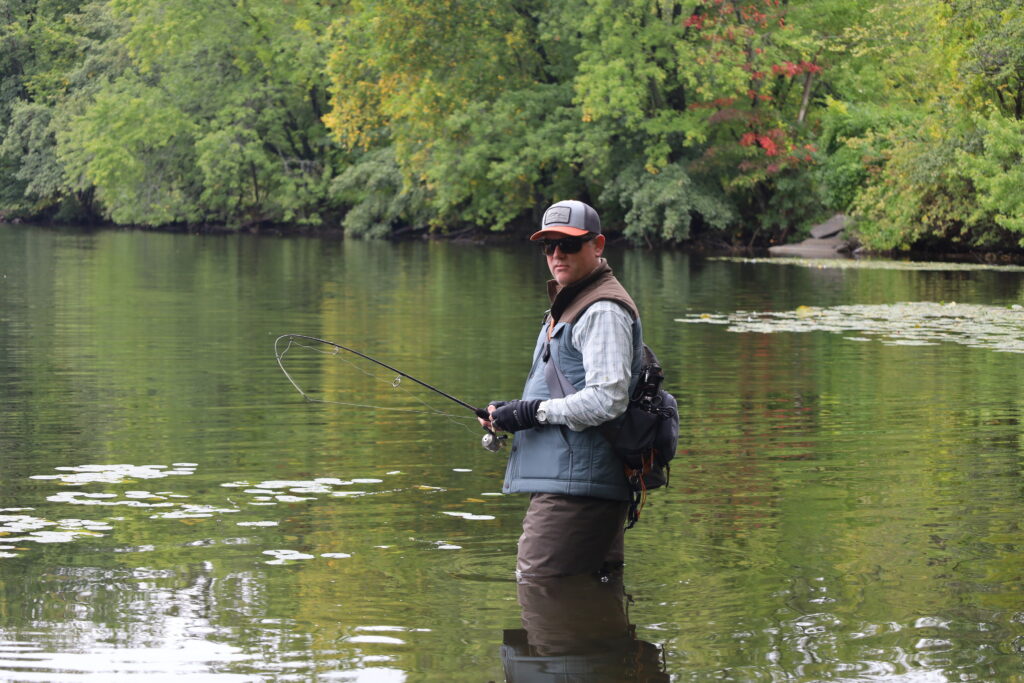
Trapper Markelz, a local fisherman, spends his free time outdoors catch and release fishing. Photo by Samantha Mandala
Arlington’s ponds, lakes and rivers may be an overlooked fishing destination, but local anglers say they offer a quiet escape close to home.
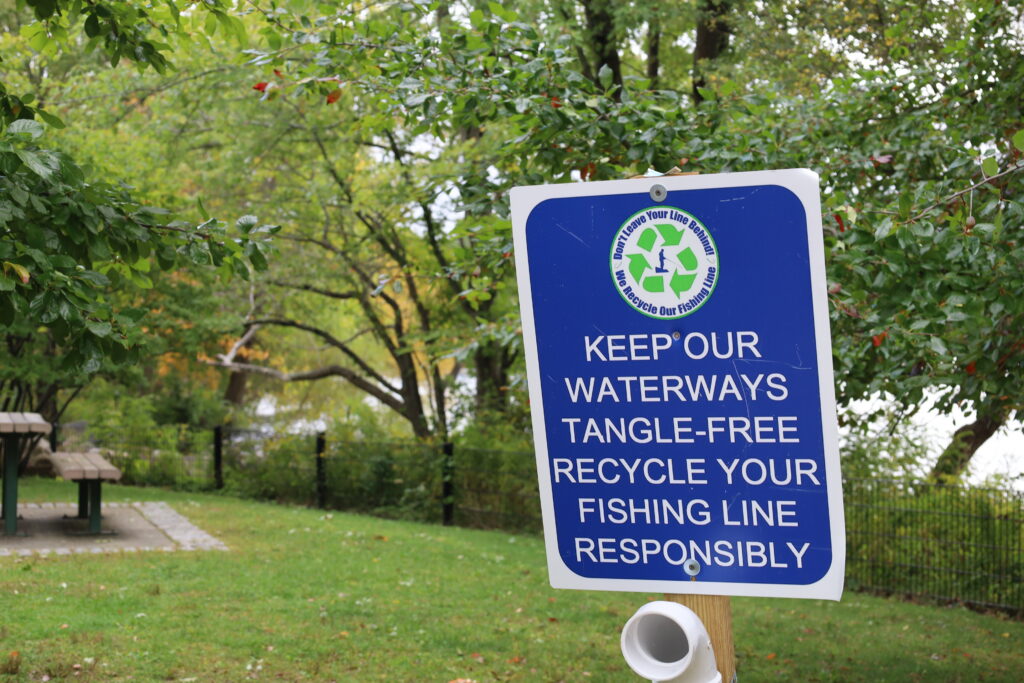
Along with fish and wildlife, though, they encounter discarded fishing line and trash — reminders of the responsibility that comes with enjoying the sport.
Fishing can be about much more than catching a fish. It can be a way to slow down, connect with nature and spend time with others.
Recreational fishing draws new fans
Remy Shannon, a Belmont resident, said fishing is about finding the right balance between relaxing and staying engaged. “It’s like a puzzle,” Shannon said. “It’s at the intersection of gambling and skill.”
Shannon started fishing on Labor Day weekend last year after a camping trip in Vermont. She bought a $30 rod and reel and caught a fallfish. Since then, she has caught more than 500 fish. Much of that fishing has happened in Arlington. Shannon regularly goes to the Mystic River, Mystic Lakes and Arlington Reservoir.
While reeling in a bluegill at Menotomy Rocks Park, Shannon said she is often surprised by how unfamiliar people are with Arlington as a fishing destination. “One of the most common questions that I get asked by other people that aren’t fishing is, ‘You catch fish in here?’” she said.
Trapper Markelz, who grew up in Alaska and moved to Arlington in 2008, also discovered the convenience of fishing close to home in spots like Spy Pond and the Arlington Reservoir.
For him, the sport offers a chance to connect with nature and his surroundings. “You end up paying a lot of attention to everything,” Markelz said. “To every little touch, to every little feeling, to where you cast.”
Markelz views the sport as a game between him and the fish, where he tries to figure out what will entice them to bite. As he explained this approach, it quickly proved fruitful when he hooked a white perch in the Mystic River. “It’s an opportunity to hope over and over again,” he said.
Longtime angler weighs in
Rodney Zukowski has spent more than 60 years fishing. His father introduced him to the sport when he was 5, and he now owns Arlington Bait & Tackle, which he has operated for more than 17 years.
He sees the sport as a way for people to step away from their daily routines. “Just being outdoors, being with family and friends, clearing your head from the day of work,” he said.
Cleaning up lines, lures and pollution
But enjoying local fishing spots also comes with responsibility.
Shannon said she is impressed by how often she sees people pick up after themselves in local communities, but she has noticed pollution left behind by other anglers. “The number one thing is fishing lines and lures,” Shannon said. (The issue has prompted local wildlife advocates to call for bans on fishing.)
This is an issue Markelz and Zukowski are familiar with. “People will cut their line and just let it hang there, and it’s like, ‘You are ruining it for all of us,’” Markelz said.
The problem is not limited to fishing lines. Zukowski has seen worm containers, beverage containers and other trash left behind.
Zukowski said he understands that Menotomy Rocks Park may soon close for fishing because of the pollution.
“People are casting and not being aware of where they are,” Zukowski said. “Line is getting stuck in the trees and birds have gotten stuck in it, a couple have died.”
Markelz said these issues surrounding local fishing spots are missed opportunities to bring anglers into the discussion.
While some people made poor decisions, he said, the response should be a call to action rather than an immediate shutdown of a fishing spot.
“Regulation is required and accepted, but I think what people want is to be involved in that conversation,” Markelz said.
In addition, new anglers should educate themselves so they are ready for any scenario. “You have to be prepared,” Markelz said. “Like any hobby, if you’re not, you’ll do more damage than you need to.”
Zukowski echoed this sentiment, noting that anglers need a license to fish in freshwater or saltwater in Massachusetts. “You definitely have to do your research,” he said. “Read the fishing regulations. A lot of people don’t.”
But learning the rules does not have to be a barrier to getting started. In fact, Shannon and Markelz use an app called Fishbrain to connect with other anglers and exchange advice.
“I’ve met quite a few local people through that,” Shannon said. “There’s actually a couple people from Arlington that I go fishing with occasionally now.”
As more people discover Arlington’s fishing spots, the anglers say learning how to enjoy them responsibly is part of participating in the sport itself. “People just have to be more aware, more responsible, of what they’re doing,” Zukowski said.
This story, published on Oct. 6, 2026, is part of a partnership between YourArlington and the Boston University Department of Journalism’s Newsroom program. Story is by Alexandra Ruane, and all photos are by Samantha Mandala.