

The rustling and squeaking begin as Emily Ristuccia walks down the stairs to her basement.
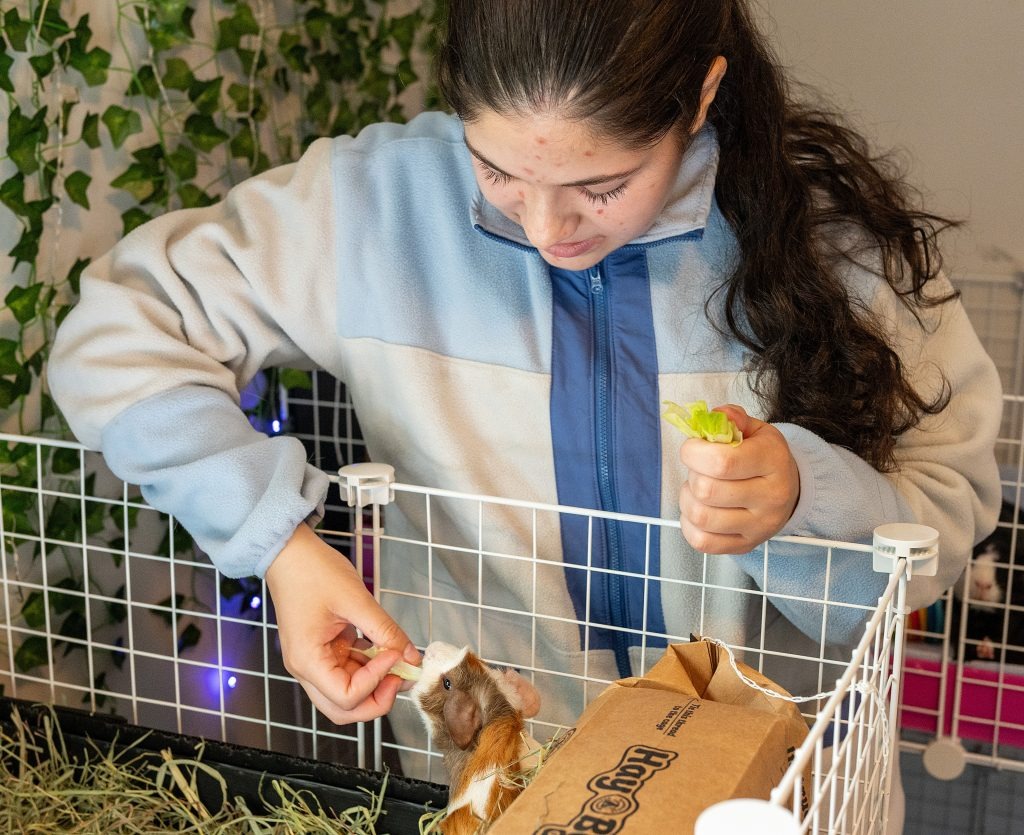
The 17-year-old peers into a row of cages lined with hay and bedding as she feeds guinea pigs their favorite snack, pea flakes. Between this room and her upstairs bedroom, she hosts 16 guinea pigs.
She created this small rescue, which she calls Piggy Overnight Camp, to save guinea pigs that have been abandoned, neglected or simply unwanted.
In 2024, guinea pig surrenders at the Massachusetts Society for the Prevention of Cruelty to Animals Boston adoption center rose 37 percent compared to the previous three years, said Kara Holmquist, the MSPCA director of advocacy.
More than 4,000 guinea pigs entered Massachusetts shelters and rescues in 2023 and 2024, and all but one shelter surveyed reported rising intake over the past three, five and 10 years, according to MSPCA-Angell data.
At the root is a mix of overbreeding, misunderstanding and a lack of regulation. Many owners become overwhelmed by how quickly guinea pigs reproduce when males and females are kept together, while others aren’t aware of how much care, space and social interaction these animals require, Ristuccia said.
Unlike dogs or cats, there are few laws governing their surrender or abandonment, making it easy for people to give them up. Sometimes they’re left outside in boxes or backyards.
About 53% of the guinea pigs that are in local shelters and rescues were originally purchased from pet stores, Holmquist said.
Boston banned the sale of guinea pigs in pet stores in December 2023. While legislation has been proposed at the state level to ban their sale in pet stores across Massachusetts, these bills remain pending in committee. If passed, pet stores partnered with rescue organizations would still be able to sell the animal.
Ristuccia’s rescue began in 2021 when she volunteered to foster a guinea pig named Vinny from the MSPCA. “He was my first foster but also my first foster fail, because I just couldn’t let him go,” she said. After Vinny’s death, her desire to foster guinea pigs diminished because of the sadness of the loss.
“Then I saw these guinea pigs on Craigslist, and that was my first rescue on my own,” Ristuccia said.
Ristuccia could tell the two guinea pigs had been abused, unsure if they would survive that night. They did, and a neighbor eventually adopted them.
“I realized how many cases there are out there of abuse, neglect, hoarding and dumping,” Ristuccia said, “It’s every day, you see it all of the time.” Ristuccia estimates that she’s cared for around 80 guinea pigs since 2021.
The monthly cost to care for the guinea pigs in her home is usually between $700 and $1,000, depending on factors such as the number of animals, donations received, and specific expenses in each month.
Ristuccia funds the rescue operation through fees charged to people who temporarily board their guinea pigs, adoption fees, and donations of money, food and supplies.
There are two regular volunteers at Piggy Overnight Camp. One works at an animal shelter and has previous experience with animal care and cleaning, while the other shares a love for guinea pigs but can’t currently own one. Ristuccia found both volunteers through local community postings.
As a senior at Arlington High School, Ristuccia spends her afternoons balancing schoolwork, cleaning cages, feeding and caring for the guinea pigs.
Ristuccia plans to study animal sciences on a pre-veterinary track next year in college.
“We’re figuring out what we’re going to do with the rescue operation when Emily goes to college,” said her mother, Christina Ristuccia.
Ristuccia is exploring options to turn Piggy Overnight Camp into a nonprofit to attract resources, volunteers and community support.
People often think guinea pigs are easy, low-maintenance pets or “starter pets” for children, when they require a lot of care and attention, Ristuccia said. Some people don’t realize they can live up to 10 years, she said.
“We tell Emily as she goes about her education, maybe those are problems that she might have to look into and solve,” Christina Ristuccia said, adding that there are gaps in rules for surrendering animals and education on guinea pigs.
To ensure each guinea pig leaves the rescue in good hands, Ristuccia requires the adopter to sign a contract along with several requirements such as having the cage approved by her and showing proof of access to a vet who treats guinea pigs. The adopter also signs a commitment to never breed the guinea pig and to return it to Piggy Overnight Camp if it cannot be kept.
“It does seem like there’s no end in sight to this problem, but Emily also seems to have no end to her ambition,” said her father, Brian Ristuccia.
All photos by Archer Liang.
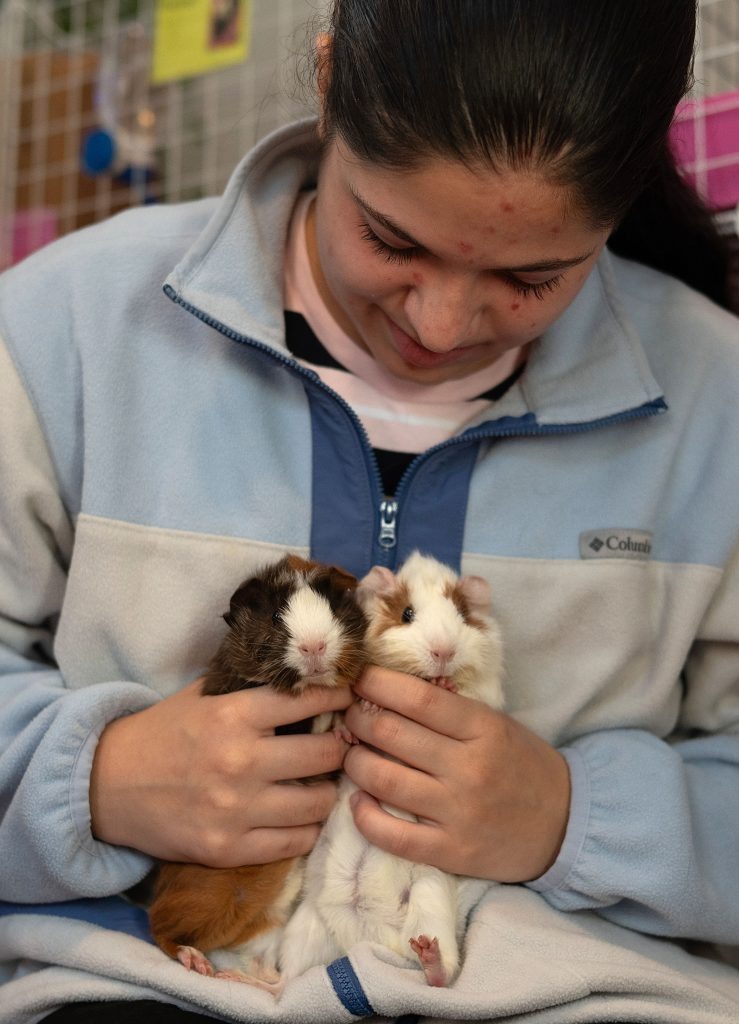
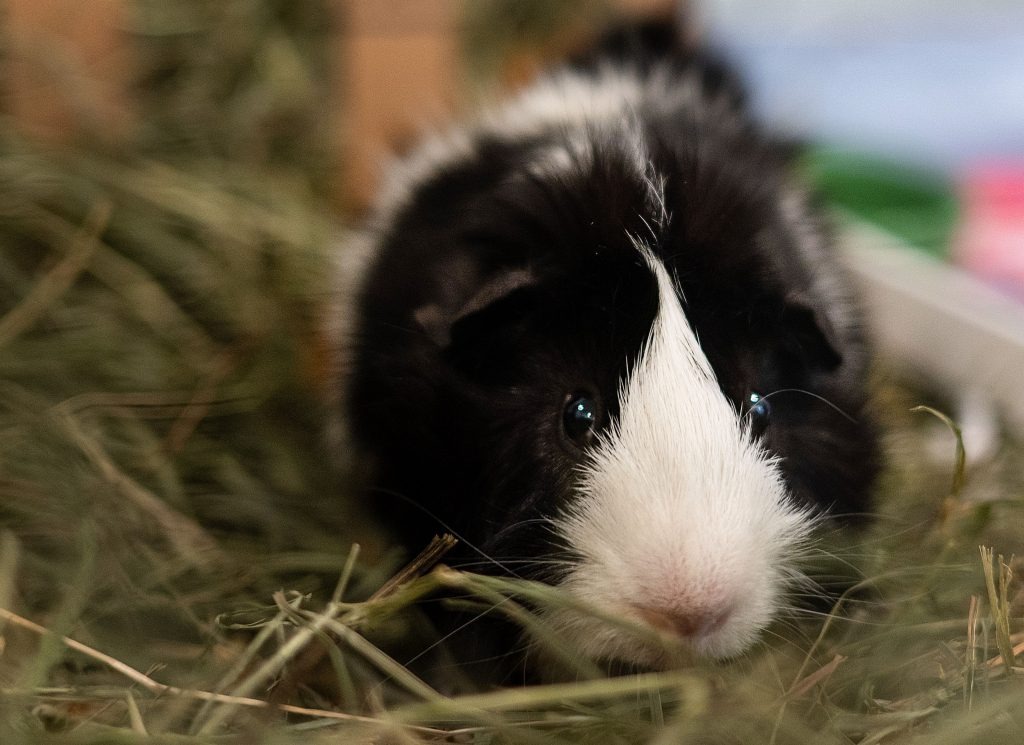
Louie, a 4-year-old guinea pig rescued from an animal flipper, is one of 16 guinea pigs cared for by high-school student Emily Ristuccia in her home-based rescue.

This story, published Nov. 9, 2025, is part of a partnership between Your Arlington and the Boston University Department of Journalism. The images for this story are by Boston University student Archer Liang.