Category: Waltham Times

  • School leadership, performance get City Council committee’s attention

    School leadership, performance get City Council committee’s attention

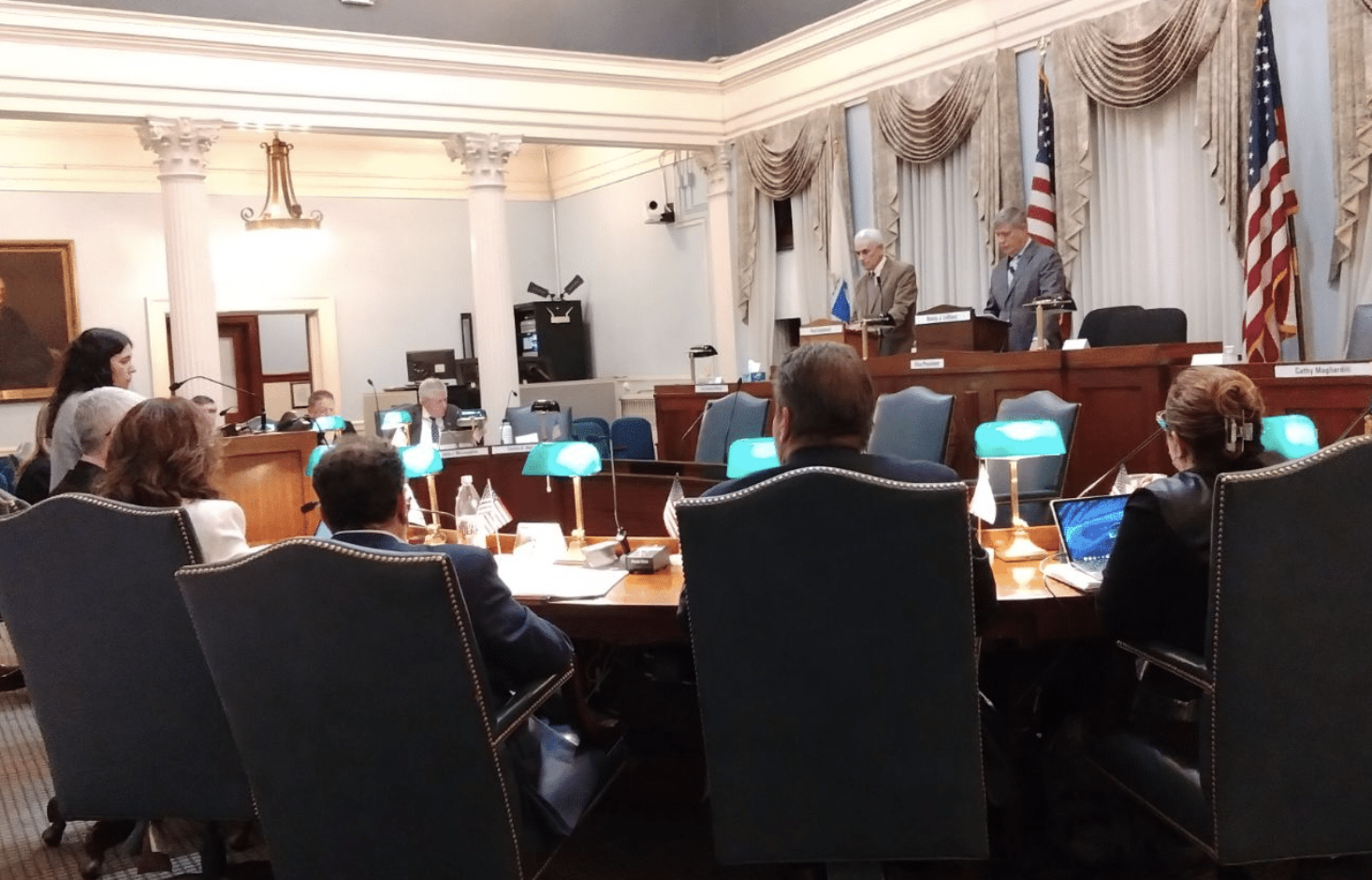
    The high turnover of principals in Waltham schools and the high school’s low score on a state education report card dominated discussion at the City Council’s Committee of the Whole meeting Monday night.

    Superintendent Marisa Mendonsa gave committee members an update on the city’s School Department, stressing that she’s working to tackle the key challenges facing the department.

    Superintendent Marisa Mendonsa addresses Committee of the Whole

    She acknowledged the challenges the city has had in retaining principals, especially at Waltham High. John Barnes, who has served as Waltham High School’s principal-in-residence since July, submitted his resignation in March. He will leave at the end of the school year. He will be the fourth principal to leave WHS since 2020. 

    Mendoza said the role is “the hardest in the district,” because WHS is the biggest school in the district with many flagship programs, including the Career and Technical Education program. She also emphasized the unique range of cultures and backgrounds making up the student body. 

    The district is looking to interview principal candidates for WHS next week and plans to hire a veteran principal for the role. She also aims to provide additional support, including more administrators and a stronger professional development plan. 

    As for WHS’s low performance, which falls in the bottom 10% statewide, Mendonsa said she recently met with teachers to develop a response plan around graduation and retention rates.  

    “A diploma is the strongest piece of paper we can deliver in the city of Waltham,” she said. 

    Mendonsa said one of the challenges is that teachers are not seeing their students regularly, which she aims to fix. Teachers are spending 15 to 20 minutes of class time to reteach students past material, due to having core classes only an average of three days a week, she said. 

    “Our teachers do not have enough time with our students,” she said. “Children cannot learn if they are not with their teachers on a regular basis, we have to fix that.” 

    Despite speculation in the community, Mendonsa said the low test scores are not because of the high percentage of English-language learners in the school. 

    “That ninth percentile means that the great majority of students are not achieving,” she said. 

    Motion to rename Northeast Elementary is tabled

    In other school-related City Council action, the council’s Licenses and Franchises Committee discussed a request to rename Northeast Elementary School. 

    The request came from Margaret Cannon, a former Waltham school district employee. Mayor Jeannette A. McCarthy read a letter from Cannon to the committee, advocating for the school to be named after former Superintendent John Daddona, a lifelong Waltham resident who died in February. 

    McCarthy emphasized Daddona’s legacy as one of the longest serving superintendents. Daddona was “strong when he had to be and kind when he ought to be,” McCarthy said. 

    City Councilor Robert Logan moved for the resolution to be sent to the School Committee for a recommendation. Logan said although only the Licenses and Franchises Committee has the power to rename schools, he wants to hear the School Committee’s opinion. 

    City Councilor-at-Large Emma Tzioumis objected to the motion, saying her discussions with the Northeast community members showed “no desire” for the school to be renamed. 

    “I want to make sure the council does its due diligence to ensure the community has a part in this,” she added. 

    Tzioumis said the current Northeast community has no ties to Daddona. McCarthy, however, emphasized Waltham’s tradition of naming schools after influential figures, including superintendents who had districtwide impacts. 

    “Either it is a war hero, president or a superintendent,” McCarthy said. “That’s the standard.” 

    The Licenses and Franchises Committee motioned to table the matter. 

  • City Council in brief: Future economic recovery options for Route 128 corridor

    The City Council’s Economic and Community Development Committee voted to request that the mayor fund a new economic development manager position in the next city budget. It also requested the clerk’s office compile job descriptions for business managers in neighboring cities for the committee to later review.

    This decision came after Frank Craig, chair of the city’s Board of Assessors, presented on how Waltham’s Route 128 corridor is facing difficulties attracting and retaining businesses in the current financial environment.

    Craig, speaking Monday at the Economic and Community Development Committee meeting, said the Route 128 corridor until recently had experienced a steady inflow of biotechnology companies looking for lab and office space. However, commercial occupancy in the last few years has tapered off as biotech companies have had more difficulty obtaining capital funding. 

    Craig spoke at Monday’s meeting to paint a picture of Waltham’s economic pressures to give councilors more information as they considered whether to hire a business manager for Waltham. 

    Craig described lab and office buildings constructed within the last five years that seem to have experienced difficulty finding tenants, including three that are fully or partially vacant. He said that given the high cost of building specialized lab spaces, real estate companies are reluctant to start construction on new buildings, meaning even more city lots will likely continue to sit empty and lose value unless companies find other ways to use them.

    Older buildings may be in an even worse position, Craig said, as real estate markets witness a “flight to quality” in the commercial sector. He pointed out that one office building at 130 Turner St. sold last year for $25.5 million — significantly less than the last time it changed hands in 2018, when it sold for approximately $80 million.

    Craig pointed to Burlington and Watertown as municipalities that have done a good job weathering this real estate downturn by taking advantage of opportunities to build new developments with office, residential and commercial spaces in close proximity. He added that Burlington and Watertown both employ municipal economic development specialists.

    The Board of Assessors has been forecasting economic trends in the city to assess the value of its commercial properties. However, Craig said the city would benefit by trying to put together a longer-term picture of those trends and their impact, for example of the potential effects of currently proposed construction projects around the city, such as the housing developments proposed under Massachusetts General Law 40B, on future commercial development. 

    City ‘eager’ to continue with mixed-use district plan

    In other City Council action, the council’s Ordinances and Rules Committee took steps toward approving a zoning change to allow real estate companies to construct mixed-use developments on three parcels of land around Route 128.

    These zoning overlay districts were proposed in December by real estate companies BXP Inc., which owns the land at the Winter Street Bay Colony and along Jones Road, and 1265 Main Street LLC, which owns the parcel at 1265 Main Street. 

    Councilors expressed a desire to move forward with the zoning changes. “The city is really eager to achieve this goal with you,” Ward 8 Councilor and committee Chair Cathyann Harris told representatives of the two companies at a Monday meeting.

    Representatives of BXP reviewed the results of a recent consultation with neighbors of the Bay Colony property. They said most of the changes requested by neighbors would be taken up in upcoming special permit discussions, but it committed to expanding the setback at the northwest edge of the property from 75 to 100 feet.

    Mark Fougere, a consultant hired by BXP to assess the developments’ fiscal impact on the city, told the committee he expects BXP’s two proposed districts to ultimately earn more money for Waltham. He estimated that the Bay Colony site would bring in about $3.9 million in new revenue from sources such as property taxes and cost the city between $1.5 and $2.2 million in services for new residents. The Jones Road parcel, he estimated, would bring in about $1.75 million in city revenue, and cost between $436,000 and $693,000.

    On the recommendation of Planning Director Robert Waters, the committee voted to allocate $55,000 to hire CommunityScale LLC, the company conducting Waltham’s ongoing zoning review, to review plans for the three overlay districts while the committee continues to deliberate. Ward 2 Councilor Caren Dunn requested CommunityScale estimate how long its review will take to complete to ensure it aligns with construction deadlines associated with the zoning districts.

    The committee also requested Mayor Jeannette A. McCarthy appear at its next meeting on April 21 to discuss the three proposed zoning changes.

    Additionally, the City Council:

    • Officially filed a 2-year-old motion welcoming Superintendent Marisa Mendonsa to the district after hearing an update from Mendonsa on Waltham’s schools. (Committee of the Whole)
    • Approved a preliminary plan for the $850,450 that Waltham will receive in Community Development Block Grant funding which the Planning Department plans to submit to the Department of Housing and Economic Development after Thursday’s community feedback meeting. (Economic and Community Development)
    • Approved an appropriation of $35,339.10 for the Disabilities Services Commission’s accessibility supplies, including changing tables, aquatic wheelchairs and scholarships for individuals impacted by disabilities (Finance) 
    • Approved a state grant of $3,500 for the Waltham Police Department to train 911 dispatchers. (Finance)
    • Preliminarily approved a grant of location at Bear Hill Road near Fox Road for the electric utility company Eversource to provide underground storage space expansion (Licences and Franchises Committee) 
    • Renewed a secondhand dealers’ license for The Tool Shed at 471 Main St. (Licenses and Franchises Committee)
    • Approved special permit extensions for three proposed office spaces at 1432 Main St., 460 Totten Pond Road and 850 Winter St. allowing landowners to postpone construction on the projects. Ward 9 Councilor and Council President Robert Logan warned that councilors should consider an upper limit on extending special permits, pointing out that the 50 Winter St. permit was originally granted in 2013 and has been affecting feasibility studies for all other prospective developments in the meantime. (Ordinances and Rules)
    • Reviewed updates to plans for a proposed hotel on Moody Street. The petitioner presented changes to the building’s aesthetic design requested by McCarthy and agreed to add in specifics about parking permits the building will purchase from the city and the funding it will provide for local park improvements. The committee sent a draft of an air rights easement the building will require for its proposed second-floor cantilever over the Embassy parking lot to McCarthy’s office for review. (Ordinances and Rules)

  • City Council in brief: Future economic recovery options for Route 128 corridor

    By Artie Kronenfeld & Elizabeth Mehler

    The City Council’s Economic and Community Development Committee voted to request that the mayor fund a new economic development manager position in the next city budget. It also requested the clerk’s office compile job descriptions for business managers in neighboring cities for the committee to later review.

    This decision came after Frank Craig, chair of the city’s Board of Assessors, presented on how Waltham’s Route 128 corridor is facing difficulties attracting and retaining businesses in the current financial environment.

    Craig, speaking Monday at the Economic and Community Development Committee meeting, said the Route 128 corridor until recently had experienced a steady inflow of biotechnology companies looking for lab and office space. However, commercial occupancy in the last few years has tapered off as biotech companies have had more difficulty obtaining capital funding. 

    Craig spoke at Monday’s meeting to paint a picture of Waltham’s economic pressures to give councilors more information as they considered whether to hire a business manager for Waltham. 

    Craig described lab and office buildings constructed within the last five years that seem to have experienced difficulty finding tenants, including three that are fully or partially vacant. He said that given the high cost of building specialized lab spaces, real estate companies are reluctant to start construction on new buildings, meaning even more city lots will likely continue to sit empty and lose value unless companies find other ways to use them.

    Older buildings may be in an even worse position, Craig said, as real estate markets witness a “flight to quality” in the commercial sector. He pointed out that one office building at 130 Turner St. sold last year for $25.5 million — significantly less than the last time it changed hands in 2018, when it sold for approximately $80 million.

    Craig pointed to Burlington and Watertown as municipalities that have done a good job weathering this real estate downturn by taking advantage of opportunities to build new developments with office, residential and commercial spaces in close proximity. He added that Burlington and Watertown both employ municipal economic development specialists.

    The Board of Assessors has been forecasting economic trends in the city to assess the value of its commercial properties. However, Craig said the city would benefit by trying to put together a longer-term picture of those trends and their impact, for example of the potential effects of currently proposed construction projects around the city, such as the housing developments proposed under Massachusetts General Law 40B, on future commercial development. 

    City ‘eager’ to continue with mixed-use district plan

    In other City Council action, the council’s Ordinances and Rules Committee took steps toward approving a zoning change to allow real estate companies to construct mixed-use developments on three parcels of land around Route 128.

    These zoning overlay districts were proposed in December by real estate companies BXP Inc., which owns the land at the Winter Street Bay Colony and along Jones Road, and 1265 Main Street LLC, which owns the parcel at 1265 Main Street. 

    Councilors expressed a desire to move forward with the zoning changes. “The city is really eager to achieve this goal with you,” Ward 8 Councilor and committee Chair Cathyann Harris told representatives of the two companies at a Monday meeting.

    Representatives of BXP reviewed the results of a recent consultation with neighbors of the Bay Colony property. They said most of the changes requested by neighbors would be taken up in upcoming special permit discussions, but it committed to expanding the setback at the northwest edge of the property from 75 to 100 feet.

    Mark Fougere, a consultant hired by BXP to assess the developments’ fiscal impact on the city, told the committee he expects BXP’s two proposed districts to ultimately earn more money for Waltham. He estimated that the Bay Colony site would bring in about $3.9 million in new revenue from sources such as property taxes and cost the city between $1.5 and $2.2 million in services for new residents. The Jones Road parcel, he estimated, would bring in about $1.75 million in city revenue, and cost between $436,000 and $693,000.

    On the recommendation of Planning Director Robert Waters, the committee voted to allocate $55,000 to hire CommunityScale LLC, the company conducting Waltham’s ongoing zoning review, to review plans for the three overlay districts while the committee continues to deliberate. Ward 2 Councilor Caren Dunn requested CommunityScale estimate how long its review will take to complete to ensure it aligns with construction deadlines associated with the zoning districts.

    The committee also requested Mayor Jeannette A. McCarthy appear at its next meeting on April 21 to discuss the three proposed zoning changes.

    Additionally, the City Council:

    • Officially filed a 2-year-old motion welcoming Superintendent Marisa Mendonsa to the district after hearing an update from Mendonsa on Waltham’s schools. (Committee of the Whole)
    • Approved a preliminary plan for the $850,450 that Waltham will receive in Community Development Block Grant funding which the Planning Department plans to submit to the Department of Housing and Economic Development after Thursday’s community feedback meeting. (Economic and Community Development)
    • Approved an appropriation of $35,339.10 for the Disabilities Services Commission’s accessibility supplies, including changing tables, aquatic wheelchairs and scholarships for individuals impacted by disabilities (Finance) 
    • Approved a state grant of $3,500 for the Waltham Police Department to train 911 dispatchers. (Finance)
    • Preliminarily approved a grant of location at Bear Hill Road near Fox Road for the electric utility company Eversource to provide underground storage space expansion (Licences and Franchises Committee) 
    • Renewed a secondhand dealers’ license for The Tool Shed at 471 Main St. (Licenses and Franchises Committee)
    • Approved special permit extensions for three proposed office spaces at 1432 Main St., 460 Totten Pond Road and 850 Winter St. allowing landowners to postpone construction on the projects. Ward 9 Councilor and Council President Robert Logan warned that councilors should consider an upper limit on extending special permits, pointing out that the 50 Winter St. permit was originally granted in 2013 and has been affecting feasibility studies for all other prospective developments in the meantime. (Ordinances and Rules)
    • Reviewed updates to plans for a proposed hotel on Moody Street. The petitioner presented changes to the building’s aesthetic design requested by McCarthy and agreed to add in specifics about parking permits the building will purchase from the city and the funding it will provide for local park improvements. The committee sent a draft of an air rights easement the building will require for its proposed second-floor cantilever over the Embassy parking lot to McCarthy’s office for review. (Ordinances and Rules)
  • Potter Place inspires confidence, purpose for people with mental health conditions

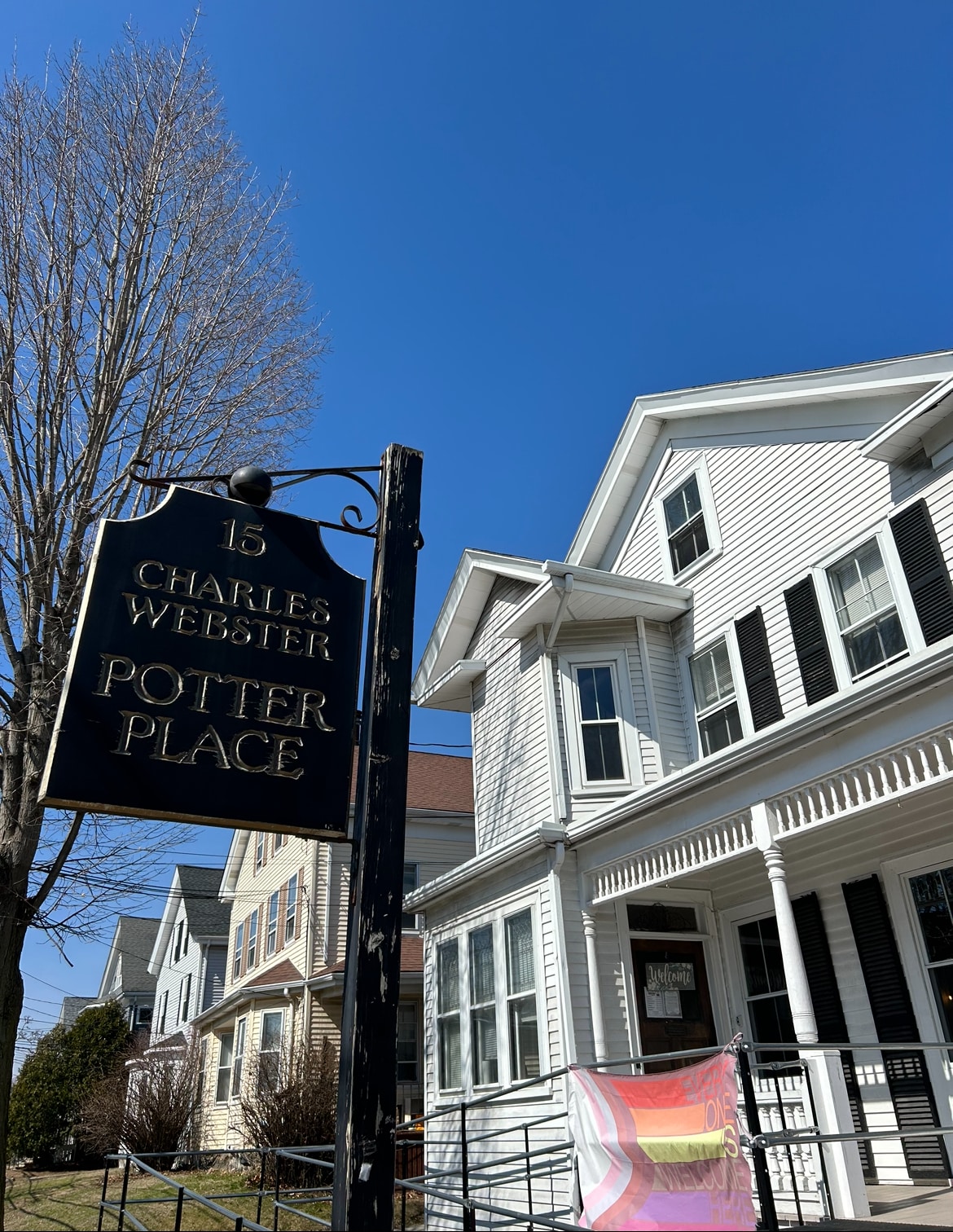
    Charles Webster Potter Place Clubhouse on Vernon Street in Waltham. Photo by Elizabeth Mehler.

    Ruth Torres, 55, has been showing up to Potter Place Clubhouse in Waltham four days a week for nearly three decades — not just to pass the time, but to build new skills, from math to French, with the help of staff who guide her progress.

    “I decided to come to the clubhouse to find a job, to work dependably by myself, to help my family,” she said. 

    Community unit coordinator Menucha Krinsky began teaching Torres skills when Krinsky first met her as an intern. They began doing puzzles together, and eventually she introduced her to educational French and math videos on YouTube. 

    “I knew that Ruth had a brain that she wasn’t utilizing in the way that I wanted her to,” Krinsky said. 

    While most mental health services offer a clinical space for therapy, Potter Place Clubhouse on Vernon Street offers a warm, welcoming space where members like Torres can build confidence and find a sense of community.

    They eat meals together, socialize, sweep the floors and answer phones together — all in the name of building community. 

    “Everything we do is done side by side for the overall mission of supporting members in recovery from mental illness,” said Michael Nderitu, assistant director of Potter Place Clubhouse. “Our model is recovery through work.”

    Regaining a sense of purpose

    The entrance hall at Potter Place Clubhouse welcomes members and visitors. Photo by Elizabeth Mehler.

    Since 1988, Waltham’s Potter Place Clubhouse has emphasized pre-vocational, vocational and social experiences to support people with mental illness

    The program is based on the international clubhouse model, which designs mental health treatment based on helping members regain a sense of self purpose and vocational confidence to be productive in society. 

    Potter Place has 100 members in Waltham. Its motto states “Once a member, always a member,’’ Nderitu said. 

    About 20 members with a diagnosed mental health condition come to the clubhouse daily for services, which are funded by the Department of Mental Health.  

    A pillar of the clubhouse’s model is its Transitional Employment Program, which helps members find short-term employment for six to nine months with local businesses, including the Waltham Chamber of Commerce. Potter Place also has partnerships with Brandeis University, More Than Words bookstore and Common Good coffee shop. 

    The goal is to find jobs that best suit members’ interests, Nderitu said. Members typically get janitorial, clerical or food services work. “[This is] meant to build them up, get them used to working again, so that hopefully, ideally, the next step is moving on to a part-time or full-time position,” Nderitu said. 

    Peter DuBois, a 65-year-old Belmont resident, has been a member of Potter Place for 30 years and said he prefers the clubhouse model over group therapy. 

    “If you’re an adult living in the United States, work is important,” he said. “You can do so much group therapy, [but] getting back to work, that’s very important.”

    “We help people regain the confidence that they need to go about their life to reenter the workforce, get back to school, or just be part of a community,” Nderitu said. 

    Building confidence and community

    The Career Hub at Potter Place provides job opportunities in the community to members. Photo by Elizabeth Mehler.

    Molyna Richards, executive director of Waltham Chamber of Commerce, hailed the clubhouse hiring program as good for the members and the larger community. 

    “We tell people how remarkable it is and the benefits of hiring from Potter Place,” she said. 

    She added, “They do little things, and that gives them the confidence of being back in the workplace. They get to meet other business professionals, and they can network that way, which is really helpful.”

    Potter Place offers more than just employment opportunities. It holds socials every Saturday, planned and decided by members themselves, and is even open on holidays. 

    “Some people do just come here for the social aspect,” Nderitu said. “[They] want a community.”  

    Krinsky said she’s witnessed members form “strong bonds” with one another, socializing in, and sometimes outside of, the clubhouse. 

    “[For many members] this is the common ground, this is how we connect,” she said. “This is going to be our place, which puts a lot of reliance on this place being here.”

    This story is part of a partnership between The Waltham Times and the Boston University Department of Journalism’s Newsroom program.

  • In MA, Doctors’ Day becomes rallying point for health care reform

    While Doctors’ Day has traditionally celebrated physicians’ contributions — specically the date of the first use of general anesthesia in surgery by Dr. Crawford W. Long on March 30, 1842 — this year Massachusetts physicians are redefining it as a platform for advocacy.

    Facing federal funding cuts and growing primary care shortages, Massachusetts physicians met with legislators on March 25 at the State House to call for urgent policy action. Physicians from the Massachusetts Medical Society gathered for their first in-person Doctors’ Day since before
    the COVID-19 pandemic to advocate for bills to increase primary care access, improve childhood immunization rates, and bolster protections for immigrant health care access.

    The renewed urgency comes as the “Big Beautiful Bill,” passed by Congress last July, is expected to cut $3.5 billion annually from federal health care funding to Massachusetts. The cuts amount to about 5% of the state’s proposed total budget for fiscal 2027. This will lead to about 326,000 residents losing health care insurance coverage, according to a minority report of the Joint Economic Committee, based on a report by the Congressional Budget Office. “I’m proud of the advocacy this day represents, but I encourage you to do more,” Dr. Kiame Mahaniah, the state’s secretary of Health and Human Services, told physicians. Mahaniah emphasized that physicians play a critical role in clinical care, but must also advocate for the broader health care system throughout the state.

    An aging workforce means a shrinking workforce

    Access to primary care physicians has been declining across Massachusetts, and is expected to face greater threats as cuts to Medicaid take effect later this year, according to a recent re-
    port by NPR. More than half of in-office physicians are age 55 or older, raising concerns about a shrinking workforce, according to Mahaniah.

    State Sen. Cindy Friedman, D-Arlington, co-chair of the Legislature’s Committee on Health Care Financing, highlighted the growing strain on the system, as colleagues consistently ask her, “Can you help me get a primary care physician?” Friedman championed several of the bills discussed at the March 25 event.

    Throughout the state, primary care represents a small and declining share of total health care spending. This leads to increased strain on emergency departments, according to a presentation from Mass. Medical Society reps.

    Physicians advocated for the future of their profession by promoting passage of several bills designed to strengthen primary care access.

    Among those proposals is one that would double the investment in primary care over four years, with a target of at least 12% of total health care spending allocated to primary care departments. It would also establish a primary care stabilization fund to deliver payments directly to practices, an idea that Mahaniah and other speakers advocated for throughout the meeting.

    Physicians also raised concerns about administrative burdens tied to insurance companies’ prior authorization requirements, an issue they say leads to unnecessary costs and often causes pa-
    patients to forgo needed treatment.

    The bill, aimed at reducing delays in patient care and administrative burden, would strengthen oversight and improve timely access to treatment.

    Addressing declines in vaccination rates

    In addition to administrative and industry issues, physicians also advocated for pressing public health concerns as nationwide threats to vaccine and immigration policies begin to take effect
    in Massachusetts.

    In early January, the Centers for Disease Control and Prevention reduced the number of recommended vaccines for children. Massachusetts has seen declines in vaccination rates in recent years, as well as a record high number of non-medical religious exemptions, according to the Mass. Medical Society.

    In some school communities, vaccination rates have dropped below herd immunity thresholds — the point at which enough people in an area have protection from a disease that it no longer spreads easily, according to the Mass. Medical Society. Vaccination ex-
    emption rates among kindergarten students are rising in central and western counties, with 1.6% exempt in Worcester County and 2.7% in Hampden County. In Middlesex County, 1.2% of students had exemptions, while in Suffolk County the rate was 0.8% for the 2024-25 school year, according to the Department of Public Health.

    Another proposal would require all public and private schools to report immunization data annually to the Department of Public Health, while ensuring that necessary medical exemptions are maintained.

    Physicians also advocated for a provision in a supplemental budget proposal, offered by Gov. Maura Healey, that calls for protecting health care facilities from civil immigration enforce-
    ment actions, with the goal of reducing appointment cancellations and no-shows. The bill would restrict immigration agents’ access to health care facilities, requiring a judicial warrant to en-
    ter medical facilities.

    The House-approved PROTECT Act would restrict local law enforcement’s cooperation with ICE. However, the act does not designate health care facilities as sensitive locations.

  • Diamond Middle School students escape bus fire

    About 60 William Diamond Middle School students and staff evacuated a charter bus in Woodstock, NH Friday night after one student noticed something disturbing: the smell of smoke. Within minutes, the vehicle was engulfed in flames. 

    The students were headed to Jay Peak, Vermont, for the school’s annual ski trip. No students were hurt, but one adult staff member was treated for smoke inhalation. 

    New Hampshire State Police told WBZ that investigators have not pinpointed the cause of the fire, but they have ruled out criminal activity. Approximately 100 students and 10 chaperones rode multiple buses on the trip. 

    Jennifer Bermont watched her two children board separate buses that night. One arrived safely. The other rode the bus that caught fire.

    When her son called after being evacuated from the burning bus, Bermont said she was overwhelmed with “panic and disbelief.” 

    Bermont praised Diamond staff members for keeping families informed throughout the night. “The school did a great job,” she said. “We continue to receive emails offering support for our kids as they process this traumatic experience.” 

    Parent Ching-Ju Kuo agreed. “I truly appreciate all the teachers and chaperones for their quick response, which helped minimize the impact of the incident,” she said. “We received updates as soon as decisions were made about the next steps.” 

    After evacuating, the students walked with a police escort along Highway I-93 to a nearby McDonald’s. A replacement bus ferried students back to campus, where they were reunited with their families around midnight. 

    “The highway had been shut down at that point, so they were safe to walk down the road,” Diamond Principal Johnny Cole said. 

    After local firefighters contained the blaze, some staff members returned to the charred remains of the bus to recover what they could. The next morning, Cole said the school invited families to collect salvageable items from the bus and photograph property for potential insurance claims. 

    “Thankfully, [my son’s] ski equipment and luggage, which were stored underneath the bus, were all okay, albeit smelling of smoke,” Bermont said. “However, some of the other things that he had on board with him were left behind during the evacuation and were damaged by the fire.” 

    Cole said vehicle problems happen occasionally on school trips. Last year, one of seven buses broke down en route to Washington, D.C. Diamond staff members are trained on emergency protocols for situations like this, he said. 

    “We regularly have drills, we have a safety team that meets once a month to discuss instances like this, to debrief, and plan ahead,” Cole said. 

    However, he said this is the first time an incident like this has occurred on the annual winter trip, which Diamond has hosted since 2010

    “We take enough field trips that sometimes buses have malfunctions, but this was a very serious one,” he said. “Nothing like this has really happened before.” 

    A spokeswoman for Z&M Legacy, the motor coach company, offered few details. “The incident is currently under investigation and we do not have any additional information to share at this time,” said one of the company’s officers, Gabriela Pitts.

    Federal Motor Carrier Safety Administration records show five Z&M inspections over the past two years. Four resulted in no violations. A fifth flagged vehicle maintenance issues, including an exhaust system concern. 

    “We are certainly not experts in motorcoach repair, so we would not have been able to spot an issue like this prior,” Cole said. “We do rely a lot on the vendors that we work with to make sure their equipment is safe.” 

    Bermont said the incident hasn’t shaken her confidence in the safety of school outings. “I feel so badly that the kids didn’t make it to Jay Peak, she said. “The kids have a blast. I hope they have the opportunity to go next year.” 

    This story was written by a journalism student in BU’s Newsroom program, a partnership between the university, The Lexington Observer and other news organizations in the Boston area.

  • Lexington High School senior signs with professional ultimate Frisbee team

    Lexington High School senior signs with professional ultimate Frisbee team

    Ultimate Frisbee player Max Coe / Courtesy: Max Coe

    Lexington High School senior Max Coe has signed with the Boston Glory, a professional ultimate Frisbee team, the team announced March 3.

    During his four years at Lexington, Coe played for the school’s ultimate squad, the Hucking Fooligans, which finished the 2025 season ranked No. 20 in the nation, according to UltiWorld, a website that tracks international news about the sport. He also served as co-captain of the 2024 team that earned an invitation to the national championships, the program’s third trip to nationals in its 27-year history.

    “I’ve known about this team for a few years,” Coe said about joining the Glory. “It’s always been my goal to play professionally.”

    The Glory is one of 24 teams in the Ultimate Frisbee Association, the largest ultimate Frisbee league in North America since its founding in 2012. The league’s growth has led to a following of more than 130,000 YouTube subscribers and over 300,000 Instagram followers.

    Coe’s team, The Boston Glory, is based in Medford, Mass., and is the UFA’s defending champion. Glory Head Coach Sam Rosenthal said the team had been aware of Coe’s talent for more than a year and signed him once he turned 18. The team’s schedule amounts to part-time work; Coe hasn’t yet made any decisions about college. 

    “We’ve known for a long time that Max is a player with a lot of potential,” Rosenthal said. “He’s got size, the motor, the disc skills and he’s got the athleticism. He checks a lot of boxes.”

    Coe combined that talent with a work ethic that made him a leader and impact player for his high school team in the biggest moments.

    “He very quickly established himself as a team leader and someone who we could rely on to give us the plays that we needed at critical moments,” said Larry David, Lexington High School’s ultimate head coach. “He rose to the occasion when we needed him. He’s a clutch player that way.”

    Coe’s talent earned him a spot on the U.S. U-20 national team, which will compete in the 2026 World Junior Ultimate Championships in July in Logroño, Spain. He was one of more than 200 athletes invited to try out for the national team. He won a spot on the mixed-gender roster as one of 24 players.

    “For a high school player to be at that level and be recognized at that level and be able to contribute is awesome,” David said.

    Once Coe returns from the national team, he will have to adjust to several differences at the pro level. It may take time to adjust to the larger playing field and a position on defense, but his coach believes he will adapt quickly. 

    “I think it’s a huge adjustment,” Rosenthal said, “but Max is going to be able to make that adjustment, I think, quicker than others.”

    Coe has already had his first practice with the Glory and believes the support he’s received from his teammates will lead him to success as a pro.   

    “I’ve known a lot of these people for a while,” Coe said. “With all the support and the help and advice they’ve given me, it has really allowed me to be the player I am today.”

    Coe will begin the season with the Glory on April 25 at Hormel Stadium in Medford, Mass.

    This story was written by a journalism student in BU’s Newsroom program, a partnership between the university, The Lexington Observer and other news organizations in the Boston area.