Category: Waltham Times

  • Waltham nail salon owner waits months to turn dark storefront into ‘Sun & Me’

    Melody Luo unlocks the darkened storefront alongside her Main Street nail salon every few days, stepping past bubble-wrapped manicure tables that have sat unused for nearly a year.

    She expected to open by spring of this year. Instead, the expansion of Queen Nails – a rebrand called Sun & Me – stalled for months amid miscommunication, language barriers and a permitting requirement that was lost in translation.

    “I thought it would be simple,” Luo said in an interview conducted in Mandarin Chinese. “Just prepare the space and start building. I didn’t expect every step to take this long.”

    Luo signed a lease for the adjoining commercial space in January 2025 after a driving school business closed. Her landlord offered three months of free rent, and she believed the city permitting would be finished in that time. Luo planned to add additional manicure and pedicure stations and relaunch as a consolidated business, Sun & Me.

    Originally from Guangzhou, China, Luo immigrated to Massachusetts in 2012. She first met her husband, Sunny Li, years ago in Cambridge, where she had gone to him as a customer at the nail station where he worked. Years later, they became partners in both life and business. Today, Li works most days at their established shop in Westwood while Luo manages Queen Nails full-time.

    “We thought expanding would make everything more comfortable,” he said.

    Second life for an old salon

    To avoid misunderstandings, Luo hired a Chinese-speaking contractor. But the contractor relied on a permit expediter to communicate with the city, creating a chain of translation between city staff, the expediter, the contractor and Luo.

    Trouble began in February, when the building permit application was filed. Waltham’s commercial approval guidelines require projects with increased water and sewer demands to include a design-flow worksheet, known as an I&I (Infiltration and Inflow) calculation. The requirement passed through several people before reaching Luo, with the meaning shifting in Chinese and English along the way.

    By the time the message reached Luo, “design-flow worksheet” had transformed into something she believed was a “sewer analysis report,” a term that triggered a search for the wrong craftsmen and wrong documents.

    “We didn’t really understand what the city wanted,” Luo said. “Everyone kept telling us something different.”

    Eventually, Luo asked her architect to visit the Waltham Building Department and Engineering Division with her. Speaking to staff, the intermediaries learned exactly what was needed. The permit was approved on July 10, nearly five months after the original submission.

    Consistency is the city’s goal

    Chief Building Inspector Brian Bower said the permitting system is meant to be predictable. Applicants receive a renovation checklist and are walked through each step.

    Language barriers can widen communication gaps, Bower said. The department has one Spanish-speaking inspector but no Chinese-language resources. All forms are in English.

    “People come in and say they were nervous,” he said. “When that happens, I bring them into my office and we go through everything together.”

    Since becoming chief three years ago, Bower has emphasized internal consistency so applicants receive the same guidance regardless of who helps them. Whether it is explaining zoning basics, clarifying forms or reviewing documents, he said the goal is to make the department’s guidance stable and predictable.

    More permits, more delays

    Approval of the building permit did not mean construction could begin, however. Luo still needed plumbing and electrical permits, each requiring separate applications and inspections.

    Then the communication chain broke again. Luo said the licensed expediter stopped responding.

    “He would read my messages but barely reply,” Luo said. “Sometimes I sent so many messages and got only one very short answer.”

    Her contractor found a replacement this fall and the change was immediate. Both the plumbing and electrical permits were approved on Nov. 20, allowing the contractor to build her illuminated Sun & Me sign and begin seeking city approval for it.

    Bower said that although Luo’s case did not involve zoning issues, he often sees other business owners run into preventable setbacks. He said anyone considering purchasing or renting a new commercial space should visit the Building Department before signing a lease.

    “People should come in and make sure their use is allowed in that zone,” Bower said. “I don’t want people to be afraid to come to the Building Department. My door’s open all the time for anybody.”

    Waiting for lights

    In July, Queen Nails closed for more than 20 days for repainting, the installation of new flooring and equipment upgrades. Customers now walk into a brighter, cleaner space, even though the expansion next door remains unused.

    Luo unlocks the darkened unit every few days. She points to where she hopes customers will one day choose polish colors from a wall display, wider walkways and a Sun & Me sign glowing over Main Street.

    “I’ve already invested so much time and money,” she said. “Now I just hope everything can move forward.”

  • Strings and stories Flow as Irish folk duo lights up Medford this Sunday

    The sound of Celtic strings will fill Medford on Nov. 16 when the Irish-American folk duo Rakish performs at Arts Collaborative Medford.

    The sound of Celtic strings will fill Medford on Sunday when the Irish-American folk duo Rakish performs at Arts Collaborative Medford.

    The concert, part of the Trad on the Mystic series founded by local musician Ellery Klein, runs from 2 to 4 p.m. on Nov. 16.

    Klein launched the series last year with support from the Medford Arts Council to create an intimate setting for acoustic performances. The show takes place in the first-floor lobby of Arts Collaborative Medford, which seats about 50 to 60 people. Klein said the space is just right for the kind of close-up experience this music deserves.

    “When Arts Collaborative Medford first opened, I was struck by how lovely and cozy the main lobby was for concerts,” Klein said. “I was hoping to continue to have Arts Collaborative Medford present these kinds of intimate, cozy concerts so people can hear that kind of music up close in Medford.”

    Rakish, the duo of fiddler Maura Shawn Scanlin and guitarist Conor Hearn, met nearly a decade ago in Boston and have been performing together ever since.

    “Most of the music that we play together these days is original,” Hearn said. “We write the songs ourselves, and there’s this kind of shared influence from the traditional music that we both grew up playing.”

    Hearn, who lives in Medford, said performing in his own community carries a sense of homecoming. He said sharing Rakish’s music here, where he lives and writes much of his work, feels like a chance to bring that creative energy full circle.

    “Getting to play here feels special because there’s actually a strong traditional music scene here in Medford,” he said. “A lot of my shows are out of town since I’m often on the road, so it’s nice to do one right in my zip code and remind people that this kind of music is happening right where we live.”

    Rakish’s set will showcase their inventive style, traditional in spirit yet modern in form. The duo blends time-honored fiddle melodies with fresh arrangements and original compositions, creating a sound that feels both rooted and new.

    “People will hear tunes they’ve never heard before, and maybe even a kind of tune they’ve never heard before,” Hearn said. “It’s an intimate setting where you’re on the same level as the performers, and that makes the experience more personal and human.”

    Regina Parkinson, director of Arts Collaborative Medford, said partnerships like Trad on the Mystic reflect what the center hopes to build through its programming.

    “When Ellery came to us with the idea, it made perfect sense,” Parkinson said. “It aligned with the kinds of performances we want to host — intimate shows that offer in-depth looks at traditional cultures or different cultures from around the world.”

    Arts Collaborative Medford’s small-scale setup fills an important gap in Medford’s cultural landscape, Parkinson said.

    “I think this series represents a healthy and fruitful collaboration,” she said. “I hope it shows the broader artist community that there is space and accessibility for these types of shows, and that we are a strong contender as a small music venue.”

    For Rakish, the Medford performance is one stop on a nationwide tour before playing festivals in New York and Scotland early next year. Hearn said there’s something uniquely rewarding about playing in small, community spaces.

    “Different venues give you the opportunity to interact with different kinds of people,” he said. “A place like Arts Collaborative brings together students, families and longtime residents, where you get to kind of interact with the whole spectrum of people in different walks of life.”

    Klein said she hopes to continue Trad on the Mystic with two concerts each year, giving both local musicians and touring artists a platform to share traditional and acoustic music with Medford audiences.

    “Word of mouth is powerful, as once people come to one, they tell their friends,” she said. “And this one’s perfect for fall — go for a morning hike, grab lunch nearby, then come hear some beautiful live music in the afternoon.”

    She said keeping the series small and personal allows each show to feel special and helps sustain interest in the city’s growing arts community.

    “People always say there’s no good live music anymore,” she said. “But there definitely is. You have to work a little harder to find them or pay attention to the shows.”

    More information about the concert and tickets can be found here.

    Sangmin Song is a senior journalism student. This story is part of a partnership between Gotta Know Medford and the Boston University Department of Journalism.

  • New Arts Collaborative Medford mural blends migration, nature and community

    Sangmin Song

    A new mural celebrating unity and migration has taken shape on Mystic Avenue, where Arts Collaborative Medford finished a large-scale work depicting people, animals and ecosystems coexisting in a shared future.

  • Heat assistance remains delayed for Waltham residents despite government reopening

    Federal funding for heat assistance has been restored after a 43-day government shutdown, but money won’t arrive in Massachusetts for another four to six weeks, leaving many Waltham residents wondering how they’ll heat their homes in the meantime. 

    Massachusetts received $144 million for the program last year. More than half of the 159,000 residents who received assistance last year were seniors. Ten percent of families had a child younger than the age of 5.

    Ann Sirois, chief planning and development officer for Community Teamwork, the nonprofit organization that helps administer the program in Waltham and in more 70 other towns in Massachusetts, said payments are on the way.

    “There may be a delay in payments being issued, but the money will be coming,” said Sirois. “I don’t want folks to feel like because there is a delay that they shouldn’t apply. It is really important that they go ahead and apply.”

    Sirois said only emergency situations will be considered for immediate funding. She also said there is a moratorium in place, which means that utility companies cannot shut off gas or electric services.

    “There still certainly is the stress of seeing that bill mount until that assistance is applied to it,” Sirois said, “but the moratorium should protect folks. There won’t be any shutoff notices issued.”

    The moratorium does not protect those who heat their homes with fuel oil, which is used in about a quarter of Massachusetts homes. 

    It also doesn’t help that shutdown-inspired budget cuts led to three of the energy team’s nine employees being laid off. 

    The staff reduction “certainly slows down the application process,” said Sirois. “We have … over 7,000 applications in hand that staff are working on processing.”

    Ben Stone, a Waltham resident and digital customer success manager at United Rentals, agrees that layoffs will only delay the application screening process.

    “It’s really sad to think about somebody having to consider wearing five sweatshirts inside instead of bumping their heat up a couple degrees,” said Stone. “I know a lot of people around here work really hard — extra shifts, paying for folks in their family to go to school, to eat, whatever — anytime that budget slips over, even by just a few dollars, it can be really devastating.”

    Waltham resident Tim Bagnall, 66, said he has been receiving heat assistance since 1980. Out of necessity, he said he typically stretches his budget, including heat assistance, down to the very last penny. 

    “It hurts in the stomach,” Bagnall said after hearing about the delay in funding. “It’s not much money at all.”

  • Capitol Theatre marks centennial season with new leadership

    Capitol Theatre marks centennial season with new leadership

    Paige Albright

    When the family that owned Arlington’s Capitol Theatre decided to step away from the business, they didn’t have to look far to find new owners. A group of four longtime employees took over the five-screen movie house and its sister, the Somerville Theatre, in May.

    The new owners say they will preserve the Capitol, which turns 100 years old this month, and work to keep it open for generations to come.

    “We basically said, ‘Why not us?’” said Ian Judge, the theater’s longtime manager and president of the new ownership group, CSB Theatres. “We put a deal together, and the old owners were happy to hand it off to a group they trusted. It’s definitely a risk, but nobody is better suited to run the theaters, so it was a calculated risk.”

    Richard Fraiman and his family had been involved with the two theaters since 1979, when they acquired the Capitol Theatre building. After over 50 years in the business, Fraiman said it was time to look to a younger generation to take over. He said he was more than happy to step back, knowing the theaters were in good hands.

    “My staff has been working with me for over 20 years, and they are good people,” Fraiman said. “They know the theaters. They love them. That’s their life. And I couldn’t think of anybody better to operate them, the people whom I trust.”

    Visiting the Capitol is like stepping back into 1925. The vaulted ceilings, gold-plated crowning and old movie posters have remained through the decades, even as the original grand ballroom theaters were converted into five auditoriums.

    Judge, Ian Brownell, Jamie Mattchen and Jay O’Leary are veteran employees of both the Capitol and Somerville theaters, the two businesses they took over. The Fraimans remain as landlords of the properties, with CSB leasing and operating the theaters. While none of the four has owned a business before, their experience and passion made it the right call, despite the risk, Judge said.

    Mattchen walked into work at the theaters for the first time almost 20 years ago. As a recent college graduate at the time, she never envisioned that she would come to own that very theater.

    “I literally showed up for work one day, and they were like, ‘Do you think you could run a building?’” Mattchen said. “I had no idea what I was doing, but I figured it out, and I’ve just kind of been here ever since.” 

    The group took over operations in May, and while their titles have changed, the day-to-day operations have stayed similar. The popcorn machines are switched on at the same time, and the old-timey ice cream parlor still serves up a chance to forget life for a while. 

    The group has no plans to change or overhaul the theaters. Their goal is simple: to keep the doors open to a crucial artistic haven.

    “I want to make an honest living, and I want to keep the theater going for the next generation and preserve what it is here and make sure that people don’t get boxed out,” Mattchen said. “We are a cradle-to-grave service, meaning affordable experiences for any member of the community.”

    The Capitol screens a range of movies, from blockbusters and arthouse films to classics. The movies playing there this week include top-name new movies like “The Mastermind” and “Blue Moon” and classics like “Pulp Fiction,” “Titanic” and “Casablanca.” 

    Tickets range from $10 to $15, depending on the movie and showtime. Judge and Mattchen said that even when theaters had financial troubles, raising prices was not an option. 

    Running a movie theater in 2025 is a challenge. Streaming platforms have drastically changed people’s viewing habits. Some 65 percent of Americans prefer to watch movies at home, The Wall Street Journal reported last year. Box office revenues this year are down 11 percent compared to last year, according to Comscore, a company that tracks audience data.

    The new owners are not deterred.

    “We live in these communities that these theaters are a part of; they mean something to the communities that they are in,” Judge said. “I think now more than ever there’s a lot of wear and tear on the social fabric, so these communal places are so important to everyone, a place to find inspiration.”

    Outlasting economic recessions, wars and more, the doors to the Capitol have stayed open. Mattchen said it became apparent to her that Arlington truly cared for the Capitol during the pandemic. While the world was on lockdown, community members sent support and donations, she said.

    The theater hosted the Arlington International Film Festival last month, screening 127 films from 29 countries. Anderson Pereira of Boston had no connection to Arlington before the festival, but as an immigrant from Brazil he was drawn in by the chance to experience something new. 

    “So this is fun for me to network with people,” Pereira said. “As a realtor, I have a lot of ideas for empty spaces to create, and it’s good to connect with the artists in the area. But my dream, honestly, my whole life, was to be an actor, really.”

    For others, this was just another weekend at their beloved hometown theater, said Ishkhan Kozelian, a member of the festival’s management team who saw his first big-screen movie at the Capitol decades ago.

    “We’ve been here for 100 years, and that was by no accident,” Mattchen said.

    oin us in a celebration of our centennial! The Capitol Theatre has been Arlington’s neighborhood theater for 100 years. Help us continue this tradition for 100 more.

    Centennial Celebration: The Capitol is marking its anniversary with special screenings of classic movies that will culminate with a celebration on the centennial on Tuesday, Nov. 25 at 7 p.m. for “Casablanca,” a champagne toast and more (formal attire encouraged!)


    This story, published Nov. 22. 2025, is part of a partnership between YourArlington and the Boston University Department of Journalism.

  • Punjabi dance competition draws 1,300 to the Strand

    Punjabi dance competition draws 1,300 to the Strand

    Madyline Swearing

    As the lights began to dim, a symphony of drums intensified, competing with the cheering voices of more than 1,300 spectators in a sold-out Strand Theatre as stragglers, carrying cups of chai and mango lassi, followed ushers to their seats. One of North America’s largest Punjabi dance competitions was about to begin.

    The Boston Bhangra Competition celebrated its 22 years of operation a week ago Saturday (Nov. 15), welcoming 11 teams from across the United States and Canada to Dorchester to compete for $4,000 in prizes. The event was hosted by cultural nonprofits South Asian Nation and Boston Bhangra, which train recreational and competition Bhangra and Bollywood dance teams.

    The Raniyaan, a Brampton, Canada-based Bhangra team, performed at the Strand. Photo by Corinne Davidson.

    Bhangra is an energetic folk dance from the Punjab region of India and Pakistan that is  associated traditionally with the harvest season. Though historically male-dominated, recent years have seen a surge of co-ed and all-female teams. Around 30 to 40 teams apply for the annual competition, with an acceptance rate of 20 percent to 25 percent, said Boston Bhangra President Rohit Bhambi. 

    “Bhangra is a very exciting dance … it’s almost a sports-like atmosphere,” Bhambi said. “People are cheering, it gets very loud at times, and the music is going to make you move. It’s a really immersive type of experience.”     

    The competition comprised student groups, like Carnegie Mellon University, and formal dance academies, like the Furteelay school in Michigan. Each performance was preceded by an independently produced introduction video.

    Throughout their 7-to-12-minute performances, teams meshed Western songs like KRS-One’s “Sound of da Police” with Bollywood hits, like the 2019 “O Saki Saki.” Dhols (double-sided barrel drums) laid the foundation for the beat, while dancers used saaps – metal or wood X-shaped expanding instruments similar to accordions – to create accompanying clapping noises. 

    Legacy, an all-female Bhangra group, performed on the Strand Theatre stage. Photos by Corinne Davidson

    “It’s fun to reconnect with people I’ve known for 10 to 12 years and also get to see the new faces in Bhangra,” said Harjot Singh, coach of The Raniyaan, an all-female team from Brampton, Canada. “The best 16 dancers from our academy are the ones chosen to go.”

    Singh said he has competed in the Boston competition two other times with his all-male group, so this year’s performance marks a first.

    Another all-female team making its debut was Boston University’s Vakhri Taur Diyan. Co-captain Trisha Natarajan said the club began around three years ago, when its founders wanted to create a safe space for women to learn Bhangra dance and culture. 

    “Most of our members don’t come from any sort of dance background at all,” said Natarajan, who has a background in ballet and contemporary dance. “It’s been overwhelming to prep for this … but at the end of the day it’s mind-blowing that we even get to be on that stage.”     

    Guests and dancers crowded the Strand’s lobby during a 30-minute intermission, eating samosas and tikki masala and rice dinner boxes from catering company Mirchi Nation, before returning for the competition’s second half.   

    Toward the end, Punjabi singer Bhinda Jatt, best known for blending West Coast hip-hop with folk vocals, took to the stage while the judges deliberated. The 11 teams slowly returned, and while Jatt performed his biggest hits and Bhangra classics, a dance circle formed behind him—competition briefly pushed aside in communal celebration.

    BU’s VTD took home the people’s choice award, determined by audience votes submitted through a QR code. Putt Sardaraan De, based in Seattle, Washington, was recognized for having the best Jodi — a pair of dancers — while best traditional outfits, Vardi or Vardiyaan, went to San Francisco Bay Area team Saanjhe. 

    Performances were evaluated on creativity and difficulty, and first, second and third were separated by two points, Bhambi said. Saanjhe, meaning “together” in Punjabi, placed third, winning $500, and was awarded “Best Mix.” The Raniyaan took second, winning $1,000. First place and the winner of $2,500 went to Apna Bhangra Crew, a 19-year-old team from Seattle, Wash. 

    This year, ABC debuted a co-ed lineup, which often makes team cohesion difficult, said coach Harmeet Dhaliwal. ABC’s all-boys team placed second in the 2018 competition, and to come out on top this year, Dhaliwal said the team has been practicing five to seven days a week.

    “These 12 dancers on stage today have been learning from our dance academy since they were five or six years old … and they’ve never danced on another team,” Dhaliwal said. “I don’t know when the next time this group gets on stage. Life is busy, and I’m just glad they came together and did it one last time.”  

    Northeastern graduate student and ballroom dancer Elena Markovitz was invited to the competition by a friend, Maninder Singh. “I do another type of competitive dance, so it was exciting to see a completely different form,” Markovitz said.

    Apna Bhangra Crew, a Seattle, Washington Bhangra team, poses for a picture after winning first place in the 2025 Boston Bhangra Competition. Photo by Corinne Davidson.

    Singh had seen Bhangra performed at weddings in India, but Saturday was his first time attending a competition. He said he had been rooting for the Boston-based teams, but Apna Bhangra Crew’s performance was particularly eye-catching. 

    “The last group stood out because they were telling a popular folk story,” the Somerville resident said. “The competition was awesome.” 

    This story is part of a partnership between the Dorchester Reporter and the Boston University Department of Journalism.

  • Biobot readies for expansion into new markets

    Biobot readies for expansion into new markets

    Martina Nacach Cowan Ros

    Cambridge wastewater detection company Biobot Analytics received a new round of venture capital, which will help it expand beyond its traditional public health market and into the private sector, helping identify trends in infectious disease outbreaks and clusters of drug use.

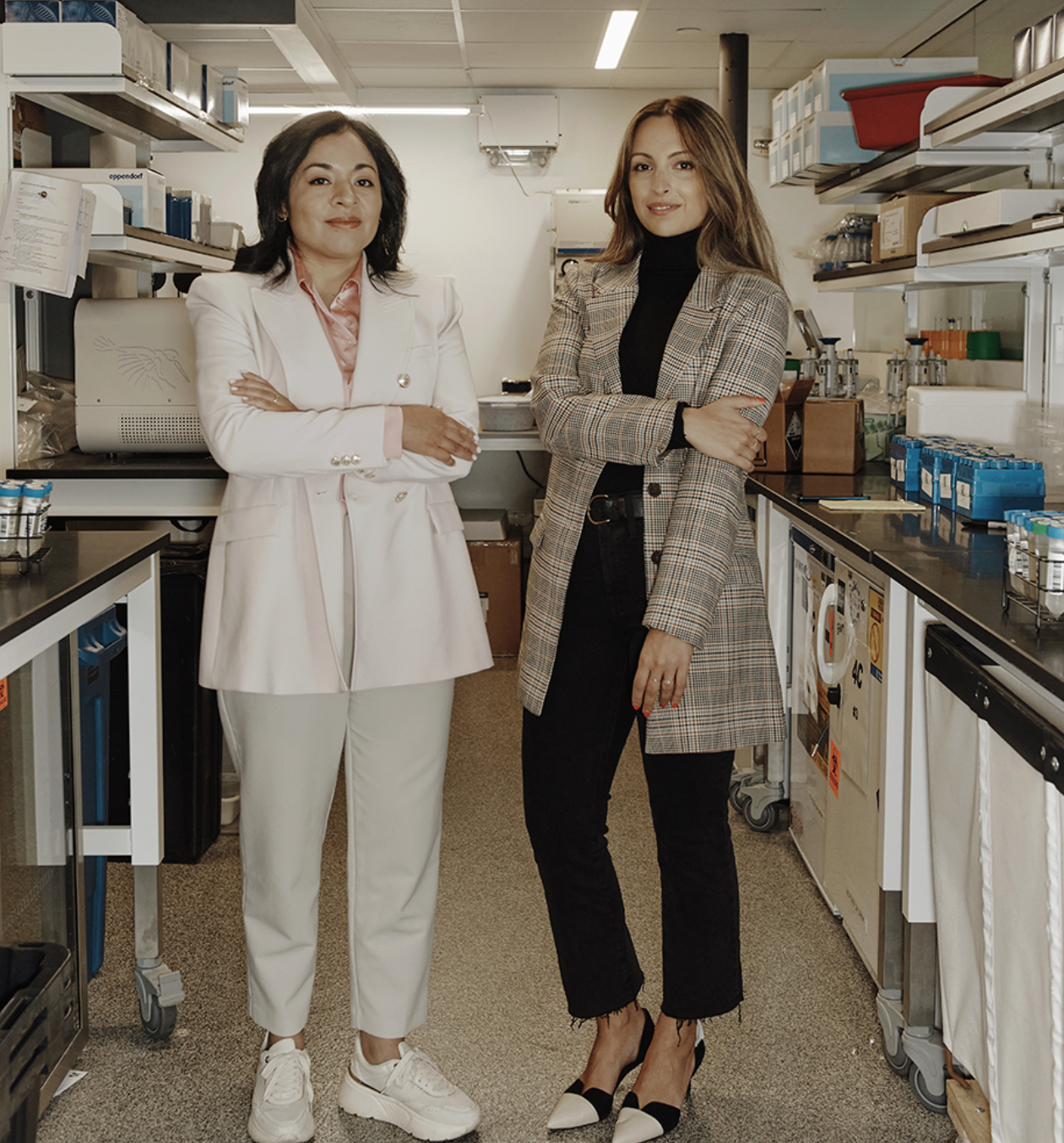
    The new round of funding, announced in June, was for an undisclosed amount. It was led by private investment firm Valor Equity Partners. Biobot also added three people to its board of directors, including Vivjan Myrto, managing partner and venture capital firm Hyperplane. Myrto said he has watched Biobot grow since Hyperplane first invested in it in 2017, the year the company was founded by Mariana Matus and Newsha Ghaeli.

    Biobot was born as a research project at the Massachusetts Institute of Technology when Matus was a PhD student and Ghaeli was a research fellow. In the beginning they took on the top priority of public health experts and local lawmakers – tackling the U.S. opioid epidemic. In 2020, when COVID-19 struck, Biobot shifted to help local governments detect spikes in the disease. Today, Biobot can measure up to 51 substances, ranging from viruses that cause influenza and measles to high-risk substances like fentanyl and cocaine.

    Seeing the concentration of a substance in a sample collected from a wastewater treatment plant, helps government agencies observe trends over time and compare local sites with each other and with regional and national averages. This data can inform decisions about allocating resources to fight infections or provide drug addiction services. Biobot charges municipalities a minimum of $15,000 a year for the service.

    “Their sheer passion for solving the problem at hand was absolutely palpable for me, and it was incredibly attractive to work with,” he said.

    Biobot has predominantly worked with government agencies, but has launched a dashboard in 2024 that allows private companies to see nationwide data and trends on infectious diseases, and includes data visualizations like graphs and maps. This information could help vaccine developers recruit people for clinical trials or other companies focus information campaigns.

    Matus, Biobot’s CEO, said the company hopes to keep expanding its reach and its products. Considering the issues in accessing healthcare in the U.S., acquiring real-time health data from wastewater is a way to ensure governments know where their communities are at, without the actual necessity of people going to the doctor, she said.

    “Our health intelligence is coming straight from people, from everybody who is connected to the sewers, which is about 80 percent of [people in] the U.S.,” Matus said. “It’s a completely different way to go about understanding what’s happening, and it’s representative … We don’t need people to go to a doctor or to a hospital – we’re going to see it in the wastewater if they get sick.”

    Helping public health departments set priorities

    Biobot recently revealed average summer cocaine levels in Nantucket wastewater were as much as 50% higher than national levels. Roque Miramontes, Nantucket’s public health director, said the island town will continue to monitor levels during the winter to see how the trend evolves with population fluctuations. The information can be used to decide where to direct resources, target education, or provide recommendations for community medical providers, he said.

    Courtesy of Biobot Analytics

    An example of dashboard output from Biobot Analytics’ wastewater surveillance tools.

    “It was not a complete surprise that the results were what they were,” Miramontes said, “but it certainly helps to quantify the numbers and ensure that what is being provided from a behavioral health perspective is in line with what’s needed.”

    Biobot also helped detect two instances of increased concentrations of COVID-19 in the wastewater during the summertime, Miramontes said. Since the data was given out in real time, this allowed for fast intervention. The public health department informed local medical providers, leading to increased testing and faster treatment and diagnosis during these spikes.

    “The faster you know that, the faster you can take precautions, the faster you know what you should be testing for and what you should be treating,” he said. “That’s all valuable information that can be used, not only by medical providers but the community in general.”

    The company is able to detect infectious diseases because an individual with a virus sheds it through bodily fluids, even before symptoms appear, said Marisa Donnelly, Biobot’s director of epidemiology.  Traces of the virus can be found in samples taken from any community’s wastewater treatment plant.

    This sample is shipped off to be tested and measured at the company’s Colorado lab, where results can take up to one to four business days, allowing governments to anticipate and estimate viral activity across the country.

    “When you do this over the course of weeks to months, you can actually see trends. You see the virus in the wastewater increase or decrease in line with surges of COVID or surges of flu,” she said.

    Faster turnaround on disease prevalence

    The city of Cambridge used Biobot to measure COVID-19 outbreaks from November 2020 until 2023, when the city could not renew its contract because it had lost access to the American Rescue Plan Act funding that had covered the service.

    Sam Lipson, Cambridge’s director of environmental health, said four samples were collected biweekly and then weekly from different parts of the city. Because data was collected once a week and with a two-to-three-day delay, the wastewater data was used to complement individual case data rather than predict outbreaks.

    “That data from Biobot made it a little easier to decide [where] to place certain vaccine clinics and testing centers,” Lipson said.

    Courtesy of Biobot Analytics

    A timeline of Covid-19 levels at a single site as assessed by Biobot Analytics’ wastewater surveillance technology.

    How communities use wastewater tracking varies, Donnelly said, noting that “a community that has really rigorous or really robust case tracking or reporting of hospitalizations, the lead time for wastewater is going to be less than it would be in a community where you don’t have good data.” She added that “If a community already has really amazing COVID data, wastewater is more confirming what’s going on in that community, though you still do get a little bit of a lead time.”

    The benefits of having real-time wastewater data are also seen when measuring concentrations of drugs and opioids, as traditional substance data usually relies on overdoses or toxicology reports that tend to be delayed, Donnelly said.

    Previously, the company worked with the U.S. Centers for Disease Control (CDC) from 2022 to 2023 to expand the National Wastewater Surveillance System (NWSS) as a way to detect COVID-19 and mpox across the country. Now, the company is forming a partnership with a federal agency – Biobot wouldn’t say which one – to apply its data on drug use.

    “Before Biobot, the whole concept of getting health data out of sewers didn’t exist,” Myrto said. “Our hope is to save millions of lives, to make millions of lives far better … and even bring this data to pharma companies to be a lot more targeted.”

    This story is part of a partnership between Cambridge Day and the Boston University Department of Journalism.

    This story was updated to correct the photo credit and caption on the photo of Biobot’s co-founders.