Category: Waltham Times

  • Medford voters rally around zoning, better help in schools

    The local election can be generally split into two groups — one calling themselves Our Revolution Medford, boasting membership of five incumbents, and the other going independent and with one incumbent, Councilor George Scarpelli.

    There are 14 candidates racing for the seven available seats on the City Council and nine school committee candidates gunning for the six spots. Mayor Breanna Lungo-Koehn ran unopposed for her second term.

    As the commuting hours wrapped up on election day, many parents and young homeowners raced to the polls just before 8 p.m. to get their vote in.

    “Hopefully, the new people get in,” said Medford resident Bob McGinley.

    One mother, Kaur Rajwinder, a 45-year-old Medford resident of 10 years who works at CVS, said she is voting for her children’s safety.

    “No bullying in schools,” she said, standing outside Andrews Middle School, where she just voted.

    Her child, who goes to Andrews, comes home from school every day with stories of bullying and fighting, she said.

    “It’s disgusting,” she said. “I need to [see] improvement.”

    Even in a city where the system is “good” and teachers are nice, she said, it’s still important to make sure schools remain non-violent places.

    Audrey Chialdelli, a 31-year-old attorney, said she felt good to see all the engagement online surrounding today’s election.

    “People get out and get involved in local issues,” she said. “It’s not a big area, so it definitely feels like your vote matters more.”

    The big thing Chialdelli hopes city councilors will focus on — and she’s not the only one, she said — is definitely zoning. She said people around her have gotten pretty passionate about the rezoning initiative, and she said it’s what she hears the most about with regard to today’s local elections.

    “I think it’s kind of hit a point in a lot of areas around here where rent really is really the driving issue for people’s living expenses,” she said.

    Her husband, Matthew Chialdelli, also 31, said he agrees with a lot of what his wife said, but he also said he was surprised by some of the issues he’s looked up for today’s election.

    “It feels like some of the issues are maybe more divisive than normal,” Matthew said. “But Medford is a smaller town than [the rest of] the Boston area, it’s just important that people show up to vote.”

    For Jamie Rice, he agrees with public opinion that zoning should be the top priority for the city councilors. He also hopes the new School Committee focuses on a more holistic approach to education and said he found the points on after-school care most interesting.

    “I think [elections] are all equally important,” Rice said, rushing into the polling station just before it closed.

    Daisy Levine is a journalism student. This story is part of a partnership between Gotta Know Medford and the Boston University Department of Journalism.

    This article was originally published on November 3.

  • Arlington International Film Festival celebrated its 15th year

    Monsters of all kinds filled the Copley Society of Art.

    Two towering inflatable tentacles greeted guests recently at the Arlington International Film Festival’s kickoff party, which opened with a reading of Maurice Sendak’s “Where the Wild Things Are.” From there, attendees were invited to create masks or draw creatures of their own creation.

    The festival, which celebrated its 15th anniversary, opened with an interactive party that brought creative types and the community together. Over the four-day festival at Arlington’s Capitol Theatre, 127 films from 29 countries were screened.

    Paige Roehrig, executive director of the Copley Society of Art, said her organization offered its space in Boston for the event because it aligned with her goal of bringing people together to celebrate art.

    “Our thinking was to activate art by cultivating more play, that’s something that’s really lost in film festivals,” said Amber Krasinski, founder and CEO of IvyHill Strategies, which did promotion, content design and other work for the festival. “Spaces you can be creative for the fun of it, with filmmakers and creatives coming together.”

    Krasinski got involved with the festival a year ago after its executive director, Jaina Cipriano, approached her with a vision. Film had always been her dream career, she said, and this opportunity to bridge community and creativity felt like a way to emphasize that anyone can be a filmmaker.

    Cipriano bought the festival two years ago from the founders and longtime directors April Ranck and Alberto Guzman. Conceived with the mission of bringing the international to Arlington, the festival has evolved to activate local art and artists.

    “Honestly, my biggest goal is to make Boston a little weirder,” Cipriano said. “I get a lot of feedback that Boston is very puritanical and people aren’t interested. I don’t think that is true. There are so many of us who want things that are strange or surprising.”

    It is important to have spaces where artists can gather, Cipriano said, because it often takes a community to produce a film.

    “Afters,” a 14-minute film showcased in the festival, was co-directed by cousins Hannah Doyon and Liam Donovan. Doyon, an Arlington native, said having her film shown in the Capitol was like a homecoming, as the theater was the first place she ever saw a movie on the big screen.

    Doyon and Donovan have a second film coming out soon. After visiting film festivals across the country, they said festivals like the Arlington International Film Festival are what any artist would hope for in an event.

    “Festivals that stand out are the ones that give opportunities to emphasize the artists,” Doyon said. “It is impossible to make a movie on your own. Being able to connect and invite people into your process is what makes you improve.”

    Cipriano’s wants to keep expanding the festival by incorporating more events, like the kick-off party, and providing a space to foster collaboration and creativity. Cipriano said, “Arlington is kind of a secret little hotspot,” she said. “People always forget it.”

    “A very lofty goal I really hope for is a small movement of transformation,” Cipriano said. “Seeing stories can really change our lives. Even just a small moment that changes someone’s perspective can open up their lives.”

    This article was originally published on November 3.

  • ‘A lot of great unknown’: Brookline’s food pantry, community fridge brace for demand amid SNAP uncertainty

    Volunteers packed food during setup for service in Brookline Food Pantry’s Marion Street location on Wednesday, Dec. 6, 2023. Photo by Andrew Burke-Stevenson

    Brookline’s food providers are anticipating increased need as the federal government shutdown threatens to interrupt Supplemental Nutrition Assistance Program benefits this week.

    More than 1.1 million Massachusetts residents rely on SNAP to help buy food, including 2,613 in Brookline , or 4.1% of the town’s population, according to state data. 

    The town is home to several efforts to aid food insecure residents, including the Brookline Food Pantry, which serves over 600 families across three locations, said Executive Director Elizabeth Boen. The pantry has seen a “small uptick” in clients over the past few weeks since the government shutdown began Oct. 1, Boen said, and it is anticipating increased need in November.

    “We are ready to listen to [families] and hear from them in terms of what additional help they need, and prepare for that,” she said. “There’s a lot of great unknown out there, and it’s really just trying to be prepared as best as possible for whatever can happen.”

    The pantry is open at United Parish at 15 Marion Street on Wednesday, Thursdays and Fridays and at 226 High Street on Tuesdays. It also has a location at 55 Egmont Street which is only available to Brookline Housing Authority residents.

    President Donald Trump had said SNAP funding would lapse if the shutdown continued into November, which it has. Two federal judges ruled Friday , however, that the Trump administration cannot cut off benefits and ordered the U.S. Department of Agriculture to distribute money owed to SNAP recipients “as soon as possible.”

    Trump later posted on social media that he needs guidance from the courts on how to proceed and indicated there would be an inevitable delay in distributing benefits. He did not say whether he would appeal the rulings.

    It is unclear whether benefits will be cut off and when they might flow again.

    Mary, a 71-year-old retiree who didn’t want to give her last name, said she has been a patron of the Brookline Food Pantry for two years. Mary is not a SNAP recipient, but she has no income and is not on Social Security.

    During her visit to the pantry Thursday, Mary said the number of patrons was a “huge difference” from the previous week. However, she noted the pantry began signups for clients to receive chickens or turkeys for Thanksgiving, which could contribute to increased traffic there.

    “This is a real busy time at food pantries,” Mary said. “Even with SNAP coming out as normal, they do get swamped.”

    Jacob Walters, a 76-year-old retired attorney, has volunteered at the Brookline Food Pantry since 2020. He regularly works on Brookline Thrives, a Brookline Food Pantry program that sends public school children from low-income families home with extra meals and snacks for the weekends.

    The loss of SNAP benefits could be especially taxing on families, Walters said. Parents may opt to feed their children over paying their rent, leading to housing troubles, he said.

    “The circle gets wider and wider of the problems that it causes for these families, and so that’s the thing that breaks my heart,” he said.

    Paul Epstein, a social worker at Brookline High School, said the students he’s spoken to are not always tuned into political news, but the SNAP impacts have “permeated through.”

    “They know what’s going on,” he said “They’re angry and horrified at the administration, but that’s the case even before the SNAP benefits ran out.”

    The impact of the SNAP cuts is simply that “food insecure families will be more food insecure,” Epstein said. He said it’s important not to lose the sense of urgency should the cuts stretch for weeks and months.

    Beyond the Brookline Food Pantry, residents struggling with food insecurity can access groceries through “Jennifer Coolfridge,”  Brookline’s community fridge located at 7 Station Street. The fridge is powered by community partners, including Brookline For the Culture, Brookline Muslim Friends and Bowls4Boston.

    Members of Bowls4Boston, Elijah Nott and Kyra Friedman, install the door of the community fridge enclosure in June. Photo by Milena Fernsler

    Zahriyannah Karakashian-Jones, a 27-year-old nonprofit manager and co-founder of Brookline For the Culture, has volunteered with the community fridge since 2020.

    While the fridge has been successful, volunteers have struggled to raise money to stock the fridge each week, Karakashian-Jones said. Need has increased in the past year or two, she said, with the volume of elderly, homeless and disabled individuals in Brookline and coming from Boston who rely on the fridge to eat.

    “There’s a number of ways that we’ve seen the needs grow, and we just can’t sustain it right now,” Karakashian-Jones said. “In a town like Brookline that has so many resources at its disposal, I just can’t imagine that about 6,000 people in our community are potentially going to go hungry in a couple weeks.”

    Community fridge volunteers are raising money to provide immediate relief to families in need, and they are working on creating an updated website with links to donate or sign up to clean the fridge, said Hajar Delshad, a 46-year-old physician assistant who volunteers with the fridge.

    “Many people are doing this in a ‘love thy neighbor’ type of way, that we just feel like we are obligated to help others, and nobody should really be going to sleep hungry in Brookline,” Delshad said.

    Even if the freeze is undone, the timeframe for when residents will get their SNAP benefits back is unknown, Karakashian-Jones said.

    Delshad called on Brookline community members to help residents in need but also on the Trump administration to restore SNAP benefits.

    “My hope is that the community at large steps up to help and fill these needs, but in a bigger picture I’m hoping that the government does its job to serve the needs of the people that they’re elected to serve,” Delshad said. “It’s really dysfunctional when people’s lives are at risk in this way.”

  • Dot’s Akiba Abaka takes helm at Afro-American Artists Center

    By Madyline Swearing

    Akiba Abaka can’t remember her life without art. Like many children, the Jamaican native dreamed of being a Hollywood star. When asked what she wanted to be when she grew up, Abaka would respond with “directing” or “filmmaking.” The advice she got back was: “Begin in theatre.”

    She wasn’t quite sure what theatre was, or how it would help her reach her goals, but as a child in Dorchester, endless opportunities were right around the corner. 


    Now, nearly 30 years later, Abaka has stepped into a new role in the arts, as interim executive director for the National Center of Afro-American Artists — one of New England’s premier institutions celebrating African-American and African diaspora art, history, and culture.

    In middle school, Abaka joined the Strand Theatre’s Teen Players program, a now-defunct initiative that connected Boston teens with theatre production and stage acting. The after-school pastime sent her tumbling down a rabbit hole at the theatre. She soon became an usher at the Strand and was invited to participate in its summer internship. It was during that time, Abaka says, that she became captivated with production and house management.


    “Because I was so amazed, I was never late,” she said. “I showed up to rehearsals on time. I showed up to usher on time. I did my best because I was engaged and I wanted to be there.”  


    Abaka’s history with the NCAAA goes back to 2004, when she walked up to the green employee entrance door of the center in Roxbury and asked then-Executive Director Edmund Barry Gaither if she could use the space to throw a party.

    “The Cosby Show” actress Phylicia Rashad was in town, acting in a play at the Huntington Theatre, and Abaka wanted to welcome her and the cast to Boston. But at 24 years old, she couldn’t afford any local venues.


    Gaither shared with her that the center had once served as a social hub when celebrities performed in the theater district, hosting talent like bandleaders Duke Ellington and Cab Calloway. Abaka’s welcome party was a chance to bring that back, and Gaither said he’d partner with her for the event. 


    While Rashad couldn’t make it to the celebration, Abaka says, she had a great time with the other cast members and connected with Gaither afterwards. She remembers he said, “You’ll be ripe and ready when we need you.”


    “In Akiba, with whom I’ve been in conversation for almost a decade,” Gaither said, “I saw someone who very much shared the vision that had been so inspiring to me, but was prepared to tailor that vision for a new millennium,.”


    After dedicating more than half a century to the center, Gaither says it will be hard to walk away. He plans to stay involved, though not directly. With his new free time, he said, he’s looking forward to writing and traveling. The Caribbean, Senegal, and Ghana are on his list.


    “Every organization needs change,” Gaither said. “No matter how devoted you are or how good you are, you have to roll over and make space for the new future.”


    Akiba is currently immersed in her work teaching theatre at a public K-8 school in Roxbury, where she was recently recognized with the Wasabi Fenway Bowl Honor Roll. Since 2020, the award has honored more than 150 educators who have gone “above and beyond” to support their students with more than $140,000 of educational support granted.


    Matt Shuman, the former instructional transformation coach at Abaka’s school, nominated her for the award. He works with teachers to improve instructional plans, and he noted that working with Abaka has completely changed his perspective.
    “She is a jewel for the city,” the fifth-grade teacher said. “She is continuing a beautiful chain of leadership [at the NCAAA], and I couldn’t imagine a better person for it. I’m excited to bring my students to visit her.”


    Abaka’s role as executive director will be made official after a fundraising campaign. She will oversee the center’s visual and performing arts programs, including its 55th annual production of “Black Nativity, ” an African-American gospel rendition of the classic nativity story, adapted from Langston Hughes’s 1963 production. 


    As for the future of the NCAAA, Abaka says fortification of the center’s infrastructure is a priority. The museum’s first floor is undergoing renovations to include restrooms and improve ADA accessibility. Renovations will continue to the third and fourth floors, Abaka said, and will hopefully open to the public in the near future. Once infrastructure is reinforced, priorities will shift to sourcing diverse talent and growing the center’s board, donor base and philanthropic community.


    “Arts allow us to see ourselves and experience each other in unexplainably spiritual and divine ways that are integral to managing and understanding the human condition,” Abaka said. “Growing up in Dorchester, such a beautiful arts town, I never felt like I didn’t belong. That’s what I want to instill and pass on.”


    This story is part of a partnership between the Dorchester Reporter and the Boston University Department of Journalism.

  • Mejia says second-place finish is proof of ‘grassroots’ prowess

    By Madyline Swearing

    Despite a lack of endorsements in a City Council campaign that she says some considered “adversarial,” Julia Mejia amassed nearly 17 percent of all votes in an eight-way race last week, securing a fourth term as an at-large councillor.

    Mejia said it was risky — and unconventional — to run independently without alliances. But as a “grassroots” campaign, she added, running without the backing of an incumbent leader was more than political — it was personal. 

    “I don’t do political endorsements, because it undermines democracy, and I’m not a king or a queen maker,” Mejia said. “My strategy is to demonstrate that real people have real power if we are intentional about building it.” 

    The Dorchester resident finished second to Ruthzee Louijeune with 47,422 votes, according to unofficial election results. JD Moore, her campaign’s policy and communications director, noted that most of her community outreach was done via social media platforms like Instagram and Facebook, WhatsApp group chats, and traditional canvassing.

    Moore said initiatives like “Day in the Life” videos, which showed the behind-the-scenes action of running a campaign while serving in office, brought a level of “authenticity” that was effective in connecting with voters and involving them in the process.

    Mejia serves as chair of the council’s Committee of Government Accountability, Transparency and Accessibility, and as vice chair of the committees for Education, Housing and Development, and Labor, Workforce and Economic Development.

    “Democracy was on the ballot, and my seat was very much at risk because I didn’t have any of those resources or money,” Mejia said. “I think my campaign could be a really good case study for grassroots, especially what’s happening on the national scale in terms of how people feel about elected officials.”

    She raised $124,095 in campaign contributions, according to the state’s Office of Campaign and Political Finance (OCPF). Of the four incumbent at-large candidates, Mejia raised the second-highest amount of contributions, OCPF reports show.

    Her campaign ultimately lacked the funds for mailers and advertisements, so social media were used “strategically” in place, with most of the contributions wspent on core staff members, Moore said. Volunteers were not paid.

    Mejia’s core team comprised Moore, a deputy and primary campaign manager, a field manager, and a volunteer base. Moore, Mejia’s field director, and her deputy campaign manager all graduated from Boston public schools within the last five years, which, Moore said, was necessary in creating an “intergenerational” team.

    Mejia was the first in her family to graduate from the BPS system and college. She immigrated to Dorchester from the Dominican Republic when she was five years old.

    “Our field director was 19, and then we had folks all the way into their 50s and 60s,” Moore said. “It was pretty intentional.”

    Last week, Mejia said she would seek election as the City Council president, a post she sought in 2023 as well. On Monday this week, the news site MassterList reported that Councillor Gabriela Coletta Zapata of East Boston has secured the votes needed to win the presidency.

    “We’re a body of 13, and there’s a need for all of us to be in communication and in community around who is going to be the leader of our body,” Mejia said. “I wanted to create an opportunity for democracy to play out publicly and to help educate our constituents about what is the City Council president’s role, how it works and why it matters.

    In her next term, Mejia plans to focus on establishing a collaborative co-governance model while continuing to pursue policy goals concerning education and housing.

    “I always tell people…even if they don’t vote for me: Just put their own name on the ballot,” Mejia said. “Politicians start paying attention to the neighborhoods that are voting…that changes the way they treat us.”

    This story is part of a partnership between the Dorchester Reporter and the Boston University Department of Journalism.

    This article was originally published on November 11, 2025.

  • At UMass Boston, young voters take up Markey vs Moulton match

    As US Rep. Seth Moulton mounts a challenge to Sen. Ed Markey built on the idea of generational change in Washington, The Reporter discussed the still-emerging contest with young voters in recent weeks..


    By Nathan Metcalf

    When US Sen. Ed Markey’s campaign blasted out endorsements last month from the state’s young Democratic leaders, it revived memories of the “Markeyverse,” the online coalition of progressives that helped propel the now-79-year-old into his third US Senate term in 2020.


    Five years later, however, as US Rep. Seth Moulton mounts a challenge built on the idea of generational change in Washington, some younger voters say their enthusiasm for incumbents is tempered by frustration with an aging Democratic establishment and the rising costs of daily life.

    UMass Boston students Nick Gentile and Arianni Pimentel said they want to believe in the system but feel alienated by it.


    “Neither of them really seems like a great option right now,” Gentile said.


    “I just want someone who’s not going to forget about people like us once they win,” Pimentel added.
    In a deep-blue state like Massachusetts, it’s likely that Moulton, often cast as a more moderate Democrat than the progressive Markey, will have to convince young voters that his pragmatism won’t come at the expense of marginalized groups.


    Those fears likely stem largely from remarks he made after Donald Trump’s victory over Vice President Kamala Harris last November, when he told The New York Times, “I have two little girls. I don’t want them getting run over on a playing field by a male or formerly male athlete, but as a Democrat, I’m supposed to be afraid to say that.”


    The comment spurred the resignation of his top political aide and drew backlash from progressives nationwide.
    With Markey’s age and Moulton’s remarks about the LGBTQ+ community emerging as their biggest liabilities among young Democrats, the two lawmakers have begun what promises to be a grueling, yearlong intra-party fight over the future.


    Inside the political science office at UMass Boston, Gentile and Pimentel – two undergraduates juggling classes, jobs, and rent – said the race feels distant from their lives.

    “I don’t really know much about either of them,” Gentile said. “But we need people who actually know what it’s like to be our age right now. It’s not about identity; it’s about whether you can afford rent, food, or even the T.”


    Gentile, a political science major from Dorchester who works part time on campus, said he’s undecided but, drawn to the idea of younger leadership, leaning toward Moulton. “He’s younger,” he said. “Maybe he’d understand how hard it is to make it work.”


    Across the desk, Pimentel, a psychology major who grew up in Dorchester and now lives in Quincy, said she’s budgeting how to eat through November while waiting on her SNAP benefits. “Everyone’s struggling to pay for groceries, not just one group,” she said. “I support LGBTQ+ rights and everything, but I think politicians talk about that more than they talk about how expensive life’s gotten.”


    Simone Alcindor, a freshman political science major from Medford, offered a different view. A member of Our Revolution Medford and the Suffolk University Democrats, he calls himself “a proud progressive” and said he’s firmly behind Markey.


    “He’s still a fine leader,” Alcindor said. “Younger doesn’t mean better. We’ve seen what happens when people talk about change but don’t fight for it.”


    Alcindor said Moulton’s comments about transgender Americans show why progressives must stand their ground. “It’s incredibly regressive,” he said. “You don’t win by throwing people under the bus. The right’s going to come after us no matter what, so we might as well stand up for what we believe in.”


    He said that after meeting Markey at a campaign event in Springfield, he saw that “he had more energy than most people in the room. He listens, and he actually shows up. That matters.”


    Alcindor said he’d “probably prefer” Ayanna Pressley if she entered the race but worries a three-way contest could split the progressive vote. “I think Pressley and Markey are on the same team,” he said. “It’s the kind of leadership that actually represents us when the time comes.”

    Pressley, a progressive Massachusetts congresswoman, has not announced a Senate bid, though her office has not ruled out the possibility, fueling speculation she could join the race.


    Abdullah Beckett, a 26-year-old Dorchester resident, UMass Boston graduate, and community organizer, said his support for Markey comes from a more local place shaped by rent hikes, long commutes, and a sense that many working-class voters have stopped believing politics can change their lives.


    Beckett works as a field organizer for Mayor Wu and plans to volunteer for Markey’s campaign this fall. “I like Markey. I think he’s real,” Beckett said. “He shows up for stuff that matters here, not just in Cambridge or downtown.”


    He said that while he respects Moulton’s service as a Marine, the congressman’s remarks about transgender athletes “felt like he was trying to play both sides.” 


    That kind of hedging he argued, drives away younger voters. “That’s not leadership,” he said. “You can’t be afraid to say what’s right just because it’s not polling well. That’s the kind of stuff that loses people my age.”


    For many of his neighbors, Beckett said, affordability outweighs ideology. “It’s hard to tell people in Dorchester that voting’s gonna change their rent,” Beckett said. “We’re paying Boston prices on fast-food wages. Until somebody fixes that, it’s hard to care who’s fighting who.”


    “He’s old, sure,” Beckett added of Markey, “but I’d rather have somebody old who listens than someone young who doesn’t.”


    This story is part of a partnership between the Dorchester Reporter and the Boston University Department of Journalism.

    This article was originally published on November 12, 2025.

  • Hotel’s sudden shutdown sends guests scrambling for rooms

    Hotel’s sudden shutdown sends guests scrambling for rooms

    By Martina Nacach Cowan Ros

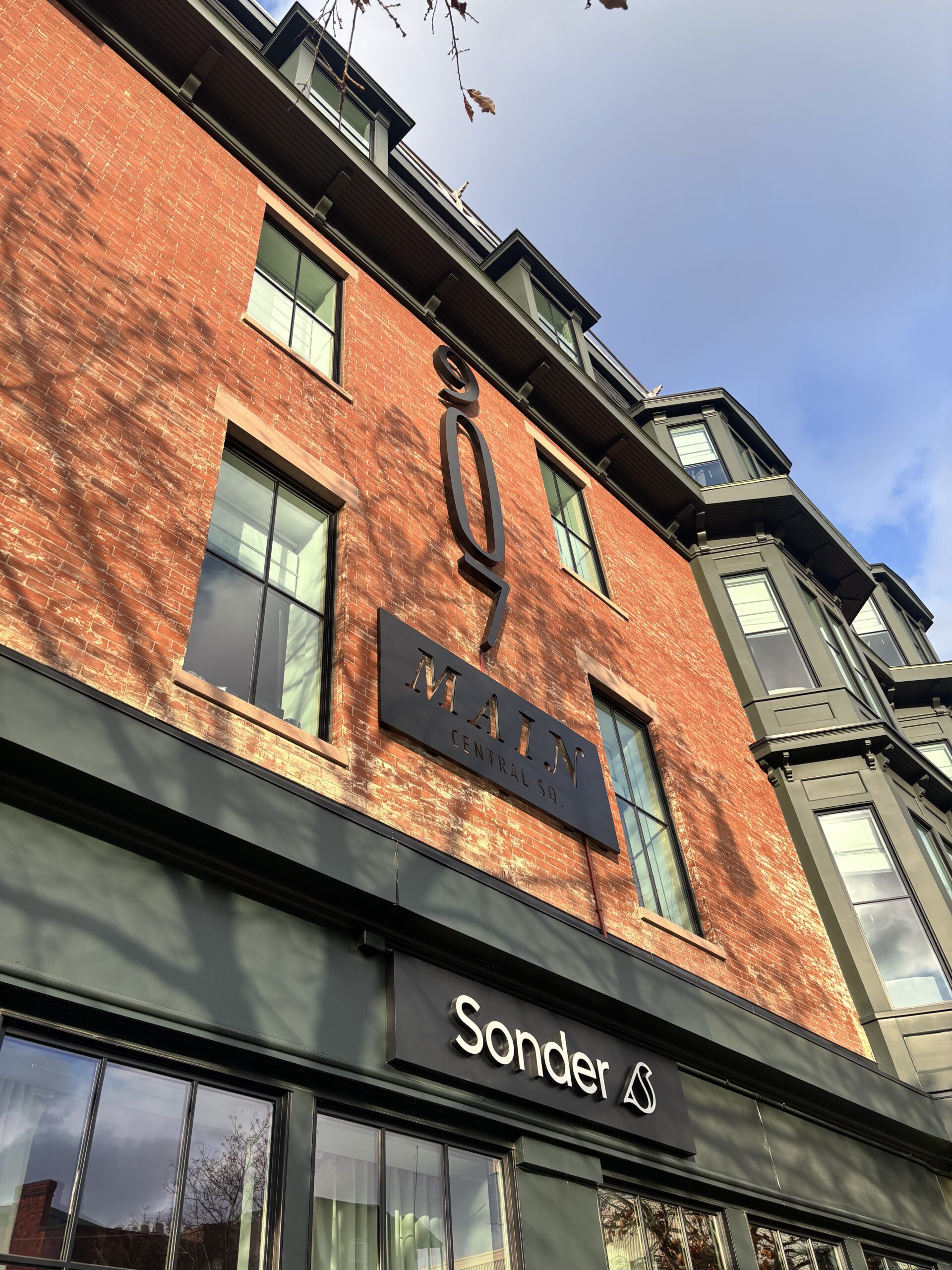
    Employees and guests of 907 Main Hotel Central Square were informed Sunday afternoon that they would have to evacuate the building by 9 a.m. Monday after Marriott ended its licensing deal with Sonder, the company that manages the hotel.

    Sonder, which operates short-term rentals and boutique hotels around the world, then announced Monday it would file for bankruptcy, leaving current and future guests with invalid reservations.

    The two restaurants in the building, Althea and Saigon Babylon, remain open for business as usual.

    One guest was Abba Dandata, who after traveling for 22 hours from Nigeria,  arrived at 907 Main Hotel Central Square Tuesday afternoon to find that the hotel he had booked was no longer operating. He recalled that he had received an email Monday saying his card transaction with the hotel had failed, and he updated the card to confirm the reservation – after the company had announced it was filing for Chapter 7 bankruptcy.

    “I’m feeling terrible,” he said. “Coming all the way from Africa, almost 22 hours of flight, it’s terrible.”

    Dandata, who came to Cambridge for a conference at the Massachusetts Institute of Technology, said he would find another hotel until his flight back Saturday. He tried to call Sonder customer service, but got a recording advising him to call Marriott instead.

    Cambridge Day got the same recording when calling Sonder. A Marriott customer service representative said she could not connect a reporter with someone who could speak for Marriott and suggested emailing the company. Marriott did not immediately reply to Cambridge Day’s email.

    Booking breakdown

    In a statement, Sonder blamed the company’s bankruptcy on problems with integrating its booking technology with Marriott’s. “We are devastated to reach a point where a liquidation is the only viable path forward,” Sonder interim chief executive officer Janice Sears said. “Unfortunately, our integration with Marriott International was substantially delayed due to unexpected challenges in aligning our technology frameworks, resulting in significant, unanticipated integration costs, as well as a sharp decline in revenue arising from Sonder’s participation in Marriott’s Bonvoy reservation system.”

    Patrick Barrett, owner of the Central Square hotel building, could not immediately be reached Tuesday afternoon.

    A sign saying Notice of Closure greeted guests at the Hotel Sonder in Cambridge. By Martina Nacach Cowan Ros

    People entering the hotel lobby in Central Square Monday and Tuesday were met with a small sign reading “notice of closure” propped up at the front desk. With staff having been unexpectedly let go on Monday, the notice and a bright neon sign reading “Hi there, traveller” were the only greetings that guests received in the lobby.

    “The Sonder Property is now closed. All operations have ceased as of November 10, 2025,” said the notice, signed “The Sonder Team.” “We sincerely apologize for the disruption and thank you for understanding.”

    Upon seeing the signs, some people made reservations at nearby hotels  while others worried about how they would be refunded what they had paid. Two guests mentioned Tuesday that they each had paid $1,000 deposits.

    Full water gallons remained unopened behind the desk, and stacked packages sat next to the abandoned lobby, waiting for guests to pick them up.

    Three friends who also traveled from Nigeria for an MIT conference came to see if their package had arrived at the hotel. They were supposed to check into the hotel Monday but booked another room at a Boston Marriott after they received an email informing them their reservation had been canceled.

    Packages stacked next to the registration desk at Hotel 907 on Main after its operator, Sonder, closed abruptly. By Martina Nacach Cowan Ros

    Since they booked the hotel through Marriott, they spoke to a customer service representative, who told them it would take five to ten days for a full refund.

    Dahiru Muhammed, one of the friends, called the experience “disappointing.” He said that when he received the email from Marriott informing him of the hotel’s closure, he was still receiving emails reminding him to check in that same day.

    Anas Yazid, another of the friends, said he was on his layover in Frankfurt when he got the email. He was unable to do anything about it since the email told him to call customer service, which he couldn’t do while he was traveling abroad.

    “[You’re in] another country, and then they send you an email to call customer service,” he said. “How do you call customer service?”

    This story is part of a partnership between Cambridge Day and the Boston University Department of Journalism.

    This story was updated to note that the two restaurants in the building remain open.

    This article was originally published on November 12, 2025.