Category: Waltham Times

  • Digitizing the legacy of The Group School

    Digitizing the legacy of The Group School

    By Martina Nacach Cowan Ros
    Scattered across homes throughout Cambridge are faded curricula, pictures and worksheets stored in boxes that preserve the memory of The Group School, an alternative high school run democratically by students and teachers in the 1970s.

    Now, more than 50 years after the school’s founding, these boxes are being opened and their contents digitized onto a new website dedicated to the school’s legacy, with the intention of inspiring educators and students today.

    Among those trying to keep this memory alive are two former Group School faculty members and four alumni who met Saturday at a house in North Cambridge to reminisce. Sitting around a small circular table, they listened to a recording of a song they’d produced decades ago. As the tune filled the room, laughter broke out when the chorus rang: “Don’t forget your working class!” It was more than a lyric; it was the school’s essence.

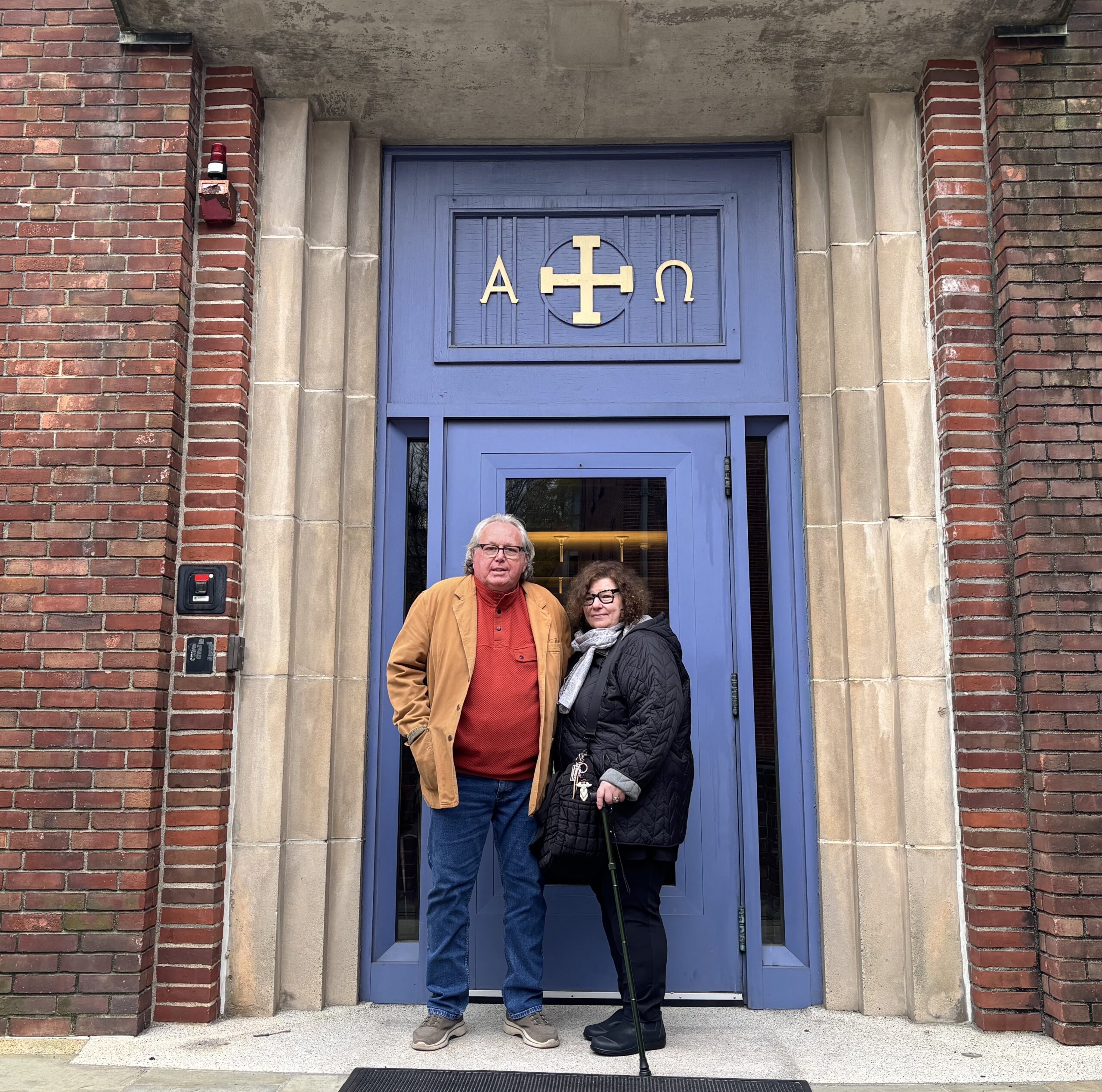
    The nonprofit school operated from 1971 to 1982 in locations around Cambridge, eventually settling in an old auto repair garage on Franklin Street in Central Square. Students from working-class families in Cambridge – some with learning disabilities or difficulties at home, many from housing projects – were recruited by faculty and other students, and each year the enrollment grew, ultimately graduating around 600 students who attended tuition-free.

    To maintain its democratic system, The Group School held weekly community meetings and set up committees where students held the majority vote, giving them the say in matters like the curriculum, fundraising and evaluations. Class sizes were small, and each student had an adviser and received individualized assistance and tutoring when needed.

    The school intentionally explored working-class identity through all courses, from having history classes like “Growing Up Working Class: Hard Times,” to assigning problems and projects related to working-class identity. The faculty used alternative teaching methods to target student anxiety in subjects like math, developing a “Math Survival Skills” course that encouraged students to share their experiences in math classes and assess their own skills.

    Although the school shut down more than 40 years ago, its students and teachers have reconnected to share its legacy through a free web resource, The Group School Archive and Resource Center. This online archive includes a documentary of the school, books and pamphlets on its curriculum, excerpts of Zoom conversations alumni and ex-faculty held to reconnect, and written reflections from these members.

    Alison Gobbeo Harris, a web team volunteer, was one of the three students who were part of the first graduating class in 1972. She was a founding member who saw the school through its inception in 1969, when it was just a cohort of students at a local school’s teen center.

    “One of our teachers used to say we were building the plane while we were flying,” Harris said as she laughed.

    As the free school movement of the 1960s encouraged separation from formal schooling, Harris said, Cambridge became a place for The Group School to flourish, encouraged by a liberal school committee and mayor. The presence of major universities was a huge influence, as much of the school’s volunteer faculty were Harvard and MIT graduate students.

    “Doors were opening to us, and we were really integrating and unifying across these big institutions – and the city was thrilled about it,” she said. “Doors were opening into labs at MIT, and classrooms and labs at Harvard.”

    The Group School provided a safe place for adolescents who came from working-class backgrounds, faced difficult family circumstances like domestic violence or had learning disabilities, Harris said. The democratic nature of the institution allowed for a personalized, inclusive education that went above normal formalities, she said.

    A second chance at school

    Sean Tevlin was a founding student member of The Group School who had moved through public and parochial schools during his adolescence, when he had been told he had a learning disability. He started working at age 12 and began missing many classes, which eventually led him to stop attending school altogether. He eventually enrolled in The Group School and graduated in 1973. He said it was the only system that worked for him.

    “As a student, coming from the public schools, you felt like you were just a number,” he said. “This was a second chance, an opportunity.”

    Everything that was most foundational, most important for me as an educator, I learned at TGS. Steve Seidel, professor emeritus at the Harvard Graduate School of Education.

    The school was dependent on volunteers at the start, but quickly was able to create paid positions for faculty and student coordinators, ending its first year with two staff positions and four faculty members. In subsequent years, it had roughly a dozen paid staff.

    Steve Seidel, professor emeritus at the Harvard Graduate School of Education, was 19 when he signed up to teach a six-week theater program at The Group School. He ended up teaching the program for 10 years while also becoming arts program coordinator, a role that he said made him the educator he became for the rest of his career.

    “Everything that was most foundational, most important for me as an educator, I learned at TGS,” he said. “Part of what I learned there, is that to create a really strong school, it has to be a place that has clear and strong values and is dedicated to living by those values.”

    A break with the traditional

    The commitment to its values was shown through the grading process, where students and teachers produced written evaluations of each other.

    “It did not make the assumption that is traditional, which is that the teacher knows what the student learned, right, or is even in a position to fully judge the student’s performance,” he said. “The teacher can see things and should say what they see, but it was not built on a fundamentally hierarchical set of assumptions about teacher authority.”

    Adria Steinberg, a founding faculty member and academic coordinator at The Group School, said the school had run thanks to volunteer work, and federal and state grants. Although this gave the school freedom, by the 1980s money had become tight, she said. The school closed in 1982.

    Still, the topics that the school tackled in the 1970s – such as race, class and gender roles – are equally relevant today, making its curricula valuable to today’s educators looking for change, she said.

    “The need to discuss identity and group issues of those kinds is still there, so we knew that a lot of the curriculum would be relevant,” she said. “It just seemed like, rather than keep the stuff in our basement or throw it out, can’t we make it available to people?”

    This story is part of a partnership between Cambridge Day and the Boston University Department of Journalism.

    This article was originally published on November 10, 2025.

  • Winchester Town Meeting to vote on updated MBTA Overlay District, boosting affordable housing

    Winchester Town Meeting to vote on updated MBTA Overlay District, boosting affordable housing

    By AAYUSHI DATTA

    Town Meeting members will vote on an amendment to the town’s MBTA Overlay District that would bring affordable housing standards in line with the rest of Winchester while maintaining state compliance.

    Article 4, proposed by the Planning Board, would update the MBTA Overlay District — a zoning area that allows multifamily housing near public transit. The change would align the overlay’s affordable housing rules with those already in place with the two underlying zoning districts, the Center Business District and the Main Street Mixed-Use District.

    Under the current MBTA overlay rules, projects of 10 units or more must designate 10% of their homes as affordable. When that 10% results in a decimal, the number is rounded down.

    “So by example, if you have 19 units, you’re developing 10% of 19, [affordable housing would] be 1.9 units, and that would round down to one unit,” said Planning Board Chair Brian Vernaglia.

    Article 4 would change the rounding method so that any fractional unit rounds up instead. So 1.9 units would round up to 2 affordable units. The proposal also lowers the threshold for when affordable housing requirements apply, from 10 units to six, again aligning it with neighboring districts.

    The MBTA Communities Act, a state law passed in 2021, requires towns with access to MBTA service to create zones that allow multifamily housing near public transit. Winchester approved its overlay district in spring 2024, covering about 48 acres within a half-mile of the town’s MBTA station.

    The town in August 2024 received a letter from the Attorney General’s Office confirming Winchester’s overlay district as being in compliance.

    Both the Executive Office of Housing and Livable Communities and the Massachusetts Attorney General’s Office have confirmed that if the amendment passes, Winchester will remain in full compliance with the state law, Vernaglia said.

    “A fairly simple amendment to our compliance,” said Town Planner Taylor Herman.

    Herman said one of the original requirements for the compliance was to submit an economic feasibility analysis, completed in June 2025. The study cost $7,500, out of the $15,000 allocated at a prior Town Meeting. The town had to work with an outside consultant to prove to the state what the inclusionary housing number could be.

    I-ching Scott, a Winchester resident and member of the Housing Partnership Board, said Article 4 balances adding affordable units to meet SHI goals with requirements that are reasonable for developers.

    “My concern as a resident of Winchester is that long-term folks cannot afford to move into something within town,” Scott said. “So encouraging development near town would be great for those right-sizing.”

    The change could help Winchester move closer to its state-mandated goal of having 10% of its housing stock qualify as affordable, Scott said.

    “We’re just a little bit shy of 5% right now, and we just really backlogged getting that going,” she said

    Vernaglia said the zoning will not change that number substantially and that the proposal has faced little pushback.

    “This is a very small change,” he said. “We’ve received unanimous favorable action from the Select Board, the Housing Partnership Board, and the Affordable Housing Trust in favor of this article.”

    While the original MBTA zoning law was “challenging and controversial” statewide, Herman said, this amendment simply fine-tunes what Winchester already passed.

    “The biggest thing is that it doesn’t disrupt our compliance,” he said. “It just makes our rules consistent.”

    If approved, the amendment will go to the Attorney General’s Office for review before being added to the town’s bylaws.

    For residents like Scott, that would mark progress — not a dramatic shift, but a meaningful one.

    “It’s a really positive step for our town,” she said. “I hope Town Meeting members will vote yes.”

    This article was originally published on November 2, 2025.

  • CRLS boys’ soccer beats Lexington on penalty kicks

    CRLS boys’ soccer beats Lexington on penalty kicks

    By Layla Penn
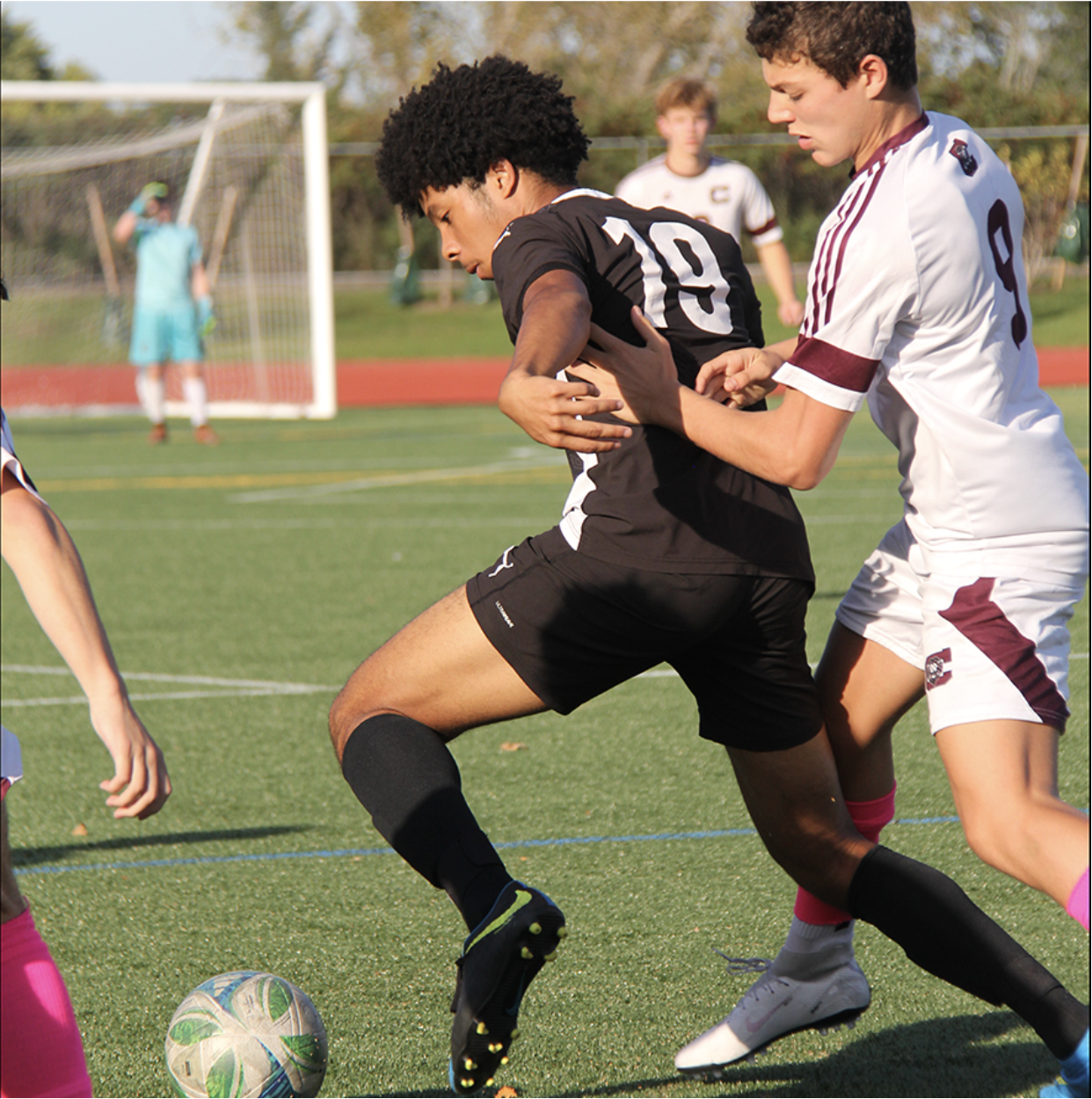
    With the score tied at 1 after 90 minutes and two 10-minute overtimes, the Cambridge Rindge and Latin boys’ soccer team was exhausted, but knew it had a job to finish.
    Most soccer players see penalty kicks as a nightmare, but the Falcons saw opportunity against Lexington. Co-captain Rhys Brown, Angel Nunez, Jamilsom Parker and Xavi Mir, all seniors, each drove home their penalty kicks, and sophomore goalkeeper Winslow Livley saved the second one from Lexington. That put CRLS ahead 4-2. The team watched as Livley faced his fourth shot, bounded to the top right corner of the net and pushed the ball into open air.

    There was a sharp moment of silence before the team ran to embrace Livley, confirming their win, followed by Cambridge students rushing onto the field to celebrate with the team.

    “It was incredible, there’s not really much to describe it with,” Livley said. “This was my first state (playoff) game, so I got into the flow, played just like I would in a regular game, and did a little bit extra in the end to save it all.”

    That kept Cambridge undefeated at home this season, and into its first Sweet Sixteen appearance in nearly two decades.

    All the scoring was in the first half, with a quick goal from the Minutemen followed by a Cambridge header from senior captain Giacomo Cotta-Ramusino Zambotti, set up by Xavi Mir off a corner kick.

    The 9th-seeded Falcons threatened multiple times in the second half through Rhys Brown, his brother Michael, and sophomore Mathis Asnake. On the defensive end, Livley and senior defender Angel Nunez made several plays to keep the Falcons in the game until the penalty kicks. Livley made a big save with two minutes left in the second overtime to keep CRLS alive.

    For the senior captains this was a new kind of special. “We’ve always been the team that’s been out in the first round, giving high-fives at the end, crying,” said Michael Brown, a co-captain along with his brother. “It was a great feeling to be out here with my brothers being seniors, big senior class. I just love being with them, and I love dancing with them.”

    Head coach Niko Emack (disclosure: Emack is a member of Cambridge Day’s board), said that goal keeper coach Noah Lawless, 23, has been a huge asset to the team, and credited him for Livley’s success. Lawless praised Livley, saying “I’m incredibly proud of Winslow. It’s not really something you can teach. It’s just straight instinct, and he just saved us today.”

    Emack also named Nunez, a Dual County League All-Star, the man of the match. “Angel was instrumental to our win,” Emack said. He noted that in addition to scoring his penalty kick, Nunez marked Lexington’s striker the whole game.

    In the quarterfinals CRLS will play 8th-seeded Weymouth, which beat Plymouth North 3-0.

    This story is part of a partnership between Cambridge Day and the Boston University Department of Journalism.

    This article was originally published on  November 5, 2025.

  • “Electric” play has CRLS boys’ soccer poised for the playoffs

    By Layla Penn
    The crunch of leaves on the ground mixes with the smack of soccer balls as Cambridge Rindge and Latin School players run shooting drills. Their breath hangs in the cold air, and they are still practicing in mid-fall,  signs that playoff season has arrived.

    The Falcons clinched a playoff spot with a 10-3-3 record, a leap from last year’s 5-9-4 finish. They are ranked ninth in the state in Division I, the largest high schools.

    The players credit the team’s success is a testament to their chemistry and growth, built through connections on and off the field. “This year, the team has never been more connected,” said senior captain Giacomo Zambotti, 17.

    To build up stamina for their upcoming season, they put a heavy emphasis on team bonding. “It really just started at preseason,” said senior Andre Baraglia, 17. “We would go jogging with the team, building connections with the players.”

    The team had four freshmen, a record – in years past it usually had one or two. With young players on a competitive team, the varsity veterans make an effort to make the players feel comfortable. “I don’t feel out of place,” said freshman Leo Davis,14. “The team takes really good care of all the freshmen.”

    Davis said senior captain Rhys Brown, 17, has been a role model both on and off the field.

    Head coach and former CRLS player Niko Emack, 29, leads a staff of five assistant coaches, four of whom are Cambridge Rindge and Latin alumni. For Emack, the team’s impact goes beyond the field. (Disclosure: Emack is on the board of Cambridge Day.)

    He said its success has brought pride and unity not only to the players but to the city. While Cambridge is considered a wealthy community, he said, many players come from families that struggle financially and often go overlooked.

    “The diversity that we bring to the field, the different playing styles and backgrounds, racially, socioeconomically, religiously, we see right here on the field,” Emack said. “It’s a statement about who we are as a city school.”

    The talent gaps on the team are so minimal that each of the nearly two dozen players has been getting minutes on the field, Emack said.

    “The players know that they can’t get complacent,” he said. “Everyone has to stay sharp, and give effort and because of that I think it’s created a healthier team dynamic.”

    Goalkeeper coach Noah Wallace, 23, said the players’ passion was on full display during senior night, where Zambotti tied the game against Newton North in the final five minutes after the Falcons trailed for most of the match. “Electric all around,” Wallace said.

    The team will find out its first playoff opponent at 1 p.m. Saturday, when the Massachusetts Interscholastic Athletic Association releases the bracket.

    Emack doesn’t care who they play or what the outcome is.

    “If we lose, if we tie, if things don’t go our way, and we work hard – I think we’ve built a strong team that we can live with those results if we know we give 110%,” Emack said.


    This post was updated Nov. 1, 2025, to correct that Falcons boys’ soccer has a 10-3-3 record.

    This article was originally published on October 31, 2025.

  • As delivery apps boom, town still wrestling with safety and enforcement on the streets

    As delivery apps boom, town still wrestling with safety and enforcement on the streets

    By Hazel Nystrom

    Getting takeout has never been easier. But many Brookline residents say that convenience is increasingly posing a danger to pedestrians and bicyclists.

    Delivery apps like DoorDash, Uber Eats and Grubhub can bring your favorite restaurants to your doorstep. But some Brookline residents say delivery drivers on mopeds, electric bikes and electric scooters are driving recklessly to earn more income.

    A surge in higher-powered e-bikes has changed how cyclists, motor vehicles and pedestrians share the streets. Residents are unclear where mopeds and e-scooters, which many delivery drivers use and can reach up to 30 mph, belong in traffic.

    The Class 1 e-bikes found at Bluebike stations are pedal-assist only and shut off when riders reach 18 mph. Class 2 and 3 e-bikes are throttle-assisted, with maximum assisted speeds of 20 and 28 mph, respectively.

    Jonathan Klein, a town meeting member and longtime Brookline resident, said high-powered e-bikes shouldn’t share bike lanes with traditional cyclists.

    “I think we need to keep creating more segregated bike lanes with really clear signage about who’s allowed in them and who’s not,” Klein said. “Class 3 electric bikes that are really more like mopeds should be riding on the streets, not in bike lanes.”

    Mopeds are allowed in bike lanes and public ways under state law but are restricted from recreational paths. E-bikes are allowed everywhere traditional bikes are, except natural surface trails, which are determined by local jurisdictions, according to MassBike. 

    Delivery drivers “tend to be worse than other e-bikes,” Klein said. “They’re always on a schedule. They’re always in a hurry.” 

    Neil Wishinsky, who has lived in Brookline for 40 years and is a former Select Board member, shared that sentiment.

    “I’ve seen motorized scooters with license plates in bike lanes blowing through red lights, and that’s not right,” he said. Wishinsky said gas-powered motorbikes are “an abuse of bike lanes.”

    Samantha Ramirez, a spokesperson for DoorDash, wrote in a statement that the company seeks to ensure the safety of drivers and pedestrians, and “does not incentivize speeding.”

    “The overwhelming majority of Dashers do the right thing and like everyone else, follow the rules of the road,” she wrote.

    In Boston, a proposal from Mayor Michelle Wu that passed the City Council  earlier this year will require third-party delivery apps to get a permit, prove that their drivers have liability insurance and provide the city with delivery data. Brookline town leaders have said they are watching the program, which is designed to crackdown on unsafe driving, closely.While residents emphasized delivery drivers in their complaints, some called for safer driving practices from mopeds, e-scooters and e-bikes overall.  

    Chris Uminski, 35, lives in Jamaica Plain and said he often worries for his own safety when encountering delivery drivers on high-powered vehicles.

    “If I didn’t notice them, I don’t think they would notice me,” he said. “Every time [delivery drivers are] zipping through traffic, through traffic lights, doing U-turns in the middle of rush hour.”

    Jonathan Phillips, 33, member of the Pedestrian Advisory Committee, often cycles in Brookline. Phillips, along with Wishinsky and Klein, called for increased police presence and traffic enforcement, but he said he believes it should be targeted at cars.

    “I would like to see more of a police presence at some of the intersections that are particularly egregious,” Phillips said, referencing the intersection at Washington Street and Beacon Street as “the worst one,” he said.

    Traffic officer Kevin Sullivan said Brookline police have seen an increase in complaints about mopeds and scooters on the street. The police department launched a Micro-Mobility Education Initiative in September, with the intent to educate residents on the rules for different modes of transportation.

    Along with handing out informative flyers, Sullivan said police “started to have this campaign where officers on bikes will be assigned to certain intersections focused on making contact with violators, and in some cases even citing them.”

    Notable areas include Harvard Street and Beacon Street, Washington Street and Beacon Street and Brookline Village, Sullivan said.

    Jessica Chicco, chair of Brookline’s Immigrant Advancement Committee, expressed concerns about increased police presence on the street, however. 

    “We have to be really thoughtful about just jumping to kind of criminal enforcement, or increased traffic enforcement,” she said. “Criminal enforcement of traffic violations can lead to interactions with the criminal system, which for many people can have a disproportionate impact.”

    Chicco said that disproportionate impact is “certainly true for non-citizens, as we have seen with, I think now, the three ICE arrests that have happened in Brookline.” Brookline.News has since reported on a fourth ICE arrest

    Asked about concerns for ICE exposure, Sullivan reiterated BPD’s emphasis on education through the department’s new initiative.

    “I know people are concerned about that, but you know, that’s not what this is about,” he said. “This is about a safety initiative where we are trying to keep everyone safe.”

    Maxim Sheinin, a town meeting member, said Brookline residents should consider priorities for enforcement. Sheinin uses an e-bike to commute to work in Cambridge and drop his two kids off at school. 

    “If we want greater enforcement of traffic rules, what should be the priority?” he asked. “It’s definitely not obvious to me that priority should be on, you know, the E bikes and mopeds.”

    Emma Green, 22, a senior at Boston University living in Coolidge Corner, said while she often encounters delivery drivers, she worries more about how cars react to mopeds.

    “If they’re in my blind spot, and I don’t see them, it would take two seconds, and I could just kill them,” she said. “I am worried for their safety more so than my own.”

    Klein said he hopes the blame for unsafe driving practices isn’t being placed entirely on the individual drivers.

    “Because of the economic structure of their industry, they’re under huge amounts of pressure to save time, because that’s how they can make a decent living,” he said. “They’re not paid enough.”

    While some delivery apps offer an optional hourly pay option, delivery drivers from Uber Eats, DoorDash, and Grubhub are all primarily paid by delivery.

    Though many residents shared their concerns about unsafe practices from delivery drivers, they also largely spoke in favor of sharing the roads and expanding Brookline’s infrastructure to prioritize bikes and e-bikes.

    “I often feel like the conversation is trying to pit bicyclists and pedestrians against mopeds and E-bikes, when the reality is that we can have multimodal transportation,” Phillips said. “But we can’t just let the cars be king.”

    This article is part of a partnership between Brookline.News and the Boston University Department of Journalism.

    Correction: A previous version of this article mischaracterized comments by resident Jonathan Phillips. The article has been updated.

    This article was originally published on November 5, 2025.

  • Basketball for the small provides fun for all

    Basketball for the small provides fun for all

    By Layla Penn
    On a dreary Sunday afternoon, children in Kyrie Irving jerseys and Lakers uniforms ran through basketball drills in the Baldwin School gymnasium.

    The hoops were lowered, making it easier for the kids to make shots. Coaches stood underneath the nets rebounding balls back to the children, smiling regardless of whether they went in.

    Despite the occasional outbursts from kids trying to entertain their peers, the children put on their game faces when the Cambridge Basketball Lab coaches reentered the focus to a game of sharks and minnows, in which the kids try to dribble past the coaches without getting tagged.

    “I love coaching the younger kids – they make me feel young again,” said Douglas Pinto, 37, first-year coach for the Cambridge Basketball Lab.

    Kids participate in a drill at a Cambridge Basketball Lab practice in October 2025.The Cambridge Basketball Lab, a mentorship and skill development program, expanded to the elementary school level for six weeks this fall. Previously, the program offered practices year-round only for middle and high school students four nights a week.

    In the new elementary school program, children in grades 2 through 5 can participate in basketball workouts. The coed practices take place on Sunday afternoons in two sessions – one for second and third graders, the other for fourth and fifth graders.

    “The way they talk, the way they dance, they’re so funny, and it’s just fun to hang around these kids,” Pinto said.

    A desire to make a difference

    The Cambridge Basketball Lab was founded in 2023 by Matt Meyersohn, 44, a mentor and coach for the group, and a former volunteer basketball coach at Cambridge Rindge and Latin for the last 22 years.

    Meyersohn had been diagnosed with stage three colon cancer in 2022 and went on medical leave. “For the first time in my adult life, I wasn’t working,” Meyersohn said.

    During his recovery, Meyersohn said, he thought of ways he wanted to make an impact on the world and community. Kids would ask him if he would come and shoot balls with them, but he realized that gyms often weren’t available. So he went to the Cambridge school committee to ask how they could create opportunities for kids to practice basketball at no cost.

    The Cambridge Basketball Lab was born, with funding and partnerships with organizations such as the Red Sox Foundation and the Boston Celtics Shamrock Foundation. The Cambridge recreation department helps cover staffing costs, to pay the coach mentors, and Cambridge Public Schools donates gym space.

    Creating opportunities

    The partners include Harvard University’s women’s basketball program, which has had five players become coach-mentors over the last two years. The team also invited 30 girls from the program to use the Harvard women’s basketball facilities for a private practice with the team.

    After the success of the middle and high school program, Pinto said, Meyersohn pitched the idea to him to expand the practices to more age groups. He said there were not many opportunities for younger kids to play basketball, and parents were asking around for suggestions on where their kids could go.

    This fall, elementary school students participate in basketball practices for six weeks. Although the Cambridge Basketball Lab practices are free of charge year round for middle and high school students, the six-week elementary program costs $30 for Cambridge residents and $60 for non-residents. The fee helps cover the cost of having more coaches at the elementary level.

    “My son looks forward to coming every week.” Kanoe Williams.

    The new elementary school program has been exciting for parents like Kanoe Williams, 42, who sits in the auditorium and watches her son, Rex, play.

    “It has been so uplifting,” Williams said. “It’s really nice to come to a place that’s inclusive, that’s focused on helping all the kids gain skills and not coming into any conflictual competition with each other.”

    Beyond Meyersohn and Pinto, the program has volunteer coach-mentors like Baileigh Sinaman-Daniel and C.J. Leonard, who are student-athletes at Lesley University, and Deondre Starling, who went to CRLS and was coached by Meyersohn. Starling now runs his own nonprofit, Scholars before Athletes, which mentors kids to focus on academics while developing athletic skills.

    Williams said that she has so much respect for the volunteer coaches, and that Meyersohn is her son’s favorite coach.

    “My son looks forward to coming every week,” Williams said.

    This story is part of a partnership between Cambridge Day and the Boston University Department of Journalism.

  • Residents weigh in on priorities for Arlington’s next comprehensive plan

    Amber Morris and Paige Albright

    About 50 residents gathered Thursday night to offer opinions about housing, economic development and other issues as town leaders shape Arlington’s new comprehensive plan, which will serve as a roadmap for the next decade.

    The workshop, held in the Arlington High School cafeteria, was led by the Department of Planning and Community Development and consultants from Stantec, a global design and planning firm that specializes in sustainable development and community planning.

    The comprehensive plan, called AmpUp!, will inform town budgeting and decision-making while measuring progress over time. “This is a plan for the community, by the community,” said Claire Ricker, the director of town planning and community development.

    Residents weighed in on major focus areas like housing, transportation, open space and economic development. Poster boards lined the walls, and attendees used stickers to rank which topics they felt deserved the most attention. Here are three that stood out as top priorities.

    Housing

    Housing in Arlington topped both the community survey results and poster board activity. With prices continuing to climb, many attendees said affordability must be at the center of the new plan.

    “I have nine people in my office. I only have one person who lives in town, and nobody can afford it,” Ricker said. “It’s just that expensive. Even folks who work here are struggling with affordability.”

    The key question, said Redevelopment Board member Stephen Revilak, is whether the town will increase zoning that allows for more multifamily housing. Currently, 58 percent of Arlington’s land is zoned only for single-family homes, according to Stantec data.

    Arlington hopes to be inclusive and address historic issues affecting the affordability crisis, Revilak said, adding that the comprehensive plan must prioritize the issue.

    “I’m interested in living in a diverse community,” said Gabrielle Bromberg, 36, an Arlington resident and doctor. “There are a lot of suburbs around Boston that are historically redlined to not be diverse. I’m interested in changing that so my kids can grow up in a place where not everybody looks like them.”

    Economic development

    Economic development was another key theme of the night and one that town officials admitted was underemphasized in Arlington’s 2015 master plan.

    “The 2015 plan was weak on economic development,” Ricker said, noting that the community has indicated that it wants the new plan to strengthen local businesses and diversify the town’s commercial base.

    Stantec’s team shared data gathered from their surveys from last spring and summer that had been shared with the community. Response indicated a high demand for increasing, improving and maximizing economic opportunities.

    Stantec principal and urban planner Steve Kearney said community voices are at the core of the team’s planning. Stantec has implemented a different approach than what was seen in 2015 by further connecting within the community.

    Kearney said the team is developing strategies to reach all members of the community by making themselves more accessible by attending local events like farmers’ markets and town day. Stantec is trying to meet people where they are, rather than waiting for the community to come to them, Kearney said.

    Natural resources and open space

    Open space and recreation was ranked the second most important topic by respondents in a Stantec survey. Some residents discussed protecting green areas, improving access to parks and trails, and preparing for the impacts of climate change.

    Ann LeRoyer, the only member from the 2015 master plan implementation committee serving on the new advisory committee, said she reapplied to help ensure continuity in areas beyond the headline issues of housing and economic development.

    “I wanted to be sure that there was some continuity, advocating for those areas, because I knew that housing, business development and transportation would be covered,” LeRoyer said. “I just wanted to be a voice for people who cared about these other topics and to ensure everything is built in a sustainable, thoughtful way.”

    The use of native plants and increased tree canopy to reduce urban heat islands and decrease stormwater runoff will continue to be implemented through the open space and recreation 2022 plan.

    “I am passionate about thinking about how we can work towards climate goals as a town,” said Sarah Gignoux, an Arlington resident and professor at University of Massachusetts Lowell, “even as the federal government is abandoning its work there.”


    This story, originally published Oct. 31, 2025, is part of a partnership between YourArlington and the Boston University Department of Journalism.