


At an exhibition last week, the students of NuVu High School showed off architectural models, a prototype of a ropeless lobster trap and a three-course meal. All of these are examples of the “new view” of education this project-based school in Cambridge provides to its 27 students.
Creativity and collaboration are the main ingredients at work in NuVu, which began as Saeed Arida’s 2009 Ph.D. dissertation at the Massachusetts Institute of Technology’s School of Architecture and Planning. Arida wanted to know whether elements of architecture design studios could meet the needs of secondary school students. He put his model into practice by establishing NuVu in Central Square in 2010.
It was not a full high school in the beginning. Students from Beaver Country Day School spent a trimester there for innovation and creativity training. After some students showed interest in remaining longer, NuVu began its transition to a four-year high school. The school graduated its first student in 2016 and earned nonprofit status last year. Tuition is $49,000 a year, and financial aid is available.
NuVu’s curriculum is built on a studio model. Every four weeks, students from different grades are placed together in classes – studios – where they work in groups on a project while receiving weekly feedback. At the end of each studio, students present their results at an exhibition.
Students typically work in their studios every day from 8:30 a.m. to 1:30 p.m. and afterward spend an hour on math or English project-based studios. On Fridays after 1:30 p.m., they have peer learning groups, where students teach each other different skills – including one in which they build robots that battle each other.
At Thursday’s exhibition, student teams presented PowerPoints on their projects to the audience, which consisted of faculty, parents and student peers. Afterward, guests were invited to walk around the school’s space to examine students’ projects, prototypes and ask questions. One team had designed a video game. Another had made a prototype for a ropeless lobster trap. Others presented how they had created and cooked a three-course meal based on two countries’ shared history
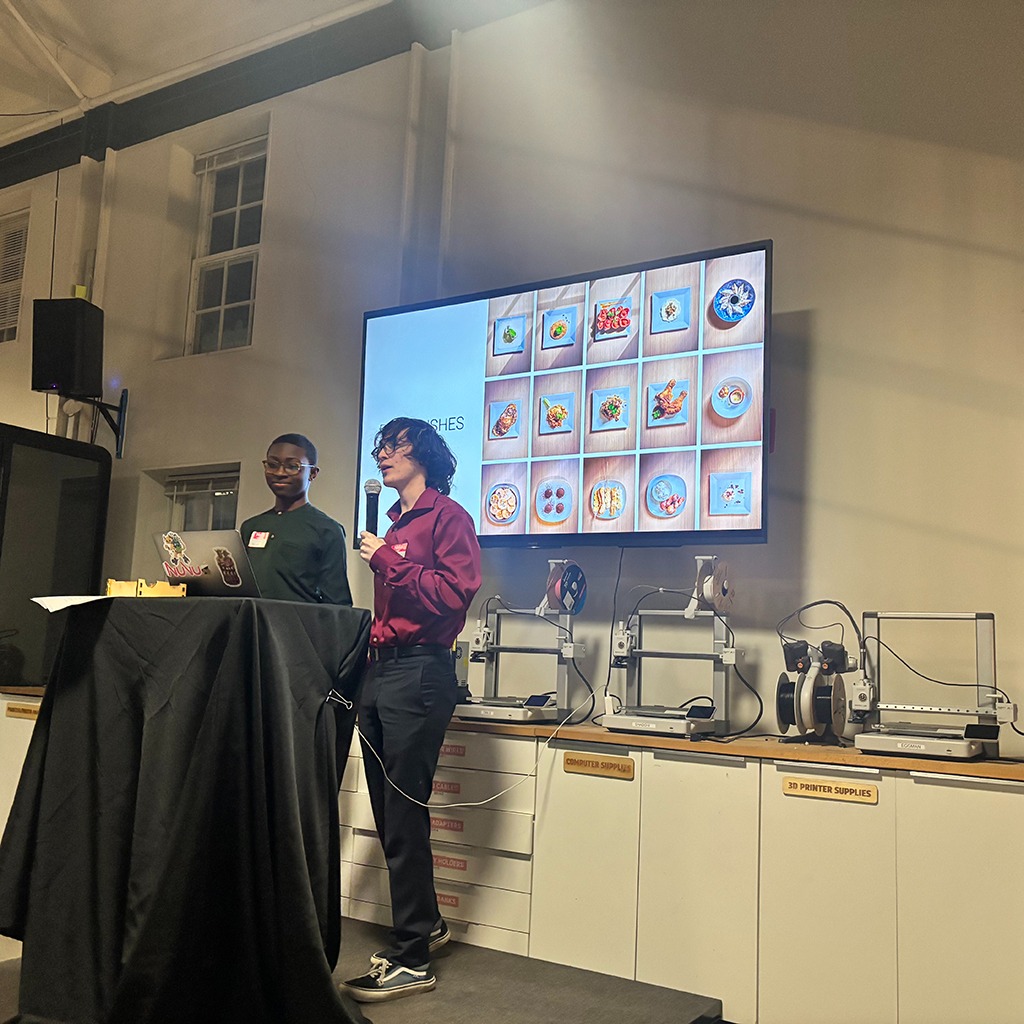
Jasmine Horowitz, a 16-year-old senior who has spent four years at NuVu, was part of a team that prepared architectural plans for a real client who wanted to transform a family ranch into a creative hub for individuals who had been incarcerated.
“I’ve never even thought about architecture,” Horowitz said, “so there is a really steep learning curve, but it’s super rewarding to use these programs and have such a high-quality result.”
The small classes make for a tight-knit community, where seniors and freshmen work together as peers and go to each other for feedback, Horowitz said.
Zephryos Koyanis, a junior who was one of the three students who created and built a prototype of a ropeless lobster trap, cited the easy access to technology, specialized faculty, and interaction with students from other grades as advantages of the school.
“It’s not just the coaches doing all the teaching,” he said. “Peer-to-peer learning happens all the time.”
Koyanis said the project-based method helps develop skills – like presenting, documenting work throughout the process and justifying decisions – that students will need in jobs. In his project, Koyanis said, his team created a prototype of an affordable lobster trap that is missing in the market.
“People pay you to do this stuff,” he said. “You get a ton of practical skills that look great on college applications.”
NuVu creative director Nada Elsonni, who oversees the curriculum, said different expectations for students are set depending on their grade, but collaboration is at the heart of the program. Although students have a say, most are placed in studios by faculty depending on what they sense that particular student needs.
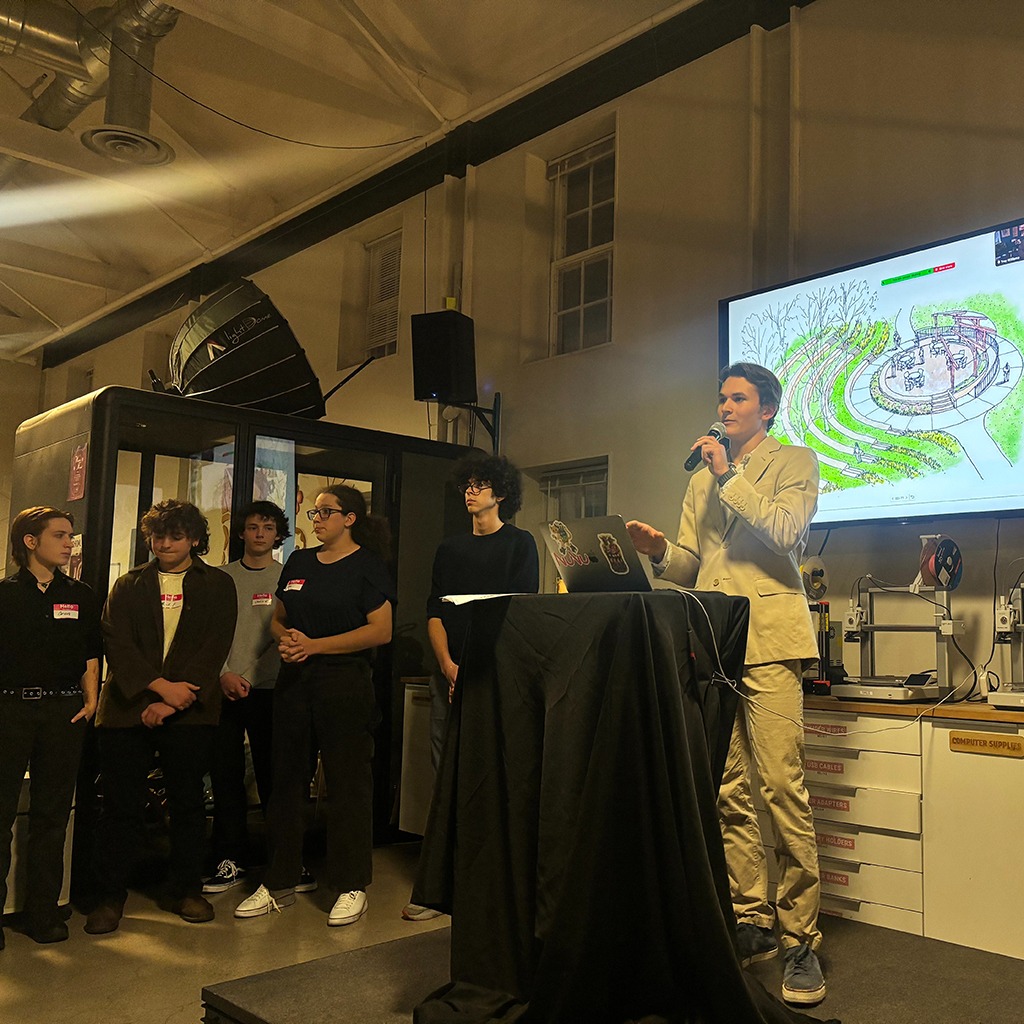
“The very core of what we do is human-centered design, which is really understanding the user needs and designing around their needs,” she said.
Arida said the school’s biggest challenge is changing the idea people have of what school should be like. NuVu’s interdisciplinary studios incorporate technology, art, design and engineering, and students learn the math or language skills they need along the way while building their confidence and ability to take feedback.
“We do school in a completely different way … everything is kind of fused together,” Arida said. “The transformation that happens with our students is that by the end of their second, third and fourth year, they start seeking that feedback to improve their project.”
Anne Perticone and David Perticone said their son, Andrew, who is a NuVu senior, thrived thanks to the school’s engaging and reflective learning process. They said they noticed an increase in his confidence and leadership skills throughout his two and a half years at the school.
“He never found himself at school, and this place, it’s home for him,” said David Perticone.
This story is part of a partnership between Cambridge Day and the Boston University Department of Journalism.