Author: Martina Nacach Cowan Ros

  • Broad Institute’s Sentinel project receives grant to prevent outbreaks

    Leaders of a groundbreaking pandemic prevention project say a $100 million grant will greatly expand their work to curb disease outbreaks.

    “The event that doesn’t exist – that is the proof our system is working,” said Dolo Nosamiefan, project manager for Sentinel, a collaboration between the Cambridge-based Broad Institute of MIT and Harvard and the Institute of Genomics and Global Health (IGH) in Nigeria. Sentinel is co-directed by the Broad Institute’s Pardis C. Sabeti and IGH cofounder Christian T. Happi.

    The Sentinel project in November won the MacArthur Foundation’s 100&Change award, gaining $100 million paid over five years. Sentinel aims to help countries like Nigeria and Sierra Leone prevent infectious disease outbreaks in low-resource areas by empowering communities and implementing surveillance frameworks for detection. Adding local capacity and know-how in these regions adds to the impact, and in particular responding more rapidly to disease incidents.

    “We’re treating very local problems, but these problems can have global impacts … A lot of these diseases, if you don’t handle it quickly enough or in the right places, they have the potential to grow into a pandemic,” said Nosamiefan.

    Al Ozonoff, director of pandemic preparedness at the Broad Institute, was Sentinel’s director of U.S. operations when it started in 2020 and will now become the managing director in phase two of the program, which begins next year. This second phase, funded by the MacArthur award, will help the project deepen its networks in Nigeria and Sierra Leone and expand into other countries in West and Central Africa.

    John D. and Catherine T. MacArthur Foundation

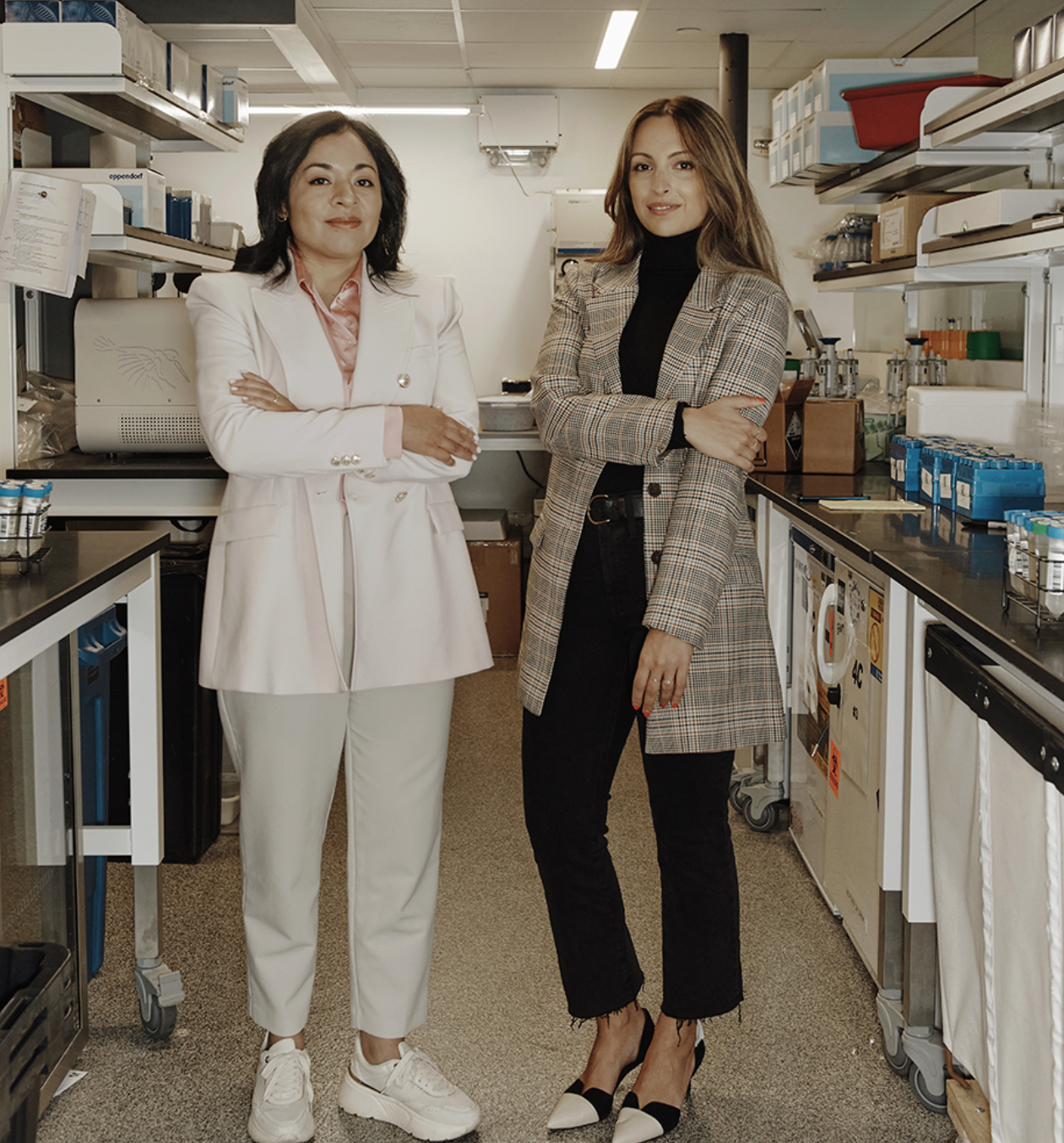
    Sentinel lab work in Owo, Nigeria.

    “The origins of Sentinel came from a deep, deep commitment to empower local communities that are most affected by outbreaks,” Ozonoff said, “so that they have the tools, the training and the technology that’s needed to provide their own response, rather than depending on others.”

    The Sentinel system aims to help countries like Nigeria and Sierra Leone prevent infectious disease outbreaks in low-resource areas by empowering communities and implementing surveillance frameworks for detection.

    The project uses a hub-and-spoke model. Each country that uses Sentinel has a single hub for high-level analysis, including genome sequencing of samples. Various spokes extend throughout the countries to perform rapid testing and send samples to the hub. These tests can help inform leaders where and how quickly a virus has spread. Right now, Nigeria has four spokes and Sierra Leone has three spokes. The next phase will introduce more spokes into these areas to help them become more prepared for outbreaks.

    “We’ve chosen some of these locations based on previous trends that we’ve observed in these countries,” said Nosamiefan. “However, emerging diseases don’t follow previous trends. We want to be better positioned in these countries to more effectively catch everything.”

    Colby Wilkason, program manager for Sentinel at the Broad Institute, said the project also works to develop new technologies to expand surveillance efficiency while ensuring these technologies work well with their country partners’ labs.

    “We create the technologies here, but then we also work very carefully and closely with our partners to make sure the technologies actually work in the country as well,” she said. “We are there to support our country partners, because that’s where the meat of the work is happening.”

    This is the third time the 100&Change award has been given out, with its inaugural round in 2017, and its second in 2021. The competition is open to organizations anywhere in the world and within any field, as long as proposals must identify a “real and measurable” solution to a current issue.

    Sentinel

    Members of the Sentinel team in Ikorodu, Nigeria.

    Chris Cardona, managing director, discovery, exploration and programs at the MacArthur Foundation, said the 18-month selection process started in May 2024 with 869 valid applications. In April 2025 MacArthur chose five finalists that included a range of projects offering solutions to urgent problems like corruption, misinformation, education and global health, Cardona said.

    “The quality of the applications was really, really high,” he said. “It was a difficult choice for the board. All of them are worthy and would use the funds well.”

    Sentinel will receive the award in installments throughout the five years and report its progress annually.

    Ozonoff said winning the grant was the “biggest thing” he has done in his career and felt deep gratitude with the recognition. “We care deeply about the work,” he said. “We think that it’s important. It meant the world to us to be acknowledged in this way. We’re always thinking about how much good this can do in the communities where we work…  The whole point of this is to make a real difference.”

    This story is part of a partnership between Cambridge Day and the Boston University Department of Journalism.

  • Broad Institute’s Sentinel project receives grant to prevent outbreaks

    Leaders of a groundbreaking pandemic prevention project say a $100 million grant will greatly expand their work to curb disease outbreaks.

    “The event that doesn’t exist – that is the proof our system is working,” said Dolo Nosamiefan, project manager for Sentinel, a collaboration between the Cambridge-based Broad Institute of MIT and Harvard and the Institute of Genomics and Global Health (IGH) in Nigeria. Sentinel is co-directed by the Broad Institute’s Pardis C. Sabeti and IGH cofounder Christian T. Happi.

    The Sentinel project in November won the MacArthur Foundation’s 100&Change award, gaining $100 million paid over five years. Sentinel aims to help countries like Nigeria and Sierra Leone prevent infectious disease outbreaks in low-resource areas by empowering communities and implementing surveillance frameworks for detection. Adding local capacity and know-how in these regions adds to the impact, and in particular responding more rapidly to disease incidents.

    “We’re treating very local problems, but these problems can have global impacts … A lot of these diseases, if you don’t handle it quickly enough or in the right places, they have the potential to grow into a pandemic,” said Nosamiefan.

    Al Ozonoff, director of pandemic preparedness at the Broad Institute, was Sentinel’s director of U.S. operations when it started in 2020 and will now become the managing director in phase two of the program, which begins next year. This second phase, funded by the MacArthur award, will help the project deepen its networks in Nigeria and Sierra Leone and expand into other countries in West and Central Africa.

    John D. and Catherine T. MacArthur Foundation
    Sentinel lab work in Owo, Nigeria.

    “The origins of Sentinel came from a deep, deep commitment to empower local communities that are most affected by outbreaks,” Ozonoff said, “so that they have the tools, the training and the technology that’s needed to provide their own response, rather than depending on others.”

    The Sentinel system aims to help countries like Nigeria and Sierra Leone prevent infectious disease outbreaks in low-resource areas by empowering communities and implementing surveillance frameworks for detection.

    The project uses a hub-and-spoke model. Each country that uses Sentinel has a single hub for high-level analysis, including genome sequencing of samples. Various spokes extend throughout the countries to perform rapid testing and send samples to the hub. These tests can help inform leaders where and how quickly a virus has spread. Right now, Nigeria has four spokes and Sierra Leone has three spokes. The next phase will introduce more spokes into these areas to help them become more prepared for outbreaks.

    “We’ve chosen some of these locations based on previous trends that we’ve observed in these countries,” said Nosamiefan. “However, emerging diseases don’t follow previous trends. We want to be better positioned in these countries to more effectively catch everything.”

    Colby Wilkason, program manager for Sentinel at the Broad Institute, said the project also works to develop new technologies to expand surveillance efficiency while ensuring these technologies work well with their country partners’ labs.

    “We create the technologies here, but then we also work very carefully and closely with our partners to make sure the technologies actually work in the country as well,” she said. “We are there to support our country partners, because that’s where the meat of the work is happening.”

    This is the third time the 100&Change award has been given out, with its inaugural round in 2017, and its second in 2021. The competition is open to organizations anywhere in the world and within any field, as long as proposals must identify a “real and measurable” solution to a current issue.

    Sentinel
    Members of the Sentinel team in Ikorodu, Nigeria.

    Chris Cardona, managing director, discovery, exploration and programs at the MacArthur Foundation, said the 18-month selection process started in May 2024 with 869 valid applications. In April 2025 MacArthur chose five finalists that included a range of projects offering solutions to urgent problems like corruption, misinformation, education and global health, Cardona said.

    “The quality of the applications was really, really high,” he said. “It was a difficult choice for the board. All of them are worthy and would use the funds well.”

    Sentinel will receive the award in installments throughout the five years and report its progress annually.

    Ozonoff said winning the grant was the “biggest thing” he has done in his career and felt deep gratitude with the recognition. “We care deeply about the work,” he said. “We think that it’s important. It meant the world to us to be acknowledged in this way. We’re always thinking about how much good this can do in the communities where we work…  The whole point of this is to make a real difference.”

    This story is part of a partnership between Cambridge Day and the Boston University Department of Journalism.

  • Losing Simon’s to construction would be ‘heartbreaking’

    Martina Nacach Cowan Ros
    Simon Yu (center, behind bar), owner of Simon’s Coffee Shop, at work on a recent day in Dec. 2025.

    Prapti Sekhon and Diego Lasso are two of the many regulars at Simon’s Coffee Shop. They meet there every other day, trading stories, life updates and advice over a small table and a few cups of coffee.

    Lasso, 67, known as the “mayor” of Simon’s, travels from Roxbury to Simon’s every day to read the newspaper – yet he rarely gets to it, interrupted by conversations with other customers. Sekhon, 31, intentionally signed a lease on an apartment based on its proximity to the coffee shop.

    Simon’s and the community around it have become part of their routine.
    Yet a new development project could displace Simon’s and the other businesses at 1740 Massachusetts Ave., which include Keezer’s & Le Couturier House of Alterations and a Walgreens. Developers plan to demolish the one-story building there next summer or fall and spend 18 to 20 months constructing a six-story, 71-unit mixed-use building.

    Simon’s Coffee Shop was founded in 2002 by Simon Yu, who bought a former coffee house, renamed it and focused on building a comfortable place offering quality products and giving people a good start to their day, he said. Soon, this small coffee shop, with its orange and yellow walls and chalkboard menu, became a community hotspot.

    Martina Nacach Cowan Ros
    Diego Lasso, the “mayor” of Simon’s Coffee Shop, talks with Prapti Sekhon in Dec. 2025. The two friends say it will be a huge loss to the community if development means the shop has to close.

    Sekhon said the community she found at Simon’s changed her life. When she moved to Cambridge, she said, she was isolated and trapped in an abusive relationship. She credits the people at Simon’s for helping her get through it. “I couldn’t have survived … and this Simon’s community came together to literally help me,” she said, teary-eyed.

    Sekhon said people from Simon’s invited her to meals when she could not afford them, walked her dog when she was going through a spinal injury, took her to appointments, and offered an ear when she needed to talk. The group of around 15 people was the first set of friends she made after she moved to Cambridge during the 2020 pandemic.

    “It was life-changing for me. And here I am, like, a year-and-a-half later, and my life has changed,” she said. When her old apartment lease ended, she found a place as close as possible to Simon’s, and today she lives only three minutes away. She said it was “heartbreaking” to hear the news of the possible temporary closure and displacement.

    Sekhon first met Lasso after she brought her golden retriever, Jelly, to the coffee shop in 2023, and he asked to pet the dog. She said Lasso, who has been coming to the coffee shop since 2012, is the group’s stable presence.

    “If Simon’s is open, Diego is there,” Lasso said, referring to himself. “There is something about the friendliness of the staff, the friendliness of Simon himself, the way the place is designed that leads [people] to want to come here and to return.”

    When he is not reading the newspaper, Lasso said, he talks with other regulars.

    “We come to have conversations about other things, about the little things,” he said.

    “It’s inevitable that I have to relocate or close, for the time being, until this project is done. I don’t know what’s gonna happen, so I don’t want to speculate [about] anything yet. — Simon Yu, owner, Simon’s Coffee Shop.

    Yu said his favorite part of having owned the space for 23 years is seeing previous regulars, who graduated from college or left Cambridge, come back years later to reminisce.

    “It’s so joyful to watch people come back five years later with kids, with [their] couples … to remember,” he said. “I’m glad to offer the space and ambience for those people who come to enjoy their time, meet new people and share new ideas.”

    He said he was informed of the new development in October, and plans to stay open until the building is demolished. Yu said he was offered a spot in the new development, but he is considering relocating because of the prospect of keeping his shop closed for nearly two years.

    “It’s inevitable that I have to relocate or close, for the time being, until this project is done,” he said. “I don’t know what’s gonna happen, so I don’t want to speculate [about] anything yet.”

    Adam Siegel, a principal of Old North Development and Cambridge’s SGL Development, which acquired the property, declined to speak with Cambridge Day but wrote in an email: “We are diligently working with both Simon’s Coffee Shop and Keezer’s Classic Clothing on space planning for their return to the new project.”

    “The Nieman Marcus of resale”

    Keezer’s Classic Clothing, founded in 1895, moved into the basement of 1738 Massachusetts Ave. after Dick Robasson bought it in 2018, when he merged Keezer’s with his own company, Le Couturier House of Alterations. The establishment sells secondhand clothing predominantly for men and offers custom tailoring.

    Martina Nacach Cowan Ros
    Keezer’s Classic Clothing, Dec. 2025. One customer called it the “Nieman Marcus of resale shops.”

    Robasson said he does not plan to move until construction begins because moving will be costly. He hopes to find a spot in Harvard Square but assumes whatever he finds will be more expensive than what he pays now.

    “We’re trying to move as late as possible,” he said.

    Katiti Kironde has been going to Keezer’s since she was a Harvard undergraduate. Now retired, she has seen the store evolve under Robasson’s management, and said the store offers expert tailoring and quality high-end merchandise that is unmatched by other secondhand stores.

    “Dick’s Keezer’s the Neiman Marcus of resale,” she said.

    She said she was upset the store might have to move but stressed she was a “devotee” and would still go wherever the store moved to.

    “It’s hard to find someone to fix stuff and fix them right,” Kironde said. “Wherever [Dick] goes, I will always follow him.”

    This story is part of a partnership between Cambridge Day and the Boston University Department of Journalism.

  • An experiment in project-based education grows

    At an exhibition last week, the students of NuVu High School showed off architectural models, a prototype of a ropeless lobster trap and a three-course meal. All of these are examples of the “new view” of education this project-based school in Cambridge provides to its 27 students.

    Creativity and collaboration are the main ingredients at work in NuVu, which began as Saeed Arida’s 2009 Ph.D. dissertation at the Massachusetts Institute of Technology’s School of Architecture and Planning. Arida wanted to know whether elements of architecture design studios could meet the needs of secondary school students. He put his model into practice by establishing NuVu in Central Square in 2010.

    It was not a full high school in the beginning. Students from Beaver Country Day School spent a trimester there for innovation and creativity training. After some students showed interest in remaining longer, NuVu began its transition to a four-year high school. The school graduated its first student in 2016 and earned nonprofit status last year. Tuition is $49,000 a year, and financial aid is available.

    NuVu’s curriculum is built on a studio model. Every four weeks, students from different grades are placed together in classes – studios – where they work in groups on a project while receiving weekly feedback. At the end of each studio, students present their results at an exhibition.

    Students typically work in their studios every day from 8:30 a.m. to 1:30 p.m. and afterward spend an hour on math or English project-based studios. On Fridays after 1:30 p.m., they have peer learning groups, where students teach each other different skills – including one in which they build robots that battle each other.

    At Thursday’s exhibition, student teams presented PowerPoints on their projects to the audience, which consisted of faculty, parents and student peers. Afterward, guests were invited to walk around the school’s space to examine students’ projects, prototypes and ask questions. One team had designed a video game. Another had made a prototype for a ropeless lobster trap. Others presented how they had created and cooked a three-course meal based on two countries’ shared history

    Students at a NuVu High School open house Nov. 20, 2025 present on a three-course meal they developed and prepared as part of the school’s project-based learning process. Martina Nacach Cowan Ros

    Jasmine Horowitz, a 16-year-old senior who has spent four years at NuVu, was part of a team that prepared architectural plans for a real client who wanted to transform a family ranch into a creative hub for individuals who had been incarcerated.

    “I’ve never even thought about architecture,” Horowitz said, “so there is a really steep learning curve, but it’s super rewarding to use these programs and have such a high-quality result.”

    The small classes make for a tight-knit community, where seniors and freshmen work together as peers and go to each other for feedback, Horowitz said.

    Zephryos Koyanis, a junior who was one of the three students who created and built a prototype of a ropeless lobster trap, cited the easy access to technology, specialized faculty, and interaction with students from other grades as advantages of the school.

    “It’s not just the coaches doing all the teaching,” he said. “Peer-to-peer learning happens all the time.”

    Koyanis said the project-based method helps develop skills – like presenting, documenting work throughout the process and justifying decisions – that students will need in jobs. In his project, Koyanis said, his team created a prototype of an affordable lobster trap that is missing in the market.

    “People pay you to do this stuff,” he said. “You get a ton of practical skills that look great on college applications.”

    NuVu creative director Nada Elsonni, who oversees the curriculum, said different expectations for students are set depending on their grade, but collaboration is at the heart of the program. Although students have a say, most are placed in studios by faculty depending on what they sense that particular student needs.

    Students at NuVu High School present an architectural design project during an open house Nov. 20, 2025. The project was done for a paying client. Martina Nacach Cowan Ros

    “The very core of what we do is human-centered design, which is really understanding the user needs and designing around their needs,” she said.

    Arida said the school’s biggest challenge is changing the idea people have of what school should be like. NuVu’s interdisciplinary studios incorporate technology, art, design and engineering, and students learn the math or language skills they need along the way while building their confidence and ability to take feedback.

    “We do school in a completely different way … everything is kind of fused together,” Arida said. “The transformation that happens with our students is that by the end of their second, third and fourth year, they start seeking that feedback to improve their project.”

    Anne Perticone and David Perticone said their son, Andrew, who is a NuVu senior, thrived thanks to the school’s engaging and reflective learning process. They said they noticed an increase in his confidence and leadership skills throughout his two and a half years at the school.

    “He never found himself at school, and this place, it’s home for him,” said David Perticone.

    This story is part of a partnership between Cambridge Day and the Boston University Department of Journalism.

  • Biobot readies for expansion into new markets

    Biobot readies for expansion into new markets

    Martina Nacach Cowan Ros

    Cambridge wastewater detection company Biobot Analytics received a new round of venture capital, which will help it expand beyond its traditional public health market and into the private sector, helping identify trends in infectious disease outbreaks and clusters of drug use.

    The new round of funding, announced in June, was for an undisclosed amount. It was led by private investment firm Valor Equity Partners. Biobot also added three people to its board of directors, including Vivjan Myrto, managing partner and venture capital firm Hyperplane. Myrto said he has watched Biobot grow since Hyperplane first invested in it in 2017, the year the company was founded by Mariana Matus and Newsha Ghaeli.

    Biobot was born as a research project at the Massachusetts Institute of Technology when Matus was a PhD student and Ghaeli was a research fellow. In the beginning they took on the top priority of public health experts and local lawmakers – tackling the U.S. opioid epidemic. In 2020, when COVID-19 struck, Biobot shifted to help local governments detect spikes in the disease. Today, Biobot can measure up to 51 substances, ranging from viruses that cause influenza and measles to high-risk substances like fentanyl and cocaine.

    Seeing the concentration of a substance in a sample collected from a wastewater treatment plant, helps government agencies observe trends over time and compare local sites with each other and with regional and national averages. This data can inform decisions about allocating resources to fight infections or provide drug addiction services. Biobot charges municipalities a minimum of $15,000 a year for the service.

    “Their sheer passion for solving the problem at hand was absolutely palpable for me, and it was incredibly attractive to work with,” he said.

    Biobot has predominantly worked with government agencies, but has launched a dashboard in 2024 that allows private companies to see nationwide data and trends on infectious diseases, and includes data visualizations like graphs and maps. This information could help vaccine developers recruit people for clinical trials or other companies focus information campaigns.

    Matus, Biobot’s CEO, said the company hopes to keep expanding its reach and its products. Considering the issues in accessing healthcare in the U.S., acquiring real-time health data from wastewater is a way to ensure governments know where their communities are at, without the actual necessity of people going to the doctor, she said.

    “Our health intelligence is coming straight from people, from everybody who is connected to the sewers, which is about 80 percent of [people in] the U.S.,” Matus said. “It’s a completely different way to go about understanding what’s happening, and it’s representative … We don’t need people to go to a doctor or to a hospital – we’re going to see it in the wastewater if they get sick.”

    Helping public health departments set priorities

    Biobot recently revealed average summer cocaine levels in Nantucket wastewater were as much as 50% higher than national levels. Roque Miramontes, Nantucket’s public health director, said the island town will continue to monitor levels during the winter to see how the trend evolves with population fluctuations. The information can be used to decide where to direct resources, target education, or provide recommendations for community medical providers, he said.

    Courtesy of Biobot Analytics

    An example of dashboard output from Biobot Analytics’ wastewater surveillance tools.

    “It was not a complete surprise that the results were what they were,” Miramontes said, “but it certainly helps to quantify the numbers and ensure that what is being provided from a behavioral health perspective is in line with what’s needed.”

    Biobot also helped detect two instances of increased concentrations of COVID-19 in the wastewater during the summertime, Miramontes said. Since the data was given out in real time, this allowed for fast intervention. The public health department informed local medical providers, leading to increased testing and faster treatment and diagnosis during these spikes.

    “The faster you know that, the faster you can take precautions, the faster you know what you should be testing for and what you should be treating,” he said. “That’s all valuable information that can be used, not only by medical providers but the community in general.”

    The company is able to detect infectious diseases because an individual with a virus sheds it through bodily fluids, even before symptoms appear, said Marisa Donnelly, Biobot’s director of epidemiology.  Traces of the virus can be found in samples taken from any community’s wastewater treatment plant.

    This sample is shipped off to be tested and measured at the company’s Colorado lab, where results can take up to one to four business days, allowing governments to anticipate and estimate viral activity across the country.

    “When you do this over the course of weeks to months, you can actually see trends. You see the virus in the wastewater increase or decrease in line with surges of COVID or surges of flu,” she said.

    Faster turnaround on disease prevalence

    The city of Cambridge used Biobot to measure COVID-19 outbreaks from November 2020 until 2023, when the city could not renew its contract because it had lost access to the American Rescue Plan Act funding that had covered the service.

    Sam Lipson, Cambridge’s director of environmental health, said four samples were collected biweekly and then weekly from different parts of the city. Because data was collected once a week and with a two-to-three-day delay, the wastewater data was used to complement individual case data rather than predict outbreaks.

    “That data from Biobot made it a little easier to decide [where] to place certain vaccine clinics and testing centers,” Lipson said.

    Courtesy of Biobot Analytics

    A timeline of Covid-19 levels at a single site as assessed by Biobot Analytics’ wastewater surveillance technology.

    How communities use wastewater tracking varies, Donnelly said, noting that “a community that has really rigorous or really robust case tracking or reporting of hospitalizations, the lead time for wastewater is going to be less than it would be in a community where you don’t have good data.” She added that “If a community already has really amazing COVID data, wastewater is more confirming what’s going on in that community, though you still do get a little bit of a lead time.”

    The benefits of having real-time wastewater data are also seen when measuring concentrations of drugs and opioids, as traditional substance data usually relies on overdoses or toxicology reports that tend to be delayed, Donnelly said.

    Previously, the company worked with the U.S. Centers for Disease Control (CDC) from 2022 to 2023 to expand the National Wastewater Surveillance System (NWSS) as a way to detect COVID-19 and mpox across the country. Now, the company is forming a partnership with a federal agency – Biobot wouldn’t say which one – to apply its data on drug use.

    “Before Biobot, the whole concept of getting health data out of sewers didn’t exist,” Myrto said. “Our hope is to save millions of lives, to make millions of lives far better … and even bring this data to pharma companies to be a lot more targeted.”

    This story is part of a partnership between Cambridge Day and the Boston University Department of Journalism.

    This story was updated to correct the photo credit and caption on the photo of Biobot’s co-founders.

  • Hotel’s sudden shutdown sends guests scrambling for rooms

    Hotel’s sudden shutdown sends guests scrambling for rooms

    By Martina Nacach Cowan Ros

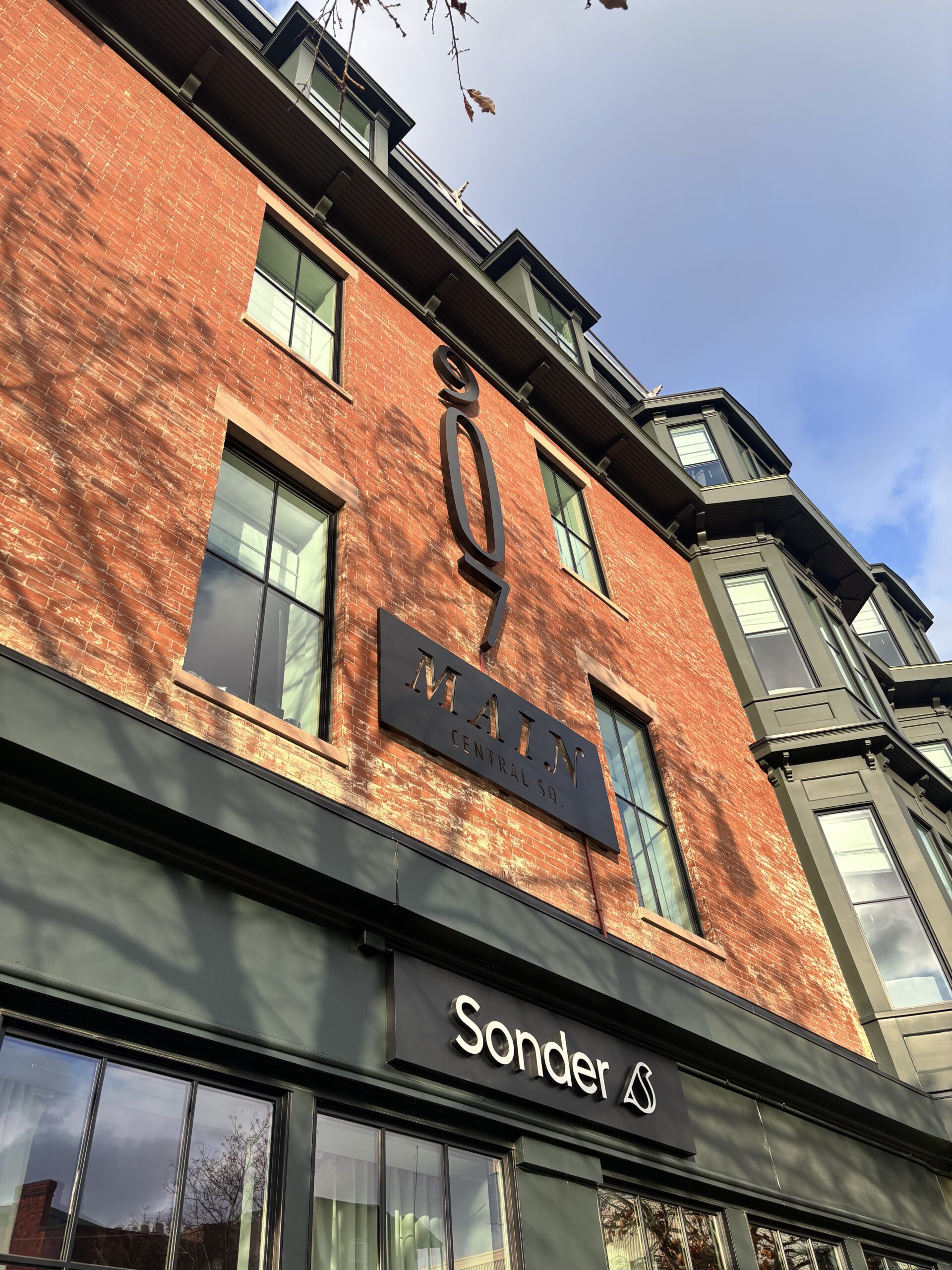
    Employees and guests of 907 Main Hotel Central Square were informed Sunday afternoon that they would have to evacuate the building by 9 a.m. Monday after Marriott ended its licensing deal with Sonder, the company that manages the hotel.

    Sonder, which operates short-term rentals and boutique hotels around the world, then announced Monday it would file for bankruptcy, leaving current and future guests with invalid reservations.

    The two restaurants in the building, Althea and Saigon Babylon, remain open for business as usual.

    One guest was Abba Dandata, who after traveling for 22 hours from Nigeria,  arrived at 907 Main Hotel Central Square Tuesday afternoon to find that the hotel he had booked was no longer operating. He recalled that he had received an email Monday saying his card transaction with the hotel had failed, and he updated the card to confirm the reservation – after the company had announced it was filing for Chapter 7 bankruptcy.

    “I’m feeling terrible,” he said. “Coming all the way from Africa, almost 22 hours of flight, it’s terrible.”

    Dandata, who came to Cambridge for a conference at the Massachusetts Institute of Technology, said he would find another hotel until his flight back Saturday. He tried to call Sonder customer service, but got a recording advising him to call Marriott instead.

    Cambridge Day got the same recording when calling Sonder. A Marriott customer service representative said she could not connect a reporter with someone who could speak for Marriott and suggested emailing the company. Marriott did not immediately reply to Cambridge Day’s email.

    Booking breakdown

    In a statement, Sonder blamed the company’s bankruptcy on problems with integrating its booking technology with Marriott’s. “We are devastated to reach a point where a liquidation is the only viable path forward,” Sonder interim chief executive officer Janice Sears said. “Unfortunately, our integration with Marriott International was substantially delayed due to unexpected challenges in aligning our technology frameworks, resulting in significant, unanticipated integration costs, as well as a sharp decline in revenue arising from Sonder’s participation in Marriott’s Bonvoy reservation system.”

    Patrick Barrett, owner of the Central Square hotel building, could not immediately be reached Tuesday afternoon.

    A sign saying Notice of Closure greeted guests at the Hotel Sonder in Cambridge. By Martina Nacach Cowan Ros

    People entering the hotel lobby in Central Square Monday and Tuesday were met with a small sign reading “notice of closure” propped up at the front desk. With staff having been unexpectedly let go on Monday, the notice and a bright neon sign reading “Hi there, traveller” were the only greetings that guests received in the lobby.

    “The Sonder Property is now closed. All operations have ceased as of November 10, 2025,” said the notice, signed “The Sonder Team.” “We sincerely apologize for the disruption and thank you for understanding.”

    Upon seeing the signs, some people made reservations at nearby hotels  while others worried about how they would be refunded what they had paid. Two guests mentioned Tuesday that they each had paid $1,000 deposits.

    Full water gallons remained unopened behind the desk, and stacked packages sat next to the abandoned lobby, waiting for guests to pick them up.

    Three friends who also traveled from Nigeria for an MIT conference came to see if their package had arrived at the hotel. They were supposed to check into the hotel Monday but booked another room at a Boston Marriott after they received an email informing them their reservation had been canceled.

    Packages stacked next to the registration desk at Hotel 907 on Main after its operator, Sonder, closed abruptly. By Martina Nacach Cowan Ros

    Since they booked the hotel through Marriott, they spoke to a customer service representative, who told them it would take five to ten days for a full refund.

    Dahiru Muhammed, one of the friends, called the experience “disappointing.” He said that when he received the email from Marriott informing him of the hotel’s closure, he was still receiving emails reminding him to check in that same day.

    Anas Yazid, another of the friends, said he was on his layover in Frankfurt when he got the email. He was unable to do anything about it since the email told him to call customer service, which he couldn’t do while he was traveling abroad.

    “[You’re in] another country, and then they send you an email to call customer service,” he said. “How do you call customer service?”

    This story is part of a partnership between Cambridge Day and the Boston University Department of Journalism.

    This story was updated to note that the two restaurants in the building remain open.

    This article was originally published on November 12, 2025.

  • Digitizing the legacy of The Group School

    Digitizing the legacy of The Group School

    By Martina Nacach Cowan Ros
    Scattered across homes throughout Cambridge are faded curricula, pictures and worksheets stored in boxes that preserve the memory of The Group School, an alternative high school run democratically by students and teachers in the 1970s.

    Now, more than 50 years after the school’s founding, these boxes are being opened and their contents digitized onto a new website dedicated to the school’s legacy, with the intention of inspiring educators and students today.

    Among those trying to keep this memory alive are two former Group School faculty members and four alumni who met Saturday at a house in North Cambridge to reminisce. Sitting around a small circular table, they listened to a recording of a song they’d produced decades ago. As the tune filled the room, laughter broke out when the chorus rang: “Don’t forget your working class!” It was more than a lyric; it was the school’s essence.

    The nonprofit school operated from 1971 to 1982 in locations around Cambridge, eventually settling in an old auto repair garage on Franklin Street in Central Square. Students from working-class families in Cambridge – some with learning disabilities or difficulties at home, many from housing projects – were recruited by faculty and other students, and each year the enrollment grew, ultimately graduating around 600 students who attended tuition-free.

    To maintain its democratic system, The Group School held weekly community meetings and set up committees where students held the majority vote, giving them the say in matters like the curriculum, fundraising and evaluations. Class sizes were small, and each student had an adviser and received individualized assistance and tutoring when needed.

    The school intentionally explored working-class identity through all courses, from having history classes like “Growing Up Working Class: Hard Times,” to assigning problems and projects related to working-class identity. The faculty used alternative teaching methods to target student anxiety in subjects like math, developing a “Math Survival Skills” course that encouraged students to share their experiences in math classes and assess their own skills.

    Although the school shut down more than 40 years ago, its students and teachers have reconnected to share its legacy through a free web resource, The Group School Archive and Resource Center. This online archive includes a documentary of the school, books and pamphlets on its curriculum, excerpts of Zoom conversations alumni and ex-faculty held to reconnect, and written reflections from these members.

    Alison Gobbeo Harris, a web team volunteer, was one of the three students who were part of the first graduating class in 1972. She was a founding member who saw the school through its inception in 1969, when it was just a cohort of students at a local school’s teen center.

    “One of our teachers used to say we were building the plane while we were flying,” Harris said as she laughed.

    As the free school movement of the 1960s encouraged separation from formal schooling, Harris said, Cambridge became a place for The Group School to flourish, encouraged by a liberal school committee and mayor. The presence of major universities was a huge influence, as much of the school’s volunteer faculty were Harvard and MIT graduate students.

    “Doors were opening to us, and we were really integrating and unifying across these big institutions – and the city was thrilled about it,” she said. “Doors were opening into labs at MIT, and classrooms and labs at Harvard.”

    The Group School provided a safe place for adolescents who came from working-class backgrounds, faced difficult family circumstances like domestic violence or had learning disabilities, Harris said. The democratic nature of the institution allowed for a personalized, inclusive education that went above normal formalities, she said.

    A second chance at school

    Sean Tevlin was a founding student member of The Group School who had moved through public and parochial schools during his adolescence, when he had been told he had a learning disability. He started working at age 12 and began missing many classes, which eventually led him to stop attending school altogether. He eventually enrolled in The Group School and graduated in 1973. He said it was the only system that worked for him.

    “As a student, coming from the public schools, you felt like you were just a number,” he said. “This was a second chance, an opportunity.”

    Everything that was most foundational, most important for me as an educator, I learned at TGS. Steve Seidel, professor emeritus at the Harvard Graduate School of Education.

    The school was dependent on volunteers at the start, but quickly was able to create paid positions for faculty and student coordinators, ending its first year with two staff positions and four faculty members. In subsequent years, it had roughly a dozen paid staff.

    Steve Seidel, professor emeritus at the Harvard Graduate School of Education, was 19 when he signed up to teach a six-week theater program at The Group School. He ended up teaching the program for 10 years while also becoming arts program coordinator, a role that he said made him the educator he became for the rest of his career.

    “Everything that was most foundational, most important for me as an educator, I learned at TGS,” he said. “Part of what I learned there, is that to create a really strong school, it has to be a place that has clear and strong values and is dedicated to living by those values.”

    A break with the traditional

    The commitment to its values was shown through the grading process, where students and teachers produced written evaluations of each other.

    “It did not make the assumption that is traditional, which is that the teacher knows what the student learned, right, or is even in a position to fully judge the student’s performance,” he said. “The teacher can see things and should say what they see, but it was not built on a fundamentally hierarchical set of assumptions about teacher authority.”

    Adria Steinberg, a founding faculty member and academic coordinator at The Group School, said the school had run thanks to volunteer work, and federal and state grants. Although this gave the school freedom, by the 1980s money had become tight, she said. The school closed in 1982.

    Still, the topics that the school tackled in the 1970s – such as race, class and gender roles – are equally relevant today, making its curricula valuable to today’s educators looking for change, she said.

    “The need to discuss identity and group issues of those kinds is still there, so we knew that a lot of the curriculum would be relevant,” she said. “It just seemed like, rather than keep the stuff in our basement or throw it out, can’t we make it available to people?”

    This story is part of a partnership between Cambridge Day and the Boston University Department of Journalism.

    This article was originally published on November 10, 2025.