Author: Martina Nacach Cowan Ros

  • Close to a quarter of Cambridge lab space sits vacant. What happens to it now?

    Close to a quarter of Cambridge lab space sits vacant. What happens to it now?

    By Martina Nacach Cowan Ros

    Four years ago, it was nearly impossible to find lab space for rent in Cambridge. Now nearly a quarter of it stands vacant.

    Only 0.3% of Cambridge lab space was vacant in the third quarter of 2021, when rents averaged $113 per square foot, according to the real estate firm CRBE. Now the vacancy rate is 22% and rents have fallen to $93 per square foot. All told, 4 million square feet of state-of-the-art equipment and bench labs meant for life-saving discoveries instead sit empty.

    These figures reflect broader trends in research and development within the biotech industry, caused by shifting expectations, a pandemic-led boom that has contracted, and uncertainty driven by the political and economic climates.

    From 0% to 22% in four years

    Part of the shift is due to the success of COVID-19 vaccine development in 2020-21, which prompted huge investments in the biotech industry, said Ben Bradford, head of external affairs at the Massachusetts Biotechnology Council (MassBio). Those investments sparked a development boom that brought large amounts of space online at the same time businesses backed by boom-time investments are failing, creating vacancies where there were none. Meanwhile, fewer new companies are able to access funding and those that do have capital are extra cautious with their spending.

    “Early-stage companies are what makes Massachusetts and Cambridge really special, and if they’re not getting funding, they’re not going to continue growing,” Bradford said.

    A market reset after a period of growth is expected, Bradford said, but any potential recovery is being disturbed by overarching uncertainty, leading to less funding in the industry along with unprecedented vacancy rates. Cuts to the National Institutes of Health (NIH), Small Business Innovation Research (SBIR) programs potentially not being reauthorized, Food and Drug Administration regulatory uncertainty, and unknown effects of tariffs on the pharmaceutical industry all add to this context.

    These challenges have led to a decrease in seed funding, enhanced by an increased preference for late-stage venture capital funding, which means investors wait longer to invest in companies that are more established. This affects early-stage companies that lack the revenue commercial companies bring in from sales.

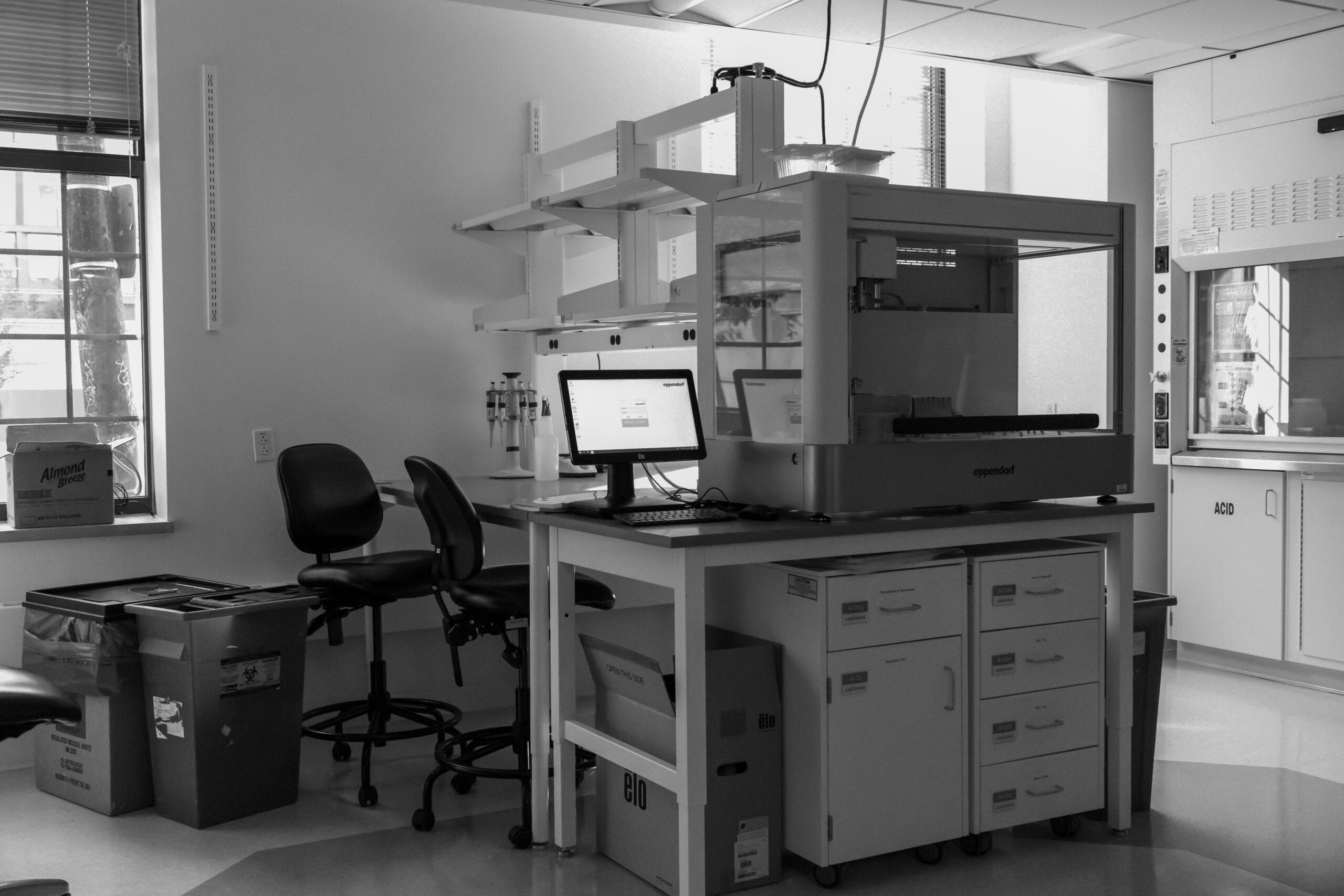
    LabCentral has used creative ways to find new tenants for its building at 700 Main Street in Cambridge, including an AI accelerator. By Ashley Hernandez Ramirez.

    Matt DeNoble, senior director of investment management for life science at real estate company Greystar, said the limited number of available lab spaces in 2020-21 raised rents and made returns more attractive for real estate developers, who pivoted from office spaces to life science developments.

    “That created an environment where it was right to develop and deliver…but as we’ve seen, a good portion of it was also developed speculatively,” he said.

    The combination of newly delivered space and opened-up spaces from shut-down or reduced companies has caused an environment prone to the large lab vacancy rates in one of the biggest biotech hubs in the world.

    What does this mean for real estate and development?

    David Townsend, executive managing director at commercial real estate adviser Newmark, said that while some landlords are waiting out the slowdown until demand shoots back up, other impatient partners are adjusting property values and lowering rents to attract tenants and fill up the empty space, Townsend said.

    “You will see some of these buildings trade and sell at a discount to their former value,” he said. “That allows [owners] to lease it out at lower rents, which I think, will be good for the ecosystem.”

    Maggie O’Toole, chief executive officer at nonprofit life science incubator LabCentral, said that because money is not flowing as quickly to early-stage companies, they are more inclined to stay in spaces like LabCentral, where they have access to equipment and space without being tied to a lease.

    “They’re going to be much more inclined to stay in a space like ours as long as they can, until they’re certain that they’ve raised the level of money that enables them to move into one of the larger spaces,” she said.

    LabCentral has used creative ways to find new tenants for its building at 700 Main Street in Cambridge, including an AI accelerator. By Ashley Hernandez Ramirez

    O’Toole said this is an opportunity to think about how to use space differently, something LabCentral did by introducing its AI BioHub to house an AI Bio Accelerator Program dedicated to AI-focused life science startups.

    “We would never have had the ability to do that before,” she said, “because our spaces were full all of the time. Because we have some empty space … we saw this opportunity to go after a grant that enabled us to take one of our labs and dedicate it fully towards exploring the intersection of AI and biotech.”

    Mark Fallon, director of research and strategy at Hunneman, said during the boom a lot of second-generation – previously used and converted spaces – entered the market and were occupied, thanks to high demand. Now, companies can choose between newly built, purpose-designed laboratories or older, repurposed spaces that aren’t ideal and thus are less likely to be filled. As a result, office-to-lab conversion projects have slowed significantly.

    Rents have dropped as a direct result of this excess of supply, Fallon said. Yet he said he does not believe this will be terminal for either of the industries.

    “Biotech is a cyclical industry, real estate’s a cyclical industry … I don’t think anyone’s ringing the death bell for biotech or life science,” he said. “None of these diseases are going away. People are still just [as] concerned about Cancer, Parkinson’s. The market isn’t gone, it’s just a timing issue.”

    Cambridge to the rescue?

    Melissa Peters, Cambridge’s assistant city manager for community development, said she recognized the life science sector was in a “chilling off period” but said the city remains a strong hub for life sciences and biotech. Although there is uncertainty, Peters said, the slowdown is part of the economic cycle, and said she is confident the economy would readjust. “[We] just need to be a little bit more proactive and innovative in coming up with how to ride that uncertainty,” she said.

    The state has helped ease the drop in federal funding and provided incentives for development, Peters said. She also said the city is happy to work with tenants looking to fill vacancies and mentioned the Economic Opportunity and Development Division, which looks to act as a liaison to help Cambridge businesses and industries.

    Peters said the goal is to have a healthy biotech industry in Cambridge with a diverse economic ecosystem that avoids oversaturation. That means providing space for ventures of all sizes, from startups to large companies and tough tech to biopharma.

    “Cambridge is the most innovative square mile on the planet,” she said. “While it’s certainly concerning for us …we really do see Cambridge as kind of home base for companies to be at.”

    This story is part of a partnership between Cambridge Day and the Boston University Department of Journalism.

    This article was originally published on October 22, 2025.

  • Here is what the most cited engineer in history has to say about biotech and research right now

    Here is what the most cited engineer in history has to say about biotech and research right now

    By Martina Nacach Cowan Ros

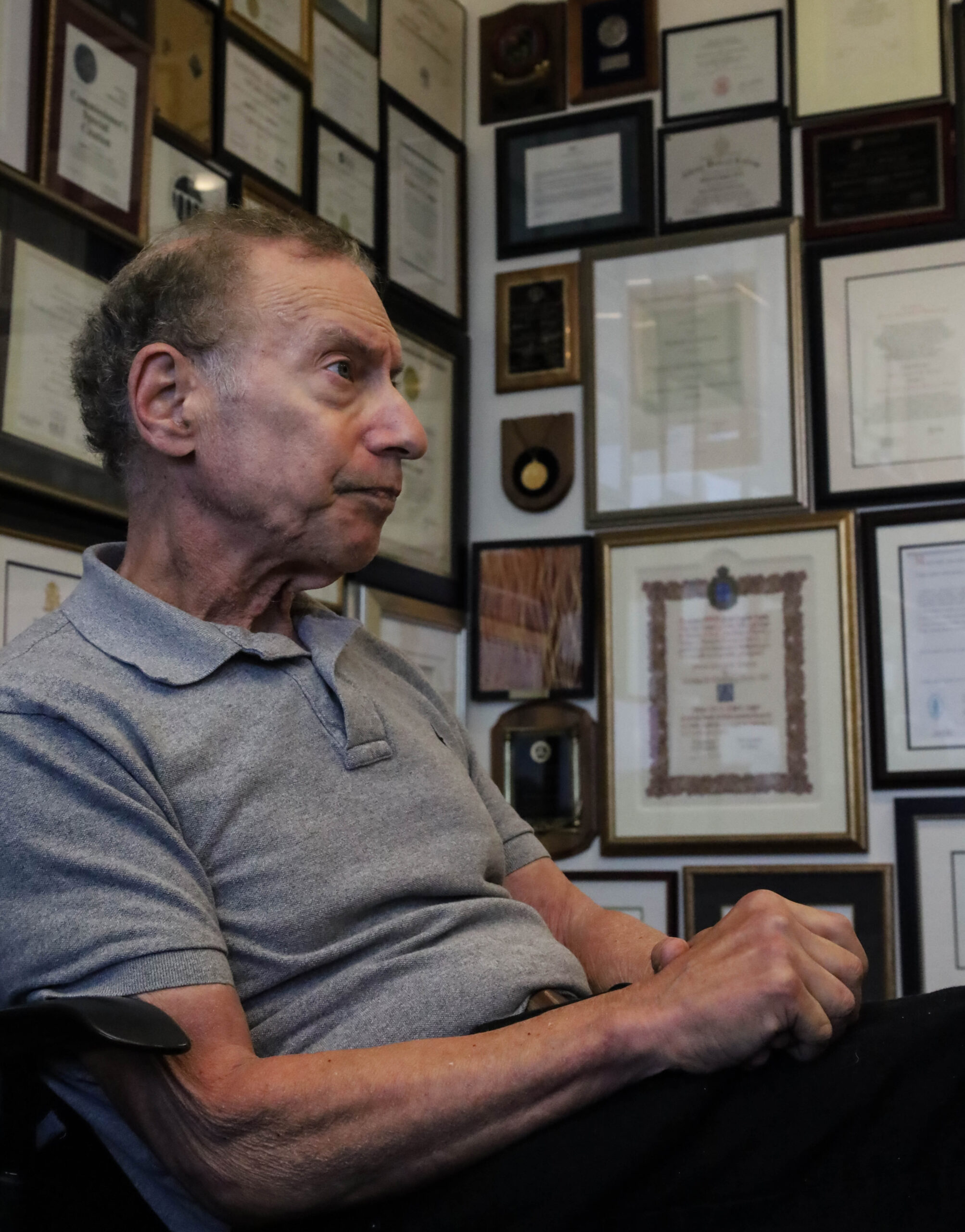
    Robert Langer, the world’s most cited engineer, has seen ups and downs in the biotech industry over the past 40 years, so he isn’t overly worried about the current slowdown. What concerns him is the spread of scientific misinformation.

    Langer has won more than 220 major awards, written more than 1,600 articles, owns 1,500 patents and has been involved in dozens of startups, including co-founding Moderna, maker of a widely distributed Covid vaccine. His h-index of 319 – a measure of both the productivity and influence of scholars’ published work by looking at how often others rely on it – is the highest ever recorded for an engineer and the third highest across all academic disciplines, according to the International Society for Pharmaceutical Engineering.

    His Langer Lab at the Massachusetts Institute of Technology employs around 100 people researching ways to deliver medicine in the body and advance tissue engineering.

    The lab remains in full operation on 19 active projects, despite the biotech industry seeing a drop in funding, layoffs in manufacturing, a rise in lab vacancies and just a modest uptick in the overall drug pipeline, according to the MassBio 2025 Industry Snapshot. Langer sat down with Cambridge Day last week to discuss the state of biotech and research in the region.

    Langer has seen slowdowns before – in 1992-1994 and 2008-2009 – but this downturn has lasted longer, with biotech companies struggling to raise money amid falling stock prices for “maybe the last three or four years,” he said.

    He says a long period of accelerated growth caused unrealistic expectations among investors in multiple sectors of the economy. “When there’s an up, there’s an overexuberance of money pumped into something, and then some things probably shouldn’t have had as much money pumped into them,” he said. “People get too exuberant, and that’s not limited to biotech.”

    He noted a hype cycle from 2003, when the Human Genome Project completed its mapping and sequencing work. “The potential of the Human Genome Project is and was enormous,” he said. “But people got the expectation that it was probably going to change the world very quickly in terms of products. And yet everything in medicine takes time.”

    Federal budget cut effects

    Massachusetts organizations received 9.9 percent of all National Institutes of Health research project grants in 2024, according to the MassBio 2025 Industry Snapshot, but if the pace of funding seen this year continues, Massachusetts organizations will see $464 million less in 2025 than in 2024 – a year that saw a 1.3 percent decrease from 2023.

    In the short run, federal budget cuts aren’t affecting the biotech business, Langer said, since companies tend to rely on funding from investors and the industry was already in a slowdown. The immediate impact is on academia: Harvard Medical School has seen 350 federal grants and contracts terminated by the government, representing about $230 million in funding annually, according to the medical school’s website.

    Langer’s lab at MIT has not been affected, but he has heard that a well-known professor from Harvard had to lay off two-thirds of their team, and he has talked to a Nobel Prize winner who lost a grant. “Those are not good signs,” Langer said.

    Research is like “shots on goal,” where sometimes a lot of effort can lead to nothing, he said. That makes it hard to choose what investigations to pursue, but “the more money you dump at things intelligently … you have greater chances of having certain things happen. If you have more good people coming at it more different ways, you have a great chance [for] success.”

    Langer pointed to the first Trump administration’s race to find a Covid vaccine. Instead of funding one program, the government funded several. The vaccinations developed in the United States and abroad prevented an estimated 14.4 million deaths in a year, according to the National Library of Medicine. “That choice of funding all those things by the government. It just saved a tremendous number of lives,” he said. “You have more of a chance when you bet on more horses, right?”

    Hopes and worries

    Langer said it’s too early to know the scope of these impacts. He is optimistic that opportunities and new medicines are still on the horizon. “This may be a bit of a downturn, [but] I have every expectation it will come back just like it has before,” he said.

    Things he’s watching are advancements in genetic medicines and cellular therapies that could be used to treat cancer and advance regenerative medicine. “Those areas, I’m very excited about,” he said. “I think they’ll make a big difference in the world.”

    What Langer is worried about is the stream of misinformation spreading daily, especially misinformation about vaccines.

    “Let’s say you’re not going to give people measles injections,” he said. “People will die. That worries me. I think that should worry everybody. Sadly, we may see more people die from certain diseases because of what’s going on in the short run. In the long run, I think throughout history, science has ultimately won.”

    This story is part of a partnership between Cambridge Day and the Boston University Department of Journalism.
    This article was originally published on October 2, 2025.

  • Massachusetts backs AI-powered biotech startups with BioHub program

    Massachusetts backs AI-powered biotech startups with BioHub program

    By Martina Nacach Cowan Ros


    Thirteen artificial-intelligence-focused life science startups graduated Tuesday from a 12-week Cambridge program that gave them access to lab space, business training and tech support.

    These companies are part of the first cohort to go through the AI Bio Accelerator Program, part of the new AI BioHub, a space in Kendall Square dedicated to the integration of biotech and AI resources. This program started when the Massachusetts Technology Collaborative, the state’s economic development agency for technology, awarded a Sector Spark grant of $1.9 million to the Cambridge nonprofit incubator LabCentral and AI venture studio C10 Labs.

    The aim of the program is to create a space to support early-stage startups at the crossroads of AI and biotechnology and help them grow. The companies involved focus on a range of areas, from developing gene-editing tools to AI-powered diagnostics for Lyme disease and breast cancer.

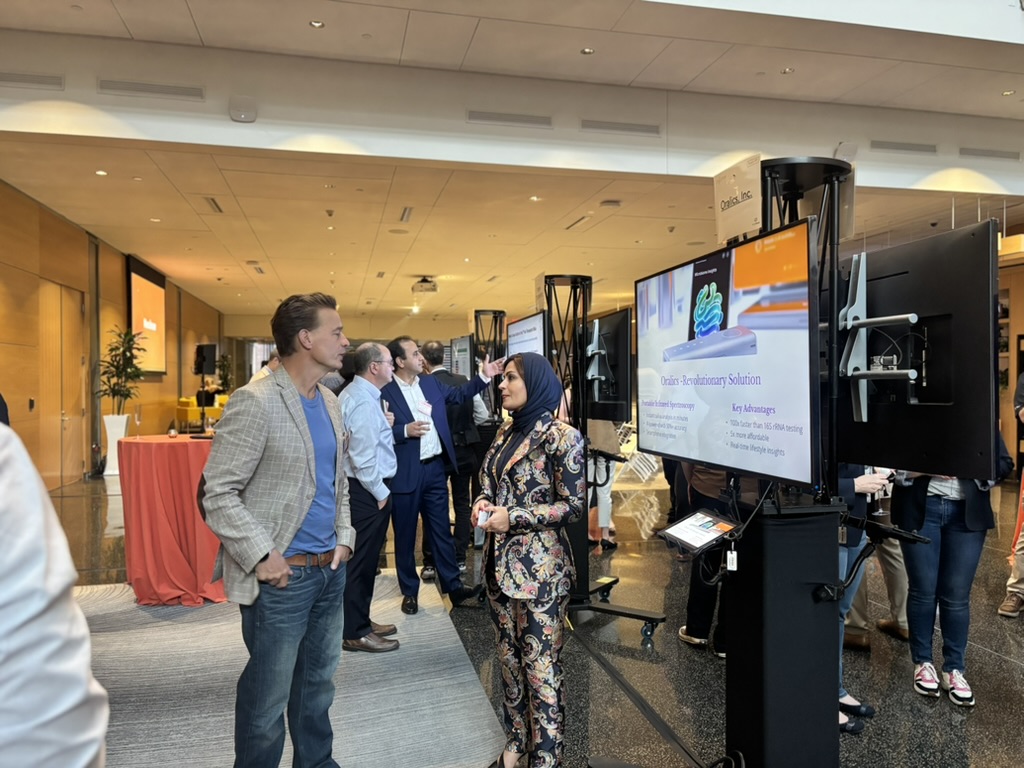
    The Brilliant Collisions showcase, which took place in the lobby of the Takeda offices in Cambridge, featured a panel of industry leaders who helped build the program, followed by one-minute pitches in which each startup presented its ideas and goals. Afterward, each team stood next to presentation slides to discuss their projects with attendees. 

    Kirk Taylor, chief executive of the Massachusetts Life Sciences Center, a state-funded group that supports the economic development of the sector, said Massachusetts stands out in a key area, one that provided the name of the showcase: “brilliant collisions.”

    “One plus one will equal three,” he said, “meaning that by colliding with people outside of your sector but who are interested in the same areas – AI, growth, health, health equity – we’re able to create new ideas, grow even faster and actually innovate.”

    Crucial after cuts

    AI is important for the growth of the biotech sector, especially after a recent slowdown in research and development, Taylor said. This makes it crucial for individuals across disciplines to partner and look for alternative ways to grow, he said. 

    “AI accelerates just about everything,” he said. “It brings products faster to market, clinical trials [are] faster, costs lower, targets are identified in a much faster way, a much cheaper way, and with that we’re able to innovate at a much faster speed, without increasing the dollars.”

    Massachusetts is the country’s top life sciences hub, Taylor said. To continue to grow, the sector needs to incorporate AI to create opportunities that will have a global impact, he said. 

    “The patients don’t just live in Massachusetts. They live in this country, they live in North America, they live in Europe, all around Africa, Asia, all around the world,” he said. “What we do here has global impact, because everyone deserves good health.”

    Startup for startups

    MassTech and the administration of governor Maura Healey announced LabCentral as a recipient of the grant in March. Four months later the program began in full operation within LabCentral’s wet lab spaces, while C10 Labs provided insight on how to bring AI-specialized support to the life science cohort, made up initially of 15 companies.

    Lyndsey Rissin, director of science strategy at LabCentral, said the grant helped with capital infrastructure and programming support, which allowed LabCentral to immediately start building the lab they named the AI BioHub. By May and June, they were already recruiting teams for the cohort.

    Beth Porter, head of studio operations at C10, said the cohort learned AI tools, methodologies and strategy throughout the program and were encouraged to find ways to implement these into their company business models. 

    Applications for the program’s second cohort are set to open early next year, offering another round of companies the chance to join.

    Guardrails for AI

    Chelsea Trengrove, chief executive and cofounder of AI gene-editing company Neoclease, which was one of the companies graduating from the cohort, said what once needed a full doctoral thesis can now be done in a minute with AI.

    “The program has been so fantastic,” she said. “AI in every industry is just going to be enabling and accelerating. So it’s really great to have folks like this connecting us to those tools.”

    She said it’s always good to be skeptical of what AI produces, and explained that there are guardrails and validation steps in place to ensure accuracy in all their work. The company is raising seed funding for a Parkinson’s editor.

    “You’re trying to create something that’s going to be life-changing for a patient,” she said. “What we’re really focused on is building cures. And so, for us, it’s a really great use case of AI.”

    This story is part of a partnership between Cambridge Day and the Boston University Department of Journalism.
    This article was originally published on October 2, 2025.

  • Biotech headwinds have Cambridge industry pros helping students transition to workforce

    Biotech headwinds have Cambridge industry pros helping students transition to workforce

    By Martina Nacach Cowan Ros

    When Lila Neel walks through the streets of Cambridge, she imagines that any passerby could hold in their mind the cure for a sick child or parent. She said Cambridge, one of the biggest biotech clusters in the world, is a “beacon of hope” for people suffering from diseases and other health issues.

    But signs are emerging that funding for research and development could become an impediment. The flow of money slowed industrywide in 2024 and the first half of 2025, according to the 2025 MassBio Industry Snapshot published in August. Research and development jobs in Massachusetts fell 1.7 percent in 2024, while 22.9 percent of lab space in Cambridge now sits vacant.

    Neel is the national director of Project Onramp, a program with the nonprofit Life Science Cares that helps match undergraduates from low-income backgrounds to paid internships in life sciences. She spoke about the importance of community in the life sciences during this “profoundly challenging time” as the keynote speaker at Thursday’s Thriving in Biotech conference at LabCentral 238 in Cambridge.

    “Political polarization, global crises and systemic inequities shape the landscape in which we’re now working and learning,” Neel said during her speech. “The scientific community hasn’t been immune to these pressures.”

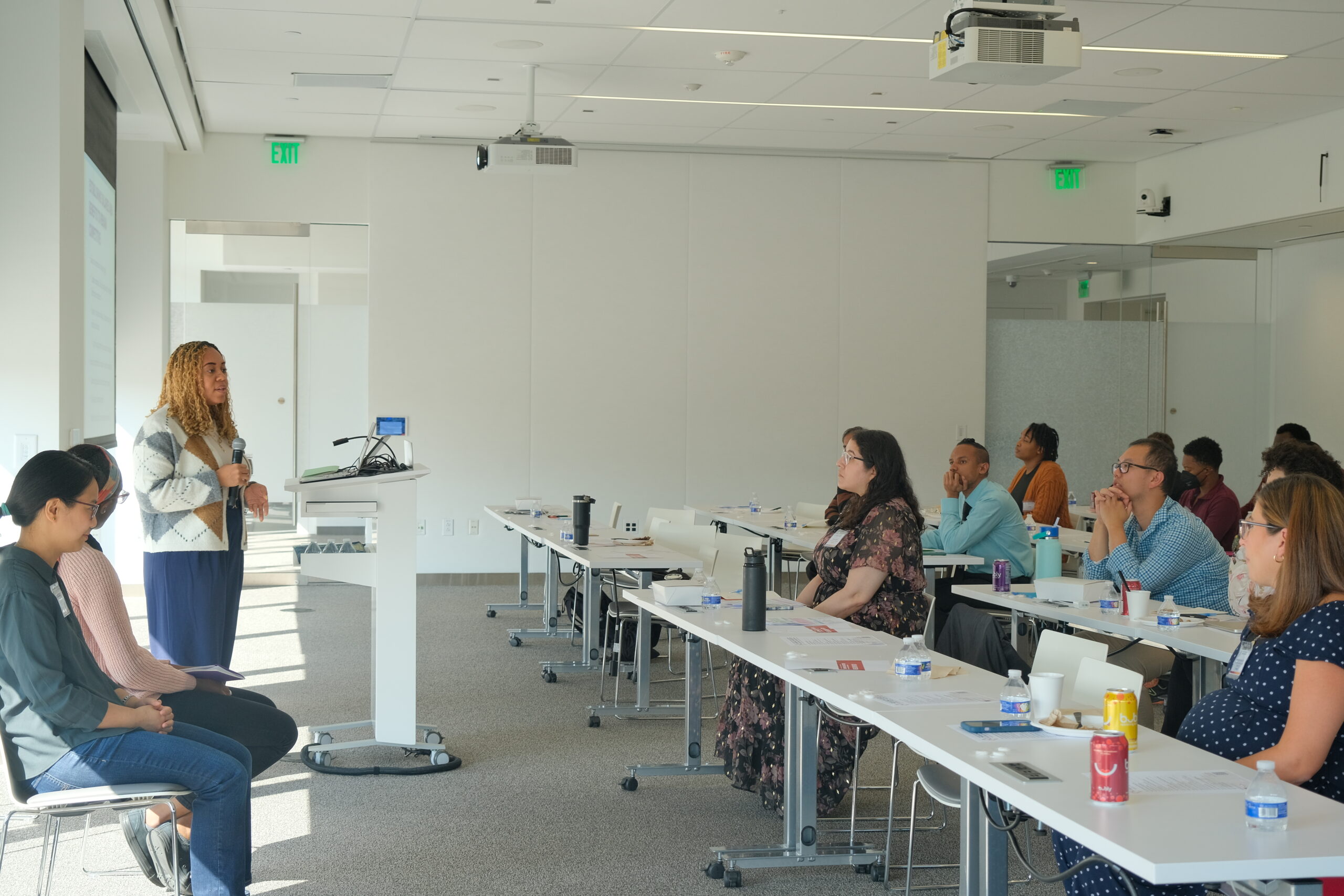
    Courtney Utsey, director of people and culture at Aktis Oncology, leads a workshop on job offers at the Thriving in Biotech conference in Cambridge on Thursday. Photo by: Zengqi Guo

    The challenges in the industry, including funding reductions and a shift in attitudes about diversity initiatives, have made the transition from academia to the workforce harder for many people. Thursday’s conference, the first in-person event organized by the nonprofit Scientists in Solidarity, aimed to help life science students and early-stage professionals transition from academia to industry, focusing specifically on historically excluded groups. The conference featured two panels, three workshops and networking sessions designed to help attendees engage with industry professionals, gain a clearer understanding of the current context and develop skills for today’s job market.

    Manasvi Verma, a doctoral student from India at Harvard Medical School’s graduate program in bacteriology, said she was aiming to graduate next spring semester but had to move up the date to November because of “chaos” with funding. Faced with an accelerated timeline, she began applying for jobs and attended the conference, noting many academics are uncertain how to make the transition from academia into the workforce.

    She said competition is heightened in the Boston area, where talented people are losing their jobs, leaving a “lot of talent and not enough roles.”

    “You have to compete with folks that have 10 years more experience than you do,” she said.

    Postdoctoral researchers are suffering the most, Verma said, as their contracts are being cut short, while students are “rushed out” of their institutions to finish their degrees prematurely.

    Usually by the end of these programs, “you’ve done all of this work, and you have synthesized it, and you get the chance to do fun things, like present your work, go to conferences, interact with other scientists,” she said. “You’re losing that because there’s no money for it.”

    “The job search has changed”

    Courtney Utsey, director of people and culture at Aktis Oncology, a Seaport biotech company, conducted three workshops at the conference that aimed to prepare participants on how to navigate the professional world, covering skills such as interviewing, networking and negotiating. Utsey recognized the shift in the biotech environment.

    “The nature of the job search has changed,” she said. “It was a candidates’ market where they had their prime pickings. And now it’s in the power of organizations, where we have the jobs.”

    She urged candidates to be patient and not to settle. She emphasized the importance of encouraging conversation throughout the interview process, reminding students the “power” they have to assess whether an organization is a match for them.

    “My goal is to make sure people today walk away feeling empowered and recall that they have the tools to validate and really assess opportunities for themselves,” she said. “I remain hopeful this industry is one that’s going to continue to evolve, just like the science continues to evolve. And I think so long as we continue to focus on the great science, we’ll continue to be a booming industry.”

    Diversity, equity and inclusion

    Minmin Yen, co-founder of Scientists in Solidarity, said the conference was organized to encourage “real talk in a safe space,” especially for people from marginalized communities in biotech. Yen said she worries that the big boom in diversity, equity and inclusion work, which arose during the 2020 pandemic, has begun to die off in the industry.

    She said companies treat DEI as a trend, investing when it is popular but retreating when it becomes difficult. Yet DEI in the biotech industry is crucial to ensure medicine benefits all parts of the population, she said.

    “If you have people working in biotech that only represent a certain part of the population, the medicines that they have will only benefit certain parts of the population,” she said. “It’s not just DEI for inclusiveness – it’s DEI because it helps us have a healthier world.”

    Yen said she hoped the conference could spark connections between peers in biotech, along with confidence and tools. She said that with so much uncertainty facing individuals in the industry, it was important to connect in person. “That’s what community is for.”

    This story is part of a partnership between Cambridge Day and the Boston University Department of Journalism.

    This article was originally published on Tuesday, September 16, 2025.