Author: Celine Hijazi

  • Newton South High School Mock Trial Team shares the strategy behind their state win ahead of Nationals

    Newton South High School Mock Trial Team shares the strategy behind their state win ahead of Nationals

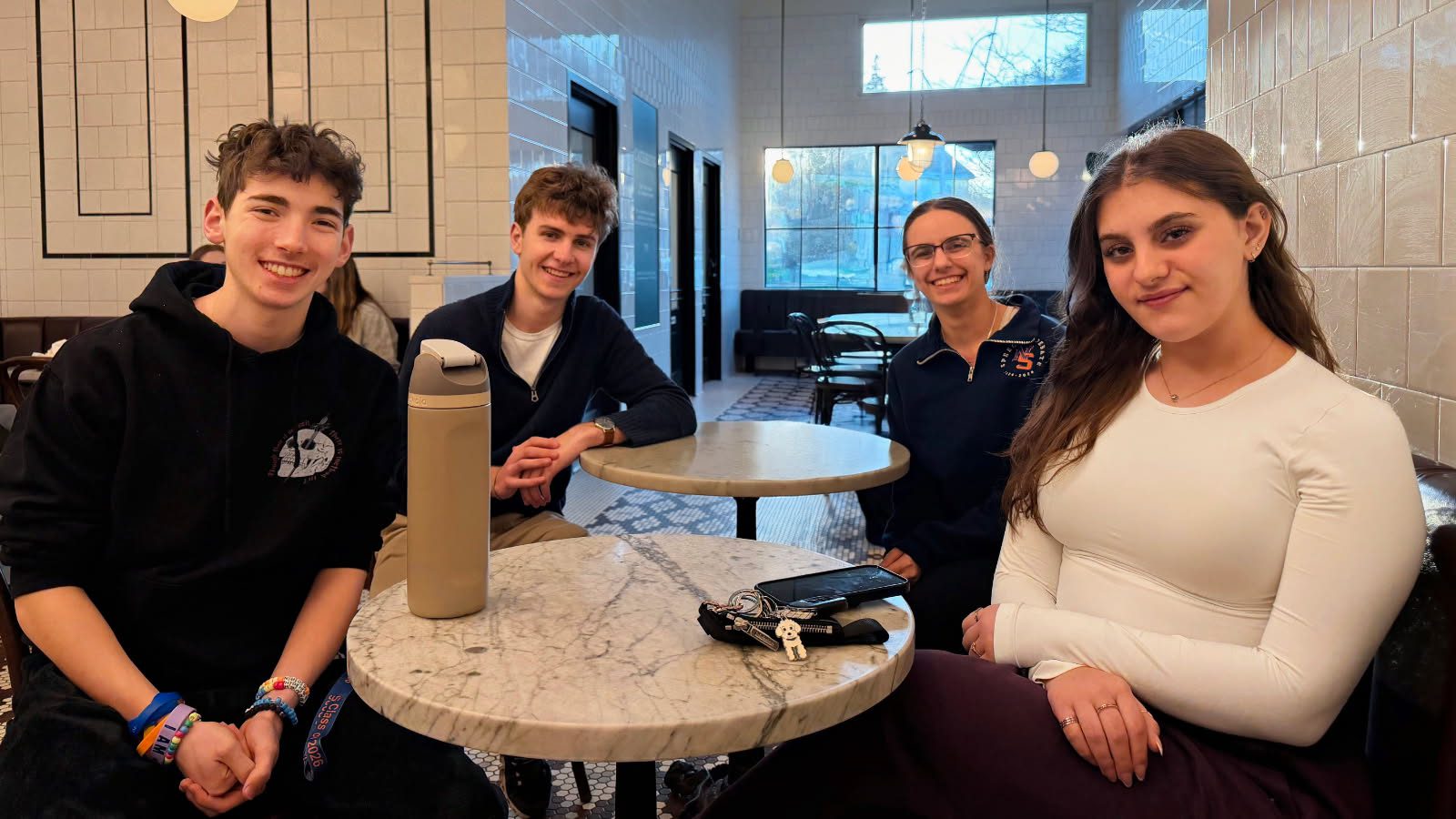
    Newton South Mock Trial Team prepares for national competition. Front: Owen Butler, left, and Emily Zisow, right. Back: Theo Younkin, left, and Sofia Telio, right. Courtesy photo

    A courtroom filled with mystery, jealousy and a peanut allergy found Audrey South guilty of poisoning Ava Maru on the set of their TV show, “Steepton Mystery.”

    The most surprising part of the case? It was entirely fake.

    It was the Newton South High School Mock Trial Team that told the story at the Massachusetts mock trial championship March 20—and won. Arguing as the prosecution, the team beat Dover-Sherborn and secured its first state championship since 2008 and is now preparing for the national tournament May 7-9 in Des Moines, Iowa.

    As prosecutors, the team argued that Audrey South, the director of “Steepton Mystery,” murdered Ava Maru, driven by lingering resentment from their university days. The defense sought to cast doubt on that narrative, claiming the death was either a tragic accident or caused by another actor, Lugansky Cook, whose jealousy over losing the lead role provided motive.

    “By the time you get to finals both teams are just so incredibly good that it was honestly a toss-up,” said Sophia Telio, one of the Newton South captains. “We ended up winning on a 2-1 judge split.” Months of preparation led to that moment. The team—led by their captains Emily Zisow,  Sophia Teilo, Theo Younkin and Owen Butler—developed nearly two dozen examinations and witness testimonies, refining arguments and performances in daily practices leading up to the competition.

    But the trial was not just about legal reasoning. It was also about performance, the team explained.

    On the stand, Lugansky Cook, portrayed by Owen Butler, became one of the case’s most memorable figures. As questioning intensified, Butler leaned into the role.

    “As the defense asked the last questions, I got a little choked up,” Butler said. “I think my fake crying was pretty good.”

    The drama escalated during cross-examination when Butler, still in character, pushed back against a confusing line of questioning.

    “I kept saying, ‘Sorry, I don’t understand the question,’ but finally I said, ‘Are you threatening me?’” he said.

    The courtroom reacted immediately. The presiding judge cut in: Mr. Cook, please answer the question. Teammates later said the moment felt strikingly real.

    Beyond the theatrics, team members point to something less visible as the key to their success: their culture.

    “We put in a lot of time and a lot of effort and we have a really strong and supportive team,” Younkin said.

    That approach meant long nights, constant collaboration and a team that stayed connected well beyond scheduled practices, reviewing scripts, running arguments and supporting one another.

    “Mock trial is like when you eat really good food—you just keep coming back to it,” Butler said.

    Even amid the intensity, the team found ways to keep things light. While preparing for states, they coached a freshman witness who struggled to sound convincing on the stand.

    “Because he’s younger, he had a younger-sounding voice,” Telio said. “So we trained him to speak a little older. It was like a Pavlovian soundboard trick. We’d play a TikTok audio every time he reverted back, and it would snap him into the older voice.”

    The method worked, and the freshman went on to deliver one of the strongest performances of the competition as an expert witness. 

    While young, many members of the Newton South team are keen on becoming lawyers, which they attribute to their love for argumenting, interest in social justice and even acting and improv. But even outside mock trials, the students are just as busy: tutoring kids, working in journalism or student government.  

    After battling through preliminary rounds—elimination playoffs to the state championship—the team is turning its attention to nationals, where they will face a new challenge: a civil case centered on a wrongful death during a citywide scavenger hunt in Des Moines. With only about a month to prepare, far less than the months they had before, students are once again diving into evidence, arguments and strategy.

    For a team built on both discipline and camaraderie, the next case is not simply another story to tell but another chance to prove it.

    “Apparently New York and Texas are pretty good,” Butler said about the biggest competitors. 

    “We’ll see, but if we want to put positive vibes out there, I’d say we’re the biggest threat,” Zisow responded.

    ****

    This story is part of a partnership between the Newton Beacon and the Boston University Department of Journalism.

  • Iranian, Lebanese diaspora members in Newton react to war back home

    Iranian, Lebanese diaspora members in Newton react to war back home

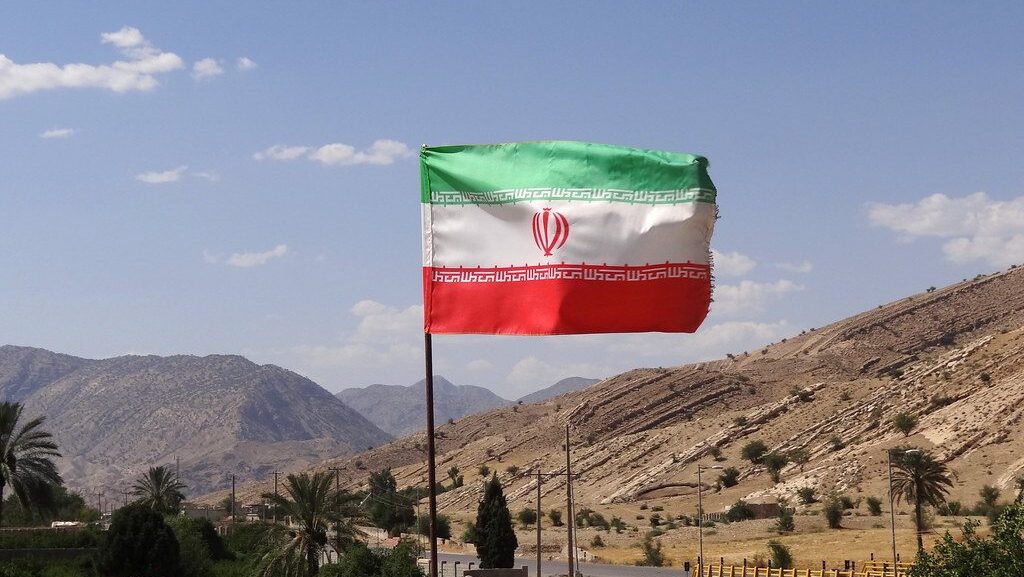
    Iranian flag flying above an archeological site in southern Iran. Public domain photo

    For Iranian and Lebanese residents in Newton, the war overseas feels both distant and dangerously close, unfolding through headlines, long silences and urgent phone calls from home.

    “The biggest overwhelming feeling … has been helplessness,” said Daniel Hannoush, a Lebanese American student at Boston College.

    The escalating conflicts involving Iran and Lebanon are rooted in long-standing political, social and economic tensions across the region.

    In Iran, the latest wave of violence began Feb. 28 with U.S. and Israeli airstrikes targeting nuclear and military infrastructure. Iran responded with strikes on neighboring Gulf countries, including Qatar, the United Arab Emirates, Kuwait and Bahrain, widening the conflict into a regional war.

    In Lebanon, the Iran-backed group Hezbollah entered the fighting on March 2, prompting an Israeli ground invasion in the south. On April 8, more than 100 bombs fell across the country in 10 minutes. The death toll remains uncertain, though Amnesty International has reported at least 254 people killed.

    Reuters, citing the International Federation of Red Cross and Red Crescent Societies, reported at least 1,900 people have been killed in Iran and 20,000 injured in the strikes.

    For diaspora communities thousands of miles away, those numbers are more than statistics—they are a fragile way to track the safety of friends and family back home.

    Amid the uncertainty, many are grappling with a difficult question: Could this war bring lasting change?

    “It’s almost impossible to answer succinctly,” said Cyrus P. Dahmubed, a newly elected Newton city councilor whose family belongs to Iran’s Zoroastrian religious minority. He said he hopes for a democratic and open Iran but remains uneasy about how change might come.

    “You can want an outcome without liking how it’s happening,” he said.

    The stakes are deeply personal. Dahmubed, who has never visited Iran, said his identity shapes his hopes for the country’s future.

    “I’m half Persian and half queer,” he said. “I want to see a society that is tolerant and embracing—including queer people.”

    Still, he expressed concern about the war itself, particularly the lack of congressional approval for U.S. involvement.

    “When you hear that dozens of schoolgirls have been killed, you know something is going wrong,” he said. “It makes you anxious, especially when you have family there.”

    Dahmubed was referring to a March 3 U.S. airstrike in Iran that killed more than 100 children, according to Amnesty International.

    Locally, he hopes the crisis can foster understanding within Newton’s diaspora community.

    “My hope is that we come together to support each other and engage meaningfully in conversations about our homeland,” he said. “Even something as simple as pronouncing ‘Iran’ correctly—that matters.”

    For Ashkon Roozbehani, founder of Persepolis Law in Newton, the war has brought fear rather than optimism.

    “A lot of people in the diaspora believe this will quickly lead to the fall of the government,” he said. “I don’t see it that way. I’m actually very scared.”

    Roozbehani, who is from Tehran and Lorestan province, said that fear has long shaped his relationship with Iran.

    “Even when I visit, there’s an underlying sense of risk,” he said. “The government can be hostile to members of the diaspora. There have been cases of people like me—U.S.-born men—being detained.”

    Unable to reach extended family members in Iran, he said the uncertainty has been especially difficult.

    “I would love to live in Iran someday,” he said. “But that hope feels very slim right now.”

    Having grown up during the Iraq and Afghanistan wars, Roozbehani said he worries about the long-term consequences of conflict.

    “I’ve seen how those wars left countries in chaos,” he said. “I want change in Iran, but I’m deeply concerned about the cost.”

    For him, the stakes are clear.

    “If any of my family members were harmed or killed, it wouldn’t be worth it—regardless of the political outcome,” he said.

    For students like Hannoush, distance itself is one of the hardest burdens.

    “I’m privileged to be in the U.S.,” he said. “But that comes with a sense of distance. I can’t help in the ways I wish I could.”

    Hannoush, whose family is from Zahle, Lebanon, remembers the country through moments of joy—walking along the Berdawni River with his grandfather, surrounded by shops and ice cream stands.

    Now, he said, those images are overshadowed by war.

    “I deleted Instagram about 45 days ago,” he said. “Even when I briefly re-downloaded it, I removed it again. I still use Twitter, but I try not to rely on social media for information.”

    At Boston College, Hannoush serves as treasurer of the Lebanese Club, where students are planning fundraisers and cultural events to support Lebanon.

    “We’re organizing a ‘Taste of Lebanon’ night,” he said. “It’s a way to share our culture while also educating people about what’s happening—in a positive and meaningful way.”

    This story is part of a partnership between the Newton Beacon and the Boston University Department of Journalism.

  • ‘A Youth Revolt’: Jason Poulos and the fight for the 4th Congressional District

    ‘A Youth Revolt’: Jason Poulos and the fight for the 4th Congressional District

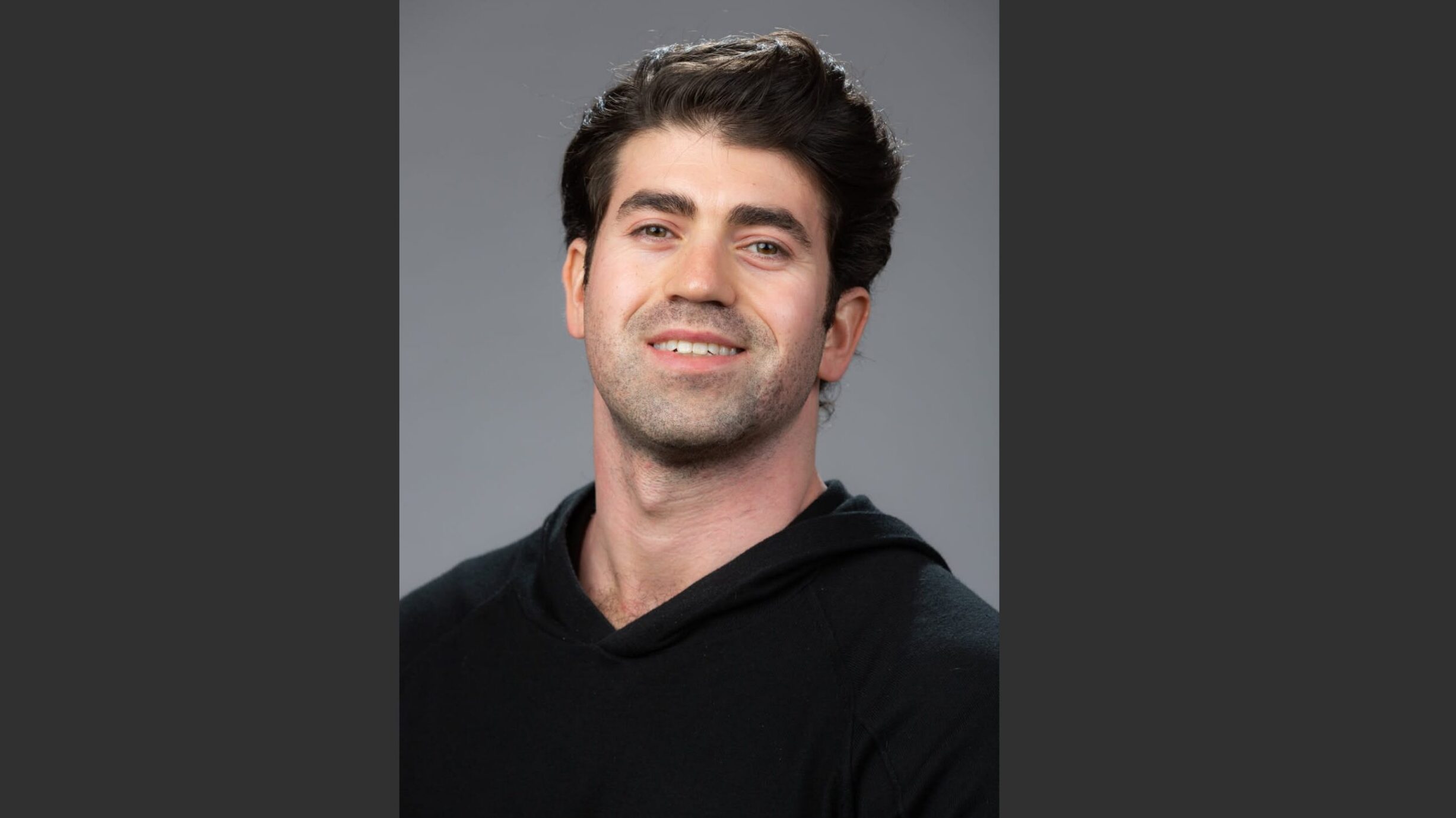
    Jason Poulos is running for the Democratic nomination for the Massachusetts 4th Congressional District seat currently held by Jake Auchincloss. Courtesy photo

    On a sunny day outside Newton City Hall, Jason Poulos lays out his vision for a new kind of leadership in Massachusetts’ 4th Congressional District.

    “This campaign is very much a youth revolt,” Poulos said.

    Poulos, a Democratic candidate for Massachusetts’ 4th Congressional District in a five-way primary that includes incumbent Rep. Jake Auchincloss, is running a campaign focused on energizing younger voters and challenging the political status quo.

    Poulos, 40, said his background is not in politics but in academic research. Over the course of his career, he has worked at institutions across the country.

    “I went to UMass Amherst,” Poulos said. “I got a PhD at UC Berkeley in political science and computational science and engineering. I came back here to do a postdoc at Harvard Medical School in AI and health policy.” Despite his national résumé, Poulos frames himself first as a local—someone who grew up in Sherborn and understands the district he now hopes to represent. The 4th District stretches across parts of Middlesex, Norfolk, Bristol and Worcester counties, encompassing communities as varied as Newton and Fall River.

    But Poulos said it wasn’t local politics that first pushed him toward a campaign—it was foreign policy.

    “What really was radicalizing for me was watching the United States send tens of billions of dollars in military arms to Israel and watch them participate actively in the genocide of the Palestinian people,” Poulos said.

    He described calling Auchincloss’s office weekly and attending town halls, searching for answers.

    Poulos said he remains discouraged that Auchincloss has not changed his position on the war in Gaza and continues to accept donations from pro-Israel political action committees.

    According to Track AIPAC (American Israel Public Affairs Committee), Auchincloss has received more than $933,000 from pro-Israel lobbying groups since 2020. In January 2026, he voted in favor of legislation providing $3.3 billion annually in funding for Israel.

    For Poulos, the influence of lobbying groups such as AIPAC underscores what he sees as a broader disconnect between elected officials and their constituents.

    “Our representatives aren’t really listening to us,” he said. “That demonstrates that we don’t really live in a representative democracy anymore.”

    On a local level, Poulos said he supported student protesters during campus encampments that drew national attention and debate over free speech.

    “The students’ demands were very simple,” he said. “They said our tuition is going towards your endowment, and your endowment is being used in support of the defense industry … we want you to divest.”

    “I supported the students,” he added. “Representative Auchincloss wanted to break up the encampments.” While the war in the Middle East remains a divisive issue—especially in Newton—Poulos said public opinion within the Democratic Party is shifting.

    “The tide has already shifted. We have polling of nationwide Democrats, and only about 8% still support the idea of sending military arms to Israel,” he said. “It’s not really an open question anymore.”

    Congressional candidate Jason Poulos collects nomination signatures at a protest outside the office of U.S. Rep. Jake Auchincloss on March 2, 2026. Photo by Bryan McGonigle

    For Poulos, those figures underscore what he sees as the influence of money in politics, a central theme of his campaign.

    Beyond foreign policy, Poulos has proposed a range of domestic policies, including changes to immigration enforcement.

    “I was the only person in this race, including the incumbent, to call for abolishing ICE,” he said. “I don’t think it should exist.”

    He also supports defunding the Department of Homeland Security and ending qualified immunity for immigration officers to increase accountability.

    Turning on issues closer to home like housing, a key issue in Newton, Poulos said affordability remains a top concern.

    “The district is very economically diverse, so when I put out policies, I’m thinking about the district as a whole,” he said.

    “One policy I’ve advocated for is curbing hedge fund ownership of housing. One of the drivers of high rent is hedge funds buying up properties and leaving them empty, creating a monopoly on prices.”

    As Poulos moves through the district, he runs his campaign in the hope that frustration with the current political system, especially with younger voters, will be translated into votes at the ballot box. 

    Whether that message will translate with younger voters is unclear, but Poulos continues to underscore that his campaign is not about incremental change, but an acute sense of political urgency.

    “This race is about the future of the Democratic Party and whether it serves the donor class or the working class,” he said.

    ****

    This story is part of a partnership between the Newton Beacon and the Boston University Department of Journalism.

  • After first state championship win since 1972, Newton North gymnasts ready for New England meet

    After first state championship win since 1972, Newton North gymnasts ready for New England meet

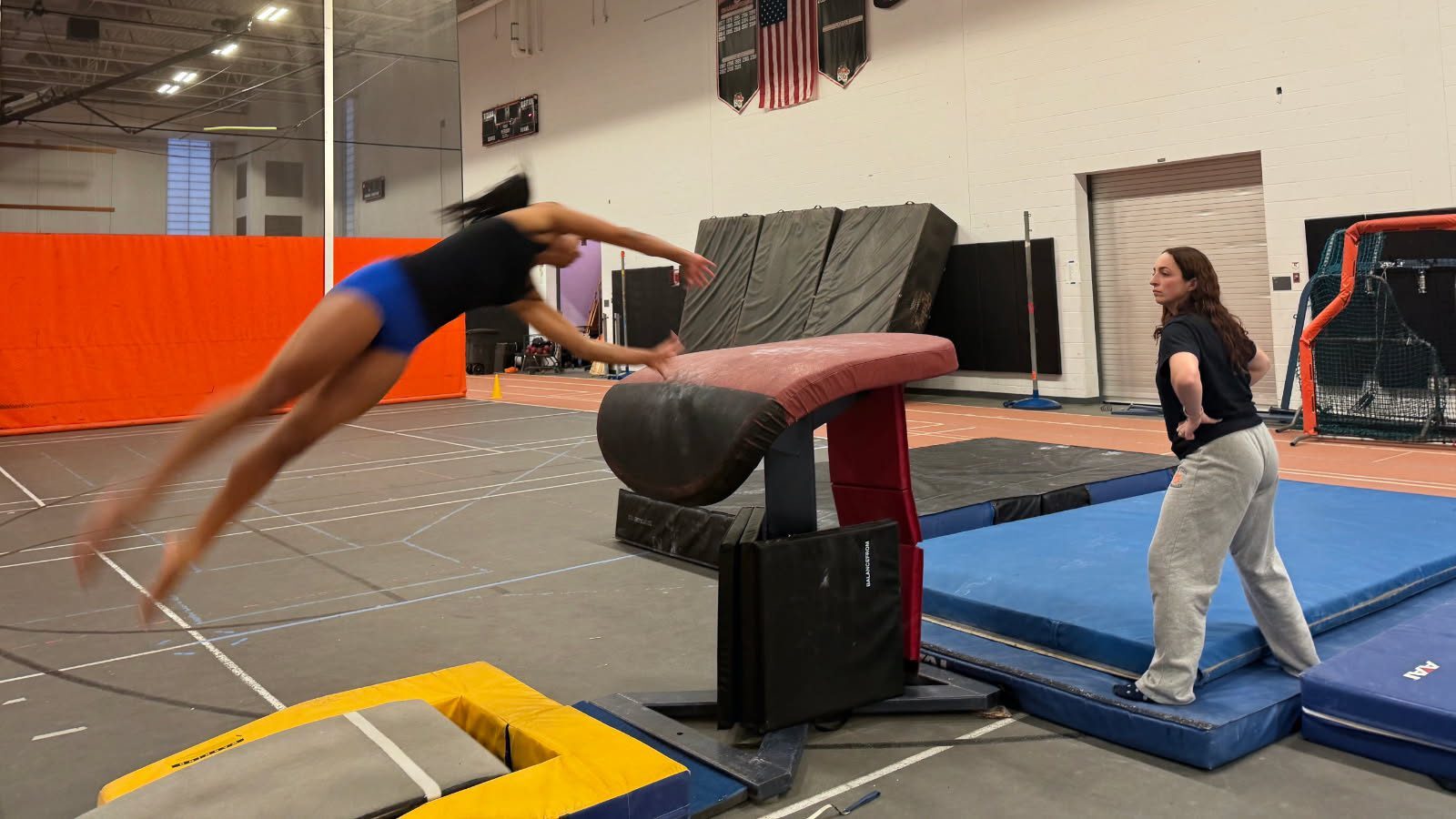
    While the rest of Newton North High School rushes home for the day, the girls’ gymnastics team is just getting started: leotards on, pink fuzzy socks flying through the air as the gymnasts hurl themselves across the gym.

    This weekend, they will trade leotards for orange sunglasses, wigs and headbands as they represent their school at the New England Interscholastic Girls Gymnastics Championship, riding the high of their state championship win last weekend — the first time the team has claimed the title since 1972.

    At practice before Saturday’s competition, the girls circle around their coach, Cassie Ford, leaning on each other’s shoulders and oohing and aahing as they listen to the logistics of meet day.

    “These girls don’t even realize how athletic they are,” Ford said as gymnasts tumbled and swung behind her.

    Before practice begins, the team blasts a variety of songs on the speaker — “Thrift Shop” by Macklemore and “Anaconda” by Nicki Minaj — as they tape each other’s ankles and yell at high school boys trying to claim the gym for a game of lacrosse.

    “We’re a very bubbly team,” senior Nika Jayanth said. “We’re always cheering for each other and having fun.”

    “Our energy is contagious,” teammate Simona Batista-Ciani added.

    The team of 15 takes turns practicing each event: floor routines, beam, vault and bars. Each time another gymnast steps up, hands in the air, ready to run,  the team erupts with cheers and chants as chalk dust rises into the air.

    Their recent historic win was fueled by that same energy, the team and coaches said.

    “We knew the stakes,” Batista-Ciani said. “The last time the team won was 1972, so we were like, ‘OK, we can do this.’” 

    The celebration matched the intensity of practice.

    “On the way back, we were blasting songs on the bus, dancing around and passing the trophy,” Batista-Ciani said.

    The gymnasts’ energy is palpable, with chalk-soaked footprints scattered across the gym floor from dancing, gossiping and cheering between exercises.

    “We feed off each other’s energy,” teammate Greer Howard said. “When everyone’s excited, it motivates the whole team.” 

    Although the practices are filled with laughter, the team’s skill and discipline remain clear.

    “I broke the school record on floor at states,” gymnast Lucia Grabski said. This weekend, she plans to perform a similar routine to “Skyfall” by Adele, hoping to match the skill and energy of her last performance.

    Nika Jayanth practices gymnastics with a teammate. Photo by Celine Hijazi

    Beyond gymnastics, the athletes are already thinking about their futures.

    “I’ve broken pretty much every bone you can imagine – that’s what made me interested in learning about the body,” teammate Julia Brown said, explaining her plans to pursue a career as a physician assistant.

    Between routines, the girls sit on bulky tumbling mats with textbooks open, scribbling down homework before jumping back into rotation.

    Ford said the team’s balance of talent and teamwork has been key to their success.

    “Their work ethic and teamwork are what made the difference this year,” Ford said. “We have depth. Even if someone makes a mistake, the rest of the lineup can keep us strong.”

    As practice winds down, the music fades and athletes leave, clothes covered in chalk, laughing as they head into the parking lot.

    This weekend, the stage may be bigger and the stakes higher, but based on the team’s practice, Newton North appears ready, complete with orange wigs, cheers and all.

    ****

    This story is part of a partnership between the Newton Beacon and the Boston University Department of Journalism.

  • Snow, Well: Newton residents work at staying chill amid this brutal winter

    Snow, Well: Newton residents work at staying chill amid this brutal winter

    Newton Highlands Village Center after a February blizzard. Photo by Lea Tran

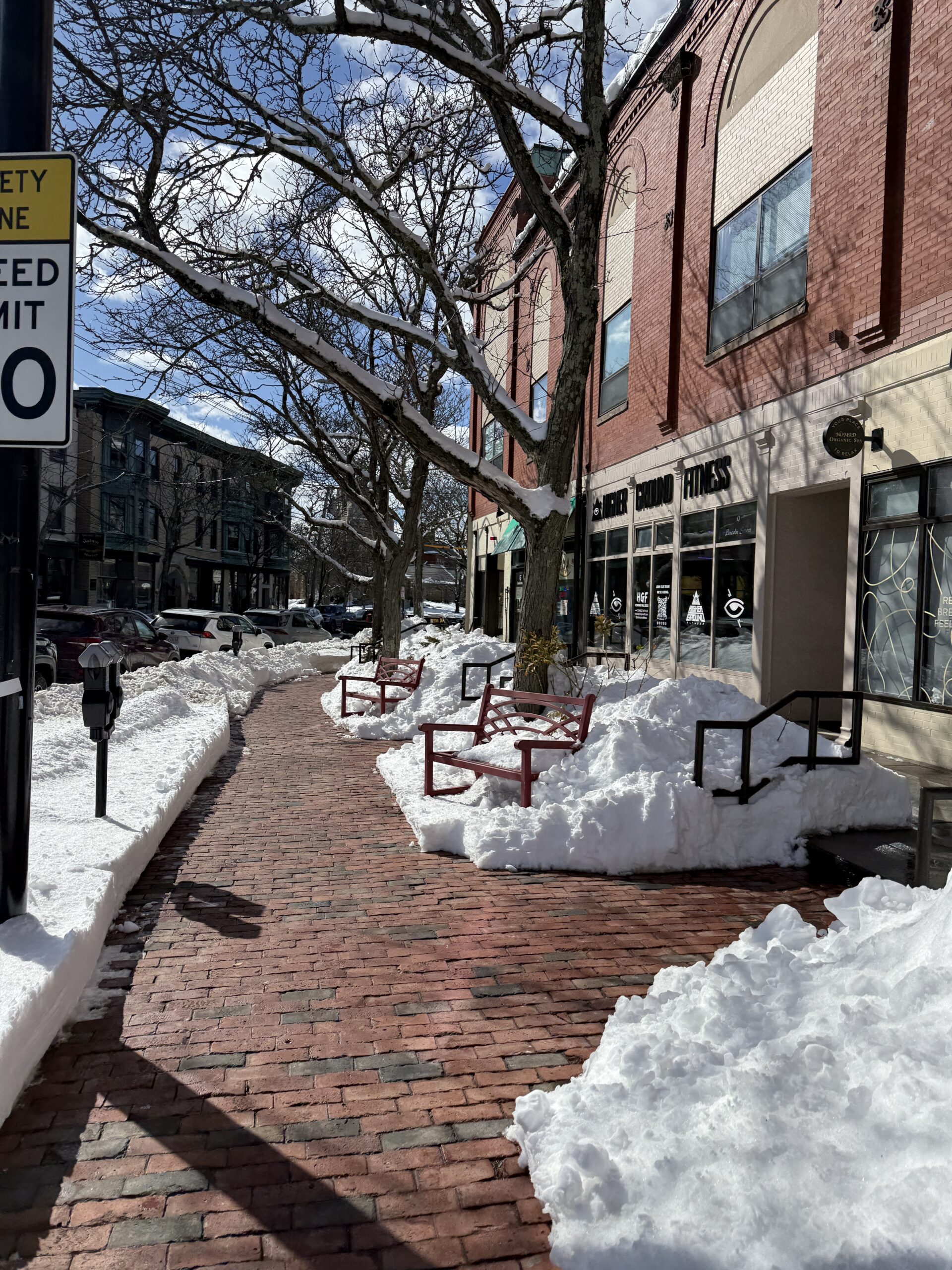
    In Newton Centre, the snow was so much that several businesses stayed closed a day or two after Monday’s blizzard. In Newton Highlands, pedestrians gingerly stepped through narrow shoveled strips of sidewalk. In Newtonville, residents complained about the slush and ice that is everywhere but mostly took this unrelenting winter in stride.

    “I think it’s given us a lot of highlight moments,” said Kerry Murphy, a cybersecurity software engineer who works remotely from home. “It’s given people time to do the traditional New England ‘get snowed in’ activities — spending time with family, catching up on Netflix, baking. I think over the past few years we may have missed that a little bit.”

    Less than a month after a massive storm walloped Newton with nearly 2 feet of snow, a historic blizzard dropped another 16 inches on the city this week. Snowbanks are piling up on street corners. Many sidewalks are unwalkable. Residents and businesses are struggling to keep up with the seemingly nonstop need to remove snow from their driveways, lots and sidewalks.

    But if you think that people have had enough of this brutal winter, think again. Not everyone is fed up. Some people actually love it. Those who don’t are coping with a shrug.

    Here is how three of Newton’s villages are contending with the harsh winter of 2025-26:

    Newton Centre

    As the snow piled up — and more continued to fall — Newton Centre fell quiet. Snowbanks lined the stairs leading from the MBTA station up to Union Street, where only a handful of pedestrians entered businesses.

    Several storefront doors glowed with neon “closed” signs. But local shop Carla Shaw was open.

    Carla Wahnon said she is tired of the snow slowing down her local jewelry business. Photo by Kate Brodkin

    Inside, owner Carla Wahnon said this stretch of winter weather has been a burden for her jewelry and sustainable fashion business. “Comparing last year’s January and February to this year’s, I’ve seen a decline on business, because the cold is too much,” Wahnon said.

    Originally from Brazil, Wahnon said she thinks the snow is beautiful, “if you ski.” “But if you have to get ready and go to work, it doesn’t make things easier.”

    Though she doesn’t love the snow, Wahnon said she was impressed by how well the city did cleaning the sidewalks and streets. “The streets were completely clean,” she said.

    Dan Solo, a resident of Newton Centre, said he’s tired of the snow and the state of the crosswalks in Newton. Photo by Kate Brodkin

    Inside Blackbird Donuts, Newton Centre resident Dan Solo said he felt the opposite. 

    “I just feel like it’s very inconsistent,” he said. “There’ll be a section where it’s plowed and cleaned and then stretches where you’re just stopped.” Solo said the crosswalks weren’t plowed wide enough for more than one person to cross the street at a time.

    But some business owners are embracing the weather.

    Jill Herer said she loves waking up in the morning and seeing snow. Photo by Kate Brodkin

    Jill Herer, owner of the Finer Consigner in Newton Centre, said she loves the snow.

    “Everyone likes to be snowed in for a good snowstorm,” she said. “It’s a great excuse to stay home, stay in your pajamas, and relax. It reminds me of being a kid.”

    Still, Herer acknowledged the challenges the snow brings for small businesses. “The fact that people cannot get from their car straight shot to the sidewalk hurts me business-wise,” she said.

    Hedy Jarras, who lives in Newton Centre and owns Sweet Tomatoes Pizza, feels far less enthusiastic about the snow.

    “I hate it,” she said. “It’s terrible for business — it’s messy.”

    The restaurant’s deliveries, originally scheduled for Monday, were delayed until Thursday because of the blizzard.

    “It’s been a lot of running around and trying to scoop up some stuff that is needed,” she said. “It’s really crippling for business.”

    Hedy Jarras, owner of Sweet Tomatoes. Photo by Kate Briodkin

    Newtonville

    Snowplows rumbled through the streets of Newtonville as snow blew across sidewalks and roadways.

    In the village center, crews in reflective jackets spread salt that turned slushy shades of pink against the snow-covered pavement. Pedestrians stepped carefully over icy sidewalks. Some welcomed the return of winter weather.

    “We are back to a tried-and-true New England winter,” said Murphy, the cybersecurity engineer.

    For remote workers like Murphy, the storm has posed few disruptions. For students and others who commute, the experience has been more challenging.

    “It was hard to get out of my house,” said Hadley Hamley, an employee at Rancatore’s Ice Cream and Yogurt. Hamley, who recently graduated from the Catherine Hinds Institute of Esthetics in Woburn, said she paid $100 for a one-way Uber ride during the storm.

    Business at Rancatore’s has remained steady, Hamley said. Although winter months typically bring a slowdown, she noticed an uptick in customers ahead of the blizzard.

    “People actually like to stock up before the storm,” she said.

    While the storm presents a rare opportunity to bundle up and spend family time, this is not everyone’s reality. For snow removal crews, the storm has meant long hours.

    “It’s been long hours for me and my crew,” said Raymond Ratchford, a snow removal worker, as equipment hummed nearby. He said the most difficult part of the job is ensuring equipment is ready, as trucks and snowplows occasionally malfunction.

    Overall, he said crews have managed conditions without major complaints.

    “They take pretty good care of the roads out here,” Ratchford said.

    Newton Highlands

    Approaching the Newton Highlands T stop on the Green Line, the fresh powdered snowfall makes the place appear as a winter wonderland. Once pedestrians are off the T platform, however, the place is navigable only through narrow paths through the sidewalks, with snow walls up to their knees.

    Nico Andrea, 20, spent his afternoon shoveling snow in an attempt to make a path for his roommate’s car to get out.

    Nico Andrea shovels snow after a blizzard in Newton. Photo by Lea Tran

    Andrea then had to clear out his driveway, which he estimated would take two hours solo because his roommate was suffering from a back injury.

    Throughout the neighborhood’s streets, residents spent their afternoons the way Andrea did.

    Jonathan Roses, 82, was shoveling his porchway after the snow plowers he hired made the entryway too narrow. The plows that cleared the dental office across the street had dumped the snow in front of Roses’ home, forcing him to make his own pathway to get out. It happens with city plows, too, he said.

    Jonathon Roses, retired Newton resident, shovels snow after a late February blizzard. Photo by Lea Tran

    “What happens every year is plows that the city hires, they block the corner,” Roses said. “And it’s impossible for me to open it up for pedestrians to go across, but people usually either walk on the street, or if there’s another path, they go.”

    Roses does not mind snow days too much, though, as it gives him an opportunity to exercise while shoveling and also catch up on “Grey’s Anatomy.” He’s currently on season 15.

    The covered sidewalks and large snow walls have forced pedestrians to walk in the main roads in Newton Highlands to get to their destinations.

    Mildred Parro, a Newton nanny, is taking the winter weather in stride. Photo by Lea Tran

    Mildred Parro, 32, nanny to a newborn, pushed a stroller when she was met with an unclear segment of the sidewalk. Unable to get through with a stroller, Parro turned around to find a new route.

    Parro said her driving commute from Watertown into Newton was fine but navigating the Newton streets as a pedestrian was much worse.

    “It’s bad when we go for a walk, especially when I’m with him,” she said, gesturing to the large stroller. “But today’s kind of clean, just not all the streets.” 

    Parro has noticed some improvements with the city’s snow removal. 

    “Last time two weeks ago, it was really bad. I couldn’t even go out with him because all the sidewalks were covered,” she said.

    While inconsistent snow removal plagues much of the neighborhood, the Newton Highlands village center was fairly clear in comparison.

    Nearly all the businesses were open, with a few customers in each shop, whether it were a cafe, salon or pilates studio.

    Eamon Porcello, barista, and Ross DeMore, manager, at Lakon Paris Patisserie. Photo by Lea Tran

    Lakon Paris Patisserie, a French-inspired cafe, was open for business Tuesday. Employees Eamon Porcello, 25, and Ross DeMore, 37, both laughed when asked how business has been at the cafe, which has gone viral for its croissants and other flaky pastries that normally have the place packed.

    “It’s been super dead and super slow today,” DeMore said.

  • Coyote sightings surge across Newton, with West Newton emerging as hotspot

    Coyote hunting along a river. Public domain photo

    Dolan Pond is knee-deep in snow and ice this time of year, but that doesn’t stop dog walkers—or coyotes—from roaming the area.

    “The coyotes are always circling up there,” said Joseph Castagnino, a dog walker and Auburndale resident.

    Nearby, a scatter of feathers lay across the snow—evidence, Castagnino said, of the predators’ presence.

    Newton police said they have received dozens of reports of coyotes across the city since the beginning of the year. 

    “The Newton Police Department is aware of several recent coyote sightings throughout the city,”  the department said in a Facebook post in late January. “Animal Control and responding officers have assessed the animals and determined the coyotes observed are in good health.” Recent sightings reflect a broader increase. According to Newton’s “Report a Coyote Sighting” tracker, there were 124 reported sightings in 2025. In the first six weeks of 2026 alone, there have already been 86 sightings, putting the city on pace for a significantly higher total if the trend continues.

    The increase may be linked to mating season, when coyotes are more active and more visible as they search for mates and establish territory, according to the Southwest Wildlife Conservation Center.

    City data show sightings are widespread but unevenly distributed. A heat map of reports from the past 12 months shows clusters throughout Newton, with the highest concentration in West Newton and additional hotspots in northern and central neighborhoods. One cluster in West Newton recorded more than 40 sightings, with nearby areas reporting more than a dozen each. Many of the sightings appear near wooded areas, parks and residential green corridors.

    “I was driving at night in Auburndale and had to stop in the middle of the road to swerve because of a coyote,” said Zachary Grinspoon, a residential specialist and lifelong West Newton resident.

    “They were always in my backyard growing up,” Grinspoon added. “But they never caused any harm.”

    Attacks on humans are extremely rare, but coyotes may prey on small animals, including cats and small dogs.

    Despite the increase in sightings, local veterinarians say there has been little evidence of conflict.

    A representative at Newton Animal Hospital said the hospital has not treated any recent coyote-related pet injuries this year.

    Back at Dolan Pond, Castagnino said his dog, Jack, remains unfazed.

    “Jack treats them as playthings or something to chase,” he said, holding the excited Catahoula leopard dog on a tight leash.

    City officials advise residents to remain alert, keep pets supervised and report sightings, as coyotes continue to be a visible part of Newton’s suburban landscape.

    ****

    This story is part of a partnership between the Newton Beacon and the Boston University Department of Journalism.

  • Coyote sightings surge across Newton, with West Newton emerging as hotspot

    Coyote hunting along a river. Public domain photo

    Dolan Pond is knee-deep in snow and ice this time of year, but that doesn’t stop dog walkers—or coyotes—from roaming the area.

    “The coyotes are always circling up there,” said Joseph Castagnino, a dog walker and Auburndale resident.

    Nearby, a scatter of feathers lay across the snow—evidence, Castagnino said, of the predators’ presence.

    Newton police said they have received dozens of reports of coyotes across the city since the beginning of the year. 

    “The Newton Police Department is aware of several recent coyote sightings throughout the city,”  the department said in a Facebook post in late January. “Animal Control and responding officers have assessed the animals and determined the coyotes observed are in good health.” Recent sightings reflect a broader increase. According to Newton’s “Report a Coyote Sighting” tracker, there were 124 reported sightings in 2025. In the first six weeks of 2026 alone, there have already been 86 sightings, putting the city on pace for a significantly higher total if the trend continues.

    The increase may be linked to mating season, when coyotes are more active and more visible as they search for mates and establish territory, according to the Southwest Wildlife Conservation Center.

    City data show sightings are widespread but unevenly distributed. A heat map of reports from the past 12 months shows clusters throughout Newton, with the highest concentration in West Newton and additional hotspots in northern and central neighborhoods. One cluster in West Newton recorded more than 40 sightings, with nearby areas reporting more than a dozen each. Many of the sightings appear near wooded areas, parks and residential green corridors.

    “I was driving at night in Auburndale and had to stop in the middle of the road to swerve because of a coyote,” said Zachary Grinspoon, a residential specialist and lifelong West Newton resident.

    “They were always in my backyard growing up,” Grinspoon added. “But they never caused any harm.”

    Attacks on humans are extremely rare, but coyotes may prey on small animals, including cats and small dogs.

    Despite the increase in sightings, local veterinarians say there has been little evidence of conflict.

    A representative at Newton Animal Hospital said the hospital has not treated any recent coyote-related pet injuries this year.

    Back at Dolan Pond, Castagnino said his dog, Jack, remains unfazed.

    “Jack treats them as playthings or something to chase,” he said, holding the excited Catahoula leopard dog on a tight leash.

    City officials advise residents to remain alert, keep pets supervised and report sightings, as coyotes continue to be a visible part of Newton’s suburban landscape.

    ****

    This story is part of a partnership between the Newton Beacon and the Boston University Department of Journalism.