Author: Eli Pekelny

  • Energy advocate hired through state grant will help Brookline residents with home energy efficiency

    Energy advocate hired through state grant will help Brookline residents with home energy efficiency

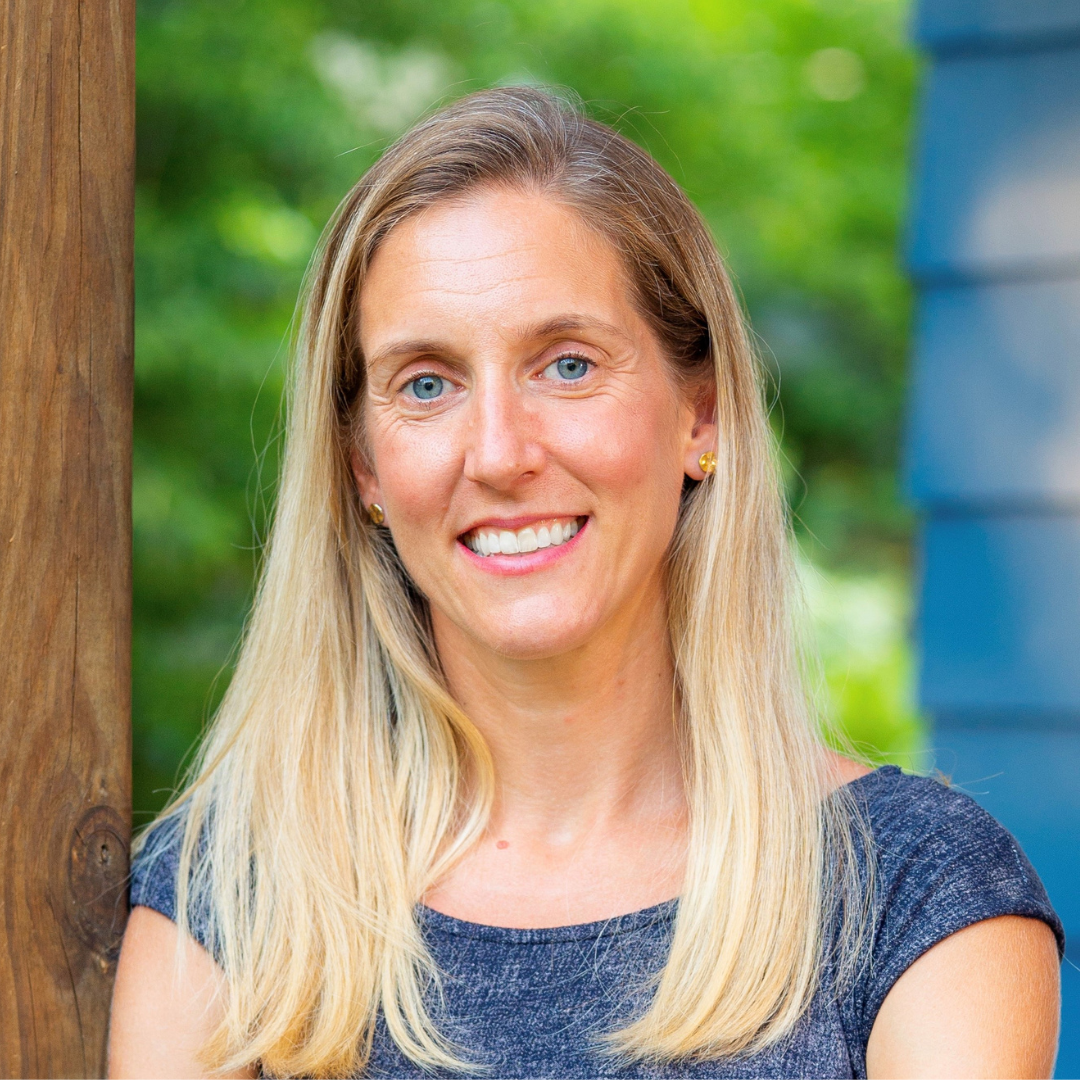
    Caroline Staudt was recently hired as an energy advocate by the town. Photo courtesy town of Brookline

    Brookline has hired an energy advocate to provide residents with free guidance on how to make their homes as energy efficient as possible.

    Funding for the position comes from a $126,000 grant from the Mass Save Community First Partnership. Mass Save, a statewide initiative that aims to lower energy usage and costs, selected 58 communities to participate in the partnership. 

    Caroline Staudt, Brookline’s new energy advocate, said her ambition is to empower homeowners, renters, landlords and business owners to make energy efficient choices through incentives, outreach and education. 

    “My position is designed to outreach to all residents in Brookline,” Staudt said, “especially among those who are traditionally underserved by energy efficiency programs.”

    Staudt, who has a background in real estate, said she is passionate about energy efficiency. When people make their homes more energy efficient, she said, they make their homes not only more climate-friendly but more comfortable.

    “I am here to demystify the program and to make the process easier for people, so that more homeowners feel empowered to take advantage [of the program],” Staudt said.

    In order to best utilize her services, Staudt said there is one crucial first step: a free home energy assessment, in which a professional assesses a home to sniff out possible energy efficiency improvements. Staudt said her job is to help people understand what their home energy assessment recommends as well as give tips as to how to follow up.

    One common way residents can increase the energy efficiency of their homes, Staudt said, is to air seal and better insulate them. Doing so reduces points of entry for pests and pollen as well as reduces energy usage, which can be “great on the wallet,” she said.

    “There are a lot of Brookline residents who may have heard the words ‘Mass Save’ but not really know what that means,” Staudt said. “My hope for those residents is that I can really educate them about what the Mass Save programs are, how they can take advantage and really help them get started.”

    State Rep. Tommy Vitolo, a former energy consultant whose district includes part of Brookline, said it can be difficult to navigate through all of the energy efficient choices one can make for their home.

    “Having a navigator — a person who is familiar with Mass Save and the contractors and the technologies and the different rebates or subsidies — will clearly help Brookline residents make the best choice for their family about how to invest in their home, to reduce energy consumption,” Vitolo said.

    Vitolo said there is “no one-size-fits-all” solution for Brookline homes, so each residence will have different areas of energy consumption to address. With Staudt in the mix, Vitolo said he is excited to see Brookliners receive help in making their homes more energy efficient. 

    “Fundamentally, every therm of natural gas, every kilowatt-hour of electricity that someone doesn’t consume not only saves them money, but it does result in cleaner air and cleaner water and a better future for our children,” Vitolo said.

    Kathleen Scanlon, an architect certified in energy-efficient building design, is a co-founder of the Brookline chapter of Mothers Out Front and member of the town’s Zero Emissions Advisory Board (ZEAB), two groups that are collaborating to provide accessible information on energy efficiency for the community through the campaign Electrify Brookline. 

    “As a mother, it was really important for me to see my children’s future evolve into buildings that were more energy efficient and sustainable,” Scanlon said.

    After moving from California to Brookline about 20 years ago, Scanlon said she didn’t see the same push for energy-efficient buildings on the east coast compared to the west. This pushed her to found Mothers Out Front and join ZEAB, as well as underscores her support for Staudt.

    “[Staudt] is a wealth of information,” Scanlon said. 

    Paul Ham, a home improvement contractor and member of ZEAB’s Residential Working Group, called Staudt an “amazing resource.” 

    “Ethically speaking, moving towards electrification is probably the right thing to do,” Ham said. “We’re at a kind of a pivotal point, like an inflection point, where I think a lot of the kind of stuff we can do to our homes are affordable and effective.” 

    Staudt will hold monthly office hours to discuss energy efficiency with residents. The first were on March 18. She said she will also arrange one-on-one meetings with those who are interested.

    “People want to take action, but they don’t know where to start, and sometimes not knowing where to start means that somebody just doesn’t take action,” Staudt said. “I hope that by being here and working with the town, I am able to get the word out that if you don’t know where to start — start with me.” 

    This story is part of a partnership between Brookline.News and the Boston University Department of Journalism.

  • With new survey, town seeks to find out what seniors need

    The Brookline Senior Center. Photo courtesy of Brookline Senior Center

    Emily Williams’ father was the best French chef there was, by her standards. Williams’ favorite recipe of his was pulled from a Julia Child cookbook — the tarte aux pommes, or apple tart. It features a shortcrust pastry base, glazed apple slices and lots of butter.

    “Every time we make a French dish, I think of him,” Williams said.

    Williams’ father died when she was a young adult, after a fall in his rural Maine home. He was 76.

    “If you’re an isolated adult and you’re kind of in trouble, you’re going to need to know who to call,” Williams said. “If the seniors of that community know about their local senior center, they have a much better chance of staying connected.”

    Creating that connection is one of the main goals of the town’s new senior survey, said Williams, who is the director of the Brookline Council of Aging and Senior Center.

    Brookline released a townwide survey to assess the needs of Brookline’s seniors in order to improve town resources and programs for its older population. 

    Residents 60 years and up are encouraged to fill out the survey, which is available online  and has been mailed to around 5,000 people. Paper copies of the survey are available at Town Hall, the Senior Center and all three Brookline libraries. The survey is open until March 20.

    The survey was made possible through a collaboration with the Gerontology Institute at the University of Massachusetts Boston. It is funded partly by the town and by a $50,000 state grant.

    The survey will help town officials understand the experiences of Brookline’s seniors — who make up over 20% of the town’s population — in order to better plan for what lies ahead, Williams said.

    “We want everybody to fill out the survey so we can plan for their future, so they can stay in Brookline,” Williams said. “We can have them live really healthy, really vibrant lives and not have to leave.”

    The survey is offered in multiple languages, such as English, Spanish, Russian, Korean and Chinese. 

    “We want a loud and vocal group of residents to be able to directly have input into the future of aging in Brookline,” Williams said, “even if English is their second language.” 

    Caitlin Coyle, the director of the Center for Social & Demographic Research on Aging at UMass Boston, was part of the team that organized the survey. After a working group of residents and council members came together, they combed through the survey, “question by question,” to make sure each one was vetted and air tight, Coyle said.

    “We’re not just coming in and giving you the same survey that we’ve given at every community,” Coyle said. “We’re really taking the time to make sure that it aligns with Brookline and that people are directly involved in the process, so that the information that is produced can be best used and acted upon.”

    The data collected will be used to improve quality life not only for older adults but for people across generations, Coyle said.

    “If we widen sidewalks for wheelchairs and walkers, we’re also making them wide enough for strollers,” Coyle said. “If we make shaded seating available for seniors, we’re also making it available for people with pets.”

    When a community takes initiative to understand the senior population, Coyle said it showcases what the community values.

    “We’re all going to get there,” Coyle said.

    Joan Lancourt, a retiree living in Brookline, was on the advisory committee for the senior survey, meaning she was there from the beginning. At 84 years old, she said she has a “personal stake in the game.”

    “Society hasn’t done a very good job to date in really looking at what older people need,” Lancourt said. “Finding out what those are is critical to being able to provide the services that are most needed.”

    Lancourt said there probably are gaps in senior services that the town will be able to fill once the survey responses roll in.

    Some changes that Lancourt hopes to see following the survey include services for seniors with fixed incomes, mobility accommodations and technology support. 

    “But until we have more data, it’s like throwing spaghetti at a wall and seeing what sticks,” Lancourt said.

    Lancourt said she wants to ensure that everyone has access to what they need.

    “The only way that we can really do that is to ask them,” Lancourt said.

    This story is part of a partnership between Brookline.News and the Boston University Department of Journalism.

  • Brookline plans to add 25 new Blueb2-26ikes stations

    A Bluebikes station in Brookline. Photo by Celeste Alcalay

    An expansion of 25 Bluebikes stations across Brookline is slated to start this year after months of planning.

    The town has seen exponential growth in use of the Boston-area public bike-share service. In 2015 people took nearly 33,000 rides from its stations in Brookline, according to Bluebikes data . That number rose to 131,000 in 2020 and over 236,000 in 2025. Despite the growth, the last time Brookline got additional Bluebike stations was in 2021, when two stations were added.

    Brookline’s 14 stations are primarily concentrated in north Brookline, while some parts of town have none. The town’s four-year plan  to add 25 Bluebikes stations will fill some of these gaps all across Brookline. The project will be funded mainly by grants, according to a draft of the plan. 

    The town will host a virtual public meeting  on the project Thursday, Feb. 26, from 6 to 7:30 p.m., where there will be a discussion about the placement of these stations.

    Sam Downes, Brookline’s deputy director of engineering and transportation, said the new Bluebike stations will improve mobility access in the town in an environmentally friendly way.

    “Brookline is really excited at the opportunity to expand this network and provide alternate means of transportation for both residents and visitors to the town,” Downes said.

    Bluebikes’ stations consist of bike docks and a kiosk where one can purchase trip passes, find nearby stations and see bike availability in real-time. It costs about $3 to rent a bike for 30 minutes and $10 to rent one for 24 hours. Long-term memberships are also available.

    The town is one of four municipalities — including Somerville, Cambridge and Boston — that kickstarted the Bluebikes network in 2012, when it was called the Hubway system. Today, there are almost 600 Bluebike stations across 13 municipalities in the Boston area.

    Of the 13 municipalities, Brookline ranks 7th in terms of number of stations as of November 2025. Downes said improvements need to be made.

    “Seeing that we have not added any new stations in the last five years just means that we’ve fallen behind in terms of playing our role in the network,” Downes said. “By improving the network, we improve mobility for all of the riders in the system.”

    Downes said he anticipates some pushback regarding curb space use and parking reduction, although he said fewer than half of the new stations would eat into parking spaces.

    “It’s a tough balance, and I look forward to hearing more from the public,” Downes said. “Hopefully a lot of the people — the residents — will see that we really worked hard to minimize parking reduction.”

    Megan MacGarvie, a bicyclist and business professor at Boston University, used one of her classes to determine where the Bluebike stations would be placed based on ridership data and a public survey that went live in May 2025. MacGarvie’s class analyzed publicly available Bluebike data, identifying patterns and avoiding town constraints before presenting their proposed station locations to the town.

    “I really appreciated [Downes’s] willingness to collaborate on this,” MacGarvie said. “It was just a really great experience for the students to see a real world example of this kind of analysis and decision making.”

    David Kroop, a retired attorney, is the president and a founding member of the advocacy group Biking for Brookline. He said he used to enjoy biking to work.

    “It was faster than public transportation. It was a lot of fun,” Kroop said. “You arrived at work feeling refreshed and ready to focus on the work at hand.”

    For that reason, Kroop said he is all for the Bluebike expansion. He said more Bluebike stations would make it possible for those who don’t own a bike to get around on two wheels.

    “Expanding Bluebikes I think is really critical for expanding the number of people who bike in Brookline and bike through Brookline,” Kroop said.

    Downes, who bikes to work, said he is excited to hear what the public has to say about the project at the meeting.

    “Bluebikes is just another way for people to have equal access to getting around,” Downes said. “It’s just showed me that we really have to think out of the box when it comes to where we place these stations.”

    This story is part of a partnership between Brookline.News and the Boston University Department of Journalism.

    Correction: A previous version of this story used the wrong title for deputy director of engineering and transportation Sam Downes.

  • How is Brookline handling this harsh winter? Snow far, snow good

    Ian Martz clears off his top deck on February 24, 2026. Photo by Milena Fernsler

    James Danforth spent an hour trying to dig his car out of ice and snow on Corey Hill before finally giving up.

    “Quite a storm we had,” Danforth said, leaning on a shovel. “The side streets are terrible.”

    Danforth, 60, lent a hand to a neighbor whose snowblower broke. “Paul’s too old for shoveling,” he said. Danforth, a roofer, said he loves the work and had been helping neighbors shovel their driveways since before sunrise Tuesday.

    “It’s good exercise,” he said.

    Monday’s blizzard piled another 17 inches of snow on Brookline less than a month after a late January storm dropped nearly 2 feet. If the winter of 2025-26 feels particularly brutal, Brookline residents are taking it in stride – maybe even enjoying it.

    “It’s been a while since we’ve had a real winter,” said Elliot Shimer, a health care strategist who was waiting for the T in Coolidge Corner. “It’s actually kind of fun to have, like, a real snowfall.”

    Daniela Santos and Daniel Lounsbury walked out of Trader Joe’s in Coolidge Corner Tuesday, groceries in hand and snow boots on, and headed to Lounsbury’s apartment in Brighton. They wanted to be prepared for the trek.

    “[We] learned our lesson,” Lounsbury said, smiling. “[Santos] wore Uggs last time.”’

    “It wasn’t fun,” said Santos, a Boston University student. “My Uggs are ruined.”

    Lounsbury, a BU alum, said he and Santos had plans to sled in the “impressive” snowfall. He was also impressed by how well Brookline cleared the roads.

    “The last storm, they didn’t do as well clearing up afterwards,” he said.

    A few doors down, Stephen Chen and his wife, Christina, shoveled snow outside Flake Bakery, their Portuguese pastry shop, as well as neighboring storefronts.

    Stephen Chen takes a break from shoveling outside his pastry shop Flake Bakery. Photo by Eli Pekelny

    “I’m just helping the neighbors shovel,” said Chen, wearing a Donald Duck apron and a short-sleeved shirt.

    Chen called Monday’s blizzard “just another snow day.”

    “I used to see this type of snow, I feel, almost every winter. Now you rarely see it,” Chen said. “It’s probably a shocker to most, but I’m just kind of just used to it. It’s nice to see.”

    Susan Silveira moved from Brookline to Portland, Oregon, in late 2025. She flew back here for a doctor’s appointment Monday. With the blizzard, her appointment was rescheduled for Tuesday and then canceled altogether. She didn’t even mind.

    “It wasn’t terrible, because I have friends here, and I really enjoyed seeing them,” Silveira said.

    Even with her flights back to Portland delayed, Silveira said she holds no vendetta against the snow.

    “In Portland, there’s no snow, so it’s actually kind of a pleasure for me to see the snow, because I’m accustomed [to it,]” Silveira said. “It’s been a pleasurable several days, even with this appointment cancellation.”

    ‘It is beautiful’

    Corey Hill might not be the Tatra Mountains of his childhood in Poland, but Andrei Prey took his skis to the slopes there Tuesday.

    “It is beautiful, eh?” he said, gesturing to the snow-laden trees around him. “Normally there’s no chance to ski because there’s no snow.”

    He pulled down his sunglasses to return to his laps around Corey Hill Playground, where he was the sole visitor. “Profiter de la vie!” he said, as he skied away, French for “make the most of life.”

    Across the street, kids were doing just that with their day off from school. One child tasted fistful after fistful of snow, while another amassed a pile of the stuff with a miniature red shovel. Others flew down Corey Hill on sleds, shrieking when they wiped out, and ran back up to repeat the experience.

    Dillion Tharp (far left) takes it easy, while Lauren Tharp gives Jordan Tharp a push and Nora, Dillon’s classmate, works on a snow pile. Photo by Milena Fernsler

    High school math teacher Lauren Tharp gave her son’s sled a kick to send him down the hill, while her other son, 3-year-old Dillon, sat motionless on a reclining park chair, staring into space.

    “Dillon doesn’t like the snow,” she said. 

    He’s not the only one, of course. Not everybody is a fan of this relentless winter.

    Bill Cook, a retiree and part-time Brookline resident, lives on the South Shore most of the time, which is where he was headed after his trip to Trader Joe’s. He said the snow situation here is a lot better than what he’s dealing with on the shore.

    “We’re buried down there,” Cook said.

    However, he did have a comment about the snow management in Brookline.

    “The streets are pretty sloppy in a lot of places,” Cook said. “I don’t want to seem cranky, but for the taxes you pay, they probably should do a better job clearing the streets.”

    In an email to Town Meeting members and other Brookline officials, public works commissioner Erin Chute asked for patience as crews work to clear roads.

    “While conditions are improving, recovery from a storm of this magnitude is a multi-day effort,” Chute wrote. “Operations will continue for several days as we work toward restoring normal conditions across the community.”

    David Hill, a Brookline Police Department spokesperson, said there were no major incidents related to the blizzard as of Tuesday.

    “A few vehicles stuck in the snow, some wires down calls, some road hazard calls, seven traffic crashes … and a bunch of cars in violation of the parking ban,” he wrote in an email to Brookline.News.

    The snow-related delays on the MBTA have also been wearying for some.

    Ian Lebovitz, who has worked at J.P. Licks in Coolidge Corner, said his commute from Somerville has become increasingly difficult.

    “Now, it’s like an hour on the T,” Lebovitz said. “I get on the green line, ride it till Government Center, switch over to a different train, and then ride it another 30, 40 minutes… The worst part is just waiting for the train to show.”

    Some people, of course, are simply tired of all the shoveling.

    Ian Martz shoveled the snow from the top deck of his house Tuesday, showering the sidewalk below, after excavating his driveway and walkways.

    “Fun times,” he said sarcastically.

    This story is part of a partnership between Brookline.News and the Boston University Department of Journalism.

  • A plan for 18 small apartments in a vacant office building turned into four big luxury condos. Housing advocates aren’t happy.

    A vacant office building at 1093 Beacon St. is set to be turned into luxury apartments. Photo by Eli Pekelny.

    A plan to convert a vacant Brookline office building into four luxury condominiums has raised concerns among local housing advocates who want the project turned into smaller, affordable housing.

    The building, at 1093 Beacon Street, had contained offices for decades, but the pandemic lessened the need for office space. This pushed the owners, Lloyd Rosenthal and Mark Blotner, to propose converting the space into 18 apartments – mostly studios or one-bedrooms around 500 to 600 square feet.

    After their plan fell through, they sold the building to Matt Ramey of Concept Properties for $6.2 million in 2024. Concept then proposed turning the building into four luxury condos.

    Each condo would fill an entire floor, spanning 1,800 to 2,600 square feet, and include three bedrooms, four bathrooms and a private elevator, architectural plans show. The basement garage would contain a turntable that directs automobiles into parking spaces and a lift to bring cars down from street level.

    The Zoning Board of Appeals unanimously approved this project in December. The developer now needs to submit final floor and landscape plans in order to get a building permit. Ramey did not return a reporter’s calls.

    Housing advocates told Brookline.News they prefer the previous plan, saying it would have improved affordable housing in Brookline.

    From empty to occupied?

    The building, which sits at the corner of Hawes Street, was originally intended for residential use, according to the developer’s attorney, Bob Allen. At the Zoning Board of Appeals meeting in December, Allen said the 13 vacant commercial units in 1093 Beacon go against the zoning laws of the multi-family district in which it is located.

    The project will contribute to the Brookline Affordable Housing Trust Fund, Allen told the board. A zoning by-law requires developers either include on-site affordable housing, or pay cash into the fund.

    The historic exterior of 1093 Beacon St. will be preserved, Allen said.

    “This is a great use of a building that’s been really sitting fairly empty for the last five years,” Allen said in the meeting.

    Allen did not return a reporter’s phone calls to discuss the project. A paralegal at his firm told Brookline.News he was occupied and could not be reached.

    Is luxury housing the best use?

    Local officials and advocates argue there are better uses of the building. 

    Steve Heikin, chair of the Brookline Planning Board and a member of the Brookline Housing Advisory Board, estimated that each condo will sell for $3 million at a time when affordable housing is desperately needed.

    “The Planning Board wants to see developers provide units that are not super luxury, large, expensive condominiums. We’re getting plenty of those,” said Heikin, a retired architect. “That’s what eventually happened with this particular building.”

    Heikin said the Planning Board was in favor of the previous plan to turn the building into 18 small apartments — save for one aspect.

    A proposed 60-foot accessibility ramp on the Hawes Street side of the building had its entrance at the back of the building. Heikin said the Planning Board thought this was not in accordance with the Americans with Disabilities Act.

    “We basically said, ‘If you can find a better solution for handicapped access, we’d like to see that,’” Heikin said. “In the end, that project was dropped.” 

    As it stands, 1093 Beacon is also not ADA compliant, although there are plans to install a lift with access to the basement on the Hawes Street side of the building.

    “This went from a project that was going to provide a sizable number of small units to four super luxury units,” Heikin said. “They’re clearly not going to have an affordable unit in the building.”

    Community leaders respond

    Although the December meeting did not include public testimony, Brookline residents have opinions about the project.

    Jonathan Klein, a board member of the pro-housing group Brookline for Everyone, said he opposes the project and preferred the original plan.  

    “I think housing is really critical for people’s well-being — having a decent, safe place to live,” Klein said. “We are dismayed that housing costs are so high and Brookline is becoming so exclusive, and we think that that’s a problem, both of supply and demand.”

    Klein said he is “not enthusiastic about this project at all.”

    “I don’t know why it was not developed when there was a proposal to do a much larger number of smaller units, which would have been much better,” Klein said.

    Randolph Meiklejohn, a member of the Zoning Board of Appeals, said deciding whether to approve a project comes down to  a “question of compliance” with zoning by-laws.

    “You could have a two-family house, take the whole place and turn it into one housing unit. And if that’s allowed by the zoning by-law, then you can do it,” Meiklejohn said. “For me, as a member of the Zoning Board of Appeals, I don’t have an opinion about whether that’s a good thing or bad thing.”

    Elizabeth Kane Tate, a communications professional, was one of 13 Brookline residents who wrote a letter of support for the current project.

    “The reality is that housing inventory in Brookline remains tight, and opportunities to add homes without dramatically changing the look and feel of the street are worth supporting,” Tate wrote. “Converting a mostly vacant commercial building into residential use is a sensible step in that direction.”

    Heikin said that one day he’ll decide that he doesn’t want to climb stairs and shovel snow anymore. He said he might look for something comparable to his current four-bedroom home.

    “If I sold my house — and still it’s worth a fair amount of money — I would not get as much money for this Victorian house as it would cost me to buy one of these units,” Heikin said. 

    This story is part of a partnership between Brookline.News and the Boston University Department of Journalism.

  • A plan for 18 small apartments in a vacant office building turned into four big luxury condos. Housing advocates aren’t happy.

    A plan for 18 small apartments in a vacant office building turned into four big luxury condos. Housing advocates aren’t happy.

    A vacant office building at 1093 Beacon St. is set to be turned into luxury apartments Photo by Eli Pekelny.

    A plan to convert a vacant Brookline office building into four luxury condominiums has raised concerns among local housing advocates who want the project turned into smaller, affordable housing.

    The building, at 1093 Beacon Street, had contained offices for decades, but the pandemic lessened the need for office space. This pushed the owners, Lloyd Rosenthal and Mark Blotner, to propose converting the space into 18 apartments – mostly studios or one-bedrooms around 500 to 600 square feet.

    After their plan fell through, they sold the building to Matt Ramey of Concept Properties for $6.2 million in 2024. Concept then proposed turning the building into four luxury condos.

    Each condo would fill an entire floor, spanning 1,800 to 2,600 square feet, and include three bedrooms, four bathrooms and a private elevator, architectural plans show. The basement garage would contain a turntable that directs automobiles into parking spaces and a lift to bring cars down from street level.

    The Zoning Board of Appeals unanimously approved this project in December. The developer now needs to submit final floor and landscape plans in order to get a building permit. Ramey did not return a reporter’s calls.

    Housing advocates told Brookline.News they prefer the previous plan, saying it would have improved affordable housing in Brookline.

    From empty to occupied?

    The building, which sits at the corner of Hawes Street, was originally intended for residential use, according to the developer’s attorney, Bob Allen. At the Zoning Board of Appeals meeting in December, Allen said the 13 vacant commercial units in 1093 Beacon go against the zoning laws of the multi-family district in which it is located.

    The project will contribute to the Brookline Affordable Housing Trust Fund, Allen told the board. A zoning by-law requires developers either include on-site affordable housing, or pay cash into the fund.

    The historic exterior of 1093 Beacon St. will be preserved, Allen said.

    “This is a great use of a building that’s been really sitting fairly empty for the last five years,” Allen said in the meeting.

    Allen did not return a reporter’s phone calls to discuss the project. A paralegal at his firm told Brookline.News he was occupied and could not be reached.

    Is luxury housing the best use?

    Local officials and advocates argue there are better uses of the building. 

    Steve Heikin, chair of the Brookline Planning Board and a member of the Brookline Housing Advisory Board, estimated that each condo will sell for $3 million at a time when affordable housing is desperately needed.

    “The Planning Board wants to see developers provide units that are not super luxury, large, expensive condominiums. We’re getting plenty of those,” said Heikin, a retired architect. “That’s what eventually happened with this particular building.”

    Heikin said the Planning Board was in favor of the previous plan to turn the building into 18 small apartments — save for one aspect.

    A proposed 60-foot accessibility ramp on the Hawes Street side of the building had its entrance at the back of the building. Heikin said the Planning Board thought this was not in accordance with the Americans with Disabilities Act.

    “We basically said, ‘If you can find a better solution for handicapped access, we’d like to see that,’” Heikin said. “In the end, that project was dropped.” 

    As it stands, 1093 Beacon is also not ADA compliant, although there are plans to install a lift with access to the basement on the Hawes Street side of the building.

    “This went from a project that was going to provide a sizable number of small units to four super luxury units,” Heikin said. “They’re clearly not going to have an affordable unit in the building.”

    Community leaders respond

    Although the December meeting did not include public testimony, Brookline residents have opinions about the project.

    Jonathan Klein, a board member of the pro-housing group Brookline for Everyone, said he opposes the project and preferred the original plan.  

    “I think housing is really critical for people’s well-being — having a decent, safe place to live,” Klein said. “We are dismayed that housing costs are so high and Brookline is becoming so exclusive, and we think that that’s a problem, both of supply and demand.”

    Klein said he is “not enthusiastic about this project at all.”

    “I don’t know why it was not developed when there was a proposal to do a much larger number of smaller units, which would have been much better,” Klein said.

    Randolph Meiklejohn, a member of the Zoning Board of Appeals, said deciding whether to approve a project comes down to  a “question of compliance” with zoning by-laws.

    “You could have a two-family house, take the whole place and turn it into one housing unit. And if that’s allowed by the zoning by-law, then you can do it,” Meiklejohn said. “For me, as a member of the Zoning Board of Appeals, I don’t have an opinion about whether that’s a good thing or bad thing.”

    Elizabeth Kane Tate, a communications professional, was one of 13 Brookline residents who wrote a letter of support for the current project.

    “The reality is that housing inventory in Brookline remains tight, and opportunities to add homes without dramatically changing the look and feel of the street are worth supporting,” Tate wrote. “Converting a mostly vacant commercial building into residential use is a sensible step in that direction.”

    Heikin said that one day he’ll decide that he doesn’t want to climb stairs and shovel snow anymore. He said he might look for something comparable to his current four-bedroom home.

    “If I sold my house — and still it’s worth a fair amount of money — I would not get as much money for this Victorian house as it would cost me to buy one of these units,” Heikin said. 

    This story is part of a partnership between Brookline.News and the Boston University Department of Journalism.

  • Art sale supporting immigrants’ rights comes to Brookline 

    A previous Art For All event at Aeronaut Brewing in Somerville. Photo by Michael Mauceri

    Art For All , a “pick-your-price” art sale where all proceeds support an organization that provides civic education to Boston’s immigrant community, will come to Brookline for the first time this weekend.

    The fundraising event will take place Saturday from 2 to 4 p.m. at the Brookline Teen Center at 40 Aspinwall Ave. Sculptures, paintings and drawings — all donated by local artists — will be for sale, with 100% of proceeds going to Brazilian Women’s Group, a nonprofit organization that supports Boston’s immigrant community through rights advocacy.

    Jeremy Fischer, a Brookline resident and high school adjustment counselor, is the founder of Boston For All, a volunteer-run community initiative that hosts events such as Art For All to support local organizations whose mission addresses the current political climate.

    Fischer wants to make one thing clear about Art For All: “It is not an auction.”

    Instead, the “pick-your-price” model serves as a way to reduce barriers for those who want to support whichever organization Art For All is partnering with, regardless of their financial circumstances.

    “Oftentimes art goes to people of significant means,” Fischer said. “But not only do people of means want to be a part of helping others — everybody wants to be a part of helping others. This is an opportunity for people to give what they think they should, or what they’re able to.” 

    This will be the sixth installation of Art For All and events like it since Boston For All started in 2017. Fischer said Boston For All as a whole came together after the 2016 presidential inauguration of Donald Trump, where he said there was an overwhelming feeling of “wanting to do something.”

    It all began with an event called Run For All, in which Fischer hosted a run around Jamaica Pond in Jamaica Plain. Runners who participated donated to the American Civil Liberties Union. Events that followed included Rock For All and Art For Abortion Access.

    “What we do is we just try to find an organization that is meeting the moment and make sure that all of the money that is donated in whatever way, goes directly to them,” Fischer said. 

    Brazilian Women’s Group, the organization partnering with Art For All this time around, joins the ranks of groups like City Life/Vida Urbana, La Colaborativa and The Boston Immigration Justice Accompaniment Network.

    Heloisa Galvão, a Jamaica Plain resident and journalist, is the executive director and co-founder of Brazilian Women’s Group. The nonprofit organization got its start in 1995 as a community-based group that mainly served as a place for Brazilian women to talk about their experiences in Boston.

    “I saw that people were talking for Brazilians when they didn’t know what they were talking about,” Galvão said. “We said, ‘We need to be visible. We need to occupy this space. We need to fight for our rights.’”

    Now Brazilian Women’s Group operates as a fountain of information for its members, specifically regarding immigrants’ rights, health advocacy and civic education.

    “I don’t care how you came here, first class or swimming,” Galvão said about her approach toward Brazilian Women’s Group. “You are a human being. You still have rights.”

    Silvina Mizrahi, a West Roxbury resident and art educator, is one of the several creators who will donate pieces of their work for this installation of Art For All.

    In the past, Mizrahi has donated pieces including bronze and silver sculptures, as well as mixed media on canvas. 

    “You feel good if your neighbor is feeling good,” Mizrahi said. “This is what motivates me.”

    In total, previous Art For All installations have raised over $61,000 for their respective organizations.

    Galvão said Brazilian Women’s Group is “privileged” to have been approached by Art For All.

    “Art is culture and culture is political,” Galvão said. “Art — for us — is a tool that make[s] our voice louder.”

    This story is part of a partnership between Brookline.News and the Boston University Department of Journalism.