
Author: Lea Tran

  • Council committee continues debating winter parking ban but postpones action

    Council committee continues debating winter parking ban but postpones action

    There’s an effort underway to repeal Newton’s winter parking ban. Courtesy photo

    A City Council committee revisited Newton’s controversial parking ban on Wednesday but held off again on taking action.

    It was the third time the item has been on the committee’s agenda since Feb. 18.

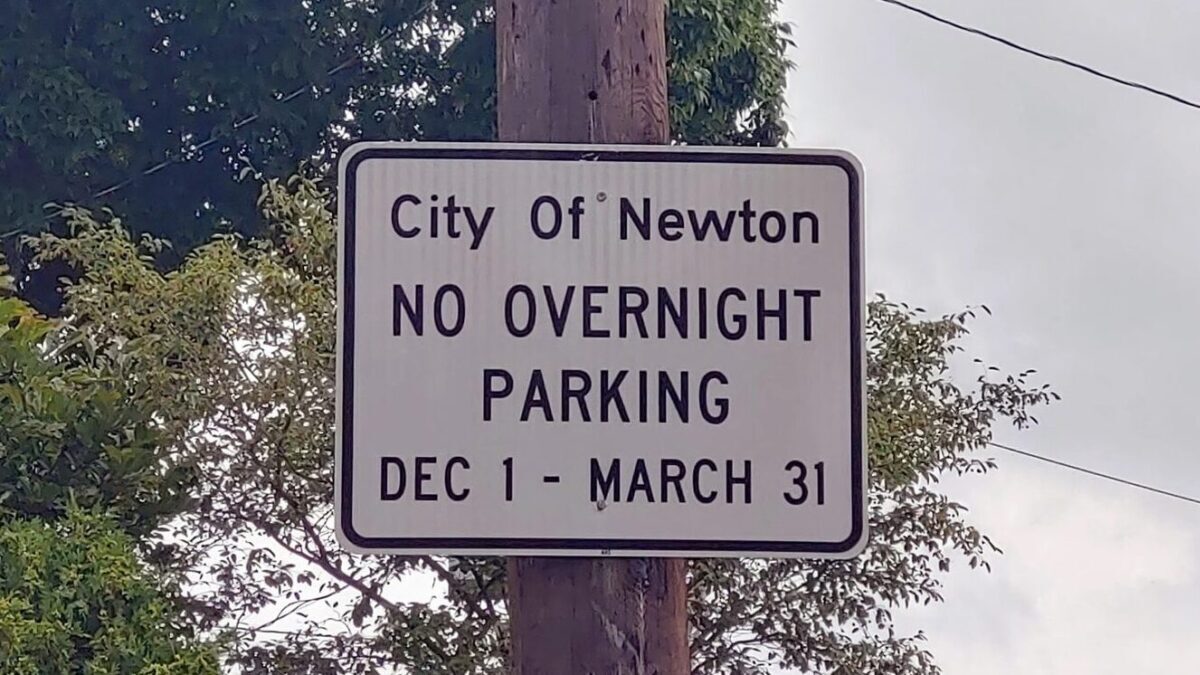
    The winter ban prohibits cars from parking on any public roads in Newton from 2 a.m. to 6 a.m.  from Dec. 1 until March 31. A violation can result in a $25 fine. Last November,  city voters narrowly voted against repealing the ban.

    Chair Tarik Lucas had asked committee members to bring goals to Wednesday’s meeting for discussion. Lucas brought his own goals for a redesigned parking ban: It should have a positive climate impact, be equitable, allow for navigable streets, be easy to enforce and easy to change.

    For the next hour, the committee members discussed the goals while voicing their opinions.

    Councilor Sean Roche requested to consider emergency vehicle response. Councilor Maria Greenberg asked for solutions to be data driven, looking at the parking patterns of each specific neighborhood. 

    “One size doesn’t fit all if you have unique neighborhoods with different needs,” Greenberg said.

    Greenberg also suggested possibly splitting the goal list into short- and long-term categories. 

    Lucas said he wanted to make clear this discussion was not intended to find a definite solution but provide a roadmap for a working group that would tackle this issue.

    “There’s nothing written in,” Lucas said. “We’re not etching in stone right now. It’s all in pencil not in pen.”

    The committee settled on a list of goals for a working group to consider when reworking the ban—street safety; a living, changeable document; and a timeline to find a solution by Dec. 1. The group would include five to seven people including people for and against the ban.

    Councilors suggested bringing in someone from the city’s traffic council because they know the streets and regulations.

    The council committee is expected to vote April 29 on whether to establish a working group.

    ****

    This story is part of a partnership between the Newton Beacon and the Boston University Department of Journalism.

  • Wegmans will offer delivery service to customers of  Chestnut Hill pharmacy after it closes 

    Wegmans will offer delivery service to customers of  Chestnut Hill pharmacy after it closes 

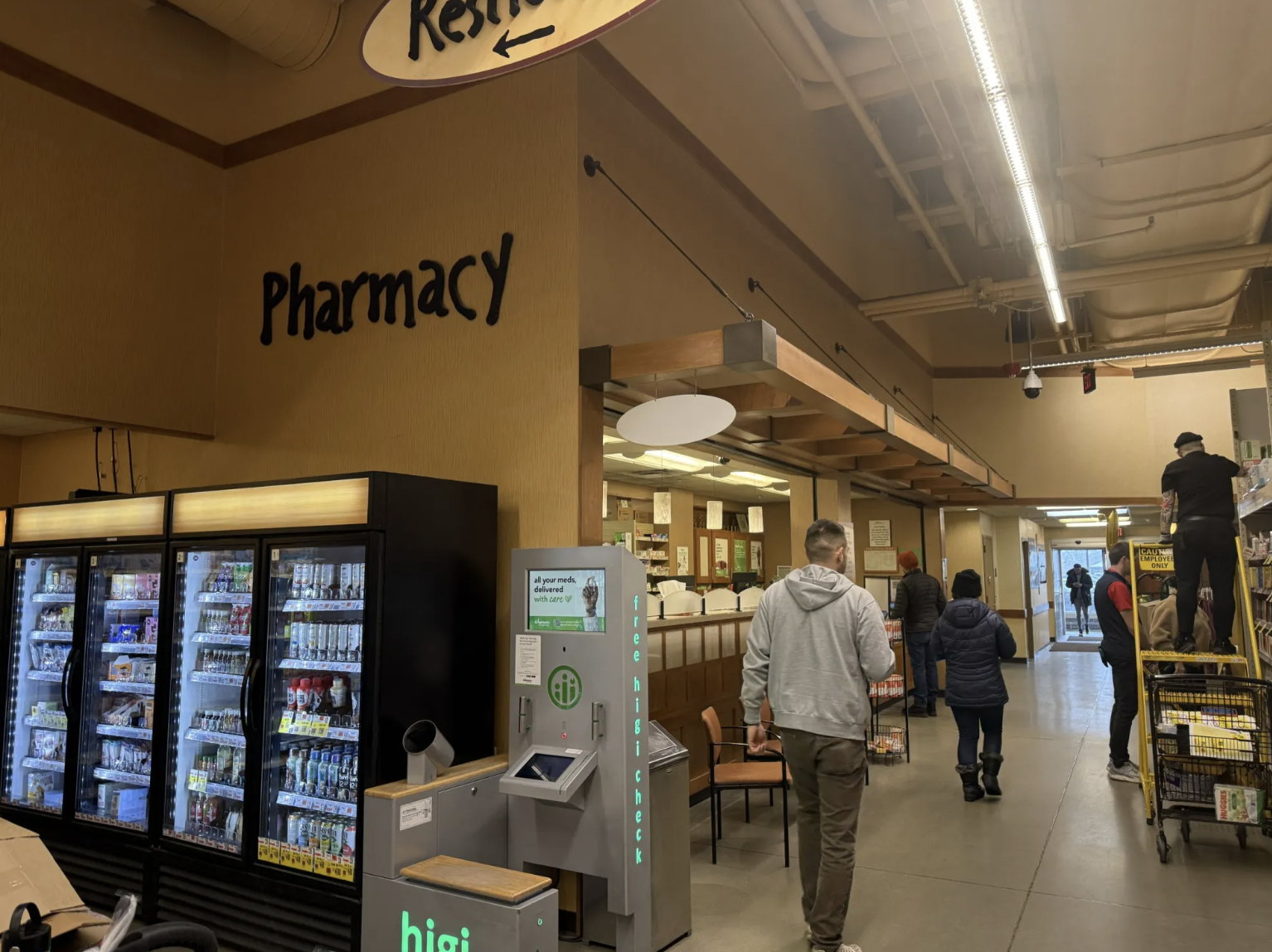
    The pharmacy at Wegmans in Chestnut Hill is set to close in April. Photo by Lea Tran

    Wegmans is offering free prescription delivery services to customers of its Chestnut Hill pharmacy, which is closing Saturday. 

    Jeff Freilich, who started a petition asking Wegmans to keep the pharmacy open, has been working with Julie Lenhard, the supermarket chain’s pharmacy services vice president, to spread the word about the concierge service to customers. Lenhard would not agree to an interview, but Wegmans emailed a statement about the decision to develop this service.

    “As a direct result of the customer feedback we’ve received, we are introducing the concierge level of service for our Chestnut Hill pharmacy customers designed to provide convenient delivery of prescriptions that require immediate attention, continuity of care, and personal support,” senior public relations coordinator Mandee Puleo wrote.

    Customers who have maintenance medications at the Chestnut Hill Wegmans can opt into a free home-delivery service, through which medication will be mailed to the person’s mailbox. Those interested should call the Chestnut Hill Wegmans at 617-762-2045.

    Customers whose medication requires special handling, such as refrigeration, will have access to free store-based delivery services. Home delivery would be provided by an employee at the Wegmans pharmacy in Westwood. Those interested should call the Westwood Wegmans at 781-234-0345. 

    These services will be available for Chestnut Hill customers for an indefinite amount of time, according to Wegmans.

    “I know this isn’t what everyone was hoping for,” Freilich said. “But I think at least in my opinion, it was a reasonable offer and something that seems to help.”

    There are no signs about the concierge service at the Chestnut Hill location. Freilich has emailed the information to everyone who signed his petition.

    “I am still a little bit uncomfortable not knowing if we’re reaching everybody,” Freilich said. 

    The company said the company is closing the pharmacy to make space for more grocery areas.

    The closure sparked controversy in the community, and more than 1,000 people signed Freilich’s petition since he created it Feb. 11. Government officials including state Rep. Greg Schwartz of Newton have expressed support for the effort to keep the pharmacy open.

    This story is part of a partnership between Brookline.News and the Boston University Department of Journalism.

  • Chris Boyd campaigns for Congress on a call to invest in region’s future

    Chris Boyd campaigns for Congress on a call to invest in region’s future

    Chris Boyd is still waiting for his American dream.

    Growing up in Bellingham, Boyd experienced firsthand the struggles of a low-income American family and remembers when the 2008 recession hit home. With his single mother providing their only income, Boyd said, his family had to rely on public assistance programs.

    “Let’s make sure that we’re investing in these programs to make life more affordable so that we can actually get that American dream,” Boyd said, “because we were promised an American dream and I’m still waiting for that deposit in my bank account.”

    Boyd, 31, studied music at Rhode Island College and became a music teacher. Now he’s running in a five-way Democratic primary for Congress in Massachusetts’ 4th House district in an attempt to unseat Rep. Jake Auchincloss.

    Boyd said his decision was the culmination of decades-long frustration with Democrats not willing to act on issues they had campaigned on.

    “It’s really that lack of fight and that lack of action that has slowly been building up over time,” Boyd said.

    Boyd said he wants to ensure that public assistance benefits such as the Supplemental Food Assistance Program will be protected for future generations.

    He said it isn’t just his campaign—it’s “ours,” including the volunteers and community members Boyd connects with. He’s campaigning on three pillars: democracy, affordability and investing in our future.

    These pillars were based on discussions and conversations Boyd has had with volunteers, people at Democratic caucuses and community meetings.

    Congressional candidate Chris Boyd, shown here with Martha Durkee-Neuman of LUCE, participates in a protest against Immigration and Customs Enforcement on the Newton Centre Green. Courtesy photo

    Boyd condemned the nation’s involvement in overseas conflicts such as those in Iran and Gaza.

    “We shouldn’t be supporting bombs going overseas,” Boyd said. “We did 20 years of that.”

    Boyd said he supports overturning Citizens United, abolishing the U.S. Immigration and Customs Enforcement agency and protecting transgender rights.

    “We are supposed to be the beacon of liberty and democracy and freedom and protecting human rights on this planet,” Boyd said. “We have supposedly set ourselves up in that role, but we’re not acting like it.” 

    In the area of affordability, he wants to tackle issues like student debt relief, create more affordable housing and work against AI replacing jobs.

    He has visions for public job programs similar to the New Deal, support for Medicare for All and school funding.

    “Thinking about investing in our future, we want to show our children and say, ‘Listen, your country cares about you,’” Boyd said.

    Boyd said his experience growing up in a low-income household makes him a strong candidate for Congress.

    “I’m a normal person,” Boyd said. “I’m not a millionaire […] and I don’t have all these big connections. But what I do have is that perspective of growing up with that struggle and seeing what our public programs can do and all the great things that we can do when we come together as a country.”

    He said his ability to connect with the public on these issues and their anxieties about the future help him run a compelling campaign. His election, he said, would bring to Congress a perspective that is lacking—that of the average American.

    “I have that experience of actually talking to people and listening and seeing and helping people through these struggles,” Boyd said. “And we don’t have a lot of that in Congress today.”

    Congressional candidate Chris Boyd, left, participates in a protest against Immigration and Customs Enforcement on the Newton Centre Green. Courtesy photo

    Boyd said his main frustration with Auchincloss’ leadership is the amount of corporate money the congressman has accepted for his campaigns. In 2023-24, the top contributors to Auchincloss were American Israel Public Affairs Committee, RA Capital Management and Deerfield Management.

    “We can just do so much better in 2026,” Boyd said.

    Boyd questions why Auchincloss accepts this money despite opposing the Supreme Court’s landmark 2010 decision in Citizens United v. FEC that removed financial restrictions on corporations’ donations to political candidates.

    “It’s really two-faced of him to keep accepting all of this money,” Boyd said, “and if I believe that he really wants to overturn Citizens United, if he wants to show that, he will return all of the corporate money.”

    Auchincloss won 22.4% of voters in the nine-candidate Democratic primary in 2020, meaning 77.6% of voters were against his election.

    But Boyd also said that if his poll numbers are not the “highest” come the primary election, he’d be willing to step away from the race to prevent a split primary.

    “The progressive cause is more important than any one candidate,” Boyd said.

    As Boyd campaigns, he said, he will stand on the values that he came into this race with.

    “My values are that we should be making sure … everybody does have a chance to get that American dream that we were promised,” Boyd said.

    ****

    This story is part of a partnership between the Newton Beacon and the Boston University Department of Journalism.

  • Newton architectural photographer Peter Vanderwarker turns his lens on Boston

    Newton photographer Peter Vanderwarker has captured monuments in Paris, colorful sites in Yellowstone and natural wonders in Costa Rica. But as the 250th anniversary of American independence approaches, Vanderwarker’s new exhibit captures what he knows best: the city of Boston.

    “Boston Freedom” features 11 photographs shot and chosen by Vanderwarker that capture the rich history of Boston. It opened March 1 at the Cooper Center for Active Living and is on display through May 30.

    “It was an honor to put stuff up,” Vanderwarker said. “It’s my hometown, right?”

    In the exhibit’s introductory plaque, Vanderwarker wrote, “We live in a complicated and highly layered place, full of imperfections. But when we look carefully at some of our favorite landmarks, we can see some important ideas about what makes our city so vital to the American imagination.”

    Meryl Kessler, Newton’s director of arts and culture and friend of Vanderwarker, said the exhibit is a perfect way to highlight both Boston and American history.

    “The images are not only beautiful, but they’re sort of expansive in their view of what makes America, America,” Kessler said.

    Born and raised in Massachusetts, Vanderwarker’s passion for photography began at 16 with a book, “Nothing Personal” by James Baldwin.

    He studied architecture at the University of California, Berkeley and spent three years as an architect but didn’t love his job. Then he found an intersection of his studies and passion in architectural photography.

    Photographer Peter Vanderwarker, shown here in his Newton home, has artwork on display at the Cooper Center for Active Living. Photo by Lea Tran

    Asked to describe his artistic process, he quoted former Supreme Court Justice Potter Stewart: “I know it when I see it.”

    “You wander around and then you sort of see something, the way the light’s going and the way the natural parts of the building are, and you just go, that’s it right there,” Vanderwarker said.

    Some photos in “Boston Freedom” have historic Boston buildings as their subject. 

    His shot of the Old North Church calls back to the crucial role Boston played in the American Revolution. In the photo, lights shine through the steeple, casting a golden glow on the tower that contrasts against the blue night sky.

    One photo of Fenway park during the summer stands out, not because of the iconic subject but because of the purple haze of the summer evening.

    “The thing about photography is it’s halfway between being a document that represents a city and something that’s art,” Vanderwarker said.

    Vanderwarker’s fondness for Boston has been present throughout his photography career. 

    “There’s always something new,” Vanderwarker said about shooting in Boston.

    “Boston: Then and Now,” Vanderwarker’s first photography book, done in partnership with the Boston Public Library, compared old photos of 1800s Boston with their counterparts from the 20th century.

    “It was during the time when big skyscrapers were starting to be built in Boston,” Vanderwarker said. “I said, ‘I’m gonna stop the ruining of this historic city, and I’m going to take these pictures and when people see them, they’re going to realize what a thing of value we have.’”

    Themes of past and modernity are also present in Vanderwarker’s “Boston Freedom” collection.

    An image of an illuminated Old State House surrounded by skyscrapers presents a juxtaposed look of the brightened older site among dark modern buildings.

    “It’s a jewel in these big boxes,” Vanderwarker said.

    Another photo shows the Boston skyline taken 23 miles away in Gloucester. The image of the city’s skyscrapers on the water recalls Boston’s ties to the sea with its early shipbuilding and fishing industries.

    It’s a direct line from Boston to Gloucester’s eastern point where Vanderwarker took the photo.

    “The curvature of the earth makes tall buildings look like they’re floating when taken with a super long lens,” Vanderwarker explained. 

    Vanderwarker’s photos also touch on nationwide issues and are not confined to Boston. A striking image of a tattered American flag is the first photo in the exhibit. It’s one of his favorites.

    “Everything in the news now is about how American democracy is failing and in tatters,” Vanderwarker said. “But I make this point that no, the fabric of America has been in rough shape before. And you know, I think we’re made of better stuff than that.” 

    Despite the variety of subjects, Vanderwarker’s selection seems purposeful in pulling individual moments from Boston culture—reminders of the city’s long and rich history.

    “I think it’s the totality of the show that really makes it special,” Kessler said.

    Vandermarker, who has worked over 30 years as a freelance architectural photographer, is happy to display his work, whether for a show in his hometown or a gallery in New York.

    “I’ve probably taken, I don’t know, a million, two million pictures in my life,” Vanderwarker said. “Well, I want to leave maybe 25 really good ones.” 

  • Newton teen creates award-winning app to help people with Type 1 diabetes

    Newton teen creates award-winning app to help people with Type 1 diabetes

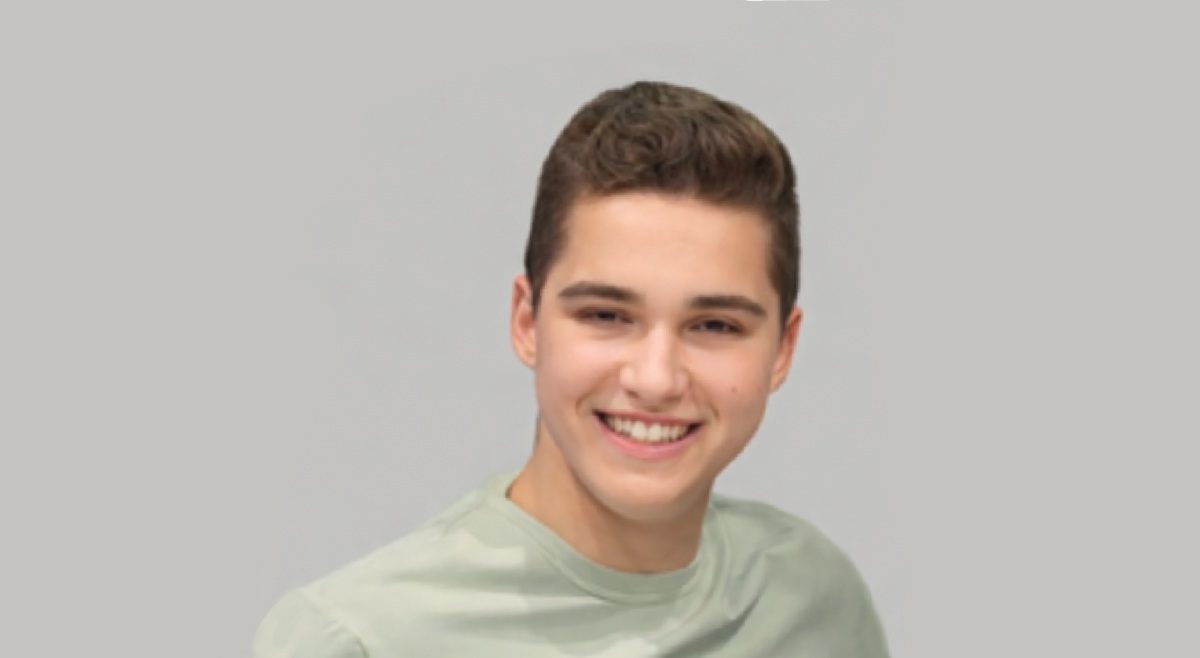
    Aaron Prager of Newton has created an app that helps monitor Type 1 diabetes and won the Eastern Region Congressional App Challenge. Courtesy photo

    As the son of two software engineers, Aaron Prager figured app development was in his future. Little did he know that the first app he made would be recognized on a national platform.

    His app, BoostT1D, designed to help people with Type 1 diabetes, was chosen by Rep. Jake Auchincloss as the winner of the 2025 Congressional App Challenge in the Massachusetts Fourth District. On Feb. 26, Aaron found out his app was picked as one of the top apps in the East Region from among 400 district winners – and over 4,000 apps submitted overall.

    Aaron, 16, a junior at British International School in Jamaica Plain, was diagnosed with Type 1 diabetes when he was 17 months old. The disease hinders the body’s ability to properly create insulin and allows blood sugars to build up. Most people with Type 1 diabetes get insulin through injections or a pump attached to the body.

    “Your sugars are hard to control in every part of your day,” Aaron said. “You just suddenly start feeling bad because of your sugar and who knows where or when.”

    When his family lived in San Francisco, his mom, Faina, had to quit her job in order to provide Aaron’s insulin since there were no staff to do so in the schools.

    “His Type 1 diabetes used to be everything I saw about him,” Faina said. “But he was growing up surprising me all the time.”

    The idea for BoostT1D came to Aaron long before he was aware of the Congressional App Challenge.

    “Originally, I went to dinner with my friends, and I was the only one out of my friends at this dinner who was diabetic,” Aaron said. “And I’m trying to figure out how many carbs there were and how much insulin to give for that, but obviously when you’re in a restaurant, it’s not going to tell you how many carbs there are.”

    After hearing about the app challenge from a friend, Aaron turned his idea into a product.

    “I was gonna try making a tool that could take photos of food, and it shows you how many carbs and how much insulin you give,” Aaron said. “And it actually works.”

    BoostT1D lets the user take a photo of a meal and get the calorie, carb and sugar breakdown. To demonstrate, Aaron took a photo of a pastry at a cafe, and the carb information and insulin suggestion appeared in seconds.

    Aaron used Google’s Gemini Vision AI tool, which has databases of food nutritional information, to share that information but also calculate how much insulin the user may need. BoostT1D allows the user to connect to NightScout, an application that diabetics use to visualize their sugar levels, so the recommendations are personalized.

    Aaron started with the food scan feature as his focus but after being selected as Massachusetts delegate for Children’s Congress, an event run by the largest diabetes research foundation Breakthrough T1D, he found more ideas for this app.

    There, Aaron talked with other diabetics and learned what problems they faced in their lives.

    He ended up adding more features including therapy adjustments for insulin intake and a mentorship program for those newly diagnosed to be partnered with volunteer mentors.

    Ironically, Aaron’s parents were initially hesitant to introduce their son to coding. Faina said being a software engineer was hard but good work and thought another field would better suit her son.

    But after coming back home from a coding camp, and creating a video game for his dad’s birthday when he was 7, Faina realized there was no stopping her son’s zest for software development.

    “We kind of thought that, no matter how hard we try, he’s going to code,” Faina said.

    As a junior, college is on the horizon for Aaron, but he’s unsure if he wants to go all in on software development.

    “I think I want to go broader to start with probably mathematics or computer science cause there’s so many places you can go from there,” Aaron said. “I like to learn. I think I’m going to love college.”

    His mom hopes for him to stay close to home, hinting at a certain college on the Cambridge side of the Charles River.

    “I want him to stay close to home. And MIT looks very attractive,” Faina said with a laugh. “When he won, it was like a step closer.”

    Outside of coding, Aaron is an accomplished competitive ballroom dancer.

    “I’ve been doing it for a long time,” he said. “And I’ve been doing it pretty seriously recently.”

    He had been dancing since he was 7 and placed third in last year’s United States Dancesport Championships. His coach of five years, Ronen Zinshtein, said he remained supportive of Aaron despite the challenges that came with his diabetes and winning bronze was one of his fondest memories with his student.

    “Aaron actually is very genuine and patient,” said Zinshtein, owner of Todos Dance and Fitness Studio. “He’s unique in a sense where he takes the time to actually listen to what he processes and then, once he processes, he can do it.”

    For a nationally recognized ballroom dancer and app developer, Aaron seems to carry himself with humility and curiosity.

    “I just wanted to make life with diabetes as livable as possible,” Aaron said. 

    ****

    This story is part of a partnership between the Newton Beacon and the Boston University Department of Journalism.

  • Committee takes up controversial overnight parking ban again

    Committee takes up controversial overnight parking ban again

    There’s an effort underway to repeal Newton’s winter parking ban. Courtesy photo

    A City Council committee may decide soon whether to repeal or modify Newton’s hotly debated winter overnight parking ban.

    The Council’s Public Safety and Transportation Committee heard public input March 4 and debated the measure but ultimately decided to put the issue on hold..

    Jeremey Freudberg, co-leader of the group Repeal the Ban, urged the council to act.

    “Indeed the overnight parking bin is or does pose a hardship for a lot of people,” Freundberg said.

    Freundberg said the council could consider changing the timeframe of the winter ban, its geographic boundaries and who the ban applies to.

    The ban prohibits cars from parking on any public roads in Newton from 2 a.m. to 6 a.m.  from Dec. 1 until March 31. A violation can result in a $25 fine.

    The parking ban has been around since 1930. In 2014, the fine increased from $5 to $25. Last November, the city narrowly voted against repealing the ban.

    Maren Coniglione, who lives in Newton Corner, said residents waste time moving their cars to different spots to avoid fines. She said some driveways don’t have enough space for the homeowners’ cars. 

    “People that are most affected are intergenerational households, people with disabilities, residents with overnight health aides, and houses that just don’t have any parking,” Coniglione said.

    Coniglione said the municipal lots are inconvenient and residents have to compete for spots with local businesses.

    Other residents said they worry that lifting the ban would pose hazards, adding more blockage to streets already heavy with snowpiles.

    “You just can’t lift the ban. I mean, even driving here tonight, I saw two accidents with the snowpiles,” said Terry Sauro, resident of Nonantum. “The streets have to be cleared and they have to be safe.”

    After hearing the speakers, the committee discussed next steps.

    “We heard a lot of solutions,” said City Councilor Sean Roche, “but I would like us to be clear on what the goals are so we can evaluate what those solutions are against those goals.”

    Some of Roche’s goals for a modified parking ban included making street space for emergency vehicles, creating an equitable experience among residents and visitors, and making it simple to administer and enforce. 

    Committee members said they were open to restructuring the ban but not eliminating it entirely.

    Suggestions that came up in the meeting included providing permits to people with medical or caregiver jobs, and restricting parking to one side of a street. The councilors said regulations and restrictions may look different for each neighborhood.

    “I agree that there are equity issues here, but it is also something that we want to do very carefully,” said Councilor Randy Block.

    Chair Tarik Lucas asked his fellow councilors to come to the next meeting with their own goals and said he hopes to create a more solid idea of how they would modify the ban.

    Once the committee is able to “parse out” these goals, Lucas said, it could create a working group to start structuring a new parking ban for next winter.

    ****

    This story is part of a partnership between the Newton Beacon and the Boston University Department of Journalism.

  • Wegmans’ plan to close Chestnut Hill pharmacy sparks outcry

    Wegmans’ plan to close Chestnut Hill pharmacy sparks outcry

    Wegmans plans to close the pharmacy in its Chestnut Hill store next month, and local residents aren’t happy. Some are fighting back.

    The supermarket chain is closing the Wegmans Pharmacy to create more space for groceries in Chestnut Hill, a Wegmans executive told a local resident in an email. Wegmans’s corporate office did not respond to repeated calls and emails from the Newton Beacon.

    Deana Percassi, Wegmans’ vice president of community engagement, explained the decision to close the pharmacy in an email to Jeff Freilich, a Brookline resident who started a petition asking Wegmans to reconsider.

    “As previously mentioned, we have made the difficult decision to close the pharmacy at our Chestnut Hill store and repurpose the space to support the continued growth of the location,” Percassi wrote to Freilich. “We remain committed to making this transition as smooth as possible for all pharmacy customers. Our team is available to help transfer prescriptions to another Wegmans Pharmacy, arrange home delivery, or move prescriptions to a pharmacy of your choice.”

    The supermarket, in the plaza across from The Shops at Chestnut Hill mall, attracts customers from Brookline and Newton.

    “One-mile radius is probably where you would expect seniors to go and walk, to go pick up their insulin or something like that,” Freilich said. “And there’s the idea that it’s certainly more convenient if you’re going to go out once or twice, you certainly want to do more than one thing.”

    Freilich started a petition on change.org Feb. 11 after seeing a sign in front of the pharmacy announcing its closure. The sign states the closure will happen in mid-April and offers instructions for customers to move their prescriptions to another Wegmans location.

    That doesn’t sit well with Freilich. “With the Wegmans pharmacy gone,” his petition says, “the primary nearby alternative will be CVS Pharmacy whose two pharmacy locations in Chestnut Hill are already overburdened with long wait times.”

    “I’m usually very careful not to be opinionated on anything ,” said Freilich, who has lived in Brookline for 25 years. “But this was something that really bothered me.”

    Freilich said he transferred his prescriptions to Wegmans a few months ago because his wife had recommended the store. Freilich said he liked the convenience of getting his medications where he buys groceries as well as the inviting staff.

    Marilyn Wolman, a resident of Brookline for over 60 years, said she has been picking up prescriptions from Wegmans location since its opening in 2014.

    “This Wegmans is just fabulous,” Wolman said. “And when they first opened in order to get customers, if you came to this is when they first opened, if you went to the pharmacy, they would give you a $10 voucher to shop in the grocery store, just so they could get customers.” 

    Wolman said she prefers Wegmans over the other pharmacies in the area because of its efficiency and proactive approach. 

    “Number one, Wegmans texts you that they have received a prescription for you,” she said. “
And then they send you a text that they’re working on it, and then they send you a text when it’s ready, and then they follow up within a month if you need a refill.”

    The store is less than a mile from Wolman’s home. The next closest Wegmans Pharmacy is in Westwood, 10 miles away.

     As of March 4, the petition had over 800 signatures. 

    Some of the supporters’ comments on the petition mention fondness for the pharmacy while others call out what they see as Wegmans’ violation of its mission statement.

    “Your decision to close the pharmacy does not align with your goal of being a critical part of the community and the compassion that your employees show customers everyday,” wrote Laurie Gerber.

    Freilich said most of his frustration comes from Wegmans’ explanation for the closure, citing a need to make space for more groceries. Freilich pointed out that the entire second floor of that Wegmans’ is dedicated to liquor. 

    “If they really want to show a commitment to the neighborhood, then they have to show that they’re committed, even if it means keeping open a not so profitable part of their store.” Freilich said. “They have to show that they are doing good for the neighborhood.”

    A pharmacist at Wegmans seemed willing to speak about the closure with a reporter who visited until a manager said that no employee there could comment. 

    Wegmans officials failed to respond to multiple calls and emails over a two-week period from the Newton Beacon.

    Freilich forwarded the signed petition and community comments to the manager of the Chestnut Hill store and other members from the Wegmans’ corporation.

    “I’m kind of trying to maximize impact,” Freilich said, “but I don’t want to go and be the cheerleader here because I am, you know, I’m just trying to do what I believe is important for the neighborhood.”

    ****

    This story is part of a partnership between the Newton Beacon and the Boston University Department of Journalism.