Author: Nathan Metcalf

  • ‘This is not normal’: Brookline lawmakers outline priorities for pivotal year on Beacon Hill

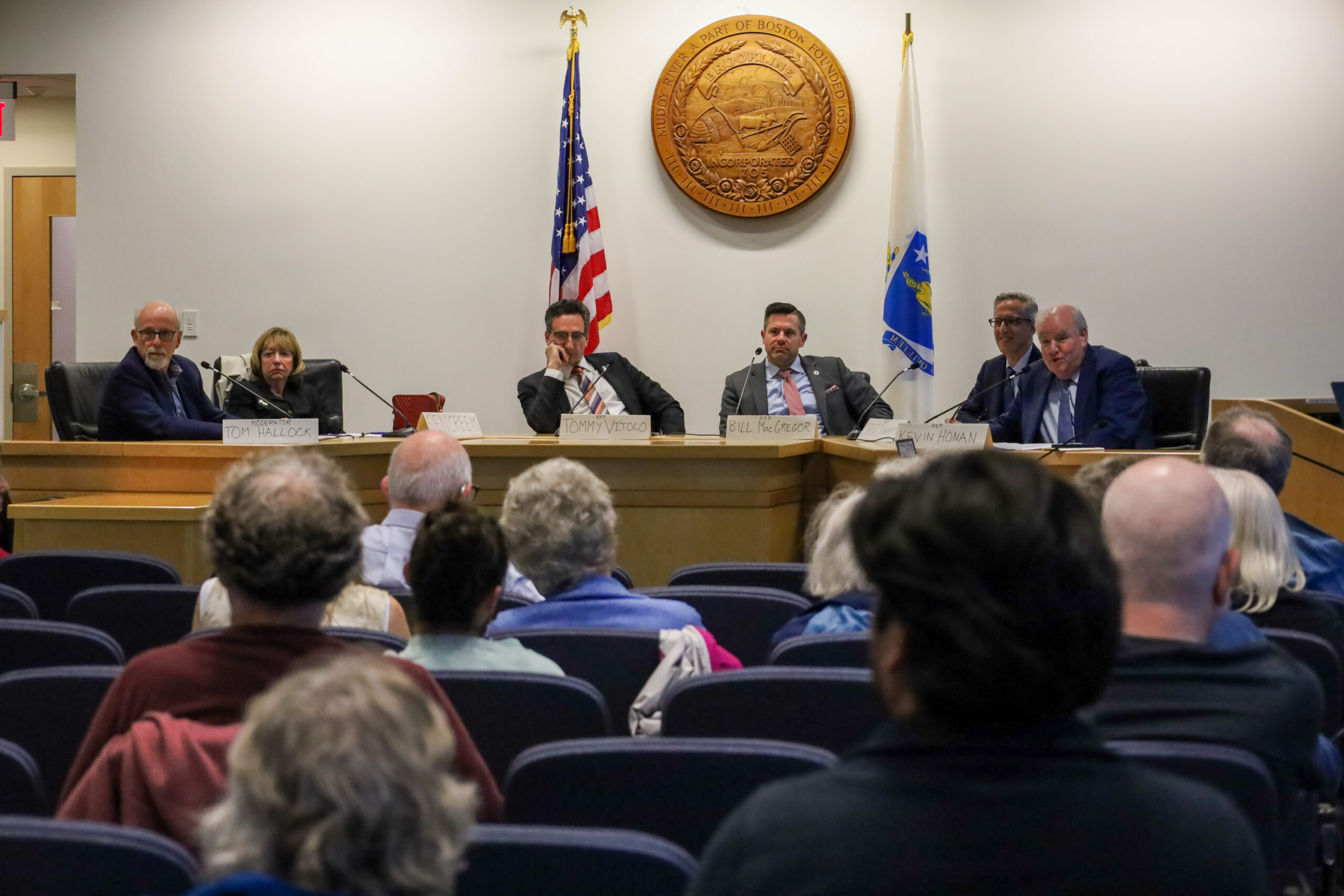
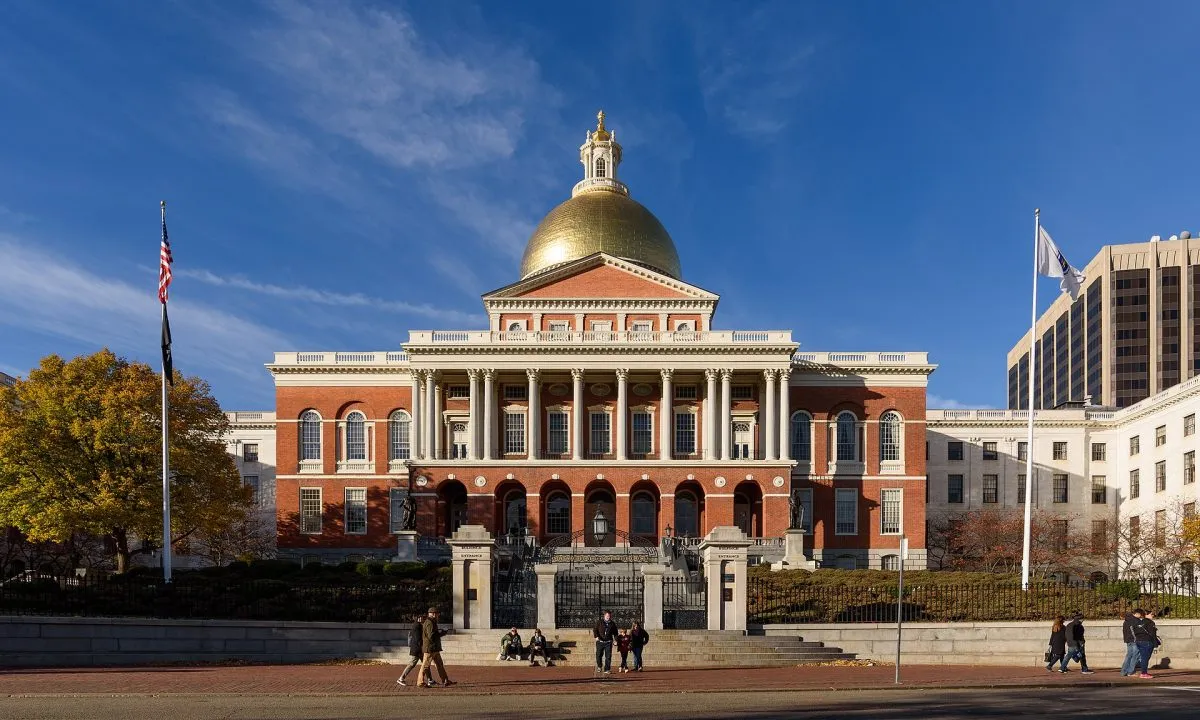
    This election year will be a high-stakes one in Brookline, on Beacon Hill, and across America, according to the five lawmakers who represent the town at the Massachusetts State House.

    The effective end of the 194th legislative session on July 31 — and with it the deadline for bills proposed over the past two years to advance or die — combined with a November election featuring races for the state’s constitutional offices, every seat in the Legislature, up to a dozen ballot questions and midterm national elections focusing on immigration and federal spending  – sets up a year that will be remembered for generations, one local lawmaker said.

    “Fifty years from now, American schoolchildren will learn about this time in history and be shocked,” said Rep. Tommy Vitolo, D-Brookline, referring to what he described as the “unquestionably” unconstitutional actions of immigration enforcement under the second Trump administration. “This is not normal, and we’ve got to figure out a way to stop it.”

    Vitolo is the only member of Brookline’s state delegation whose district is entirely contained within the town. He, along with Sen. Cindy Creem  (D–Newton) and Reps. Greg Schwartz, D-Newton, Kevin Honan and Bill MacGregor, both Boston Democrats, collectively speak for Brookline’s interests on Beacon Hill.

    Rep. Tommy Vitolo

    Vitolo, first elected in 2018 and now serving his fourth term, said the urgency of the moment is shaping the “day-in, day-out work of governing,” particularly as affordability pressures continue to define life in Brookline and across the state.

    “The word you’re going to hear over and over again is affordability, and for good reason,” Vitolo said. “Too many people are working hard and doing the right things and still struggling to have the comfort they rightfully expect.”

    Among his priorities, Vitolo highlighted workforce development, particularly the House-passed bill  which would require certain large public construction projects to use apprentices 

    “The only way you become a master plumber or a master carpenter or a master welder is to start by getting your first job learning how to do it,” Vitolo said. “Apprenticeships lead to jobs where someone can own a home, raise a family, and maybe go on vacation once in a while.”

    Vitolo also highlighted energy and climate legislation as a key focus, including a measure which aims to transition buildings away from natural gas , and a separate bill which would strengthen energy codes  to promote net-zero and solar-ready construction, both of which he filed. 

    “Brookline is on the cutting edge,” Vitolo said, noting the town’s role as one of 10 municipalities authorized by state law to require fossil-fuel-free new construction. “Communities that have more privilege, more wealth, more capital — those should be the leaders.”

    Sen. Cindy Creem

    Creem, first elected in 1998 and now serving as Senate majority leader, framed the year ahead from a position of institutional power — and constraint.

    She said immigration enforcement is the most urgent issue she hears about from constituents, and that a core focus in the coming months will be advancing a bill filed by Gov. Maura Healey in late January that would restrict civil immigration arrests  without a judicial warrant in sensitive locations such as courthouses, schools, health care facilities and places of worship, among other measures. 

    “We cannot control the federal government,” Creem said. “But we can make sure people are not impersonating ICE, that due process is protected, and that we’re not complicit in actions that violate constitutional rights.”

    Besides immigration issues, Creem said her top legislative priority for the final year of the session is a Senate-passed data privacy bill  which would ban the sale of sensitive personal information, including precise location data.

    “We banned the sale of sensitive data, including location data — in other words, somebody who might come to Massachusetts for services that may not be legal in another state, such as abortion or gender-affirming care,” Creem said. 

    Rep. Greg Schwartz

    Schwartz, a first-term lawmaker elected in 2024 and a practicing primary care physician, said healthcare access is his central concern as lawmakers confront budget pressures and federal uncertainty. As a key priority, he pointed to advancing a bill he is sponsoring, which would increase the share of healthcare spending devoted to primary care.  

    “Primary care is the foundation of the entire healthcare system,” Schwartz said. He said the state’s low level of spending on primary care is contributing to physician burnout and limiting access to care. “People have insurance, but they can’t find a doctor,” he said.

    Schwartz added that budget discussions on healthcare are complicated by uncertainty about federal funding, particularly Medicaid reimbursements, which account for a substantial portion of state spending.

    “In a roughly $62 billion budget, we’re talking about on the order of $14 billion in reimbursements from the federal government,” Schwartz said. “That’s practically 25%.”

    Rep. Kevin Honan

    Honan, first elected in 1987 and the longest-serving member of the Massachusetts Legislature, said his priorities for the final year of the session include legislation aimed at improving housing governance and increasing housing production as affordability pressures continue to grow.

    One proposal he highlighted would establish a condominium ombudsman  within the Attorney General’s Office to help resolve disputes between condo owners and associations.

    “This is an issue that comes up all the time,” Honan said. “People feel like they don’t have anywhere to turn.”

    Honan also pointed to a measure often referred to as the “Yes in my back yard”  (YIMBY) bill, which he supports, to make it easier to build multifamily housing and allow housing on underused land.

    “When you’re trying to create more housing, you need zoning reform,” Honan said. “You need multifamily housing to address the housing shortage that we’re experiencing in Massachusetts.”

    Rep. Bill MacGregor

    MacGregor, who was elected in 2022 and is currently serving his second term, said the rising cost of living is also shaping his priorities for the final year of the session, particularly child care affordability, in addition to concerns about access to mental health care.

    “I’m a father of two toddlers, so early childhood education is something that’s important to me,” MacGregor said. “For two kids in daycare, it’s over $50,000. We’re one of the most expensive states.”

    To help offset those costs, MacGregor said he has filed a bill which would create a child care and dependent care tax credit , allowing families to reduce their state tax bill by up to $500.

    MacGregor acknowledged the amount was modest, but said, “Every little bit helps nowadays.”

    MacGregor also highlighted legislation that would establish a special commission to study interstate telehealth  and ways to allow patients to maintain continuity of care when crossing state lines, particularly for mental health treatment.

    “If you’re seeing a therapist and you go to college out of state, you wouldn’t be able to see that same therapist,” MacGregor said. “That’s a real problem.”

  • Dot bus routes rank with slowest of T’s fleet, say transit advocates

    Four MBTA bus routes serving Dorchester are among the 10 slowest and the 10 most bunched in Greater Boston, according to an analysis by the advocacy group TransitMatters.

    The group’s annual Pokey and Schleppie Awards – which measure bus speed and “bunching,” when buses show up back-to-back after an extended wait — found that Routes 19, 22, 23, and 28 performed among the worst in the network.

    “I try to leave the house two hours before work because I know these buses are slow,” said Xavier Walker, 21, who rides the 28 almost every day from his Dorchester home to his security job at the Museum of Fine Arts.

    Riders stood shoulder-to-shoulder on a packed 28 bus at around noon a recent Wednesday. The 28 had the second-highest ridership in the MBTA system as of Jan. 2025, according to TransitMatters data. 

    “I’m about to be late again,” Walker said. “It’s frustrating, especially in security, when they expect you to be on time. You can’t be guarding very expensive stuff and be fog-minded because of what happened on the bus.”

    TransitMatters ranked the Route 23 bus as the most bunched in Greater Boston, placing it first on the Schleppie list with a bunching rate of 19.3 percent, meaning nearly one in five trips arrived too close together to provide regular service. Route 22 ranked seventh for bunching, with a rate of 14.6 percent, and Route 28 ranked ninth at 14.2 percent.

    On the speed side, Route 19 appeared on the Pokey list as the region’s fourth-slowest route, with an average speed of 6.49 miles per hour. Route 28 also made that list, ranking tenth slowest at 6.70 miles per hour.

    Systemwide, TransitMatters reported, average speeds on the MBTA’s 10 slowest routes slipped again this year, falling from 6.83 miles per hour to 6.52 miles per hour. Bunching across the network also increased, rising from 14.1 percent to nearly 15.8 percent.

    TransitMatters leaders said the four Dorchester routes illustrate how congestion, limited bus-priority infrastructure, and long-term underinvestment combine to slow service in neighborhoods that rely on transit the most.

    A 23 bus departed Ashmont station on a recent weekday less than a minute after another one left, an example of the clustering that made the route the most bunched in the MBTA system this year. Nathan Metcalf photos

    “There’s definitely a disinvestment in the infrastructure like bus lanes and transit signal priority,” said Caitlin Allen-Connelly, the group’s executive director. “Slow speeds and bunching are disproportionately harming some of the system’s most transit-dependent riders, who tend to be low-income and primarily from Black and Brown communities in Dorchester and Roxbury. Riders are losing hours.”

    Her colleague Cole Lewis, a co-lead on TransitMatters’ NextGen Bus team, which analyzes bus performance and advocates for faster, more reliable services, said those delays accumulate into a measurable barrier to opportunity.

    “It’s a lack of access,” Lewis said. “That extra 15 minutes waiting or riding can decide whether someone looks at a job, gets to healthcare, or reaches the parts of the city others take for granted.”

    In a statement, the MBTA said it is working to improve speed and reliability and expand priority infrastructure across the city.

    “Improving the speed and reliability of our bus service is one of our top priorities,” the statement said. “The MBTA will continue to do its part while collaborating with our municipal and state roadway owners and stakeholders to expand bus priority infrastructure and increase Bus Lane and Bus Stop Enforcement to achieve improved service for our riders.”

    The MBTA said its major Blue Hill Avenue bus-priority project is nearly 30 percent designed, with plans for center-running bus lanes, transit-signal priority, and safer crossings. Similar upgrades are planned for Warren Street and Malcolm X Boulevard, while Tremont Street would see an extension of the Columbus Avenue center-running busway. 

    Additionally, a redesign of Nubian Square would improve bus circulation and boarding. Construction on Blue Hill Avenue — used heavily by the 23 and 28 — is unlikely to begin before 2027, pending federal funding.

    TransitMatters said the timeline is further complicated by the federal grant that the Blue Hill Avenue project is depending on. Grant approvals have stalled under the Trump administration and left cities unsure when funding will arrive.

    Taneja Williams (above), 22, of Dorchester, recently started a cleaning business and uses the 28 to reach clients. “I was late today,” she said. “Luckily, since it’s my business, I can communicate with my clients. But if I had a 9-to-5, there’s just no wiggle room, you gotta be clocked in at eight.” Nathan Metcalf photo

    Williams said the delays are hardest on younger riders. “The main frustrating thing is when kids are going to school and they have to wait out in the cold,” she said. “They’re way more susceptible to dangers and weather.”

    Gwendolyn Henry, 54, also of Dorchester, said, “I’ve been late to appointments because of the 28. They told me I was too late and had to reschedule, and I had to go back home. It made me so angry.”

    Dorchester resident Tyquan Lamar, 30, said he has used the 22 for most of his life and is back on it after recently returning home from incarceration and losing his car. “I don’t mind taking the bus. I’m a trooper,” he said. “I grew up taking the bus everywhere, taking the bus by myself every day starting at 11.”

    But even after a lifetime on the bus, the delays take a toll. “I hate when the bus is late,” he said. “Your boss don’t care. You gotta be to work, you gotta be to work.”

    Jocelyn Henry (no relation to Gwendolyn), 20, of Dorchester, takes the 22 to her job in Central Square on days when she doesn’t have to pick up her child. She said the route’s slow, unreliable service reflects deeper inequities between neighborhoods.

    “Mattapan and Dorchester are definitely underfunded compared to places like the South End or Back Bay, and that’s because of the people here,” she said. “There are more people of color in this neighborhood, and we don’t get the same buses or the same resources.”

    This story is part of a partnership between the Dorchester Reporter and the Boston University Department of Journalism.

  • T-Mobile in crosshairs of non-profits, others over reimbursements for cell tower leases

    A Dorchester health center says it is owed nearly $35,000 in back property-tax reimbursements from T-Mobile for a rooftop antenna on its building. It’sa dispute that real estate attorneys and telecommunications specialists say reflects a broader, largely hidden problem affecting hundreds of small landlords, nonprofits, and churches across Boston.

    The Harvard Street Neighborhood Health Center hosts T-Mobile equipment on its roof on Blue Hill Avenue,earning about $2,000 per month in rent. Under the terms of the lease, the wireless carrier is also required to reimburse the landlord for property taxes attributable to the site of the placement.

    But the health center has paid those taxes itself for four years without reimbursement, according to AirWave Lease Insights, a Lincoln company that analyzes wireless leases and, for a fee, helps property owners fight for their claims.

    Harvard Street president and CEO Charles “Charley” Murphy said he was “surprised that cell tower companies conduct themselves this way.” He emphasized that the center simply wants the carrier to meet its obligations. “If they owe the money, they should pay it,” he said.

    Neither T-Mobile nor its attorneys responded to The Reporter’s repeated requests to discuss the matter.

    “Our role is to serve the underserved with medical services,” Murphy said. “We have family medicine, primary care, dental services, behavioral health services, a veterans center, a food bank — and we serve over 10,000 people, probably 12,000 or 13,000 a year.”

    While Harvard Street is still waiting on a response, the experience of another Dorchester institution — a house of worship — shows what it can take for a small property owner to get its reimbursements.

    Global Ministries Church on Washington Street near Codman Square.

    A near foreclosure

    Global Ministries Christian Church, at Washington Street and Welles Avenue, leased space inside its steeple to T-Mobile beginning in 2003. In 2008, the church sold the future rent stream to a company called Ulysses for a one-time payment of $216,660, meaning it no longer collected monthly rent from the carrier. For years, the arrangement appeared uneventful.

    At some point — the exact date is unclear from court filings — the city reclassified the steeple as a separate taxable parcel and began assessing real estate taxes on the income value created by the antenna. Under the lease, those taxes were the responsibility of T-Mobile, not the church.

    But the church didn’t know the bills existed. The city was mailing them to an address the church had never used, and postal records show they were repeatedly returned as undeliverable. As the years passed, interest and penalties quietly accumulated. By 2024 the antenna had been removed.

    According to Steve Kropper, the CEO of AirWaveLease Insights, T-Mobile “removed their gear… once the problem became visible — we think, to evade paying the tax.” By the time of the removal, the outstanding balance had grown to nearly $188,000, prompting the city to place a lien on the church property and raising the risk of foreclosure.

    The attorney and former Boston City Councillor Larry DiCara, who has practiced real estate law for decades and has long known the church’s pastor, Rev. Bruce Wall, said the situation illustrates how easily small nonprofits can be blindsided.

    “Most people don’t even know the concept,” he said. “Life is complicated enough without having to worry about stuff like this. He’s a preacher — he’s in the job of saving souls, not trying to figure out reimbursements for real property taxes.”

    The church received its first tax bill in May 2023 and soon turned to AirWave Lease Insights for help. The firm prepared a detailed claim package showing that, under the lease and standard industry practice, T-Mobile was required to reimburse the church for those taxes, and sent it to T-Mobile. When T-Mobile did not make the payment, the church filed a lawsuit alleging unfair and deceptive practices and breach of the reimbursement clause.

    “T-Mobile is notorious for failing and refusing to pay taxes accrued as a result of the installation of its telecommunications equipment upon leased properties throughout the Commonwealth of Massachusetts and beyond, resulting in oppressive tax debts crippling small businesses and charitable organizations,” the lawsuit states.

    After months of negotiations, the church and T-Mobile reached a settlement in July of this year, with the company agreeing to pay the full balance to the city. A recent tax statement reviewed by The Reporter shows the account now listed at zero.

    “These are what we were taught as kids were ‘sins of omission,’” DiCara said of the broader issue. “I don’t see a bunch of people… sitting around in fancy clothes, drinking champagne, laughing about this, but that doesn’t mean it’s right. They have a moral obligation, if not a legal obligation, to be more forthcoming about these things.”

    A hidden, citywide problem

    AirWave’s Kropper said cases like Global Ministries’ and Harvard Street’s are far from isolated.

    According to AirWave research, some 400 Boston properties have rooftop antennas, generating an estimated real estate tax number of $7 million per year. About 75 percent of leases require reimbursement by the wireless carriers  — but AirWave estimates 95 percent of owners never file claims that amount to millions of unrecovered dollars.

    The Reporter contacted the city of Boston several times over a two-week period in an effort to independently verify these figures. City officials responded but ultimately did not provide the information requested.

    Kropper said many property owners have no idea the tax even exists. Boston doesn’t tax the equipment itself; it taxes the income value created by the antenna in place — and the charge never appears as its own line item. Instead, he said, it’s folded into the overall property assessment, “there’s no line that says ‘cell tax,’” which makes it easy to miss.

    For landlords who signed leases a decade or more ago, the reimbursement clause covering those taxes can be just a short sentence buried inside a 40-page lease, further obscuring the obligation.

    In the church’s case, the city’s misaddressed mail compounded the problem. In Harvard Street’s case, the health center became aware of the tax only after AirWave alerted it.

    The reimbursement gap persists because many carriers pay only when pressed, Kropper said.

    “T-Mobile’s approach has basically been: Don’t ask, won’t pay,” he said. “If you don’t know to claim the tax, they’re not going to volunteer it.”

    Furthermore, he said, carriers invariably deny reimbursement even when requests are filed. “One hundred percent of the time when we [AirWave Insights] file a claim, it gets rejected the first time around,” he said.

    Harvard Street’s ongoing battle

    The reimbursement Harvard Street is claiming — $34,945 across four years — is modest compared with Global Ministries’ near-foreclosure. But Murphy said the principle is the same. The health center serves one of Boston’s lowest-income neighborhoods; even small funding gaps matter.

    Wireless Asset Slice, an affiliated claims entity of AirWave, filed a 15-page reimbursement request with T-Mobile for the health center in February of this year. The package included tax bills, lease provisions, and calculations showing that the health center had paid taxes attributable to T-Mobile’s antenna.

    T-Mobile, through its attorneys, argued in a June letter that the company was not obligated to pay, raising three defenses: that the claim had not been filed in a timely manner; that T-Mobile reserved the right to challenge assessments; and that reimbursing the tax would constitute “double taxation” because the company already pays personal property tax on its equipment.

    Kropper called those arguments “specious.” He said the leading precedent — a 2013 New York case, T-Mobile Northeast LLC v. DeBellis — rejected the double-taxation claim and held that personal-property taxes on equipment and real-property taxes on income value are legally distinct.

    Kropper disputed the “timely notice” argument, saying the lease contains no filing deadline and that the health center submitted its request “as soon as [it] became aware” of the tax.”

    “We take as guidance the statute of limitations in Massachusetts providing for six years’ worth of reimbursement. That’s the relevant law here,” he said. “They raise these points hoping landlords don’t know the history. And often they don’t.”

    A call for transparency

    The issue reflects a power imbalance between providers and property owners, DiCara said. “The city collects what it’s owed, owners should recover what they are owed, and carriers should shoulder their fair share,” he said. “Problems like this shouldn’t be swept under the rug.”

    To that point, Murphy said the episode makes clear how unprepared most nonprofits are for the reimbursement process. “I didn’t know this existed,” he said. “Once it was brought to our attention, we wanted to pursue it, because it’s owed to the community.” As of this week, Harvard Street had not received the reimbursement.

    AirWave believes that the more than 400 Boston property owners cited above may be missing out on similar payments. Kropper said that reality helps explain why carriers resist even small claims. Carriers routinely push back on them, he argued, because widespread reimbursement could expose them to millions in overdue payments across Boston.

    “That’s the tip of the iceberg,” he said.

    This story is part of a partnership between the Dorchester Reporter and the Boston University Department of Journalism.

  • Shattuck Awards go to three from Dorchester

    Three Dorchester residents will be recognized this week as recipients of a Henry L. Shattuck Award, one of Boston’s highest honors for public service.

    Each year, the Shattuck Public Service Awards, administered by the Boston Municipal Research Bureau, a non-partisan fiscal watchdog, celebrate a cohort of City of Boston employees whose work has strengthened the city and two Shattuck City Champions, one nonprofit leader and one private-sector notable. 

    This year’s honorees include Dorchester residents Jeffrey Alkins of the Mayor’s Office of Housing; Taylor McCoy, an inclusion specialist at Mattahunt Elementary School; and Bill Kennedy, a longtime civic leader and partner at Nutter, McClennen & Fish LLP, who received the Shattuck City Champion Award.

    For Steve Poftak, president and CEO of the Research Bureau, this 40th awards ceremony —set for Thursday evening— presents an opportunity to highlight individuals whose contributions are “incredibly inspiring” and often overlooked.

    “I’ve had the opportunity to meet them and be incredibly impressed with their deep understanding of the needs of the residents that they serve,” Poftak said. In a polarized time when public servants often go unappreciated, he added, “everyone who gets the Shattuck award represents the very best in commitment to the public.”

    Kara Buckley, who co-chairs the selection committee, said the panel looks for city employees and leaders whose work reflects the values embodied by Henry L. Shattuck, a Boston city councillor and state legislator, civic leader, Harvard treasurer and interim president, and chair of the Boston Municipal Research Bureau in the first half of the 20th century.

    “He was someone who was highly dedicated to public service — a great, quiet leader and a humble man,” she said. “That’s what we look for when we go through these nominations: tremendous character, tremendous service, tremendous impact on the city and the world around them.”

    For Jeff Alkins, the Shattuck Public Service Award recognizes more than two decades of work helping residents purchase their first homes and hold onto the homes they already have. A program manager with the Boston Home Center, Alkins provides foreclosure-prevention advocacy, technical assistance, and guidance on everything from mortgages to emergency repairs.

    “It was completely by surprise, and it was definitely a humbling honor,” said Alkins, who grew up in Dorchester and has spent most of his life living in neighborhoods from Blue Hill Avenue to Four Corners to Lower Mills. His work, he said, is rooted in values he learned as one of nine children. “Growing up in a large family was about stability in your neighborhoods,” he said. “I’ve always been a strong community person.”

    His work also centers on seniors, through the city’s Age Strong initiative. He helps connect them to fuel assistance, tax abatements, and emergency home-repair programs so they don’t have to choose, as he put it, “Do I pay my bill, or do I buy groceries this month?”

    For Alkins, his work comes down to a straightforward philosophy: “You start small. You take your village, which is what Dorchester is — my village — and… we make this city a better place from one end to the other.”

    Taylor McCoy outside the Mattahunt Elementary School where she works as an Inclusion Specialist. Nathan Metcalf photo

    For Taylor McCoy, an inclusion specialist at Mattahunt Elementary School, the award also came as a shock. “I actually wasn’t aware that I was nominated,” she said. “It felt both surreal and humbling.”

    McCoy spent eight years teaching in substantially separate kindergarten classrooms at Mattahunt before moving into her current role three years ago. Now, she works to help students with specialized learning and behavioral needs transition from more restrictive settings into inclusive classrooms where they can learn alongside their peers.

    “In this role, I work tirelessly — or I try to work tirelessly — to move students from the most restrictive setting to the least restrictive setting,” she said.

    Much of McCoy’s commitment comes from her own experiences growing up. She struggled with letter reversals as a child and remembers the teachers who helped her. “I had such great teachers… it just kind of really stuck with me,” she said.

    As a Dorchester native, McCoy said the award carries added meaning. “It’s nice to work in the community where I grew up and have lived my whole life.” 

    Mattahunt serves a large multilingual student population and hosts the nation’s first Haitian Creole dual-language program. Many students face challenges outside school as well. “Just making sure they know when they come to school, they’re loved, they’re welcomed, that we are here for them — that’s been pretty heartbreaking but also rewarding,” she said.

    For Bill Kennedy, a partner at Nutter McClennen & Fish LLP — the Boston law firm where he co-chairs the public policy group — and the lone recipient from the business community honored this year, the Shattuck City Champion Award recognizes decades of service to Boston’s civic and charitable institutions.

    “For my peers to think that I am worthy of the City Champion Award is very flattering and humbling for me, and it means a great deal,” Kennedy said.

    His public service career stretches across four decades. Born and raised in Dorchester’s Meetinghouse Hill neighborhood, he went from Suffolk University Law School to state government, serving as chief of staff and chief legal counsel to former House Speaker Thomas Finneran and to the House Ways and Means Committee. He later worked as an attorney for the Executive Council and as an assistant clerk at the Massachusetts Supreme Judicial Court.

    He also spent more than 20 years involved with the Boston Municipal Research Bureau, including a decade as chair or co-chair of the Shattuck Awards dinner, the annual event that celebrates its recipients.

    Kennedy’s civic commitments run deep. He has long supported organizations such as Pine Street Inn, Boston Health Care for the Homeless, Catholic Charities, and St. John Paul II Catholic Academy.

    Across all those roles, Kennedy said, he has tried to carry forward an ethic that has shaped his work: “Life is a team sport. We can’t do it alone. We need each other.”

    Other honorees at the Shattuck Awards include Elisabeth Jackson, CEO of Bridge Over Troubled Waters; John Connors, court coordinator for the city’s Inspectional Services Department’s Legal Division; Mari McCullough, special library assistant at the North End branch of the Boston Public Library; Elsie Morantus Petion, nurse manager at the Boston Public Health Commission;  Sgt. Peter Moscaritolo, supervisor at the Boston Police Department’s Street Outreach Unit; Alexa Pinard, assistant Deputy Director of Design Review at the Boston Planning Department; and Eric Prentis, principal administrative assistant at the Public Works Department.

    This story is part of a partnership between the Dorchester Reporter and the Boston University Department of Journalism.

  • At UMass Boston, young voters take up Markey vs Moulton match

    As US Rep. Seth Moulton mounts a challenge to Sen. Ed Markey built on the idea of generational change in Washington, The Reporter discussed the still-emerging contest with young voters in recent weeks..


    By Nathan Metcalf

    When US Sen. Ed Markey’s campaign blasted out endorsements last month from the state’s young Democratic leaders, it revived memories of the “Markeyverse,” the online coalition of progressives that helped propel the now-79-year-old into his third US Senate term in 2020.


    Five years later, however, as US Rep. Seth Moulton mounts a challenge built on the idea of generational change in Washington, some younger voters say their enthusiasm for incumbents is tempered by frustration with an aging Democratic establishment and the rising costs of daily life.

    UMass Boston students Nick Gentile and Arianni Pimentel said they want to believe in the system but feel alienated by it.


    “Neither of them really seems like a great option right now,” Gentile said.


    “I just want someone who’s not going to forget about people like us once they win,” Pimentel added.
    In a deep-blue state like Massachusetts, it’s likely that Moulton, often cast as a more moderate Democrat than the progressive Markey, will have to convince young voters that his pragmatism won’t come at the expense of marginalized groups.


    Those fears likely stem largely from remarks he made after Donald Trump’s victory over Vice President Kamala Harris last November, when he told The New York Times, “I have two little girls. I don’t want them getting run over on a playing field by a male or formerly male athlete, but as a Democrat, I’m supposed to be afraid to say that.”


    The comment spurred the resignation of his top political aide and drew backlash from progressives nationwide.
    With Markey’s age and Moulton’s remarks about the LGBTQ+ community emerging as their biggest liabilities among young Democrats, the two lawmakers have begun what promises to be a grueling, yearlong intra-party fight over the future.


    Inside the political science office at UMass Boston, Gentile and Pimentel – two undergraduates juggling classes, jobs, and rent – said the race feels distant from their lives.

    “I don’t really know much about either of them,” Gentile said. “But we need people who actually know what it’s like to be our age right now. It’s not about identity; it’s about whether you can afford rent, food, or even the T.”


    Gentile, a political science major from Dorchester who works part time on campus, said he’s undecided but, drawn to the idea of younger leadership, leaning toward Moulton. “He’s younger,” he said. “Maybe he’d understand how hard it is to make it work.”


    Across the desk, Pimentel, a psychology major who grew up in Dorchester and now lives in Quincy, said she’s budgeting how to eat through November while waiting on her SNAP benefits. “Everyone’s struggling to pay for groceries, not just one group,” she said. “I support LGBTQ+ rights and everything, but I think politicians talk about that more than they talk about how expensive life’s gotten.”


    Simone Alcindor, a freshman political science major from Medford, offered a different view. A member of Our Revolution Medford and the Suffolk University Democrats, he calls himself “a proud progressive” and said he’s firmly behind Markey.


    “He’s still a fine leader,” Alcindor said. “Younger doesn’t mean better. We’ve seen what happens when people talk about change but don’t fight for it.”


    Alcindor said Moulton’s comments about transgender Americans show why progressives must stand their ground. “It’s incredibly regressive,” he said. “You don’t win by throwing people under the bus. The right’s going to come after us no matter what, so we might as well stand up for what we believe in.”


    He said that after meeting Markey at a campaign event in Springfield, he saw that “he had more energy than most people in the room. He listens, and he actually shows up. That matters.”


    Alcindor said he’d “probably prefer” Ayanna Pressley if she entered the race but worries a three-way contest could split the progressive vote. “I think Pressley and Markey are on the same team,” he said. “It’s the kind of leadership that actually represents us when the time comes.”

    Pressley, a progressive Massachusetts congresswoman, has not announced a Senate bid, though her office has not ruled out the possibility, fueling speculation she could join the race.


    Abdullah Beckett, a 26-year-old Dorchester resident, UMass Boston graduate, and community organizer, said his support for Markey comes from a more local place shaped by rent hikes, long commutes, and a sense that many working-class voters have stopped believing politics can change their lives.


    Beckett works as a field organizer for Mayor Wu and plans to volunteer for Markey’s campaign this fall. “I like Markey. I think he’s real,” Beckett said. “He shows up for stuff that matters here, not just in Cambridge or downtown.”


    He said that while he respects Moulton’s service as a Marine, the congressman’s remarks about transgender athletes “felt like he was trying to play both sides.” 


    That kind of hedging he argued, drives away younger voters. “That’s not leadership,” he said. “You can’t be afraid to say what’s right just because it’s not polling well. That’s the kind of stuff that loses people my age.”


    For many of his neighbors, Beckett said, affordability outweighs ideology. “It’s hard to tell people in Dorchester that voting’s gonna change their rent,” Beckett said. “We’re paying Boston prices on fast-food wages. Until somebody fixes that, it’s hard to care who’s fighting who.”


    “He’s old, sure,” Beckett added of Markey, “but I’d rather have somebody old who listens than someone young who doesn’t.”


    This story is part of a partnership between the Dorchester Reporter and the Boston University Department of Journalism.

    This article was originally published on November 12, 2025.

  • Early voters make their choices ahead of next Tuesday’s city election

    Early voters make their choices ahead of next Tuesday’s city election

    By Nathan Metcalf

    A slow but steady trickle of 2,230 voters cast early ballots at one of the ten locations that were opened over the weekend for voting ahead of Boston’s Nov. 4 municipal election.

    At Dorchester’s Richard J. Murphy School,185 residents cast ballots on either Saturday or Sunday.

    With Mayor Wu’s reelection assured, early voters arriving at the K–8 school on Worrell Street described the at-large City Council race, with four seats and eight names on the ballot, as the contest that was keeping them engaged.

    Those candidates include four incumbents, Julia Mejía, Erin J. Murphy, Henry Santana and Ruthzee Louijeune; three newcomers, Alexandra Valdez, Will Onuoha, and Marvin Mathelier; and a familiar face in Dorchester, Frank Baker, returning from a two-year hiatus after not seeking reelection to the District 3 seat he had held for 12 years.

    “I think housing is the biggest issue facing Boston right now,” said Meghan Greeley, 42, a Pope’s Hill resident and Murphy School parent who was raking leaves for her volunteer group, the Murphy School Family Council, before going inside to vote.

    She said she voted for incumbents Louijeune and Santana, as well as newcomers Onuoha and Mathelier.

    “We’re homeowners,” Greeley said, “but if we want a thriving community, people have to be able to afford to live here.” Given that, she said she supported candidates aligned with Wu’s housing and education priorities.

    “I was thrilled that Wu’s running unopposed,” she said. “She’s the right choice for the city.”

    Not everyone agreed with Greeley’s take on things . Kevin M., a 55-year-old Savin Hill resident who declined to give his last name, said he voted only for Frank Baker, calling the former District 3 councillor “the one trying to get sense back into City Hall.”

    He said the council has become “upside down” and mired in corruption, referring to the recent ethics scandal involving former Councillor Tania Fernandez Anderson. His bullet vote to back only Baker, rather than choosing up to four candidates, as voters can in the at-large race, helped to maximized his candidate’s share of support in a crowded field.

    A lifelong Dorchester resident who said he grew up with Baker, Kevin cited crime and homelessness as his top concerns.

    “Frank’s got a track record,” he said. “He’s done a great job.”

    Ben Stone, 38, of Ashmont, said he voted for Louijeune, Onuoha, Santana, and Valdez, adding that he backed the latter two because they were endorsed by Abundant Housing Massachusetts, which advocates looser zoning to increase supply.

    “They want more housing of all kinds,” said Stone, who is executive director of the Brookline Housing Authority.

    Longtime Cedar Grove residents Thomas J. and Rita McCarthy said early voting’s weekend hours make civic
    participation easier. “It’s convenient,” said Thomas, 76. “Being on a Sunday, you beat the line.”

    The couple chose Louijeune, Mejía, Onuoha, and Mathelier — a split between incumbents and newcomers. Thomas described them as “Wu people,” adding, “I wanted to give two votes back to Wu.”

    They praised the mayor’s leadership but worried about property taxes if Proposition 2½ were loosened or repealed.

    “The city’s collecting plenty already,” Thomas said.

    The McCarthys said aging school buildings remain their top concern.

    “Tom and I volunteered recently in one of the elementary schools where they can’t drink out of the water bubblers because there is lead in the pipes, said Rita. “They have no gyms. They have no lunchrooms. They have these old buildings that have been around since I went to school in Boston.”

    Among the campaign volunteers outside the Murphy School was Valdez’s father, Modesto Valdez, 52, of Mattapan, (shown below) who spoke about helping with his daughter’s first campaign.

    “I feel so proud of her,” he said. “She’s a really nice person, very dedicated, very hard-working.”

    Valdez said his daughter, who emigrated from the Dominican Republic as a child and grew up in Mattapan, has been committed to public service since she was young.

    “She’s been serving the city almost her whole life,” he said. “Now she feels it’s time to give back even more to Boston.”

    Not wanting to be outdone by the Valdezes, a volunteer for Will Onuoha phoned the candidate’s mother, Esther Onuoha, who hurried to the Murphy School for an interview.

    Onuoha described her son as “a uniter” shaped by years of work under four Boston mayors, Tom Menino, Marty Walsh, Kim Janey, and Wu.

    “He’s been serving this city for a long time,” she said. “He understands how it works, and he listens to everyone.”

    The city’s Election Department put the weekend tally at the Murphy School at 112 ballots on Saturday and 73 on Sunday. Citywide, 1,203 ballots were cast on Saturday and 1,027 on Sunday.

    More early voting opportunities are available this week at Boston City Hall, Dorchester’s Perkins Community Center (Tuesday, Oct. 28, 12-8 p.m.), and Florian Hall (Thursday, 12-8 p.m.).

    Polls will be open on Tuesday, Nov. 4 from 7 a.m.-8 p.m. at all of the city’s precincts.

    This story is part of a partnership between the Dorchester Reporter and the Boston University Department of Journalism.

    This article was originally published on October 28, 2025.

  • Dot tenants push ballot measure to cap rent boosts at five percent

    By Nathan Metcalf

    Volunteers from Dorchester are gathering signatures at grocery stores, MBTA stops, and community centers in an effort to get a rent-control measure on the 2026 Massachusetts ballot that, if approved, would limit rent increases for most residential units to five percent a year, or the annual rise in the Consumer Price Index, whichever is lower.

    The bill would exempt owner-occupied buildings with four or fewer units and properties less than 10 years old. It would also repeal the 1994 law that outlawed rent control statewide, ended programs in Boston, Cambridge and Brookline, and barred new ones.

    Organizers have until Nov. 19 to collect the 74,574 signatures needed to put the petition on next year’s ballot.

    Supporters say the proposal, if made law, would give urgently needed relief to tenants struggling to afford housing, with many spending more than 30 percent of their income for rent. In Boston and Dorchester especially, advocates say, it’s essential to preserve working-class and immigrant communities that are now facing mounting displacement.

    For their part, opponents counter that rent caps would discourage new construction, reduce maintenance, and burden small property owners, worsening the shortage the measure aims to fix.

    Said Lori Hurlebaus of Fields Corner, a member of the resident-run alliance Dorchester Not for Sale, “We’ve been talking to people all over Dorchester who are feeling the pressure of rising rents. A lot of folks are worried about whether they can keep living in the neighborhoods they grew up in. This ballot campaign is about making sure they can stay.”

    Dorchester Not for Sale hosted a community dinner on Oct. 9 at the Vietnamese American Initiative for Development (VietAID) center in Fields Corner, where tenants and small property owners shared Vietnamese food and discussed strategy.

    Lan Le, a Vietnamese refugee who spent two decades in Dorchester before being priced out, said she has moved more than 15 times since arriving in the United States in 1981.

    “It made my family have to move out of Dorchester, which is where all the Asian community gather,” she said. “My mother doesn’t speak English, so it’s the best place for her to be in Dorchester, but because of the rent that we cannot afford, we had to move to Quincy.”

    Nelito Vaz, a tenant who has lived on Robinson Street for a decade, said his monthly rent has climbed from $1,600 to $2,150 over that time. “It’s very stressful,” he said. “When I pay the rent, I barely have money to afford other things that I need.”

    Despite already spending about half his income on rent, Vaz said he’s determined to stay among his Cape Verdean community in Dorchester. “That’s why I’m part of this organization,” he said, “so we can stay here and not get relocated.”

    Not everyone at the dinner was a renter. Rich LeBrun, a Dorchester resident who owns and lives in a two-family home in Ashmont Hill, supports rent control to protect both his tenants and his neighborhood.

    “In the last 20 years we’ve seen people that have been there for years and years be priced out,” he said. “As a small landlord, I see this as protecting my investment, because it’s protecting my neighborhood.”

    But many landlords and property groups say rent control would do more harm than good, warning it could drive up costs, discourage upkeep, and shrink the city’s housing supply.

    Leaders of the Small Property Owners Association, which helped repeal Massachusetts’s previous rent control law in 1994, argue that bringing it back would repeat what they call a failed experiment. The policy, in place from 1970 to 1994, “was a nightmare on all fronts,” said Vice President Amir Shahsavari, who noted that the association was founded by small, “mom-and-pop” landlords frustrated by what they saw as abuses under the old system. “History has shown that the policy itself is unworkable.”

    Tony Lopes, a Dorchester property manager who oversees approximately 30 units, said the effects would be especially damaging in neighborhoods like his.

    Of that earlier time, he said, “It led to higher rents, fewer available units, and discouraged new housing development. He added that rising insurance and tax costs make rent caps “unsustainable for local owners who rely on rents to send their kids to school or fund retirement.”

    Other landlords were blunter. Rick Martin, a Clam Point investor who has owned multiple two- and three-family homes in Dorchester since the 1990s, called rent control “an utter disaster for Boston” and said it would drive small owners out of the city.

    “If they’re going to bring back rent control, I want nothing of it,” he said. “You’re going to see people flock out of the rental industry left and right, and then you’re going to end up with dilapidated houses everywhere.”

    Tenant organizers dismissed those claims as fear-mongering from an industry long resistant to oversight.

    “This isn’t about punishing landlords,” said Jason Boyd, housing coordinator for the Dorchester-based coalition Action for Equity. He noted that the proposal exempts small, owner-occupied buildings and gives new developments a 10-year grace period. “It’s not targeting community members who live in the community,” he said. “It’s a simple and effective tool to protect tenants and allow people to plan.”

    Carolyn Chou, executive director of Homes for All Massachusetts, a statewide coalition of tenant and housing justice groups leading the Keep MA Home ballot campaign, said opponents are recycling outdated arguments.

    “We’ve heard the same scare tactics before, but this is 21st-century rent control,” she said. “Our communities can’t wait while people are being priced out of neighborhoods they built.”

    This story comes from a partnership between the Dorchester Reporter and the Boston University Department of Journalism.

    This article was originally published on October 22, 2025.