Author: Nathan Metcalf

  • A decades-old state law is squeezing budgets in Brookline and beyond. Local legislators aren’t eager to change it.

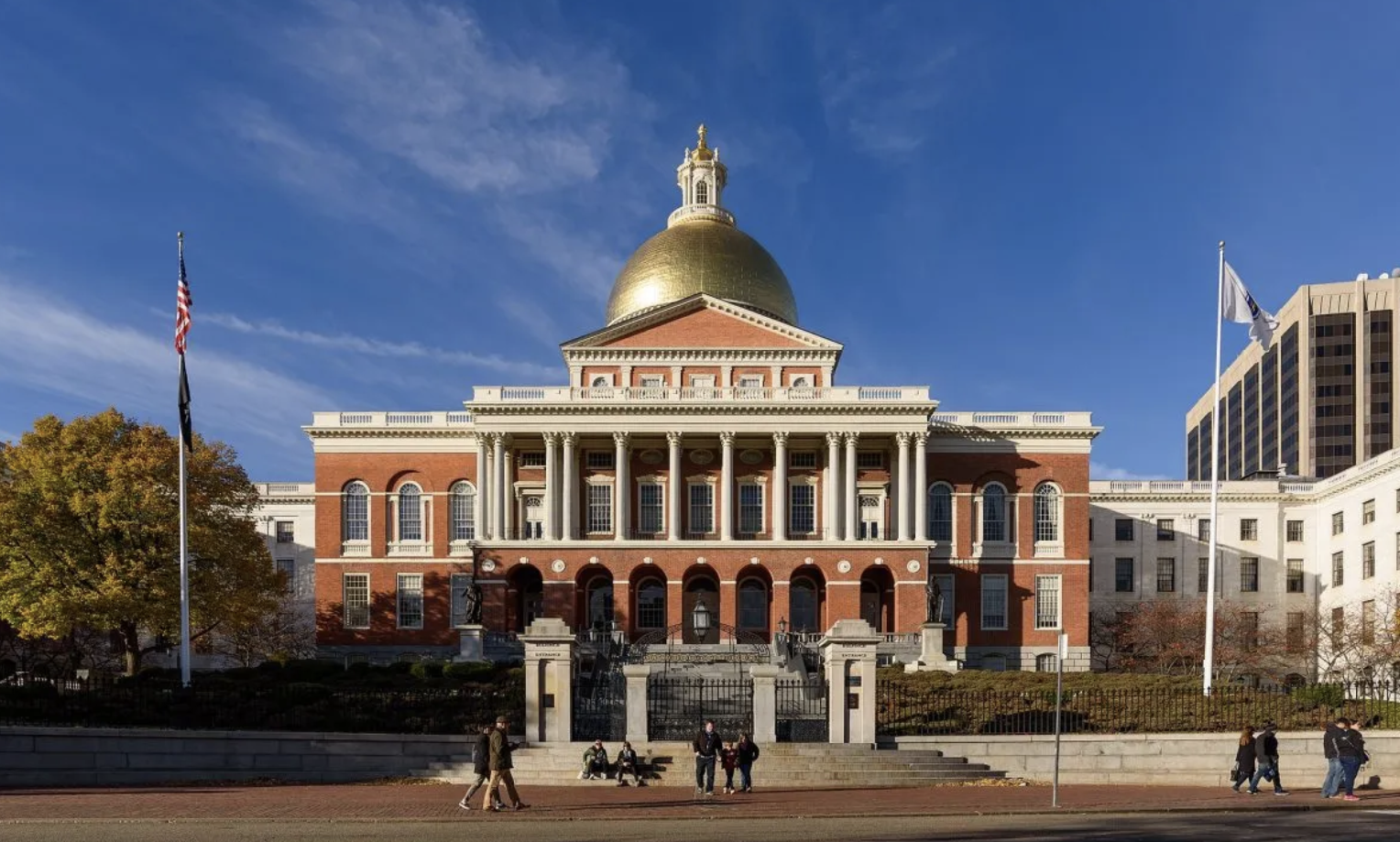
    The Massachusetts State House. Photo via Wikimedia Commons

    As Brookline voters go to the polls next month for the second time in three years to vote on a property tax override – this time for roughly $23 million, the largest in state history if approved — local legislators don’t appear keen on amending a decades-old state law that a town study committee points to as major factor in creating a “structural deficit.”

    The override proposal includes about $18.5 million for the Public Schools of Brookline over the next three years and $5.3 million for other services, as officials warn that failure could lead to layoffs affecting more than 200 school employees and the elimination of programs such as middle school world language instruction and K–8 conservatory music.

    town study committee report  published last month attributes Brookline’s repeated need for overrides not to one-time mismanagement, but to a structural mismatch between rising costs and limits on how quickly the town can raise revenue.

    “Brookline has a ‘structural deficit’ because its revenues, an overwhelming majority of which are statutorily limited, grow at a slower rate than its expenses, none of which have legal limits,” the report said.

    Because property taxes account for nearly 80% of Brookline’s revenue, the report identifies one statute above all others as driving that imbalance: Proposition 2½, the decades-old state law that caps annual property tax increases at 2.5%, unless voters approve an override.

    “The existence of the structural deficit is why Brookline keeps coming back to voters to approve revenue increases above and beyond Proposition 2½ limits,” the report adds.

    That finding is now fueling a broader questions on Beacon Hill: just how much is Proposition 2½  contributing to the strain facing communities like Brookline, and are lawmakers willing to revisit reform or repeal? 

    Brookline is not alone. Communities across Massachusetts have turned to Proposition 2½ overrides to close similar budget gaps, including in Arlington, where just days ago voters approved a $14.8 million override, currently the largest in state history. Other towns, such as Milton, Franklin, Natick and Duxbury, have also advanced override proposals in the past year.

    A December report from the Massachusetts Municipal Association, a statewide advocacy group representing all 351 cities and towns and a key municipal policy voice, outlined possible reforms to Proposition 2½ as municipalities face growing fiscal pressure.

    Adam Chapdelaine, the organization’s executive director, said the group is not calling for a full repeal of Proposition 2½, but instead supports changes that would give municipalities more breathing room.

    Among the proposals is allowing communities, through a ballot vote, to raise their levy limit above 2.5% or tie it to an economic indicator.

    “Allowing a community, by ballot vote, to decide they want to be, let’s say, a ‘Prop 3.5’ community, or vote to tie their number to some type of economic index, maybe the CPI,” he said.

    Chapdelaine said such changes would preserve the spirit underpinning the law while giving municipalities more flexibility.

    “Despite the challenges that Proposition 2½ presents to local budget makers, it also helps build community trust by ensuring there is a system in place to keep local property taxation in check,” he said.

    Still, Chapdelaine said no changes are expected during the brief remainder of the current legislative session, though he said lawmakers are beginning to engage more seriously with the issue.

    “I feel like, generally speaking, legislators understand that we’re reaching something that feels like a breaking point,” he added, “and some types of changes … need to be on the table.”

    Rep. Tommy Vitolo, D-Brookline, expressed his support for the town’s override but did not address whether he believes Proposition 2½ is contributing to the underlying budget pressures.

    “Brookline voters love our four publics: public schools, public parks, public services and public transportation,” Vitolo said in a statement. “Because exceptional public amenities require commensurate public investment, I will vote in favor of Brookline’s Proposition 2½ override on Election Day.”

    When pressed on whether the law itself should be revisited or reformed, Vitolo declined to comment.

    Sen. Cindy Creem, D-Newton, whose district includes Brookline, said she had read the MMA report and was aware of it circulating among lawmakers on Beacon Hill, but stopped short of embracing its central premise that Proposition 2½ is a primary driver of the state’s municipal budget strain.

    “I do know that communities feel stymied by Proposition 2½ in regard to how much money they can raise,” Creem said. “But I wouldn’t want to say it was the main contributor for any community.”

    Instead, Creem listed other factors exacerbating mounting budgetary pressures.

    “It’s not getting back money from the federal government … or the cost of everything going up so much … fuel costs … snow removal costs,” she said. “So, when you talk about contributing, they all contributed.”

    Creem agreed there is little immediate momentum for major Proposition 2½ reform on Beacon Hill, though she said “I do” when asked if she expects the issue to draw renewed attention in the next legislative session.

    “The Massachusetts Municipal Association is really good at getting people together. I’m assuming that they’re working with legislators to see if they can come up with some solution here,” she said.

    She pointed to uncertainty around federal funding and one of this year’s ballot questions, which could slash Massachusetts income tax revenue by 20%, as factors shaping the debate. However, Creem said those same pressures could cut both ways politically.

    “One would say yes because what it would reflect on is less money to cities and towns,” she said. “Another person could look at it and say the voters spoke — they don’t want to raise any more money.”

    Creem declined to take a position on whether she would support Proposition 2½ reform or repeal.

    “I don’t know at this point, I have to listen to my communities,” she said.

  • The man behind the clipboard: How one Brookline resident quietly shapes which questions appear on ballots across Massachusetts

    The man behind the clipboard: How one Brookline resident quietly shapes which questions appear on ballots across Massachusetts

    Harold Hubschman’s humble attire – sneakers, blue jeans, and a red McGill hoodie projects an air of understatement as he strides into the Caffe Nero minutes away from his Brookline Village condo. 

    Few would guess that the 69-year-old with a crop of unkempt white hair is a highly skilled political operator, let alone the linchpin behind the vast majority of paid signature drives that have put ballot questions before Massachusetts voters over the past two decades.

    Harold Hubschman, partial owner of SignatureDrive.com, Massachusetts leading signature collection firm, sitting down at the Caffe Nero in Brookline Village. Photo by Nathan Metcalf

    Ballot questions allow voters to directly weigh in on proposed laws, bypassing the state Legislature. In Massachusetts, qualifying a question requires collecting tens of thousands of valid voter signatures within a tight timeframe, a process that has given rise to a small, highly specialized industry.

    Hubschman, along with two partners, owns SignatureDrive.com, a firm that has become the dominant signature-gathering business in Massachusetts and an important national player. The firm has completed more than 100 statewide signature drives for ballot initiatives and candidates in 26 states, all successfully.

    Since 2009, the company has run collection drives for 26 of the 29 ballot initiatives in Massachusetts that hired paid firms. Of the 11 ballot questions currently advancing through the certification process for potential inclusion on this November’s ballot – the most in state history if all qualify – SignatureDrive collected signatures for eight.

    But the petition process is more than just a business to Hubschman, who has called Brookline home since 1984, after immigrating to the United States from his native Montreal. 

    “It’s the purest form of democracy…This country was built on petitioning the government,” he said before whipping out his business card, emblazoned across the top with a quote from the U.S. Constitution: “Congress shall make no law … abridging … the right of the people … to petition the Government.”

    Hubschman’s circuitous journey into the world of signature-drive organizing began in 1994, when he got involved in his friend Doug Barth’s ballot campaign to eliminate tolls on the Massachusetts Turnpike.

    “I wanted to work on a campaign, and so I helped him with that,” Hubschman said. “I’d literally never been involved in politics before then. And so we had to go out and collect, I think that year it was like 60,000 valid signatures.”

    The effort quickly became a crash course in the mechanics of direct democracy. With no established infrastructure, Hubschman and his collaborators had to build a signature-gathering operation from scratch.

    “We’d never done this before. We were building an organization on the fly,” he said. “And I realized at the end of that experience that I hate collecting signatures, and I never want to do it again.”

    While he came to dislike being grimaced while standing outside supermarkets for eight hours, Hubschman discovered that he had a knack for the logistical side of organizing the drives.

    “I told Doug, I will run the entire statewide signature drive if I don’t have to collect signatures,” Hubschman said. “And Doug said, ‘Sold.’”

    What began as an impromptu operation has since grown into a Massachusetts industry leader. SignatureDrive’s work sits within a niche corner of politics that few voters ever consider.

    In a state with more than five million voters, “There are probably fewer than 100 people who know how to do what we know how to do,” Hubschman said. “It’s a very niche field. There are very few people who are good at it. It’s extremely lucrative, quite honestly, and it’s fun for us.”

    The initial defeat does still sting, however,

    “Tolls on the pike are a really dumb idea, and one of these days I’m gonna actually get that question on the ballot to get rid of them,” he said. 

    Behind the scenes, Hubschman describes running a signature drive as a herculean feat of organization.

    During peak campaign season in Massachusetts, typically the eight-week window in the fall when campaigns race to collect enough signatures to qualify for the ballot, Hubschman said he works roughly 100-hour weeks. His days often begin around 9 a.m. and stretch until 2 a.m., spent almost entirely on the phone coordinating crews, managing logistics, and tracking progress across the state.

    Much of that work involves coordinating a small army of experienced signature gatherers who travel from campaign to campaign across the country.

    “They’re like migrant political workers,” Hubschman said. “They travel around the country, and they collect signatures. They’re people who do this year-round.”

    Managers often rent Airbnbs as workspaces where petitioners can turn in signatures, while individual workers stay in nearby motels or short-term housing, moving as needed to where demand is highest.

    The work itself is repetitive and often thankless.

    “We tell them you’re going to stand in front of a supermarket. A thousand people are going to walk by over the course of eight to 10 hours, 900 of them are going to blow you off,” Hubschman said. “A good day is when you get 50 people to sign. A great day is 100.”

    Signature drives are expensive undertakings. Hubschman said a full campaign to qualify a question for the ballot typically costs between $800,000 and $1 million, most of which he said is paid to signature collectors.

    When asked whether that price tag creates a barrier for everyday people trying to get issues on the ballot, Hubschman pointed to the recent success of one of the few questions slated to appear before Massachusetts voters this November that his company didn’t collect signatures for. 

    “Rent control did their initiative entirely with volunteers,” he said, before conceding the limits of that approach. “I mean, the answer is yes, it’s definitely easier if we do it.”

    Campaign filings first reported on by the State House News Service,  however, show that even the rent control campaign — which proudly touted not hiring a paid signature-gathering firm — relied in part on paid nonprofit staff to collect signatures, blurring the line between a volunteer effort and one supported by compensated labor, and underscoring the rarity of truly all volunteer drives. 

    Despite the scale of his operation, Hubschman describes his role as largely procedural, noting that SignatureDrive.com works with a wide range of clients across the political spectrum. 

    “I’m running a business, and it’s not my role to decide who gets to be in the debate,” he said. “If you want to raise taxes, we’ll help you do that. If somebody else wants to lower that tax down the road, we’ll help them do that too.”

    Hubschman said he and his partners do not discuss their personal opinions about initiatives with clients, nor do their clients ask for them. Still, that neutrality has limits.

    “We each have red lines. If the ick factor is too high, we won’t touch them under any circumstances,” Hubschman said. “I’m pro-choice, I’m pro-equal marriage, pro-union. I am pro-immigrant. I won’t work on initiatives that I consider to be on the wrong side of those issues.”

    Even so, Hubschman denies that his firm’s dominance over the signature-gathering business in Massachusetts makes him a gatekeeper to the process.

    “I tell my clients, we’re the only people who can get you on the ballot in Massachusetts,” he said wryly. “But other people can do it.”

    Instead, Hubschman insists that he and his colleagues are simply neutral facilitators.

    “We definitely do not have an outsized influence. We’re just the technicians who collect the signatures,” he said. “If we weren’t doing it, eventually other people would figure out how to do it too, but not as well as us.”

    With a record number of questions slated to appear on Massachusetts voters’ ballots this year, Hubschman said the trend reflects growing frustration with the state Legislature, which was the least efficient in the country in 2025 based on the ratio of bills proposed to bills passed, according to policy analysis firm Fiscal Note .

    “Political groups don’t do it unless they have been trying for years to get it done through the Legislature and not succeeding,” he said. “The process wouldn’t exist if people were able to get things easier through the Legislature.”

    From his vantage point, having attended hearings on several of this year’s ballot questions in recent weeks, Hubschman said lawmakers’ frustration is evident, even if it is not always explicit.

    “They’re polite in their annoyance,” he said.

    That frustration, he said, is most focused on proposals that would directly affect lawmakers’ own power or independence. Among the most hated this year, by his estimation, are the questions pertaining to legislative stipends and public records laws.

    While he couldn’t point to specific proposals, Hubschman said he has recently heard rumblings from reporters around the Statehouse that during the next legislative session, lawmakers may move to make it more difficult to get questions on the ballot in response to the unprecedented number advancing toward November.

    Hubschman, for one, is unsurprised, “They’re perennially trying to reform the ballot process,” he said. “They’re always trying to make it harder.”

    He is, however, not particularly bothered by efforts to further complicate the already idiosyncratic process. To sum up his perspective on the matter, Hubschman recalled a meeting some years back with a former head of the Legislature’s Election Laws Committee at the Statehouse, whom he declined to name.

    “The first thing he said was, ‘I want to increase the number of signatures,’” Hubschman said. “And I said, ‘I love that idea.’ He was surprised and said, ‘Why?’ I said, ‘Because we make more money.’ He was shocked.”

  • Candidates line up to replace Morrissey as Norfolk County DA

    After years of controversy surrounding the Norfolk County district attorney’s office, voters will choose a new top prosecutor this fall as a crowded field of candidates begins to take shape.

    District attorneys serve as the chief law enforcement officials in their counties, overseeing criminal prosecutions, working with police on investigations, and deciding what charges to bring or whether to bring them at all.

    The race comes after longtime Norfolk District Attorney Michael W. Morrissey announced in January that he would not seek reelection, having served since 2010. Morrissey’s tenure has drawn increasing scrutiny in recent years over how his office handled several high-profile cases.

    The Sept. 1 Democratic primary is likely to decide the race, as voters in 28 cities and towns including in Brookline choose from a field of six candidates. 

    High-profile cases fuel scrutiny of DA’s office

    The most high-profile case in recent Norfolk County history was that of Karen Read, who was charged with killing her boyfriend, Boston police officer John O’Keefe, in 2022. Prosecutors alleged Read struck O’Keefe with her SUV and left him in the snow, while her defense argued she was framed and that O’Keefe was injured elsewhere.

    The case drew national attention, fueled protests outside the courthouse, and raised questions about evidence handling and potential conflicts of interest. After a mistrial in 2024, Read was acquitted of the most serious charges in 2025, though she was convicted of driving under the influence.

    Another case that intensified criticism of the office is the death of Sandra Birchmore, a 23-year-old woman found dead in her Canton apartment in 2021. Her death was initially ruled a suicide, and the district attorney’s office said it found no evidence of foul play. 

    Federal prosecutors later alleged that Birchmore was killed by a former Stoughton police officer, who staged the scene to appear as a suicide, raising questions about why the case was not pursued more aggressively at the local level.

    Together, the cases have prompted broader concerns about investigative practices, prosecutorial decision-making, and the relationship between law enforcement agencies in Norfolk County. Those issues are now at the center of the race to replace Morrissey.

    A crowded candidate field

    Several candidates have centered their campaigns on reform aimed at restoring public trust, though they differ in how deeply they believe the office’s problems run.

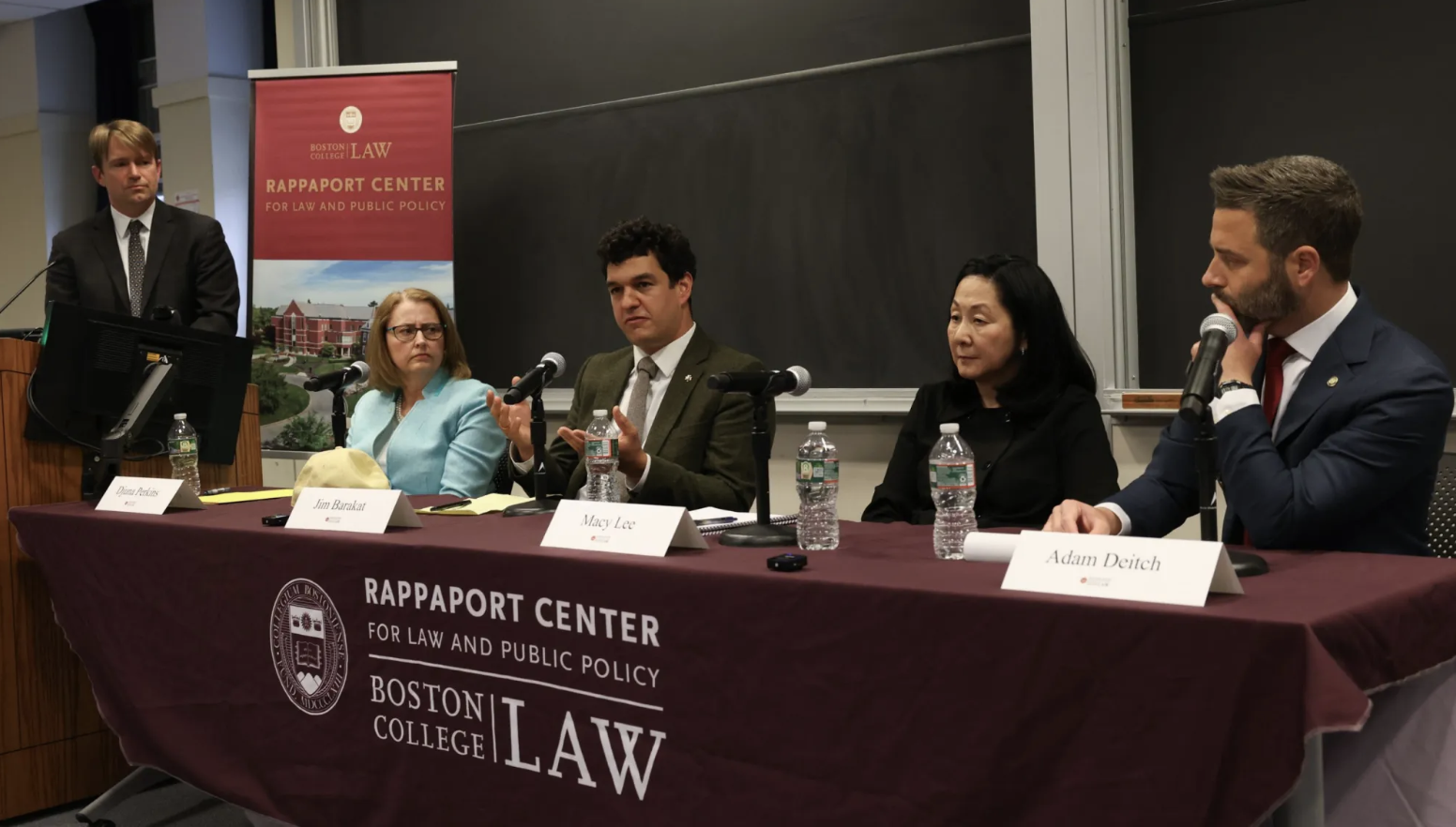
    Djuna Perkins , a former prosecutor and civil attorney, has been among the most forceful critics of the office’s recent performance. She pointed to what she described as “bad and unethical decisions” in the handling of high-profile cases and called the failure to pursue charges in the Sandra Birchmore case a “complete failure of our government” which inspired her to run for DA. 

    Perkins said she would begin her tenure with a top-to-bottom audit of the office and emphasized the need to return to “the highest standards of professionalism, integrity and transparency.”

    Adam Deitch , a former federal prosecutor who worked on public corruption cases, has also emphasized restoring public trust, focusing on transparency and access to the office. 

    “Folks feel like the DA’s office is closed to them, and that should not be the case,” he said.

    He said he would pursue that transparency through structural changes, including regular public meetings, expanded access to information and the creation of a dedicated anti-corruption unit. He also supports the creation of dedicated task forces for elder fraud and hate crimes.

    Greg Connor , who spent 25 years as a prosecutor in the Norfolk DA’s office, has taken a different approach, emphasizing experience and continuity while acknowledging the need for change. 

    Connor acknowledged concerns about recent cases, saying the Karen Read prosecution was “overcharged,” but pointed to what he described as the office’s broader track record.

    He highlighted the expansion of overdose prevention efforts and diversion programs such as drug court and veterans court and said he would build on those initiatives while more strictly enforcing conflict-of-interest rules requiring prosecutors or officers with personal connections to a case to step aside and introducing new units focused on cold cases and animal cruelty.

    “I think that anyone who wins is going to rebuild that office in what they want to do,” he said, framing his candidacy as an effort to build on the office’s existing strengths rather than overhaul it.

    Craig MacLellan , who has worked as both a prosecutor and a defense attorney, has positioned himself as another middle-ground candidate, arguing that reform is needed without dismissing the work of career prosecutors. 

    “The vast majority of cases … are handled in a professional manner,” he said of the current DA’s office.

    He acknowledged that recent controversies have “caused the public to lose a great deal of confidence in the office,” criticizing “certain elements” of the Karen Read case as “very poorly” handled and saying the Birchmore investigation “left a lot to be desired.”

    To regain public trust, MacLellan said the office is “in need of reform” in three core areas: community engagement and outreach, the office’s internal structure, and the way deaths are investigated, all of which need to be “reinvented and reimagined.”

    Macy Lee , who currently serves as director of the state’s Office of Medicaid Board of Hearings and previously led a narcotics unit in the Suffolk County district attorney’s office, has emphasized her experience managing large systems and pointed to hate crimes and constitutional protections as key priorities, drawing on her own experiences with discrimination.

    Lee, who is Asian American, said she “experienced hate at a very young age,” adding that those experiences have shaped her commitment to ensuring protections for “all residents, not just citizens,” and to taking a zero-tolerance approach to civil rights violations, including by federal immigration enforcement.

    Jim Barakat , a defense attorney, has framed his campaign around a broader critique of the criminal justice system and the role of prosecutors within it. 

    “I’ve spent my career representing people against the full weight of the system, and that changes how you see justice,” he said.

    Barakat argued that the office should move away from prioritizing conviction rates and instead focus on rehabilitation and reducing recidivism. 

    “We should be asking: are we reducing harm, are we treating people fairly, and are we building trust?” he said.

    Correction: A previous version of this article linked to the incorrect website for Greg Connor. The article has been updated.

  • Race for Norfolk DA opens after Morrissey steps down amid controversy surrounding Read, Birchmore cases

    After years of controversy surrounding the Norfolk County district attorney’s office, voters will choose a new top prosecutor this fall as a crowded field of candidates begins to take shape.

    District attorneys serve as the chief law enforcement officials in their counties, overseeing criminal prosecutions, working with police on investigations, and deciding what charges to bring or whether to bring them at all.

    The race comes after longtime Norfolk District Attorney Michael W. Morrissey announced in January that he would not seek reelection, having served since 2010. Morrissey’s tenure has drawn increasing scrutiny in recent years over how his office handled several high-profile cases.

    The Sept. 1 Democratic primary is likely to decide the race, as voters in 28 cities and towns including in Wellesley choose from a field of six candidates. 

    High-profile cases fuel scrutiny of DA’s office

    The most high-profile case in recent Norfolk County history was that of Karen Read, who was charged with killing her boyfriend, Boston police officer John O’Keefe, in 2022. Prosecutors alleged Read struck O’Keefe with her SUV and left him in the snow, while her defense argued she was framed and that O’Keefe was injured elsewhere.

    The case drew national attention, fueled protests outside the courthouse, and raised questions about evidence handling and potential conflicts of interest. After a mistrial in 2024, Read was acquitted of the most serious charges in 2025, though she was convicted of driving under the influence.

    Another case that intensified criticism of the office is the death of Sandra Birchmore, a 23-year-old woman found dead in her Canton apartment in 2021. Her death was initially ruled a suicide, and the district attorney’s office said it found no evidence of foul play. 

    Federal prosecutors later alleged that Birchmore was killed by a former Stoughton police officer, who staged the scene to appear as a suicide, raising questions about why the case was not pursued more aggressively at the local level.

    Together, the cases have prompted broader concerns about investigative practices, prosecutorial decision-making, and the relationship between law enforcement agencies in Norfolk County. Those issues are now at the center of the race to replace Morrissey.

    A crowded candidate field

    Several candidates have centered their campaigns on reform aimed at restoring public trust, though they differ in how deeply they believe the office’s problems run.

    Djuna Perkins, a former prosecutor and civil attorney, has been among the most forceful critics of the office’s recent performance. She pointed to what she described as “bad and unethical decisions” in the handling of high-profile cases and called the failure to pursue charges in the Sandra Birchmore case a “complete failure of our government” which inspired her to run for DA. 

    Perkins said she would begin her tenure with a top-to-bottom audit of the office and emphasized the need to return to “the highest standards of professionalism, integrity and transparency.”

    Adam Deitch, a former federal prosecutor who worked on public corruption cases, has also emphasized restoring public trust, focusing on transparency and access to the office. 

    “Folks feel like the DA’s office is closed to them, and that should not be the case,” he said.

    He said he would pursue that transparency through structural changes, including regular public meetings, expanded access to information and the creation of a dedicated anti-corruption unit. He also supports the creation of dedicated task forces for elder fraud and hate crimes.

    Greg Connor, who spent 25 years as a prosecutor in the Norfolk DA’s office, has taken a different approach, emphasizing experience and continuity while acknowledging the need for change. 

    Connor acknowledged concerns about recent cases, saying the Karen Read prosecution was “overcharged,” but pointed to what he described as the office’s broader track record.

    He highlighted the expansion of overdose prevention efforts and diversion programs such as drug court and veterans court and said he would build on those initiatives while more strictly enforcing conflict-of-interest rules requiring prosecutors or officers with personal connections to a case to step aside and introducing new units focused on cold cases and animal cruelty.

    “I think that anyone who wins is going to rebuild that office in what they want to do,” he said, framing his candidacy as an effort to build on the office’s existing strengths rather than overhaul it.

    Craig MacLellan, who has worked as both a prosecutor and a defense attorney, has positioned himself as another middle-ground candidate, arguing that reform is needed without dismissing the work of career prosecutors. 

    “The vast majority of cases … are handled in a professional manner,” he said of the current DA’s office.

    He acknowledged that recent controversies have “caused the public to lose a great deal of confidence in the office,” criticizing “certain elements” of the Karen Read case as “very poorly” handled and saying the Birchmore investigation “left a lot to be desired.”

    To regain public trust, MacLellan said the office is “in need of reform” in three core areas: community engagement and outreach, the office’s internal structure, and the way deaths are investigated, all of which need to be “reinvented and reimagined.”

    Macy Lee, who currently serves as director of the state’s Office of Medicaid Board of Hearings and previously led a narcotics unit in the Suffolk County district attorney’s office, has emphasized her experience managing large systems and pointed to hate crimes and constitutional protections as key priorities, drawing on her own experiences with discrimination.

    Lee, who is Asian American, said she “experienced hate at a very young age,” adding that those experiences have shaped her commitment to ensuring protections for “all residents, not just citizens,” and to taking a zero-tolerance approach to civil rights violations, including by federal immigration enforcement.

    Jim Barakat, a defense attorney, has framed his campaign around a broader critique of the criminal justice system and the role of prosecutors within it. 

    “I’ve spent my career representing people against the full weight of the system, and that changes how you see justice,” he said.

    Barakat argued that the office should move away from prioritizing conviction rates and instead focus on rehabilitation and reducing recidivism. 

    “We should be asking: are we reducing harm, are we treating people fairly, and are we building trust?” he said.

  • Brookline residents divided over ballot question to repeal recreational cannabis legalization

    Brookline residents divided over ballot question to repeal recreational cannabis legalization

    Different types of cannabis are on display at the dispensary Comm Ave Canna on Sept. 3, 2025. Photo by Taylor Coester

    Brookline residents are divided over a proposed statewide ballot question that would repeal Massachusetts’ legalization of recreational cannabis, with supporters arguing the policy has contributed to youth drug use and opponents warning that reversing it could revive inequities from the era of prohibition.

    The proposal, titled “An Act to Restore a Sensible Cannabis Policy,” has been filed in two versions by its sponsors, the Coalition for a Healthy Massachusetts.

    Both versions would eliminate licensed retail sales of recreational cannabis while allowing adults 21 and older to possess limited amounts of cannabis and preserving the state’s medical cannabis program.

    However, version A  of the petition would also limit the potency of medical cannabis products, a provision supporters say addresses concerns about increasingly high-THC cannabis products. Version B  is identical except for that provision. 

    Preliminary polling indicates the proposal has not yet persuaded Bay Staters. The University of New Hampshire released findings last month showing 63%  of respondents oppose either version.

    However, in Brookline, where cannabis policy has been a recurring flashpoint since dispensaries first opened, some residents remain hopeful the repeal effort will succeed.

    Among them is Susan Park, a Town Meeting member who helped organize the Concerned Citizens of Coolidge Corner, a group that opposed a proposed cannabis dispensary  on Beacon Street in 2019. Park later ran unsuccessfully for Select Board in 2024 on a platform that included curtailing retail cannabis in the town.

    Park pointed to survey data cited in the 2023 Brookline Marijuana Landscape Assessment , which draws on the 2023 Massachusetts Youth Risk Behavior Survey .

    “Overall, 13% of BHS student respondents to the MYRBS reported having used cannabis in the past 30 days,” she wrote in an email, with usage rising by grade level to “30%, almost one in three, among 12th graders.”

    Park said those figures suggest legalization has not been accompanied by sufficient efforts to prevent youth use.

    “The narrative that cannabis is totally safe is false,” she wrote. “More needs to be done to educate our youth that cannabis is addictive.”

    Park argued that legalization occurred too quickly without sufficient safeguards.

    “With legalization of cannabis, there was a responsibility to make sure our youth are educated, protected, and safe,” she wrote. “This was not adequately done.”

    At the same time, Park said her concerns center on recreational use rather than the medical cannabis program.

    “Let’s be clear,” she wrote. “We are not talking about medical cannabis. People who need cannabis for illnesses should get their cannabis.”

    Regulation and repair, or prohibition and punishment?

    Others in Brookline disagree. Zahriyannah Karakashian-Jones, a Brookline resident who previously worked extensively with local youth as manager of programs and partners at the Brookline Community Foundation, said recriminalization would fail to keep cannabis out of high schoolers’ hands while reviving problems the regulated system was meant to address.

    “If the theme is cannabis harms children,” she said, “then the answer should be tighter regulation, prevention, and enforcement against selling to minors, not eliminating licensed sales and handing the market back over to unregulated sources.”

    She also argued that the legal market includes safety standards that do not exist with underground sales.

    “The beauty of having regulation is that it allows testing, ID checks, labeling, potency controls, and reduces contamination risk,” she said. “Illicit markets don’t have that.”

    Karakashian-Jones said the ballot question also raises concerns about the history of cannabis enforcement in the United States, where arrests and criminal penalties disproportionately affected Black and brown communities.

    “The people that are always punished the most are communities of color,” she said. “The question is whether we want to handle cannabis through regulation and repair or through prohibition and punishment.”

    View from a dispensary

    Cannabis businesses also oppose the repeal effort. 

    New England Treatment Access, known as NETA, opened in Brookline Village as a medical dispensary and later became the first recreational cannabis retailer in the Greater Boston area  when it began adult-use sales in 2019. There are currently two other retailers in Brookline or on the border line with Boston.

    “Massachusetts voters approved adult-use cannabis nearly a decade ago, and since then the regulated market has generated billions in economic activity, supported tens of thousands of jobs, and produced hundreds of millions of dollars each year in tax revenue that funds important public programs and local services,” wrote Jervonne Singletary, vice president of compliance and government relations at Parallel, NETA’s parent company.

    “Repealing adult-use cannabis would push sales back into the illicit market, increase burdens on law enforcement, expose consumers to untested and unsafe products, and punish law-abiding businesses and citizens,” Singletary said.

    ‘It has to stop’

    For one Brookline parent of a ninth-grade student at Brookline High School, concerns about youth access feel especially personal. She said she discovered two cannabis vape cartridges in her child’s backpack during the first week of freshman year last September. Since then, she said, the family has been in what she described as an eight-month “cat and mouse chase,” repeatedly finding cannabis paraphernalia among her child’s belongings.

    “I don’t know where she’s getting it. I’m not a detective,” said the parent, who spoke on the condition of anonymity because of the stigma surrounding youth drug use.

    Still, she believes legalization may have made it easier for cannabis to reach teenagers through informal resale.

    “All they need to do is show ID now, boom. They get it, come out, sell it to someone else, who sells it to someone else.”

    The parent, whose child has an Individualized Education Program, said she was further alarmed after reading the Brookline Marijuana Landscape Assessment. The report found that 21.8% of Brookline High School students in grades 9 and 10 with an Individualized Education Program reported having ever used cannabis, compared with 10.2% of students without an IEP.

    In recent months, she said she has noticed concerning changes in her child’s behavior that she attributes to cannabis use.

    “Her attitude, her behavior, has completely changed,” the parent said. “She’s refusing school. She just doesn’t want to go. She’s lethargic.”

    The experience is why she plans to vote yes on the ballot question to repeal recreational cannabis sales.

    “We want our children to do well and be successful in life, but the opposite is happening,” she said. “It has to stop.”

    A medical cannabis perspective

    But Colleen Powell, 62, a cancer survivor who grew up in Brookline and is now a medical cannabis patient at NETA, said eliminating recreational sales would undermine a system many patients rely on. She first turned to medical cannabis after chemotherapy left her struggling with fatigue and pain that interfered with daily life.

    “Once I learned what different strains do, I was able to manage my pain and my energy level,” she said. “It was really a life-changing thing for me.”

    Powell said the expansion of recreational dispensaries has helped lower prices by increasing competition.

    “I would not want to see that end and all of a sudden I’m paying double or triple what I’m currently paying,” she said. 

    Powell said she also believes, as a matter of principle, that adults should be able to choose whether to use cannabis for themselves. 

    “I see it as equal to alcohol,” she said. “Adults deserve the ability to relax.”

    Addressing concerns about youth access, Powell, who attended Brookline High School in the late 1970s and early 1980s, said cannabis was already used among teenagers long before legalization and would likely remain so even if recreational sales were repealed.

    “Yes,” she said, laughing. “Kids were smoking pot when I was in high school.”

  • Massachusetts lawmakers push to direct more healthcare spending to primary care amid access crisis

    Massachusetts lawmakers push to direct more healthcare spending to primary care amid access crisis

    Greg Schwartz, second from right, is one of the Massachusetts lawmakers working on increasing access to primary care. Photo by Jacqueline Manetta

    Only about 6.7%  of total health care dollars spent by insurers and providers in Massachusetts go toward primary care, less than half the average in other high-income countries and a level that coincides with almost 1 in 3  Bay Staters reporting difficulty accessing primary care, according to the most recent state data.

    Last December, a state task force convened by the Health Policy Commission recommended increasing that share to 15%  of total health care spending to address what physicians describe as a growing access crisis.

    In line with that goal, lawmakers have introduced three bills this session collectively known as “Primary Care For You” (PC4You) , which would increase the portion of overall health spending directed to primary care. One version, filed by Rep. Greg Schwartz, D-Newton, who represents parts of Brookline, faces a March 17 reporting deadline before the Joint Committee on Health Care Financing.

    At a Statehouse briefing last month, physicians involved in an ongoing unionization effort among primary care doctors at Massachusetts General Brigham (MGB) joined lawmakers to argue that reforms are urgently needed.

    Schwartz, currently the only practicing primary care physician in the Massachusetts Legislature, said his bill would address burnout and staffing shortages by allowing practices to hire and retain more clinicians and support staff.

    “It’s not that medical residents aren’t interested in going into primary care, and it isn’t that they’re not ready to take a lower salary,” Schwartz said in an interview. “It’s that they just don’t want to practice in an area of medicine that doesn’t have administrative support. Those resources are just not provided to primary care the way that they are for some of the specialty care practices.”

    At the briefing, Dr. Zoe Tseng, a primary care physician at Brigham and Women’s Hospital, said the question she hates to hear most is whether she is accepting new patients.

    “I really dread this question,” Tseng said. “Because I hate to say no when I know there’s so much need.”

    Tseng said more than 60 primary care physicians have left Mass General Brigham in the past three years, describing “significant moral distress” among doctors who feel “that our patients’ needs are increasingly at odds with the profit-driven decisions at MGB.”

    Physicians also noted that approximately 250 MGB primary care doctors voted in 2025 to unionize with Doctors Council SEIU, with roughly 88% in favor. The health system has challenged the National Labor Relations Board’s determination of which physicians are eligible for inclusion in the union, delaying contract negotiations.

    In a written statement, Mass General Brigham said it is taking steps to address primary care shortages and physician workload, including hiring additional clinicians and expanding programs intended to reduce administrative burden and improve access to care.

    Addressing the unionization effort, the system said it is “committed to creating a workplace where all physicians, clinicians, and staff feel heard and valued,” and that it asked the National Labor Relations Board to review whether the proposed bargaining unit was “appropriate under the law for acute care hospitals” and is awaiting the board’s decision.

    ‘This is how things get missed’

    Dr. Kristin Gunning, a primary care physician at Mass General Hospital who has practiced for 26 years, said the workload has become unsustainable.

    “For every hour we see patients, we have an hour of unpaid work,” Gunning said, adding that full-time primary care physicians can often work 80 hours or more a week.

    She said seven doctors and one nurse practitioner left her practice within seven months, leaving roughly 5,000 patients without their regular physicians. The remaining doctors absorbed hundreds of additional patients while already fully paneled.

    Gunning argued the shortage stems from decades of underinvestment in primary care as hospital systems prioritize more profitable specialty services.

    “Preventing disease is not profitable,” she said. “The money is in lucrative diseases such as cancer and cardiovascular disease.”

    Dr. Benjamin Kerman, a primary care physician at Brighman and Women’s Hospital, read a statement from his patient, Natasha Andino, describing rushed appointments.

    “I pay for insurance, but I still find myself rationing my questions, choosing what fear I’m allowed to say out loud before time runs out,” Andino wrote. “This is how things get missed. This is how treatable problems become pricey because no one had time to catch them early.”

    Three bills, one problem

    PC4You refers to three bills filed by Sen. Cindy Friedman, D-Arlington, and Reps. Schwartz and Richard Haggerty, D-Woburn. All seek to increase total primary care spending, but through different mechanisms.

    The Schwartz and Friedman  bills would require the Health Policy Commission to set annual benchmarks for primary care spending, raising the share of total health care expenditures devoted to primary care to at least 12% by 2029. Entities that fail to meet targets could be required to file performance improvement plans and face civil penalties. The bills would also create a primary care board to study longer-term payment reforms, including a potential shift to per-member, per-month payments, but would not immediately implement that model or create a funding mechanism. 

    Haggerty’s bill  would raise primary care spending to 15% by 2029 and immediately establish a Primary Care Stabilization Fund financed through required insurer contributions. The bill would immediately implement a prospective per-member, per-month payment model for participating practices, paid from that fund.

    Similar versions of Haggerty’s proposal have been filed in previous sessions but have not advanced. Schwartz said his approach is intentionally more incremental.

    “It doesn’t require a wholesale change in the way that care is paid for,” he said, arguing a less disruptive model may be more likely to gain support from insurers and hospital systems.

    Friedman’s bill was reported favorably out of the Joint Committee on Health Care Financing in June 2025 and is now before the Senate Committee on Ways and Means. Haggerty’s bill has remained before the Joint Committee on Health Care Financing since last May. All three bills must be acted on by both chambers by July 31, or they will die with the session.

    Dr. Justin Holtzman, who runs an independent primary care practice in Brookline, said he supports additional funding but does not believe spending alone will solve the crisis.

    “Who would say no to more money?” Holtzman said.

    He argues that consolidation and “anti-competitive” behavior among the region’s large hospital systems, not just underinvestment, have created barriers for independent physicians like himself.

    “It sucks being a doctor in Eastern Massachusetts,” Holtzman said. “Over time, the hospitals have bought up all these primary care practices, the doctors eventually retired, and now nobody wants to come and work for them.”

    Holtzman described a case from several years ago involving a patient with severe psychiatric needs whose insurance required care within the Mass General Brigham system. When he attempted to refer the patient to psychiatry at Massachusetts General Hospital, he said he was initially told the department could not accept the referral because he was not an MGB physician.

    “So I said, ‘All right, let’s get this patient in an appointment with a primary care doc in your clinic,’” Holtzman said. “They said, ‘That’s fine. It’ll be two and a half years before they can get in.’”

    Holtzman said he later spoke with the department chair and was told the service was overwhelmed and could not take his referral because it was struggling to accommodate patients already within the health system.

    “He said, ‘Listen, we just can’t do it. We have so many patients that we can’t even see our own patients, let alone patients outside our health system,’” Holtzman said.

    Mass General Brigham disputed Holtzman’s account. In its statement, the health system wrote: “To reiterate, regarding specialist referrals, Mass General Brigham does not have any policies prohibiting referrals from non-MGB physicians.”

    “So what do I do?” Holtzman said, arguing that in a system with more independent physicians, referrals could move more quickly and patients could access care more reliably.

    “If I know an independent doctor, I can call and say, ‘This patient is pretty sick — can you see them?’ and they’ll get them in right away,” he said. “I can’t do that with the big hospitals, and almost all the doctors now are employed by the big hospitals.”

  • Brookline’s rent control bid advances through state legislature

    Brookline’s rent control bid advances through state legislature

    The Massachusetts State House. Photo via Wikimedia Commons

    Brookline’s push to reestablish a cap on rent increases cleared another hurdle this month, with the town’s home rule petition winning initial approval in the Massachusetts Senate, a  procedural step before a final vote in that chamber in April.

    If approved, the bill would move to the House, bringing the town one step closer to regaining the authority to enact rent stabilization for the first time since 1994, when Massachusetts voters approved a statewide ballot question banning rent control as it previously existed.

    Because of Chapter 40P of the Massachusetts General Laws , enacted through that 1994 ballot question, Brookline must obtain authorization from the Legislature through a home rule petition before adopting rent stabilization locally. If approved, it would become the first Massachusetts municipality to implement rent regulation in more than three decades.

    The proposal reached Beacon Hill after a November 2023 Special Town Meeting vote, when members approved a warrant article 112–107, with 13 abstentions, directing the town to seek state authorization.

    Alec Lebovitz, a Town Meeting and Advisory Committee member who was one of the article’s original petitioners, said the policy was crafted in response to sharp rent increases threatening to displace residents.

    “I can remember speaking to one young woman who rents a home with her partner and her daughter,” Lebovitz said. “She was facing, at that time, an increase in her rent, $800 a month. No repairs had been made to the house. Nothing had changed, except that the landlord determined he could charge that much.”

    Under the proposal, Brookline could cap annual rent increases at the Consumer Price Index plus 3%, or 7%, whichever is lower. Newly constructed units would be exempt for 15 years, along with owner-occupied properties with four units or fewer.

    “We were very deliberate when we crafted our home rule petition to try and build more flexibility to avoid creating that disincentive,” Lebovitz said, referring to concerns about discouraging new housing development.

    The Brookline petition is advancing as voters prepare to consider a separate statewide initiative petition  that would repeal Chapter 40P and establish a framework for rent stabilization to be imposed on every municipality in the commonwealth.

    That proposal would limit annual rent increases for most covered units to the Consumer Price Index or 5%, whichever is lower, including after tenant turnover. It would exempt owner-occupied buildings with four or fewer units and housing constructed within the past 10 years.

    Under the state’s initiative process, proponents may negotiate with lawmakers before the measure appears on the ballot. Carolyn Chou, executive director of Homes for All, told The Boston Globe earlier this month  that the group would consider dropping the measure if lawmakers passed a “strong” rent control policy.

    The prospect of that more sweeping measure is shaping debate over authorizing individual municipalities like Brookline to adopt more limited policies.

    “I support communities voting, by community, for if they want rent stabilization,” said Sen. Cindy Creem, D-Newton, who filed Brookline’s home rule petition in the Senate and said affordability is the top concern she hears from constituents.

    “I think it makes more sense to do that versus the broad issues in the ballot,” Creem said. “What Brookline is doing is more realistic.”

    Rep. Tommy Vitolo, D-Brookline, said he views his role on home rule petitions as advancing the will of the Town Meeting.

    “If Town Meeting says they want it, it’s now my job to try to make it happen,” Vitolo said.

    However, while acknowledging that rent caps could help current tenants, he warned of long-term tradeoffs.

    “It will certainly improve the housing affordability situation for the people who have housing,” Vitolo said. “It’s not clear that the folks who want to move in but now can’t find a place will feel quite as good about it.”

    Vitolo said rent stabilization does not address what he sees as the underlying cause of rising costs.

    “The problem with housing prices is that supply isn’t meeting demand. We need more housing,” he said.

    Rep. Kevin Honan, D-Boston, who chaired the Legislature’s Committee on Housing for 17 years, came out more decidedly in favor of Brookline’s petition.

    “I would be supportive of that,” Honan said. “The cost of housing is out of control.”

    Honan said the proposal strikes a balance by allowing rent increases while offering predictability.

    “That’s still a rent increase that would allow a property owner to maintain the property and make a profit,” he said.

    Asked about concerns that rent stabilization could deter new housing construction, Honan said he didn’t anticipate that problem in high-demand communities like Brookline.

    “Many of these communities are so desirable to live in that production will continue,” Honan said.

    Doug Quattrochi, executive director of MassLandlords, a statewide landlord trade association that counts Brookline property owners among its ranks, said his organization opposes any rent caps that do not compensate property owners.

    “An uncompensated cap is a nonstarter,” Quattrochi said.

    He argued that Chapter 40P allows rent regulation only if landlords are reimbursed for the difference between market rent and the controlled rate, and said limiting rent without compensation amounts to taking private property without payment.

    Quattrochi acknowledged that no municipality in the country currently operates a compensated rent control system and that such an approach would require significant local budget overhauls.

    “We would never argue against teachers, firefighters, or police budgets. It’s all super important,” Quattrochi said. “But towns also fund discretionary projects like dog parks and conservation. At the end of the day, if you want rent-burdened people to remain in your community, someone has to decide how to pay for it.”

    Quattrochi noted that the landlord advocacy group Housing for Massachusetts coalition has already filed suit challenging the statewide initiative petition, arguing that repealing Chapter 40P’s compensation requirement through an initiative petition violates a clause in Article 48 of the state Constitution  prohibiting initiative petitions that aim to contravene “the right to receive compensation for private property appropriated to public use.” 

    He said Brookline’s home rule petition would likely face similar legal challenges if enacted without compensation.

    “This rent control stuff is not going to happen,” he said. “Option one, compensation, is the bottom line; option two is we’re suing.”

    Correction: A previous version of this article misspelled the name of MassLandlords director Doug Quattrochi. The article has been updated.