Category: Brookline.News

  •  ‘The only thing ordinary people can do’: Brookliners head north to NH to protest region’s first large-scale ICE facility

     ‘The only thing ordinary people can do’: Brookliners head north to NH to protest region’s first large-scale ICE facility

    An hourlong drive, snow and a ruptured achilles tendon were not enough to stop 81-year-old Brookline activist Suzette Abbott from making her voice heard in Merrimack, New Hampshire.

    Abbott navigated from the passenger side of the Toyota Prius for her husband, David Klafter, 79, with three newly acquainted passengers squeezed into the back. Conversation in the car was periodically interrupted by a weather alert. 

    “Winter storm ahead,” said Google Maps. “Please proceed with caution.” 

    Unfazed by the warning, the group was among around 10 Brookliners who carpooled to Merrimack Saturday to protest plans for an immigrant detention center in a 324,000-square-foot warehouse.

    According to documents released by New Hampshire Gov. Kelly Ayotte, the site would cost $158 million to renovate and could house up to 600 detained people at a time, which would make it the first large-scale detention facility in New England. 

    Confusion over the Republican governor’s knowledge of the acquisition and local outrage over the initiative drew more than 1,000 protesters to Merrimack Town Hall. As Abbott and Klafter pulled up, they were greeted with “ICE OUT” signs, an 8-foot cutout of the Statue of Liberty, cowbells and chants of “Ayotte is a liar.” 

    Protesters outside Merrimack Town Hall on Saturday, Feb. 21. Photo by Milena Fernsler.

    “It’s not just about New Hampshire. It’s about all of New England,” said Deborah Good, a Brookline resident and retired social worker. She said she came because she believed everyone, not just those in Merrimack, would be affected by the warehouse. 

    “People who are our neighbors, our co-workers, our employees, our friends are under threat and will be dragged to this place,” Good said. “The only thing that ordinary people can do is make it known that we oppose.”

    Boston University biology professor Edward Loechler, who lives in Brookline, drove almost four hours from a music camp to be there. He voiced his concern for the lack of due process for immigrants in ICE detention. 

    “People are being denied their rights,” he said. 

    As of February 2026, nearly 70,000 people were held in detention centers nationwide, with reports of overcrowding and infrastructure unsuitable for human habitation raising health concerns. While the Trump administration has claimed this widespread crackdown on illegal immigration is targeting “violent criminals,” CBS News  reported that only about half of those arrested in the past year had criminal records – and fewer than 14% had been convicted of a violent crime.

    “​​This has nothing to do with criminality,” Klafter said. “It has everything to do with promoting a white nationalist agenda.” 

    Around him, numerous signs alluded to the concentration camps of Nazi Germany, reading “We are not Nazis” and “No Gestapo in America.”

    Passing vehicles were as much a part of the demonstration as those holding signs. Cars honked as they drove by – some angry honks, others in support. One man stepped out of his truck, yelling at the crowd “Go home!” until he was escorted by a volunteer peacekeeper.  

    An organized convoy of cars painted in anti-ICE slogans paraded midway through the standout and unaffiliated snow plows were met with applause by protesters who saw them as a symbolic representation of their calls to “remove ICE.”

    Amid the chaos, Abbott was stationed in a foldable chair because of her injury, sharing a cardboard sign with Klafter. She said it was important for her to be there. 

    David Klafter (left), Suzette Abbott (in the white hat), and Edward Loechler (in orange), converse with New Hampshire State Rep. Heath Howard (right) at the protest. Photo by Milena Fernsler

    Originally from South Africa, where she protested against apartheid rule in her youth, she has participated in social movements across decades.  

    “I grew up where everything was censored. There was government control of every newspaper. News, media, books were banned,” she said. “I see inklings of that now, which is pretty scary.” 

    One of four women who run the group Activist Evenings in Brookline, she said it is crucial for citizens to stand up to authority. 

    Klafter agreed. “I think ICE has to be resisted,” he said. “The resistance in Minneapolis really forced them to back down and withdraw. But even more than that, it really showed the whole country that you can stand up to these people.” 

    Once they’d had enough of the cold, Abbott and Klafter regrouped to head back. But first they had one more stop to make. Curious to see the contested warehouse, they found the road there marked “private property” and blocked by a security vehicle. The guard inside said he was unsure why he was stationed there and refused to provide further information. 

    The road to the contested warehouse was marked “private property” and blocked by a security vehicle. Photo by Milena Fernsler

    Back on the road, Abbott said she was already planning for the No Kings protest March 28. 

    “People in Brookline should be organizing,” she said. 

    This story is part of a partnership between Brookline.News and the Boston University Department of Journalism.

  • Police reports reveal shooters movements on day of MIT professor’s murder

    The exterior of 9 Gibbs St., where MIT professor Nuno Loureiro was killed in December. Photo by Vivi Smilgius

    On the morning of Dec. 15, Claudio Manuel Neves Valente pulled a gray Nissan Sentra into a parking spot on Babcock Street and lingered in the neighborhood. Twelve hours later, he fatally shot MIT physicist Nuno F.G. Loureiro in the foyer of his own home.

    Newly released reports from the Brookline Police Department detail Valente’s movement on the streets of Brookline before carrying out a targeted execution

    In security camera footage and witness interviews, police discovered that Valente had been hiding in plain sight. He drew no attention to himself as he traversed through Brookline streets for a full day, waiting for Loureiro.

    Police later learned that Valente was the man who opened fire inside a Brown University physics department building, shooting 11 students and killing two during an economics study session. Authorities searched for a suspect for five days before Valente killed himself Dec. 18 in New Hampshire.

    Valente, who had crossed paths with Loureiro decades earlier at a university in their native Portugal, had harbored resentments  over Loureiro’s successful career, reporters at The Boston Globe found.  

    At the time of the shootings, investigators had no concrete evidence linking them.

    But Brookline police records show that despite having just committed a mass shooting in Providence, Rhode Island, Valente spent a full day in Loureiro’s neighborhood before killing him that evening. The records were first reported on by the Boston Herald. 

    Throughout the day, Valente made various stops, all within a mile of Loureiro’s home at 9 Gibbs St.

    While Valente was parked on Babcock Street for about four and a half hours, Loureiro was at MIT overseeing PhD qualifying examinations, according to police records.

    Around 1:30 p.m., Valente was seen on security footage walking along Commonwealth Avenue past Jumbo Seafood, Canna Dispensary, and Fiya Chicken before entering Pho Viet’s, where he purchased a sandwich with cash.

    Police interviewed the employee who served Valente, who said there was nothing notable about their interaction.

    Around the same time, Loureiro attended a research council meeting and by 3 p.m. was overseeing another qualifying examination.

    Loureiro’s last known professional activity was after 5 p.m., when he approved a visitor log form via email, a colleague said.

    Soon after, he was watching a movie at home with his daughters while his wife went to dance class.

    Around 8 p.m., Valente began what police described as “preoperational surveillance,” circling the immediate neighborhood multiple times.

    Police wrote that Valente was most likely “gathering information of the neighborhood layout by his repeated presence and probable mapping of routes, including entry and exit points.”

    At 8:22 p.m., a neighbor’s Ring camera captured Valente wearing a yellow reflective safety vest carrying a box with a barcode, a disguise that led Loureiro’s daughter to believe he was a delivery driver.

    Loureiro was in the kitchen with his wife, who had returned from her dance class, when the doorbell rang.

    He stepped into the foyer to answer the door and was shot in his chest, abdomen and thigh. Inside, Loureiro’s family heard his screams and then silence.

    In the days after the killing, Brookline police interviewed Loureiro’s family, colleagues and students, who said he was well-liked and had no clear reason to be targeted.

    A professor and director of MIT’s Plasma Science and Fusion Center, Loureiro managed a major research lab that employed around 250 staff and students. He worked closely with graduate students in the nuclear science and engineering and physics programs and had recently implemented a new mentoring program.

    Although there were typical academic pains, police interviews with students and colleagues found no evidence that Loureiro had seriously angered anyone.

    Loureiro’s family told police they were unaware of any threats or issues, and did not notice any “strange interactions.”

    Loureiro was pronounced dead at Beth Israel Deaconess Medical Center early the morning after the shooting.

    After he opened fire, Valente drove off in the Nissan with its headlights and taillights turned off and disappeared into the night, concluding his 12-hour stint in Brookline. He was later found dead from a self-inflicted gunshot wound to the head in a storage unit in Salem, New Hampshire.

    This story is part of a partnership between Brookline.News and the Boston University Department of Journalism.

  • Despite Pentagon order, Brookline Scouts embrace an inclusive troop

    Troop 6 Scouts at their weekly meeting, participating in group discussions with Joe Henrich, an assistant scoutmaster. Photo by Camille Bugayong

    As patrol leader of Brookline’s Troop 6, 16-year-old Daphne Spunt guides her fellow Scouts through the presentation of the U.S. flag, the Pledge of Allegiance and the recitation of the Scout Oath.

    It’s an inherently patriotic thing, Spunt said of Scouting America, formerly known as the Boy Scouts. “What other institution does the Pledge of Allegiance to the flag?” she said. “We represent America.” 

    Defense Secretary Pete Hegseth warned Scouting America this month that it could lose military support  unless it adopts unspecified “core value reforms.” Hegseth has been a strong critic  of Scouting America’s diversity, equity and inclusion initiatives, including its decision in 2018 to admit girls. 

    Troop 6 is unfazed.

    “Scouting does not need a military perspective to help create better children,” said Clyde Lanford “Lanny” Smith, an assistant scoutmaster. “This troop stands strong without all that. We never needed that.” 

    Spunt joined the Scouts in middle school after feeling underwhelmed by Girl Scout activities. She said she found that Scouts offered the lifelong skills she wanted. 

    Among her accomplishments are the first aid, camping, swimming and rifle shooting merit badges. To earn these badges, Spunt said, she had to complete the same requirements as the boys.

    “It’s not easier for me because I’m a girl,” she said.

    As she rises through the ranks, Spunt said she has wondered why the country’s leadership “attacks” the current iteration of Scouting America. 

    “I’m able to do everything [the boys] can do. There’s no reason why I shouldn’t be allowed to participate in scouting,” Spunt said. “We just add – we don’t take away.” 

    Spunt invited her friend Astrid Shivers to join the Scouts.

    “I remember being very mesmerized even though I was an outsider,” said Shivers, 16. “But then I thought, ‘I think I can actually learn a lot from this.’” 

    Like her friend, Shivers never understood the argument that girls should resort to joining Girl Scouts when Scouting America better suited her ambitions. 

    “Scouting America is all about preparing the youth, teaching them morals, discipline, and Girl Scouts is not that,” Shivers said. “I think what’s marketed towards those two genders says so much about how Western society values things that are male-oriented versus female-oriented.” 

    At this weekly meeting, Smith handed out discussion questions for Scouts to earn their Citizenship in Society merit badges, a required badge to become an Eagle Scout. 

    Introduced in 2022, the badge focuses on diversity, equity and inclusion, and asks Scouts how they can promote a culture of belonging. 

    “There’s a whole teaching around [this badge] that has made some people in leadership positions in the United States feel uncomfortable with scouting,” Smith said. “This badge says that if you’re an immigrant, you’re gay, trans, you are welcome.”

    Unlike other badges, Scouts earn Citizenship in Society through discussions with their counselors. 

    Some questions ask Scouts to put themselves into scenarios where a peer may experience bullying and exclusion. 

    Other questions challenge prejudicial beliefs: What would they do if a camper makes an offensive comment about people with disabilities, if a social media account spreads harmful messages about a person, or if someone tells a new student from a different country to “go back where they came from.”

    Scouts are encouraged to understand varying perspectives to make a positive and welcoming difference. 

    “We do not accept people who are mean to other people, people who are bullies to other people, people who make fun of others,” Smith said. 

    Scouts are asked to interview someone in their community or school who has made a significant impact promoting diversity, equity and inclusion.  One question asks Scouts to document three or more areas of their life outside of scouting where they can include others because, “[DEI] is not just in here,” Smith said.

    Craig Hagan, an assistant scoutmaster, said Troop 6 will travel to Philmont Scout Ranch in New Mexico, where Scouts can interact with people from “all over the world.”

    “Part of that is learning how to get along with people from all walks of life,” Hagen said, “and find things like what you have in common, rather than focusing on the differences,

    Hagan’s son Ben, 17, said race, gender and identity don’t make a difference in a Scout’s value in Brookline’s troop.

    “It doesn’t matter who you are,” Ben said. “You’re a Scout.” 

    This story is part of a partnership between Brookline.News and the Boston University Department of Journalism.

  • Brookline sues property owner over unapproved windows in historic district

    A property at 179 Babcock Street is the subject of a dispute between the town and the property owner over windows that were allegedly improperly installed in a historic district. Photo by Camille Bugayong

    The town of Brookline is suing a local property owner, claiming she installed windows that violate historic district regulations and demonstrated “willful disregard” by ignoring demands to fix them for four years.

    The lawsuit, filed Jan. 29 in Norfolk Superior Court, has prompted the property owner, Pamela Bardhi, to accuse Brookline officials of discrimination and unfair practices.

    The dispute began in 2021 after Bardhi replaced five windows on the front of 179 Babcock St. without approval from the Brookline Preservation Commission.

    In a phone interview Jan. 30, Bardhi said she was unaware of the lawsuit and that the town “has been nothing but racist, discriminatory and unkind.” She said she plans to take legal action against the town for “defamation, discrimination, and unfair practices.”

    Town officials denied requests for an interview with Brookline.News and instead sent a statement signed by commission preservation planner Rebecca Moroski, planning and community development director Kara Brewton, and first assistant town counsel Jonathan Simpson. The statement said the town tried to work with Bardhi but that she was unresponsive.

    “For [the commission] to respond in this way is disgusting, truthfully, like [they] are not a human being,” Bardhi said of the lawsuit.

    Bardhi, a real estate developer, purchased 179 Babcock St. in 2020 as a family home, she said, and undertook what she described as a “full-gut” renovation costing more than $1 million, which included replacing the windows.

    The property is a three-unit building, and some of its apartments are listed for rent on Zillow , Apartments.com  and Hotpads. Bardhi did not respond to follow-up questions about whether she lives in the building. The town’s lawsuit against her says she lives in Roxbury.

    In her interview with Brookline.News, Bardhi said she was unaware the property was in a historic district and subject to strict regulations.

    “It was an honest mistake,” Bardhi wrote in an April 14, 2025, email to town officials. Had I known, I would have never installed those few windows or even touched them for that matter.”

    According to a letter sent to Bardhi by senior preservation planner Tina McCarthy, Bardhi submitted a retroactive application in 2022 for the window replacements, which was denied. 

    Nearly five months later, Bardhi submitted a follow-up application proposing the installation of cheaper windows similar to those down the street at 189 Babcock St., but that request was also denied.

    “[McCarthy] can reconsider the windows that [she’s] approving me, and I can find a manufacturer faster that will be a bit cheaper, but [she’s] not even giving me that leg room,” Bardhi told Brookline.News. “Nobody else needed to get that type of approval.”

    The town clarified in a statement that the pre-existing windows at 189 Babcock St. were vinyl but were installed in the 1990s, before the historic districts were established.

    The house, built in 1929, is in the Graffam-McKay Local Historic District, which is governed by Brookline’s Historic District By-Law. Under its regulations, exterior changes visible to the public require prior approval from the preservation commission, and any unauthorized alteration is considered a form of “demolition.”

    “The purpose of this By-law is to promote the educational, cultural, physical, economic and general welfare of the public through the preservation and protection of the historical assets of Brookline,” the town’s statement reads.

    After her application for vinyl windows was denied, Bardhi was ordered to correct the violation by installing wooden-framed windows with a historic look, court documents show.

    Court records say that the windows had not been replaced as of April 2025 and Bardhi failed to respond to previous emails and voicemail messages.

    Bardhi said in an interview that she delayed replacing the windows after receiving estimates of over $50,000, and cited financial strain due to personal hardships, including the birth of twin daughters and a divorce.

    “The town is absolutely terrible and doesn’t communicate and tries to corner people when they’re in their most vulnerable times in their life,” Bardhi said.

    Town officials disputed the claim. They said the commission discussed Bardhi’s financial hardship and suggested she apply for a Certificate of Hardship, a provision for homeowners in local historic districts. But the town said Bardhi never applied for the certificate despite being informed about it multiple times.

    Town officials said they sent Bardhi at least 35 emails and two certified letters over a four-year period.

    The town said the dispute has been ongoing since July 2021 and filing the lawsuit was a last resort to resolve the issue. The lawsuit seeks to compel Bardhi to install windows that comply with the historic district regulations.

    “[The commission has] exhausted every avenue of collaboration and communication as well as provided information, alternatives and assistance without a suitable resolution per Town and State laws before going to the Select Board on October 21, 2025, for authorization to file a lawsuit,” the town’s statement said. 

    Bardhi said the lawsuit is making her concerned about potential damage to her reputation as a real estate developer, broker and founder of a modular construction company.

    In text messages to this reporter, Bardhi threatened to file her own lawsuit if details of the case were published.

    “If this is being publicized, I will absolutely be taking legal action,” Bardhi wrote, without specifying whom she would sue. “Seems to be that because my occupation is real estate development, that the town wants to paint me as a villain, which qualifies as defamation. This is nowhere close to the truth.”

    This story is part of a partnership between Brookline.News and the Boston University Department of Journalism.

  • ‘This is not normal’: Brookline lawmakers outline priorities for pivotal year on Beacon Hill

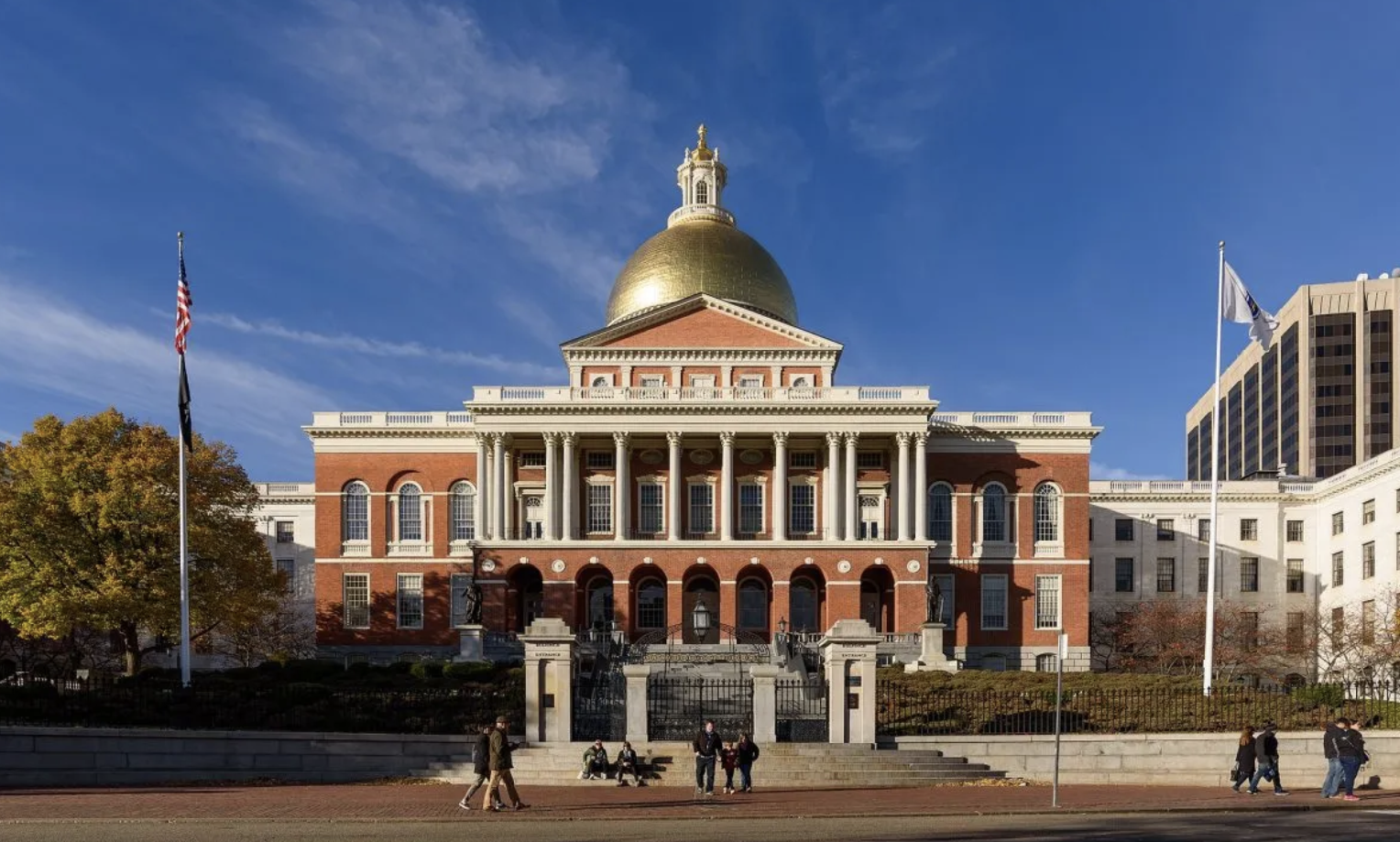
    This election year will be a high-stakes one in Brookline, on Beacon Hill, and across America, according to the five lawmakers who represent the town at the Massachusetts State House.

    The effective end of the 194th legislative session on July 31 — and with it the deadline for bills proposed over the past two years to advance or die — combined with a November election featuring races for the state’s constitutional offices, every seat in the Legislature, up to a dozen ballot questions and midterm national elections focusing on immigration and federal spending  – sets up a year that will be remembered for generations, one local lawmaker said.

    “Fifty years from now, American schoolchildren will learn about this time in history and be shocked,” said Rep. Tommy Vitolo, D-Brookline, referring to what he described as the “unquestionably” unconstitutional actions of immigration enforcement under the second Trump administration. “This is not normal, and we’ve got to figure out a way to stop it.”

    Vitolo is the only member of Brookline’s state delegation whose district is entirely contained within the town. He, along with Sen. Cindy Creem  (D–Newton) and Reps. Greg Schwartz, D-Newton, Kevin Honan and Bill MacGregor, both Boston Democrats, collectively speak for Brookline’s interests on Beacon Hill.

    Rep. Tommy Vitolo

    Vitolo, first elected in 2018 and now serving his fourth term, said the urgency of the moment is shaping the “day-in, day-out work of governing,” particularly as affordability pressures continue to define life in Brookline and across the state.

    “The word you’re going to hear over and over again is affordability, and for good reason,” Vitolo said. “Too many people are working hard and doing the right things and still struggling to have the comfort they rightfully expect.”

    Among his priorities, Vitolo highlighted workforce development, particularly the House-passed bill  which would require certain large public construction projects to use apprentices 

    “The only way you become a master plumber or a master carpenter or a master welder is to start by getting your first job learning how to do it,” Vitolo said. “Apprenticeships lead to jobs where someone can own a home, raise a family, and maybe go on vacation once in a while.”

    Vitolo also highlighted energy and climate legislation as a key focus, including a measure which aims to transition buildings away from natural gas , and a separate bill which would strengthen energy codes  to promote net-zero and solar-ready construction, both of which he filed. 

    “Brookline is on the cutting edge,” Vitolo said, noting the town’s role as one of 10 municipalities authorized by state law to require fossil-fuel-free new construction. “Communities that have more privilege, more wealth, more capital — those should be the leaders.”

    Sen. Cindy Creem

    Creem, first elected in 1998 and now serving as Senate majority leader, framed the year ahead from a position of institutional power — and constraint.

    She said immigration enforcement is the most urgent issue she hears about from constituents, and that a core focus in the coming months will be advancing a bill filed by Gov. Maura Healey in late January that would restrict civil immigration arrests  without a judicial warrant in sensitive locations such as courthouses, schools, health care facilities and places of worship, among other measures. 

    “We cannot control the federal government,” Creem said. “But we can make sure people are not impersonating ICE, that due process is protected, and that we’re not complicit in actions that violate constitutional rights.”

    Besides immigration issues, Creem said her top legislative priority for the final year of the session is a Senate-passed data privacy bill  which would ban the sale of sensitive personal information, including precise location data.

    “We banned the sale of sensitive data, including location data — in other words, somebody who might come to Massachusetts for services that may not be legal in another state, such as abortion or gender-affirming care,” Creem said. 

    Rep. Greg Schwartz

    Schwartz, a first-term lawmaker elected in 2024 and a practicing primary care physician, said healthcare access is his central concern as lawmakers confront budget pressures and federal uncertainty. As a key priority, he pointed to advancing a bill he is sponsoring, which would increase the share of healthcare spending devoted to primary care.  

    “Primary care is the foundation of the entire healthcare system,” Schwartz said. He said the state’s low level of spending on primary care is contributing to physician burnout and limiting access to care. “People have insurance, but they can’t find a doctor,” he said.

    Schwartz added that budget discussions on healthcare are complicated by uncertainty about federal funding, particularly Medicaid reimbursements, which account for a substantial portion of state spending.

    “In a roughly $62 billion budget, we’re talking about on the order of $14 billion in reimbursements from the federal government,” Schwartz said. “That’s practically 25%.”

    Rep. Kevin Honan

    Honan, first elected in 1987 and the longest-serving member of the Massachusetts Legislature, said his priorities for the final year of the session include legislation aimed at improving housing governance and increasing housing production as affordability pressures continue to grow.

    One proposal he highlighted would establish a condominium ombudsman  within the Attorney General’s Office to help resolve disputes between condo owners and associations.

    “This is an issue that comes up all the time,” Honan said. “People feel like they don’t have anywhere to turn.”

    Honan also pointed to a measure often referred to as the “Yes in my back yard”  (YIMBY) bill, which he supports, to make it easier to build multifamily housing and allow housing on underused land.

    “When you’re trying to create more housing, you need zoning reform,” Honan said. “You need multifamily housing to address the housing shortage that we’re experiencing in Massachusetts.”

    Rep. Bill MacGregor

    MacGregor, who was elected in 2022 and is currently serving his second term, said the rising cost of living is also shaping his priorities for the final year of the session, particularly child care affordability, in addition to concerns about access to mental health care.

    “I’m a father of two toddlers, so early childhood education is something that’s important to me,” MacGregor said. “For two kids in daycare, it’s over $50,000. We’re one of the most expensive states.”

    To help offset those costs, MacGregor said he has filed a bill which would create a child care and dependent care tax credit , allowing families to reduce their state tax bill by up to $500.

    MacGregor acknowledged the amount was modest, but said, “Every little bit helps nowadays.”

    MacGregor also highlighted legislation that would establish a special commission to study interstate telehealth  and ways to allow patients to maintain continuity of care when crossing state lines, particularly for mental health treatment.

    “If you’re seeing a therapist and you go to college out of state, you wouldn’t be able to see that same therapist,” MacGregor said. “That’s a real problem.”

  • Brookline resident and GBH producer recognized for dedication to youth education 

    Brookline resident Elizabeth Gardner was recently honored for her work creating public media projects that foster civic engagement and media literacy for students. Photo courtesy Elizabeth Gardner

    A Brookline resident and GBH producer has been honored for her work creating public media projects that foster civic engagement and media literacy for students.

    Elizabeth Gardner, who oversees video production for the social studies, civics and history curriculum on PBS LearningMedia, has been named a 2026 Becton Fellow. Her work includes the youth-facing educational web series “Why It Matters” and the civic action program “Youth Stand Up.”

    The Becton Fellowship is designed to support GBH producers in their professional development by providing them with grants to explore career opportunities, said Seeta Pai, GBH’s vice president of children’s media and education. Gardner is among eight GBH producers receiving Becton, Rey and Peter S. McGhee fellowships, all of which are awarded annually by GBH.

    Pai called Gardner the star of GBH’s education department who “brought out the best of GBH.” 

    “There’s nobody else that does it quite like us,” Pai said. “We don’t just use media gratuitously. We use it for a purpose.”

    Gardner, who joined GBH in 2016, frequently collaborates with educators and students to turn complex histories into accessible classroom tools.

    “All of this is to equip students to be engaged citizens in this world and know how to do it and why it matters to them,” said Gardner. 

    At a rocky time for GBH and public media across the country, Pai said, Gardner has been essential in helping the department navigate funding cuts by creating content that performs well and addresses current civics and democracy headlines in a digestible way. In July, Congress pulled back funding for the Corporation for Public Broadcasting, costing GBH  $18 million, about 8 percent of its budget. 

    “All the work she’s done is the example of what public media brings and what could be lost if it isn’t around,” Pai said.

    “Youth Stand Up,” designed for middle schoolers, features short video profiles of young civic leaders, explainer videos and a skill-building toolkit to support student-run projects, such as worksheets and activities that teachers can use in the classroom.

    “We really are looking for opportunities to bring in youth voices wherever we can,” she said, “so that we’re not just making media for young people. We’re also making it with young people.” 

    Gardner takes a social media-style approach to “Youth Stand Up” videos, drawing inspiration from TikToks and Instagram Reels to capture students’ attention.

    “We knew [there] was an issue [of] young people that were learning civics in the classroom and really not connecting it to their own lived experience or understanding how this had to do with them,” Gardner said. 

    To find a solution, Gardner’s team went into middle school classrooms and found that students respond “overwhelmingly” well to videos that feature quick cuts, text on screen and a first-person perspective from a young person speaking to the camera. 

    One video centers on a Native American teen who organized a book drive on Native American reservations that featured Indigenous characters and authors. Another was a TikTok-style explainer on how to identify a credible source created and presented by a freshman at Cornell University. 

    As a Brookline resident, Gardner said she has seen student leaders in the community step up and take action. 

    In 2020, Gardner and her team produced a “Youth Stand Up” video on Adaeze Anyaosah, who at the time was a Brookline High School student who organized a rally for racial justice in Brookline. 

    The team turned her activism efforts into a short video and created accompanying materials for classroom learning. 

    “My experience of Brookline is that it is a community of people who care deeply about the place that they live and about their neighbors in the world, and that’s been very inspiring to me,” Gardner said. 

    Zaheer Ali, an educator in New Jersey, worked with Gardner on the documentary series “American Muslims: A History Revealed.”As executive producer, Ali said Gardner respected his goals and vision for what needed to come to fruition.

    Ali said he felt comfortable rejecting ideas and pushing back on different decisions during the production. 

    “Elizabeth and I had long conversations where it was clear that she respected what I wanted to make sure came across in the materials,” Ali said.  

    Ali said being able to draw on public media is more important than ever, as the media spaces young people turn to may not always be credible. 

    “It’s really important for my students to be able to find that kind of media that we can critically engage with but depend on as having gone through some kind of process that has passed the test of scholarly rigor and academic integrity,” Ali said.  

    Gardner said her colleagues and their department’s mission inspire her to continue working in public media as the industry evolves. 

    “I found a home at GBH,” she said. 

    This story is part of a partnership between Brookline.News and the Boston University Department of Journalism.

  • Art sale supporting immigrants’ rights comes to Brookline 

    A previous Art For All event at Aeronaut Brewing in Somerville. Photo by Michael Mauceri

    Art For All , a “pick-your-price” art sale where all proceeds support an organization that provides civic education to Boston’s immigrant community, will come to Brookline for the first time this weekend.

    The fundraising event will take place Saturday from 2 to 4 p.m. at the Brookline Teen Center at 40 Aspinwall Ave. Sculptures, paintings and drawings — all donated by local artists — will be for sale, with 100% of proceeds going to Brazilian Women’s Group, a nonprofit organization that supports Boston’s immigrant community through rights advocacy.

    Jeremy Fischer, a Brookline resident and high school adjustment counselor, is the founder of Boston For All, a volunteer-run community initiative that hosts events such as Art For All to support local organizations whose mission addresses the current political climate.

    Fischer wants to make one thing clear about Art For All: “It is not an auction.”

    Instead, the “pick-your-price” model serves as a way to reduce barriers for those who want to support whichever organization Art For All is partnering with, regardless of their financial circumstances.

    “Oftentimes art goes to people of significant means,” Fischer said. “But not only do people of means want to be a part of helping others — everybody wants to be a part of helping others. This is an opportunity for people to give what they think they should, or what they’re able to.” 

    This will be the sixth installation of Art For All and events like it since Boston For All started in 2017. Fischer said Boston For All as a whole came together after the 2016 presidential inauguration of Donald Trump, where he said there was an overwhelming feeling of “wanting to do something.”

    It all began with an event called Run For All, in which Fischer hosted a run around Jamaica Pond in Jamaica Plain. Runners who participated donated to the American Civil Liberties Union. Events that followed included Rock For All and Art For Abortion Access.

    “What we do is we just try to find an organization that is meeting the moment and make sure that all of the money that is donated in whatever way, goes directly to them,” Fischer said. 

    Brazilian Women’s Group, the organization partnering with Art For All this time around, joins the ranks of groups like City Life/Vida Urbana, La Colaborativa and The Boston Immigration Justice Accompaniment Network.

    Heloisa Galvão, a Jamaica Plain resident and journalist, is the executive director and co-founder of Brazilian Women’s Group. The nonprofit organization got its start in 1995 as a community-based group that mainly served as a place for Brazilian women to talk about their experiences in Boston.

    “I saw that people were talking for Brazilians when they didn’t know what they were talking about,” Galvão said. “We said, ‘We need to be visible. We need to occupy this space. We need to fight for our rights.’”

    Now Brazilian Women’s Group operates as a fountain of information for its members, specifically regarding immigrants’ rights, health advocacy and civic education.

    “I don’t care how you came here, first class or swimming,” Galvão said about her approach toward Brazilian Women’s Group. “You are a human being. You still have rights.”

    Silvina Mizrahi, a West Roxbury resident and art educator, is one of the several creators who will donate pieces of their work for this installation of Art For All.

    In the past, Mizrahi has donated pieces including bronze and silver sculptures, as well as mixed media on canvas. 

    “You feel good if your neighbor is feeling good,” Mizrahi said. “This is what motivates me.”

    In total, previous Art For All installations have raised over $61,000 for their respective organizations.

    Galvão said Brazilian Women’s Group is “privileged” to have been approached by Art For All.

    “Art is culture and culture is political,” Galvão said. “Art — for us — is a tool that make[s] our voice louder.”

    This story is part of a partnership between Brookline.News and the Boston University Department of Journalism.