Category: The Flip Side

  • AI concerns in the arts loom over city’s youth summit

    AI concerns in the arts loom over city’s youth summit

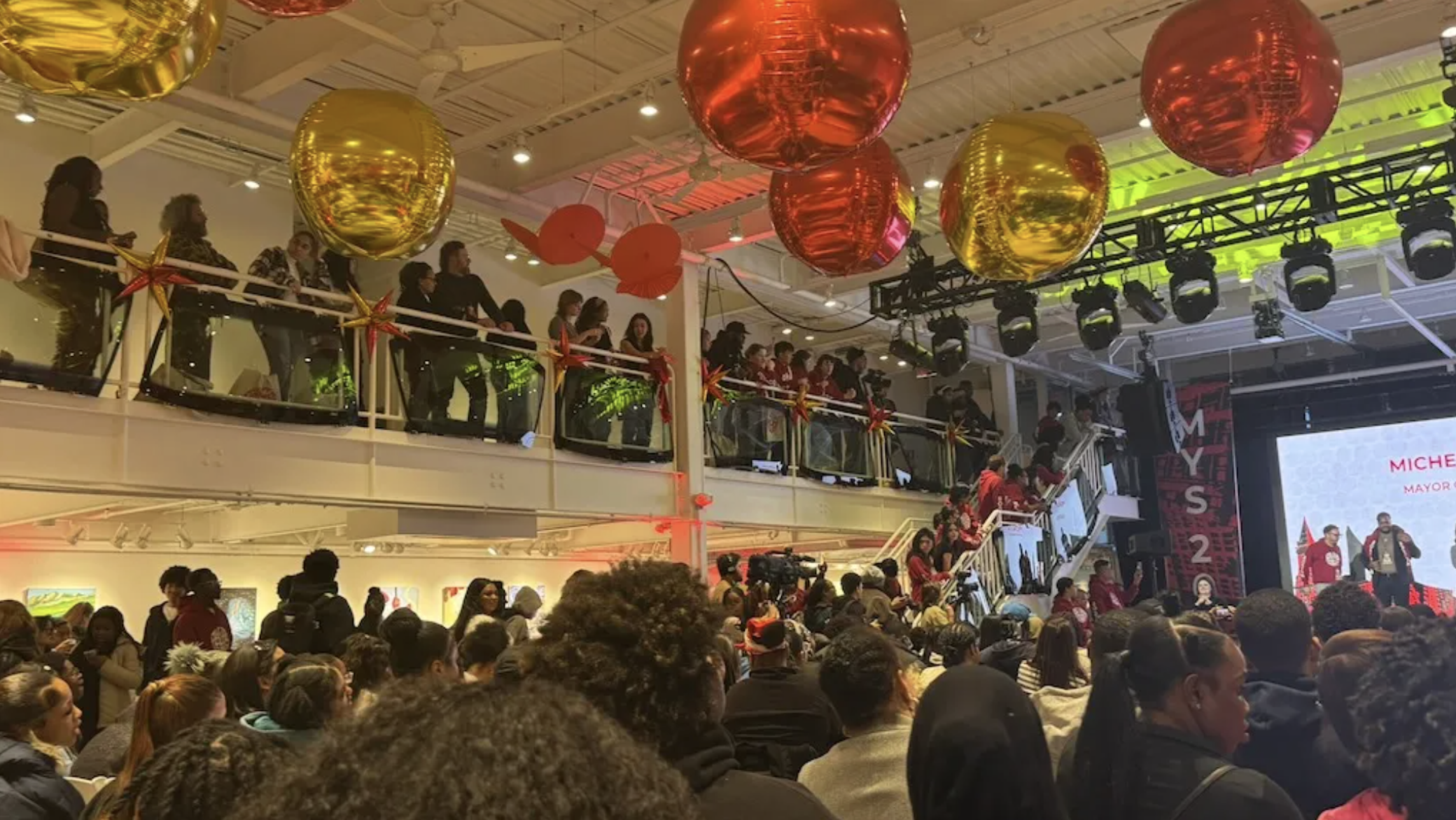
    Hundreds of teenagers attended the Mayor’s Youth Summit recently for live performances, painting displays and interactive art booths, but some caution against the rise of artificial intelligence in their creative endeavors.

    “It’s crazy how advanced [AI] is getting. It’s terrifying that creative spaces that were run by people are now being taken over,” said Yara Munif, a 14-year-old East Boston high schooler, who attended the summit. 

    The summit, hosted by Mayor Michelle Wu’s Office of Youth Engagement, was held Feb. 21 in South Boston’s Artists for Humanity EpiCenter with about 600 attendees, ages 14 to 19.

    The summit aims to give young people a stage to perform and share their art while building meaningful connections with peers from every neighborhood, officials said. 

    Multiple youth groups performed, including Beat the Odds, Boston Music Project, Teen Empowerment and other local organizations. Performances included an ensemble of brass instruments, a violin duet, hip-hop dancing and rapping.   

    For many teenagers at the summit, using a screen is part of their daily routine, whether it is scrolling on TikTok, posting on Instagram or doing their homework on a Chromebook. 

    The summit moved teenagers away from the screens, allowing them to interact with one another and try art-related activities. The event comes at a time when many young people, who came of age during the pandemic, are seeking more in-person connections.  Some of the attendees discussed the negative impact of AI on the younger generation, live performances and cultural representation. 

    “Of course, being behind a screen and [using] online networks are great for global connection, but having these local art communities … is just reassuring to know and very positive,” said Gloriann Zhou, a Boston University student who also works for the Community Music Center of Boston, which put on a live performance at the summit.

    Zhou said she’s concerned about the encroachment of AI on her student’s creativity at the center, which helps children explore different genres of music and learn new instruments. She also noted that it can be difficult as a teacher to tell what is AI-generated art versus human-made art. 

    “In fact, I’m totally against people that straight-up use AI to create their work. I give them a little bit of leeway [if it] helps point them in the direction they want, but I’m absolutely against creating the whole entire work [with AI],” said Zhou. 

    Anahi Cruz, a Northeastern University student, said that art is based on being present and bearing witness to the times. It’s also about representing culture and humanity. AI is incapable of doing that, she added. 

    “Being Latina, [I see that] art tells the history and the times. There’s so many different forms in music, poetry, writing and visual arts. It’s really about being present … that makes such a difference [compared] to AI,” said Cruz in an interview. 

    Ameera Suttles, a Suffolk University student from Dorchester, emphasized the importance of having live music and performances at these summits, adding that they cannot be replicated by AI. 

    “Every single singer I’ve ever loved has touched me on a human level,’’ said Suttles in an interview. “This event is truly just people socializing and enjoying each other’s presence — something AI would not be able to achieve.” 

  • Networking event connects small restaurant owners

    Networking event connects small restaurant owners

    Silverware hung from a display wall that also showcased well-engineered pots and pans.

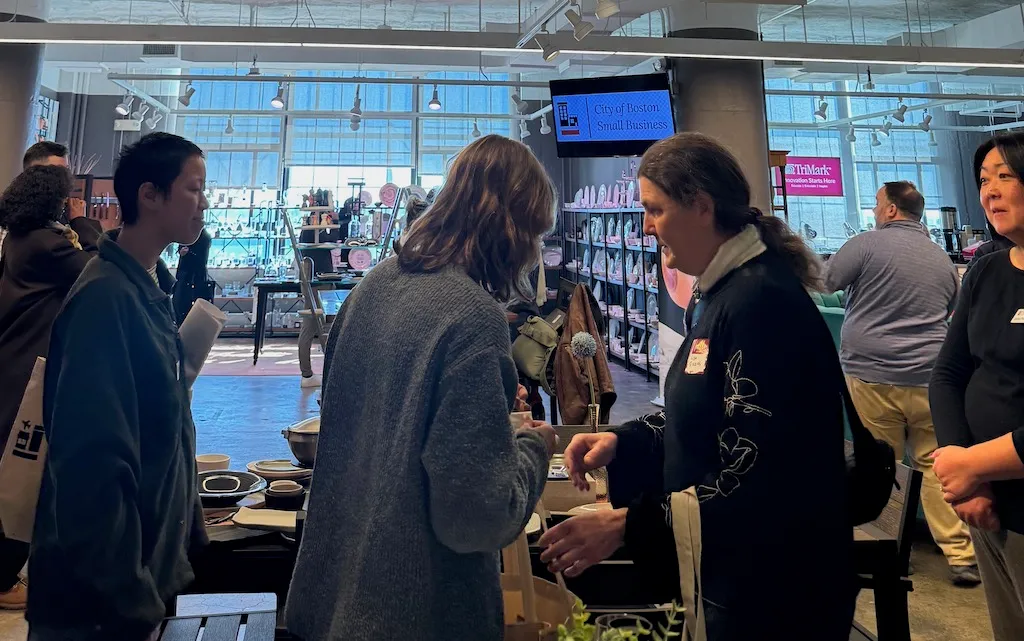
    At booths and tables, local owners of “mom-and-pop” shops connected with one another.

    And nearby in a massive kitchen were demonstrations of equipment designed to transform the business of cooking.

    Welcome to the first gathering of the Boston Restaurateurs Interactive Open House and Networking Event, held Feb. 9 and hosted by the City of Boston and TriMark Innovation Center.

    The open house allowed aspiring and established restaurateurs to explore hands-on demonstrations, practical tools and equipment for improving kitchen and bar efficiency. It also provided guidance for preparing for the upcoming high-traffic seasons.

    Industry experts and members of the city’s Licensing Board and Office of Small Business also shared insights and answered questions. They connected with attendees at the open house, which, according to organizers, aims to support a strong and resilient restaurant community.

    “I’m stoked for the event. It’s a great spot for business owners to try out their different servicewares and play around with things in 3D instead of looking things up online,” said Abbie Gregory, a regional manager for Counter Culture Coffee, at the event.

    Gregory, who runs a sustainable wholesale coffee supplier for cafes and restaurants, said that some of her partners have gone out of business since the pandemic.

    She said she worries about the success of small businesses in residential areas.

    “For Counter Culture specifically, we’re seeing more clients in the business areas but not as much in residential areas, so people who are drinking coffee every day are more in Kendall Square, Financial District and Seaport whereas Jamaica Plain, Brookline and Somerville are seeing less of these people,” said Gregory in an interview.

    Small businesses in Massachusetts recovering after the devastating pandemic continue to feel its effects. A 2025 report from MassINC Polling Group found that about half of the small businesses surveyed reported revenues lower than pre-pandemic levels.

    “One of the challenges that urban-based businesses, especially small businesses, face in addition to a technical gap is a capital gap. Access to capital and funding is always for any business a major challenge. It’s even more acute for Black and brown businesses,” said Hans Bastien, senior small business manager for the City of Boston’s Office of Economic Development and Inclusion.

    Bastien helps small businesses with permits, licenses, and other business inquiries. He said the networking effort is focused on neighborhood-based businesses or “mom-and-pop” stores that are often run by five employees or fewer. Those include takeout restaurants, day care centers, wellness centers, and other industries.

    Letiana Yin-Tate, a food equipment design specialist for TriMark who helped create and present the appliances at the open house, said small business owners are conscious of the products they buy.

    “Each piece of equipment needs to be multipurpose. We can’t afford to have specialty equipment that only has a single use, so focusing on how many things it can do is important,” said Yin-Tate in an interview.

    She said the open house helped to educate people on how they can spend their money more wisely and how to use technology to be more efficient.

    “A lot of times, [small businesses] have a smaller budget, but they aren’t necessarily well-versed in all the technologies that help them run a more efficient business,” said Yin-Tate.

    Despite the focus on innovation and efficiency, Gregory, of Counter Culture Coffee, and others said the networking event provided a social setting for business owners to have organic conversations about mentoring, support and similar challenges – topics that are often overlooked in the food service industry.

    “Networking is awkward and clunky until you realize we’re all just human beings looking to connect over hospitality and togetherness,” said Gregory.