Category: YourArlington

  • Grief in community: The Children’s Room approaches 30th anniversary

    Grief in community: The Children’s Room approaches 30th anniversary

    Joy Fisher Williams remembers the welcoming atmosphere of her first peer support group meeting at The Children’s Room.

    “I was invited to make myself a cup of tea,” she said. “We had a singing bowl that we rung right at the beginning to signal, ‘whatever was on your mind: your commute to the children’s room, your busy day, your whatever, leave that and come together now to get the support that you need.’”

    In November 2017, Williams’ husband, Brent, died from an unexpected heart attack. She sought out grief support from the Room for herself and her two sons, Fisher and Ruben.

    “I was with a lot of people who were a little bit more experienced in their loss than I was,” said Fisher, who’s now on the Arlington nonprofit’s board. “I just remember this feeling that I want to be the person who has experience and time behind me, like a distance from the event so that I can feel like I had my life together. That did eventually happen.”

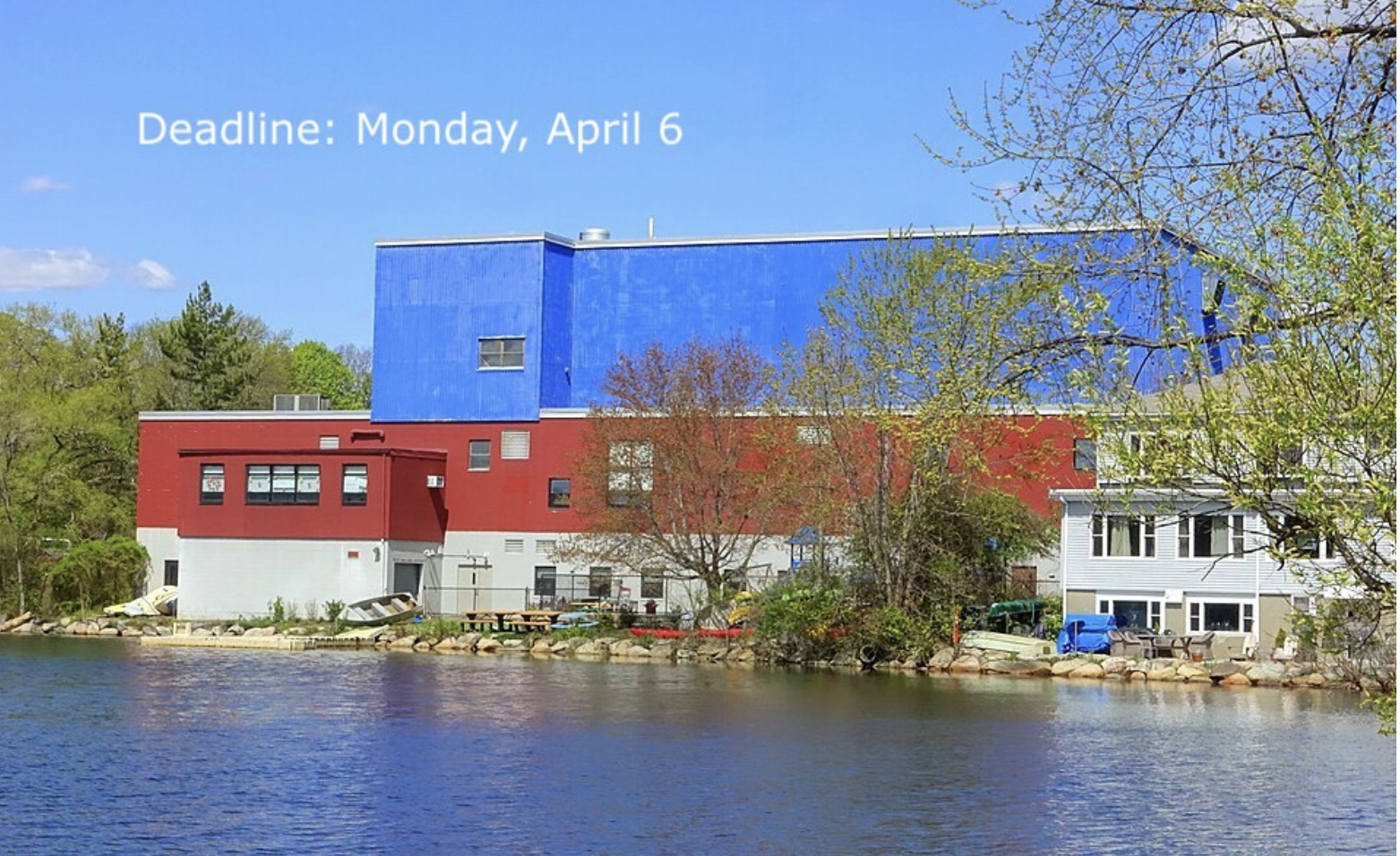
    Settled in a yellow Victorian house, The Children’s Room provides free grief support services to children and families in Massachusetts, along with programming in community centers and schools.

    A group of caregivers started the organization in 1993 at Hospice West in Waltham as a space for children to openly grieve. The Children’s Room gained nonprofit status in April 1996.

    Today The Children’s Room serves people from 80 communities. About 1 in 13 Massachusetts children experience the death of a parent or sibling by the age of 18, data from the Childhood Bereavement Estimation Model shows.

    Jon Gay, The Children’s Room’s executive director, reflected on the organization’s growth since its founding.

    “We were in the basement of a church, and we had five or six families coming to us,” Gay said. “You fast forward to today, and we’re working with about 500 children and teens and about 350 parents and caregivers. That’s kind of the exponential impact that we’ve been able to have.”

    A main component of its grief support services is the peer support model, which involves placing participants of similar ages and experiences into facilitated groups to address their grief. This approach makes people feel less isolated in their bereavement, Gay said.

    “What we hear oftentimes from the kids and teenagers is that they don’t feel alone,” he said. “They feel connected to others and like they’re part of a community.”

    Christine Lambright, the nonprofit’s director of school and community-based services, said the organization also emphasizes self-expression for children who are grieving. 

    “We also want to help them to be able to learn more about what grief is and how to express it,” Lambright said. “That could be learning words to match up to their emotions and learning ways to express their needs. It could also be through other means, like using art or using play or using movement or music.”   

    The Children’s Room uses grief-sensitive language in its approaches, such as avoiding the use of clinical terminology, Gay said.

    “We try not to medicalize grief, and we don’t treat grief because it’s a normal reaction,” Gay said. “We try not to use language like ‘loved ones’ because all relationships are complicated and different. We really are trying to change the narrative.”

    The center’s services extend into schools throughout the state. One of the focuses of in-school support is to teach students strategies to manage their expressions of grief, Gay said.

    “If they’re having a rough day, they’re going to know how to develop coping skills like taking a deep breath or stepping away from the material so that they can come back to it,” he said.

    Gay underscores the role of in-school grief support in mitigating negative effects, such as declines in attendance and test scores.

     “The actual intervention of providing grief support is a great way to counteract those adverse outcomes by getting kids the support they need in a place where they can benefit from it,” he said.

    One of these partner schools is Fenway High School. After attending a professional development presentation by The Children’s Room last February, school social worker Alejandra Castro worked with the organization to launch a peer support group this year.

    Castro said the group demonstrates the expansiveness of grief.

    “We had zoned in initially on students who would experience loss with parents and siblings, but what we’re seeing now is with friends and grandparents,” she said. “There were even kids talking about pets and neighbors.”

    School social worker Allyssa Pontes said the peer support group has affected the school community in a positive manner.

    “The impact for the Fenway community is just being able to give them that space, that students feel more comfortable, and there’s more awareness around getting help,” said Pontes.

    Lambright refutes the idea that children don’t grieve as much as adults do.

    “It’s interwoven into their story and who they are,” Lambright said. “It doesn’t define all of who they are, but it really helps shape how they see the world, especially as they grow up. Oftentimes in very empowering ways.”


    This story, published March 13, 2026, is part of a partnership between Your Arlington and the Boston University Department of Journalism.

  • Ballot is set, preparations continue for March 28 town election

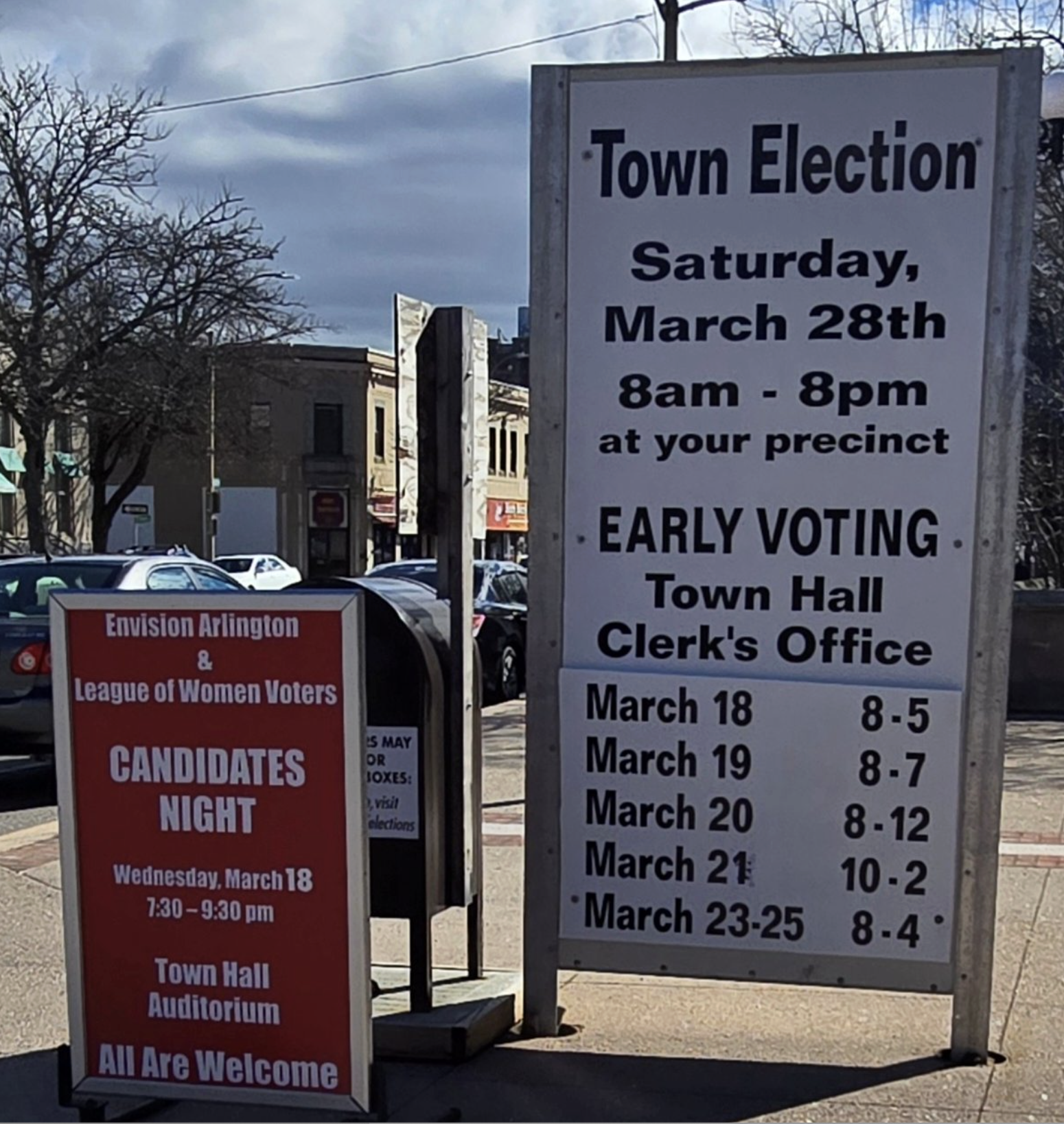
    The ballot for this month’s local election has been finalized. Arlington residents will cast votes to fill various seats in Town Meeting, and on two ballot questions, the big-ticket question is a proposed $14.8 million override of the tax override.

    All but two of the town office races on the March 28 ballot are uncontested. The Housing Authority has one opening, and two candidates are campaigning for the position: Jacob Henry Deck and Nicholas C. Mitropoulos. The single seat for the one-year appointment to the School Committee has three candidates: Dmitry Missiuro VasilyevCrystal S. Haynes Copithorne, and Shaun D. Berry. That seat was left vacant when Jane P. Morgan resigned from the committee to fill the spot on the Select Board after member Len Diggins moved out of town.

    The town will host a forum on March 18 for those running for townwide offices.

    Question One on the ballot is an operating override of the Proposition 2½ tax cap, which, if approved by voters, would permanently increase property taxes by $14.8 million to cover the operating costs of town and school departments. Prop. 2½ is a state law that limits how much property taxes can be increased to 2.5 percent town-wide annually. The tax base also increases each year based on “new growth” such as the construction of apartment buildings and home improvement projects.

    The most recent operating override of $7 million, approved by voters in November 2023, kept municipal finances afloat through the current fiscal year, which ends on June 30. Another type of override is a debt exclusion, such as the June 2019 vote that funded the new $290.4 million Arlington High School, which was completed earlier this year.

    Candidates on the ballot

    Also on the ballot are: the two seats on the Select Board, with two candidates running, incumbent Diane Mahon and Joseph A. Solomon; three incumbents for three seats on the School Committee: Elizabeth R. Exton, Paul Schlichtman, and Laura B. Gitelson; and Board of Assessors chair Mary Winstanley O’Connor is running unopposed. Arlington is facing a structural deficit in balancing its books, as revenue has not kept pace with the rising costs of maintaining services. Town officials – from elected to professional to volunteers – have been meeting for more than a year to cut the projected deficit and get costs under control. Because of Arlington’s small commercial tax base, there is a heavier tax burden placed on the residential taxpayers, according to the town’s website.

    According to a list of commitments approved by the Select Board, a successful vote would fund town and school operations for at least three fiscal years, and a promise that the town would not seek another operating override for at least three years. If the vote fails, the town could seek another override on next year’s ballot. The town government has posted an online calculator for residents to estimate their real estate taxes if the override passes for Fiscal Year 2027, which begins on July 1.

    No special election

    The Select Board approves all tax override questions for inclusion on the ballot and has traditionally set the election to come after Town Meeting has started so that the town’s voters have a full picture of the budget situation. This year, the Select Board decided not to wait for a special election later in the year.

    “The big decision for the Select Board during an override year is when it will be held, and traditionally, in Arlington, the overrides are held in June,” said Town Clerk Juli Brazile. “This is so we have more time for the state budgeting process to go further.

    “Because we don’t know exactly what the dollars are that we’re going to get from the state in March. But that has its own budgeting problems, and it means you’re holding an extra election, which is an extra expense.”

    Putting the override on the annual spring ballot saves the town roughly $50,000 by avoiding an additional election, said Brazile. While two of the three elections in this year’s cycle are at the state level, the town is still responsible for many of the expenses related to them.

    “The state provides the ballots [for state elections],” said Brazile. “So all of that is free. It just shows up. We have to pay the outgoing postage for all elections. But the state considers vote-by-mail an unfunded mandate because it’s a new expense. And so if I fill out forms, I can get reimbursed for all the postage costs, but we’re definitely out of pocket for the cost of operating the polls on election day.”

    Three elections this year

    With three elections this year, planning has been underway for months. Brazile said budget planning started last October to calculate the necessary allotment of town money to properly fund the three elections. Her office must organize and pay any personnel working the polls, like police security and poll staffers.  

    Brazile said she is grateful for the support of the Arlington Police Department and the motivated group of Arlington poll workers. All poll workers are entitled to compensation for their time, in Arlington the average hourly rate is around $17, said Brazile. Many will work 12 or more hours while the polls are open.

    The most difficult part of planning an election today for Brazile is a timing battle that she has little control over.

    “Honestly, I think the hardest thing is just the logistics that vote by mail changed,” said Brazile. “It changed the flow of the work because in some cases, the time we get the ballots is closer to the date of the election. So we’re under more pressure to mail quickly.”

    For example, this year’s primary election is held at the beginning of September, but the election will not be certified until weeks later. Printing at the state-level for these ballots cannot happen until after the results have been certified, and then the state must deliver each community its allotment of ballots.

    Mail-in ballots

    “Best case, I get my ballots ready to go first of October,” said Brazile. “That’s not a lot of time to mail 10 or 15,000 ballots and for people to get them back to me. So that’s the logistically tricky thing.”

    Working with the Arlington Post Office during elections has helped Brazile and her team settle into a new pattern for vote-by-mail. After many voting laws changed during the pandemic, Brazile said the partnership with the post office has been a great help in making voters feel as comfortable as possible when casting their vote non-traditionally.  

    The Arlington post office was unable to provide a comment due to agency policy. U.S. Postal Service media representative, Judy Ferriera, said in an emailed comment, “Throughout the year, the postal service has engaged in regular communication and meetings with many stakeholders across the election ecosystem — including members of Congress, secretaries of state, governors and local boards of elections and election administrators — to educate stakeholders that choose to use the mail on how to do so effectively.”

    In local elections, the town is responsible for creating mail voting kits. Brazile said that as early as last fall, her office began preparing kits for Arlington residents who chose to vote by mail. As vote-by-mail is becoming increasingly popular in the town, Brazile and her department prepared 7,000 kits ahead of time, but due to the law, there is always a rush at the finish line.

    “For town elections, I can’t finalize the ballot by law any earlier than 33 days before the election,” said Brazile. “And then I put the order in, and I start praying that I can get my ballots as quickly as possible, so that we can have basically a week to mail them. Otherwise, there’s just not enough time for people to be comfortable.”

    This year, despite inclement weather and a quick turnaround, Brazile said her office is on track for a smooth election day. Town elections see a smaller turnout than state or presidential elections. However, with an override on the ballot, Brazile expects to see a bump in the norm to around a 40 percent turnout.

    There are other items on the March 28 town ballot. The other races on the ballot are the Town Meeting seats for the 21 precincts in town. You can find more about who your Town Meeting representatives are and where and how to vote on the town’s website.

    March 18 is the last day to register to vote in the town election.


    This news story, published on March 11, 2026, was written as part of the Boston University Statehouse Program.

  • Wildlife advocates say Arlington’s efforts to prevent bird entanglements in fishing lines aren’t working

    Laura Kiesel dreads the approach of spring.

    The founder of Save Arlington Wildlife says she fears the return of fishing line waste littering Arlington parks and injuring and killing wildlife. She says she gets reports of animals, mostly birds, entangled at least weekly or biweekly outside of winter.

    The town’s efforts to combat this problem are doing little to prevent birds from getting fatally injured, Kiesel said. Last October, she said, it took two hours for town workers to rescue a screech owl, shown in the main photo, badly entangled in a tree at Spy Pond.

    Many of the animals are almost impossible to save and usually die without medical intervention. 

    Wildlife rehabilitators who can help injured birds are few and far between. According to the wildlife rehabilitator directory on the MassWildlife website, there are none who take in birds in Arlington.

    The Arlington Department of Recreation will install fishing line waste receptacles at all waterbodies that are under the jurisdiction of the Parks and Recreation Commission this spring, according to a memo from Natasha Waden, director of recreation and community services.

    “Fishing line waste will be regularly collected, sorted, packaged and periodically sent out to Boat US Foundation’s Reel & Recycle,” Waden wrote in a statement to Your Arlington. She said she was too busy to speak with a reporter this week.

    Save Arlington Wildlife and some residents proposed a temporary ban on fishing at Menotomy Rocks Park last year, but the commission rejected it. Instead, the commission decided it would be better to focus on education, the installation of fishing line waste receptacles, tree trimming, and partnering with local fishing organizations and business, Waden’s memo said. The commission also plans to form a new group to work on the problem this year.

    Kiesel said she was sad that the town did not pause fishing and has seen little improvement in the past year after the commission installed receptacles.

    “Every week I was out there at Spy Pond cleaning up yards and yards of fishing line,” Kiesel said.

    Fishing lines get caught in the trees when anglers cast their lines too high. Lines are caught up in trees, bushes, fencing and on the ground just 20 to 30 feet away from the receptacles, Kiesel said. Many of these receptacles had been knocked down and were spilling their contents onto the ground, she said.

    “We continued to get animals reported to us on a weekly to biweekly basis throughout the whole time these receptacles were up,” Kiesel said.

    Christopher Wilson, a Tufts University administrator and angler from Arlington, said he goes to various parks in Arlington and collects discarded fishing line.

    “I’m not being paid for any of this,” Wilson said. “I just do it because it’s the right thing to do.”

    Retrieving lines requires special gear and takes a lot of work, Wilson said.

    “I can get most of the stuff I see in an hour and a half, but I’ll come back a couple months later, and it’s covered again,” he said.

    Wilson said he believes that a fishing pause is a good plan.

    “The idea is you have a pause to allow the fish population and the bird population in that area to recover a little bit, to improve the health of the ecosystem there,” Wilson said.

    Jim Lagacy, an angler education coordinator for Mass Wildlife, said he supports fishing but also supports a temporary pause if the resource is being abused.

    “We want all waters open,” Lagacy said. “I think it’s a wonderful way to engage in nature, but when people abuse it, then there has to be recourse to any action, especially when it causes harm to wildlife.”

    Because fishing lines are made of plastic, they don’t break up easily.

    “It just doesn’t break,” Lagacy said, “and the birds get tangled in it, and they end up dying.”

    Kiesel said cleaning up fishing lines and seeing the impact on entangled birds takes a toll.

    “It’s very, very traumatic to rescue these birds or to know that they’re dying,” Kiesel said. “It’s very upsetting for many of us.”


    This story, published on March 7, 2026, is part of a partnership between Your Arlington and the Boston University Department of Journalism.

  • ZBA approves Boston Gas Co. proposal to rebuild facilities

    The Zoning Board of Appeals approved the Boston Gas Co.’s proposal to rebuild a distribution station in Arlington during their Tuesday meeting.

    The zoning board agreed that the project met the criteria for a special permit, meaning that it is essential to the neighborhood and it is not detrimental to their welfare.

    During the hearing for the proposal, Joshua Smith, the lawyer representing National Grid, explained that new features were incorporated into the site design based on comments from the Arlington Zoning Board and community members.

    The original plan had only one species of plant for landscaping while the revised plan includes more plantings and a more diverse array of species around the site. The new plan also uses a different kind of security fencing. The original idea was to use chain link fencing while the new fencing is made of wrought iron.

    Marina Popova, a member of Mothers Out Front who offered her comments during the hearing, said that the neighbors are considering an appeal over the decision.

    When Popova first heard that the Zoning Board approved the gas company’s proposal, she said that was very disappointed. (The area residents wrote a letter that was published on Feb. 9. You can read it here.)

    Popova said that the updated landscaping plan was an improvement, but believed that it was a poor substitute for the loss of trees in the area.

    “I feel that the voices of the neighborhood were not heard at all,” said Popova.

  • Neighbors oppose expansion of Boston Gas Co. facilities

    Boston Gas Co.’s plan to rebuild a distribution station in Arlington is drawing opposition from neighbors.

    Boston Gas is seeking a special permit from the Arlington Zoning Board of Appeals to rebuild a distribution station and expand its facilities on Washington Street. The company needs permission from the town before it can start construction.

    The Arlington Zoning Board of Appeals will discuss the Boston Gas proposal at its meeting scheduled for tonight, Feb. 24.

    The so-called “take station” receives gas from a transmission pipeline and processes it for customers, Joshua Smith, a lawyer representing Boston Gas, said at a Jan. 13 zoning board meeting.

    Smith and Jeremy Butler, the project engineer, said the take station at 305 Washington St., which was constructed in the 1950s and rebuilt in 1997, needs to be replaced.

    Neighbors wrote a letter objecting to the proposal. You can read it here.

    The company wants to build a new station next to the old one, at 307 Washington St., in order to meet National Grid and federal code standards. National Grid is the parent company of Boston Gas.

    During the January meeting, Smith explained that some of the equipment in the facility needs to be replaced and moved above ground for safety and security purposes. Butler said the new take station will serve most of Arlington.

    The site is about two acres, and about a third of an acre of trees would have to be cut down. The company hopes to start construction this summer.

    Boston Gas officials would not speak to a reporter but said in an emailed statement: “The project is focused on making critical safety upgrades for our existing customers and does not expand our gas infrastructure.”

    Members of Mothers Out Front, a climate justice organization, and other residents plan to submit a petition requesting that the zoning board reject the gas company’s proposal. Nearly 500 people have signed the petition.

    “We hope that that will demonstrate to the zoning board that it’s really not in the interests of our neighbors in the town,” said Marina Popova, a member of Mothers Out Front who co-authored the petition.

    Popova, who lives near the site, said she is worried about the loss of nature and the risk to the wildlife.

    ”It will cause harm to the neighborhood, by cutting and eliminating the mature trees and mature woods,” Popova said.

    Claire Moodie, a co-coordinator of the Arlington chapter of Mothers Out Front and one of the authors of the petition, acknowledged that safe gas distribution is important but said she wishes that the company would renovate its current site instead of building a new facility that would cut down trees in the area.

    “There was definitely a strong concern from those immediate neighbors that walk their dogs through the area and just appreciate the natural habitat,” Moodie said of the neighbors who spoke at the zoning board meeting in January.

    Brian Guzik, who signed the Mothers Out Front petition, lives a few hundred yards from the proposed location of the facility.

    “I was a little bit surprised, I guess, to the extent to which the modifications were going to be made,” Guzik said. “I mean, there’s kids that walk through there to get to school.”

    Karen Samuelson, who lives a few houses down from 307 Washington St., said that she would be saddened by the loss of nature in the area. “It’s a really lovely green space in our neighborhood, and there’s lots of wildlife here,” Samuelson said.

    Stephanie Levinson, a neighbor who has resided in her home for 40 years, lives next to the Washington St. property. ”When I was told that they were going to be taking all kinds of trees down, I was really distressed,” Levinson said, “not only for myself, but for this whole area, because there aren’t a lot of green areas.”

    Danielle Dean, who lives next to the wooded area, said she appreciates the scenery that the environment near her house provides. She said her kids sled in the area and collect worms for fishing.

    “It feels like it’s just a little reprieve from the densely populated rest of the neighborhood,” Dean said.


    This story, published Feb. 24, 2026, is part of a partnership between Your Arlington and the Boston University Department of Journalism.

  • Coyote mating season breeds curiosity and cautiousness

    Coyote mating season breeds curiosity and cautiousness

    With eastern coyote mating season under way, so too is the annual debate in Arlington over how well humans and coyotes can coexist.

    Arlington Animal Control Officer Michelle Parsons said she hasn’t received any reports of  coyote attacks on humans or pets so far this season. The last reported attacks in town occurred in 2021, when coyotes attacked two 2-year-olds in separate incidents.

    Coyotes are a minimal threat to human safety, Parsons said.

    “There are people that are more afraid, and I try to dissuade them from being super fearful,” she said. “[Coyotes] are really not out to attack us, and they’re more afraid of us than we are them.”

    During mating season, coyotes concentrate on courting mates and defending their territory. Their habitat includes all of Massachusetts, except Martha’s Vineyard and Nantucket. Although coyotes can adapt to urban, suburban, and rural environments, attacks on humans are extremely rare and usually caused by deliberate feedings.

    Pets face the most danger, Parsons said. She advises people to accompany animals during trips outside.

    “Especially during breeding season, a male is not going to let other males into the house,” she said. “They may not be discerning between your big male domestic dog against another male coyote that’s trying to come into their territory.”

    This winter’s heavy snowfall poses a challenge to coyotes’ and other wild animals’ ability to find food, Parsons said.

    “A lot of the smaller rodents and stuff that the coyotes are used to are underground and in hiding because of the cold weather,” she said. “I think they’re skinnier. They’re a little less robust.”

    With the coyotes increased hunger, Parsons encourages people to keep their garbage sealed to avoid attracting them.

    Capturing and relocating wildlife is prohibited in Massachusetts. Instead, people are advised to contact an animal control agent if they encounter issues with wildlife on their property. The law permits killing wildlife if they’re caught in the act of destroying someone’s property.

    Anne Short Gianotti, an associate earth and environment professor at Boston University who specializes in wildlife management, said people’s discomfort with coyotes persists despite state policy.

    “Being uncomfortable with coyotes in a particular place or wanting them to not be there can sometimes cause tensions between different neighbors,” she said. “People can have different ideas about what should happen with coyotes, but there’s actually not that much they can do except for manage their own property and their own behaviors.”

    Coexistence is the only option, Gianotti said.

    “We have to learn how to live with [coyotes] because even if we were allowed to remove them, they would just come back,” she said. “They’re very good at responding to openings in the environment.”

    Online groups create openings for communication and foster connections between humans and coyotes, Gianotti said.  

    One of these online groups is the Facebook group Coyotes of Arlington. Jang-Ho Cha founded the group in 2021 after seeing a lot of social media posts about coyotes on the Facebook forum The Arlington List. Coyotes of Arlington, which has roughly 2,700 members, is increasingly active during mating season.

    “We’re seeing all these incredible videos from people’s Ring cameras, and then occasionally there’s a sprinkling of [posts of], ‘My cat is missing,’ and then there’s a little discussion of ‘We should eliminate all the coyotes,’” Cha said.

    Most of the group’s posts are photos of coyotes, which receive mostly positive comments, Cha said.

    “Seeing a coyote is a really cool thing,” he said. “For some people, it’s scary. For me, it’s like if I saw a bald eagle.”

    Laura Kiesel, founder of Save Arlington Wildlife, a grassroots wildlife conservation organization, said the organization’s Facebook posts about coexistence with coyotes sometimes attract negative comments.

    Kiesel hopes to teach others about coyotes to reduce their stigma.

    “There’s been a lot of fear and I’ve seen more people saying we should cull them or we should relocate them, which is not even feasible or practical,” she said. Kiesel encourages people to maintain boundaries with coyotes.

    “At the same time that you shouldn’t be terrified of them, you also don’t want to feed them,” she said. “They’re not our dogs. They’re not pets, and it’s good to have some distance and keep them wild to the extent possible.”


  • Neighbors oppose expansion of Boston Gas Co. facilities

    Neighbors oppose expansion of Boston Gas Co. facilities

    Boston Gas Co.’s plan to rebuild a distribution station in Arlington is drawing opposition from neighbors.

    Boston Gas is seeking a special permit from the Arlington Zoning Board of Appeals to rebuild a distribution station and expand its facilities on Washington Street. The company needs permission from the town before it can start construction.

    The Arlington Zoning Board of Appeals will discuss the Boston Gas proposal at its meeting scheduled for tonight, Feb. 24.

    The so-called “take station” receives gas from a transmission pipeline and processes it for customers, Joshua Smith, a lawyer representing Boston Gas, said at a Jan. 13 zoning board meeting.

    Smith and Jeremy Butler, the project engineer, said the take station at 305 Washington St., which was constructed in the 1950s and rebuilt in 1997, needs to be replaced.

    Neighbors wrote a letter objecting to the proposal. You can read it here.

    The company wants to build a new station next to the old one, at 307 Washington St., in order to meet National Grid and federal code standards. National Grid is the parent company of Boston Gas.

    During the January meeting, Smith explained that some of the equipment in the facility needs to be replaced and moved above ground for safety and security purposes. Butler said the new take station will serve most of Arlington.

    The site is about two acres, and about a third of an acre of trees would have to be cut down. The company hopes to start construction this summer.

    Boston Gas officials would not speak to a reporter but said in an emailed statement: “The project is focused on making critical safety upgrades for our existing customers and does not expand our gas infrastructure.”

    Members of Mothers Out Front, a climate justice organization, and other residents plan to submit a petition requesting that the zoning board reject the gas company’s proposal. Nearly 500 people have signed the petition.

    “We hope that that will demonstrate to the zoning board that it’s really not in the interests of our neighbors in the town,” said Marina Popova, a member of Mothers Out Front who co-authored the petition.

    Popova, who lives near the site, said she is worried about the loss of nature and the risk to the wildlife.

    ”It will cause harm to the neighborhood, by cutting and eliminating the mature trees and mature woods,” Popova said.

    Claire Moodie, a co-coordinator of the Arlington chapter of Mothers Out Front and one of the authors of the petition, acknowledged that safe gas distribution is important but said she wishes that the company would renovate its current site instead of building a new facility that would cut down trees in the area.

    “There was definitely a strong concern from those immediate neighbors that walk their dogs through the area and just appreciate the natural habitat,” Moodie said of the neighbors who spoke at the zoning board meeting in January.

    Brian Guzik, who signed the Mothers Out Front petition, lives a few hundred yards from the proposed location of the facility.

    “I was a little bit surprised, I guess, to the extent to which the modifications were going to be made,” Guzik said. “I mean, there’s kids that walk through there to get to school.”

    Karen Samuelson, who lives a few houses down from 307 Washington St., said that she would be saddened by the loss of nature in the area. “It’s a really lovely green space in our neighborhood, and there’s lots of wildlife here,” Samuelson said.

    Stephanie Levinson, a neighbor who has resided in her home for 40 years, lives next to the Washington St. property. ”When I was told that they were going to be taking all kinds of trees down, I was really distressed,” Levinson said, “not only for myself, but for this whole area, because there aren’t a lot of green areas.”

    Danielle Dean, who lives next to the wooded area, said she appreciates the scenery that the environment near her house provides. She said her kids sled in the area and collect worms for fishing.

    “It feels like it’s just a little reprieve from the densely populated rest of the neighborhood,” Dean said.


    This story, published Feb. 24, 2026, is part of a partnership between Your Arlington and the Boston University Department of Journalism.