
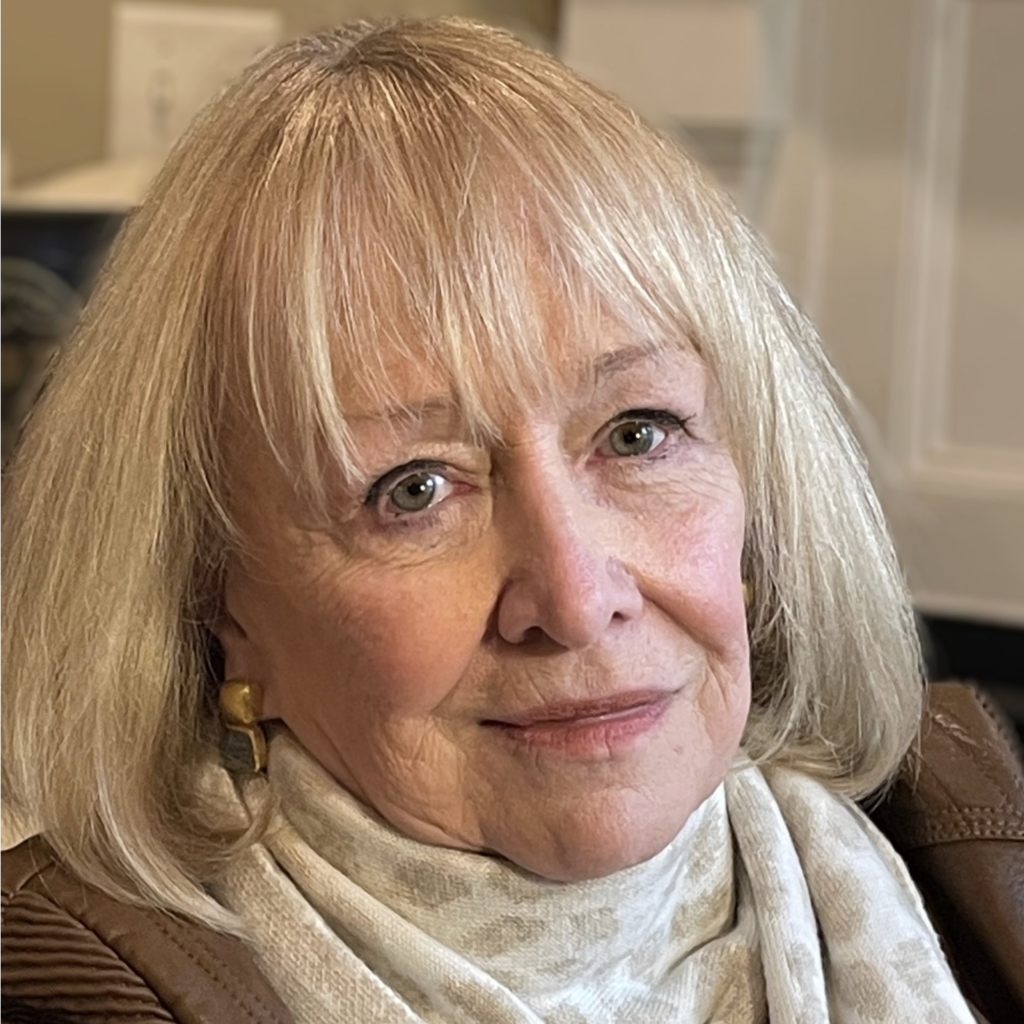
Teresa Cader was inspired to write her first real poem in high school after she found Walt Whitman’s “Leaves of Grass” sitting on her father’s shelf.
“Somehow it was that poetry,” Cader said. “All the barriers went down, and I started writing.”
Cader said her love of poetry and literature came from her father, a self-educated Polish immigrant who worked as a tool and die maker.
“He loved opera and classical music and literature and art, so that was what I was surrounded with growing up,” Cader said.
Cader began her tenure as Arlington’s fifth poet laureate April 1.
Over the course of her career, Cader has published four award-winning poetry collections; has had her poetry featured in publications like The Atlantic, Ploughshares and The Massachusetts Review; and has taught poetry at Lesley University, the Massachusetts Institute of Technology, Emerson College and the University of Massachusetts-Boston.
As poet laureate, Cader plans to initiate a program that will be titled Arlington’s Favorite Poem Project. Robert Pinsky, the former U.S. poet laureate, began the Favorite Poem Project in 1998 as a way to showcase Americans’ favorite poetry. Cader hopes to do the same thing, where Arlington residents recite their favorite poems in a town reading.
Cader also wants to work with restaurants to hold events that showcase poetry and food from different countries.
“Poetry connects us across time and geography and culture,” Cader said. “We get to know what somebody else feels or what somebody else has experienced, and also know that you’re not alone.”
Jean Flanagan, Arlington’s former poet laureate, is a member of the Poet Laureate Committee, which chooses the poet to serve the town before the Select Board gives its approval. “She has a number of very good ideas that she wants to do,” Flanagan said of Cader. “And one of the things that I really liked about her is that she’s very thorough.”
Dan Blask, program manager for artists and youth at the Mass Cultural Council, said the position of poet laureate is impactful. He said he was thrilled that Arlington is continuing its poet laureate program. Blask was involved in the election process of the first poet laureate for the state of Massachusetts, Regie Gibson.
“No matter what changes in our world, it feels like we still need people who can do something special with language,” Blask said.
Joyce Peseroff, the former director of UMass Boston’s MFA Program, has been meeting with Cader and poet Steven Cramer regularly for writer’s workshops for the past 20 years. Peseroff said these meetings are common practice for poets.
“Each poet reads the poem out loud, and then we make our comments and our critiques, and it’s a back and forth,” Peseroff said.
Peseroff said she admires Cader’s precision in her poems.
“What happens with her poems is you start [in] one place, and you end up with all of these threads, weaving together to create a fabric that didn’t exist before,” Peseroff said.
Peseroff said when she heard Cader would be the new poet laureate for Arlington she thought that she would be a perfect fit.
“I know when she came to think about the poet laureate position in Arlington, she had all of these ideas about how to promote poetry in the community,” Peseroff said.
Peseroff said she believes the community helps to draw out a person’s interest in poetry. “I think that’s what a poet laureate does,” Peseroff said. “A poet laureate creates a community from those individual interests.”
This story, published May 3, 2026, is part of a partnership between Your Arlington and the Boston University Department of Journalism.