Tag: Democratic party

  • ‘A Youth Revolt’: Jason Poulos and the fight for the 4th Congressional District

    ‘A Youth Revolt’: Jason Poulos and the fight for the 4th Congressional District

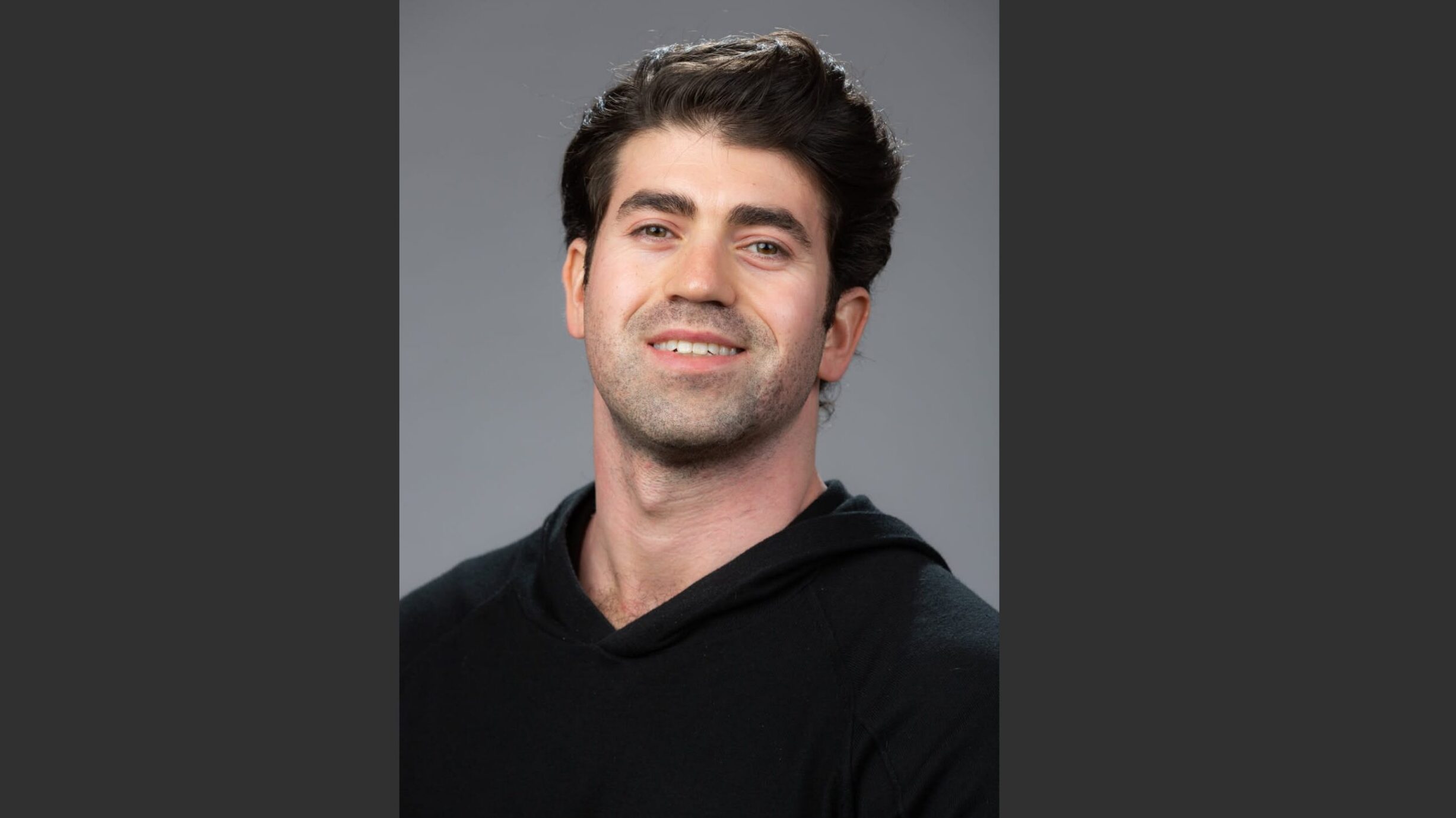
    Jason Poulos is running for the Democratic nomination for the Massachusetts 4th Congressional District seat currently held by Jake Auchincloss. Courtesy photo

    On a sunny day outside Newton City Hall, Jason Poulos lays out his vision for a new kind of leadership in Massachusetts’ 4th Congressional District.

    “This campaign is very much a youth revolt,” Poulos said.

    Poulos, a Democratic candidate for Massachusetts’ 4th Congressional District in a five-way primary that includes incumbent Rep. Jake Auchincloss, is running a campaign focused on energizing younger voters and challenging the political status quo.

    Poulos, 40, said his background is not in politics but in academic research. Over the course of his career, he has worked at institutions across the country.

    “I went to UMass Amherst,” Poulos said. “I got a PhD at UC Berkeley in political science and computational science and engineering. I came back here to do a postdoc at Harvard Medical School in AI and health policy.” Despite his national résumé, Poulos frames himself first as a local—someone who grew up in Sherborn and understands the district he now hopes to represent. The 4th District stretches across parts of Middlesex, Norfolk, Bristol and Worcester counties, encompassing communities as varied as Newton and Fall River.

    But Poulos said it wasn’t local politics that first pushed him toward a campaign—it was foreign policy.

    “What really was radicalizing for me was watching the United States send tens of billions of dollars in military arms to Israel and watch them participate actively in the genocide of the Palestinian people,” Poulos said.

    He described calling Auchincloss’s office weekly and attending town halls, searching for answers.

    Poulos said he remains discouraged that Auchincloss has not changed his position on the war in Gaza and continues to accept donations from pro-Israel political action committees.

    According to Track AIPAC (American Israel Public Affairs Committee), Auchincloss has received more than $933,000 from pro-Israel lobbying groups since 2020. In January 2026, he voted in favor of legislation providing $3.3 billion annually in funding for Israel.

    For Poulos, the influence of lobbying groups such as AIPAC underscores what he sees as a broader disconnect between elected officials and their constituents.

    “Our representatives aren’t really listening to us,” he said. “That demonstrates that we don’t really live in a representative democracy anymore.”

    On a local level, Poulos said he supported student protesters during campus encampments that drew national attention and debate over free speech.

    “The students’ demands were very simple,” he said. “They said our tuition is going towards your endowment, and your endowment is being used in support of the defense industry … we want you to divest.”

    “I supported the students,” he added. “Representative Auchincloss wanted to break up the encampments.” While the war in the Middle East remains a divisive issue—especially in Newton—Poulos said public opinion within the Democratic Party is shifting.

    “The tide has already shifted. We have polling of nationwide Democrats, and only about 8% still support the idea of sending military arms to Israel,” he said. “It’s not really an open question anymore.”

    Congressional candidate Jason Poulos collects nomination signatures at a protest outside the office of U.S. Rep. Jake Auchincloss on March 2, 2026. Photo by Bryan McGonigle

    For Poulos, those figures underscore what he sees as the influence of money in politics, a central theme of his campaign.

    Beyond foreign policy, Poulos has proposed a range of domestic policies, including changes to immigration enforcement.

    “I was the only person in this race, including the incumbent, to call for abolishing ICE,” he said. “I don’t think it should exist.”

    He also supports defunding the Department of Homeland Security and ending qualified immunity for immigration officers to increase accountability.

    Turning on issues closer to home like housing, a key issue in Newton, Poulos said affordability remains a top concern.

    “The district is very economically diverse, so when I put out policies, I’m thinking about the district as a whole,” he said.

    “One policy I’ve advocated for is curbing hedge fund ownership of housing. One of the drivers of high rent is hedge funds buying up properties and leaving them empty, creating a monopoly on prices.”

    As Poulos moves through the district, he runs his campaign in the hope that frustration with the current political system, especially with younger voters, will be translated into votes at the ballot box. 

    Whether that message will translate with younger voters is unclear, but Poulos continues to underscore that his campaign is not about incremental change, but an acute sense of political urgency.

    “This race is about the future of the Democratic Party and whether it serves the donor class or the working class,” he said.

    ****

    This story is part of a partnership between the Newton Beacon and the Boston University Department of Journalism.

  • Five state legislators outline strategy to counter Trump administration at Brookline forum

    From left to right: Moderator Tom Hallock, State Senator Cindy Creem, State Representative Tommy Vitolo, State Representative Bill MacGregor, State Representative Greg Schwartz and State Representative Kevin Honan. Photo by Jacqueline Manetta

    Five Democratic state lawmakers advised Brookline residents Monday how to navigate the Trump administration and push back against its policies.

    About 70 people attended the forum, which featured state Sen. Cynthia Stone Creem and state Reps. Kevin Honan, William MacGregor, Greg Schwartz and Tommy Vitolo. It was hosted by the Brookline Democratic Town Committee and Activist Evenings, a progressive group based in Brookline.

    Tom Hallock, treasurer of the Brookline Democrats, asked the legislators questions about essential services, the environment and immigration. The group responded to three audience questions at the end and stayed afterwards to answer one-on-one questions.

    Creem cited the state Senate’s new committee, Response 2025, as a potential solution to the Trump administration’s cuts. The initiative has tasked the bipartisan Committee on Steering, Policy and Scheduling with finding policy solutions to combat misinformation and protect residents’ rights.

    Keeping political allies in office is one of the most effective ways to fight the executive branch’s polarizing policies, Vitolo said.

    “I think it’s really important in all of the things we talk about tonight to consider the reality that if Governor Healey doesn’t win reelection — or Attorney General Campbell doesn’t win reelection — we are in much worse shape,” he said.

    Schwartz, the only medical doctor in the Massachusetts legislature, said health care programs — and consequently state revenue — will be affected if defunding continues. If the U.S. Senate approves President Trump’s “Big Beautiful Bill,” Massachusetts can expect its $14 billion of Medicaid reimbursement to be reduced, he said.

    “That could affect 200,000 to 300,000 patients losing Medicaid and, of course, it will affect the emergency rooms, the primary care physicians and the hospitals, which are already not in great shape,” Schwartz said.

    All five lawmakers emphasized the need for Massachusetts to remain at the forefront of responsible environmental efforts as federal environmental protections roll back. The legislators plan to concentrate on statewide initiatives such as expanding clean energy, increasing accessibility to electric vehicles and strengthening existing policies.

    The lawmakers also discussed immigration, which they identified as a core American principle that must be protected. Honan cited several bills that work to protect the rights of immigrants, including the federal Safe Communities Act, which prevents local law enforcement from asking about immigration status.

    “We say the best Americans represent hard work, taking chances, building a business, finding success, improving yourself and being part of a community,” Vitolo said. “These are all the things we say we value as a country, and the folks who do it best are the immigrants.”

    Before taking questions from the audience, Creem discussed the Massachusetts Data Privacy and Protection Act and its aim to support women’s reproductive health care rights.

    Under the bill, selling location data and other information collected on cellphones and devices would be prohibited. In recent court cases, consumers’ data from apps has been used  to prosecute health care providers and women receiving out-of-state abortions.

    “My hope is that we can protect that data and minimize the use of that data outside of what you intended it to be,” Creem said.

    The audience at a community forum on safeguarding democracy on Monday, Jun 9, 2025. Photo by Jacqueline Manetta

    Asked if the public has a role to play in resisting the Trump administration’s policies, the lawmakers urged residents to engage with opposing viewpoints and point out injustices.

    “Every second Saturday, from 11 to 1 p.m. in Coolidge Corner, we’re out there doing the very public work of reminding folks that this is not normal, and it’s perfectly reasonable to say it out loud,” Vitolo said.

    The audience erupted with applause as the panel of representatives was asked about increasing transparency in the state’s government.

    MacGregor said representatives are candid about financial statements and regularly audited.

    Creem said she posts her votes on social media to communicate with her constituents. The accusation of insufficient transparency has been brought to her attention before, but she said she doesn’t understand what voters mean or where their concerns come from.

    Schwartz, who was elected to his position in 2024, framed problems with transparency as a potential shortcoming of the media.

    The legislators’ answers to the transparency question were met with eye rolling and groans.

    The event closed with a discussion about reforming the Democratic party. Although Honan said he thinks Republicans will cause their own demise, MacGregor and Creem said Democrats must regain popularity with the working class.

    Vitolo and Schwartz agreed their party must find a message that speaks to a larger segment of the population.

    “We on the left like to play demographic bingo with our voters,” Vitolo said. “What they see is a Democratic party picking off little bits and pieces of certain people and saying, ‘That’s what’s important’ instead of saying everybody’s important.”