
Tag: Dorchester

  • House History project earns DHS a preservation citation

    By Madyline Swearing

    Lisa Murphy’s house on Moultrie Street sits on land once cultivated by descendants of Dorchester’s first English settlers. Though she has lived there since 1998, Murphy didn’t learn this until 2023, when she asked the Dorchester Historical Society (DHS) for help.

    The society’s House History Research program provides Dorchester and Mattapan residents with comprehensive reports of their home’s histories. Some accounts date back to the colonial and federalist era, but more often they include details about the architect, builder and owners in much later times.

    Since 2020, nearly 600 house histories have been recorded.

    Run entirely by volunteers, the society collects, preserves and circulates historical facts about Dorchester. The House History team, which includes Earl Taylor, Marti Glynn, Vicki Rugo, Kayla Skillin, and Kit Binns, was formally recognized on Oct. 21, with a Stewardship Award at the Boston Preservation Alliance’s 37th Annual Preservation Achievement presentation at Artists for Humanity in South Boston.

    The citation recognizes a preservation initiative without a definite end.

    “This really stands out, because unless you share the history of all, you only learn the history of some,” said the non-profit alliance’s deputy director, Matthew Dickey. “It just shows how much of a melting pot Dorchester is and continues to be, and it’s really cool to be rooted in the history that surrounds you.”

    Winners are selected based on the project’s quality of execution, creativity, innovation, and public impact, among other factors. Past awardees have included WGBH’s “The Big Dig” podcast, Joseph Bagley’s book “Boston’s Oldest Buildings and Where to Find Them,” and The History Project’s “Stonewall 50” walking tour.

    Dickey says he encourages a variety of projects to apply, including those from the Dorchester Historical Society, where he sits on the board of directors — though he says he is not part of the awards selection committee or process.

    “We’ve learned a lot just about Dorchester’s history in general, and we’ve shared what we can,” said Earl Taylor, the historical society’s president. “To be recognized for that effort … it’s just great.”

    Lisa Murphy had been searching in the Boston Public Library’s archives for the architectural plans of her house. For a $75 fee, the historical society analyzed tax records, building permits, marriage records, and census data to produce a 20-page report, dating back to the home’s construction in 1898.

    “We were very curious,” Murphy said. “This part of town has so much interesting history.”

    A plaque near the front door signifies it meets the historical society’s criteria for a “historic” home. The off-white oval marker includes the year of construction and the builder’s name, John N. Chute, in black lettering. Homeowners must apply separately for the house marker.

    Blocks away, Edward Cook has a similar plaque that lists a construction year of 1897 and architect John A. Block. Cook, a former board member of the society, was an “early adopter” of the house histories project in 2020. He says that while there wasn’t anything particularly captivating about his home’s history, it was nice to have the information.

    “It gives a sense of inclusion in the neighborhood, of rootedness and continuity in the house,” Cook said. “[Volunteers] have spent hours of their time and become incredible researchers, even though this wasn’t in their backgrounds. It’s an amazing resource for the community.”

    The awards ceremony is the Preservation Alliance’s largest fundraising event of the year, Dickey said, though what defines the event is its film project. Dickey interviewed 45 people among this year’s winners to create short films about each project, the people who completed it, and its associated history. For those who can’t attend in person, Dickey says the films will be available online by mid-November.

    Other honorees include the Twelfth Baptist Church, the Curley Community Center, The Pryde independent living apartments, Harvard Medical School’s Francis Countway Library of Medicine, renovations to City Hall, and Copp’s Hill Burying Ground’s gravestone conservation.

    “We’re from all walks of life, but what ties us together is the curiosity to look at a topic and try to figure out all the aspects of it,” Taylor said. “Most houses may not have extraordinary events or people connected to them, but they are part of history, and they tell the story of what people were doing at any particular time.”

    For more information on the DHS House History program, go here.

    This story is part of a partnership between the Dorchester Reporter and the Boston University Department of Journalism.

    This article was originally published on October 23, 2025.
  • Early voters make their choices ahead of next Tuesday’s city election

    Early voters make their choices ahead of next Tuesday’s city election

    By Nathan Metcalf

    A slow but steady trickle of 2,230 voters cast early ballots at one of the ten locations that were opened over the weekend for voting ahead of Boston’s Nov. 4 municipal election.

    At Dorchester’s Richard J. Murphy School,185 residents cast ballots on either Saturday or Sunday.

    With Mayor Wu’s reelection assured, early voters arriving at the K–8 school on Worrell Street described the at-large City Council race, with four seats and eight names on the ballot, as the contest that was keeping them engaged.

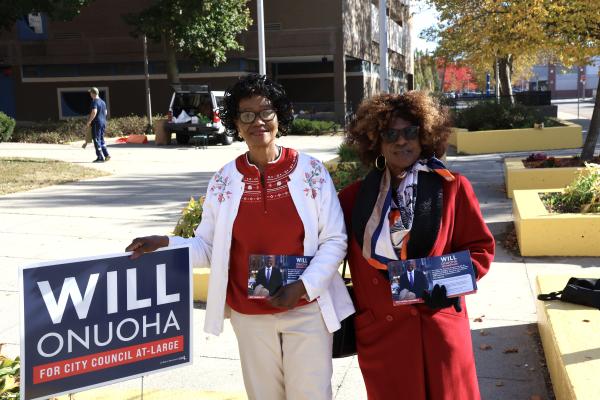
    Those candidates include four incumbents, Julia Mejía, Erin J. Murphy, Henry Santana and Ruthzee Louijeune; three newcomers, Alexandra Valdez, Will Onuoha, and Marvin Mathelier; and a familiar face in Dorchester, Frank Baker, returning from a two-year hiatus after not seeking reelection to the District 3 seat he had held for 12 years.

    “I think housing is the biggest issue facing Boston right now,” said Meghan Greeley, 42, a Pope’s Hill resident and Murphy School parent who was raking leaves for her volunteer group, the Murphy School Family Council, before going inside to vote.

    She said she voted for incumbents Louijeune and Santana, as well as newcomers Onuoha and Mathelier.

    “We’re homeowners,” Greeley said, “but if we want a thriving community, people have to be able to afford to live here.” Given that, she said she supported candidates aligned with Wu’s housing and education priorities.

    “I was thrilled that Wu’s running unopposed,” she said. “She’s the right choice for the city.”

    Not everyone agreed with Greeley’s take on things . Kevin M., a 55-year-old Savin Hill resident who declined to give his last name, said he voted only for Frank Baker, calling the former District 3 councillor “the one trying to get sense back into City Hall.”

    He said the council has become “upside down” and mired in corruption, referring to the recent ethics scandal involving former Councillor Tania Fernandez Anderson. His bullet vote to back only Baker, rather than choosing up to four candidates, as voters can in the at-large race, helped to maximized his candidate’s share of support in a crowded field.

    A lifelong Dorchester resident who said he grew up with Baker, Kevin cited crime and homelessness as his top concerns.

    “Frank’s got a track record,” he said. “He’s done a great job.”

    Ben Stone, 38, of Ashmont, said he voted for Louijeune, Onuoha, Santana, and Valdez, adding that he backed the latter two because they were endorsed by Abundant Housing Massachusetts, which advocates looser zoning to increase supply.

    “They want more housing of all kinds,” said Stone, who is executive director of the Brookline Housing Authority.

    Longtime Cedar Grove residents Thomas J. and Rita McCarthy said early voting’s weekend hours make civic
    participation easier. “It’s convenient,” said Thomas, 76. “Being on a Sunday, you beat the line.”

    The couple chose Louijeune, Mejía, Onuoha, and Mathelier — a split between incumbents and newcomers. Thomas described them as “Wu people,” adding, “I wanted to give two votes back to Wu.”

    They praised the mayor’s leadership but worried about property taxes if Proposition 2½ were loosened or repealed.

    “The city’s collecting plenty already,” Thomas said.

    The McCarthys said aging school buildings remain their top concern.

    “Tom and I volunteered recently in one of the elementary schools where they can’t drink out of the water bubblers because there is lead in the pipes, said Rita. “They have no gyms. They have no lunchrooms. They have these old buildings that have been around since I went to school in Boston.”

    Among the campaign volunteers outside the Murphy School was Valdez’s father, Modesto Valdez, 52, of Mattapan, (shown below) who spoke about helping with his daughter’s first campaign.

    “I feel so proud of her,” he said. “She’s a really nice person, very dedicated, very hard-working.”

    Valdez said his daughter, who emigrated from the Dominican Republic as a child and grew up in Mattapan, has been committed to public service since she was young.

    “She’s been serving the city almost her whole life,” he said. “Now she feels it’s time to give back even more to Boston.”

    Not wanting to be outdone by the Valdezes, a volunteer for Will Onuoha phoned the candidate’s mother, Esther Onuoha, who hurried to the Murphy School for an interview.

    Onuoha described her son as “a uniter” shaped by years of work under four Boston mayors, Tom Menino, Marty Walsh, Kim Janey, and Wu.

    “He’s been serving this city for a long time,” she said. “He understands how it works, and he listens to everyone.”

    The city’s Election Department put the weekend tally at the Murphy School at 112 ballots on Saturday and 73 on Sunday. Citywide, 1,203 ballots were cast on Saturday and 1,027 on Sunday.

    More early voting opportunities are available this week at Boston City Hall, Dorchester’s Perkins Community Center (Tuesday, Oct. 28, 12-8 p.m.), and Florian Hall (Thursday, 12-8 p.m.).

    Polls will be open on Tuesday, Nov. 4 from 7 a.m.-8 p.m. at all of the city’s precincts.

    This story is part of a partnership between the Dorchester Reporter and the Boston University Department of Journalism.

    This article was originally published on October 28, 2025.

  • Work starts on Grove Hall’s full-service community center

    By Madyline Swearing

    Construction of Dorchester’s first stand-alone community center officially began last Wednesday (Oct. 15), three years after the location in Grove Hall was selected. Elected officials and community members celebrated the center’s planning, viewed building designs, and listened to a DJ play Michael Jackson and Prince on the site’s vacant lot.

    Part of the Boston Centers for Youth and Families, the Grove Hall Community Center will be Dorchester’s first full-service city-run center outside of a school building. The building will occupy a city-owned lot that sits across the street from the Grove Hall Library and Senior Center. 

    “For too long, Dorchester’s BCYF centers have been makeshift, shoehorned into leftover space,” said Mayor Wu. “With today’s groundbreaking, we’re making it clear that every neighborhood deserves a state-of-the-art community center that they can be proud of. It’s time to offer the level of programming that the families of Dorchester and Grove Hall deserve.” 

    The 41,000-square-foot facility will feature a pool, a technology lab, a teaching kitchen, and separate teen and senior centers. The $65 million project is funded through the city’s five-year capital plan.

    Because it’s a stand-alone facility, visitors and resources will not be restricted to school hours, allowing for more programming through BCYF. The center can also double as a temporary emergency shelter and a heating and cooling station.

    Designs for the center were finalized through a series of community meetings and feedback forums, including a 3D model viewing at the library. BCYF Commissioner Marta Rivera said the “historic” day would not have been possible without the continuous input from participants at the senior center and students from Dr. Albert D. Holland High School of Technology.

    High school junior Kingston Mills was chosen to represent the school at the groundbreaking ceremony. A Roxbury-Dorchester native, Mills said growing up in the neighborhood instilled a sense of resilience and community in him, which he says will continue to be fostered at the center.

    “Our youth may be 30 percent of the city’s population, but we’re 100 percent of the future,” Mills said. “Continue to invest in us. We’re worth it.” 

    Michael Kozu, co-director of Project RIGHT — which promotes neighborhood stability and economic growth within Grove Hall — said the development of the center can serve as a lesson to young people on how to push back against the status quo and work for what you believe in, despite roadblocks. 

    “Our job is not finished,” Kozu said. “We still have to fill the void for the next two or three years, developing prevention activities until the community center is built.”

    Cynthia Grant-Carter, a Dorchester resident of 30 years, says she is excited to have a space where community members can gather with their friends and family, without having to travel elsewhere.  

    Connie Forbes, a Grove Hall resident, said establishing the center has been an “uphill battle,” but she’s excited that the moment is finally here. “Finally,” she said. “We’ve fought so hard to have this for the community.”

    This story is part of a partnership between the Dorchester Reporter and the Boston University Department of Journalism.

    This article was originally published on October 22, 2025.

  • What to know about Bluebikes’ expansion in Dot, Mattapan, Roxbury, Jamaica Plain

    By Madyline Swearing

    Boston’s bike share system is expanding throughout Dorchester, Mattapan, Roxbury and Jamaica Plain, with 20 new Bluebikes stations to be installed in those neighborhoods. City officials hosted an open house on Oct. 1 at the Marshall Community Center, where residents reviewed proposed site maps and offered feedback on potential station sites (see map below for specific locations).

    Here’s a look at the details of the initiative.

    What is Bluebikes, and how does it work?

    Bluebikes is a publicly owned bike share system that lets anyone rent bikes from docking stations. The system operates in 13 municipalities and has 337 stations in Boston.

    Payment plans include 30-minute rides for $2.95, $10 day passes, monthly and annual memberships. Passes and memberships can be bought on the Bluebikes app and website, or at a station kiosk.

    Boston saw 2.6 million Bluebikes trips in 2024, 11 percent of which started in Dorchester, Mattapan, Roxbury, and Jamaica Plain.

    What is the Bluebikes expansion plan?

    Last year, Mayor Wu and the Boston Streets Cabinet — consisting of the Public Works and Transportation departments — announced plans to add 100 new Bluebikes stations throughout Boston’s neighborhoods to meet a rising demand.

    This is all part of Go Boston 2030, the city’s transportation plan to improve safety, expand access, and reduce emissions. Launched in 2017, the project’s initiatives have included extending MBTA service hours, building neighborhood “slow streets,” and ensuring each household in Boston is within a 10-minute walk of a public bike share station. About 89 percent of households meet that criteria, according to the Streets Cabinet.

    “The objective is to make it convenient and reliable for people to get around the city by bike,” said Boston Bikes Director Kim Foltz. “Biking is a sustainable and affordable form of transportation and is a good connection to other transit.”

    What has already been done?

    The expansion has been implemented in phases, beginning with the MBTA Red Line diversion in 2023. The first phase involved the addition of eight new bike stations in Dorchester and Mattapan, and 31 docks were added to existing stations.

    Since last year, the city has received more than 2,600 comments offering feedback on proposed bike station sites, compiled from open houses, emails, and survey responses. So far, nearly 80 of the 100 new stations have been installed across the Beacon Hill, Downtown, South Boston and Allston neighborhoods, to name a few.

    Where is the project now?

    The initiative is in its fourth phase, focused on adding 20 new Bluebikes stations throughout Dorchester, Mattapan, Roxbury and Jamaica Plain. The Streets Cabinet aims to install two to four stations in Dorchester, two to four in Jamaica Plain, two to five in Mattapan, and four to seven in Roxbury.

    Boston Bike Share Planner Louisa Gag said proposed sites were chosen for their visibility, clearance of utilities, and potential accessibility for a Bluebikes service van. Gag said it is a priority to put docking sites within half a mile of an MBTA station.

    Other requirements include access to at least four hours of sunlight each day, to charge the sun-powered docking computers, and ensuring sites leave at least 5 feet of sidewalk space for pedestrians and 1.5 feet of clearance from the street curb. Off-street sites were favored overall, as they don’t disturb parking and don’t need to be removed for snowplows in the winter.

    Sites may be installed on public or private property, which can include plazas, residential neighborhoods, sidewalks, parking lanes, and libraries.

    Residents are invited to attend open houses where they can review maps of potential docking locations, offer feedback and ask questions. There will be two events in Mattapan this month, on Oct. 28 at the Mattapan Library and on Oct. 30 via Zoom.

    Feedback forms will be offered in person at each open house or can be accessed on the city website until Oct. 31.

    What is the timeline for the project?

    The Streets Cabinet will accept suggestions for new bike stations until Oct. 31. They will be reviewed and considered over four weeks. Site lists will be narrowed, and permits will be filed. Installation is expected to begin in January.

    What other programs does Boston Bikes offer?

    Boston Bikes offers community workshops like adult bike lessons, youth biking programs, and community ride events. Cyclists can arrange to have their bikes repaired at no cost or learn how to fix them independently during community workshop events.

    Discounted bike passes and e-bikes are available for residents, new riders and those who are income-eligible.


    This story is part of a partnership between the Dorchester Reporter and the Boston University Department of Journalism.

    This article was originally published on October 17, 2025.

  • Dot tenants push ballot measure to cap rent boosts at five percent

    By Nathan Metcalf

    Volunteers from Dorchester are gathering signatures at grocery stores, MBTA stops, and community centers in an effort to get a rent-control measure on the 2026 Massachusetts ballot that, if approved, would limit rent increases for most residential units to five percent a year, or the annual rise in the Consumer Price Index, whichever is lower.

    The bill would exempt owner-occupied buildings with four or fewer units and properties less than 10 years old. It would also repeal the 1994 law that outlawed rent control statewide, ended programs in Boston, Cambridge and Brookline, and barred new ones.

    Organizers have until Nov. 19 to collect the 74,574 signatures needed to put the petition on next year’s ballot.

    Supporters say the proposal, if made law, would give urgently needed relief to tenants struggling to afford housing, with many spending more than 30 percent of their income for rent. In Boston and Dorchester especially, advocates say, it’s essential to preserve working-class and immigrant communities that are now facing mounting displacement.

    For their part, opponents counter that rent caps would discourage new construction, reduce maintenance, and burden small property owners, worsening the shortage the measure aims to fix.

    Said Lori Hurlebaus of Fields Corner, a member of the resident-run alliance Dorchester Not for Sale, “We’ve been talking to people all over Dorchester who are feeling the pressure of rising rents. A lot of folks are worried about whether they can keep living in the neighborhoods they grew up in. This ballot campaign is about making sure they can stay.”

    Dorchester Not for Sale hosted a community dinner on Oct. 9 at the Vietnamese American Initiative for Development (VietAID) center in Fields Corner, where tenants and small property owners shared Vietnamese food and discussed strategy.

    Lan Le, a Vietnamese refugee who spent two decades in Dorchester before being priced out, said she has moved more than 15 times since arriving in the United States in 1981.

    “It made my family have to move out of Dorchester, which is where all the Asian community gather,” she said. “My mother doesn’t speak English, so it’s the best place for her to be in Dorchester, but because of the rent that we cannot afford, we had to move to Quincy.”

    Nelito Vaz, a tenant who has lived on Robinson Street for a decade, said his monthly rent has climbed from $1,600 to $2,150 over that time. “It’s very stressful,” he said. “When I pay the rent, I barely have money to afford other things that I need.”

    Despite already spending about half his income on rent, Vaz said he’s determined to stay among his Cape Verdean community in Dorchester. “That’s why I’m part of this organization,” he said, “so we can stay here and not get relocated.”

    Not everyone at the dinner was a renter. Rich LeBrun, a Dorchester resident who owns and lives in a two-family home in Ashmont Hill, supports rent control to protect both his tenants and his neighborhood.

    “In the last 20 years we’ve seen people that have been there for years and years be priced out,” he said. “As a small landlord, I see this as protecting my investment, because it’s protecting my neighborhood.”

    But many landlords and property groups say rent control would do more harm than good, warning it could drive up costs, discourage upkeep, and shrink the city’s housing supply.

    Leaders of the Small Property Owners Association, which helped repeal Massachusetts’s previous rent control law in 1994, argue that bringing it back would repeat what they call a failed experiment. The policy, in place from 1970 to 1994, “was a nightmare on all fronts,” said Vice President Amir Shahsavari, who noted that the association was founded by small, “mom-and-pop” landlords frustrated by what they saw as abuses under the old system. “History has shown that the policy itself is unworkable.”

    Tony Lopes, a Dorchester property manager who oversees approximately 30 units, said the effects would be especially damaging in neighborhoods like his.

    Of that earlier time, he said, “It led to higher rents, fewer available units, and discouraged new housing development. He added that rising insurance and tax costs make rent caps “unsustainable for local owners who rely on rents to send their kids to school or fund retirement.”

    Other landlords were blunter. Rick Martin, a Clam Point investor who has owned multiple two- and three-family homes in Dorchester since the 1990s, called rent control “an utter disaster for Boston” and said it would drive small owners out of the city.

    “If they’re going to bring back rent control, I want nothing of it,” he said. “You’re going to see people flock out of the rental industry left and right, and then you’re going to end up with dilapidated houses everywhere.”

    Tenant organizers dismissed those claims as fear-mongering from an industry long resistant to oversight.

    “This isn’t about punishing landlords,” said Jason Boyd, housing coordinator for the Dorchester-based coalition Action for Equity. He noted that the proposal exempts small, owner-occupied buildings and gives new developments a 10-year grace period. “It’s not targeting community members who live in the community,” he said. “It’s a simple and effective tool to protect tenants and allow people to plan.”

    Carolyn Chou, executive director of Homes for All Massachusetts, a statewide coalition of tenant and housing justice groups leading the Keep MA Home ballot campaign, said opponents are recycling outdated arguments.

    “We’ve heard the same scare tactics before, but this is 21st-century rent control,” she said. “Our communities can’t wait while people are being priced out of neighborhoods they built.”

    This story comes from a partnership between the Dorchester Reporter and the Boston University Department of Journalism.

    This article was originally published on October 22, 2025.

  • In Town Field, ‘Journey of Light’ installation illuminates the path to a permanent memorial

    By Nathan Metcalf


    Below a glowing canopy of lights and traditional nón lá hats, each affixed with a slip of paper bearing a Vietnamese family’s immigration date, nearly 100 people gathered Sunday night for a temporary art installation marking a milestone in the campaign to establish a permanent Vietnamese diaspora memorial in Boston.

    Artist Ngọc-Trân Vũ organized “Journey of Light: A 1975 Memorial Field,” a multisensory installation of illuminated conical hats, projected visuals, music, and intergenerational storytelling in Town Field Park, at the heart of Dorchester’s Little Saigon cultural district.

    For Vũ, the nón lá were not just cultural emblems but “vessels of stories,” a way to honor lives uprooted by war and displacement, and to expand remembrance beyond traditional war memorials that center narratives of American soldiers to include the families and communities who endured the Vietnam War’s aftermath.

    Growing up in Dorchester, home to New England’s largest Vietnamese-American community, Vũ often visited the Vietnam Veterans Memorial on Morrissey Boulevard with her father, a South Vietnamese veteran, and his friends.

    “That memorial only has American names,” she said. “There’s no Vietnamese name represented here. What would it mean for our community to have a space where our stories are recognized?”

    This year marks the 50th anniversary of the fall of Saigon, remembered by many in the Vietnamese diaspora as Black April, when communist North Vietnamese forces captured the capital on April 30, 1975, sealing the collapse of the South Vietnamese government. In the months that followed, hundreds of thousands fled the country by land, sea or air. Many who remained were sent to so-called “re-education” camps, where they endured forced labor and political indoctrination.

    Though the nation it once represented collapsed half a century ago, the yellow flag of South Vietnam, streaked with three red stripes, billowed over Town Field Park on Sunday night. As the programming began with a flag-raising ceremony, elderly veterans in faded uniforms stood at attention and saluted.

    “Journey of Light” is part of a broader, years-long effort known as the 1975: A Vietnamese Diaspora Commemoration Initiative. The community-led campaign has hosted dialogue nights, design showcases, and archived dozens of oral histories, all efforts to build momentum for a permanent memorial in Boston’s Little Saigon so Vietnamese Americans can see their history honored alongside the city’s other monuments.

    Khang Nguyễn, vice president of the Vietnamese-American Community of Massachusetts, emphasized the project’s wide support during the event.

    “This is not one organization – it has support from more than 25 groups,” he said, before adding with a smile: “In November, please vote for the candidate that’s going to help us get this memorial.”

    The installation sparked a range of memories and reflections, from elders who lived through the war and its aftermath to younger Vietnamese Americans seeking to understand their inheritance.

    For some, the canopy of hats called back painful memories of displacement. Trần Trung Đạo, a 70-year-old poet from Braintree, recalled fleeing by boat after the fall of Saigon, before ending up in a refugee camp in the Philippines, where he met a young girl whose story has lingered with him for decades.

    “She was six years old,” he said. “She lost her father, she lost her mother, she lost her sister in the ocean. She came to the camp with her two-year-old brother, and other people took care of them. When I wrote a poem about her, I cried.”

    Nia Dương, 37, who grew up in Dorchester and now coordinates UMass Boston’s Asian American Studies program, said the installation reflected the diversity of the Vietnamese diaspora, which came to the United States in four major waves, from the first evacuees of 1975, to the “boat people” of the late 1970s and ’80s, to Amerasians and former soldiers who arrived through government programs in the 1980s and ’90s, to more recent family reunifications.

    “People left for many reasons, not just politics,” she said. “A lot of us came for opportunity, because of poverty.”

    For younger Vietnamese Americans, the installation offered space to connect with histories they did not live through and reflect on the larger meaning of the war.

    “Every Vietnamese family was affected by the war,” said Aaron Nguyễn, 24, of Little Saigon. “The US should not have been in the war, but it both harmed and helped the Vietnamese people. Most people didn’t want the country divided in the first place, they just wanted peace.”

    As night fell, organizers handed out small blue and white tea lights and asked attendees to close their eyes in remembrance. People were invited to think of someone they had lost, then exchange their light with a neighbor, a symbolic gesture of carrying one another’s stories forward.

    “White is about memory, mourning, and honoring our ancestors,” Vũ said. “Blue is about water and sky, migration, the journey, and hope.”

    This story is part of a partnership between the Dorchester Reporter and the Boston University Department of Journalism.

    This article was originally published on October 2, 2025.

  • Dot man drives LGBTQ+ museum plans

    Jean Dolin, a Haitian immigrant who was raised in Dorchester, is the person behind Boston LGBTQ+ Museum of Art, History & Culture. Dolin came up with the notion for the traveling museum in 2020 after years of working in politics and journalism.

    “I emerged out of Covid wanting to do the thing that moves me, the thing that I feel like would inspire, would inform, but would also empower,” Dolin said.

    “And then something kind of sparked,” he said. 

    Inspired by a photography exhibition he’d seen in the streets of Boston, he created “Portraits of Pride,” which is now in its fourth round. The latest iteration of the exhibit, featuring 10-foot-tall portrait banners of people who have stood out in their communities, is now installed at the Connector/Winthrop Center Park. 

    It includes 20 portraits, photographed by John Huet, including Gretchen Van Ness, executive director of LGBTQ Senior Housing, Paul Glass and Charles Evans, founders of LGBTQ+ Elders of Color, and Jerome Smith, a Dorchester resident who is the senior manager of external affairs at Amazon and Boston’s former chief of civic engagement.

    On June 11, the museum opened a new show, a collaboration between the two artistically renowned cousins, Paul Firmin, a queer Haitian artist widely known as KINI, and Rejeila Firmin, the exhibition’s curator, as the artist in residence. The presentation is at the Pryde Gallery, at 59 Harvard Ave. in Hyde Park.

    “I think I’m also excited that this is a Haitian queer artist that is doing it,” Dolin said. “There is a very long history of homophobia in Haiti. So that’s easy for these two identities to be held in one body.”

    The exhibition will be up until mid-September, and then will be followed by another, Dolin said.

    The museum’s 2026 project is still in the works, but there are plans to have a commemoration of the 250th birthday of the United States in the spring, and then travel with it across the state in 2027 and 2028.

    “So, at that point, we’re going to be evolving the name of the institution from Boston LGBTQ to Massachusetts LGBTQ,” Dolin said, “because ultimately, we’re telling the history of the state, and we want to evolve into a statewide institution.”