


In parts of Lexington, the land the town requires for a single house could hold up to six homes under a ballot question voters will decide Nov. 3.
Question 7, which will appear on ballots statewide, would set a minimum lot size of 5,000 square feet for any parcel with at least 50 feet of road frontage and access to public water and sewer service.
Lexington now requires between 15,500 and 30,000 square feet, depending on the neighborhood, which means Question 7 would reduce the minimum lot size by as much as 83.3%.
Supporters say smaller lots will bring back the modest starter home in expensive suburbs like Lexington. Opponents, including the state’s municipal trade association, argue the measure takes zoning decisions away from local communities, and won’t achieve its goal of increasing affordable housing.
Will Smaller Lot Sizes = Cheaper Homes?
Legalize Starter Homes, a housing advocacy committee, filed the petition. Andrew Mikula, the organization’s chairman, says the measure would bring more affordable housing to Massachusetts.
“We know that because land is so expensive in much of Massachusetts, allowing homes on smaller lots will reduce the cost of homes for buyers,” Mikula said. “It’ll make it so that developers don’t have to build giant McMansions, just to justify the cost of assembling so much land.”
Bob Creech of the Lexington Planning Board says that while the town is in need of affordable housing, Question 7 isn’t the answer.
“In Lexington, they’re not going to be starter homes price-wise,” Creech said. “Forget that.”
Creech said home prices in Lexington are driven by demand, and that even small homes and apartments sell for millions. As someone who oversees Lexington residents’ requests to utilize property, Creech views the petition as “wrong-minded.”
Young People Flee Mass. As Housing Prices Increase
Creech has been a Lexington resident since 1991, when the median price of a single-family home was $239,000.
He’s watched the cost of housing climb over the decades. Today, the Lexington Housing Needs Assessment reports the median price for a single-family home in Lexington at $1.6 million.
Creech says even in the 2000s, the cost of housing would have put Lexington out of reach for him.
“I only had an ordinary salary,” he said. “We could not have afforded it.”
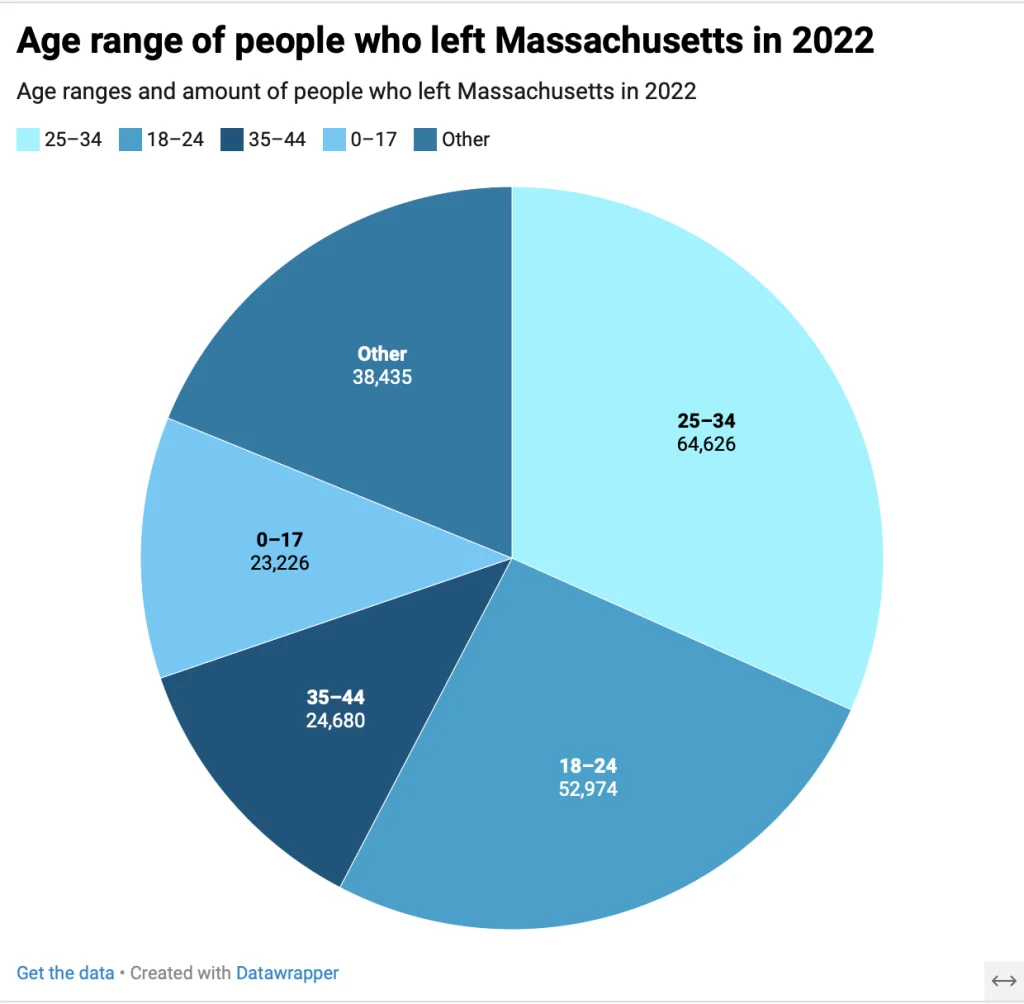
The high cost of housing is one of the top reasons young people cite for leaving the state, according to the “Cost and Consequences” report from the state government. The study found that in 2022 alone, 200,000 residents moved out of Massachusetts, mostly young adults aged 25 to 34.
If Question 7 passes, Mikula’s team calculates that between 2,200 and 5,700 new homes would be built annually statewide.
The Center for State Policy Analysis at Tufts University projects far fewer. Its June study, based on how homeowners have historically subdivided their property, forecasts 350 to 1,200 new homes a year across Massachusetts.
Adam Chapdelaine, executive director of the Massachusetts Municipal Association (MMA), said the ballot question lacks details on how more affordable housing would be created.
“It’s very possible to build a large and expensive home on a 5,000 square foot lot, which would not be a starter home,” Chapdelaine said.
Creech of the Lexington Planning Board agrees that Question 7 won’t have a big impact on the town.
“It’s not going to affect affordability, so there has to be a different way,” he said.