

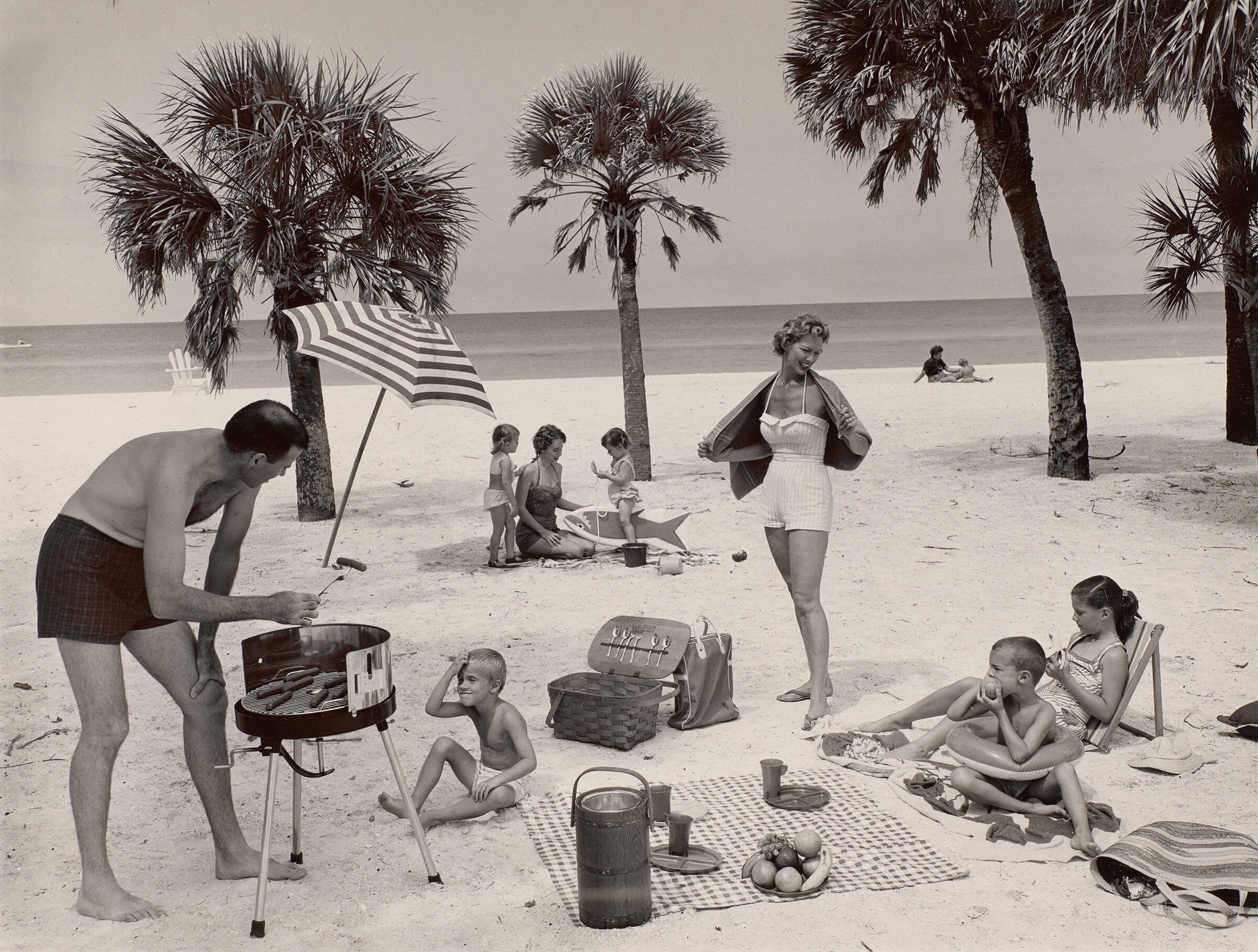
A new photography exhibit at the Harvard Art Museums presents an idealized view of life in postwar America – and then raises questions about that vision.
“The Way We Never Were” features 70 photos taken across the country by hired photographers and drawn from the American Professional Photographers Collection at Harvard University. These images – from weddings, school dances, family breakfasts and other events – depict daily life in America during the 1950s.
The show also brings attention to how these images were commissioned to project a certain image of American life, questioning how authentic these moments were.
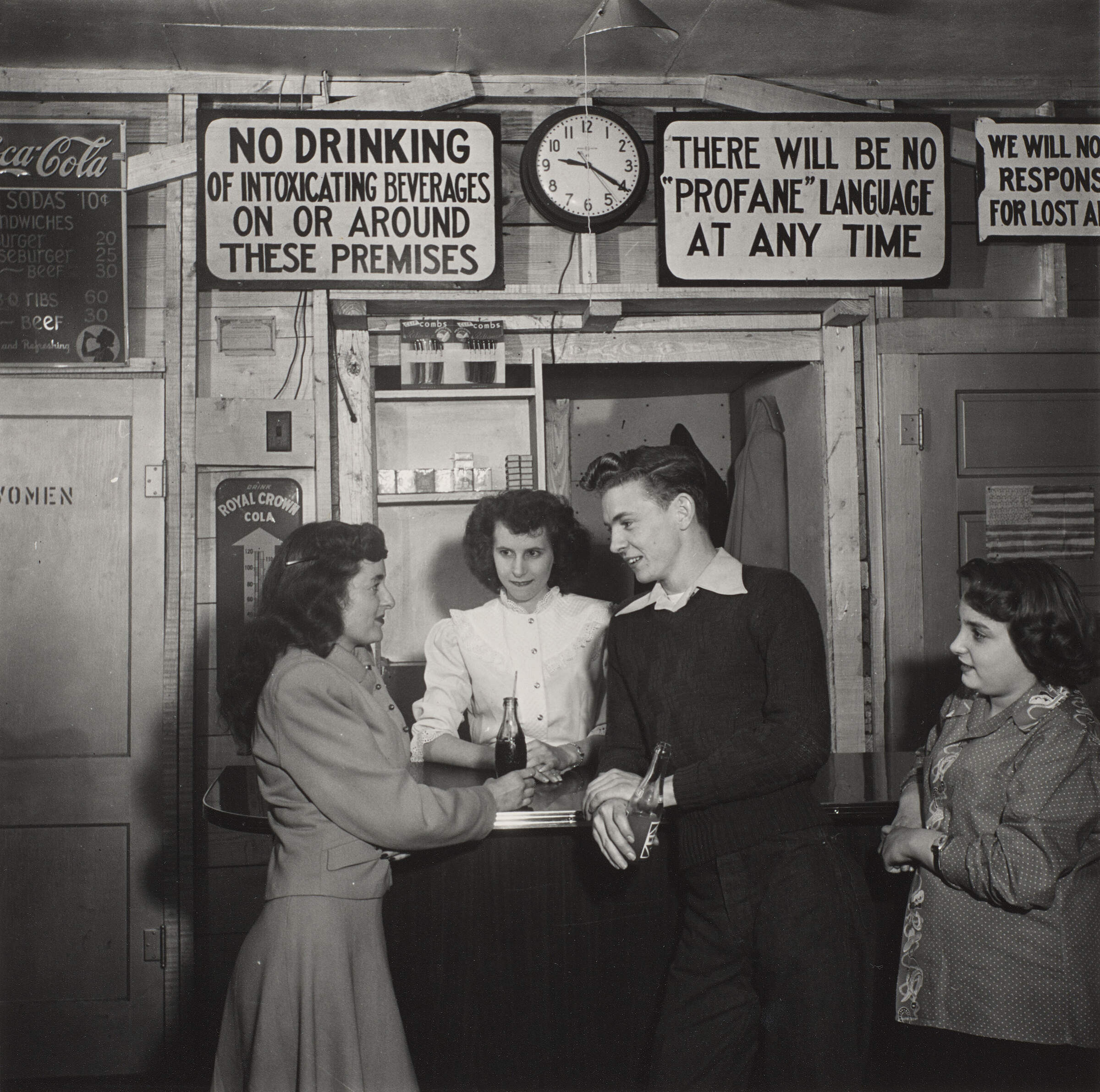
“We wanted to argue that there’s so many different kinds of photography,” said Audrey Sands, who curated the show with Madison Brown and Bridget Hinz. “All of them have really tenuous and complicated relationships to how we understand ourselves, how we understand the past, and we wanted to really make space within this exhibition for that multiplicity.”
The exhibit marks the 50th anniversary of the American Professional Photographers Collection. Assembled by Barbara Norfleet, a sociologist interested in the “record of American life,” the collection consists of over 20,000 negatives and prints from the 1870s to the 1970s.
Sands and Brown wanted to examine Norfleet’s impact on sociology and photography, as well as how this collection fits into the 21st century.
“It’s a big process,” Brown said. “It’s such a big and rich collection, so narrowing it down to something digestible is a real challenge.”
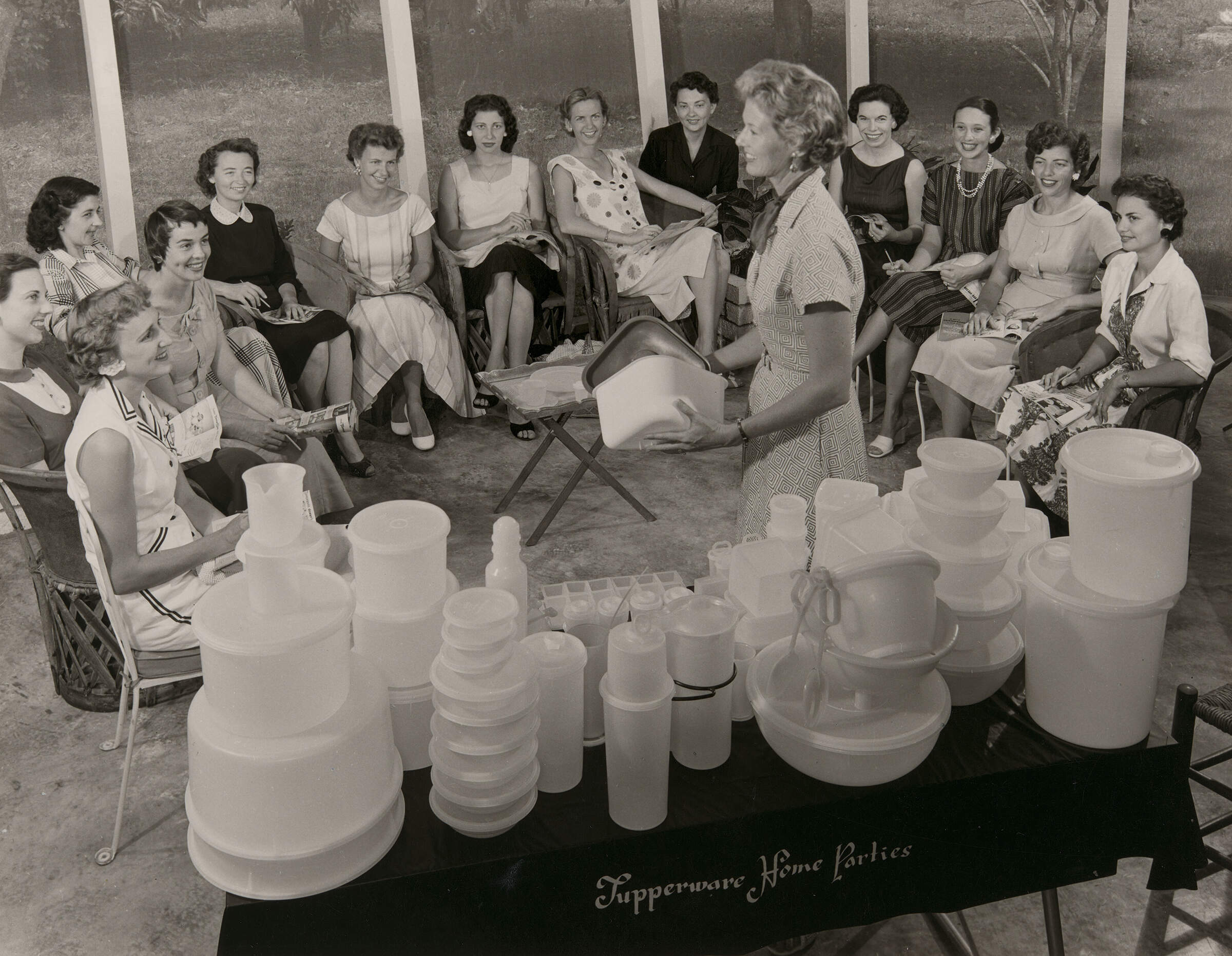
Rather than trying to display the entire century the collection spans across, they decided to focus on a specific time period.
“By focusing on the immediate postwar years,” Sands said, “it allowed us to look at a period that Barbara Norfleet herself really was attending to the most, a period in whose kind of rites and rituals of every day, the professional photographers were often brought into documenting.”
Located in the University Research Gallery on the third floor, the exhibit is divided into five sections: “Postwar Boom,” “Inventing Suburbia,” “A Nation of Conformity,” “Rites and Rupture” and “The Work of the Professional Photographer.”
Each section features photos that highlight an aspect of 1950s culture. “The Postwar Boom” features photos of delivery rooms, referencing the Baby Boomer generation. “Inventing Suburbia” displays landscape photos of suburban homes. “The Work of the Professional Photographer” looks at the techniques and work processes of professional photographers.
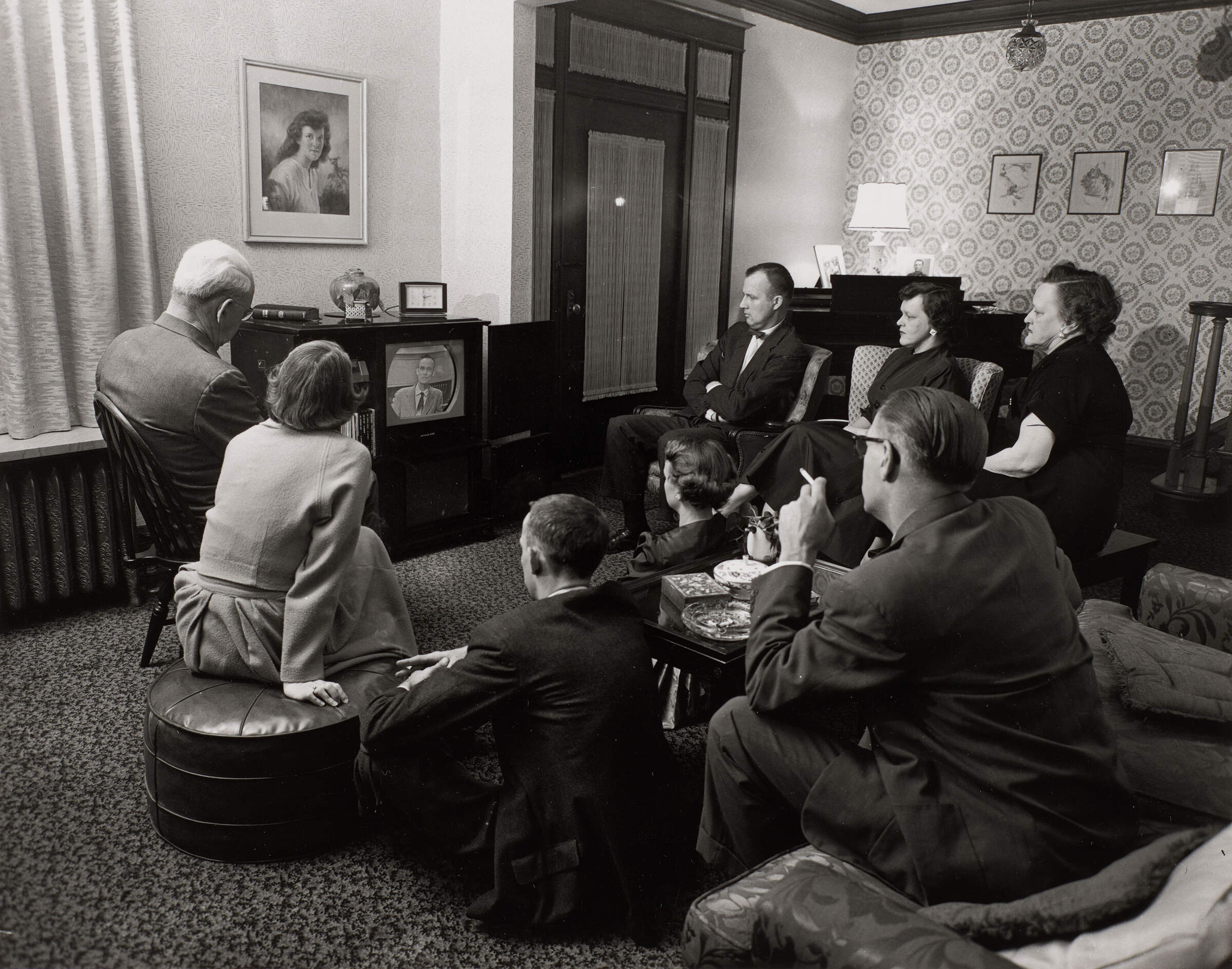
“I think that when people look at many of these pictures on the walls, you see these really tightly constructed pictures on the one hand, that are also so candid in their aesthetic, and so it’s easy to sort of look at them and be like, ‘Oh, that’s exactly these are just documents of 1950s life,’” Sands said. “And so it was our role to, as we sort of took it on, to tease out a little bit more.”
Sands said she wanted viewers to think about what is present in the photos and what is omitted. These images of the idealized life are contrasted with news images that are silkscreened as the backdrop of each section.
For example, in the “A Nation of Conformity” section, photos of homecoming dances, Boy Scouts, and high school classrooms are superimposed on the background image from the March on Washington.
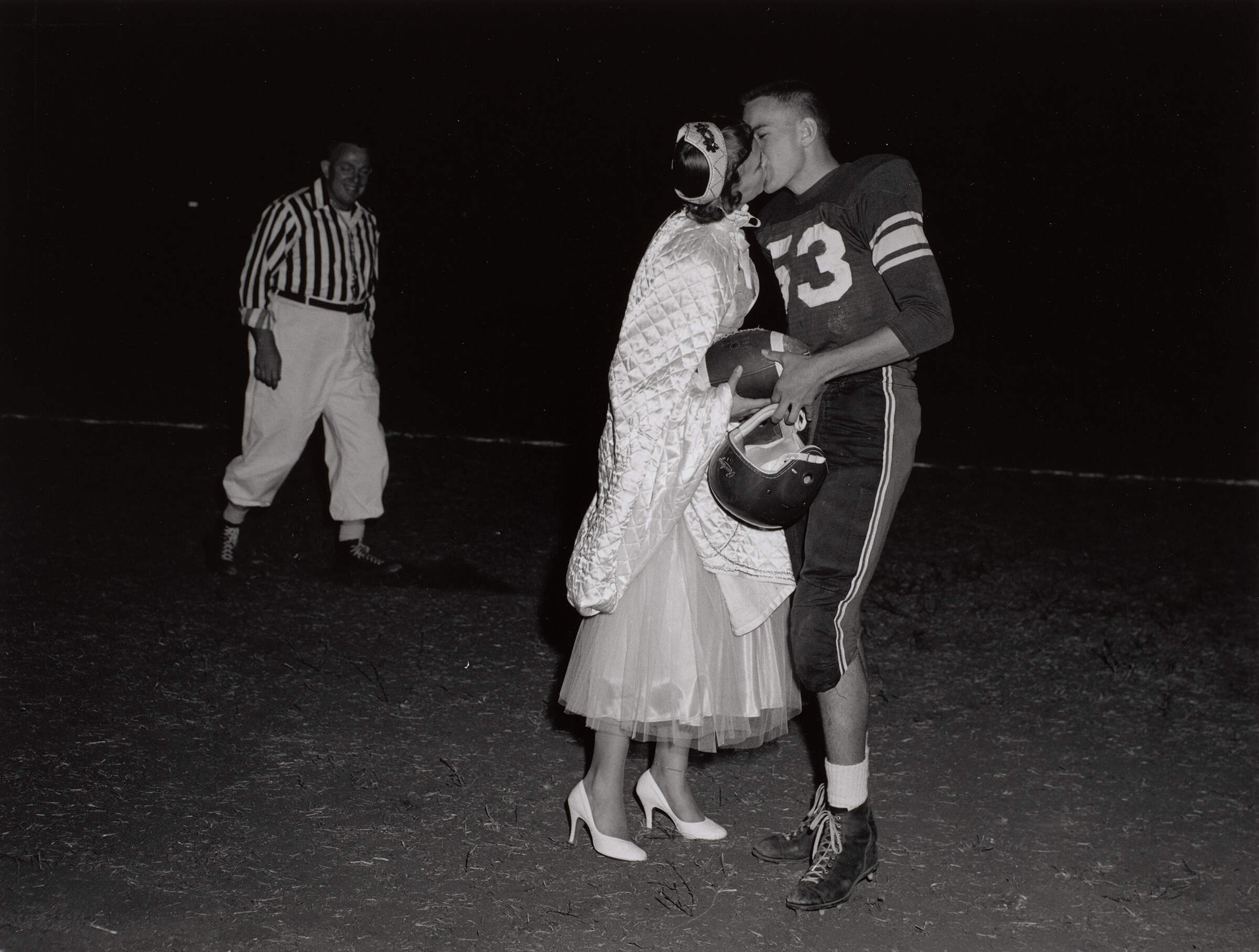
“These were things that were being experienced across the whole country,” Brown said, “ so we really wanted to emphasize that there is something shared, that is the literal backdrop to these happy pictures. Things look really sleek and smooth in these pictures, but there was way more going on in the background.”
The show is named after Stephanie Coontz’s book “The Way We Never Were,” which explores the myth of the nuclear family.
“We read a lot of literature about both the 1950s, about vernacular photography, and one of the voices that spoke to us the most was that of the sociologist Stephanie Coontz,” Sands said. “She, too, was interested in how these ideas we have about the past that are so solidified through movies, through songs, through television shows, and especially through photographs.”