Author: Kelly Broder

  • Some want to rename Ruggles Station. But who was Ruggles?

    Some want to rename Ruggles Station. But who was Ruggles?

    An online movement to rename a T station is gaining traction after a local librarian learned that it memorializes a family that included an enslaver. 

    The Ruggles station on the orange line gets its name from Ruggles Street, which is just south of the stop. The street was named in 1825 for Roxbury’s Ruggles family, according to a 1910 volume of “A Record of the Streets, Alleys, Places, etc.” published by Boston’s Board of Street Commissioners.

    The entrance to Ruggles MBTA station. Kelly Broder photo

    Matthew Weidemann, a librarian at Needham Free Public Library, runs an Instagram account – @rename_ruggles – on which he posts videos nearly every day about why he wants the T station renamed. The account has accumulated over 1,700 followers.

    Weidemann created the account after sitting on the T wondering where station names came from. He learned that Timothy Ruggles, a member of the Roxbury family for which the street and station were named, was a Loyalist military officer and enslaver in the 1700s.

    “People just assume that names are just kind of neutral, or they just exist like the weather, but they aren’t,” Weidemann said. “They’re all a choice, and we can make better choices.”

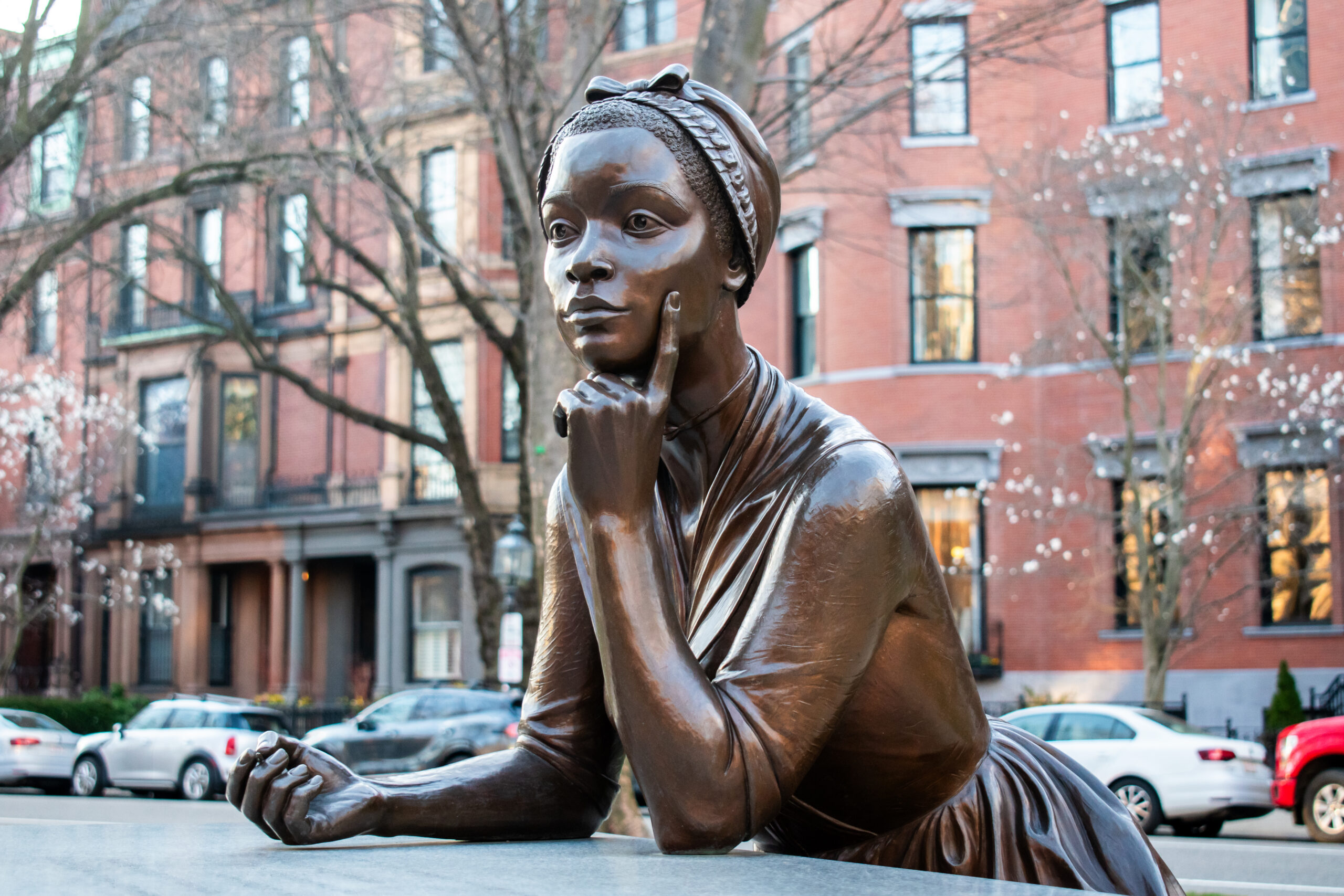
    Weidemann’s posts argue that Ruggles should be renamed Wheatley Station. Phillis Wheatley, born in West Africa, was enslaved and brought to Boston in 1761. John and Susanna Wheatley bought her around age 7 and taught her to read and write in English. She became a prominent poet and author, and is regarded as a trailblazing pioneer of black authorship.

    “To me she represents both the promise and the failures of America,” Weidemann said. 

    A statue of Phillis Wheatley resides in the Boston Women’s Memorial. Her 1773 volume “Poems on Various Subjects, Religious and Moral” was the first book published by an African writer in America. Kelly Broder photo

    But Weidemann is open to another option. David Ruggles, an abolitionist born in Connecticut who is not known to be directly related to Timothy, helped to free enslaved people through the Underground Railroad, including Frederick Douglass. 

    “That kind of interesting juxtaposition is almost reason enough to just consider intentionally naming it after him,” Weidemann said. 

    Many of New England’s Ruggleses come from one prominent Roxbury family who emigrated from England in the 1600s and spread across New England over generations, leaving their mark wherever they went. Some were politicians, military figures, and local elites. 

    Almost 400 years after the family first landed in Boston from England, the Ruggles name has stretched across all six New England states. 

    Maine has the Ruggles House Society, a museum in Columbia Falls sharing the architecture and culture of the Federalist era. Ruggles Mine in New Hampshire invites campers to stay atop Isinglass Mountain in Grafton. Vermont is home to an engineering company with the name and a shared housing community for older adults. 

    In Rhode Island, a beloved college resource dog shares the name. Salve Regina University’s labrador retriever was named by students and inspired by Ruggles Avenue, a street on the Newport campus. The pup’s handler and resource officer, Michelle Caron, said she did not know of the name’s complex history, and that she is concerned about the connection. That street was named after Nathaniel Sprague Ruggles, a likely relative of Roxbury’s Ruggles family.

    “Over the years those names stay the same,” Roxbury historian Leland Clarke said. “But history sometimes can get clouded.” 

    Clarke, a Boston University professor of fine arts and music, has a special interest in Roxbury history. He grew up in the neighborhood and authored a book, “Something Worth Saving: Forgotten People, Places, and Events That Helped Shape America,” about Roxbury’s history. 

    He said there are several examples of street names in the Boston area that were named after once-prominent families but have become more of a reminder of the region’s history and less about honoring those it was named for. Examples in Roxbury include the Warren and Dudley names.

    A March 2023 blog post, written under the pen name Riverside Lechmere, proposed renaming stations with “names that are now long divorced from our memory.” 

    The author declined to speak with the Dorchester Reporter and share their real name but wrote in an email that they “only wished to start a conversation, not endorse a conclusion.” 

    Betty Ruggles Tolias, from Middleboro, is a descendant of the Roxbury Ruggles family. Betty said she is descended from John Ruggles, whose brother, Thomas, was Timothy’s great-great-grandfather. 

    She was shocked to hear that Timothy was an enslaver. 

    “I think the people of Roxbury should do what they think is right,” Tolias wrote in a message to this reporter. “I pray they remember there are Ruggles who care about minorities of all types. We care a great deal.” 

    Byron Rushing, president of the Roxbury Historical Society, said he would support renaming the station after the abolitionist Ruggles. But he was hesitant to throw out the original Ruggles name because it was named for the family, not one particular enslaver.  

    “If you’re in a [slave-owning] family and you did not own slaves, the whole family doesn’t lose its right to be honored,” Rushing said. 

    Boston has a recent history of renaming landmarks due to the city’s racist past.

    In 2018, the city changed Fenway Park’s nearby Yawkey Way to Jersey Street after the Red Sox petitioned to remove the former club owner’s name over acts of racism under his leadership

    Dudley Square was renamed Nubian Square in 2020 to embrace the neighborhood’s African roots. The Dudley name came from a 1600s colonial governor, Thomas Dudley, who served in office when slavery was legal. 

    Many T riders have no clue where the “Ruggles” came from. 

    Cole Eidson, a psychology professor at Northeastern University who uses Ruggles Station frequently, said he would support renaming efforts. Dorchester resident and orange line rider Leny Marrero said it “felt like it was a no brainer” when Dudley Square was renamed to Nubian Square and would like to see the same for Ruggles. 

    Weidemann’s Instagram account shared a petition that calls on Mayor Michelle Wu to rename the station. But the renaming process actually starts with the T. 

    The process to rename a station happens under the MBTA’s Station Naming Committee, a five-member group that discusses proposed names before giving a recommendation to the T’s general manager.  

    “It’s a very difficult and challenging conversation. It doesn’t divide us,” Clarke said. “It brings us together, and it sparks the conversation. What else is out there that we need to look into, to explore and to celebrate?” 

  • US Rep. Pressley eulogizes Emmanuel Damas who died in ICE custody, pushes rare House vote on Haiti TPS 

    US Rep. Pressley eulogizes Emmanuel Damas who died in ICE custody, pushes rare House vote on Haiti TPS 

    Massachusetts officials are calling for accountability among local and federal law enforcement in the wake of the death of Dorchester’s Emmanuel Damas in immigration custody last month.

    Massachusetts Congresswoman Ayanna Pressley and Senators Ed Markey and Elizabeth Warren demanded a full investigation into the circumstances surrounding the death of Damas in early March.

    Pressley addressed the House of Representatives last Thursday, March 26, to mourn the death of Damas and to call for greater accountability among law enforcement. 

    Emmanuel Damas in Dorchester, 2024. Family photo

    “There can never be true justice for Emmanuel,” Pressley said on the House floor. “In a just world, he would still be alive and home with his family. There must be accountability.” 

    Pressley started a discharge petition that was signed by a majority of House members, forcing a vote to extend Temporary Protected Status (TPS) for Haiti by three years. The vote will take place in the coming weeks.

    That was a “really important and unlikely victory,” said Brian Concannon, co-founder and executive director of the human rights organization Institute for Justice and Democracy in Haiti. “In my research, there’s never been a successful discharge petition that was generated by grassroots movements ever in history. This is particularly historic.” 

    What his family says started as a toothache turned tragic when Damas was allegedly unable to access proper and timely health care at the Florence Detention Center in Arizona. The federal Department of Homeland Security and U.S. Immigration and Customs Enforcement officials have publicly refuted that allegation and have said Damas was taken to three medical centers for treatment.

    Damas arrived legally in Dorchester in 2024 from Haiti and was arrested Sept. 14 on a count of domestic violence, though his family refutes the legitimacy of those allegations. He died after being taken to a facility in Phoenix for a cardiothoracic workup. The Laken Riley Act required he be held pending his asylum appeal. His original asylum claim was denied in 2025, filed after he was taken into custody by ICE in Boston last September.

    The Department of Homeland Security said in a March statement that everyone in ICE custody receives medical, dental and mental health screenings within 12 hours of arriving at a detention center. 

    City Councillor Ruthzee Louijeune stood next to Emmanuel Damas’ mother (seated) during a City Hall Plaza vigil for Damas on March 18, 2026. Kelly Broder photo

    City Councillor Ruthzee Louijeune has been helping Damas’ family access legal and emotional support and helped plan his memorial services that took place Saturday, March 28. She said the family had to secure an independent autopsy for Damas themselves, as ICE did not provide a comprehensive one after his death. 

    “It’s just been an uphill battle for them,” Louijeune said. “But they have just been so incredible in using their pain — their very private pain — to make sure this doesn’t happen to anyone ever again.” 

    Louijeune said she would like to see a review of the actions by the Boston Police Department as well as a federal investigation into Damas’ death. Boston and Suffolk county law enforcement arrested Damas and submitted his fingerprints at the Nashua Street Jail into a federal database, which triggered ICE to pick him up. 

    The Boston Police Department had no direct communication with ICE after Damas’ Sept. 14 arrest, said Mark Marron, a spokesperson for the department. Marron said he had no knowledge of any investigation into the actions of the department regarding Damas’ arrest. 

    Marron said all arrestees’ fingerprints are taken and submitted to the National Crime Information Center and the Automated Fingerprint Identification System. Because Damas’ arrest report includes an allegation of domestic violence, the case details are not publicly available. 

    Louijeune recommended anyone in legal trouble with ICE consult an immigration and a criminal attorney before taking action, even if it’s to bail out a family member or loved one. 

    “It’s an irredeemable institution that needs to end,” Louijeune said. “Because they’ve been acting and moving lawlessly.” 

    This story is part of a partnership between the Dorchester Reporter and the Boston University Department of Journalism. 

  • City’s heat island issue has deep roots – and there’s a leafy solution at hand

    The Boston Parks Department has an answer to the city’s summer heat problem — plant more trees.

    Boston experiences the urban heat island effect — increased temperatures in places covered in asphalt and concrete — across its more developed neighborhoods like South Boston, where the artificial surfaces absorb and retain heat and make conditions environmentally hostile in the summer.

    Because those neighborhoods have limited space, it is more difficult to plant trees there, but it’s worthwhile, said Todd Mistor, the director of the city’s Urban Forestry Division. “We can’t keep avoiding the difficult tasks because they’re just difficult and more expensive.”

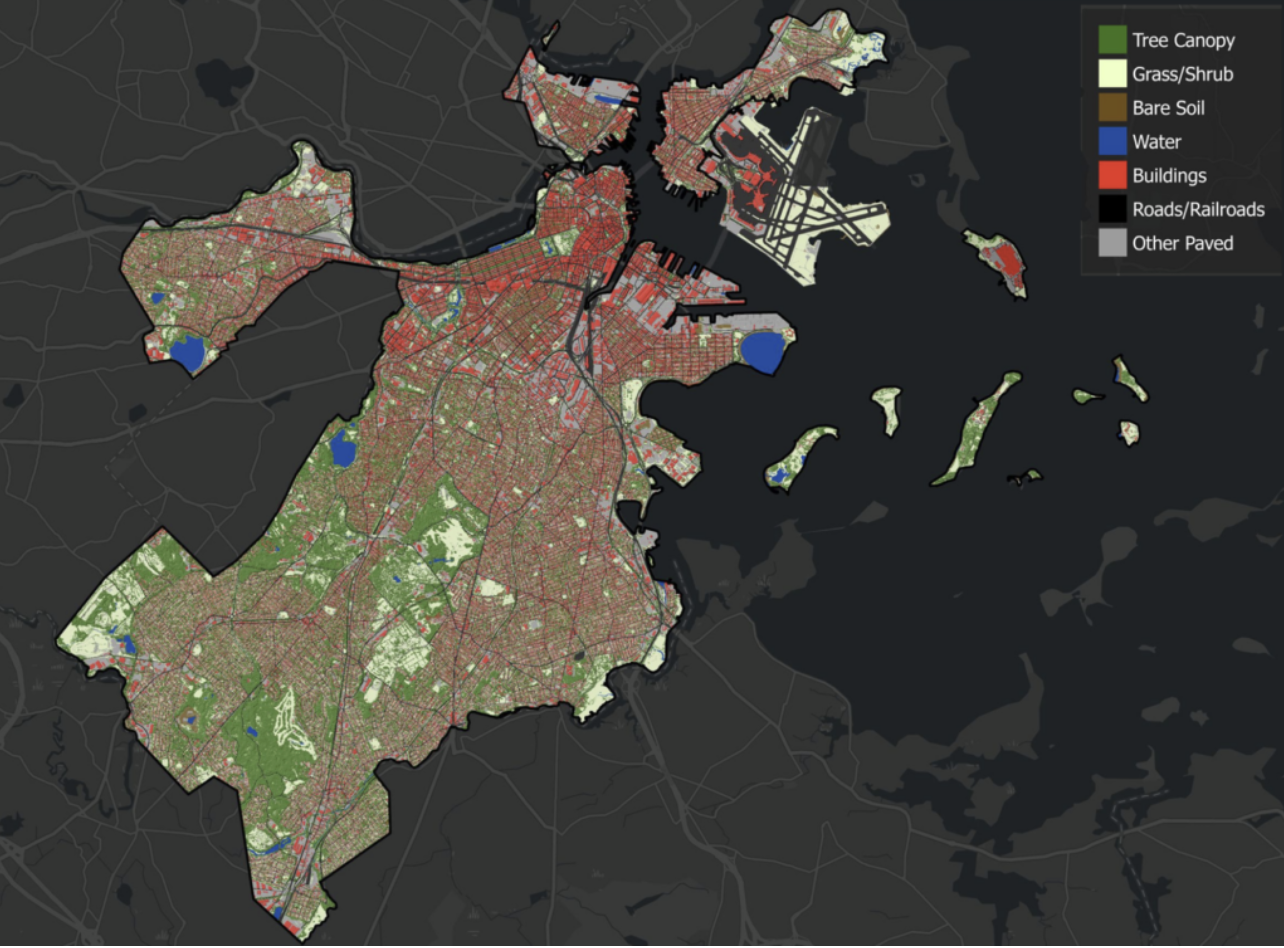
    The phrase “tree canopy” describes the coverage provided by a tree’s branches and leaves that cover the ground when viewed from above. A Tree Canopy Assessment Report, put out earlier this month by the Parks Department and the Mayor’s Office, used data collected via Light Detection and Ranging, a remote sensing technology known as LiDAR, to create a precise map of tree canopy coverage in Boston. 

    The assessment, which was provided by the University of Vermont Spatial Analysis Lab, showed a net increase of 151 acres of canopy, resulting in Boston’s coverage increasing by an absolute 0.5 percent to 28.5 percent (excluding the airport) during the five-year period, driven by gains on public land such as parks and rights-of-way.

    This was called “meaningful progress” over the previous five-year period, which showed no net change in canopy coverage.

    Shade provided by trees helps cool the air outside and reduces indoor cooling costs, Mistor said, and mature trees also block northern winds, uptake stormwater, and, as a corollary matter, have been shown to benefit mental health. 

    “We need to be proactive about caring for our trees,” he said. “They are absolutely an asset for the community.”

    Although the Urban Forestry Division is responsible for the maintenance of newly planted street trees, his office encourages residents to be stewards of nearby trees by watering them and looking out for issues like invasive pests or dying trees.

    Research shows that tree cover in US cities average about 40 percent, but only 27 percent of Boston’s 31,000 acres is covered by tree canopy, according to the assessment.

    Dorchester’s canopy saw almost no change between 2019 and 2024, according to the report. More-leafy Mattapan and Hyde Park saw decreases in coverage, but because these neighborhoods already had a high percentage of canopy coverage — roughly 36 percent and 41 percent in 2019 — the small decreases there are less concerning than a small decrease in an area like East Boston, where canopy coverage is scarce, Mistor said. 

    Dave Queeley, interim executive director of Speak for the Trees, Boston, a nonprofit that plants, preserves, and advocates for trees, said in an email that younger trees don’t offer the same benefits as mature trees, “but continuing to plant as many trees as possible is important.” 

    His group partners with the Parks Department to plant trees in public parks, cemeteries, and areas where trees are dying. The group has planted more than 529 trees since 2018 and projects it will plant 200 this year. An added positive factor: more than $1.3 million in city grants to fund tree-planting initiatives. 

    Slowing the development of areas that house clusters of mature trees would also aid climate resilience efforts, Queeley wrote. 

    Development is not the only factor to consider; harsh weather can take a toll on the city’s trees, especially during punishing storms like the few Boston saw this winter. And invasive pests like the emerald ash borer beetle kill ash trees when its larvae burrow under the bark and feed on the nutrients inside the tree.

    The largest share of Boston’s tree canopy, 35 percent, is on residential land. Dorchester is no exception to this. Mistor said he wants residents to know that trees on private property matter just as much as street and park trees and that residents can request that a tree be planted on a street near their land. 

    Rather than focusing on a quantitative goal, Mistor said, the Parks Department is committed to creating equity among neighborhoods.

    “Hopefully in a place like Dorchester,” he said, “we can move that needle a little bit more than just breaking even.” 

    This story is the product of a partnership between the Dorchester Reporter and the Boston University Department of Journalism. 

  • At City Hall vigil, calls for justice for Emmanuel Damas, who died while in ICE custody in Arizona

    At City Hall vigil, calls for justice for Emmanuel Damas, who died while in ICE custody in Arizona

    Speakers called for probe into actions by ICE, DHS, and local law enforcement in Boston and Suffolk County…

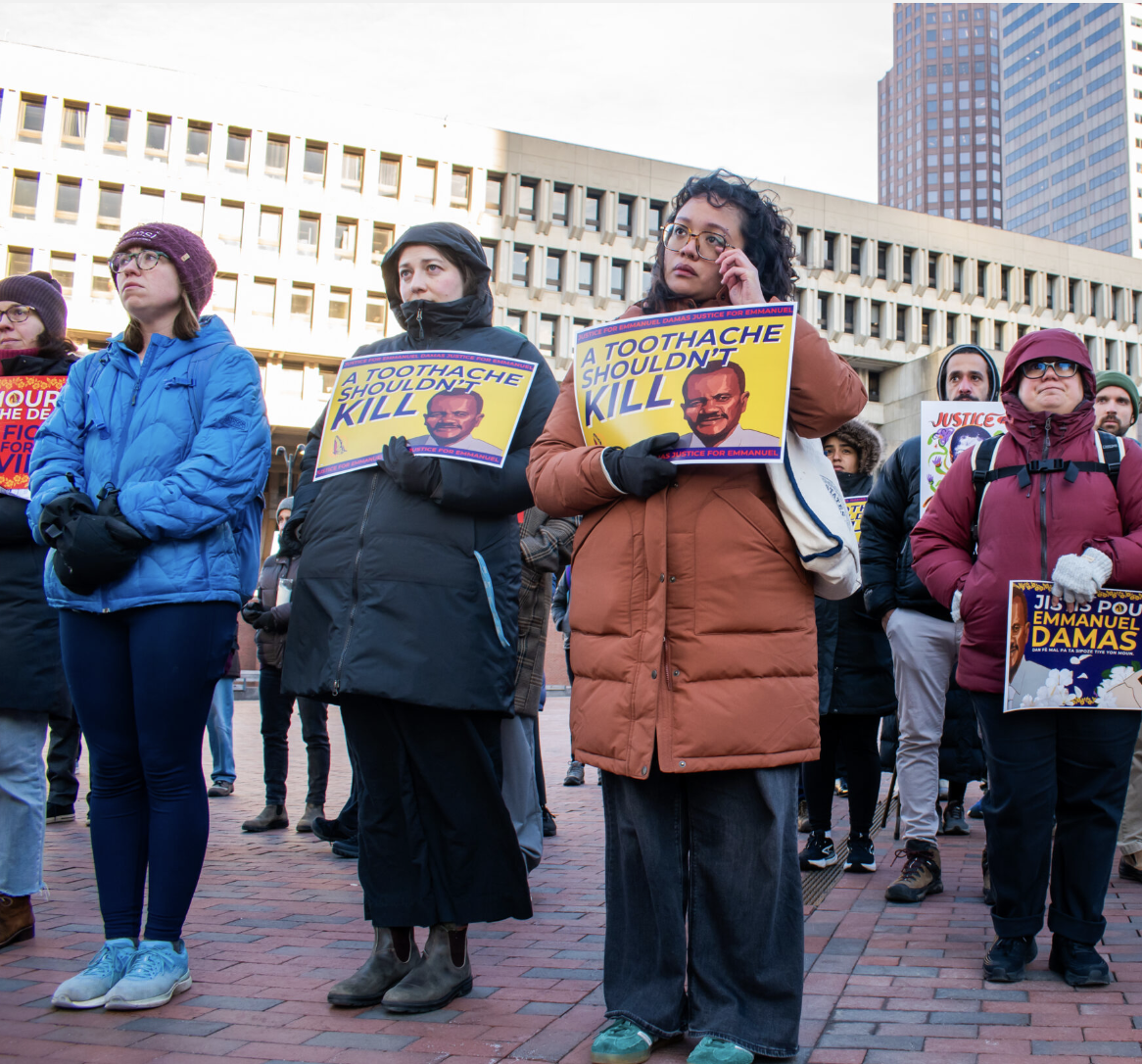
    More than 100 people stood in frigid weather at Boston’s City Hall Plaza Wednesday evening to mourn the death of Emmanuel Damas, the 56-year-old Haitian man who died in an Arizona ICE detention center on March 2.

    “America, we can do better than that,” Damas’ brother, Presner Nelson said. “We are better than that, and we expect better than that from our government.”

    Other vigil speakers called on state and federal politicians to launch an independent criminal investigation into the actions of US Immigration and Customs Enforcement (ICE) that they say resulted in Damas’ death. 

    Emmanuel Damas’s twin brothers, Presner and Presly Nelson spoke at the vigil alongside City Councillor Ruthzee Louijeune. Kelly Broder photo

    What his family says started as a toothache turned tragic when Damas was allegedly unable to access proper and timely health care at the Florence Detention Center in Arizona. The federal Department of Homeland Security (DHS) and ICE officials have publicly refuted that allegation and have said Damas was taken to three different medical centers for treatment.

    Damas arrived legally in Dorchester in 2024 from Haiti and died after being taken to a facility in Phoenix for a cardiothoracic workup. The Laken Riley Act required he be held pending his asylum appeal. His original asylum claim was denied in 2025, filed after he was taken into custody by ICE in Boston last September.

    Vigil attendee Kate Billman-Golemme said she found the news of Emmanuel Damas’s death “deeply upsetting” and “morally offensive.” Kelly Broder photo

    The medical liaison for ICE notified Damas’ family that they were permitted to visit him eight days after he was intubated on a ventilator in the intensive care unit at the John C. Lincoln Medical Center, according to an ICE statement

    “We should not have to use your pain to call shame to a system that is every day abusing our neighbors — our immigrant brothers and sisters,” said City Councillor Ruthzee Louijeune, a daughter of Haitian immigrants. “I am so angry.” 

    Immigrant advocates asked Mayor Michelle Wu and Gov. Maura Healey to initiate an independent review of Boston and Suffolk County law enforcement, who arrested Damas and who submitted his fingerprints at the Nashua Street Jail into a federal database.

    Local representatives of LUCE believe the fingerprinting is probably what alerted ICE.

    The scene on Boston City Hall Plaza on Wed., March 18, 2026. Kelly Broder photo

    Hannah Hafter, a member of the Dorchester hub for LUCE, said Damas’s family is financially responsible for a full autopsy and for the transport of Damas’ body back to Haiti. 

    “His mother says she can’t stand the idea of him being buried in the country that rejected him and killed him,” Hafter said. The family has a GoFundMe page. 

    Brian Concannon, the founder and executive director of the Institute for Justice & Democracy in Haiti, urged members of Congress to end the attempt to terminate Temporary Protected Status (TPS) for immigrants through Congresswoman Ayanna Pressley’s discharge petition that would extend TPS. 

    Speakers at the vigil further demanded that Healey shut down the Boston Regional Intelligence Center, known as BRIC, an organization formed after the Sept. 11, 2001 terrorist attacks that allows data sharing between state and federal officers.

    Latoya Gayle, a candidate for state Senate who volunteers with LUCE Network Massachusetts, said she is outraged by Damas’ treatment in ICE custody.

    “He didn’t deserve what happened to him,” Gayle said in an interview. “His family doesn’t deserve this. We don’t need another family to have to deal with that.”

    Representatives from the LUCE immigrant advocacy group, Immigrant Family Services Institute (IFSI) and local elected leaders like Councillor Miniard Culpepper attended the vigil for Emmanuel Damas. Kelly Broder photo

    Organizers also called for a divestment from CoreCivic, the private for-profit prison company that held Damas in the Arizona detention center. Vigil organizers said Citizens Bank finances CoreCivic and The GEO Group, two of the largest private operators of immigrant detention centers. 

    So far this year 12 people – including Damas – have died in ICE custody, according to the agency’s own records. An additional 31 died in ICE custody in 2025. 

    This story is part of a partnership between the Dorchester Reporter and the Boston University Department of Journalism. 

    Emmanuel Damas was living in Dorchester until his arrest and detention in Sept. 2025. Family photo
  • Criticism, optimism greet developers at Greater Mattapan Council session

    Residents’ reaction to two redevelopment plans in Mattapan diverged sharply between criticism and optimism Tuesday night as developers of the 1576 Blue Hill Avenue project and the former Carney Hospital site presented plans to the Greater Mattapan Neighborhood Council (GMNC)..

    Residents’ reaction to two redevelopment plans in Mattapan diverged sharply between criticism and optimism Tuesday night as developers of the 1576 Blue Hill Avenue project and the former Carney Hospital site presented plans to the Greater Mattapan Neighborhood Council (GMNC) over Zoom to just under 50 attendees.

    Attorney Mike Ross shared the plans of his real estate developer client, Solmon Chowdhury, to redevelop 1576 Blue Hill Avenue. The site runs along Babson Street, which is just off of Blue Hill Avenue.

    The proposal calls for the construction of a 6-story building with 58 rental units, 8 of which are intended for affordable housing, Ross said. There would be 38 one-bedroom apartments, 3 studios, 11 two-bedrooms, 4 three-bedrooms and 3 artist live-in work lofts.

    Attendees raised concerns about the limited parking available, saying they were worried how that could affect the area.

    Plans call for between two and six parking spaces using mechanical stackers for shared vehicles that belong to the housing development. Residents’ guests and any residents with cars would likely have to find parking elsewhere.  

    “There are plenty of buildings with parking spaces,” Ross said. “This isn’t one of them.” 

    The project got negative views from some residents, who said the six-story building would feel out of place in the commercial heart of Mattapan. “How does this benefit our community when we have been historically marginalized?” David Venter asked.

    Residents were also skeptical that no homeownership options were available in the project, considering Mattapan’s largely residential community. Some were frustrated that the plan would not require approval from the Zoning Board of Appeal, under the Squares + Streets zoning initiative that seeks to simplify the process of gaining approval for housing.

    And some felt that the design was created before developers understood what the neighborhood wanted. Allentza Michel, an urban planner, said developers hadn’t “done their homework” when developing this proposal.

    Barbara Crichlow offered that the project is too large and would be better outside of the Mattapan business district. Countered Ross: “What we’re building here is exactly what the squares and streets zoning has asked to be built here.”

    Other attendees said they felt their questions went unanswered by Ross, who left the Q&A session early to attend a different meeting. Many continued to write questions about the project in the chat section of the Zoom meeting. 

    “I feel like the presentation was triggering to a lot of folks,” Pamela Jones, the treasurer of the GMNC and co-moderator of the meeting, wrote in the chat. 

    The GMNC submitted a “comment letter” to the developers detailing design requests for the property that the group would like to see in the final proposal. While the development does not require the GMNC’s approval, Jones said, “we have some influence.” It needs approval by the Boston Planning & Development Agency but not by the Zoning Board of Appeal.

    Redevelopment plans for the Carney Hospital site were met with more excitement. 

    Tom O’Brien, the chief executive officer of HYM Investment Group, presented his concepts. His company is working with My City at Peace, an urban planning organization that evaluates neighborhood needs and works with developers. The preliminary plan includes building a medical center and housing, and adding more green space.

    Carney Hospital was owned by Steward Health Care, which went bankrupt in 2024. The hospital has since closed, leaving Mattapan’s and Dorchester’s 150,000 residents without a local hospital. 

    “First of all, it’s wrong, but also it creates demand,” O’Brien said. “It’s pretty sad, you know, but hopefully we can all work together to make something good come of it.” 

    The 12.7-acre site would house a medical building leased to a major health care system that is yet to be determined. That building will also host some sort of educational program — likely a nursing school, O’Brien said. Senior housing and family unit rental buildings would also be on the site. The number of units has not been decided, nor has the number of affordable housing units. 

    Developers will create a more detailed plan and present it at the GMNC’s April meeting. Plans will be reviewed by Boston’s planning department in an Article 80 evaluation — a multi-stage development review that considers the impact on neighborhoods, transportation, the environment and public infrastructure. O’Brien and his team are working on hospital outreach to see which might operate the medical center of the site.

    O’Brien said his team has met regularly with abutters, and plans to “blur” the boundary between the campus and surrounding properties. The building, now in disrepair, would be demolished, and much of the paved area would be eliminated to create more green space.

    Apollo Global Management, the property’s owner that foreclosed on the Carney site after Steward’s bankruptcy, hired HYM and My City at Peace to develop plans for the site. 

    O’Brien and his team have met in about 30 public meetings to discuss Carney redevelopment with civic groups and abutters. 

     “That’s our objective,” he said, “to listen a lot to people right now and then work our way toward a proposal that reflects that.” 

    GREATER MATTAPAN NOTEBOOK

    Bigtime Talent Showdown: Fri., March 27, from 5 to 8 p.m. at Perkins Community Center. Youth talent competition for performers who sing, dance, play an instrument, or otherwise share a performance talent. Prizes: Cash prizes, community recognition, and a chance to perform in front of a packed room

    • HBCU:  Summer legislative internships / aide positions for students currently enrolled at Historically Black Colleges and Universities. For more information, contact Matthew Martinelli at matthew.martinelli@boston.gov or 401-374-2406.

    • City budget public testimony: Tues., March 10, at 6 p.m. at Boston City Hall. Any resident can speak about budget priorities.

    • Crossing Guard of the Year Recognition: Nominations are open for the statewide awards.

    This story is part of a partnership between the Dorchester Reporter and the Boston University Department of Journalism. 

  • Shattuck ‘restart’ sparks debate on recovery needs and housing

    Shattuck ‘restart’ sparks debate on recovery needs and housing

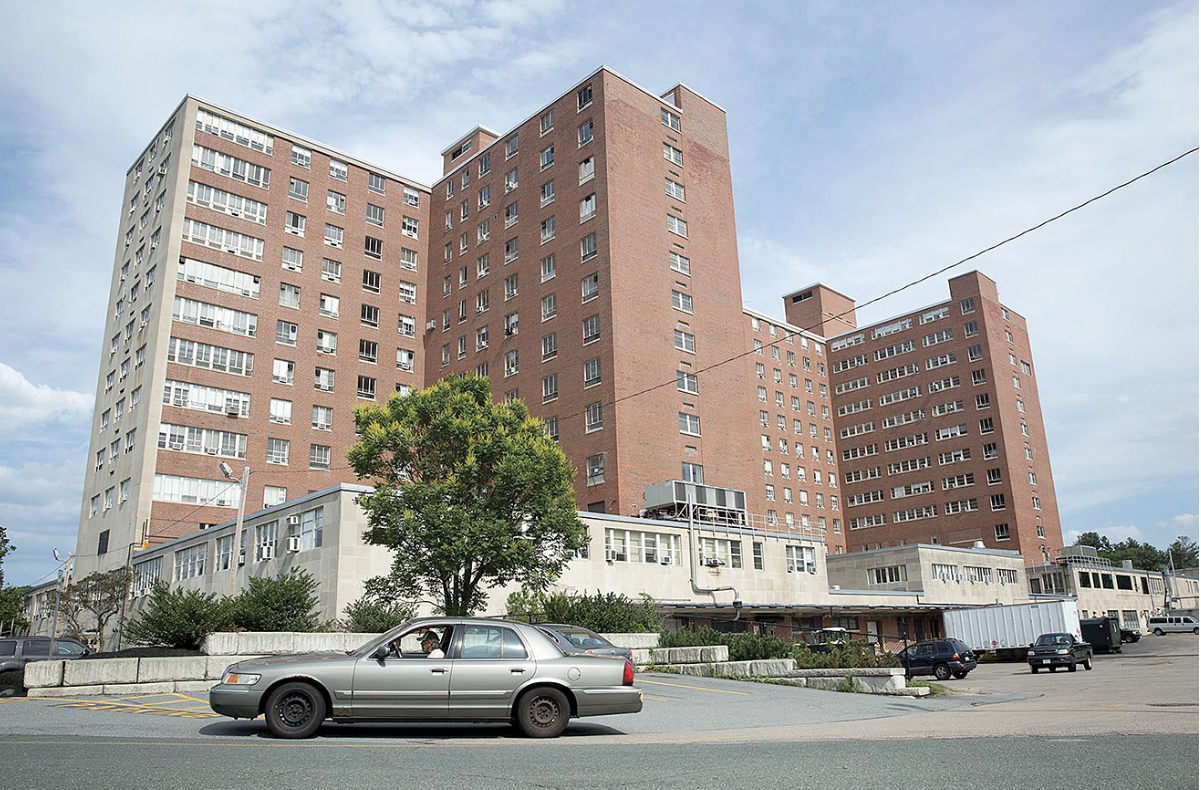
    A renewed discussion over uses for the soon-to-be-vacant Lemuel Shattuck Hospital property next to Franklin Park has prompted new ideas – and a rise in tension among interested parties.

    State officials last year scrapped a Boston Medical Center-led plan to redevelop the property as a recovery campus following the relocation of the hospital and its 260 beds to the East Newton Pavilion in the South End next year.

    In the months since the BMC plan dissolved, advocates and coalition representatives have been eager to present their ideas to the state Executive Office of Health and Human Services (EOHHS). 

    More than 100 community members gathered last Thursday night (Feb. 27) for a “listening session” with several state agencies at Edward Brooke High School on American Legion Highway in Dorchester. Members from the Department of Mental Health, the state housing cabinet, and EOHHS attended – as did a host of state public health officials that included Shattuck CEO Fatima Watt.

    Catharine Hornsby, senior advisor for the state Health and Human Services cabinet, said the process is a complete reset with no preconceived notions. Beside her is Josh Cuddy of the Executive Office of Housing and Livable Communities. Seth Daniel photo

    Catharine Hornsby, senior advisor for EOHHS, said they came with no preconceived notions and a presumption that many in the audience might already know more than the state officials. It was, she said, a “full restart” that will inform a new Request for Proposals (RFP).

    Two main camps quickly emerged — those who want some form of supportive housing built, and those who want the 13.3-acre lot turned over to more community-based plans in abutting Franklin Park. Supportive housing is a type of facility that combines under one roof behavioral health and substance use disorder (SUDs) support services.  

    In addition to input, the state is seeking ideas for how to incorporate that input, possibly establishing a community advisory board to oversee its actions regarding the project. 

    The existing Shattuck serves patients through a combined approach of medical and psychiatric treatment and the hosting of rehabilitation and recovery programs. Non-profit provider programs at the Shattuck, which include a methadone clinic, a Pine Street Inn shelter, residential treatment programs, and outpatient psychiatric services are not part of next year’s move. Bay Cove CEO Kevin Martone said at the meeting that they want to remain on site.

    The Morton Street property was deeded to the Commonwealth of Massachusetts in 1949 with a statutory restriction requiring that the land be used for public health purposes. 

    Some who favor the supportive housing idea said it should be designated for people recovering from SUDs. Other proposals aired include housing for veterans, a village for abutting senior citizens looking to downsize, mothers reuniting with their children, and other populations that could benefit from a combination of housing and support/health services under one roof. 

    Dorchester’s Dianne Wilkerson, a former state senator, proposed a “senior citizen legacy village” with senior housing, urgent care, a 24/7 pharmacy, and a veterans’ center.

    Former Sen. Dianne Wilkerson spoke at the meeting. Seth Daniel photo

    “This is not your grandmother’s addiction,” she said. “The idea of an addiction village here – there’s a reason why no one else has done this in the United States. It doesn’t make sense.”

    Many at the meeting said they were concerned about a high concentration of people in varying stages of substance use recovery living together, citing the increased relapse rate when individuals in recovery are surrounded by active drug users.

    Dorchester’s Marti Glynn and Jamaica Plains’s Patricia Clifford – both retired public health workers – said that sort of situation is detrimental to recovery.

    Patricia Clifford, an abutter to the Shattuck site on the Jamaica Plain side and a retired employee, said putting those in recovery together in large numbers isn’t a good idea. Seth Daniel photo

    “When people are trying to get clean and are in close contact with active users it is an insurmountable task,” said Clifford, who retired from the Shattuck in 2023.

    In contrast, members of the Housing and Health on Morton Street Homes Coalition (HHOMS) – a group that supported and worked with the BMC proposal – said they want any new plan to include at least 200 supportive housing units and to allow substance use recovery and mental health providers in the facilities. 

    Dorchester’s Shameeka Moreno, a member of HHOMS and organizer for Boston Tenant Coalition, appeared frustrated as she addressed opposition to the supportive housing idea. 

    “If this community cares about the kids, give us housing for moms going through reunification,” Moreno said. “Give us places for our kids to play where we still can have that green, but we can still have that housing, too.”

    Asserting that green space a form of public health, Karen Mauney-Brodek, president of the Emerald Necklace Conservancy, wants the site to be turned over to Franklin Park.

    Mattapan’s Kenya Beaman said the Shattuck was considered a “scary” place when she was growing up, and she’d like to see it become community-oriented and inviting. Seth Daniel photo

    “The Parthenon of parks could be reborn under this administration,” Mauney-Brodek said. “The park is a limited resource. We have limited green spaces in the city.” 

    Moreno countered that she has seen disparities in how support services are regarded by some other community members. Opponents of the housing idea said they agree that more supportive housing is needed in Boston, but they add that the Morton Street campus is not the place for it.  

    “It’s good for my Black kid, but it’s not good for a predominantly white neighborhood,” Moreno said. “That’s what I hear when you say, ‘Not in the Emerald Necklace, not over here.’ This is the city. This is what comes with the city.” 

    State Rep. Chris Worrell said in an interview that he wants to hear every idea, and that “no idea is dumb. We could create something very beautiful.” 

    In an interview, District 7 City Councillor Miniard Culpepper said that he was opposed to the former BMC plan and emphasized his support for community input on the project.

    “Whenever you have a diversity of opinion, you come up with a good result,” he said. 

    While he said he does not specifically support one plan over another, Culpepper did say he was against developing a 400-unit supportive housing complex, and he added that the residents in the immediate area who opposed the BMC plan should be represented on the advisory board. 

    “Whatever leverage I have,” Culpepper said, “I’m going to use it to make sure whatever the residents decide goes into that facility.”

    State Sen. Liz Miranda (above), who attended the meeting, said she was happy the state “agreed to start this process over.” And State Sen. Nick Collins said in an interview that he wants to see a review of the facilities and cost-benefit analysis done before the community decides on a proposal. He said he wants to explore the possibility of “retrofitting” what’s there. 

    “I think we should take a step back and say, ‘What can we do with the existing building?’” Collins said. 

    There is no clear timeline for the future listening sessions or next steps in the process, but the state again emphasized that community input will be at the forefront this time around. 

    “[Community members] feel like the trust is shattered,” Worrell said. “This is the first step of building that trust and letting the community know that this is truly a community led process.”

    His brother, District 4 Councillor Brian Worrell, added, “I’m hopeful that this state-led process will result in a use that serves Bostonians for generations to come and reflects the will of our residents.” 

    This story is the product of a partnership between the Dorchester Reporter and the Boston University Department of Journalism. The Reporter’s news editor, Seth Daniel, contributed to the article.

  • The good, the bad and the ugly of Boston’s snow removal

    Neelima Cherukuri dressed in her best cheetah print shorts and sandals before she picked up her shovel and braved the cold outside her Carson Street apartment.

    “I’m not really cold right now,” she said. “I’m very lazy to put on shoes. I came out at — oh no, it’s been 40 minutes.” 

    Above: Carson Street resident Neelima Cherukuri shovels snow from her front steps and driveway Tuesday afternoon. Kelly Broder photo

    The 17 inches of snow dropped by Monday’s blizzard reaffirmed what many Dorchester residents were already thinking: When will this winter end? 

    More than 44 inches of snow has dropped on Boston in the last month. With temperatures only recently hovering above freezing, much of it remains.

    Meanwhile, Boston’s 14 “snow farms” continue to grow. 

    Crews work to dump snow into the Bayside Expo lot on Tuesday afternoon. More than half a dozen trucks unloaded mountains of snow into the Dorchester “snow farm” in under 10 minutes. Kelly Broder photo

    Three of these farms are in Dorchester. The lot at Bayside Expo, Circuit Drive and Franklin Park serve as designated areas where large trucks dump snow to be melted. 

    The city rented snow melters from two or three vendors, interim Chief of Streets Nick Gove said. The vendors fire up the machines for up to 10 hours and all melted snow is released into stormwater drains. 

    Snow farms are typically parcels that are in an “interim state” that don’t see a lot of traffic, like the lot of the former Boston Edison Power Plant in South Boston, Gove said. Others are placed in sites owned by the City, like the Bunker Hill lots in Charlestown. The large trucks that transport snow cause temporary road closures, and farm sites are chosen to minimize that disruption. 

    Gove said city crews start with pre-treating roads to create a “brine” of salt. Plows are deployed during the storm, targeting main roadways frequented by emergency vehicles and MBTA buses. Crews then load the snow into large trucks to be dumped at the snow farms, where it will be put into snow melters. The days following a storm consist of city crews clearing school lots, sidewalks, bike lanes and bus stops. 

    The Bayside “snow farm” in operation on Tuesday, Feb. 24, 2026. Bill Forry photo

    “We appreciate everybody’s cooperation with the snow emergency and related parking bans,” Gove said. “We know that that’s an inconvenience, but it’s really critical for us to be able to get back to the curb.” 

    In a post to BlueSky Social on Wednesday, Mayor Michelle Wu said that Tuesday (Feb.24) “was the [first] time the City has done large-scale daytime snow removal, holding the parking ban to give crews max space to work. Across daytime and overnight, we hauled away almost 1,500 truckloads of snow (25,000+ cubic yds) to clear main roads and school zones. [Thank you] to our hardworking City teams.”

    The discussion of purchasing snow melters will be on the agenda at a 2 p.m. hearing on Tuesday, March 3, with city councilors Ed Flynn, Brian Worrell and Enrique Pepén. The trio will discuss establishing a snow corps and other snow removal strategies to bolster up Boston’s snow removal efforts. 

    Some Dorchester residents said they actually enjoyed their snow days, even if it meant shoveling. They appeared more bothered with Mother Nature herself. 

    “Maybe other people like the snow,” Cherukuri said, “but I’m done for this season.” 

    Others tolerated shoveling with more acceptance. 

    “I actually find it kind of gratifying,” fellow Dorchester resident Matthew Pugnaire-Jones said. “It’s not great, but it’s a sense of work.” 

    The East Cottage Street resident said he abbreviated his trip to Portland, Maine, to get back before the storm, but enjoyed being “holed up” at the Banshee pub Monday. 

    Above: Residents of Moseley Street work to clear snow from cars Tuesday afternoon. (Photo by Kelly Broder)

    On Moseley Street, resident Doug Sorensen cleared snow from around his car to return to in-person work for the Army Corps of Engineers on Wednesday. 

    Sorensen said the large snowbanks around street parking areas have been crowded, but that the roads appeared well-treated prior to this storm. He said he’s done with winter weather. 

    “We can stop at this,” Sorensen said. “That would be nice.”