Category: Newton Beacon

  • Newton Community Education rebounds, finding financial footing after years of uncertainty

    Newton Community Education rebounds, finding financial footing after years of uncertainty

    Newton Community Education is reporting a significant rebound in revenue this fiscal year, following years of financial turbulence.

    But its financial improvement has come at a cost.

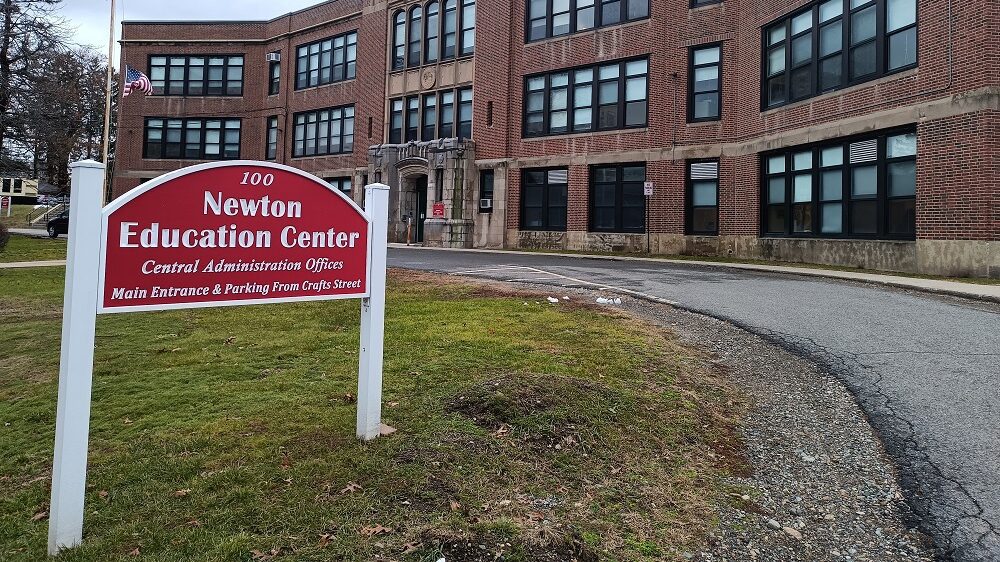
    Founded in 1991 as a self-sustaining arm of Newton Public Schools, the nonprofit NCE offers hundreds of classes and programs each year, including woodworking, yoga and beekeeping classes.

    The Newton Education Center. Photo by Dan Atkinson

    In recent years, after COVID-19 decimated enrollment, rising costs caught up with the organization. NCE had to pay employee benefits and pension costs in addition to pitching in for custodial services, creating a deficit of more than $300,000, the Beacon reported in 2024.

    “The reason why we’re in a better position at this time this year, compared to last year, is because we have made significant cuts to our staff,” said Kate Carpenter Bernier, NCE’s executive director. NCE eliminated its director of finance and administration and cut 1.2 office positions, Carpenter Bernier said.

    For now, NCE is relying on a part-time bookkeeper and two volunteers—one of whom is an NCE commission member—to fill the gap.

    “Those community volunteers are providing a lot of expertise and assistance, and financial analysis, projections and budgeting,” Carpenter Bernier said. She also acknowledged, however, that the arrangement isn’t meant to be permanent.

    Restoring staff would reduce the projected profit that NCE has worked hard to rebuild. “That’s the catch-22,” Carpenter Bernier said.

    Claire Wadlington, a member of the Newton Community Education commission, said cutting staff was necessary in order for NCE to break even. “There weren’t very many options for what to cut,” she said.

    Wadlington also pointed out that NCE’s fiscal year follows an unusual cycle. Its lowest revenue period, which is the fall, is its highest expense period—driven by a roughly $160,000 pension bill and the cost of summer camp labor, Carpenter Bernier wrote in a memo to the school committee.

    Wadlington said the timing is key to understanding NCE’s financial health.

    By the end of this fiscal year, NCE projects a surplus of roughly $107,000, according to Carpenter Bernier’s memo. NCE’s annual budget is $1.9 million.

    Last year NCE conducted focus groups to see what parents wanted from after-school programming. Based on that feedback, the group retooled its afternoon clubs to be longer and also to run for a whole semester. The result is fewer individual enrollments, but each one was worth significantly more in revenue.

    Adult programming also surged almost 50% compared to last fall, Carpenter Bernier said. Still, summer camps continue to be the biggest revenue driver, accounting for about half of NCE’s revenue, she said.

    NCE is now working with John Rice, the city’s chief of community services, to create new programs and increase revenue and enrollment. 

    With Rice’s help, Carpenter Bernier said, NCE is set to relocate adult art classes to the Cooper Center and is collaborating with the city Parks and Recreation Department on a carpentry program for adults with disabilities.

    Rice said he sees cross-promotion between city events and NCE as a direct financial benefit for the nonprofit.

    NCE runs more than 700 classes, clubs and camps annually, serving nearly 3,000 children and adults. Carpenter Bernier said she sees opportunity to grow those numbers, particularly through expanded after-school clubs and new programming for middle and high school students.

    But sustaining that growth will require rebuilding the internal capacity of NCE, Carpenter Bernier said. 

    “You need staff in order to really deliver your product well and to continue to expand programming and take advantage of needs and opportunities, which will also drive revenue,” Carpenter Bernier said. “If you don’t have the revenue, then it’s difficult to build staff.”

    Wadlington said she expects Carpenter Bernier to be disciplined about when to restore positions. “I think they’re doing amazing in the context of growing despite having cut essential people,” she said.

    Carpenter Bernier said she thinks NCE’s revenue and expenses are stable and she doesn’t see any upcoming risks. “I think that it’s important that we, organizationally, determine a path to restoring capacity so that we can be fully … operating as high capacity as we were in the past,” she said.

  • Snow, Well: Newton residents work at staying chill amid this brutal winter

    Snow, Well: Newton residents work at staying chill amid this brutal winter

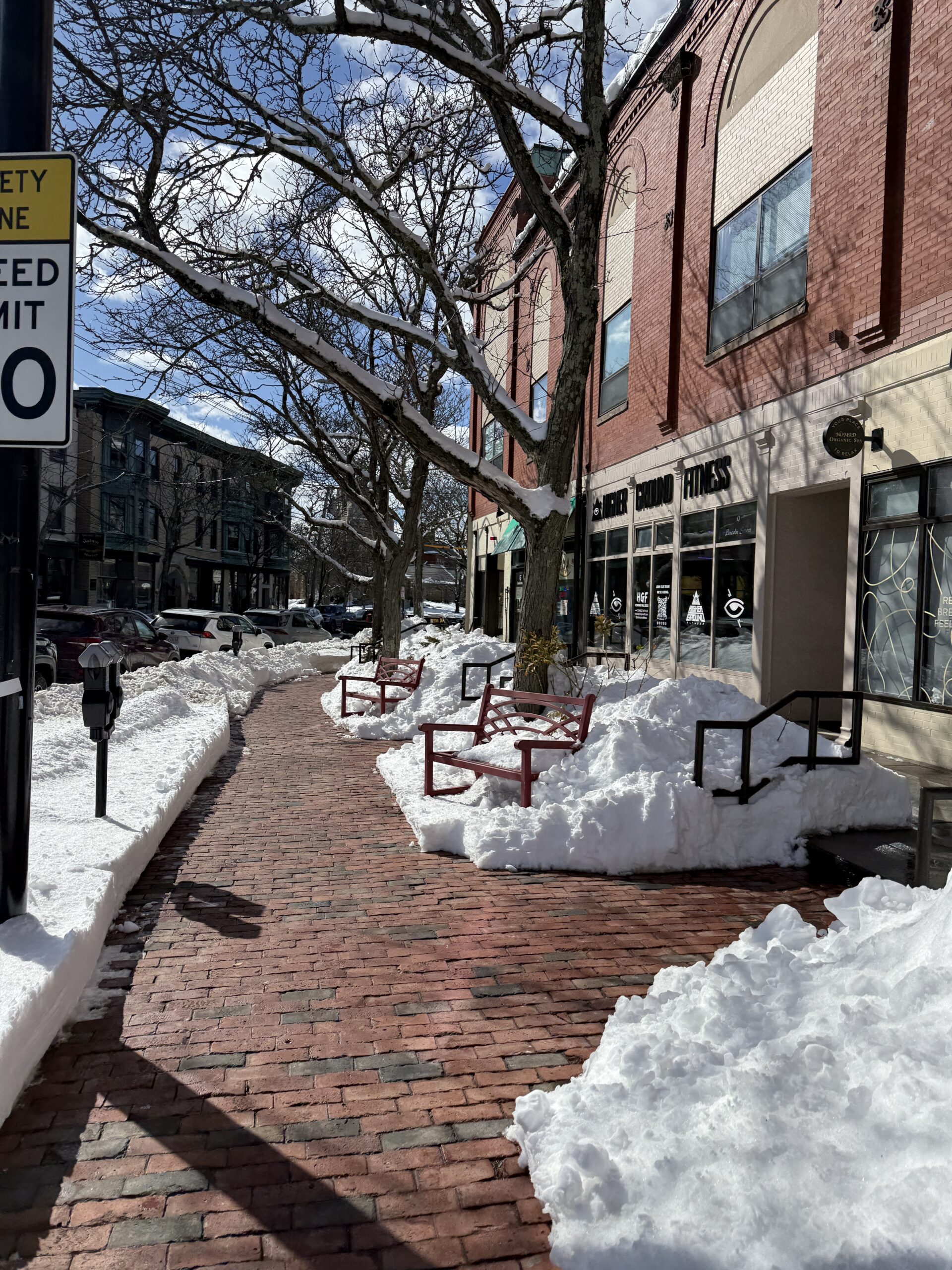
    Newton Highlands Village Center after a February blizzard. Photo by Lea Tran

    In Newton Centre, the snow was so much that several businesses stayed closed a day or two after Monday’s blizzard. In Newton Highlands, pedestrians gingerly stepped through narrow shoveled strips of sidewalk. In Newtonville, residents complained about the slush and ice that is everywhere but mostly took this unrelenting winter in stride.

    “I think it’s given us a lot of highlight moments,” said Kerry Murphy, a cybersecurity software engineer who works remotely from home. “It’s given people time to do the traditional New England ‘get snowed in’ activities — spending time with family, catching up on Netflix, baking. I think over the past few years we may have missed that a little bit.”

    Less than a month after a massive storm walloped Newton with nearly 2 feet of snow, a historic blizzard dropped another 16 inches on the city this week. Snowbanks are piling up on street corners. Many sidewalks are unwalkable. Residents and businesses are struggling to keep up with the seemingly nonstop need to remove snow from their driveways, lots and sidewalks.

    But if you think that people have had enough of this brutal winter, think again. Not everyone is fed up. Some people actually love it. Those who don’t are coping with a shrug.

    Here is how three of Newton’s villages are contending with the harsh winter of 2025-26:

    Newton Centre

    As the snow piled up — and more continued to fall — Newton Centre fell quiet. Snowbanks lined the stairs leading from the MBTA station up to Union Street, where only a handful of pedestrians entered businesses.

    Several storefront doors glowed with neon “closed” signs. But local shop Carla Shaw was open.

    Carla Wahnon said she is tired of the snow slowing down her local jewelry business. Photo by Kate Brodkin

    Inside, owner Carla Wahnon said this stretch of winter weather has been a burden for her jewelry and sustainable fashion business. “Comparing last year’s January and February to this year’s, I’ve seen a decline on business, because the cold is too much,” Wahnon said.

    Originally from Brazil, Wahnon said she thinks the snow is beautiful, “if you ski.” “But if you have to get ready and go to work, it doesn’t make things easier.”

    Though she doesn’t love the snow, Wahnon said she was impressed by how well the city did cleaning the sidewalks and streets. “The streets were completely clean,” she said.

    Dan Solo, a resident of Newton Centre, said he’s tired of the snow and the state of the crosswalks in Newton. Photo by Kate Brodkin

    Inside Blackbird Donuts, Newton Centre resident Dan Solo said he felt the opposite. 

    “I just feel like it’s very inconsistent,” he said. “There’ll be a section where it’s plowed and cleaned and then stretches where you’re just stopped.” Solo said the crosswalks weren’t plowed wide enough for more than one person to cross the street at a time.

    But some business owners are embracing the weather.

    Jill Herer said she loves waking up in the morning and seeing snow. Photo by Kate Brodkin

    Jill Herer, owner of the Finer Consigner in Newton Centre, said she loves the snow.

    “Everyone likes to be snowed in for a good snowstorm,” she said. “It’s a great excuse to stay home, stay in your pajamas, and relax. It reminds me of being a kid.”

    Still, Herer acknowledged the challenges the snow brings for small businesses. “The fact that people cannot get from their car straight shot to the sidewalk hurts me business-wise,” she said.

    Hedy Jarras, who lives in Newton Centre and owns Sweet Tomatoes Pizza, feels far less enthusiastic about the snow.

    “I hate it,” she said. “It’s terrible for business — it’s messy.”

    The restaurant’s deliveries, originally scheduled for Monday, were delayed until Thursday because of the blizzard.

    “It’s been a lot of running around and trying to scoop up some stuff that is needed,” she said. “It’s really crippling for business.”

    Hedy Jarras, owner of Sweet Tomatoes. Photo by Kate Briodkin

    Newtonville

    Snowplows rumbled through the streets of Newtonville as snow blew across sidewalks and roadways.

    In the village center, crews in reflective jackets spread salt that turned slushy shades of pink against the snow-covered pavement. Pedestrians stepped carefully over icy sidewalks. Some welcomed the return of winter weather.

    “We are back to a tried-and-true New England winter,” said Murphy, the cybersecurity engineer.

    For remote workers like Murphy, the storm has posed few disruptions. For students and others who commute, the experience has been more challenging.

    “It was hard to get out of my house,” said Hadley Hamley, an employee at Rancatore’s Ice Cream and Yogurt. Hamley, who recently graduated from the Catherine Hinds Institute of Esthetics in Woburn, said she paid $100 for a one-way Uber ride during the storm.

    Business at Rancatore’s has remained steady, Hamley said. Although winter months typically bring a slowdown, she noticed an uptick in customers ahead of the blizzard.

    “People actually like to stock up before the storm,” she said.

    While the storm presents a rare opportunity to bundle up and spend family time, this is not everyone’s reality. For snow removal crews, the storm has meant long hours.

    “It’s been long hours for me and my crew,” said Raymond Ratchford, a snow removal worker, as equipment hummed nearby. He said the most difficult part of the job is ensuring equipment is ready, as trucks and snowplows occasionally malfunction.

    Overall, he said crews have managed conditions without major complaints.

    “They take pretty good care of the roads out here,” Ratchford said.

    Newton Highlands

    Approaching the Newton Highlands T stop on the Green Line, the fresh powdered snowfall makes the place appear as a winter wonderland. Once pedestrians are off the T platform, however, the place is navigable only through narrow paths through the sidewalks, with snow walls up to their knees.

    Nico Andrea, 20, spent his afternoon shoveling snow in an attempt to make a path for his roommate’s car to get out.

    Nico Andrea shovels snow after a blizzard in Newton. Photo by Lea Tran

    Andrea then had to clear out his driveway, which he estimated would take two hours solo because his roommate was suffering from a back injury.

    Throughout the neighborhood’s streets, residents spent their afternoons the way Andrea did.

    Jonathan Roses, 82, was shoveling his porchway after the snow plowers he hired made the entryway too narrow. The plows that cleared the dental office across the street had dumped the snow in front of Roses’ home, forcing him to make his own pathway to get out. It happens with city plows, too, he said.

    Jonathon Roses, retired Newton resident, shovels snow after a late February blizzard. Photo by Lea Tran

    “What happens every year is plows that the city hires, they block the corner,” Roses said. “And it’s impossible for me to open it up for pedestrians to go across, but people usually either walk on the street, or if there’s another path, they go.”

    Roses does not mind snow days too much, though, as it gives him an opportunity to exercise while shoveling and also catch up on “Grey’s Anatomy.” He’s currently on season 15.

    The covered sidewalks and large snow walls have forced pedestrians to walk in the main roads in Newton Highlands to get to their destinations.

    Mildred Parro, a Newton nanny, is taking the winter weather in stride. Photo by Lea Tran

    Mildred Parro, 32, nanny to a newborn, pushed a stroller when she was met with an unclear segment of the sidewalk. Unable to get through with a stroller, Parro turned around to find a new route.

    Parro said her driving commute from Watertown into Newton was fine but navigating the Newton streets as a pedestrian was much worse.

    “It’s bad when we go for a walk, especially when I’m with him,” she said, gesturing to the large stroller. “But today’s kind of clean, just not all the streets.” 

    Parro has noticed some improvements with the city’s snow removal. 

    “Last time two weeks ago, it was really bad. I couldn’t even go out with him because all the sidewalks were covered,” she said.

    While inconsistent snow removal plagues much of the neighborhood, the Newton Highlands village center was fairly clear in comparison.

    Nearly all the businesses were open, with a few customers in each shop, whether it were a cafe, salon or pilates studio.

    Eamon Porcello, barista, and Ross DeMore, manager, at Lakon Paris Patisserie. Photo by Lea Tran

    Lakon Paris Patisserie, a French-inspired cafe, was open for business Tuesday. Employees Eamon Porcello, 25, and Ross DeMore, 37, both laughed when asked how business has been at the cafe, which has gone viral for its croissants and other flaky pastries that normally have the place packed.

    “It’s been super dead and super slow today,” DeMore said.

  • Coyote sightings surge across Newton, with West Newton emerging as hotspot

    Coyote hunting along a river. Public domain photo

    Dolan Pond is knee-deep in snow and ice this time of year, but that doesn’t stop dog walkers—or coyotes—from roaming the area.

    “The coyotes are always circling up there,” said Joseph Castagnino, a dog walker and Auburndale resident.

    Nearby, a scatter of feathers lay across the snow—evidence, Castagnino said, of the predators’ presence.

    Newton police said they have received dozens of reports of coyotes across the city since the beginning of the year. 

    “The Newton Police Department is aware of several recent coyote sightings throughout the city,”  the department said in a Facebook post in late January. “Animal Control and responding officers have assessed the animals and determined the coyotes observed are in good health.” Recent sightings reflect a broader increase. According to Newton’s “Report a Coyote Sighting” tracker, there were 124 reported sightings in 2025. In the first six weeks of 2026 alone, there have already been 86 sightings, putting the city on pace for a significantly higher total if the trend continues.

    The increase may be linked to mating season, when coyotes are more active and more visible as they search for mates and establish territory, according to the Southwest Wildlife Conservation Center.

    City data show sightings are widespread but unevenly distributed. A heat map of reports from the past 12 months shows clusters throughout Newton, with the highest concentration in West Newton and additional hotspots in northern and central neighborhoods. One cluster in West Newton recorded more than 40 sightings, with nearby areas reporting more than a dozen each. Many of the sightings appear near wooded areas, parks and residential green corridors.

    “I was driving at night in Auburndale and had to stop in the middle of the road to swerve because of a coyote,” said Zachary Grinspoon, a residential specialist and lifelong West Newton resident.

    “They were always in my backyard growing up,” Grinspoon added. “But they never caused any harm.”

    Attacks on humans are extremely rare, but coyotes may prey on small animals, including cats and small dogs.

    Despite the increase in sightings, local veterinarians say there has been little evidence of conflict.

    A representative at Newton Animal Hospital said the hospital has not treated any recent coyote-related pet injuries this year.

    Back at Dolan Pond, Castagnino said his dog, Jack, remains unfazed.

    “Jack treats them as playthings or something to chase,” he said, holding the excited Catahoula leopard dog on a tight leash.

    City officials advise residents to remain alert, keep pets supervised and report sightings, as coyotes continue to be a visible part of Newton’s suburban landscape.

    ****

    This story is part of a partnership between the Newton Beacon and the Boston University Department of Journalism.

  • Coyote sightings surge across Newton, with West Newton emerging as hotspot

    Coyote hunting along a river. Public domain photo

    Dolan Pond is knee-deep in snow and ice this time of year, but that doesn’t stop dog walkers—or coyotes—from roaming the area.

    “The coyotes are always circling up there,” said Joseph Castagnino, a dog walker and Auburndale resident.

    Nearby, a scatter of feathers lay across the snow—evidence, Castagnino said, of the predators’ presence.

    Newton police said they have received dozens of reports of coyotes across the city since the beginning of the year. 

    “The Newton Police Department is aware of several recent coyote sightings throughout the city,”  the department said in a Facebook post in late January. “Animal Control and responding officers have assessed the animals and determined the coyotes observed are in good health.” Recent sightings reflect a broader increase. According to Newton’s “Report a Coyote Sighting” tracker, there were 124 reported sightings in 2025. In the first six weeks of 2026 alone, there have already been 86 sightings, putting the city on pace for a significantly higher total if the trend continues.

    The increase may be linked to mating season, when coyotes are more active and more visible as they search for mates and establish territory, according to the Southwest Wildlife Conservation Center.

    City data show sightings are widespread but unevenly distributed. A heat map of reports from the past 12 months shows clusters throughout Newton, with the highest concentration in West Newton and additional hotspots in northern and central neighborhoods. One cluster in West Newton recorded more than 40 sightings, with nearby areas reporting more than a dozen each. Many of the sightings appear near wooded areas, parks and residential green corridors.

    “I was driving at night in Auburndale and had to stop in the middle of the road to swerve because of a coyote,” said Zachary Grinspoon, a residential specialist and lifelong West Newton resident.

    “They were always in my backyard growing up,” Grinspoon added. “But they never caused any harm.”

    Attacks on humans are extremely rare, but coyotes may prey on small animals, including cats and small dogs.

    Despite the increase in sightings, local veterinarians say there has been little evidence of conflict.

    A representative at Newton Animal Hospital said the hospital has not treated any recent coyote-related pet injuries this year.

    Back at Dolan Pond, Castagnino said his dog, Jack, remains unfazed.

    “Jack treats them as playthings or something to chase,” he said, holding the excited Catahoula leopard dog on a tight leash.

    City officials advise residents to remain alert, keep pets supervised and report sightings, as coyotes continue to be a visible part of Newton’s suburban landscape.

    ****

    This story is part of a partnership between the Newton Beacon and the Boston University Department of Journalism.

  • Newton-based Bricks for the Blind helps people without sight enjoy Legos

    Newton-based Bricks for the Blind helps people without sight enjoy Legos

    Newton resident Matthew Shifrin leads a nonprofit, Bricks for the Blind, which brings the joy of Legos to the sight-impaired. Courtesy photo

    Newton resident Matthew Shifrin leads an initiative to make Legos more accessible through his nonprofit Bricks for the Blind.

    “It’s been really wonderful because blind people have been able to explore the world in different ways,” Shifrin said.

    Shifrin, 28, who grew up and lives in Newton, was born blind. His love for Legos began when he was 13 and a family friend, Lilya Finkel, translated the picture-based Lego instructions into text so Shifrin could follow along. Since then Shifrin has translated more instructions so other blind people could have access.

    “It became this way to learn about the parts of the world that blind people physically cannot access that are too big to engage with,” Shifrin said.

    From then, Shirfrin and Finkel started adapting Lego instructions until Finkel’s death in 2017. Shifrin realized he could not keep up this project by himself. 

    “I said to myself, you can either keep this project going and get it to the people who can make it happen, or you can throw in the towel,” he said.

    At first, Shifrin reached out to the Lego Group in 2017 asking for help with his translating initiative. Lego offered to adapt 20 sets a year, which is fewer than 3% of the sets it releases annually.

    “I cannot assume that the company is just going to make stuff accessible just because it can,” Shifrin said.

    Instead, Shifrin pivoted to forming his nonprofit, Bricks for the Blind. The organization has adapted nearly 500 Lego sets, building up a team of 30 writers and testers.

    Writers are sighted people who adapted the Lego instructions into text, while the testers are blind people who ensure that the instructions make enough sense that any person could easily build the set. These volunteers come from all over the world.

    Natalie Charbonneau, who lost her vision at age 8, was introduced to Legos when her boyfriend at the time had bought a set and audibly guided her through building it herself. That boyfriend is now her husband, Alex Charbonneau, and both are paid volunteers at Bricks for the Blind.

    Alex learned about Bricks for the Blind through a Lego subreddit thread in which Shifrin asked for volunteers. After translating a small car set, Alex had Natalie try out his text instructions.

    “I gave him some feedback and I was able to do it, and it was just a really cool feeling being able to build that on my own,” Natalie said.

    For the past three years, the couple has been volunteering for Bricks for the Blind from the Pacific Northwest.

    Bricks for the Blind is a nonprofit that brings the joy of Legos to the sight-impaired. Courtesy photo

    Alistar Guild, a software engineer and a sighted writer in Scotland, got back into Lego building during Covid. After learning about Bricks for the Blind through an Instagram post, Guild thought it could be an opportunity to combine his hobby with an important cause.

    “It’s nice to feel like I’m giving back a bit making Lego more accessible,” he said.

    Each translation starts with a description of the box itself and then it defines the pieces and phrases the builder will be using throughout the process. 

    “The box is a deep blue,” reads a snippet from the text from the Harry Potter Chamber of Secrets set. “On the front right corner is an image of Harry, Hermione, and Ron from the film. A swish of magic curves around the border of the box.”

    The process calls for a sighted person to sort the pieces into groups so the blind builder can build properly and is not overwhelmed by the number of pieces. From there, builders can use text-to-audio on the PDF or a braille translator.

    “Place three tan 1×2 plates with three little triangles on one side, sideways with the triangles on the top, centered horizontally on the front side studs,” reads step four from the Harry Potter Chamber of Secrets set. “Repeat symmetrically on the back side.” 

    The time it takes to translate instructions varies based on the size.

    “A small one could take a couple of hours. 
A large one could take a month or two, and by large, we mean, like 2,000 pieces,” Shifrin said.

    Volunteers are paid small fees for their services. Writers have a slightly higher rate with a starting base of $50 plus the price of the set. Then they are also paid an additional 30 cents per piece in the set. 

    All translated instructions are available for free download on the Bricks for the Blind website, offering a range of sets from different collections and sizes. Users have downloaded instructions more than 30,000 times.

    Bricks for the Blind, which reported $253,000 in donations and grants in 2024, gets no funding from Lego. However, because of Shifrin’s initiatives, Lego has also begun adapting instructions into braille and audio translations of their own.

    A Lego spokesperson said she was unavailable for an interview but provided a written statement saying the company appreciates Shifrin’s work: “We applaud the work Bricks for the Blind is leading to increase access to play. Matthew’s story is inspiring and we’re pleased to have worked with him since 2017.” 

    Already this year, Bricks for the Blind has adapted 20 sets.

    “The goal is just that the kid is able to go and get any set off the shelf and know for a fact that this is something that they will be able to build,” Shifrin said.

    **** 

    This story is part of a partnership between the Newton Beacon and the Boston University Department of Journalism.

  • A Newton couple traveled to every city and town in Massachusetts. Here are their top 5 restaurants

    Jo Gray, left, and Jenny McBride, right, partners in life and adventure, recently embarked on a visit to all 351 cities and towns in Massachusetts. Courtesy photos

    After losing their business in 2020, Jenny McBride and Jo Gray made it their mission to travel to every city and town in Massachusetts. 

    The couple closed Inman Oasis, their massage therapy and hot tub business, during the COVID-19 pandemic. “We had that business for 15 years, and it was a big loss,” Gray said. 

    Yet the loss set the couple on a search for something new—something that could bring them joy again. They found that joy taking walks outside and exploring the neighboring towns around Newton, where the couple lives—a habit that grew into what they called the Massachusetts 351 project.

    In each town they visited, Gray and McBride made it one of their “rules” to support the local economy and any local restaurants they could find. Gray said supporting community-owned businesses “unlocks your flexibility and your openness to new things and people.”

    When asked about their top five restaurants they visited, the couple immediately smiled, taking out multiple sheets of paper. “We have this written down,” McBride said with a laugh.

    1. Restaurante Algarve, New Bedford

    Restaurante Algarve is a Portuguese restaurant serving authentic dishes based on family recipes, according to the restaurant’s website.

    The restaurant, located in a small neighborhood, features classic Portuguese dishes such as francesinha sandwiches and pudim flan.

    The couple ordered a seafood stew that came with rice and tomatoes. “I loved that restaurant,” Gray said.

    1. The Old Mill Café, Hatfield

    The Old Mill Café is a restaurant inside an inn that used to be a grist mill. It serves breakfast featuring house-made scones and McBride’s favorite, its biscuits.

    “I’m from southern Missouri. I know a good biscuit,” McBride said. “You laid it down, and there was butter everywhere. I would think about those biscuits so much so that we had to go back.”

    The inn also serves Rao’s coffee, which Gray, who described herself as a coffee roaster enthusiast, enjoyed. “That was a huge gem,” McBride said.

    1. Black Joy Kitchen, Oak Bluffs

    During a weekend trip to Martha’s Vineyard, where the couple tackled two of the island’s six towns each day, Gray and McBride were driving through Oak Bluffs when they saw a handwritten yard sign.

    “It said something like ‘Black Joy: Grand opening,’” Gray said. They pulled over and smelled barbeque. The restaurant had opened two days earlier.

    The couple ordered brunch alongside their friend Angie Waszkiewicz, who has known McBride since their college days. The group shared small plates—brisket, greens, cornbread and more.

    “Everything had a very unique flavor to it,” Waszkiewicz said. “The food itself was really delicious.” Gray said the town’s Black history and the restaurant’s community feel made it unforgettable.

    1. Sangar General Store, Windsor

    Although technically not a restaurant, Gray and McBride raved about Sangar General Store. In “the middle of nowhere on a winter day,” McBride said, they found the convenience store with a small wooden sign reading “samosas.”

    Not wanting to be hungry before their day of snowshoeing, the couple ordered samosas and dal (dried split items such as lentils, beans, or peas that are cooked into a flavorful stew or soup), savoring the warmth of the food on a cold winter day.

    “It was just a couple of tables set up in the back of the convenience store,” McBride said. “But the food was amazing.”

    A lobster roll at The Bayside in Westport. Courtesy photo
    1. The Bayside Restaurant, Westport

    While adventuring through Westport, the couple stumbled upon The Bayside Restaurant, a seasonal restaurant near Horseneck Beach, where Gray said she had the best lobster roll she has ever had in her life.

    She said it felt like they picked the lobster 10 minutes before serving it to her. “It was something very, very special,” Gray said. At around $30, she said, “it was worth every single penny that we paid.”

    Aside from the lobster roll, the restaurant’s menu also features classic New England seafood dishes like calamari, fish and chips, and chowder.

    Honorable mention: Crying Thaiger Rustic Thai Kitchen, Malden

    Because the Sangar General Store isn’t really a restaurant, Gray and McBride said if they were to add one more sit-down place to the list, it would be Crying Thaiger.

    “We were really blown away,” McBride said. The restaurant serves classic Thai dishes from pad see ew to chicken satay to roti with green curry. 

    “I loved every bit of that experience,” Gray added.

    Beyond discovering great food, the Massachusetts 351 project reinforced what Gray and McBride already believed from owning their own small business: Local businesses are the heartbeat of their communities.

    “Those small towns—those independent businesses—they’re going to bring people together,” McBride said.

    Waszkiewicz, who has joined the couple on several of their trips through Massachusetts, said the project is such a representation of who Gray and McBride are. “They are going to do everything,” she said. “They’re going to take on some cool, unusual thing and they’re going to do it to the max.”

    This story is part of a partnership between the Newton Beacon and the Boston University Department of Journalism.

  • Newton’s new community services chief, John Rice, has devoted his life to the city

    Newton Chief Community Services Officer John Rice welcomes guests to the WinterFEST Soup Social at the Hyde Community Center on Jan. 24, 2026. Photo by Bryan McGonigle

    Newton’s new community services chief has devoted his life to the city

    John Rice was 8 years old when his brother, James, was killed in the Vietnam War. James was 21 and just a few days shy of completing his 13-month deployment.

    “He was supposed to be home in three days,” Rice said.

    In the years that followed his brother’s death, Rice watched his parents grieve while still continuing on with their lives. Out of that experience, Rice said, he learned his most valuable life lesson, one that shaped him.

    “My parents realized that the little things in life don’t bother you,” Rice said. “You focus on the bigger things in life.”

    Rice carries that lesson into his new role in City Hall. After serving 10 years on the Newton City Council and two decades running the Hyde Community Center, Rice, now 66, stepped into a new role in the mayor’s office Jan. 1 as Newton’s chief of community services. He is responsible for coordinating community programming and partnerships across city departments including Parks and Recreation, the library and cultural services, and working across all 13 villages to support community organizations and listen to residents’ ideas or concerns.

    Rice grew up in Newtonville, studied communication studies at the University of Massachusetts Amherst and returned to Newton after college.

    “I’ve lived in Newton all my life,” he said.

    Rice took after his father, who worked multiple jobs and was deeply involved in Newton when Rice was growing up. Rice volunteered for years at the Brigham Community House, served on the City Council, and worked a full-time sales job for the trade show industry before serving on the board of the Hyde Community Center for 20 years.

    He said he would always do community service because he loved to do it. “And then it became a job,” Rice said.

    By the time working the Hyde became his main job, Rice’s life was firmly rooted in Newton and shared with his wife, Bonnie. The two met in 1979, when they were both still in college. 

    Though they had both grown up in Newton, their paths had not crossed. “I met him on a bus,” Bonnie said. She had never taken a campus bus before, but she was late for a midterm and jumped on as it passed.

    They married in 1984 and eventually bought a home in Newton Highlands, where they have lived since 1987 and raised two daughters. When the opportunity at the Hyde came along years later, John and Bonnie’s daughters—Jocelyn and Abigail (Abby)—were older and the couple had more time to give. 

    “It felt like something good,” Bonnie said, recalling her decision to leave a career as a financial analyst to work alongside John. Bonnie said she liked the idea of working in a job that actually benefited her own community.

    And for 20 years, the job was shared between John and Bonnie. Bonnie handled scheduling, finances and the back-office operations, while John focused on the building, programming and partnerships across the city.

    “It takes a lot of work running a community center,” John said. “Between me and Bonnie, it worked out really well.”

    Janice Bourque, president of the Hyde Community Center, met Rice around 30 years ago after becoming active with the Newton Highlands Area Council. 

    “We found out we both supported the community and really wanted to make the Highlands the best it could be,” Bourque said. “We became friends.”

    Bourque said Rice’s effectiveness comes from how he relates to people. “His activism in the community is just an extension of who John is as a person,” she said. 

    Rice said leaving his role at the Hyde was hard. “I envisioned that I’d be staying at the Hyde into my 80s.” But the opportunity, presented by Mayor Marc Laredo, allowed Rice to extend his life’s work across all 13 villages in Newton.

    “It’s an enormous undertaking,” Rice said. But working as part of a bigger team, he added, is very rewarding.

    Rice’s motivation to work remains unchanged. 

    “He loves it. He loves his community,” Bonnie said. “He’s always trying to get people to make connections and work together—that is actually who he is.”

    This story is part of a partnership between the Newton Beacon and the Boston University Department of Journalism.