Category: Newton Beacon

  • ‘A Youth Revolt’: Jason Poulos and the fight for the 4th Congressional District

    ‘A Youth Revolt’: Jason Poulos and the fight for the 4th Congressional District

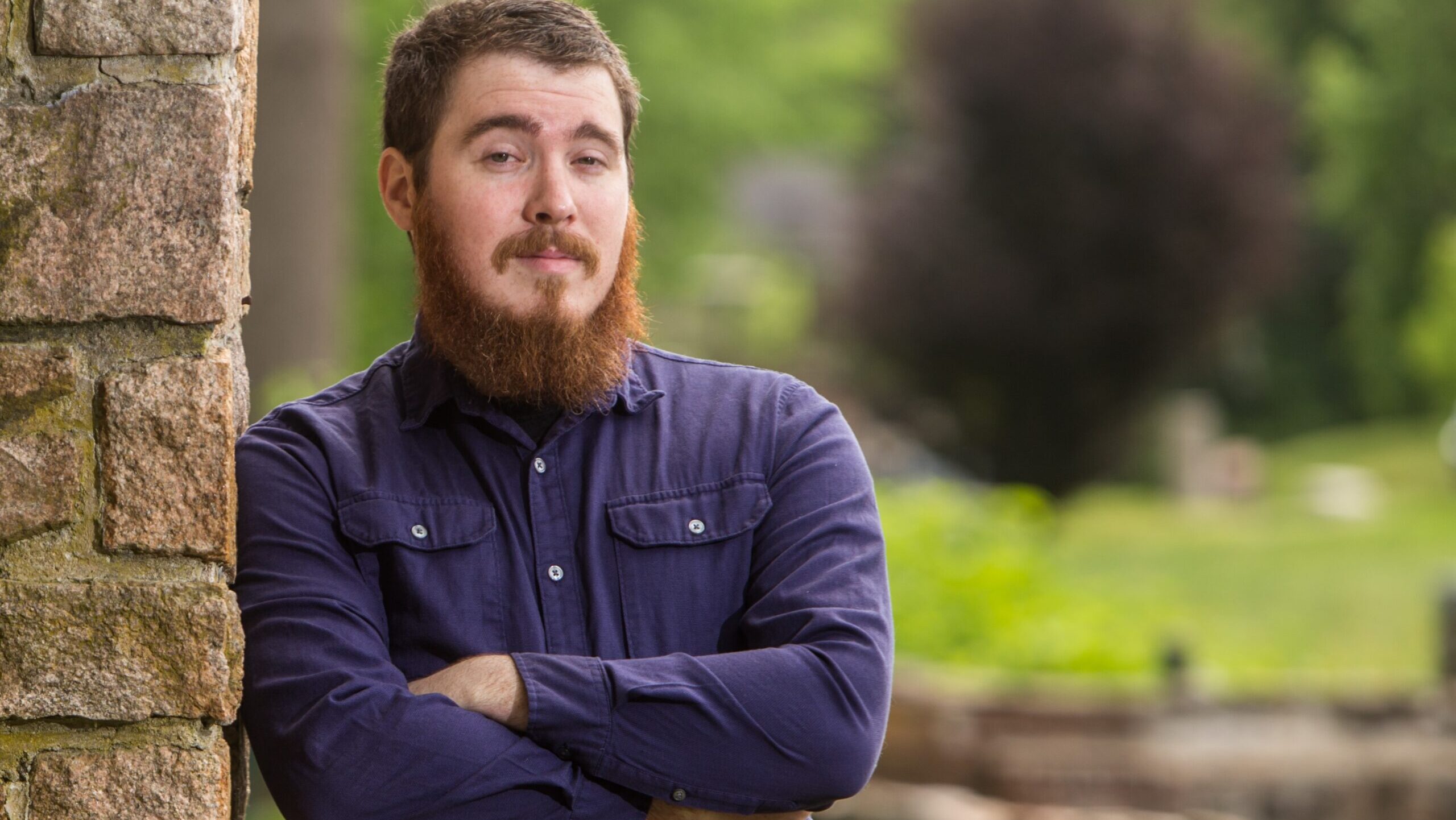
    Jason Poulos is running for the Democratic nomination for the Massachusetts 4th Congressional District seat currently held by Jake Auchincloss. Courtesy photo

    On a sunny day outside Newton City Hall, Jason Poulos lays out his vision for a new kind of leadership in Massachusetts’ 4th Congressional District.

    “This campaign is very much a youth revolt,” Poulos said.

    Poulos, a Democratic candidate for Massachusetts’ 4th Congressional District in a five-way primary that includes incumbent Rep. Jake Auchincloss, is running a campaign focused on energizing younger voters and challenging the political status quo.

    Poulos, 40, said his background is not in politics but in academic research. Over the course of his career, he has worked at institutions across the country.

    “I went to UMass Amherst,” Poulos said. “I got a PhD at UC Berkeley in political science and computational science and engineering. I came back here to do a postdoc at Harvard Medical School in AI and health policy.” Despite his national résumé, Poulos frames himself first as a local—someone who grew up in Sherborn and understands the district he now hopes to represent. The 4th District stretches across parts of Middlesex, Norfolk, Bristol and Worcester counties, encompassing communities as varied as Newton and Fall River.

    But Poulos said it wasn’t local politics that first pushed him toward a campaign—it was foreign policy.

    “What really was radicalizing for me was watching the United States send tens of billions of dollars in military arms to Israel and watch them participate actively in the genocide of the Palestinian people,” Poulos said.

    He described calling Auchincloss’s office weekly and attending town halls, searching for answers.

    Poulos said he remains discouraged that Auchincloss has not changed his position on the war in Gaza and continues to accept donations from pro-Israel political action committees.

    According to Track AIPAC (American Israel Public Affairs Committee), Auchincloss has received more than $933,000 from pro-Israel lobbying groups since 2020. In January 2026, he voted in favor of legislation providing $3.3 billion annually in funding for Israel.

    For Poulos, the influence of lobbying groups such as AIPAC underscores what he sees as a broader disconnect between elected officials and their constituents.

    “Our representatives aren’t really listening to us,” he said. “That demonstrates that we don’t really live in a representative democracy anymore.”

    On a local level, Poulos said he supported student protesters during campus encampments that drew national attention and debate over free speech.

    “The students’ demands were very simple,” he said. “They said our tuition is going towards your endowment, and your endowment is being used in support of the defense industry … we want you to divest.”

    “I supported the students,” he added. “Representative Auchincloss wanted to break up the encampments.” While the war in the Middle East remains a divisive issue—especially in Newton—Poulos said public opinion within the Democratic Party is shifting.

    “The tide has already shifted. We have polling of nationwide Democrats, and only about 8% still support the idea of sending military arms to Israel,” he said. “It’s not really an open question anymore.”

    Congressional candidate Jason Poulos collects nomination signatures at a protest outside the office of U.S. Rep. Jake Auchincloss on March 2, 2026. Photo by Bryan McGonigle

    For Poulos, those figures underscore what he sees as the influence of money in politics, a central theme of his campaign.

    Beyond foreign policy, Poulos has proposed a range of domestic policies, including changes to immigration enforcement.

    “I was the only person in this race, including the incumbent, to call for abolishing ICE,” he said. “I don’t think it should exist.”

    He also supports defunding the Department of Homeland Security and ending qualified immunity for immigration officers to increase accountability.

    Turning on issues closer to home like housing, a key issue in Newton, Poulos said affordability remains a top concern.

    “The district is very economically diverse, so when I put out policies, I’m thinking about the district as a whole,” he said.

    “One policy I’ve advocated for is curbing hedge fund ownership of housing. One of the drivers of high rent is hedge funds buying up properties and leaving them empty, creating a monopoly on prices.”

    As Poulos moves through the district, he runs his campaign in the hope that frustration with the current political system, especially with younger voters, will be translated into votes at the ballot box. 

    Whether that message will translate with younger voters is unclear, but Poulos continues to underscore that his campaign is not about incremental change, but an acute sense of political urgency.

    “This race is about the future of the Democratic Party and whether it serves the donor class or the working class,” he said.

    ****

    This story is part of a partnership between the Newton Beacon and the Boston University Department of Journalism.

  • Newton Energy Commission launches survey to understand barriers to home electrification

    Newton Energy Commission launches survey to understand barriers to home electrification

    Solar panels. Public domain photo

    The city of Newton aims to become carbon neutral by 2050, but reaching that goal will require transforming nearly 25,000 homes into fully electric households. And environmental advocates say it starts with something basic: knowing what’s actually inside people’s homes.

    To gain a better understanding of what’s being used in Newton homes, the Newton Energy Commission—in partnership with Green Newton, 350 Mass Newton, and Mother’s Out Front Newton—launched a survey aimed at single-family homeowners. 

    “There’s a lot of conversation at the policy level—both for the city and the state—about this subject, and a lot of it is quite honestly uninformed by what’s the current state,” said Jon Slote, a volunteer member of the Newton Energy Commission and a retired solar engineer. “We wanted to take an objective view and find that out.”

    Slote said the survey is designed to answer two fundamental questions: What heating sources and appliances are Newton residents using, and what is stopping them from switching to electric alternatives.

    Massachusetts has been working toward this kind of transformation for years. In 2008 the state passed the Global Warming Solutions Act and in 2021 updated the act to set a goal of cutting greenhouse gas emissions at least 57% below their 1990 levels by 2030. According to Massachusetts Clean Energy and Climate Metrics, residential fuel combustion remains one of the key factors the state must address in order to complete its climate goal.

    Judy Jacobs, executive director of Green Newton, said the survey is as much about fixing poor-quality data as it is about gathering new data. “Right now, the decisions are being made with incomplete or overly conservative data,” she said, “And in some cases those costs are being estimated much higher than the real cost.”

    For Jacobs, better data means better outcomes for residents. “We really want to get the data we need about costs and barriers and help that inform decisions so that it ultimately benefits Newton residents,” she said.

    That data could ultimately shape how residents heat, power and cook in their homes in the years ahead.

    “One of the things that’s pretty clear, when we think about carbon neutrality, is you need to reduce the emissions of greenhouse gases that are being produced by everything we do on a day-to-day basis,” Slote said. “All of us who live in homes in Newton, over time, we need to think about replacing gas and oil and propane uses with electricity.”

    The survey, which went live March 16, asks homeowners about their heating systems, hot water, cooking appliances, dryers and other energy uses. The survey is funded by a $3,000 microgrant from the Village Bank, which will help cover costs to mail surveys to Newton residents. 

    Additionally — to encourage participation — three respondents will be randomly selected to win free gift cards ranging from $50 to $250. Residents who complete the survey can also request a free consultation with one of the city’s volunteer energy consultants.

    For some Newton residents, the survey won’t be necessary. They’ve already decided to switch to all-electric products. 

    Rachel White has fully electrified her home after years of gradual changes. She began with her stove, then tackled heating and hot water in 2023 when her central air conditioning system was failing.

    “The motivation for doing that was that I really wanted to reduce exposure to the emissions associated with gas while cooking,” she said.

    White said one unexpected benefit was the quiet. “The air blows so smoothly and slowly from heat pump systems that they’re barely noticeable when they’re operational,” she said.

    She also acknowledges cost as a legitimate concern but says she breaks it into two categories—upfront costs and operating costs—and says the investment has been worth it. White said solar panels, which she installed alongside the heat pump system, have helped offset rising electricity costs. 

    “For folks who do have good solar exposure, the solar panels pair really, really nicely with an all-electric house,” she said.

    Debra Kriensky had a similar experience. Eight years ago, she and her family moved to a Newton home that ran mostly on oil —something she described as both expensive and frustratingly loud.

    “Even within our first year we were like, ‘We would love to do something about this and get off oil,’” she said. “Not just because of the environmental concerns, but also it was expensive and the prices kept changing.”

    Like White, Kriensky replaced appliances gradually throughout her time living in her home rather than doing it all at once. 

    Kriensky said she discovered heat pumps through a Green Newton webinar. “I’m grateful for organizations like Green Newton, for example, because if I hadn’t randomly come across one of their webinars on heat pumps, I don’t know that I would’ve even known about it as an option.”

    Her family has since gone fully electric and recently added solar panels to manage expensive electric bills.

    “Our home has been much more comfortable—everything’s been quieter,” Kriensky said. “I definitely think it was worth it.”

    Slote said he hopes the survey will help to inform further conversations about electrifying homes in Newton. “We’re very excited about the notion of trying to find some neighborhoods where people would like to collectively electrify and get off the gas system,” he said. “And we want to be a big support for that.”

    If you’re a single-family homeowner and are interested in filling out the survey, click here

    ****

    This story is part of a partnership between the Newton Beacon and the Boston University Department of Journalism.

  • New exhibit at Jackson Homestead highlights Newton’s diverse history

    After over six months of renovations, the Jackson Homestead and Museum has reopened with a new exhibit celebrating Newton’s multicultural history.

    The exhibit, “Newton: The City We Make,” reconstructed the entire first floor of the historic building as a space where visitors can not only learn about Newton’s history but envision themselves as a part of it.

    The Homestead, built by Timothy Jackson in 1809, remained in the family for about 140 years before a descendant, Frances Middendorf, donated it to the city of Newton in 1949. Shortly after being built, the Homestead became known as a station on the Underground Railroad, a history the museum continues to honor and preserve.

    The previous installation in the Homestead had been on the walls since the 1980s. While it told a story in its time, it was a narrow version of Newton’s past, one seen from a 19th century, white, affluent view, said Sara Lundberg, curator of Historic Newton, a partnership between the city and the Newton Historical Society that operates the homestead.

    “It very sorely needed to be replaced,” Lundberg said.

    An exhibit at the Jackson Homestead, “Newton: The City We Make,” shows how people have shaped Newton over centuries. Photo by Bryan McGonigle

    Lisa Dady, Historic Newton’s director, said she was more understanding of the old installation. “I don’t want to diss my predecessors, or even me, for the first few years because it did serve a purpose,” she said.

    The old exhibit consisted of foam board panels pinned to the wall, Dady said. For 40 years, the exhibit centered on a single era of Newton’s past—mostly following the history of white residents of Newton, Dady said. But she realized there was so much more to tell about Newton’s history.

    The new exhibit is centered on three themes: “On This Land,” which shows how the city’s physical landscape has changed over time; “Making Newton Home,” which highlights the communities and immigrants who have lived and worked in Newton; and “Creating Change,” which emphasizes moments when residents advocated to shape the city, and country, they wanted to live in. Each of the three galleries features artifacts, photographs and replicas from residents with historical backgrounds rooted in Newton.

    In “On This Land,” the gallery features an aerial image of the suburbanization of Newton, the Massachusetts Turnpike and the Black community that was decimated by its construction.

    The overarching idea of the exhibit, Dady said, “is that Newton is shaped by the decisions of individual people in response to an array of forces.”

    Rather than presenting the past as a continuum of events, the new gallery is there to emphasize the role of Newtonians and their decision-making. “The idea is that history doesn’t just happen to us,” Dady said. “It’s really the result of key moments of decision making and agency.”

    Lundberg said her hope for the exhibit is for visitors to leave feeling like participants of those decisions—people who can shape Newton’s future just as others shaped its past.

    Putting that vision into action meant being selective over curatorial choices. The exhibit doesn’t ignore any of the major themes in Newton’s history—it just approaches them through different stories, different objects and different people than the old exhibit did.

    “It wasn’t a trade-off,” Dady said. “It’s the same history. It’s the same time and place. It’s just selecting a different vantage point.”

    An exhibit at the Jackson Homestead, “Newton: The City We Make,” shows how people have shaped Newton over centuries. Photo by Bryan McGonigle

    The “Making Newton Home” gallery highlights the city’s various identities as a community built from people who immigrated to the city. The exhibit features one section called “suitcase stories,” which tells the story of five ethnic groups with deep roots in Newton. For this section, Lundberg said, artifacts and photographs were donated by community members, while she had to track down others through careful research.

    Lundberg and Dady, however, decided to leave three walls of the gallery unfinished. They plan to invite the community to help curate the remaining space with their own desires for what the space could be, a nod to the fact that the story of Newton is built upon its residents.

    Mayor Marc Laredo praised the exhibit in a press release, saying it “helps us see how those varied perspectives form a shared civic story of our city.”

    Throughout the exhibit, hands-on interactive elements, such as QR codes and puzzles, give visitors, 30% of whom come from outside Newton, ways to directly engage with the material, Dady said.

    “With museum exhibits, you don’t want to overwhelm the visitors with too much,” Lundberg said. “You want to entice them to learn more later on.”

    The museum is also committed to keeping the exhibit from going stale, Dady said.

    One gallery corner will rotate its content monthly, and the community curation model in the immigration part of the gallery is designed to evolve over time. “We’re really trying to have it be more dynamic and not done and then there for 40 years,” Dady said.

    “We hope—we think—that when people are here looking at the exhibit, they see themselves on that continuum of agency of someone that can shape Newton in the future,” Dady said.

    ****

    This story is part of a partnership between the Newton Beacon and the Boston University Department of Journalism.

  • Newton teen creates award-winning app to help people with Type 1 diabetes

    Newton teen creates award-winning app to help people with Type 1 diabetes

    Aaron Prager of Newton has created an app that helps monitor Type 1 diabetes and won the Eastern Region Congressional App Challenge. Courtesy photo

    As the son of two software engineers, Aaron Prager figured app development was in his future. Little did he know that the first app he made would be recognized on a national platform.

    His app, BoostT1D, designed to help people with Type 1 diabetes, was chosen by Rep. Jake Auchincloss as the winner of the 2025 Congressional App Challenge in the Massachusetts Fourth District. On Feb. 26, Aaron found out his app was picked as one of the top apps in the East Region from among 400 district winners – and over 4,000 apps submitted overall.

    Aaron, 16, a junior at British International School in Jamaica Plain, was diagnosed with Type 1 diabetes when he was 17 months old. The disease hinders the body’s ability to properly create insulin and allows blood sugars to build up. Most people with Type 1 diabetes get insulin through injections or a pump attached to the body.

    “Your sugars are hard to control in every part of your day,” Aaron said. “You just suddenly start feeling bad because of your sugar and who knows where or when.”

    When his family lived in San Francisco, his mom, Faina, had to quit her job in order to provide Aaron’s insulin since there were no staff to do so in the schools.

    “His Type 1 diabetes used to be everything I saw about him,” Faina said. “But he was growing up surprising me all the time.”

    The idea for BoostT1D came to Aaron long before he was aware of the Congressional App Challenge.

    “Originally, I went to dinner with my friends, and I was the only one out of my friends at this dinner who was diabetic,” Aaron said. “And I’m trying to figure out how many carbs there were and how much insulin to give for that, but obviously when you’re in a restaurant, it’s not going to tell you how many carbs there are.”

    After hearing about the app challenge from a friend, Aaron turned his idea into a product.

    “I was gonna try making a tool that could take photos of food, and it shows you how many carbs and how much insulin you give,” Aaron said. “And it actually works.”

    BoostT1D lets the user take a photo of a meal and get the calorie, carb and sugar breakdown. To demonstrate, Aaron took a photo of a pastry at a cafe, and the carb information and insulin suggestion appeared in seconds.

    Aaron used Google’s Gemini Vision AI tool, which has databases of food nutritional information, to share that information but also calculate how much insulin the user may need. BoostT1D allows the user to connect to NightScout, an application that diabetics use to visualize their sugar levels, so the recommendations are personalized.

    Aaron started with the food scan feature as his focus but after being selected as Massachusetts delegate for Children’s Congress, an event run by the largest diabetes research foundation Breakthrough T1D, he found more ideas for this app.

    There, Aaron talked with other diabetics and learned what problems they faced in their lives.

    He ended up adding more features including therapy adjustments for insulin intake and a mentorship program for those newly diagnosed to be partnered with volunteer mentors.

    Ironically, Aaron’s parents were initially hesitant to introduce their son to coding. Faina said being a software engineer was hard but good work and thought another field would better suit her son.

    But after coming back home from a coding camp, and creating a video game for his dad’s birthday when he was 7, Faina realized there was no stopping her son’s zest for software development.

    “We kind of thought that, no matter how hard we try, he’s going to code,” Faina said.

    As a junior, college is on the horizon for Aaron, but he’s unsure if he wants to go all in on software development.

    “I think I want to go broader to start with probably mathematics or computer science cause there’s so many places you can go from there,” Aaron said. “I like to learn. I think I’m going to love college.”

    His mom hopes for him to stay close to home, hinting at a certain college on the Cambridge side of the Charles River.

    “I want him to stay close to home. And MIT looks very attractive,” Faina said with a laugh. “When he won, it was like a step closer.”

    Outside of coding, Aaron is an accomplished competitive ballroom dancer.

    “I’ve been doing it for a long time,” he said. “And I’ve been doing it pretty seriously recently.”

    He had been dancing since he was 7 and placed third in last year’s United States Dancesport Championships. His coach of five years, Ronen Zinshtein, said he remained supportive of Aaron despite the challenges that came with his diabetes and winning bronze was one of his fondest memories with his student.

    “Aaron actually is very genuine and patient,” said Zinshtein, owner of Todos Dance and Fitness Studio. “He’s unique in a sense where he takes the time to actually listen to what he processes and then, once he processes, he can do it.”

    For a nationally recognized ballroom dancer and app developer, Aaron seems to carry himself with humility and curiosity.

    “I just wanted to make life with diabetes as livable as possible,” Aaron said. 

    ****

    This story is part of a partnership between the Newton Beacon and the Boston University Department of Journalism.

  • Committee takes up controversial overnight parking ban again

    Committee takes up controversial overnight parking ban again

    There’s an effort underway to repeal Newton’s winter parking ban. Courtesy photo

    A City Council committee may decide soon whether to repeal or modify Newton’s hotly debated winter overnight parking ban.

    The Council’s Public Safety and Transportation Committee heard public input March 4 and debated the measure but ultimately decided to put the issue on hold..

    Jeremey Freudberg, co-leader of the group Repeal the Ban, urged the council to act.

    “Indeed the overnight parking bin is or does pose a hardship for a lot of people,” Freundberg said.

    Freundberg said the council could consider changing the timeframe of the winter ban, its geographic boundaries and who the ban applies to.

    The ban prohibits cars from parking on any public roads in Newton from 2 a.m. to 6 a.m.  from Dec. 1 until March 31. A violation can result in a $25 fine.

    The parking ban has been around since 1930. In 2014, the fine increased from $5 to $25. Last November, the city narrowly voted against repealing the ban.

    Maren Coniglione, who lives in Newton Corner, said residents waste time moving their cars to different spots to avoid fines. She said some driveways don’t have enough space for the homeowners’ cars. 

    “People that are most affected are intergenerational households, people with disabilities, residents with overnight health aides, and houses that just don’t have any parking,” Coniglione said.

    Coniglione said the municipal lots are inconvenient and residents have to compete for spots with local businesses.

    Other residents said they worry that lifting the ban would pose hazards, adding more blockage to streets already heavy with snowpiles.

    “You just can’t lift the ban. I mean, even driving here tonight, I saw two accidents with the snowpiles,” said Terry Sauro, resident of Nonantum. “The streets have to be cleared and they have to be safe.”

    After hearing the speakers, the committee discussed next steps.

    “We heard a lot of solutions,” said City Councilor Sean Roche, “but I would like us to be clear on what the goals are so we can evaluate what those solutions are against those goals.”

    Some of Roche’s goals for a modified parking ban included making street space for emergency vehicles, creating an equitable experience among residents and visitors, and making it simple to administer and enforce. 

    Committee members said they were open to restructuring the ban but not eliminating it entirely.

    Suggestions that came up in the meeting included providing permits to people with medical or caregiver jobs, and restricting parking to one side of a street. The councilors said regulations and restrictions may look different for each neighborhood.

    “I agree that there are equity issues here, but it is also something that we want to do very carefully,” said Councilor Randy Block.

    Chair Tarik Lucas asked his fellow councilors to come to the next meeting with their own goals and said he hopes to create a more solid idea of how they would modify the ban.

    Once the committee is able to “parse out” these goals, Lucas said, it could create a working group to start structuring a new parking ban for next winter.

    ****

    This story is part of a partnership between the Newton Beacon and the Boston University Department of Journalism.

  • After first state championship win since 1972, Newton North gymnasts ready for New England meet

    After first state championship win since 1972, Newton North gymnasts ready for New England meet

    While the rest of Newton North High School rushes home for the day, the girls’ gymnastics team is just getting started: leotards on, pink fuzzy socks flying through the air as the gymnasts hurl themselves across the gym.

    This weekend, they will trade leotards for orange sunglasses, wigs and headbands as they represent their school at the New England Interscholastic Girls Gymnastics Championship, riding the high of their state championship win last weekend — the first time the team has claimed the title since 1972.

    At practice before Saturday’s competition, the girls circle around their coach, Cassie Ford, leaning on each other’s shoulders and oohing and aahing as they listen to the logistics of meet day.

    “These girls don’t even realize how athletic they are,” Ford said as gymnasts tumbled and swung behind her.

    Before practice begins, the team blasts a variety of songs on the speaker — “Thrift Shop” by Macklemore and “Anaconda” by Nicki Minaj — as they tape each other’s ankles and yell at high school boys trying to claim the gym for a game of lacrosse.

    “We’re a very bubbly team,” senior Nika Jayanth said. “We’re always cheering for each other and having fun.”

    “Our energy is contagious,” teammate Simona Batista-Ciani added.

    The team of 15 takes turns practicing each event: floor routines, beam, vault and bars. Each time another gymnast steps up, hands in the air, ready to run,  the team erupts with cheers and chants as chalk dust rises into the air.

    Their recent historic win was fueled by that same energy, the team and coaches said.

    “We knew the stakes,” Batista-Ciani said. “The last time the team won was 1972, so we were like, ‘OK, we can do this.’” 

    The celebration matched the intensity of practice.

    “On the way back, we were blasting songs on the bus, dancing around and passing the trophy,” Batista-Ciani said.

    The gymnasts’ energy is palpable, with chalk-soaked footprints scattered across the gym floor from dancing, gossiping and cheering between exercises.

    “We feed off each other’s energy,” teammate Greer Howard said. “When everyone’s excited, it motivates the whole team.” 

    Although the practices are filled with laughter, the team’s skill and discipline remain clear.

    “I broke the school record on floor at states,” gymnast Lucia Grabski said. This weekend, she plans to perform a similar routine to “Skyfall” by Adele, hoping to match the skill and energy of her last performance.

    Nika Jayanth practices gymnastics with a teammate. Photo by Celine Hijazi

    Beyond gymnastics, the athletes are already thinking about their futures.

    “I’ve broken pretty much every bone you can imagine – that’s what made me interested in learning about the body,” teammate Julia Brown said, explaining her plans to pursue a career as a physician assistant.

    Between routines, the girls sit on bulky tumbling mats with textbooks open, scribbling down homework before jumping back into rotation.

    Ford said the team’s balance of talent and teamwork has been key to their success.

    “Their work ethic and teamwork are what made the difference this year,” Ford said. “We have depth. Even if someone makes a mistake, the rest of the lineup can keep us strong.”

    As practice winds down, the music fades and athletes leave, clothes covered in chalk, laughing as they head into the parking lot.

    This weekend, the stage may be bigger and the stakes higher, but based on the team’s practice, Newton North appears ready, complete with orange wigs, cheers and all.

    ****

    This story is part of a partnership between the Newton Beacon and the Boston University Department of Journalism.

  • Wegmans’ plan to close Chestnut Hill pharmacy sparks outcry

    Wegmans’ plan to close Chestnut Hill pharmacy sparks outcry

    Wegmans plans to close the pharmacy in its Chestnut Hill store next month, and local residents aren’t happy. Some are fighting back.

    The supermarket chain is closing the Wegmans Pharmacy to create more space for groceries in Chestnut Hill, a Wegmans executive told a local resident in an email. Wegmans’s corporate office did not respond to repeated calls and emails from the Newton Beacon.

    Deana Percassi, Wegmans’ vice president of community engagement, explained the decision to close the pharmacy in an email to Jeff Freilich, a Brookline resident who started a petition asking Wegmans to reconsider.

    “As previously mentioned, we have made the difficult decision to close the pharmacy at our Chestnut Hill store and repurpose the space to support the continued growth of the location,” Percassi wrote to Freilich. “We remain committed to making this transition as smooth as possible for all pharmacy customers. Our team is available to help transfer prescriptions to another Wegmans Pharmacy, arrange home delivery, or move prescriptions to a pharmacy of your choice.”

    The supermarket, in the plaza across from The Shops at Chestnut Hill mall, attracts customers from Brookline and Newton.

    “One-mile radius is probably where you would expect seniors to go and walk, to go pick up their insulin or something like that,” Freilich said. “And there’s the idea that it’s certainly more convenient if you’re going to go out once or twice, you certainly want to do more than one thing.”

    Freilich started a petition on change.org Feb. 11 after seeing a sign in front of the pharmacy announcing its closure. The sign states the closure will happen in mid-April and offers instructions for customers to move their prescriptions to another Wegmans location.

    That doesn’t sit well with Freilich. “With the Wegmans pharmacy gone,” his petition says, “the primary nearby alternative will be CVS Pharmacy whose two pharmacy locations in Chestnut Hill are already overburdened with long wait times.”

    “I’m usually very careful not to be opinionated on anything ,” said Freilich, who has lived in Brookline for 25 years. “But this was something that really bothered me.”

    Freilich said he transferred his prescriptions to Wegmans a few months ago because his wife had recommended the store. Freilich said he liked the convenience of getting his medications where he buys groceries as well as the inviting staff.

    Marilyn Wolman, a resident of Brookline for over 60 years, said she has been picking up prescriptions from Wegmans location since its opening in 2014.

    “This Wegmans is just fabulous,” Wolman said. “And when they first opened in order to get customers, if you came to this is when they first opened, if you went to the pharmacy, they would give you a $10 voucher to shop in the grocery store, just so they could get customers.” 

    Wolman said she prefers Wegmans over the other pharmacies in the area because of its efficiency and proactive approach. 

    “Number one, Wegmans texts you that they have received a prescription for you,” she said. “
And then they send you a text that they’re working on it, and then they send you a text when it’s ready, and then they follow up within a month if you need a refill.”

    The store is less than a mile from Wolman’s home. The next closest Wegmans Pharmacy is in Westwood, 10 miles away.

     As of March 4, the petition had over 800 signatures. 

    Some of the supporters’ comments on the petition mention fondness for the pharmacy while others call out what they see as Wegmans’ violation of its mission statement.

    “Your decision to close the pharmacy does not align with your goal of being a critical part of the community and the compassion that your employees show customers everyday,” wrote Laurie Gerber.

    Freilich said most of his frustration comes from Wegmans’ explanation for the closure, citing a need to make space for more groceries. Freilich pointed out that the entire second floor of that Wegmans’ is dedicated to liquor. 

    “If they really want to show a commitment to the neighborhood, then they have to show that they’re committed, even if it means keeping open a not so profitable part of their store.” Freilich said. “They have to show that they are doing good for the neighborhood.”

    A pharmacist at Wegmans seemed willing to speak about the closure with a reporter who visited until a manager said that no employee there could comment. 

    Wegmans officials failed to respond to multiple calls and emails over a two-week period from the Newton Beacon.

    Freilich forwarded the signed petition and community comments to the manager of the Chestnut Hill store and other members from the Wegmans’ corporation.

    “I’m kind of trying to maximize impact,” Freilich said, “but I don’t want to go and be the cheerleader here because I am, you know, I’m just trying to do what I believe is important for the neighborhood.”

    ****

    This story is part of a partnership between the Newton Beacon and the Boston University Department of Journalism.